Forget one major – graduates may need 10 minors in the AI age: Piyush Gupta别只选一个主修专业——人工智能时代,毕业生可能需要十个辅修专业:皮尤什·古普塔
Universities must shift from knowledge transfer to training reasoning and cross-disciplinary skills as AI reshapes graduate jobs and workplace demands, says Piyush Gupta. Read more at straitstimes.com.
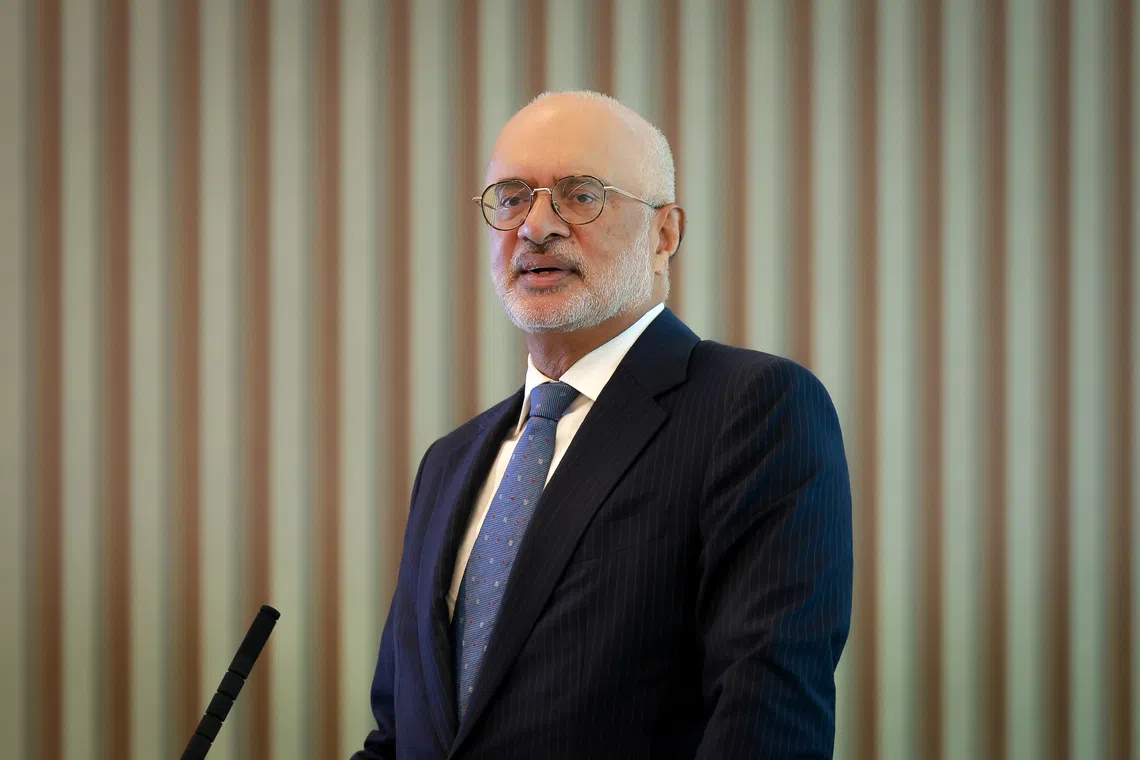
Universities must shift their focus from transferring information to training students how to think, said SMU chairman Piyush Gupta.
Published Sep 22, 2026, 07:45 PM
Updated Sep 23, 2026, 09:19 AM
Universities must shift from teaching information to training students in critical thinking, curiosity, and cross-disciplinary skills as AI handles routine tasks.
Students should pursue broad, interdisciplinary learning and real-world experience through internships to prepare for advanced roles in an AI-driven workplace.
Lifelong learning and support for entrepreneurship are essential as AI reshapes jobs, requiring changes in education, employment structures, and social safety nets.
SINGAPORE – As artificial intelligence makes knowledge instantly accessible, universities will have to shift their focus from transferring information to training students how to think.
That means developing their curiosity and judgment, as well as their ability to understand context and connect ideas across disciplines, instead of preparing them narrowly for one profession, said Piyush Gupta, chairman of the board of trustees at Singapore Management University.
“The university has to modify to create the platform for this,” he told The Straits Times in an interview.
Gupta, who is 66, stepped down as DBS chief executive in March 2025 after 15 years at the helm. He is currently also chairman of Singapore-listed Keppel and the Mandai Wildlife Group.
His comments come as universities grapple with how to prepare students for a workplace where AI can increasingly perform the routine research, coding, accounting and administrative tasks traditionally assigned to junior employees.
Automating the “grunt work” traditionally done by fresh graduates has raised concerns about whether they will possess the depth of knowledge and practical experience needed for more advanced roles.
It also suggests that the “graduate premium” – the higher salaries that university graduates have traditionally commanded over non-graduates – could narrow, Gupta said.
Employers may become less willing to pay that premium if graduates bring little to the workplace that distinguishes them from school-leavers with access to the same AI tools.
10 minors over one major
Universities have traditionally performed two functions: transferring knowledge and training the mind. However, the former is becoming less valuable when ChatGPT can retrieve and explain information in seconds.
Thus, universities must now ensure that students develop their minds through questioning and discussion instead of simply receiving information, Gupta said.
Students, too, must also reconsider how to get the most out of their years in university.
“So far, the focus has been on choosing a major. In the future, I would say: Forget one or two majors and focus on 10 minors, so you get enough cross-disciplinary and eclectic learning.”
In other words, while deep expertise will remain necessary in areas such as scientific research and semiconductors, many graduates will increasingly gain an advantage by knowing which questions to ask, judging whether an answer makes sense and “connecting the dots” across different domains to understand the broader context, Gupta said.
He noted that SMU’s College of Integrative Studies already allows students to design an individualised major instead of following a conventional course centred on one subject by combining areas such as economics, law and accounting to create their own programme.
Gupta said the university was initially unsure whether enough students would want such flexibility. In 2026 , however, the school received around 900 applications for 100 places.
“There’s obviously a lot of demand from students who are willing to sign up and do this.”
But encouraging students to acquire broader knowledge will achieve little if they outsource its interpretation to AI, as overreliance on the technology could erode the very reasoning skills that a broad education is meant to develop.
He described this as “cognitive debt”, where mental capabilities weaken because people no longer exercise them.
Students may, for example, use AI to produce polished assignments while failing to understand the subject matter, develop an argument independently or recognise when the technology is wrong.
Still, universities should not ban AI, which is now an important tool in the workplace, Gupta said. Instead, they must change how students learn and are assessed.
At SMU, for example, students are being taught to identify flaws and hallucinations in AI-generated answers and verify the technology’s work instead of accepting its output at face value.
“You’ve got to embrace AI, but you’ve got to then shift the pedagogy to make sure that by getting the help of AI, you’re not giving up on reasoning, conceptual, understanding skills.”
He added that universities must double down on “application of mind skills”, including critical reasoning, communication and working with people.
Working with corporations
With more companies expected to reduce entry-level hiring in favour of AI automation, graduates may be expected to take on more advanced responsibilities when they join the workplace without first having the opportunity to practise the basics and learn their trade.
Part of this grunt work will now have to be front-loaded into university through internships, apprenticeships and projects with companies, Gupta said.
Students who do not undertake an internship or apprenticeship, join a start-up or participate in substantial applied work could increasingly be disadvantaged, he added.
SMU plans to deepen its corporate partnerships so that students can apply their knowledge to real-life projects and help shape more of such programmes before they enter the workforce. Gupta added that this experience should also extend beyond Singapore to give students exposure to regional markets.
He noted that companies have been “very receptive” to taking on interns because they recognise the potential longer-term problems of hiring fewer graduates.
While more companies are likely to reduce entry-level recruitment as AI takes over junior work, Gupta said the smart ones would not stop hiring graduates altogether.
This is because doing so may save costs in the short term, but could leave them without a pipeline of employees ready to assume more senior positions several years later.
He cited DBS, which announced plans to hire 600 graduates despite being an extensive user of AI, as an example of a company continuing to invest in its future talent pipeline.
One solution would be for companies to work directly with universities to provide students with the training and practical exposure they would previously have acquired in their first few years of employment.
Graduates could then enter roles that require more experience, rather than having to start in junior positions that companies are increasingly automating or removing.
Government support may also be required. Gupta noted that during the Covid-19 pandemic, the authorities subsidised programmes that encouraged banks to continue hiring and training young people.
A similar programme could motivate companies to provide internships and other forms of workplace learning, he said, with universities, employers and the Government jointly building an industrywide training structure.
Learning must be for life
Universities must also evolve from providing four years of education to supporting learning throughout a career, as people change jobs and AI reshapes existing occupations, Gupta said.
SMU has around 10,000 undergraduates and 4,000 postgraduate students. In comparison, about 30,000 people attend its continuing education, executive education and academy programmes.
Its lifelong learning population is therefore already more than twice the size of its undergraduate and postgraduate population combined.
Universities will have to help people continuously reinvent their skills rather than assume that knowledge acquired in early adulthood will last for the next several decades.
The structure of employment itself could eventually change, with big companies hiring fewer people and more workers creating their own jobs.
Gupta expects AI to drive the growth of micro-enterprises or “one-person companies”, as AI tools can already perform functions such as accounting, finance, marketing and administration that once required a large organisation.
Meanwhile, entrepreneurs can outsource production and reach customers internationally through the internet.
“For all the challenges of AI and job losses, the big silver lining is that it makes it possible to be an entrepreneur and even build a global business by yourself,” he said.
Still, a substantial change in mindset and culture, particularly in Singapore, is needed before this can happen, Gupta said.
He estimated that nine out of 10 students here may lack the risk appetite or inclination to start something themselves.
In Silicon Valley, failing at several start-ups can be viewed as valuable experience and even make an entrepreneur more attractive to investors. In Singapore, failure can carry a lasting stigma and make it harder for someone to obtain financing or another job, Gupta said.
Many people also choose salaried employment because Singapore’s high cost of living makes financial stability important. Regular jobs also provide predictable income, medical benefits and retirement contributions.
If one-person companies and irregular work become more common, support systems will therefore have to change, too.
For example, Central Provident Fund and medical coverage may need to cater better to workers without conventional employers, while banks may have to reconsider their reliance on monthly payslips when assessing applications for housing loans and credit cards.
“While SMU is expanding its incubators and accelerators to help students build businesses and learn from failure, wider changes will also be needed,” Gupta said.
“We’re going to have to re-architect many other systems to prepare for this possibility.”
AI/artificial intelligence
SMU/Singapore Management University
SMU主席皮尤什·古普塔表示,大学必须将重点从传递信息转移到培养学生的思考方式上。
发布于 2026 年 9 月 22 日晚上 7:45
更新于2026年9月23日上午9:19
随着人工智能处理日常任务,大学必须从教授信息转向培养学生的批判性思维、好奇心和跨学科技能。
学生应该通过实习追求广泛的跨学科学习和真实的实践经验,为在人工智能驱动的工作场所担任高级职位做好准备。
随着人工智能重塑就业市场,教育、就业结构和社会保障体系也需要做出改变,因此终身学习和对创业的支持至关重要。
新加坡——随着人工智能使知识唾手可得,大学将不得不把重点从传递信息转移到培养学生的思考方式上。
新加坡管理大学董事会主席皮尤什·古普塔表示,这意味着要培养他们的好奇心和判断力,以及理解背景和跨学科联系思想的能力,而不是让他们狭隘地为某一职业做准备。
“大学必须做出改变,才能为此创造平台,”他在接受《海峡时报》采访时表示。
现年66岁的古普塔在担任星展银行首席执行官15年后,于2025年3月卸任。他目前还是新加坡上市公司吉宝集团和万代野生动物集团的董事长。
在他发表这番言论之际,各大学正在努力思考如何让学生为未来的职场做好准备,因为人工智能可以越来越多地承担传统上分配给初级员工的常规研究、编码、会计和行政任务。
将传统上由应届毕业生完成的“繁重工作”自动化,引发了人们对他们是否具备担任更高级职位所需的知识深度和实践经验的担忧。
古普塔表示,这也表明“毕业生溢价”(即大学毕业生传统上比非毕业生更高的薪资)可能会缩小。
如果毕业生在工作中没有带来任何能够让他们与那些同样拥有人工智能工具的应届毕业生区分开来的能力,那么雇主可能就不太愿意支付这笔溢价了。
10 个小调高于一个大调
大学传统上承担着两项职能:知识传授和思维训练。然而,随着 ChatGPT 能够在几秒钟内检索并解释信息,前者(知识传授)的价值正在降低。
古普塔表示,因此,大学现在必须确保学生通过提问和讨论来发展思维,而不是仅仅接收信息。
学生们也必须重新思考如何才能充分利用大学时光。
“到目前为止,重点都放在了选择主修专业上。未来,我会建议:不要只选择一两个主修专业,而是专注于十个辅修专业,这样才能获得足够的跨学科和多元化学习机会。”
换句话说,古普塔表示,虽然在科学研究和半导体等领域仍然需要深厚的专业知识,但许多毕业生将越来越有机会通过知道该问哪些问题、判断答案是否合理以及将不同领域的知识“联系起来”以了解更广泛的背景而获得优势。
他指出,新加坡管理大学综合研究学院已经允许学生设计个性化的专业,而不是遵循以单一学科为中心的传统课程,而是将经济学、法律和会计等领域结合起来,创建自己的课程。
古普塔表示,学校最初并不确定是否会有足够多的学生想要这种灵活的学习方式。然而,在2026年,学校收到了约900份申请,而招生名额只有100个。
“显然有很多学生愿意报名参加。”
但是,如果鼓励学生获取更广泛的知识,却将知识的解释权外包给人工智能,那么这种鼓励将收效甚微,因为过度依赖这项技术可能会削弱通识教育旨在培养的推理能力。
他将此描述为“认知债务”,即由于人们不再锻炼心理能力而导致心理能力下降。
例如,学生可能会使用人工智能来制作精美的作业,但却无法理解学科内容,无法独立展开论述,也无法识别技术何时出错。
古普塔表示,尽管如此,大学仍不应禁止人工智能,因为它如今已成为职场的重要工具。相反,大学必须改变学生的学习和评估方式。
例如,在新加坡管理大学 (SMU),学生们被教导要识别人工智能生成的答案中的缺陷和幻觉,并验证该技术的运行情况,而不是全盘接受其输出结果。
“你必须接受人工智能,但同时也要转变教学方法,确保在借助人工智能的同时,不会放弃推理、概念理解能力。”
他还补充说,大学必须加倍重视“思维技能的应用”,包括批判性推理、沟通和与人合作。
与企业合作
随着越来越多的公司减少入门级招聘,转而采用人工智能自动化,毕业生在进入职场时可能被要求承担更高级的职责,而没有机会先练习基础知识和学习技能。
古普塔表示,现在部分基础工作必须提前在大学通过实习、学徒和与公司合作的项目来完成。
他还补充说,不参加实习或学徒计划、不加入创业公司或不参与实质性应用工作的学生可能会越来越处于不利地位。
新加坡管理大学计划深化与企业的合作关系,使学生能够在进入职场前将所学知识应用于实际项目,并参与构建更多此类项目。古普塔补充说,这种经验也应扩展到新加坡以外,让学生有机会接触区域市场。
他指出,各公司“非常乐意”招收实习生,因为他们意识到减少毕业生招聘可能会带来长期问题。
古普塔表示,虽然随着人工智能取代初级工作,越来越多的公司可能会减少入门级招聘,但聪明的公司不会完全停止招聘应届毕业生。
这是因为这样做虽然短期内可以节省成本,但几年后可能会导致公司缺乏能够胜任更高职位的人才储备。
他以星展银行为例,指出该公司虽然广泛使用人工智能,但仍宣布计划招聘 600 名毕业生,以此说明该公司仍在持续投资于未来的人才储备。
一种解决方案是,企业直接与大学合作,为学生提供他们以前在职业生涯最初几年才能获得的培训和实践经验。
这样一来,毕业生就可以直接进入需要更多经验的岗位,而不必从公司正在逐步自动化或取消的初级职位做起。
政府的支持可能也必不可少。古普塔指出,在新冠疫情期间,政府对鼓励银行继续雇用和培训年轻人的项目进行了补贴。
他表示,类似的计划可以激励企业提供实习和其他形式的职场学习机会,大学、雇主和政府可以共同构建一个全行业的培训体系。
学习应该贯穿一生
古普塔表示,随着人们不断更换工作,人工智能也在重塑现有职业,大学也必须从提供四年制教育转变为支持整个职业生涯的学习。
新加坡管理大学拥有约1万名本科生和4000名研究生。相比之下,约有3万人参加该校的继续教育、高管教育和学院课程。
因此,其终身学习人口数量已经超过本科生和研究生人口总和的两倍。
大学必须帮助人们不断重塑技能,而不是假设成年早期获得的知识可以持续几十年。
就业结构本身最终可能会发生变化,大公司会减少雇佣员工,而更多的劳动者会自己创造就业机会。
古普塔预计人工智能将推动微型企业或“一人公司”的发展,因为人工智能工具已经可以执行会计、财务、营销和行政等功能,而这些功能以前需要大型组织才能完成。
与此同时,企业家可以将生产外包,并通过互联网接触国际客户。
“尽管人工智能带来了诸多挑战和失业问题,但它最大的好处在于,它使人们有可能成为企业家,甚至独自建立一家全球性企业,”他说。
古普塔表示,不过,在新加坡,要实现这一点,还需要在思维方式和文化方面进行实质性的改变。
他估计,这里十个学生中有九个可能缺乏冒险精神或创业意愿。
古普塔表示,在硅谷,多次创业失败会被视为宝贵的经验,甚至能让创业者更受投资者青睐。但在新加坡,失败却可能留下难以磨灭的污名,使人更难获得融资或找到其他工作。
许多人选择受薪工作也是因为新加坡生活成本高昂,经济稳定至关重要。稳定的工作还能提供可预测的收入、医疗福利和退休金。
如果一人公司和不规律工作变得越来越普遍,那么支持体系也必须随之改变。
例如,中央公积金和医疗保险可能需要更好地照顾没有传统雇主的劳动者,而银行在评估住房贷款和信用卡申请时可能需要重新考虑对每月工资单的依赖程度。
“虽然SMU正在扩大其孵化器和加速器,以帮助学生创建企业并从失败中吸取教训,但还需要进行更广泛的变革,”古普塔说。
“为了应对这种情况,我们将不得不重新设计许多其他系统。”
人工智能
新加坡管理大学