Can big data save the next Megan Khung? It’s definitely worth a try to keep children safer大数据能拯救下一个梅根·孔吗?为了保障儿童安全,绝对值得一试。
SAFER, which relies on a risk algorithm based on data analytics, does not replace human judgment. Read more at straitstimes.com.
新闻视频
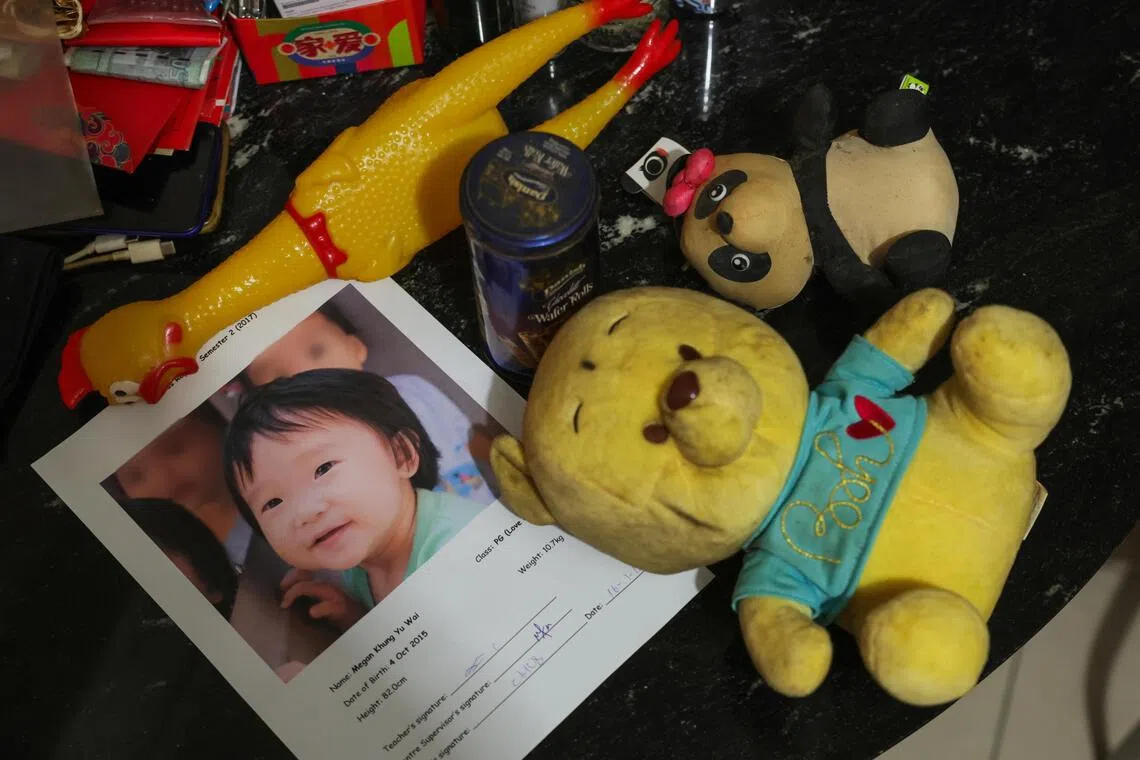
Megan’s mother and her ex-partner horrifically abused the four-year-old girl to death, and the couple burnt her corpse to avoid detection.
Published Sep 23, 2026, 06:35 PM
Updated Sep 23, 2026, 06:35 PM
The Ministry of Social and Family Development (MSF) launched SAFER, a risk algorithm, to flag and prevent child abuse by analysing data from multiple government agencies.
SAFER helps social workers monitor thousands of child protection cases to spot risks early and strengthen safety plans, but it does not replace human judgment.
While promising, such risk algorithms faces challenges like data quality and false alarms; success depends on regular audits, fine-tuning, and coordinated efforts among professionals and the community to tackle child abuse.
SINGAPORE – Can big data predict t he risk of abuse before it happens and alert child protection officers to save children who may be suffering behind closed doors?
The Ministry of Social and Family Development (MSF) is venturing that it can.
On September 22, the MSF launched its SAFER (Sensemaking Alerts for Frontline Engagement and Response) unit, to pull together information from different agencies to identify cases that need more attention. This will hopefully prevent another tragic death like Megan Khung’s.
Had SAFER been in place then, her case would have been flagged for review about five months before her death, MSF said.
How risk algorithms can help tackle child abuse
SAFER relies on a risk algorithm based on data analytics to combine information from multiple government agencies - such as the Central Narcotics Bureau, police and MSF agencies - for families with young children with child protection concerns, such as abuse or neglect.
Singapore is not the first country to use risk algorithms in child protection.
In 2016, the authorities in Allegheny County, Pennsylvania, introduced the Allegheny Family Screening Tool to help staff decide whether to investigate cases of potential child abuse.
The tool considers over 100 criteria, such as jail records, psychiatric services and public welfare benefits. A 2019 evaluation found that the tool “moderately” improved decisions to investigate cases.
In Singapore, SAFER is not meant to be a magic bullet to stem out child abuse. By analysing indicators such as pre-school attendance and withdrawals, drug and sexual offences, SAFER builds a risk profile for these children and their families.
What it can do is to monitor and flag developments among the thousands of families here that social service professionals are currently working with for child protection concerns.
In 2024 alone, there were 2,303 new high-risk child abuse cases , and 3,292 new lower risk cases.
But the algorithm does not replace human judgment.
Child protection staff will review potential concerns flagged by SAFER, and use their professional judgment to decide on the next course of action.
Such action could involve coming up with a plan to keep the child safe for new cases, or re-looking existing safety plans if new developments in the family raise concerns.
More importantly, SAFER could keep watch over the tens of thousands of child protection cases that have been closed and where active intervention has stopped.
Many of these families struggle with multiple complex problems, such as poverty, drug or crime issues, mental health conditions and relationship conflicts. Even after a case is closed, stresses within families could flare up again, potentially tipping the child back into harm’s way.
Connecting these disparate pieces of data to form a fuller picture of what is going on at home is critical in coming up with stronger safety plans for the child, social workers say.
For one thing, families may hide certain information or may even lie - perhaps out of shame and embarrassment or simply because some experiences are too painful to talk about .
However, the risk assessments and subsequent safety plans may look very different once the protection professionals know, for example, that a parent is abusing drugs or if one parent has a history of spousal violence.
In Megan’s case, her mother and her ex-partner were on drugs, and the mother lied about Megan’s injuries when the girl’s pre-school teacher asked.
Coupled with multiple breaches by various agencies, such as police officers not following protocols and an officer from the Child Protective Service who failed to log a call by Megan’s pre-school seeking help, the system failed to save Megan.
Potential pitfalls of using data
Despite its promises, risk algorithm models also come with potential pitfalls.
For one thing, how robust the model is depends on the quality, scope and timeliness of the data it has access to.
The Allegheny Family Screening Tool, for example, has been criticised for disproportionately flagging low-income families because its databases have far more data on poor families than richer ones.
This creates a risk of poorer families being subject to greater scrutiny, while missing out on detecting abuse in wealthier households.
Another question is how the parameters for alerts are set.
Setting thresholds for alerts too strictly risks generating many false alarms, which may add to the workload of social service professionals. This may also cause more tension among families who could be subjected to repeated checks and questioning.
Ultimately, SAFER’s success will depend on regular auditing and continuous fine-tuning to ensure its model stays sharp.
The new unit is just one part of MSF’s strengthened child protection framework.
In the past year, the MSF rolled out a series of measures to boost the child protection system following recommendations made by the review panel on Megan’s case.
The MSF has formed an independent panel of experts to resolve disagreements between agencies over how best to protect a child, designated agencies with the relevant expertise to manage child abuse cases, and set up a $15 million care fund for well-being initiatives for those involved in protection work.
Together, the measures point to a decisive shift towards a more proactive, co-ordinated and robust child protection system.
Technology has its limits. While algorithms can process vast amounts of data at a speed and scale no human can match, at the end of the day, they do not save children. Humans do.
Turning the alerts into actions still depends on people - such as watchful teachers and people around a child who notice something is wrong and alert the authorities, and social service professionals who can assess the risks and intervene.
It takes a collective resolve, and not just one SAFER unit, to ensure that no child meets the same fate as Megan again.
Theresa Tan is the senior social affairs correspondent at The Straits Times. She covers issues that affect families, youth and vulnerable groups.
Ministry of Social and Family Development
梅根的母亲和她的前伴侣残忍地虐待致死这名四岁女孩,为了避免被发现,两人还焚烧了她的尸体。
发布于 2026 年 9 月 23 日下午 6:35
更新于2026年9月23日下午6:35
社会及家庭发展部 (MSF) 推出了 SAFER,这是一种风险算法,通过分析来自多个政府机构的数据来识别和预防虐待儿童行为。
SAFER 帮助社会工作者监控数千起儿童保护案件,以便及早发现风险并加强安全计划,但它并不能取代人类的判断。
虽然这类风险算法前景广阔,但它们也面临着数据质量和误报等挑战;成功取决于定期审核、微调以及专业人士和社区为解决虐待儿童问题而进行的协调努力。
新加坡——大数据能否在虐待发生之前预测其风险,并提醒儿童保护官员拯救那些可能在紧闭的门后遭受痛苦的儿童?
社会及家庭发展部(MSF)认为它可以做到。
9月22日,无国界医生组织启动了SAFER(一线参与和响应预警机制)小组,旨在整合不同机构的信息,识别需要更多关注的案例。希望这能防止类似梅根·孔的悲剧再次发生。
无国界医生组织表示,如果当时SAFER项目已经实施,她的案件会在她去世前大约五个月就被标记出来进行审查。
风险算法如何帮助解决虐待儿童问题
SAFER 依靠基于数据分析的风险算法,将来自多个政府机构(如中央缉毒局、警察和无国界医生组织)的信息结合起来,为有幼儿且存在儿童保护问题(如虐待或忽视)的家庭提供服务。
新加坡并非第一个在儿童保护中使用风险算法的国家。
2016 年,宾夕法尼亚州阿勒格尼县当局推出了阿勒格尼家庭筛查工具,以帮助工作人员决定是否调查潜在的虐待儿童案件。
该工具考虑了100多项标准,例如监狱记录、精神病治疗服务和公共福利待遇。2019年的一项评估发现,该工具“在一定程度上”改善了案件调查决策。
在新加坡,SAFER并非旨在成为根除虐童的灵丹妙药。SAFER通过分析学前入学和退学、毒品和性犯罪等指标,为这些儿童及其家庭构建风险概况。
它可以监测并标记这里数千个家庭的进展情况,这些家庭目前正由社会服务专业人员处理儿童保护问题。
仅在 2024 年,就有 2303 起高风险儿童虐待案件和 3292 起低风险案件。
但算法并不能取代人类的判断。
儿童保护工作人员将审查 SAFER 指出的潜在问题,并运用其专业判断来决定下一步行动方案。
此类行动可能包括制定计划以确保儿童在新案件中的安全,或者如果家庭出现新的情况引发担忧,则重新审视现有的安全计划。
更重要的是,SAFER 可以监督数万起已结案且已停止积极干预的儿童保护案件。
这些家庭往往面临诸多复杂问题,例如贫困、毒品或犯罪问题、精神健康问题以及人际关系冲突。即使案件结案,家庭内部的压力也可能再次爆发,使孩子再次陷入危险境地。
社会工作者表示,将这些分散的数据联系起来,形成对家庭情况的更全面了解,对于制定更完善的儿童安全计划至关重要。
首先,家庭可能会隐瞒某些信息,甚至撒谎——或许是出于羞耻和尴尬,或者仅仅是因为有些经历太过痛苦而难以启齿。
然而,一旦保护专业人员知道例如父母一方滥用药物或一方有配偶暴力史,风险评估和随后的安全计划可能会截然不同。
梅根的母亲和前伴侣都吸毒,当梅根的幼儿园老师询问时,她的母亲对梅根的伤情撒了谎。
由于多个机构的违规行为,例如警察不遵守规程,以及儿童保护服务机构的一名官员未能记录梅根的幼儿园寻求帮助的电话,该系统未能挽救梅根的生命。
使用数据的潜在陷阱
尽管风险算法模型具有诸多优势,但也存在潜在的缺陷。
首先,模型的稳健性取决于其可获取数据的质量、范围和及时性。
例如,阿勒格尼家庭筛查工具就因不成比例地标记低收入家庭而受到批评,因为它的数据库中关于贫困家庭的数据远远多于关于富裕家庭的数据。
这会导致较贫困的家庭受到更严格的审查,同时却可能错过对较富裕家庭虐待行为的发现。
另一个问题是如何设置警报参数。
警报阈值设置过严格会导致大量误报,从而增加社会服务人员的工作量。此外,反复接受检查和询问也可能加剧家庭成员之间的紧张关系。
最终,SAFER 的成功将取决于定期审计和持续微调,以确保其模型保持敏锐。
新成立的部门只是无国界医生组织加强儿童保护框架的一部分。
过去一年,根据梅根案件审查小组提出的建议,无国界医生组织推出了一系列措施来加强儿童保护体系。
无国界医生组织成立了一个独立的专家小组,以解决各机构在如何最好地保护儿童方面存在的分歧;指定了具有相关专业知识的机构来处理虐待儿童案件;并设立了一个 1500 万美元的关爱基金,用于为参与保护工作的人员提供福利保障。
这些措施共同表明,儿童保护体系正朝着更加积极主动、协调一致和强有力的方向发生决定性转变。
科技有其局限性。虽然算法能够以人类无法企及的速度和规模处理海量数据,但归根结底,它们无法拯救儿童,只有人类才能做到。
将警报转化为行动仍然取决于人——例如细心的老师和孩子周围的人,他们注意到情况不对劲并通知有关部门,以及能够评估风险并进行干预的社会服务专业人员。
要确保不再有孩子遭遇和梅根一样的命运,需要的是集体的决心,而不仅仅是一个 SAFER 小组的行动。
特蕾莎·谭是《海峡时报》的资深社会事务记者。她主要报道影响家庭、青年和弱势群体的问题。
社会及家庭发展部