China calls Trump battleship ‘easier target’ amid mixed US reception在美国反应不一之际,中国称特朗普的战舰是“更容易攻击的目标”。
Some analysts have suggested the battleship proposal may ultimately not be realistic and instead a move by Trump to jolt awake U.S. shipbuilders.
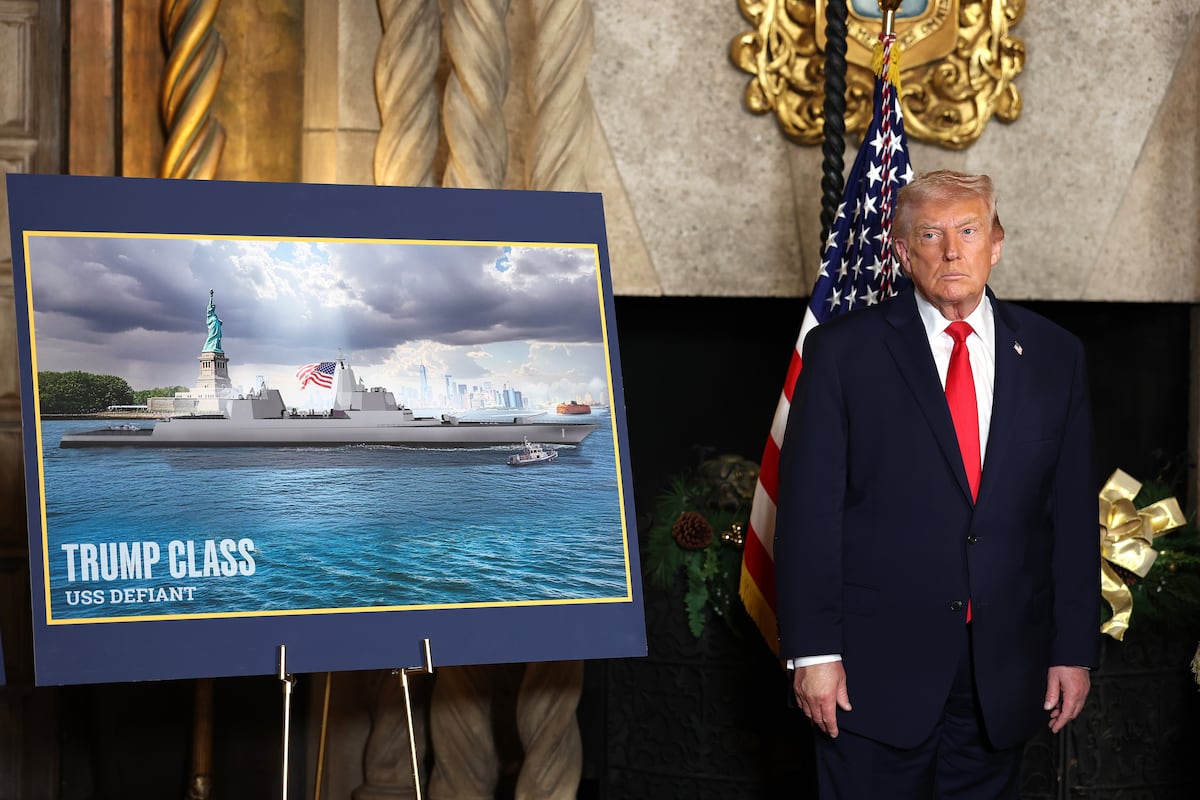
U.S. President Donald Trump calls the vessel a new class of “battleship” graced by his own name , but China just calls the U.S. Navy’s latest concept a larger and “easier target” for its growing array of anti-ship drones and missiles.
A day after Trump’s Dec. 22 announcement at Mar-a-Lago that he had ordered the construction of a “Trump class” of possibly 20 to 25 battleships , China’s Global Times, a state media outlet, carried an interview with naval researcher Zhang Junshe stating that the type of warship envisioned by Trump would be a ripe target for China’s anti-ship weapons, including the so-called “carrier killer” DF-21D ballistic missile.
“The large size of a battleship also makes it more vulnerable and potentially an easier target, particularly when it is densely loaded with munitions,” according to Zhang , a researcher at the People’s Liberation Army Naval Military Academic Research Institute.
In the wake of the announcement, some analysts suggested the battleship proposal may ultimately not be realistic and instead a move by Trump to jolt awake the U.S. shipbuilding industry, which lags far behind China.
“We must wait and see if it can succeed,” Zhang told the Global Times, a tabloid published under the guidance of “People’s Daily,” the official newspaper of the Chinese Communist Party.
Trump’s battleship plan also appeared to draw a response from Russia. Two days after the Dec. 22 announcement, Nikolai Patrushev, an aide to President Vladimr Putin and head of Russia’s Naval Board, said in a speech that Russia had begun working on a “next-generation” nuclear-powered ballistic missile submarine, according to Russia’s Interfax news agency.
YJ-21 hypersonic anti-ship ballistic missiles are seen during a military parade in Beijing, Sept. 3, 2025. (Pedro Pardo/AFP via Getty Images)
On Dec. 30, in the wake of the unveiling of the battleship concept, the non-partisan Congressional Research Service released a report estimating that the new class of ships would cost as much as $15 billion for the first to put to sea — already named the USS Defiant — with each additional ship costing about $10 billion.
In a statement shortly after Trump put forward the plan, Bath Iron Works President Charles F. Krugh said his shipyard “stands ready to fully support the Navy in the design and construction of this important new shipbuilding program.”
Chris Kastner, Huntington Ingalls president and CEO, also issued a statement, saying, “We are proud to have built the Navy’s most technologically advanced surface combatants and our shipbuilders are committed to continuing that work in lock step with the Navy to expand their Fleet.”
The biggest fan of the battleship proposal, meanwhile, might be the service’s Chief of Naval Operations Adm. Daryl Caudle, who said Wednesday at the Surface Navy Association Symposium that he views the battleship as the centerpiece in the formation of a “Golden Fleet” which “will anchor maritime fires and sea control in the most contested environments, massing durable combat power and absorbing punishment an adversary cannot match.”
Caudle also said the Navy has a lot of catching up to do in keeping pace with China, but that will depend on the ability of the shipyards to speed up production.
“It is not happening at the pace any of us are satisfied with,” Caudle said. “I am pressing hard with [Navy Secretary John Phelan] to accelerate deliveries in 2026 and beyond. I want more hulls in the water, and I want them there faster.”
Adm. Daryl Caudle visits an East Coast-based Naval Special Warfare unit, April 2023. (MC1 John Kotara/U.S. Navy)
Caudle noted that the Navy’s “Battle Force stands at roughly 290 ships, with about 100 deployed worldwide on any given day.”
That number stands in contrast to projections contained in the Pentagon’s recently released Annual Report to Congress on Military and Security Developments Involving the People’s Republic of China, which estimated the number of surface warships and submarines in service to Beijing to be at 370.
At the symposium Wednesday, Caudle gave a grim forecast, considering that near-peer fleet, on what the next fight at sea might look like.
“Let me be absolutely clear about that fight,” he said. “It will be faster, more distributed, more lethal and far less forgiving than anything we have faced in our lifetimes.
“There will be no rear area. There will be no sanctuary. There will be no ‘time to figure it out later.’ The opening minutes of the next fight will be decisive, and our obligation is to be ready on day one.”
Naval officials are hoping the development of the new class will help turn the future tide in America’s favor.
At the Dec. 22 announcement, Trump lauded the new battleships as being “the fastest, the biggest and by far, 100 times more powerful.”
He also claimed the ships would be armed with high-powered laser technology, nuclear-armed sea-launched cruise missiles and hypersonic weapons — all technologies in various stages of development. The president went on to mention the inclusion of an electromagnetic railgun, which the service said it had ditched in 2021 .
A high-speed camera captures a full-energy shot by an electromagnetic railgun prototype launcher. (John F. Williams/U.S. Navy)
Despite the president’s “biggest” claims, the tentative length of the BBG (X) — at 840 to 880 feet, with a beam of 105 to 115 feet — would be close to the measurements of the World War II-era Iowa class battleships. The battleship Missouri, meanwhile, had a displacement when fully loaded of about 58,000 tons, while the Trump class would come in at 35,000 tons-plus.
Considered too costly to maintain and too vulnerable to attack, the four Iowa class battleships — Iowa, Missouri, Wisconsin and New Jersey — were retired in the 1990s. Those same factors, analysts say , cast doubt over the future of the Trump class iteration.
Beyond the weapons and displacement of the new class, some have noted the artist renderings of the BBG(X) bears a resemblance to the “arsenal ship” of the 1990s, one that was intended to be a floating platform for up to 500 Tomahawk cruise missiles and other armaments.
Congress defunded the arsenal ship program in 1997, citing costs and questions about the survivability of the ships in combat.
Critics of the proposed new battleships said the same concerns that unraveled the arsenal ship will eventually scrap the Trump class program.
In a Dec. 23 commentary , Mark Cancian, a senior defense and security adviser at the Center for Strategic and International Studies, wrote that “this ship will never sail.”
“It will take years to design, cost $9 billion each to build and contravene the Navy’s new concept of operations, which envisions distributed firepower,” said Cancian, a retired Marine colonel and Vietnam veteran. “A future administration will cancel the program before the first ship hits the water.”
A different take came from retired Adm. James Foggo, a submariner and dean of the Center for Maritime Strategy think tank, who said in a Jan. 6 phone interview with Military Times that “anytime the [president] shows interest in your service is a good thing. It’s good that [Trump] is behind a program to build more ships.”
President Donald Trump arrives to speak during a celebration for the 250th anniversary of the U.S. Navy aboard the USS Harry S. Truman, Oct. 5, 2025. (Steve Helber/AP)
“So, the good news is the president is behind the initiatives to get shipbuilding going again,” said Foggo, a former commander of U.S. Naval Forces Europe-Africa. “Certainly it’s a high risk because the Chinese have these very capable weapons systems. There’s a risk to anything that that floats on the sea. It’s how you deploy those systems in distributed maritime operations — don’t concentrate in one area. If the balloon goes up, the dumbest thing you could do is concentrate your forces.”
Complicating the pursuit of the new class is the current state of U.S. shipbuilding, which Phelan, in a Jan. 7 interview with Bret Baier of Fox News, called a “mess” and consistently “behind schedule and over budget.”
But the battleship program could serve as a catalyst in jump starting a new era of efficient and speedy construction in the yards, he added.
Phelan also expressed confidence that a new administration bent on erasing all things Trump would have a hard time in justifying the cancellation of the program.
“I think they’re going to have to explain why they canceled something that the Navy views as a requirement to protect us, enhance sea lanes and maintain and enhance America’s maritime dominance.”
In its report on the battleship program, the Congressional Research Service listed several “Issues for Congress” to decide on prior to approving the first two BBG(X) ships in the authorization and appropriations process.
Among them, the CRS report requested that Congress explore what analysis went into the procurement, whether the development would be the most cost-effective course of action and what the acquisition process looked like prior to the program’s initiation.
The report also suggested investigating whether new technologies, such as “an electromagnetic railgun and higher-power lasers,” would be ready by the 2030s as options to be incorporated.
美国总统唐纳德·特朗普称这艘舰艇是新型“战列舰”,并以他的名字命名,但中国则称美国海军的最新概念舰艇对于其日益增多的反舰无人机和导弹而言,是一个更大、更容易成为目标的“目标”。
在特朗普 12 月 22 日于海湖庄园宣布下令建造 20 至 25 艘“特朗普级”战列舰的第二天,中国官方媒体《环球时报》刊登了对海军研究员张军社的采访。张军社在采访中表示,特朗普设想的这种战舰将成为中国反舰武器(包括所谓的“航母杀手”东风-21D 弹道导弹)的绝佳目标。
“战舰的庞大体积也使其更容易受到攻击,更容易成为攻击目标,尤其是在装载大量弹药的情况下,”中国人民解放军海军军事学术研究所的研究员张表示。
消息公布后,一些分析人士认为,建造战舰的提议最终可能并不现实,而是特朗普为了唤醒远远落后于中国的美国造船业而采取的举措。
张先生告诉《环球时报》:“我们必须拭目以待,看看它能否成功。”《环球时报》是中共中央机关报《人民日报》指导下出版的小报。
特朗普的战舰计划似乎也引起了俄罗斯的回应。据俄罗斯国际文传电讯社报道,在12月22日宣布该计划两天后,俄罗斯总统弗拉基米尔·普京的助手、俄罗斯海军部部长尼古拉·帕特鲁舍夫在一次讲话中表示,俄罗斯已经开始研发“下一代”核动力弹道导弹潜艇。
2025年9月3日,在北京举行的阅兵式上,可以看到YJ-21高超音速反舰弹道导弹。(图片来源:Pedro Pardo/AFP via Getty Images)
12 月 30 日,在战列舰概念公布之后,无党派的国会研究服务处发布了一份报告,估计这种新型舰艇的造价将高达 150 亿美元,首艘下水的舰艇(已命名为“无畏”号)的造价将达到 150 亿美元,之后每增加一艘舰艇的造价约为 100 亿美元。
在特朗普提出该计划后不久,巴斯钢铁厂总裁查尔斯·F·克鲁格在一份声明中表示,他的造船厂“随时准备全力支持海军进行这项重要的新造船计划的设计和建造”。
亨廷顿·英格尔斯公司总裁兼首席执行官克里斯·卡斯特纳也发表声明称:“我们很自豪能够建造海军技术最先进的水面作战舰艇,我们的造船工人致力于与海军紧密合作,继续这项工作,以扩大其舰队规模。”
与此同时,战列舰提案的最大支持者可能是海军作战部长达里尔·考德尔海军上将。他周三在水面海军协会研讨会上表示,他认为战列舰是组建“黄金舰队”的核心,这支舰队“将在最具争议的环境中巩固海上火力并控制海域,集结持久的战斗力,承受对手无法匹敌的打击”。
考德尔还表示,海军在追赶中国的步伐方面还有很多工作要做,但这取决于造船厂加快生产的能力。
考德尔说:“目前的进度远未达到我们任何人的预期。我正在向海军部长约翰·费兰施压,要求加快2026年及以后的交付速度。我希望更多的舰艇下水,而且希望它们更快地投入使用。”
2023年4月,达里尔·考德尔海军上将视察了驻扎在美国东海岸的一支海军特种作战部队。(一级军士长约翰·科塔拉/美国海军)
考德尔指出,海军的“作战部队大约有 290 艘舰艇,每天大约有 100 艘部署在世界各地。”
这一数字与五角大楼最近向国会提交的关于中华人民共和国军事和安全发展的年度报告中的预测形成鲜明对比,该报告估计北京服役的水面军舰和潜艇数量为 370 艘。
在周三的研讨会上,考德尔对与势均力敌的舰队的下一场海上战斗可能呈现的景象做出了悲观的预测。
“让我把这场战斗说清楚,”他说。“它将比我们一生中遇到的任何战斗都更快、更分散、更致命,而且更残酷无情。”
“不会有后方区域,不会有避难所,也不会有‘以后再想办法’的机会。下一场比赛的开局几分钟至关重要,我们的职责就是在第一天就做好准备。”
海军官员希望新舰艇的研发能够帮助美国扭转未来的局势。
在 12 月 22 日的发布会上,特朗普称赞这些新型战舰是“速度最快、体积最大,而且威力是现有战舰的 100 倍”。
他还声称,这些舰艇将配备高功率激光技术、核弹头海基巡航导弹和高超音速武器——所有这些技术都处于不同的研发阶段。总统随后提到了电磁轨道炮,但军方表示已于2021年放弃了该项目。
高速摄像机捕捉到电磁轨道炮原型发射器发射全能量炮弹的瞬间。(约翰·F·威廉姆斯/美国海军)
尽管总统声称其规模“最大”,但BBG(X)的暂定长度——840至880英尺,舰宽105至115英尺——与二战时期的“衣阿华”级战列舰的尺寸相近。与此同时,“密苏里”号战列舰满载排水量约为58000吨,而“特朗普”级战列舰的排水量则超过35000吨。
由于维护成本过高且极易遭受攻击,四艘爱荷华级战列舰——爱荷华号、密苏里号、威斯康星号和新泽西号——于上世纪90年代退役。分析人士表示,同样的因素也使特朗普级战列舰的未来蒙上了阴影。
除了新舰艇的武器和排水量之外,一些人注意到 BBG(X) 的艺术家渲染图与 20 世纪 90 年代的“武库舰”有相似之处,后者旨在成为一个可搭载多达 500 枚战斧巡航导弹和其他武器的浮动平台。
1997 年,国会以成本高昂和舰艇在战斗中的生存能力存在疑问为由,取消了武库舰艇项目的拨款。
批评人士指出,导致武库舰项目失败的同样担忧最终也会取消特朗普级战列舰项目。
12 月 23 日,战略与国际研究中心高级国防与安全顾问马克·坎西安在一篇评论文章中写道:“这艘船永远不会启航。”
“设计需要数年时间,每艘造价90亿美元,而且违背了海军新的作战概念,即分布式火力,”退役海军陆战队上校、越战老兵坎西安说。“未来的政府会在首艘舰艇下水前取消这个项目。”
退役海军上将詹姆斯·福戈(James Foggo)则持不同观点。他曾是一名潜艇兵,也是海洋战略中心智库的主任。1月6日,他在接受《军事时报》电话采访时表示:“任何时候(总统)对你的服役表现出兴趣都是好事。(特朗普)支持建造更多舰艇的计划是件好事。”
2025年10月5日,美国总统唐纳德·特朗普抵达“哈里·S·杜鲁门”号航空母舰,在庆祝美国海军成立250周年的活动上发表讲话。(史蒂夫·赫尔伯/美联社)
“所以,好消息是总统支持重启造船业的各项举措,”福戈说道,他曾任美国海军欧洲-非洲司令部司令。“当然,这风险很高,因为中国拥有非常先进的武器系统。任何漂浮在海上的东西都存在风险。关键在于如何在分散的海上作战中部署这些系统——不要集中在一个区域。如果局势失控,最愚蠢的做法就是集中兵力。”
使新舰艇建造计划更加复杂的是美国造船业的现状。菲兰在 1 月 7 日接受福克斯新闻的布雷特·拜尔采访时称,美国造船业“一团糟”,而且一直“进度落后,预算超支”。
但他补充说,战列舰计划可以成为催化剂,开启造船厂高效快速建造的新时代。
菲兰还表示,他相信一心想要抹去所有与特朗普有关的事情的新政府,很难为取消该项目找到合理的理由。
“我认为他们必须解释一下,为什么他们取消了海军认为对保护我们、加强海上航道以及维护和增强美国海上优势至关重要的项目。”
在关于战列舰计划的报告中,国会研究服务处列出了几个“国会在授权和拨款程序中批准前两艘 BBG(X) 舰艇之前需要决定的问题”。
其中,国会研究服务处 (CRS) 的报告要求国会调查采购过程中进行了哪些分析,开发是否是最具成本效益的行动方案,以及在项目启动之前采购流程是什么样的。
该报告还建议调查诸如“电磁轨道炮和更高功率的激光器”等新技术是否能在 2030 年代准备就绪,以便纳入考虑范围。