Marina Square through the years: A timeline滨海广场历年大事记:时间线
With Marina Square set to close for redevelopment, CNA looks back at the mall's beginnings and how it evolved over its four decades.
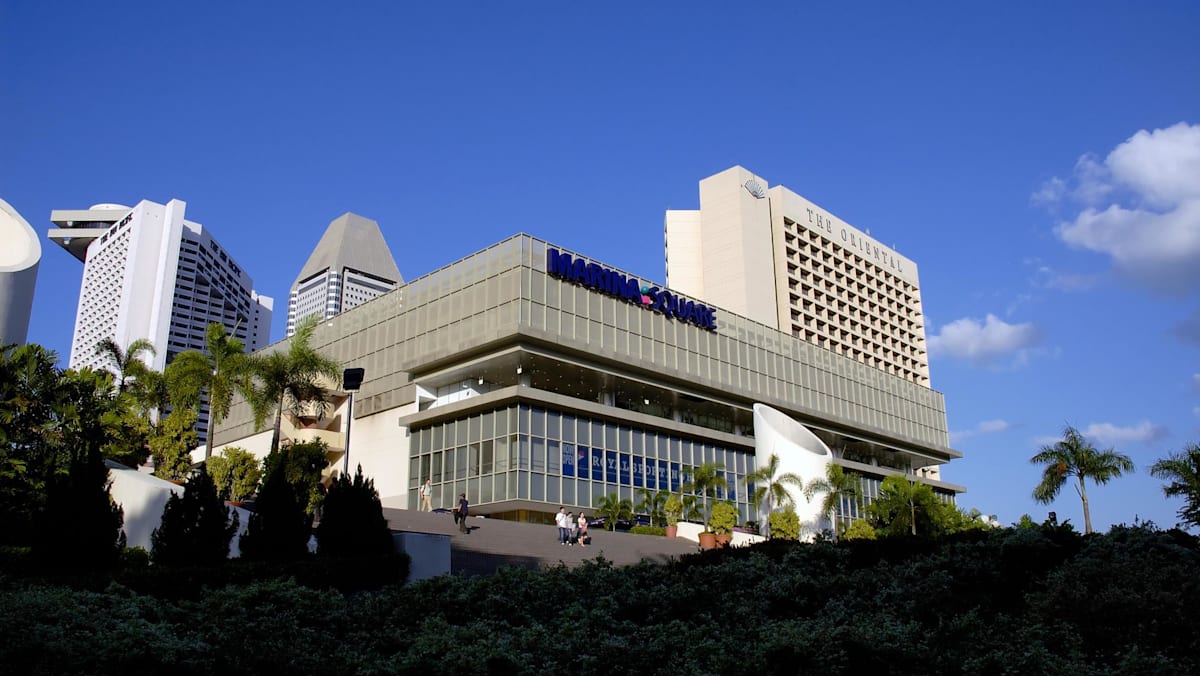
With Marina Square set to close for redevelopment, CNA looks back at the mall's beginnings and how it evolved over its four decades.
Marina Square in 2006. (Photo: SingLand)
This audio is generated by an AI tool.
SINGAPORE: From shopping trips and date nights to family outings and Formula 1 race weekends, Marina Square has been a go-to destination for generations of Singaporeans.
News on Tuesday (Sep 1) that the mall will close next year came as a shock to many. Singapore Land Group (SingLand), which owns Marina Square, said that the closure is part of wider plans to redevelop the area .
As consumer habits evolved over the years, so did Marina Square.
CNA looks back at Marina Square's beginnings and the many transformations it has undergone over its four decades.
1970s: New land, new possibilities
Land reclamation works to create the Marina Bay area began in 1971, according to the Urban Redevelopment Authority (URA).
One phase of the works was completed in 1977, creating a site known as Marina Centre, according to an article published in the National Library Board publication BiblioAsia.
In 1978, URA offered land in Marina Centre to developers for the first time as part of a land sale involving 21 sites. The sale was also the first in which foreign developers were invited to participate, The Business Times reported in November of that year.
Six of the sites were located in Marina Centre, with three earmarked for hotels and one for a shopping or entertainment complex.
1983: Settling on a name
In 1981, the name "Marina Centre" came to apply to a project in the area, consisting of a mall and three hotels, being developed by a consortium led by SingLand. However, the developers would soon face what The Singapore Monitor called a "name problem".
According to reports published in the now-defunct newspaper in November 1983, the developers had not sought approval to use the name, and the authorities took issue with it as it was meant to be the name of the whole area.
As such, the developers were asked to submit a new name for the complex to an advisory committee that decided on the names of roads and buildings – the predecessor of today's Street and Building Names Board.
After considering several alternative names submitted by the developers, the committee decided on Nov 25, 1983, that the project would be renamed "Marina Square". Final approval was needed from the Finance Ministry, but the name quickly stuck in the media.
Other names suggested by the developers included Marina Esplanade and Hai Bin Square, according to The Singapore Monitor.
CNA Games Guess Word Crack the word, one row at a time Buzzword Create words using the given letters Mini Sudoku Tiny puzzle, mighty brain teaser Mini Crossword Small grid, big challenge Word Search Spot as many words as you can Show More Show Less
Marina Square in the mid-1980s. (Photo: Instagram/National Museum of Singapore)
1986-1988: The biggest shopping mall in Southeast Asia
The Marina Square mall opened in 1986, around the same time as the project's three hotels: the Marina Mandarin, Pan Pacific Singapore and Oriental Singapore.
With about 59,000 sq m of retail space, Marina Square was said to be the largest shopping complex in Southeast Asia. The mall opened with four department stores, including outlets of homegrown retailer Metro and Japanese chain Tokyu, as well as a supermarket and about 220 shops.
Tokyu opened its Marina Square outlet in 1987, with then Finance Minister Richard Hu officiating the opening.
Local cinema operator Eng Wah opened two theatres there in 1988, each with a seating capacity of 335, The Business Times reported. King's Snookerium Management opened its third and largest billiard hall at the mall the same year.
The shopping complex was estimated to have cost between S$500 million and S$600 million, according to The Business Times.
1990s: Moves and shakes
The 1990s saw a series of changes to Marina Square's tenant mix.
Tokyu closed its Marina Square outlet in 1993. Its space was taken over by The Sale Store, before Kmart Metro opened there in 1994.
As Marina Square faced growing competition from neighbouring malls Suntec City and Millenia Singapore, it sought to strengthen its entertainment offerings, the Straits Times reported in 1996.
A four-storey entertainment complex was therefore built next to the mall's existing amusement centre and food court that year.
The Marina Leisureplex housed a six-screen Golden Village cineplex with nearly 2,000 seats. It was then the cinema operator's flagship facility in Singapore.
The Marina Leisureplex also brought in new food and beverage outlets, including McDonald's, the second one at Marina Square, Long John Silver's, MOS Burger and Teck Kee Pau.
Other retailers that opened during this period included American crafts store chain Ben Franklin and fashion retailer Guess.
By this time, Marina Square's monthly shopper traffic had doubled from about 400,000 to 500,000 visitors when it first opened, to around 1 million visitors.
A worker sticks part of a printed painting on the steps at Marina Square in Singapore on Jan 12, 1998. (File photo: AFP/Roslan Rahman)
2004-2006: A S$100 million makeover
Nearly two decades after it first opened, Marina Square embarked on its first major renovation in 2004.
According to TODAY, S$100 million was spent to revamp the mall.
That same year, hypermarket Giant replaced Metro as one of Marina Square's anchor tenants, The New Paper reported.
American fast-food chain Carl's Jr opened its first Singapore outlet at Marina Square in 2005. Other notable newcomers of this era included luxury watchmakers Longines and Edox, as well as British fashion retailer Miss Selfridge.
Marina Square in 2005. (Photo: SingLand)
The revamped Marina Square reopened in 2006, with the mall reorganised into different themed zones. Among them was Groove Nation, which was targeted at youths and featured trendy fashion stores and hair salons.
To promote its new look, Marina Square launched a two-and-a-half-month marketing campaign spanning print advertisements, television commercials and outdoor advertising.
As part of the campaign, a six-episode series of one-minute television dramas with the theme "love at Marina Square" was produced, starring Adrian Pang and Kym Ng.
A McDonald's outlet at Marina Square in 2006. (Photo: SingLand)
The Carl's Jr outlet at Marina Square. (Photo: Carl's Jr)
SuperBowl and Golden Village at Marina Square in 2006. (Photo: SingLand)
A KBox outlet at Marina Square in 2006. (Photo: SingLand)
A Kenny Rogers Roasters outlet at Marina Square in 2006. (Photo: SingLand)
A Billy Bombers outlet at Marina Square in 2006. (Photo: SingLand)
A Swensen's outlet at Marina Square in 2006. (Photo: SingLand)
Marina Square's Marina Food Loft in 2004. (Photo: SingLand)
A Cathay Photo outlet at Marina Square in 2006. (Photo: SingLand)
2008: A front-row seat for F1
When Singapore hosted its first Formula 1 race in 2008, Marina Square found itself in the middle of the action.
Those without tickets gathered at the mall's outdoor areas, hoping to catch a glimpse of the cars. Its four-storey outdoor staircase became one vantage point for the event, offering spectators a view of part of the Marina Bay Street Circuit across from the Esplanade.
The New Paper even published an article the day before the inaugural race highlighting six spots at the mall where fans could get views of the track.
In the years that followed, Marina Square remained a familiar gathering spot during race weekends.
Its location also made it a popular spot for those hoping to catch National Day celebrations around Marina Bay.
Marina Square in the background next to the Mandarin Oriental Singapore hotel during a Formula 1 race at the Marina Bay Street Circuit. (Photo: iStock)
2010s: More than just shopping
In 2010, Marina Square became directly connected to the rail network through Marina Link, an underground pedestrian link to Esplanade MRT station.
The mall underwent another major makeover during the decade, with renovation works carried out in phases.
The first phase, completed in 2013, saw the opening of The Dining Edition, a new wing dedicated to food and beverage outlets.
The second phase was completed in 2015, adding an extended retail area and a new wing facing Marina Bay. The renovation expanded the mall's floor area to about 100,000 sq m.
New attractions included Emporium Shokuhin, a Japanese food marketplace, and Pororo Park Singapore, an indoor theme park for children.
Marina Square's tenant mix continued to evolve. In 2016, private education institution PSB Academy announced that it would set up a new city campus at the mall.
According a Lianhe Zaobao report that year, it moved into spaces on the third and fourth floors of the mall previously occupied by entertainment facilities such as the Golden Village cineplex and a bowling alley.
Two years later, indoor playground Kiztopia took over the space formerly occupied by Emporium Shokuhin.
The spiral staircase-shaped water fountain at Marina Square, known by some as the octopus fountain, in 2013. (Photo: SingLand)
People gather to witness the launch of the biennial Singapore Garden Festival at Marina Square on Apr 1, 2016. Above them is the world's largest floral chandelier, according to Guinness World Records. (File photo: AFP/Roslan Rahman)
Colourful sea creatures made with 100,000 inflated balloons are displayed in the atrium of Marina Square on Mar 15, 2017. (File photo: AFP/Roslan Rahman)
The Kiztopia outlet at Marina Square. (Photo: Kitztopia)
2026: One last transformation for now
Marina Square will close its doors on Mar 31, 2027, as part of a major redevelopment.
The project will add three new towers – one comprising 204 luxury homes, another with 260 serviced apartments and the third to house a 304-room hotel and about 13,000 sq m of office space.
Pan Pacific Singapore, Parkroyal Collection Marina Bay and Mandarin Oriental Singapore will remain open during the redevelopment.
Marina Square itself will be overhauled, and will have a greater focus on food and beverage, sports, wellness and lifestyle offerings, as well as landscaped and pet-friendly spaces.
An artist’s impression of Marina Square after the redevelopment, integrated with landscaped public spaces and connected to the precinct’s existing and new components. (Image: Singapore Land)
Chief executive of SingLand Jonathan Eu said that the redevelopment is an opportunity to make Marina Square a "more connected and compelling destination".
"By adding residences, serviced apartments and workplaces alongside the existing hotels – and repositioning the mall around experience-led retail, sports, wellness and community – we are creating a new ecosystem where people can live, work, stay and connect," Mr Eu said.
The redevelopment is expected to be completed by 2031.
Get our pick of top stories and thought-provoking articles in your inbox
Stay updated with notifications for breaking news and our best stories
Join our channel for the top reads for the day on your preferred chat app
随着滨海广场即将关闭进行重建,CNA回顾了该购物中心的起源以及它在过去四十年中的发展历程。
2006年的滨海广场。(图片:SingLand)
这段音频由人工智能工具生成。
新加坡:从购物之旅、约会之夜到家庭出游和一级方程式赛车周末,滨海广场一直是几代新加坡人的首选目的地。
周二(9月1日)传出滨海广场将于明年关闭的消息,令许多人感到震惊。拥有滨海广场的新加坡置地集团(SingLand)表示,关闭该商场是其更广泛的区域重建计划的一部分。
随着消费者习惯的不断变化,滨海广场也随之发展演变。
CNA回顾了滨海广场的起源及其在过去四十年间经历的多次变革。
20世纪70年代:新土地,新机遇
据市区重建局(URA)称,滨海湾地区的填海工程始于1971年。
据国家图书馆管理局出版物 BiblioAsia 上发表的一篇文章称,该工程的一个阶段于 1977 年完成,建成了滨海中心。
1978年,市区重建局首次向开发商出售滨海中心的地块,此次出售涉及21个地块。据《商业时报》同年11月报道,这也是首次邀请外国开发商参与的土地出售项目。
其中六个地块位于滨海中心,三个地块计划用于建设酒店,一个地块计划用于建设购物或娱乐综合体。
1983年:确定名称
1981年,“滨海中心”这个名称开始用于该地区的一个项目,该项目包括一个购物中心和三家酒店,由新加坡地产集团(SingLand)牵头的财团开发。然而,开发商很快就面临着《新加坡观察报》所称的“名称问题”。
据现已停刊的报纸 1983 年 11 月刊登的报道,开发商并未寻求批准使用该名称,而当局对此提出异议,因为该名称原本是整个地区的名称。
因此,开发商被要求向一个负责决定道路和建筑物名称的咨询委员会提交该建筑群的新名称——该委员会是如今街道和建筑物名称委员会的前身。
在考虑了开发商提交的几个备选名称后,委员会于1983年11月25日决定将该项目更名为“滨海广场”。虽然还需要财政部的最终批准,但这个名字很快就在媒体上流行起来。
据《新加坡观察报》报道,开发商提出的其他名称还包括滨海广场和海滨广场。
CNA游戏 猜词游戏 逐行破解单词 流行词游戏 用给定的字母组成单词 迷你数独 小小谜题,挑战你的大脑 迷你填字游戏 小方格,大挑战 单词搜索 尽可能多地找出单词 显示更多 显示更少
20世纪80年代中期的滨海广场。(图片来源:Instagram/新加坡国家博物馆)
1986-1988年:东南亚最大的购物中心
滨海广场购物中心于 1986 年开业,与该项目的三个酒店(滨海文华酒店、新加坡泛太平洋酒店和新加坡东方酒店)同期开业。
滨海广场拥有约59,000平方米的零售空间,据称是东南亚最大的购物中心。该购物中心开业时设有四家百货公司,包括本土零售商麦德龙和日本连锁店东急百货的门店,以及一家超市和约220家商店。
东急于 1987 年在滨海广场开设分店,时任财务大臣胡锦涛主持了开业典礼。
据《商业时报》报道,本地电影院运营商英华集团于1988年在此开设了两家影院,每家影院可容纳335人。同年,金氏台球管理公司也在该购物中心开设了其第三家也是规模最大的一家台球厅。
据《商业时报》报道,该购物中心的造价估计在 5 亿至 6 亿新元之间。
1990年代:风云变幻
20 世纪 90 年代,滨海广场的租户组合发生了一系列变化。
东急百货于 1993 年关闭了滨海广场分店。其店面被 The Sale Store 接管,之后 Kmart Metro 于 1994 年在此开业。
据《海峡时报》1996 年报道,由于滨海广场面临来自邻近购物中心新达城和新加坡美年购物中心日益激烈的竞争,它寻求加强其娱乐服务。
因此,当年在购物中心现有的游乐中心和美食广场旁边建造了一座四层高的娱乐综合体。
滨海休闲中心内设有拥有六个放映厅、近2000个座位的金村影院。当时,它是该影院运营商在新加坡的旗舰影院。
滨海休闲中心还引入了新的餐饮店,包括麦当劳(滨海广场的第二家麦当劳)、龙约翰银、摩斯汉堡和德记包。
在此期间开业的其他零售商包括美国工艺品连锁店 Ben Franklin 和时尚零售商 Guess。
到那时,滨海广场的月客流量已经翻了一番,从刚开业时的约 40 万至 50 万人次,增加到约 100 万人次。
1998年1月12日,一名工人在新加坡滨海广场的台阶上粘贴一幅印刷画作的一部分。(资料照片:法新社/罗斯兰·拉赫曼)
2004-2006年:耗资1亿澳元的改造
在开业近二十年后,滨海广场于 2004 年开始了第一次大规模翻新。
据《今日报》报道,该购物中心耗资1亿新元进行翻新。
据《新报》报道,同年,大型超市 Giant 取代 Metro 成为 Marina Square 的主力租户之一。
美国快餐连锁店 Carl's Jr 于 2005 年在新加坡滨海广场开设了第一家分店。这一时期其他值得关注的新晋品牌包括奢侈手表制造商浪琴表和爱多士,以及英国时尚零售商 Miss Selfridge。
2005年的滨海广场。(图片:SingLand)
经过翻新的滨海广场于2006年重新开放,商场被重新划分为不同的主题区域。其中就包括面向年轻人的Groove Nation,那里汇集了众多时尚服饰店和美发沙龙。
为了推广其全新形象,滨海广场发起了一项为期两个半月的营销活动,涵盖平面广告、电视广告和户外广告。
作为该活动的一部分,制作了一部以“滨海广场的爱情”为主题的六集一分钟电视剧,由 Adrian Pang 和 Kym Ng 主演。
2006年滨海广场的一家麦当劳门店。(图片:SingLand)
位于滨海广场的卡乐星餐厅。(图片:卡乐星)
2006年滨海广场的超级碗和金城购物中心。(图片:SingLand)
2006年滨海广场的一家KBox门店。(图片:SingLand)
2006年位于滨海广场的肯尼罗杰斯烤鸡店。(图片:SingLand)
2006年滨海广场的一家Billy Bombers门店。(图片:SingLand)
2006年滨海广场的Swensen's门店。(图片:SingLand)
2004 年滨海广场的滨海美食阁。(图片:SingLand)
2006年,位于滨海广场的国泰照片冲印店。(图片:SingLand)
2008年:F1赛车前排座位
2008 年新加坡首次举办一级方程式赛车比赛时,滨海广场就位于比赛的中心地带。
没有门票的人聚集在商场的户外区域,希望能一睹赛车的风采。商场四层楼高的户外楼梯成了观看比赛的一个好位置,观众可以从这里看到滨海湾街赛道的一部分,这条赛道正对着滨海艺术中心。
《新报》甚至在首场比赛前一天发表了一篇文章,重点介绍了购物中心内六个可以让粉丝观看赛道的地点。
在随后的几年里,滨海广场一直是赛车周末期间人们熟悉的聚集地。
它的地理位置也使它成为那些希望在滨海湾附近观看国庆庆祝活动的人们的热门地点。
在滨海湾街赛道举行的F1方程式赛车比赛期间,背景是滨海湾广场,毗邻新加坡文华东方酒店。(图片:iStock)
2010年代:不仅仅是购物
2010 年,滨海广场通过滨海连道(Marina Link)与铁路网络直接连接,滨海连道是一条通往滨海艺术中心地铁站的地下人行通道。
十年间,该购物中心又经历了一次重大改造,翻新工程分阶段进行。
第一阶段于 2013 年完成,当时开设了餐饮区,这是一个专门用于餐饮场所的新翼楼。
二期工程于2015年竣工,新增了零售区域和面向滨海湾的新翼楼。此次翻新使购物中心的建筑面积扩大到约10万平方米。
新增景点包括日本食品市场 Emporium Shokuhin 和儿童室内主题公园 Pororo Park Singapore。
滨海广场的租户组合持续变化。2016年,私立教育机构PSB学院宣布将在该商场设立新的城市校区。
据《联合早报》当年报道,该商场搬进了三楼和四楼,这些楼层之前是金村电影院和保龄球馆等娱乐设施的所在地。
两年后,室内游乐场 Kiztopia 接管了 Emporium Shokuhin 原先的场地。
2013年,滨海广场的螺旋楼梯形喷泉,也被一些人称为章鱼喷泉。(图片:SingLand)
2016年4月1日,人们聚集在滨海广场,共同见证两年一度的新加坡花园节的开幕。在他们头顶上方,悬挂着据吉尼斯世界纪录认证的世界最大花卉吊灯。(资料照片:法新社/罗斯兰·拉赫曼)
2017年3月15日,由10万个充气气球组成的五彩缤纷的海洋生物在滨海广场的中庭展出。(资料照片:法新社/罗斯兰·拉赫曼)
位于滨海广场的Kiztopia门店。(图片:Kitztopia)
2026年:最后一次转型
作为一项重大重建计划的一部分,滨海广场将于 2027 年 3 月 31 日关闭。
该项目将新增三座塔楼——一座包含 204 套豪华住宅,另一座包含 260 套服务式公寓,第三座将容纳一家拥有 304 间客房的酒店和约 13,000 平方米的办公空间。
新加坡泛太平洋酒店、滨海湾百乐精选酒店和新加坡文华东方酒店将在重建期间继续营业。
滨海广场本身也将进行改造,更加注重餐饮、体育、健康和生活方式,以及景观美化和宠物友好型空间。
这是艺术家绘制的滨海广场重建后的效果图,广场与景观优美的公共空间融为一体,并与该区域的现有和新增部分相连。(图片:新加坡置地)
新加坡地产公司SingLand首席执行官Jonathan Eu表示,此次重建将使滨海广场成为一个“更具吸引力和更紧密联系的目的地”。
“通过在现有酒店旁增设住宅、服务式公寓和办公场所,并将购物中心重新定位为以体验为主导的零售、体育、健康和社区为中心,我们正在创建一个人们可以生活、工作、住宿和交流的新生态系统,”Eu先生说。
该重建项目预计将于2031年完成。
订阅我们的邮件,即可获取精选热点新闻和引人深思的文章。
订阅通知,第一时间获取突发新闻和精彩报道。
加入我们的频道,即可在您常用的聊天应用上获取当日热门文章。