China opens Pinglu Canal to cut 560km off trade route to Asean中国开通平陆运河,切断通往东盟的560公里贸易航线。
NANNING, Sept 24 — China opened the Pinglu Canal recently, giving its landlocked south-west a shortcut to the coast and overseas markets, particularly those in the Association of...
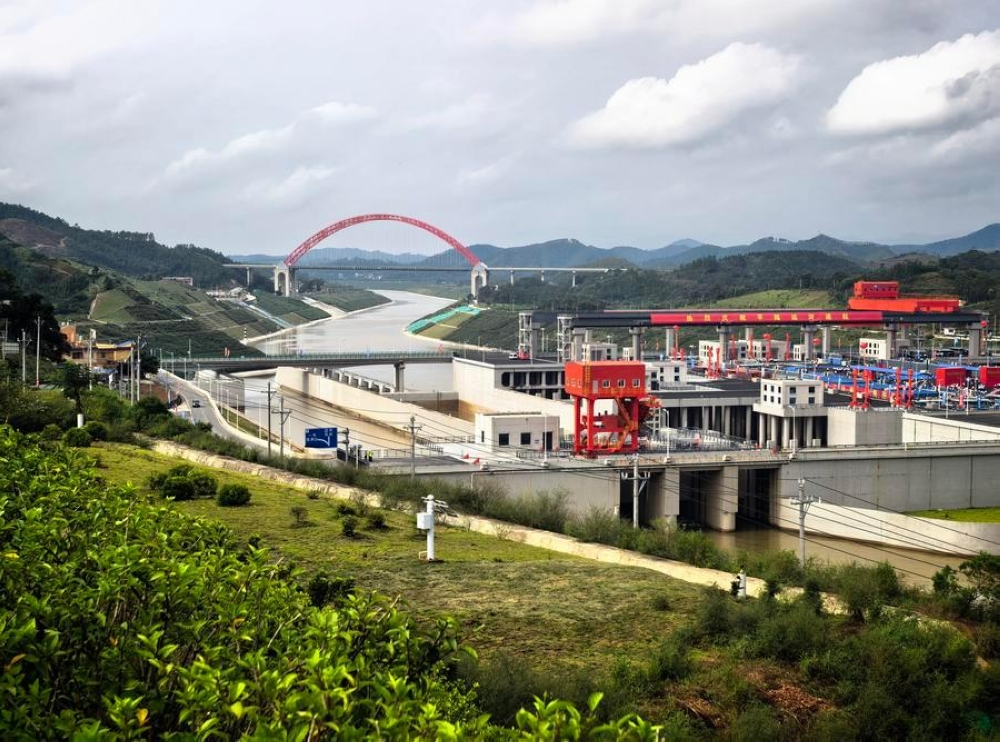
China has opened the Pinglu Canal, providing a new trade route from its southwest to Asean markets, reducing travel distance by over 560 kilometres.
The 134.2-kilometre canal, costing 72.7 billion yuan, is expected to cut logistics costs by 18 to 30 per cent and save 5 billion yuan annually.
The canal's completion, part of China's strategic trade initiatives, is likely to boost regional connectivity, trade efficiency, and supply-chain integration within China and Asean.
NANNING, Sept 24 — China opened the Pinglu Canal recently, giving its landlocked south-west a shortcut to the coast and overseas markets, particularly those in the Association of South-east Asian Nations (Asean), the country’s largest trading partner.
Built at a cost of 72.7 billion yuan (about RM43.8 billion), the 134.2-kilometer canal runs from Hengzhou, a county-level city in south China’s Guangxi Zhuang Autonomous Region, to the Beibu Gulf, the closest maritime outlet for much of south-west China.
The canal stretches along the New International Land-Sea Trade Corridor, a strategic trade route connecting China’s inland regions with Asean and other global markets.
It is the first river-to-sea canal project planned and coordinated at the national level since the founding of the People’s Republic of China in 1949.
Designed for vessels of up to 5,000 tonnes, the canal shortens the inland waterway journey for goods from south-west China to the sea by more than 560 kilometers compared with traditional routes through ports in Guangdong Province.
It is expected to reduce overall logistics costs by 18 to 30 per cent and save more than 5 billion yuan in transportation costs each year.
Lu Xinning, vice chairperson of the regional government of Guangxi, said the canal creates a new link between China’s market of 1.4 billion people and Asean’s nearly 700 million consumers.
Its impact, Lu said, could extend beyond the movement of goods, spurring new cross-border investment and deepening regional supply-chain integration.
The canal took over four years to build. Most of it was created by widening, deepening and straightening existing waterways, while a small section had to be excavated through dry land and mountainous terrain.
“There was no established model or ready-made precedent to follow,” said Cheng Yaofei, chairman of Guangxi Pinglu Canal Construction Co, Ltd.
One of the biggest engineering challenges was a 65-meter difference in water level, roughly the height of a 20-plus-story building.
Three navigation hubs, all featuring twin-line ship locks, were built to raise and lower vessels along the canal.
Engineers developed water-recycling systems at the hubs, enabling the canal to save more than 1 billion cubic meters of water annually.
Environmental protection was another priority during construction.
More than 98 per cent of the roughly 315 million cubic meters of earth and rock excavated during construction was reused. The canal also includes a fish passage more than 480 meters long and a dedicated wildlife crossing for land animals including leopard cats and squirrels.
The canal opens in the first year of China’s 15th Five-Year Plan period (2026-2030), as the world’s second-largest economy seeks to promote more coordinated regional development and further expand high-standard opening up — priorities outlined in the plan.
The new artery carries particular significance for China’s south-west, which has long lagged behind the more prosperous eastern coast and faced higher costs getting goods to seaports.
Coal, ore, grain, new-energy materials and auto parts from the region can now take a more direct route to overseas markets.
In the near term, the canal is likely to reshape existing cargo flows, with some freight shifting from road and rail to waterways and from the Pearl River Estuary to the Beibu Gulf, said Meng Shuang, an associate professor at Central University of Finance and Economics.
Over time, Meng said, the lower cost of reaching the sea could generate new trade, draw investment inland and reshape industrial development along the canal.
With China and Asean seeking closer economic ties and greater regional connectivity, experts say the Pinglu Canal could provide a new corridor for goods to flow in both directions between the vast Chinese and Asean markets.
China’s trade with Asean exceeded US$1 trillion for the first time last year. In the first seven months of 2026, total trade between the two sides reached US$744.41 billion, an increase of 24.7 per cent year on year, accounting for 21.8 per cent of China’s total foreign trade during this period.
BeBe Zhao, president of Singapore-China Integrated Developments (Guangxi) Pte Ltd, said the canal could bring new opportunities for businesses on both sides.
Asean products could move more efficiently into western China, while goods manufactured there could reach global markets through regional hubs such as Singapore.
“The new route will not only make trade more efficient but also strengthen Singapore’s role as a regional transshipment and trade hub,” Zhao said.
For Boonsub Panichakarn from the Faculty of Logistics and Digital Supply Chain at Naresuan University in Thailand, the canal’s significance goes beyond the distance it saves.
It lies in how much the canal can reduce logistics costs, time variability and uncertainty across the entire Asean-south-west China supply chain, he said. — Xinhua via The Borneo Post
Xi Jinping heads to Washington for Trump talks amid US-China tensions
Iran airlines suspend more international flights as US sanctions take effect
Indonesia identifies body of missing Anak Krakatau crew member, seven including journalists remain missing
What prolonged extreme heat means for Malaysia’s poultry: Growth slows, eggs dip, but no automatic shortage
UUCA replacement Bill expected to be tabled in December, says Zambry
ADB raises Malaysia’s 2026, 2027 growth forecasts to 4.9pc, 4.7pc
中国开通了平陆运河,为中国西南地区通往东盟市场开辟了一条新的贸易路线,缩短了560多公里的航程。
这条全长134.2公里的运河耗资727亿元人民币,预计将降低物流成本18%至30%,每年节省50亿元人民币。
作为中国战略贸易举措的一部分,该运河的建成有望提升中国和东盟内部的区域互联互通、贸易效率和供应链一体化。
南宁,9月24日——中国最近开通了平陆运河,为这个内陆西南地区提供了一条通往沿海和海外市场的捷径,特别是通往其最大贸易伙伴——东南亚国家联盟(东盟)市场的捷径。
这条全长 134.2 公里的运河耗资 727 亿元人民币(约合 438 亿令吉)建成,从中国南方广西壮族自治区的一个县级城市衡州市延伸至北部湾,北部湾是中国西南地区最近的出海口。
这条运河沿着新国际陆海贸易走廊延伸,这是一条连接中国内陆地区与东盟及其他全球市场的战略贸易通道。
这是自1949年中华人民共和国成立以来,第一个由国家层面规划和协调的江海运河工程。
该运河设计通行吨位达 5000 吨的船舶,与经由广东省港口的传统路线相比,将中国西南地区货物内河运输至海洋的航程缩短了 560 多公里。
预计这将降低整体物流成本18%至30%,每年节省超过50亿元人民币的运输成本。
广西壮族自治区人民政府副主席卢新宁表示,这条运河为拥有14亿人口的中国市场与拥有近7亿人口的东盟消费者之间开辟了一条新的联系。
卢表示,其影响可能不仅限于货物流动,还能刺激新的跨境投资,深化区域供应链一体化。
这条运河的建设耗时四年多。大部分是通过拓宽、加深和拉直现有水道而建成的,而一小部分则需要挖掘穿过旱地和山区地形。
“没有既定的模式或现成的先例可以遵循,”广西平路运河建设有限公司董事长程耀飞说。
最大的工程挑战之一是65米的水位差,这大约相当于一座20多层楼的高度。
为了升降运河上的船只,建造了三个航道枢纽,每个枢纽都设有双线船闸。
工程师们在枢纽站开发了水循环利用系统,使运河每年能够节约超过 10 亿立方米的水。
施工过程中,环境保护也是一项重点工作。
施工期间开挖的约3.15亿立方米土石中,超过98%得到了再利用。运河还包括一条超过480米长的鱼道,以及一条专为豹猫、松鼠等陆生动物设计的野生动物通道。
运河在中国“十五”规划(2026-2030年)的第一年开通,当时世界第二大经济体中国正寻求促进更加协调的区域发展,并进一步扩大高标准对外开放——这些都是该规划中提出的优先事项。
这条新干线对中国西南地区具有特别重要的意义,该地区长期以来落后于较为繁荣的东部沿海地区,并且面临着将货物运往海港的更高成本。
该地区的煤炭、矿石、粮食、新能源材料和汽车零部件现在可以走更直接的途径进入海外市场。
中央财经大学副教授孟爽表示,短期内,这条运河可能会重塑现有的货物运输格局,一些货物将从公路和铁路转移到水路,一些货物将从珠江口转移到北部湾。
孟表示,随着时间的推移,到达海洋的成本降低可能会催生新的贸易,吸引投资进入内陆,并重塑运河沿岸的工业发展。
专家表示,随着中国和东盟寻求更紧密的经济联系和更大的区域互联互通,平陆运河可以为中国和东盟这两个庞大市场之间的货物双向流动提供一条新的通道。
去年,中国与东盟的贸易额首次突破1万亿美元大关。2026年前七个月,双方贸易总额达到7444.1亿美元,同比增长24.7%,占中国同期对外贸易总额的21.8%。
新加坡-中国综合发展(广西)私人有限公司总裁赵碧碧表示,这条运河可能会为两岸企业带来新的机遇。
东盟产品可以更高效地进入中国西部市场,而中国制造的产品可以通过新加坡等区域枢纽进入全球市场。
赵表示:“这条新航线不仅将提高贸易效率,还将加强新加坡作为区域转运和贸易枢纽的作用。”
对于泰国那黎宣大学物流与数字供应链学院的 Boonsub Panichakarn 来说,这条运河的意义远不止于它节省的距离。
他表示,关键在于运河能在多大程度上降低整个东盟-中国西南供应链的物流成本、时间波动性和不确定性。——新华社,经《婆罗洲邮报》报道
中美关系紧张之际,习近平前往华盛顿与特朗普举行会谈
随着美国制裁生效,伊朗航空公司暂停更多国际航班
印度尼西亚确认了失踪的阿纳克喀拉喀托船员的尸体,包括记者在内的七人仍然失踪
持续高温对马来西亚家禽业的影响:生长速度放缓,产蛋量下降,但不会立即出现短缺。
赞布里表示,UUCA替代法案预计将于12月提交。
亚洲开发银行将马来西亚2026年和2027年的经济增长预期分别上调至4.9%和4.7%。