Trump calls for new nuclear pact as US-Russia treaty expires美俄核协议到期,特朗普呼吁缔结新的核协议
The Kremlin said Thursday it regretted the expiration of the last remaining U.S.-Russian nuclear arms pact, while Trump declared he wants a better deal.
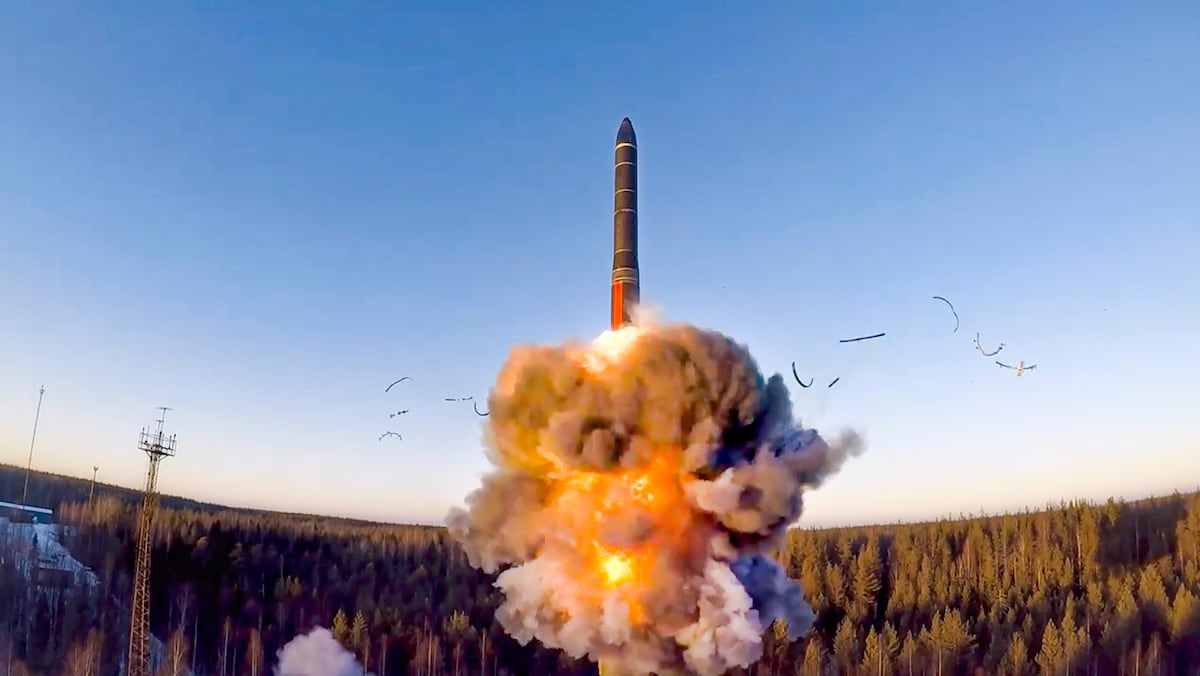
MOSCOW — The Kremlin said Thursday it regretted the expiration of the last remaining nuclear arms pact between Russia and the United States, while U.S. President Donald Trump declared he was against keeping its limits and wants a better deal.
The pact’s termination left no caps on the two largest atomic arsenals for the first time in more than a half-century, fueling fears of an unconstrained nuclear arms race.
Russian President Vladimir Putin last year declared his readiness to stick to the treaty’s limits for another year if Washington followed suit, but Trump has ignored the offer and argued that he wants China to be a part of a new pact — something Beijing has rebuffed.
“Rather than extend ‘NEW START’ (A badly negotiated deal by the United States that, aside from everything else, is being grossly violated), we should have our Nuclear Experts work on a new, improved, and modernized Treaty that can last long into the future,” Trump posted on his Truth Social network.
Putin discussed the pact’s expiration with Chinese leader Xi Jinping on Wednesday, noting the U.S. failure to respond to his proposal to extend its limits and saying that Russia “will act in a balanced and responsible manner based on thorough analysis of the security situation,” Kremlin adviser Yuri Ushakov said.
Kremlin spokesman Dmitry Peskov said Moscow views the treaty’s expiration Thursday “negatively” and regrets it. He said Russia will maintain its “responsible, thorough approach to stability when it comes to nuclear weapons,” adding that “of course, it will be guided primarily by its national interests.”
Peskov emphasized that “if we receive constructive responses, we will certainly conduct a dialogue.”
With the end of the treaty, Moscow “remains ready to take decisive military-technical measures to counter potential additional threats to the national security,” the Russian Foreign Ministry said.
Even as New START expires, the U.S. and Russia agreed Thursday to reestablish high-level, military-to-military dialogue following a meeting between senior officials from both sides in Abu Dhabi, the U.S. military command in Europe said. The link was suspended in 2021 as relations between Moscow and Washington grew increasingly strained before Russia sent troops into Ukraine in February 2022.
New START, signed in 2010 by then-President Barack Obama and his Russian counterpart, Dmitry Medvedev, restricted each side to no more than 1,550 nuclear warheads on no more than 700 missiles and bombers — deployed and ready for use. It was originally supposed to expire in 2021 but was extended for five more years.
The pact envisioned sweeping on-site inspections to verify compliance, although they stopped in 2020 because of the COVID-19 pandemic and never resumed.
In February 2023, Putin suspended Moscow’s participation, saying Russia couldn’t allow U.S. inspections of its nuclear sites at a time when Washington and its NATO allies have openly declared Moscow’s defeat in Ukraine as their goal. At the same time, the Kremlin emphasized it wasn’t withdrawing from the pact altogether, pledging to respect its caps on nuclear weapons.
In offering in September to abide by New START’s limits for a year to buy time for both sides to negotiate a successor agreement, Putin said the treaty’s expiration would be destabilizing and could fuel nuclear proliferation.
New START was the last remaining pact in a long series of agreements between Moscow and Washington to limit their nuclear arsenals, starting with the SALT I in 1972.
Trump wants China in a pact
Trump has indicated he would like to keep limits on nuclear weapons but wants to involve China in a potential new treaty.
U.S. Secretary of State Marco Rubio said Wednesday that Trump has made clear “in order to have true arms control in the 21st century, it’s impossible to do something that doesn’t include China because of their vast and rapidly growing stockpile.”
In his first term, Trump tried and failed to push for a three-way nuclear pact involving China. Beijing has balked at any restrictions on its smaller but growing nuclear arsenal, while urging the U.S. to resume nuclear talks with Russia.
“China’s nuclear forces are not at all on the same scale as those of the U.S. and Russia, and thus China will not participate in nuclear disarmament negotiations at the current stage,” Foreign Ministry spokesperson Lin Jian said Thursday.
He said China regrets the expiration of New START and calls on the U.S. to resume nuclear dialogue with Russia soon. Beijing, he said, urges the U.S. to respond positively to Moscow’s suggestion that the two sides continue observing the core limits of the treaty for now.
Peskov reaffirmed Thursday that Moscow respects Beijing’s position. He and other Russian officials have repeatedly argued that any attempt to negotiate a broader nuclear pact instead of a U.S.-Russian deal should also involve nuclear arsenals of NATO members France and the U.K.
Arms control advocates bemoaned the end of New START and warned of the imminent threat of a new arms race.
“If the Trump administration continues to stiff-arm nuclear arms control diplomacy with Russia and decides to increase the number of nuclear weapons in the U.S. deployed strategic arsenal, it will only lead Russia to follow suit and encourage China to accelerate its ongoing strategic buildup in an attempt to maintain a strategic nuclear retaliatory strike capability vis-a-vis the United States,” said Daryl Kimball, executive director of the Arms Control Association in Washington. “Such a scenario could lead to a years-long, dangerous three-way nuclear arms buildup.”
Associated Press writers Ken Moritsugu in Beijing and Aamer Madhani in Washington contributed to this report.
The Associated Press receives support for nuclear security coverage from the Carnegie Corporation of New York and Outrider Foundation. The AP is solely responsible for all content.
莫斯科——克里姆林宫周四表示,对俄罗斯和美国之间仅存的核武器条约到期感到遗憾,而美国总统唐纳德·特朗普则宣称,他反对维持该条约的限制,并希望达成更好的协议。
该条约的终止使得半个多世纪以来,美国最大的两个核武库首次失去了规模限制,加剧了人们对不受约束的核军备竞赛的担忧。
俄罗斯总统弗拉基米尔·普京去年曾表示,如果华盛顿也这样做,他准备再遵守该条约的限制一年,但特朗普无视了这一提议,并声称他希望中国加入一项新的条约——北京方面拒绝了这一提议。
特朗普在他的“真相社交网络”上发帖称:“与其延长‘新削减战略武器条约’(这是美国谈判达成的一项糟糕协议,而且除了其他所有问题之外,它还遭到了严重违反),我们应该让我们的核专家着手制定一项新的、改进的、现代化的条约,使其能够长期有效。”
克里姆林宫顾问尤里·乌沙科夫表示,普京周三与中国领导人习近平讨论了该条约到期的问题,指出美国没有回应他提出的延长条约期限的提议,并表示俄罗斯“将在对安全形势进行全面分析的基础上,以平衡和负责任的方式采取行动”。
克里姆林宫发言人德米特里·佩斯科夫表示,莫斯科对该条约周四到期持“负面”态度,并对此感到遗憾。他表示,俄罗斯将继续秉持“负责任、彻底的核武器稳定政策”,并补充说,“当然,俄罗斯的首要原则是维护国家利益”。
佩斯科夫强调,“如果我们收到建设性的回应,我们一定会展开对话。”
俄罗斯外交部表示,随着该条约的终止,莫斯科“仍然准备采取果断的军事技术措施,以应对国家安全可能面临的其他威胁”。
尽管《新削减战略武器条约》即将到期,但美国驻欧洲军方周四表示,美俄两国高级官员在阿布扎比会晤后,同意恢复高层军事对话。此前,由于莫斯科和华盛顿之间的关系日益紧张,双方的军事对话于2021年暂停,随后俄罗斯于2022年2月向乌克兰派兵。
2010年,时任美国总统奥巴马和俄罗斯总统梅德韦杰夫签署了《新削减战略武器条约》(New START),该条约限制双方拥有的核弹头数量不得超过1550枚,部署在不超过700枚导弹和轰炸机上的核弹头数量也不得超过700枚——且必须随时可以投入使用。该条约原定于2021年到期,但后来延长了五年。
该协议设想进行全面的现场检查以核实合规情况,但由于 COVID-19 疫情,这些检查在 2020 年停止,并且再也没有恢复。
2023年2月,普京暂停了莫斯科参与《俄乌条约》的进程,称在华盛顿及其北约盟国公开宣称以莫斯科在乌克兰的失败为目标之际,俄罗斯不能允许美国对其核设施进行核查。与此同时,克里姆林宫强调俄罗斯并未完全退出该条约,并承诺遵守条约中关于核武器数量的上限规定。
普京在9月份提出,愿意遵守《新削减战略武器条约》的限制一年,以便双方有时间谈判达成后续协议。他表示,该条约到期将造成不稳定,并可能助长核扩散。
新削减战略武器条约是莫斯科和华盛顿之间为限制其核武库而达成的一系列长期协议中最后一个仍然存在的条约,这些协议始于 1972 年的第一阶段限制战略武器条约。
特朗普希望与中国达成协议
特朗普曾表示,他希望维持对核武器的限制,但希望让中国参与一项潜在的新条约。
美国国务卿马可·卢比奥周三表示,特朗普已经明确表示,“为了在 21 世纪实现真正的军控,不可能不把中国包括在内,因为中国的军备储备庞大且增长迅速。”
特朗普在其第一任期内曾试图推动一项包含中国的三方核协议,但最终失败。北京方面一直反对对其规模虽小但不断增长的核武库施加任何限制,同时敦促美国恢复与俄罗斯的核谈判。
外交部发言人林健周四表示:“中国的核力量与美国和俄罗斯的核力量规模完全不在一个档次,因此中国现阶段不会参与核裁军谈判。”
他表示,中方对《新削减战略武器条约》的失效感到遗憾,并呼吁美国尽快恢复与俄罗斯的核对话。他还说,北京敦促美国积极回应莫斯科的建议,即双方目前应继续遵守该条约的核心限制。
佩斯科夫周四重申,莫斯科尊重北京的立场。他和俄罗斯其他官员一再强调,任何试图通过谈判达成更广泛的核协议(而非美俄协议)的尝试,都应将北约成员国法国和英国的核武库纳入其中。
军备控制倡导者对《新削减战略武器条约》的终止表示惋惜,并警告说,一场新的军备竞赛迫在眉睫。
“如果特朗普政府继续阻挠与俄罗斯的核军控外交,并决定增加美国部署的战略核武库中的核武器数量,只会导致俄罗斯效仿,并鼓励中国加快其正在进行的战略核武库建设,以维持对美国的战略核报复打击能力,”华盛顿军控协会执行主任达里尔·金博尔表示。“这种情况可能导致长达数年的危险的三方核武库建设。”
美联社北京撰稿人 Ken Moritsugu 和华盛顿撰稿人 Aamer Madhani 对本报告做出了贡献。
美联社的核安全报道得到了纽约卡内基基金会和Outrider基金会的支持。美联社对所有内容负全部责任。