China’s US$1.77b rice eel industry eyes global markets中国价值17.7亿美元的鳗鱼产业瞄准全球市场
WUHAN, Sept 24 — Across a patchwork of village ponds in central China, rows of floating cages ripple on the water.Beneath the surface, slender, snake-like rice eels twist through...
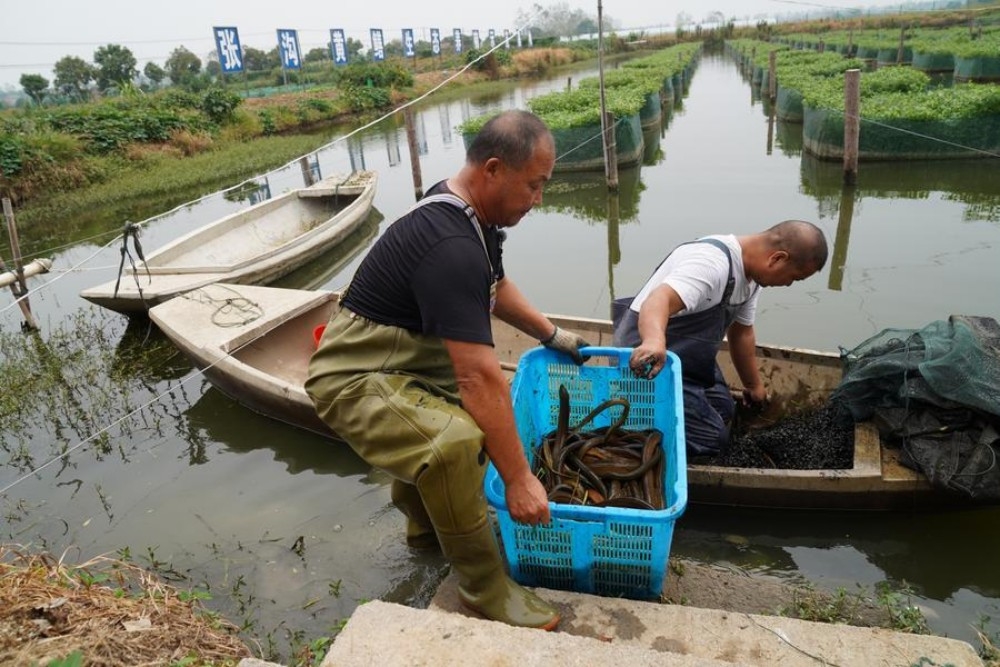
Xiantao in Hubei Province is a major rice eel farming hub, producing about a quarter of China's output and generating an annual output value of over 12 billion yuan (RM7.2 billion).
Advances in breeding techniques and aquaculture systems have enabled year-round production and increased survival rates of rice eels, aiding farmers in challenging weather conditions.
Xiantao has exported more than 125 tonnes of frozen and processed rice eel products, focusing on expanding into markets in Europe and North America with tailored products.
WUHAN, Sept 24 — Across a patchwork of village ponds in central China, rows of floating cages ripple on the water.
Beneath the surface, slender, snake-like rice eels twist through the nets — the fish are a common dish at Chinese meals and a big part of how local farmers make a living.
Also known as the Asian swamp eel, the slippery freshwater fish is still somewhat of a niche delicacy outside of Asia.
In China, however, it is widely consumed and has long been prized for its distinctive flavour and nutritional value.
The ponds are in Xiantao, a major hub for rice eel breeding and farming in Hubei Province.
The city now accounts for roughly one-quarter of China’s rice eel output, according to local industry figures.
The industry began to take shape more than three decades ago, when local farmers started experimenting with raising rice eels in cages.
Getting rice eel farming off the ground wasn’t always easy. When people saw how profitable it could be, producers all over China jumped in, creating an oversupply and sending prices tumbling. A lot of farming communities gave up, but Xiantao stuck with it.
“With much of our farmland converted into ponds, rice eel farming had become the only viable way forward,” said Zhu Chuanbao, Party secretary of Xianfeng Village in Zhanggou Town and president of the Xiantao rice eel industry association.
The village alone produces about one billion rice eels a year.
“That is enough to put Xianfeng’s rice eels on the table of nearly every household in China on average,” Zhu said.
The industry has helped lift villagers out of poverty and onto a path toward prosperity.
Xiantao is now home to China’s biggest rice eel processing enterprise and the largest rice eel trading market at the production site.
The city’s rice eel industry generates an annual output value of over 12 billion yuan (US$1.77 billion or RM7.2 billion).
The growth of this industry has been supported by the central government’s policies to advance rural revitalisation.
China aims to basically achieve modernisation by 2035, and that cannot happen without the modernisation of agriculture and rural areas.
“We are entering a new era of rice eel farming,” said Zhu.
Researchers at Huazhong Agricultural University in Wuhan, the provincial capital, and the Institute of Hydrobiology under the Chinese Academy of Sciences have worked with local producers to develop large-scale artificial breeding techniques and controlled-environment aquaculture systems.
These advances have reduced the industry’s dependence on seasonal cycles, making year-round production possible.
By allowing precise control of water quality and temperature, the systems help farmers cope with increasingly frequent extreme weather.
They also protect rice eels from predators, raising juvenile survival rates in the lab from 50 per cent to 90 per cent.
The real challenge isn’t just raising more rice eels. It’s about getting more people to try them, especially outside Asia where many folks are not as familiar with the fish.
That means tapping overseas markets. In the first half of this year, Xiantao exported more than 125 tonnes of frozen rice eels and processed rice eel products to more than 10 countries and regions, including North America, Australia, Japan, the Republic of Korea and South-east Asia.
“There are more than 60 million overseas Chinese, and rice eels are already widely accepted in East Asia and South-east Asia.
“We are now seeking to reach more consumers in Europe and North America by developing products suited to their tastes, including grilled rice eel and rice eel steaks,” Zhu said.
Rice eel farmers in Xiantao have built a digital platform covering the entire supply chain, from breeding and farming to feeding and processing.
Consumers can use it to trace products through every stage of production.
“Traceability gives Xiantao rice eels the confidence to reach consumers across China and around the world,” said Lu Huawei, a local government official.
Some farmers are already looking ahead to the next technological upgrade.
Xiao Tiebing is closely following the development of an unmanned boat by a local company in collaboration with leading Chinese universities.
Designed to automate repetitive tasks, the vessel can feed the fish and remove uneaten feed.
“I hope new technologies can further improve farming efficiency, just as earlier innovations have done, and help us earn more,” Xiao said. — Xinhua via The Borneo Post
Global stocks fall as bond yields surge, oil rises sharply
Ringgit opens lower against US dollar as Fed rate hike bets lift greenback
Johor entrepreneur turns RM8,000 into unmanned used clothing store
Former Tabung Haji COO Adi Azuan charged with receiving RM302,000 in house renovations
JPJ denies fake news on Rohingya driving licences, files MCMC report
AGC appeals High Court acquittal of teen in Bandar Utama schoolmate murder case
湖北省仙桃市是重要的稻鳗养殖中心,产量约占中国总产量的四分之一,年产值超过120亿元人民币(72亿令吉)。
育种技术和水产养殖系统的进步使得全年生产和提高米鳗的存活率成为可能,帮助农民应对恶劣的天气条件。
仙桃已出口超过125吨冷冻及加工鳗鱼产品,致力于通过定制产品拓展欧洲和北美市场。
武汉,9月24日——在中国中部,村庄池塘星罗棋布,一排排漂浮的笼子在水面上泛起涟漪。
水面之下,细长的蛇形稻鳗在渔网中穿梭——这种鱼是中国人餐桌上的常见菜肴,也是当地农民谋生的重要来源。
这种滑溜溜的淡水鱼又被称为亚洲沼泽鳗,在亚洲以外地区仍然是一种小众美味。
然而,在中国,它却广受欢迎,并因其独特的风味和营养价值而备受推崇。
这些池塘位于湖北省仙桃市,仙桃市是湖北省稻鳗养殖和养殖的主要中心。
据当地行业数据显示,该市目前约占中国鳗鱼总产量的四分之一。
该产业的雏形始于三十多年前,当时当地农民开始尝试在笼子里养殖稻鳗。
米鳗养殖起步并非一帆风顺。当人们看到米鳗养殖的丰厚利润后,全国各地的养殖户纷纷涌入,导致供应过剩,价格暴跌。许多养殖社区被迫放弃,但仙桃坚持了下来。
“由于我们的大部分农田都被改造成了池塘,养殖鳗鱼成了唯一可行的出路,”仙桃市张沟镇仙峰村党支部书记、仙桃市鳗鱼产业协会会长朱传宝说。
仅该村庄每年就生产约10亿条米鳗。
朱先生说:“这足以让咸丰的米鳗平均到中国几乎每个家庭的餐桌上。”
该行业帮助村民摆脱了贫困,走上了繁荣发展的道路。
仙桃现在是中国最大的鳗鱼加工企业所在地,也是该地区最大的鳗鱼交易市场所在地。
该市的鳗鱼养殖业年产值超过120亿元人民币(17.7亿美元或72亿令吉)。
该行业的发展得益于中央政府推进农村振兴的政策。
中国的目标是到 2035 年基本实现现代化,而没有农业和农村地区的现代化,这一目标是无法实现的。
“我们正在进入稻鳗养殖的新时代,”朱先生说。
位于省会武汉的华中农业大学和中国科学院水生生物研究所的研究人员与当地生产者合作,开发了大规模人工繁殖技术和可控环境水产养殖系统。
这些进步降低了该行业对季节性周期的依赖,使全年生产成为可能。
通过精确控制水质和温度,这些系统帮助农民应对日益频繁的极端天气。
它们还能保护米鳗免受捕食者的侵害,使实验室中幼鳗的存活率从 50% 提高到 90%。
真正的挑战不仅仅是养殖更多的米鳗,而是如何让更多的人尝试食用这种鱼,尤其是在亚洲以外的地区,那里的许多人对这种鱼并不熟悉。
这意味着要开拓海外市场。今年上半年,仙桃公司向北美、澳大利亚、日本、韩国、东南亚等10多个国家和地区出口了超过125吨冷冻米鳗及米鳗加工产品。
“海外华人超过6000万,稻田鳗鱼在东亚和东南亚地区已经广受欢迎。
朱先生表示:“我们现在正寻求通过开发适合欧洲和北美消费者口味的产品,例如烤鳗鱼和鳗鱼排,来吸引更多欧洲和北美的消费者。”
仙桃市的稻鳗养殖户建立了一个涵盖从养殖、饲养到饲料加工整个供应链的数字平台。
消费者可以利用它来追踪产品生产的每一个阶段。
“可追溯性让仙桃大米有信心走向中国乃至世界各地的消费者,”当地政府官员卢华伟表示。
一些农民已经在展望下一次技术升级了。
肖铁兵密切关注着一家本土公司与中国顶尖大学合作研发的无人船。
该船旨在实现重复性任务的自动化,可以喂鱼并清除未被吃掉的饲料。
“我希望新技术能够像之前的创新一样,进一步提高农业效率,帮助我们增加收入,”肖先生说。——新华社,婆罗洲邮报报道
全球股市下跌,债券收益率飙升,油价大幅上涨
由于市场预期美联储加息提振美元,令吉兑美元开盘走低。
柔佛州企业家用8000令吉打造无人二手服装店
前朝圣基金局首席运营官阿迪·阿祖安被控收受30.2万令吉用于房屋装修
陆路交通局否认有关罗兴亚人驾驶执照的虚假新闻,并向马来西亚通讯及多媒体委员会提交报告
总检察署就高等法院对万达镇同学谋杀案中青少年无罪判决提出上诉