New mRNA vaccines to be developed, produced in S’pore to develop expertise and prepare for Disease X新加坡将研发和生产新型mRNA疫苗,以积累专业知识并为应对X疾病做好准备。
Singapore is advancing mRNA influenza vaccine development to boost pandemic preparedness and support global vaccine manufacturing and rapid response capabilities. Read more at straitstimes.com.
新闻视频
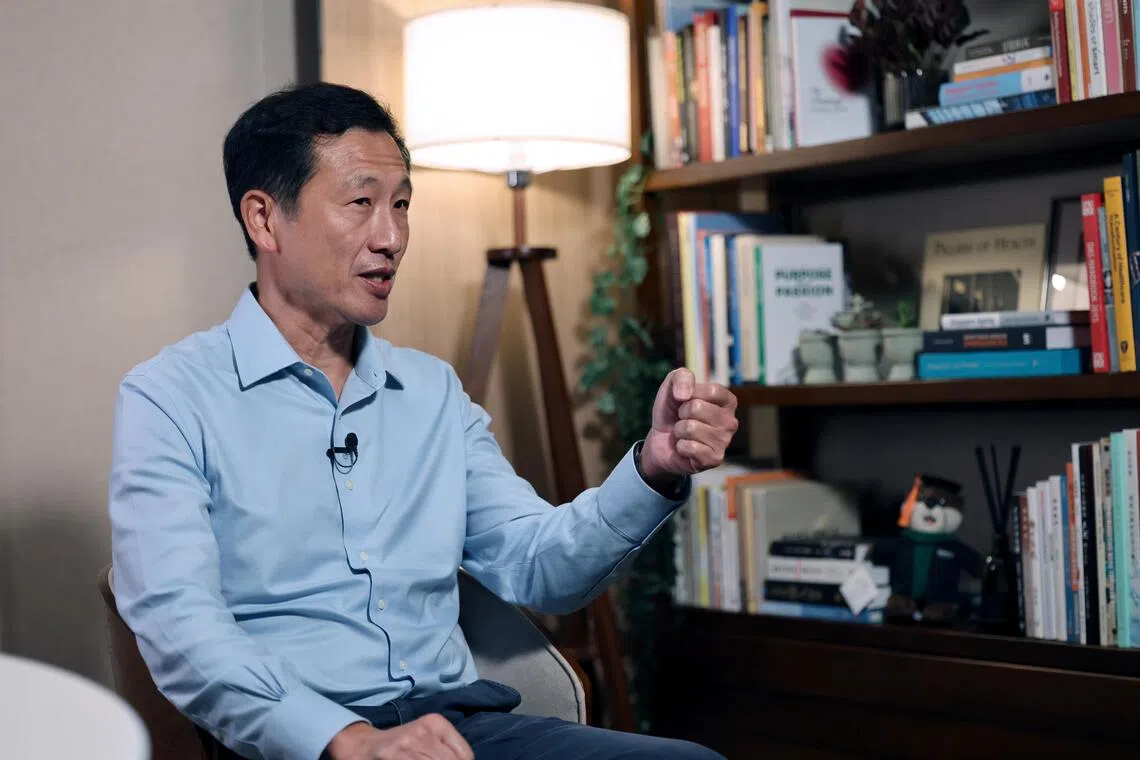
Health Minister Ong Ye Kung said the capability of developing and producing mRNA vaccines will help in Singapore’s pandemic preparedness.
PHOTO: LIANHE ZAOBAO
Published Sep 24, 2026, 12:00 PM
Updated Sep 24, 2026, 12:00 PM
Singapore aims to develop and produce new mRNA influenza vaccines to boost pandemic preparedness and vaccine manufacturing capabilities, says Health Minister Ong Ye Kung.
Singapore supports global vaccine efforts through partnerships with Hilleman Laboratories, major pharmaceutical companies, and plans for an RNA Readiness and Response global biofoundry.
The nation focuses on flexible, fast vaccine production platforms and international collaboration to ensure readiness for future pandemics, with continuous-flow manufacturing for large-scale mRNA vaccine output.
SINGAPORE - Singapore is looking at supporting the development and production of new mRNA influenza vaccines here.
This will greatly boost the nation’s pandemic preparedness and is key to helping it exit the next deadly contagion, said Health Minister Ong Ye Kung.
Messenger ribonucleic acid (mRNA) vaccines, which were first harnessed widely in the fight against Covid-19 , played a critical role in curbing its spread.
Such vaccines probably offer the greatest flexibility in development and time to market, Ong said in an interview with The Straits Times and Lianhe Zaobao.
mRNA vaccine technology allows vaccines to be designed and produced more quickly than traditional ones, making them a good option to combat a fast-spreading outbreak.
“I think it’s useful to try out something that’s mRNA platform, and you need to produce it for peacetime and keep the facility warm, he explained.
“So let’s produce a vaccine that is commonly used, influenza is a possibility.”
On pandemic preparedness, he said Singapore is “50 per cent” prepared and that “a lot more important work needs to be done”.
Critically, this means building up vaccine manufacturing and development capability.
“I think it is the most important because when you have a Disease X kind of pathogen in the next pandemic, the only way for the world to exit it is to have an effective vaccine.”
Disease X is the name given to a future epidemic caused by an unknown pathogen .
“With an effective vaccine, we can expect a similar experience to how we dealt with the Covid-19 outbreak - vaccinate, open up, then exit.”
He pointed to Singapore-based vaccine research and development organisation Hilleman Laboratories’ efforts in developing and producing vaccines against the rare Bundibugyo ebolavirus strain spreading rapidly in the Democratic Republic of the Congo.
“I hope this effort with Hilleman brings us to 60 per cent. If we can produce an influenza mRNA vaccine, I think we move even closer,” Ong added.
He said that Hilleman’s Singapore facility will produce material for early clinical trials, and if those succeed, its annual domestic production capacity could reach 12 million doses of drug product . Depending on needs, it will make arrangements for technology transfer to a larger-scale manufacturer in the region.
“This is preparedness in action: existing science, an operating facility that is kept warm and trusted partners to scale up - all of which shorten the path from threat to a full response. It offers us a possible approach in response to Disease X in future ,” Ong said .
But there is no such thing as being 100 per cent ready.
Singapore will never be fully prepared to deal with a next Disease X, he cautioned.
“There is always an unknown that you need to decide as and when things happen.”
Ong said Singapore is placing a bet based on science: to deal with the next totally new virus, the most probable vaccine platform against it will be mRNA.
“It offers the most flexible platform and fastest to market, fastest to develop, fastest to produce. And with AI technology, I think you can reiterate the solutions much faster,” he added.
Hilleman is a joint venture between MSD, the international trade name of American pharmaceutical giant Merck & Co, and British charitable foundation Wellcome Trust. In 2021, it moved its headquarters to Singapore, and its manufacturing facility was officially opened by Ong in November 2023 .
Health Minister Ong Ye Kung opened the Hilleman Laboratories’ current Good Manufacturing Practice facility in 2023. PHOTO: ST FILE
Health Minister Ong Ye Kung opened the Hilleman Laboratories’ current Good Manufacturing Practice facility in 2023.
On Sept 25, Ong, who is also Coordinating Minister for Social Policies, will attend the United Nations General Assembly High-Level Meeting in New York, the US.
He also spoke at a side event on Sept 23 organised by his ministry and Hilleman, where he similarly touched on how Singapore is preparing to support the pilot initiative to develop an mRNA influenza vaccine here.
“It serves a peacetime need, while building up our adaptable capability , and I hope Hilleman can support this ,” he said in his speech.
Health Minister Ong Ye Kung speaking at an event organised by his ministry and Hilleman on in New York Sept 23. PHOTO: MINISTRY OF HEALTH
Health Minister Ong Ye Kung speaking at an event organised by his ministry and Hilleman on in New York Sept 23.
PHOTO: MINISTRY OF HEALTH
In addition, Singapore is working with companies with capabilities across vaccine platforms and manufacturing. These include Sanofi, GSK, Moderna and Thermo Fisher Scientific.
The Republic is also exploring working with Wellcome Leap – the non-profit entity founded by Wellcome Trust – and the Coalition for Epidemic Preparedness Innovations (CEPI) to establish an RNA Readiness and Response (or R3) global biofoundry here, one of the few centres around the world.
The biofoundry’s model separates product development from production – an approach common in the semiconductor industry – and explores continuous-flow RNA manufacturing to reduce bottlenecks.
Ong said in the interview that he believed that the way large pharmaceutical companies produce new vaccines would be different from the Covid-19 outbreak where Pfizer, Moderna, Johnson & Johnson and AstraZeneca all launched their own vaccines separately.
When the next pandemic hits, Ong predicts that there will be a vaccine solution put forth by CEPI and its network of laboratories.
CEPI, a global foundation based in Oslo, London and Washington that funds vaccine development, aims to develop safe and effective vaccines within 100 days of identifying a new pandemic threat.
Singapore supports CEPI’s efforts through technical exchanges and research collaborations, as well as continued contributions to the coalition.
With CEPI leading efforts in vaccine development, Ong said, “what happens is the industry becomes more like the semiconductor industry. You have companies that just design the chip, like Nvidia, and you have got companies like TSMC that just produce the chip whatever the design is, and they are called foundries”.
The biofoundry’s continuous-flow production model allows its production volume to be much larger, even though very little space is needed.
Ong said, “We are talking about hundreds of millions or billions of doses a year. It is still very preliminary, but this is a project that we are working on as a biofoundry, and it will have the ability to produce mRNA vaccines.”
Since Covid-19, Singapore has made several changes to prepare for the next outbreak.
These include converting its community care facilities that housed Covid-19 patients to transitional care facilities and bringing private general practitioners into the public healthcare network; amending the Infectious Diseases Act; and setting up the Communicable Diseases Agency.
Ong said these were the “three big pieces” of local response, but two other pieces of international work were necessary too, as a pandemic will be an international event and a global threat.
“One is global surveillance, so that when it pops up, we know in the first instance as early as possible. Second is to build up vaccine manufacturing and vaccine development capability”, he added.
As a small market, Singapore is able to host some of the world’s most advanced vaccine manufacturing capability. “The vaccine manufacturer is quite assured that putting something in Singapore means most of its vaccines can be exported to the world and the region to help the world, and we wouldn’t impose things like export control,” Ong said.
“I mean, one week of production or maybe a few days of production is enough for the whole Singapore. The rest is for the region and the world... Singapore is a good place to put your investments and your capability, and that put us in a much more secure position.”
Pointing to the next pandemic as an evolutionary certainty, he said at the MOH-Hilleman event: “We should remember that while a virus is biological, a pandemic is never only a medical event. It is also political, economic and social.
“To prepare for Disease X, we must resist denial, stigma, unfairness and the temptation to retreat behind national borders when global co-operation is most needed. Instead, we must harness the constructive power of our unity of purpose. We need to co-operate with each other, place our confidence in science and put in place overlapping and complementary plans ahead of time.”
卫生部长王乙康表示,研发和生产mRNA疫苗的能力将有助于新加坡应对疫情。
图片来源:联合早报
发布于 2026 年 9 月 24 日下午 12:00
更新于2026年9月24日中午12:00
新加坡卫生部长王乙康表示,新加坡的目标是研发和生产新型mRNA流感疫苗,以提高应对疫情的准备能力和疫苗生产能力。
新加坡通过与 Hilleman Laboratories、主要制药公司合作,以及建立 RNA 准备和响应全球生物铸造厂的计划,支持全球疫苗工作。
该国致力于发展灵活、快速的疫苗生产平台和国际合作,以确保为未来的流行病做好准备,并采用连续流生产方式大规模生产mRNA疫苗。
新加坡——新加坡正考虑支持本地新型mRNA流感疫苗的研发和生产。
卫生部长王乙康表示,这将大大提高国家应对疫情的准备能力,是帮助国家摆脱下一次致命传染病的关键。
信使核糖核酸(mRNA)疫苗最初被广泛用于对抗新冠肺炎,在遏制新冠肺炎疫情传播方面发挥了关键作用。
Ong在接受《海峡时报》和《联合早报》采访时表示,这类疫苗在研发和上市时间方面可能具有最大的灵活性。
mRNA疫苗技术使得疫苗的设计和生产速度比传统疫苗更快,因此是应对快速传播的疫情的良好选择。
“我认为尝试一下 mRNA 平台是有用的,你需要为和平时期生产它,并保持设施温暖,”他解释说。
“所以,让我们研制一种常用的疫苗,流感疫苗就是一个选择。”
关于疫情应对准备,他表示新加坡已做好“50%”的准备,还有“更多重要的工作要做”。
至关重要的是,这意味着要建立疫苗生产和研发能力。
“我认为这是最重要的,因为在下一次大流行病中,当出现某种X疾病病原体时,世界摆脱困境的唯一方法就是拥有有效的疫苗。”
X 疾病是指由未知病原体引起的未来流行病的名称。
“有了有效的疫苗,我们可以期待类似应对新冠疫情的经验——接种疫苗、开放,然后退出。”
他指出,总部位于新加坡的疫苗研发机构 Hilleman Laboratories 正在努力研发和生产针对在刚果民主共和国迅速传播的罕见的 Bundibugyo 埃博拉病毒株的疫苗。
“我希望与希勒曼公司的合作能使我们的研发进度达到60%。如果我们能研制出流感mRNA疫苗,我认为我们离目标就更近了,”翁补充道。
他表示,希勒曼位于新加坡的工厂将生产早期临床试验所需的原料药,如果试验成功,其年国内产能可达1200万剂药品。根据实际需要,该公司还将安排将技术转让给该地区规模更大的生产商。
“这就是行动中的准备:现有的科学技术、保持运转的设施以及值得信赖的合作伙伴来扩大规模——所有这些都缩短了从威胁到全面应对的路径。它为我们未来应对X疾病提供了一种可能的方案,”翁说。
但根本不存在百分之百的准备。
他警告说,新加坡永远无法完全做好应对下一场“X疾病”的准备。
“总会有一些未知情况需要你根据实际情况随时做出决定。”
王乙康表示,新加坡正在基于科学进行押注:为了应对下一种全新的病毒,最有可能的疫苗平台将是mRNA。
“它提供了最灵活的平台,上市速度最快,开发速度最快,生产速度也最快。而且借助人工智能技术,我认为解决方案的迭代速度可以更快,”他补充道。
Hilleman是美国制药巨头默克公司(Merck & Co.)的国际贸易名称MSD与英国慈善基金会惠康基金会(Wellcome Trust)的合资企业。2021年,该公司将其总部迁至新加坡,其生产设施于2023年11月由Ong正式揭幕。
卫生部长王乙康于2023年为希勒曼实验室(Hilleman Laboratories)目前的良好生产规范(GMP)设施揭幕。(图片:海峡时报档案)
卫生部长王乙康于 2023 年为 Hilleman Laboratories 目前的良好生产规范设施揭幕。
9月25日,兼任社会政策统筹部长的王乙康将出席在美国纽约举行的联合国大会高级别会议。
9月23日,他还出席了由他的部门和希勒曼公司联合举办的一场边会,会上他同样谈到了新加坡如何准备支持在本地开发mRNA流感疫苗的试点计划。
他在演讲中说:“这既满足了和平时期的需求,又增强了我们的适应能力,我希望希勒曼能够支持这一点。”
卫生部长王乙康于9月23日在纽约出席由卫生部和希勒曼公司联合举办的活动并发表讲话。图片:卫生部
卫生部长王乙康于9月23日在纽约出席由卫生部和希勒曼公司联合举办的活动并发表讲话。
图片来源:卫生部
此外,新加坡正与多家在疫苗平台和生产方面拥有强大能力的公司合作,其中包括赛诺菲、葛兰素史克、莫德纳和赛默飞世尔科技。
共和国还在探索与惠康基金会创立的非营利实体惠康飞跃组织(Wellcome Leap)以及流行病防范创新联盟(CEPI)合作,在此建立一个 RNA 准备和响应(或 R3)全球生物铸造厂,这是世界上为数不多的中心之一。
该生物铸造厂的模式将产品开发与生产分开——这是半导体行业常见的做法——并探索连续流 RNA 制造以减少瓶颈。
Ong在采访中表示,他认为大型制药公司生产新疫苗的方式将与新冠肺炎疫情爆发时不同,当时辉瑞、Moderna、强生和阿斯利康都分别推出了自己的疫苗。
Ong预测,当下一次疫情来袭时,流行病防范创新联盟(CEPI)及其实验室网络将会提出疫苗解决方案。
CEPI是一个总部位于奥斯陆、伦敦和华盛顿的全球性基金会,致力于资助疫苗研发,其目标是在发现新的流行病威胁后的100天内研发出安全有效的疫苗。
新加坡通过技术交流和研究合作以及对联盟的持续贡献来支持 CEPI 的工作。
Ong表示,随着CEPI在疫苗研发方面发挥领导作用,“疫苗行业会变得越来越像半导体行业。有些公司只负责设计芯片,比如英伟达;而有些公司,比如台积电,则负责生产芯片,无论设计如何,它们被称为代工厂。”
该生物铸造厂的连续流生产模式使其生产规模更大,而所需的空间却非常小。
Ong表示:“我们谈论的是每年数亿甚至数十亿剂疫苗。目前还处于非常初步的阶段,但这是我们作为生物铸造厂正在开展的一个项目,它将具备生产mRNA疫苗的能力。”
自新冠疫情爆发以来,新加坡已做出多项改变,为应对下一次疫情做好准备。
这些措施包括将收容新冠肺炎患者的社区护理设施改建为过渡护理设施,并将私人全科医生纳入公共医疗保健网络;修订《传染病法》;以及设立传染病机构。
Ong表示,这三点是本地应对措施的“三大支柱”,但还需要另外两项国际合作,因为疫情将成为国际事件和全球威胁。
他补充说:“一是建立全球监测体系,这样一旦出现疫情,我们就能尽早发现。二是提升疫苗生产和研发能力。”
新加坡虽然市场规模较小,却拥有全球最先进的疫苗生产能力。“疫苗生产商非常有信心,在新加坡生产意味着其大部分疫苗可以出口到世界各地和本地区,为世界做出贡献,而且我们不会实施出口管制之类的措施。”王乙康说道。
“我的意思是,一周甚至几天的产量就足以满足整个新加坡的需求。其余的产量则供应区域乃至全球……新加坡是投资和发挥自身能力的理想之地,这使我们处于更加稳固的地位。”
他在卫生部-希勒曼活动上指出下一次大流行病是进化的必然结果,他说:“我们应该记住,虽然病毒是生物性的,但大流行病绝不仅仅是医疗事件。它还涉及政治、经济和社会问题。”
“为了应对X疾病,我们必须抵制否认、污名化、不公,以及在全球合作最为迫切之时,拒绝退守国界的诱惑。相反,我们必须发挥团结一致的建设性力量。我们需要彼此合作,相信科学,并提前制定相互重叠、互补的计划。”