Hajiji: Sabah setting high standards to protect carbon credit reputation哈吉吉:沙巴州制定高标准以保护碳信用声誉
KOTA KINABALU, Sept 24 — Sabah will not permit unvetted projects or speculative trading to undermine its emerging carbon market, Chief Minister Datuk Seri Panglima Hajiji Noor...
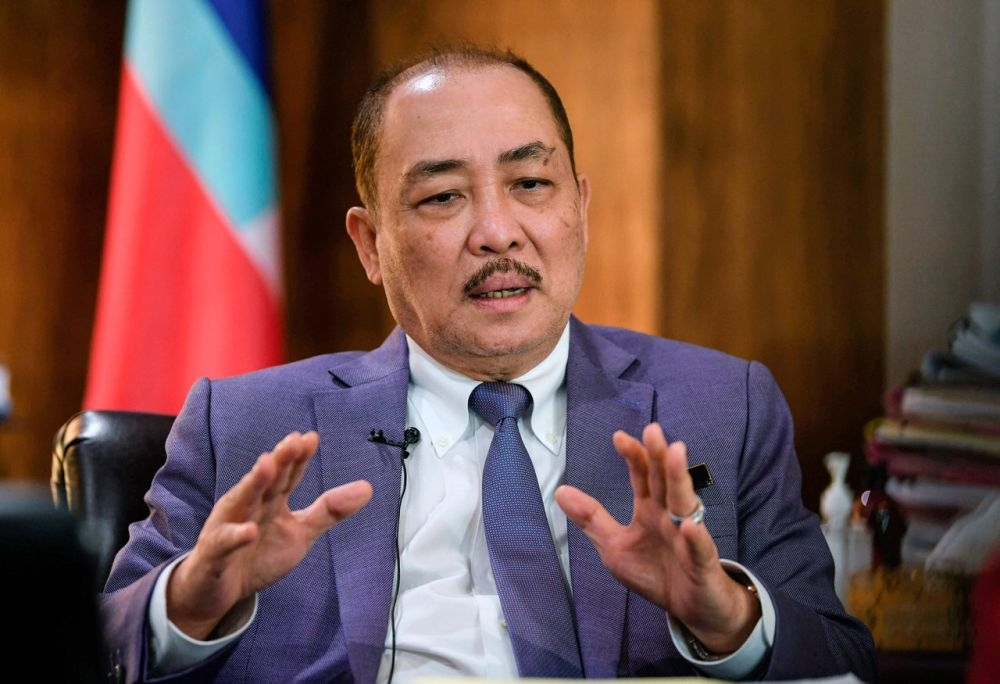
Sabah Chief Minister Datuk Seri Panglima Hajiji Noor emphasized the importance of maintaining stringent regulatory standards to safeguard the credibility of Sabah's emerging carbon market and foster investor confidence.
Speaking at the Sabah Carbon Market Forum, Hajiji outlined plans for the Sabah Climate Change and Carbon Governance Enactment 2025, aiming to provide legal certainty for carbon rights and establish operational rules.
The enactment will focus on a transparent, coordinated regulatory framework to streamline carbon-related activities while encouraging innovative financing solutions.
Sabah also intends to diversify its carbon asset portfolio, emphasizing projects like the Kuamut Rainforest Conservation Project to ensure sustainable economic returns.
KOTA KINABALU, Sept 24 — Sabah will not permit unvetted projects or speculative trading to undermine its emerging carbon market, Chief Minister Datuk Seri Panglima Hajiji Noor said today, insisting that strong regulatory standards are vital to secure long-term investor confidence.
Hajiji warned that poorly structured initiatives, exaggerated climate claims, undervalued natural resources, and the exclusion of native indigenous communities would severely damage the credibility of Sabah’s carbon credits on the global stage.
“It is therefore in Sabah’s commercial interest to uphold the highest standards of environmental, social, financial, and governance integrity. Buyers will demand full transparency. We will not allow unvetted projects to be rushed to market or traded on speculation.
“Through strong regulatory discipline, we will protect Sabah’s reputation and brand,” he said.
His speech was delivered by Deputy Chief Minister II and State Finance Minister Datuk Seri Masidi Manjun during the Sabah Carbon Market Forum here today.
Hajiji highlighted that the forthcoming Sabah Climate Change and Carbon Governance Enactment 2025 will provide legal certainty by officially recognising the state government’s ownership of carbon rights, subject to statutory provisions.
The legislation will also establish clear operating rules for carbon-related activities, ranging from project approvals to credit trading.
While no enforcement date has been set, Hajiji noted that the framework will provide investors with a streamlined, coordinated regulatory gateway for project licensing and carbon registry entries.
Under the enactment, the newly established Sabah Climate Change Action Council will steer state climate policy, draft the state carbon budget for cabinet approval and gazettement, and harmonize inter-agency cooperation between state and federal authorities.
The council will be supported operationally and technically by a dedicated Climate Registry and Inventory Centre.
Acknowledging that high upfront development costs pose a significant hurdle to early-stage carbon projects, Hajiji called on the banking and investment sectors to step forward with innovative capital solutions.
“We therefore challenge the financial sector to develop or co-develop practical financing frameworks that can bridge this gap,” he said, directing his appeal to major market players including CIMB Bank Berhad, Bursa Malaysia, and institutional investors.
Hajiji stressed that Sabah must balance project credibility, commercial demand, and structured financing to ensure that nature conservation translates into sustainable economic returns.
He added that the state is actively pursuing a diversified portfolio of carbon assets, targeting high-potential sectors including the blue economy, sustainable agriculture, renewable energy, green technology, and carbon capture and storage (CCS).
Citing tangible progress, Hajiji cited the Kuamut Rainforest Conservation Project, which encompasses approximately 83,381 hectares of lowland and hill dipterocarp forests, as a premier example of Sabah’s potential. The project is projected to generate average emissions reductions of over 800,000 tonnes of carbon dioxide equivalent annually.
Negeri Sembilan MB coy over coerced signing allegation, claims ‘overtaken by events’
Only RM6.7m recovered from RM2.97b scams, Lim Guan Eng demands urgent action
Negeri Sembilan MB rejects Anwar’s ‘rude, uncivilised’ claim, says exco acted within role
沙巴首席部长拿督斯里邦里玛哈吉吉·诺尔强调,维持严格的监管标准对于维护沙巴新兴碳市场的信誉和增强投资者信心至关重要。
哈吉吉在沙巴碳市场论坛上发表讲话,概述了《2025 年沙巴气候变化和碳治理法案》的计划,旨在为碳权利提供法律确定性并建立操作规则。
该法案将着重建立透明、协调的监管框架,以简化与碳相关的活动,同时鼓励创新的融资解决方案。
沙巴州还计划使其碳资产组合多元化,重点发展库阿穆特雨林保护项目等项目,以确保可持续的经济回报。
哥打基纳巴卢,9月24日讯——沙巴首席部长拿督斯里邦里玛哈吉吉诺尔今日表示,沙巴不会允许未经审查的项目或投机性交易破坏其新兴的碳市场,并强调强有力的监管标准对于确保投资者长期信心至关重要。
哈吉吉警告说,结构不合理的倡议、夸大的气候声明、低估的自然资源以及将土著社区排除在外,将严重损害沙巴碳信用额在全球舞台上的信誉。
因此,维护环境、社会、财务和治理方面的最高诚信标准符合沙巴的商业利益。买家会要求完全透明。我们绝不允许未经审查的项目仓促上市或进行投机交易。
“我们将通过严格的监管纪律来保护沙巴的声誉和品牌,”他说。
今天,沙巴州副首席部长兼州财政部长拿督斯里马西迪·曼俊在沙巴碳市场论坛上宣读了他的讲话。
哈吉吉强调,即将出台的《2025 年沙巴气候变化和碳治理法令》将通过正式承认州政府对碳排放权的拥有权(受法定条款约束)来提供法律确定性。
该立法还将为碳相关活动制定明确的操作规则,涵盖从项目审批到碳信用交易等各个方面。
虽然尚未确定实施日期,但哈吉吉指出,该框架将为投资者提供一个简化、协调的监管渠道,用于项目许可和碳排放登记。
根据该法令,新成立的沙巴气候变化行动委员会将指导州气候政策,起草州碳预算供内阁批准和公布,并协调州和联邦政府之间的机构间合作。
理事会将在运营和技术支持方面得到专门的气候登记和清单中心的帮助。
哈吉吉承认高昂的前期开发成本对早期碳项目构成重大障碍,他呼吁银行和投资部门提出创新的资本解决方案。
“因此,我们呼吁金融界制定或共同制定切实可行的融资框架,以弥合这一差距,”他说道,并向包括 CIMB 银行、马来西亚证券交易所和机构投资者在内的主要市场参与者发出呼吁。
哈吉吉强调,沙巴必须平衡项目信誉、商业需求和结构化融资,以确保自然保护转化为可持续的经济回报。
他还补充说,该州正在积极寻求多元化的碳资产组合,目标是包括蓝色经济、可持续农业、可再生能源、绿色技术以及碳捕获和储存(CCS)在内的高潜力行业。
哈吉吉指出,库阿穆特雨林保护项目是沙巴潜力的一个杰出例证,该项目涵盖约83,381公顷的低地和山地龙脑香林,并已取得切实进展。该项目预计每年可减少超过80万吨二氧化碳当量排放。
森美兰州务大臣对胁迫签约指控保持沉默,称“事态发展已超出预期”。
林冠英要求采取紧急行动,此前仅追回29.7亿令吉诈骗案中的670万令吉。
森美兰州务大臣驳斥安华“粗鲁无礼”的指控,称行政议员的行为符合其职责范围。