Market discipline first, taxpayer support last for AirAsia’s woes — Jane Yu解决亚航困境,首先应考虑市场纪律,其次才是纳税人的支持——简·于
SEPTEMBER 15 — For weeks, a government-appointed review of AirAsia’s finances has raised one question: will the government eventually be asked to bail it out? AirAsia CEO Tony...
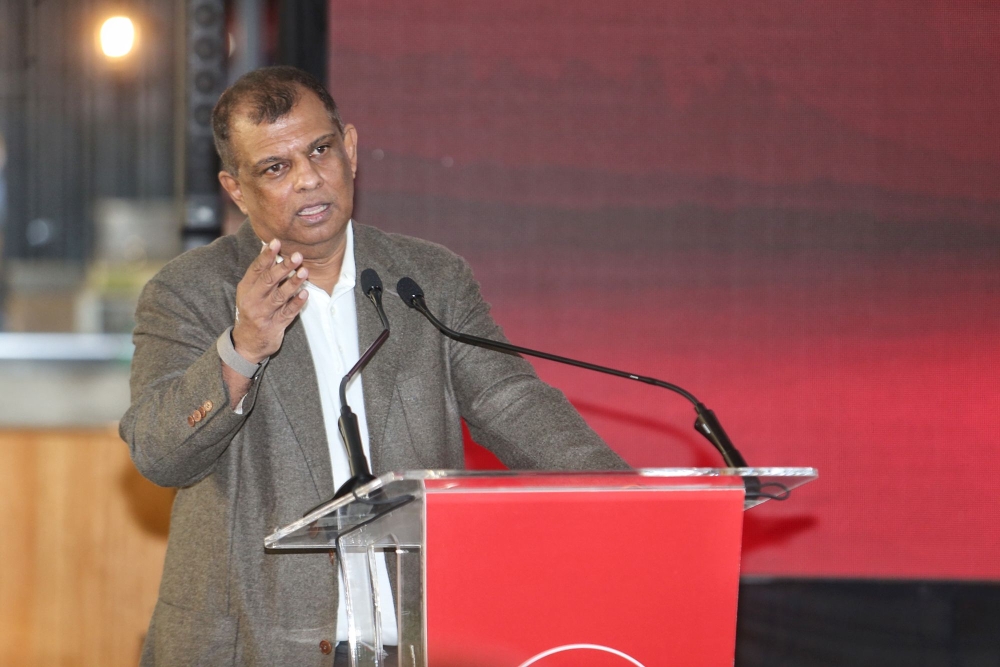
The article discusses the financial challenges facing AirAsia, including its significant debt, recent losses due to high fuel prices, and asset sales.
While CEO Tony Fernandes asserts that AirAsia does not need a government bailout and can manage its finances privately, the government's preparations suggest underlying concerns.
The debate centers on whether AirAsia is "too big to fail," given its substantial market share and impact on Malaysia's aviation sector.
However, the article argues that public financing should be a last resort, focusing on preserving industry functions rather than the company itself, advocating for market-driven solutions and careful consideration of any potential intervention.
SEPTEMBER 15 — For weeks, a government-appointed review of AirAsia’s finances has raised one question: will the government eventually be asked to bail it out? AirAsia CEO Tony Fernandes has pushed back, saying AirAsia does not need a bailout and can sort out its financing privately.
As a taxpayer, that is reassuring. But it does not settle the issue.
If everything is under control, why is the government preparing for the possibility that it is not?
AirAsia may insist that it does not need rescuing, but there are clear signs that the airline is under financial pressure.
AirAsia’s current problems did not appear overnight. Fuel prices have certainly hurt. The airline said average jet fuel prices reached US$183 per barrel in the second quarter, contributing to a RM830.5 million quarterly loss.
But the group was already restructuring hundreds of millions of dollars in debt at the start of the year, before the latest fuel shock. In January, it was targeting US$500 million to US$600 million in debt restructuring. It then raised about US$300 million in March to extend debt tenures and reduce principal obligations.
Now, it is seeking up to US$1 billion from international debt markets and RM700 million locally. As of June 30, it had RM18.4 billion in current liabilities and RM954 million in cash.
Analysts quoted by The Star suggested the airline’s debt-to-equity ratio was 4.7 times, compared with 1.0 times for most top Asian carriers – meaning it carries significantly more debt relative to equity. It has less room to absorb losses, and another shock could hurt more because its balance sheet has less cushion.
Most strikingly, AirAsia has sold six newly delivered A321neo aircraft since last year without putting them into service. That matters, because aircraft are not easy to come by.
Thanks to a supply chain crisis, the International Air Transport Association says airlines may wait up to seven years for a new plane. According to analysts, selling scarce new aircraft suggests that the airline is in urgent need of cash.
That does not mean AirAsia will collapse tomorrow. But it does make it harder to dismiss the government’s concern as mere overreaction.
While concern is warranted, it should not be overblown. The problem is that public debate keeps circling back to whether AirAsia is too big to fail. That is jumping the gun: a full collapse is the extreme case, and that is rarely how a struggling company’s story actually plays out.
Fernandes is right that no single airline can replace AirAsia overnight. The Civil Aviation Authority of Malaysia estimates that AirAsia accounted for 33.7 per cent of total passenger traffic in the first quarter of 2026, with Malaysia Airlines second at 17.1 per cent. Any major disruption would affect fares, tourism, jobs and connectivity.
But that does not mean the entire 33.7 per cent is suddenly at risk, unless AirAsia’s finances are far worse than they currently appear.
So if AirAsia has taken on too much, let it scale down. If it has assets that others can use more profitably, let them be sold. Slots and traffic rights can be reassigned to other airlines according to the relevant rules. Lessors can redeploy aircraft. Workers can move to other operators.
The immediate practical question is how much capacity the market can absorb as AirAsia adjusts, and how the government can best facilitate that without disruption. If AirAsia sheds some capacity over time, Batik Air, Malaysia Airlines and other carriers may be able to pick up parts of it where it makes commercial sense.
That is a very different problem from trying to replace the entire airline at once, and this distinction matters. It is a reminder not to treat “too big to fail” as a conclusion before we know what is actually at stake.
Public financing should be the last step
AirAsia is big enough that the government cannot ignore it. That is different from saying every problem AirAsia faces becomes a national problem.
The government’s job is not to “save the company”, but to “protect what the company does” – the routes, the jobs and the competition that has kept flights cheap. Those are not automatically the same thing.
If the airline trims capacity, sells assets or becomes smaller, that may be painful without being catastrophic. The case for government intervention becomes stronger only where the fallout cannot be reasonably commercially absorbed.
Right now, there is no bailout on the cards. But if taxpayers are eventually asked to help, the support cannot simply preserve the status quo. Any rescue should ensure that shareholders and creditors bear an appropriate share of the losses, rather than shifting those losses onto taxpayers. Governance and management changes should be considered. There should also be clear restructuring milestones and a credible path back to sustainable profitability.
Malaysia Airlines itself is the obvious precedent. It went through years of painful restructuring before returning to profitability.
Until AirAsia’s problems are shown to be genuinely catastrophic, we should be careful about treating every reduction in capacity as a systemic “too big to fail” crisis. A smaller AirAsia is not the same as no AirAsia, and gradual retrenchment is something markets are built to absorb.
Let the market work.
* This is the personal opinion of the writer or publication and does not necessarily represent the views of Malay Mail .
Malaysia is accelerating to 5.7pc economic growth in 2026 with Q4 projected to hit 5.9pc — Paolo Casadio and Geoffrey Williams
When money runs out before the month does — Nurul Fardini Zakaria
Measles is making a comeback. Will we end it for good? — Saia Ma’u Piukala
Malaysia, China agree on proposed ECRL extension to Rantau Panjang, says Anwar
Tengku Zafrul asks N. Sembilan MB to name who allegedly forced him to sign proclamation
Former Petronas manager met Petros official before job interview, court told
文章探讨了亚洲航空面临的财务挑战,包括其巨额债务、近期因燃油价格高企而造成的亏损以及资产出售。
尽管首席执行官托尼·费尔南德斯坚称亚航不需要政府救助,可以自行管理财务,但政府的准备工作表明其背后存在一些担忧。
争论的焦点在于,鉴于亚航在马来西亚航空业的巨大市场份额和影响力,它是否“大到不能倒”。
然而,文章认为公共融资应该是最后的手段,重点在于保护行业功能而不是公司本身,提倡市场驱动的解决方案,并认真考虑任何潜在的干预措施。
9月15日——数周以来,政府委派的对亚航财务状况的审查引发了一个问题:政府最终是否会被要求出手救助亚航?亚航首席执行官托尼·费尔南德斯对此予以反驳,称亚航不需要政府救助,可以通过私下解决融资问题。
作为纳税人,这令人感到安心。但这并不能解决问题。
如果一切都在掌控之中,政府为何还要为可能失控的情况做准备?
亚洲航空或许会坚称自己不需要救助,但种种迹象表明,该航空公司正面临财务压力。
亚航目前的困境并非一朝一夕形成。燃油价格上涨无疑是主要原因。该航空公司表示,第二季度航空燃油平均价格达到每桶183美元,导致当季亏损8.305亿令吉。
但早在年初,也就是最近这次燃油价格冲击之前,该集团就已经开始重组数亿美元的债务。1月份,其目标是重组5亿至6亿美元的债务。随后,在3月份,该集团筹集了约3亿美元,用于延长债务期限和减少本金。
目前,该公司正寻求从国际债务市场筹集至多10亿美元,并在本地筹集7亿令吉。截至6月30日,该公司流动负债为184亿令吉,现金为9.54亿令吉。
《星报》援引分析师的话指出,该航空公司的负债权益比为4.7倍,而大多数亚洲顶级航空公司的负债权益比仅为1.0倍——这意味着该航空公司的负债相对于权益而言明显过高。其承受损失的空间较小,如果再次受到冲击,由于资产负债表缓冲能力有限,损失可能会更大。
最引人注目的是,亚航自去年以来已售出六架新交付的A321neo飞机,但并未投入运营。这意义重大,因为飞机资源十分紧缺。
由于供应链危机,国际航空运输协会表示,航空公司可能需要等待长达七年才能获得新飞机。分析人士认为,出售稀缺的新飞机表明航空公司急需资金。
但这并不意味着亚航明天就会倒闭。但这确实让人更难将政府的担忧仅仅视为反应过度。
虽然担忧不无道理,但也不应过分夸大。问题在于,公众辩论总是围绕着亚航是否“大到不能倒”这个问题展开。这种说法未免操之过急:彻底破产只是极端情况,而一家苦苦挣扎的公司最终很少会走到那一步。
费尔南德斯说得对,没有任何一家航空公司能在一夜之间取代亚航。马来西亚民航局估计,到2026年第一季度,亚航的客运量占马来西亚总客运量的33.7%,马来西亚航空位居第二,占17.1%。任何重大中断都会影响票价、旅游业、就业和交通连接。
但这并不意味着全部 33.7% 的股份都突然面临风险,除非亚航的财务状况比目前看起来要糟糕得多。
因此,如果亚航承担了过多的业务,就应该缩减规模。如果它拥有其他航空公司可以更有效地利用的资产,就应该出售。航班时刻和航权可以根据相关规定重新分配给其他航空公司。租赁公司可以重新部署飞机。员工可以转到其他航空公司。
眼下最实际的问题是,随着亚航调整运力,市场能够吸收多少,以及政府如何才能在不造成混乱的情况下最好地促成这一调整。如果亚航逐渐削减部分运力,巴迪克航空、马来西亚航空和其他航空公司或许能够在商业上合理的范围内接手部分运力。
这与试图一次性替换整个航空公司是截然不同的问题,而这种区别至关重要。它提醒我们,在真正了解利害关系之前,不要把“大到不能倒”当作结论。
公共融资应该是最后一步。
亚航规模庞大,政府无法忽视。但这并不意味着亚航遇到的每一个问题都会演变成国家问题。
政府的职责不是“拯救公司”,而是“保护公司所经营的产业”——包括航线、就业岗位以及维持机票低廉的竞争。这两者并非必然相同。
如果航空公司削减运力、出售资产或缩小规模,虽然可能会带来一些痛苦,但不会造成灾难性后果。只有当由此产生的负面影响无法通过商业手段合理消化时,政府干预的理由才更加充分。
目前,政府尚未出台任何救助方案。但如果最终需要纳税人出手相助,这种支持绝不能仅仅维持现状。任何救助方案都应确保股东和债权人承担适当的损失份额,而不是将损失转嫁给纳税人。此外,还应考虑公司治理和管理方面的改革。同时,还应制定明确的重组里程碑,并制定切实可行的恢复可持续盈利能力的路径。
马来西亚航空公司本身就是一个显而易见的先例。它经历了多年的痛苦重组才恢复盈利。
在亚航的问题被证实确实具有灾难性之前,我们应该谨慎对待每一次运力削减,不要将其视为系统性的“大到不能倒”危机。规模缩小的亚航并不等同于亚航的消失,而市场机制本身也能够消化这种逐步的收缩。
让市场发挥作用。
* 这是作者或刊物的个人观点,并不一定代表《马来邮报》的观点。
马来西亚经济增长速度正在加快,预计到2026年将达到5.7%,第四季度预计增速将达到5.9%——保罗·卡萨迪奥和杰弗里·威廉姆斯
当钱在月底前就用完了——努鲁尔·法尔迪尼·扎卡里亚
麻疹卷土重来。我们能彻底根除它吗?——赛亚·毛·皮乌卡拉
安瓦尔表示,马来西亚和中国就东海岸铁路(ECRL)延长至兰道班让(Rantau Panjang)的提议达成一致
东姑扎夫鲁要求森美兰议员说出谁强迫他签署公告
法庭获悉,前马来西亚国家石油公司经理在求职面试前曾与该公司官员会面。