Over 80,000 finance workers to get AI training by 2028 as industry launches job transformation initiative到2028年,超过8万名金融从业人员将接受人工智能培训,这是该行业启动工作转型计划的一部分。
23 financial institutions have committed to training their entire Singapore workforce in critical artificial intelligence skills by 2028 through programmes recognised by the Institute of Banking and Finance.
23 financial institutions have committed to training their entire Singapore workforce in critical artificial intelligence skills by 2028 through programmes recognised by the Institute of Banking and Finance.
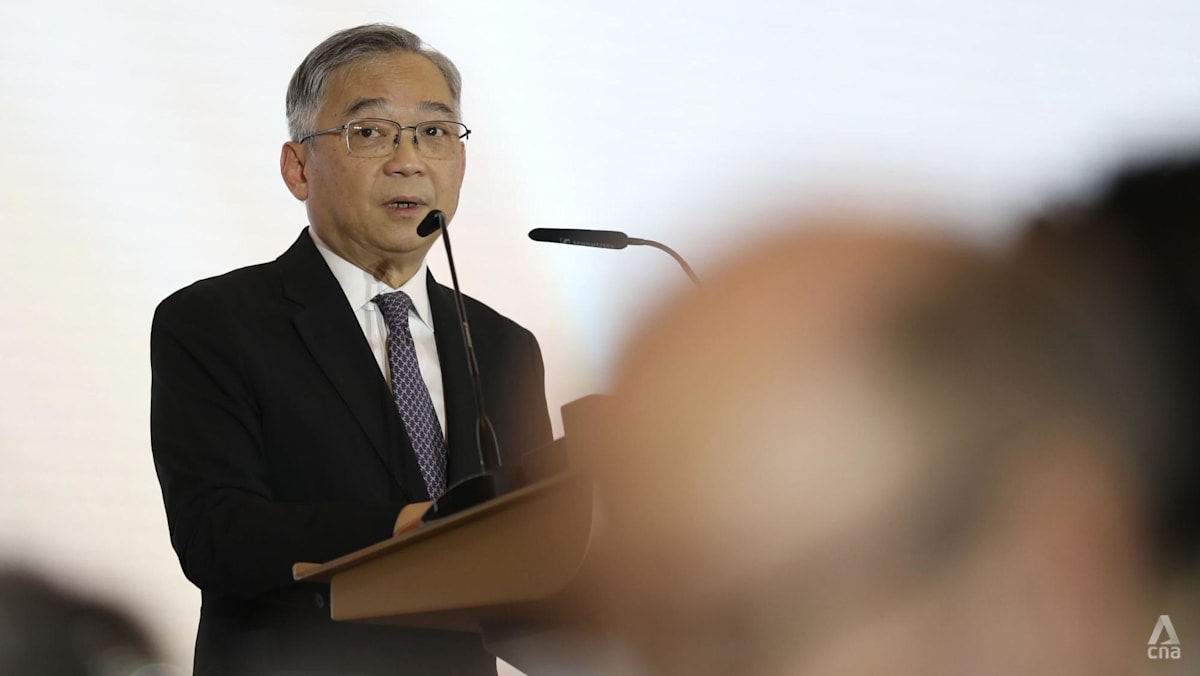
Deputy Prime Minister Gan Kim Yong speaking at the Institute of Banking and Finance Distinction Evening at Marina Bay Sands Convention Centre on Sep 24, 2026. (Photo: CNA/Mak Jia Kee)
This audio is generated by an AI tool.
SINGAPORE: More than 80,000 finance workers in 23 financial institutions will be trained in critical artificial intelligence skills by 2028, Deputy Prime Minister Gan Kim Yong said on Thursday (Sep 24).
Speaking at the Institute of Banking and Finance's (IBF) annual Distinction Evening, Mr Gan officially launched a collaborative initiative formed by these financial institutions to assess how AI is changing jobs and to test practical approaches to training and job redesign.
Called the IBF AI Workforce Co-Lab, the 23 institutions have committed to training their entire Singapore workforce in AI skills through IBF-recognised programmes, said Mr Gan, who is also chairman of the Monetary Authority of Singapore (MAS).
More than half of their employees have already been trained, he said, adding that the training will give employees a common foundation for working with AI.
CNA Games Guess Word Crack the word, one row at a time Buzzword Create words using the given letters Mini Sudoku Tiny puzzle, mighty brain teaser Mini Crossword Small grid, big challenge Word Search Spot as many words as you can Show More Show Less The 23 institutions, which cut across the banking, insurance and asset management sectors, include DBS, OCBC, UOB, AIA Singapore and Prudential. Employees will also need skills suited to their specific roles, so the Co-Lab will develop pathways to help workers acquire the necessary skills. "I encourage more financial institutions to join the Co-Lab and make the commitment to your people," he said. IBF chief executive Carolyn Neo said the pioneer institutions who formed the Co-Lab employ around 40 per cent of the financial services workforce. They have adopted AI use cases and are committed to workforce development initiatives, she added. AI IN THE FINANCIAL SERVICES SECTOR The announcement comes as AI becomes more pervasive in workplaces, including financial institutions. Mr Gan said AI is already changing operations in customer service, financial advisory, credit underwriting, fraud detection, market analysis and software development. There are "tremendous opportunities" to use AI to raise productivity, serve clients better, strengthen risk management and develop new areas of growth, he said. Roles will expand and change as AI adoption grows, so developing Singapore's workforce must be part of the effort from the outset. "We want AI to translate into better careers for Singaporeans and a more productive workforce," he said, adding that this will require commitment and action by financial institutions, and partnership and support from the government and unions. Financial institutions must plan for their people as they plan for AI by identifying how jobs will change, preparing employees early and helping them benefit from new opportunities.
The 23 institutions, which cut across the banking, insurance and asset management sectors, include DBS, OCBC, UOB, AIA Singapore and Prudential.
Employees will also need skills suited to their specific roles, so the Co-Lab will develop pathways to help workers acquire the necessary skills.
"I encourage more financial institutions to join the Co-Lab and make the commitment to your people," he said.
IBF chief executive Carolyn Neo said the pioneer institutions who formed the Co-Lab employ around 40 per cent of the financial services workforce. They have adopted AI use cases and are committed to workforce development initiatives, she added.
AI IN THE FINANCIAL SERVICES SECTOR
The announcement comes as AI becomes more pervasive in workplaces, including financial institutions.
Mr Gan said AI is already changing operations in customer service, financial advisory, credit underwriting, fraud detection, market analysis and software development.
There are "tremendous opportunities" to use AI to raise productivity, serve clients better, strengthen risk management and develop new areas of growth, he said.
Roles will expand and change as AI adoption grows, so developing Singapore's workforce must be part of the effort from the outset.
"We want AI to translate into better careers for Singaporeans and a more productive workforce," he said, adding that this will require commitment and action by financial institutions, and partnership and support from the government and unions.
Financial institutions must plan for their people as they plan for AI by identifying how jobs will change, preparing employees early and helping them benefit from new opportunities.
In the past, the financial industry has done well to equip its workforce for new growth areas, said Mr Gan, noting that professionals in the sector have recorded over 21,000 training completions in sustainable finance since the Sustainable Finance Jobs Transformation Map was launched in 2024.
Such training has helped professionals apply sustainable finance knowledge in their work.
"AI may bring even greater changes, and will require more effort from our tripartite partners to prepare our workforce," he said.
The strategy will have three prongs: uplift the workforce with critical AI skills, upskill professionals for specific AI-enabled roles and upbuild a stronger pipeline or AI- and job-ready young talent, he said.
At the launch on Thursday, Mr Gan also outlined three pathways that the Co-Lab has come up with for leaders, wealth managers and operations staff.
The pathway for leaders will equip them to identify valuable applications of AI, establish sound governance and lead workforce transformation.
Leaders should consider where new opportunities will emerge and how to prepare their employees accordingly when developing AI strategies, he said.
For wealth managers, AI can help relationship managers analyse information more quickly. IBF and several private banking employers are working to develop practical courses that combine AI skills with client engagement and advisory expertise.
The pathway for operations staff involves bringing major banking and insurance employers together to redesign operational jobs and develop ways for workers to progress.
Staff in operations roles will need to develop capabilities in areas such as process improvement, risk oversight and validating the AI output, said Mr Gan.
Most of the time, it will involve more responsibilities in an existing role, but it may also mean moving to a related role or a new role involving AI, he said.
Our chief editor shares analysis and picks of the week's biggest news every Saturday.
Get our pick of top stories and thought-provoking articles in your inbox
Stay updated with notifications for breaking news and our best stories
Join our channel for the top reads for the day on your preferred chat app
23 家金融机构承诺,到 2028 年,将通过银行与金融学院认可的课程,对其新加坡全体员工进行关键人工智能技能培训。
2026年9月24日,副总理颜金勇在滨海湾金沙会展中心举行的银行与金融学会杰出晚宴上发表讲话。(图片:CNA/麦嘉琪)
这段音频由人工智能工具生成。
新加坡:副总理颜金勇周四(9月24日)表示,到2028年,23家金融机构的8万多名金融从业人员将接受关键人工智能技能培训。
在银行与金融学会 (IBF) 年度杰出成就晚会上,甘先生正式启动了由这些金融机构组成的合作计划,旨在评估人工智能如何改变工作,并测试培训和工作重新设计的实用方法。
新加坡金融管理局(MAS)主席颜金勇表示,这23家机构组成的名为“IBF人工智能劳动力合作实验室”的组织承诺通过IBF认可的课程,对其新加坡全体员工进行人工智能技能培训。
他说,他们超过一半的员工已经接受了培训,并补充说,该培训将为员工使用人工智能奠定共同的基础。
CNA游戏猜词游戏:逐行破解单词;流行词游戏:用给定的字母组成单词;迷你数独:小巧的谜题,强大的脑力挑战;迷你填字游戏:小网格,大挑战;单词搜索:尽可能多地找出单词。显示更多 显示更少 这23家机构涵盖银行、保险和资产管理领域,包括星展银行、华侨银行、大华银行、友邦保险新加坡和保诚集团。员工还需要具备与其特定岗位相匹配的技能,因此Co-Lab将制定途径,帮助员工获得必要的技能。“我鼓励更多金融机构加入Co-Lab,并对员工做出承诺,”他说。IBF首席执行官Carolyn Neo表示,组建Co-Lab的先行机构雇佣了约40%的金融服务从业人员。她补充说,这些机构已经采用了人工智能应用案例,并致力于员工发展计划。人工智能在金融服务领域的应用:随着人工智能在包括金融机构在内的工作场所中日益普及,这项公告也随之发布。颜先生表示,人工智能已经在改变客户服务、财务咨询、信贷审批、欺诈检测、市场分析和软件开发等领域的运营模式。他指出,利用人工智能提高生产力、更好地服务客户、加强风险管理以及开拓新的增长领域蕴藏着“巨大的机遇”。随着人工智能应用的普及,岗位职责将会扩展和变化,因此,从一开始就必须将新加坡的劳动力发展纳入其中。他表示:“我们希望人工智能能够为新加坡人带来更好的职业发展机会,并打造一支更高效的劳动力队伍。”他还补充道,这需要金融机构的承诺和行动,以及政府和工会的合作与支持。金融机构在规划人工智能的同时,也必须为员工做好规划,明确工作岗位将如何变化,尽早为员工做好准备,并帮助他们从新的机遇中受益。
这 23 家机构涵盖银行、保险和资产管理等领域,包括星展银行、华侨银行、大华银行、友邦保险新加坡和保诚集团。
员工还需要具备与其具体岗位相适应的技能,因此合作实验室将制定途径帮助员工获得必要的技能。
“我鼓励更多金融机构加入Co-Lab,并对你们的员工做出承诺,”他说。
IBF首席执行官Carolyn Neo表示,组建Co-Lab的先行机构雇佣了约40%的金融服务从业人员。她补充说,这些机构已经采用了人工智能应用案例,并致力于员工发展计划。
人工智能在金融服务领域的应用
随着人工智能在工作场所(包括金融机构)的应用越来越广泛,这项公告也随之发布。
甘先生表示,人工智能已经改变了客户服务、财务咨询、信贷承销、欺诈检测、市场分析和软件开发等领域的运营方式。
他表示,利用人工智能可以带来“巨大的机遇”,例如提高生产力、更好地服务客户、加强风险管理以及开发新的增长领域。
随着人工智能应用的普及,各种角色将会扩展和变化,因此,从一开始就必须将培养新加坡的劳动力作为一项重要工作。
“我们希望人工智能能够为新加坡人带来更好的职业发展机会和更高效的劳动力,”他说道,并补充说,这将需要金融机构的承诺和行动,以及政府和工会的合作与支持。
金融机构在规划人工智能发展的同时,也必须规划好员工发展,明确工作岗位将如何变化,尽早为员工做好准备,并帮助他们从新的机遇中受益。
颜先生表示,过去金融行业在为员工提供新的增长领域所需的技能方面做得很好,并指出自2024年推出可持续金融就业转型路线图以来,该行业的专业人士已完成了超过21000次可持续金融方面的培训。
此类培训帮助专业人士将可持续金融知识应用于工作中。
“人工智能可能会带来更大的变化,这将需要我们的三方合作伙伴付出更多努力来培养我们的劳动力,”他说。
他表示,该战略将包含三个方面:提升劳动力的关键人工智能技能,提高专业人员在特定人工智能岗位上的技能,以及建立更强大的人工智能和就业能力兼备的年轻人才储备。
在周四的发布会上,颜先生还概述了 Co-Lab 为领导者、财富管理者和运营人员提出的三条发展路径。
这条领导者发展路径将使他们能够识别人工智能的有价值的应用,建立健全的治理,并引领劳动力转型。
他表示,领导者在制定人工智能战略时,应该考虑新的机遇将在哪里出现,以及如何让员工做好相应的准备。
对于财富管理机构而言,人工智能可以帮助客户经理更快地分析信息。IBF和多家私人银行正在合作开发实用课程,将人工智能技能与客户互动和咨询专长相结合。
运营人员的晋升途径是将主要的银行和保险公司聚集在一起,重新设计运营岗位,并为员工制定晋升方式。
甘先生表示,运营岗位的员工需要培养在流程改进、风险监督和验证人工智能输出等方面的能力。
他表示,大多数情况下,这意味着在现有职位上承担更多责任,但也可能意味着转到相关职位或涉及人工智能的新职位。
我们的主编每周六都会分享对本周重大新闻的分析和精选。
订阅我们的邮件,即可获取精选热点新闻和引人深思的文章。
订阅通知,第一时间获取突发新闻和精彩报道。
加入我们的频道,即可在您常用的聊天应用上获取当日热门文章。