Haze doesn’t just hurt your lungs: Experts warn of hidden damage to skin, scalp and eyes雾霾不仅损害肺部:专家警告称,它还会对皮肤、头皮和眼睛造成隐性损害。
KUALA LUMPUR, Sept 25 — While public health warnings during haze episodes typically focus on respiratory health, medical experts are sounding the alarm on the hidden, often...
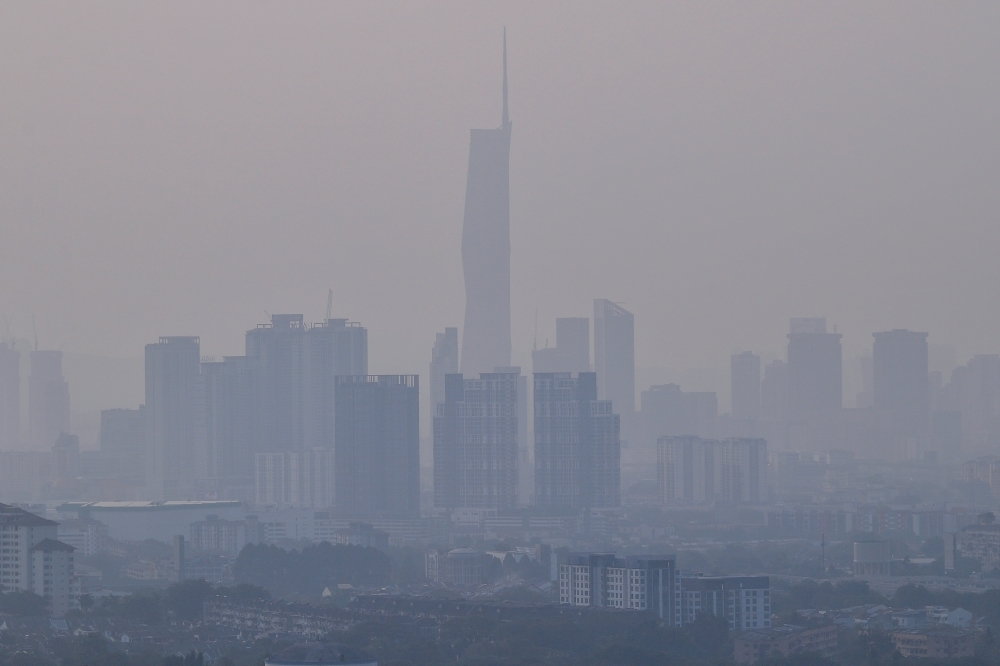
In Kuala Lumpur, medical experts underscore the significant yet often overlooked impact of PM2.5 pollutants on the skin, scalp, and eyes during haze episodes.
These fine particles can penetrate tissues, causing oxidative stress, inflammation, and photodamage, potentially leading to conditions like eczema, premature skin aging, and various eye disorders.
Children are particularly vulnerable due to their developing systems and active lifestyles.
Experts recommend staying indoors, using air purifiers, and adopting protective skincare routines, including regular moisturizing and sunscreen application, regardless of visible haziness.
KUALA LUMPUR, Sept 25 — While public health warnings during haze episodes typically focus on respiratory health, medical experts are sounding the alarm on the hidden, often overlooked impact of pollutants on the body’s largest organ: the skin, as well as the scalp and eyes.
As air quality fluctuates, experts told Malay Mail that fine particulate matter, known as PM2.5 — particles measuring 2.5 micrometres in diameter — poses a significant risk that goes far beyond surface-level dirt.
According to UM Specialist Centre consultant dermatologist Dr Nik Aimee Azizah Faheem, these tiny particles are insidious.
“Haze is not just the usual dust and pollutants; it has PM2.5 particles which are tiny, 2.5 micrometres in diameter. These particles can penetrate our tissue, be it the skin, lungs, or eyes.
“They don’t just sit on the surface and cause external dirt,” she said.
The invisible damage
When PM2.5 particles infiltrate the pores, they disrupt the skin’s natural barrier.
This leads to increased sensitivity, dryness, and irritation, often triggering flare-ups of underlying conditions such as eczema, psoriasis, and acne.
However, the damage extends deeper.
Dr Kwan Zhenli, a consultant dermatologist and dermatologic surgeon at Subang Jaya Medical Centre, said haze consists of particulate matter from smoke, dust, moisture and vapour suspended in the air that impairs visibility.
“Particulate matter in haze can penetrate the skin, causing oxidative stress and inflammation.
“Haze also alters the skin microbiome composition, which can impair the skin’s barrier function. Air pollutants synergise with UV radiation to worsen oxidative skin damage, as pollution-related changes to the ozone layer allow greater UV transmission to the earth’s surface,” Dr Kwan explained.
This synergistic effect is a major point of concern for dermatologists, who note that many people falsely assume that “cloudy” or hazy skies mean lower UV exposure.
“Many omit their sun protective measures like wearing sunscreen, protective hat, sunglasses and UV-protective clothing, thinking that there is a lack of these harmful UV rays.
“This can lead to long-term photo-damaging effects like pigmentary disorders, wrinkles, and potentially skin cancers,” Dr Nik warned.
Echoing similar sentiment, Pantai Hospital Cheras dermatologist Dr Low Dyoi-E, said the consequences are chronic.
“Prolonged exposure may accelerate premature skin ageing by promoting free-radical damage to collagen and elastin.
“It can also contribute to dullness, uneven pigmentation and weakening of the skin barrier, increasing dryness and potentially aggravating inflammatory conditions such as eczema,” Dr Low said.
Scalp and hair health
The scalp is equally vulnerable.
The PM2.5 particles can block hair follicles, leading to inflammation and scalp congestion.
“On the scalp, these particles can also penetrate and block our hair follicles.
“This can lead to a disruption in our scalp barrier, a buildup of dirt and dead skin cells, as well as an overgrowth of Malassezia furfur, which is a type of yeast that is a normal commensal of our scalp,” said Dr Nik Aimee, adding that this may result in inflamed, itchy, flaky scalp called seborrhoeic dermatitis.
Dr Kwan added that for hair, “particulate matter can trigger inflammatory responses in the hair follicle, causing chemical and oxidative damage that leads to loss of shine, structural weakening and hair loss, including conditions such as alopecia areata.”
Vulnerability of eyes and children
The eyes are also immediate targets for haze-related irritation.
In the short term, exposure leads to dryness, redness, itchiness, and conjunctivitis.
Persistent exposure, however, can be more serious.
“Long-term effects can be in the form of persistent dry eyes, cataract and glaucoma,” Dr Nik Aimee stated.
Children are particularly at risk, given that they are generally more active and have developing immune and respiratory systems.
Dr Kwan emphasised that children are “more susceptible to the effects of haze as they typically spend longer time outdoors, are more physically active, and have developing respiratory systems that are more vulnerable to the effects of particulate matter.”
When should you worry?
While daily precaution is advised, there are specific thresholds for concern.
Dr Nik Aimee noted that for those with pre-existing skin, hair, or eye conditions, an Air Pollutant Index (API) of 50 and above may trigger a flare-up.
For the general population, an API of 100 and above is sufficient to cause dryness and irritation.
Steps to protect yourself
The experts advised a multi-pronged approach to mitigation, starting with the most effective method: avoidance.
“Number one is avoidance; that means to stay indoors and avoid any outdoor activities,” said Dr Nik Aimee.
She also advises avoiding wearing contact lenses, which can trap particles against the eye, and reducing screen time to prevent eye strain and further dryness.
Dr Kwan suggested a comprehensive routine: “Stay indoors as much as possible, use air purifiers, drink plenty of water, and eat a healthy diet rich in antioxidants.”
For skincare, Dr Low suggested using moisturisers containing ceramides, hyaluronic acid or niacinamide, and using antioxidants like vitamin C, vitamin E and niacinamide to help counter oxidative stress.
Both Dr Nik Aimee and Dr Low stressed the necessity of daily sunscreen, regardless of how hazy the sky appears.
“Wash the face and scalp after outdoor exposure; avoid harsh scrubbing,” advised Dr Low.
Rohingya caught between Malaysia crackdown and Myanmar’s uncertain welcome
Beyond reconciliation: How the National Population and Family Development Board helps non-Muslim couples part ways peacefully
N. Sembilan Ruler formally revokes appointments of 10 exco members
在吉隆坡,医学专家强调了雾霾期间 PM2.5 污染物对皮肤、头皮和眼睛的重大但常被忽视的影响。
这些细小的颗粒可以渗透到组织中,引起氧化应激、炎症和光损伤,可能导致湿疹、皮肤过早老化和各种眼部疾病等症状。
由于儿童的身体系统仍在发育,且生活方式活跃,因此他们特别容易受到伤害。
专家建议,无论空气中是否有明显的雾霾,都应该待在室内,使用空气净化器,并采取防护性护肤措施,包括定期保湿和涂抹防晒霜。
吉隆坡,9 月 25 日讯——虽然雾霾期间的公共卫生警告通常侧重于呼吸系统健康,但医学专家正在发出警报,指出污染物对人体最大器官——皮肤以及头皮和眼睛——的隐蔽且经常被忽视的影响。
专家告诉《马来邮报》,随着空气质量的波动,细颗粒物(PM2.5,直径为2.5微米的颗粒)构成了重大风险,其影响远远超出了地表灰尘。
据马来亚大学专科中心顾问皮肤科医生 Nik Aimee Azizah Faheem 博士称,这些微小的颗粒具有隐蔽性。
“雾霾不仅仅是普通的灰尘和污染物;它还含有直径仅为2.5微米的PM2.5颗粒。这些颗粒可以穿透我们的组织,无论是皮肤、肺部还是眼睛。”
“它们不会只是停留在表面,造成外部污垢,”她说。
隐形的伤害
PM2.5颗粒渗入毛孔时,会破坏皮肤的天然屏障。
这会导致皮肤更加敏感、干燥和刺激,常常引发湿疹、牛皮癣和痤疮等潜在疾病的发作。
然而,损害远不止于此。
梳邦再也医疗中心皮肤科顾问医师兼皮肤外科医生关振利博士表示,雾霾是由悬浮在空气中的烟雾、灰尘、水分和水蒸气等颗粒物组成,会损害能见度。
“雾霾中的颗粒物可以渗透皮肤,引起氧化应激和炎症。
“雾霾还会改变皮肤微生物群的组成,从而损害皮肤的屏障功能。空气污染物与紫外线辐射协同作用,加剧皮肤氧化损伤,因为污染导致的臭氧层变化使得更多的紫外线能够到达地球表面,”关医生解释说。
这种协同效应是皮肤科医生非常关注的问题,他们指出,许多人错误地认为“阴天”或雾霾天气意味着紫外线照射量较低。
“许多人忽略了防晒措施,例如涂抹防晒霜、佩戴防护帽、太阳镜和穿着防紫外线服装,认为这里缺乏有害的紫外线。
“这会导致长期的光损伤效应,如色素紊乱、皱纹,甚至可能引发皮肤癌,”尼克博士警告说。
班台医院蕉赖分院的皮肤科医生Low Dyoi-E博士也表达了类似的观点,称其后果是慢性的。
“长时间暴露于自由基可能会加速皮肤过早老化,因为自由基会损害胶原蛋白和弹性蛋白。
“它还会导致皮肤暗沉、色素沉着不均和皮肤屏障减弱,加剧干燥,并可能加重湿疹等炎症性疾病,”罗医生说。
头皮和头发健康
头皮同样脆弱。
PM2.5颗粒会堵塞毛囊,导致炎症和头皮充血。
“在头皮上,这些颗粒物还会渗透并堵塞我们的毛囊。
“这会导致头皮屏障受损,污垢和死皮细胞堆积,以及糠秕马拉色菌过度生长,糠秕马拉色菌是一种酵母菌,是我们头皮的正常共生菌,”尼克·艾米医生说,并补充说,这可能会导致头皮发炎、发痒、脱屑,称为脂溢性皮炎。
关医生补充说,对于头发而言,“颗粒物会引发毛囊的炎症反应,造成化学和氧化损伤,导致头发失去光泽、结构脆弱和脱落,包括斑秃等疾病。”
眼睛和儿童的脆弱性
眼睛也是雾霾刺激的直接目标。
短期内,接触会导致眼睛干燥、发红、发痒和结膜炎。
然而,持续接触可能会更严重。
“长期影响可能表现为持续性干眼症、白内障和青光眼,”尼克·艾米医生表示。
儿童尤其容易受到伤害,因为他们通常更加活跃,而且免疫系统和呼吸系统还在发育中。
关医生强调,儿童“更容易受到雾霾的影响,因为他们通常在户外待的时间更长,身体活动更活跃,而且呼吸系统还在发育,更容易受到颗粒物的影响。”
什么情况下应该担心?
虽然建议每天都采取预防措施,但也有特定的阈值需要引起重视。
尼克·艾米博士指出,对于已有皮肤、头发或眼睛疾病的人来说,空气污染指数(API)达到 50 及以上可能会引发病情发作。
对于一般人群而言,API 值达到 100 及以上就足以引起皮肤干燥和刺激。
保护自己的步骤
专家建议采取多管齐下的缓解措施,首先采用最有效的方法:避免。
“第一要务是避免外出;这意味着待在室内,避免任何户外活动,”尼克·艾米博士说。
她还建议避免佩戴隐形眼镜,因为隐形眼镜可能会将颗粒物滞留在眼睛里;同时减少屏幕使用时间,以防止眼睛疲劳和进一步的干涩。
关医生建议采取一套全面的措施:“尽可能待在室内,使用空气净化器,多喝水,并食用富含抗氧化剂的健康饮食。”
对于护肤,Low 医生建议使用含有神经酰胺、透明质酸或烟酰胺的保湿霜,并使用维生素 C、维生素 E 和烟酰胺等抗氧化剂来帮助对抗氧化应激。
尼克·艾米医生和洛医生都强调,无论天空看起来多么阴沉,每天都必须涂抹防晒霜。
“户外活动后要清洗脸部和头皮;避免用力搓洗,”罗医生建议道。
罗兴亚人处境艰难,夹在马来西亚的镇压和缅甸不确定的接纳之间。
超越和解:国家人口与家庭发展委员会如何帮助非穆斯林夫妇和平分手
森美兰州统治者正式撤销10名行政议员的任命