For Germany’s Scholz, Taurus missiles are a bridge too far in Ukraine对德国总理朔尔茨而言,在乌克兰部署金牛座导弹是不可逾越的障碍。
Critics have portrayed the powerful cruise missile as a defining, but lacking, element of German military assistance to Kyiv.
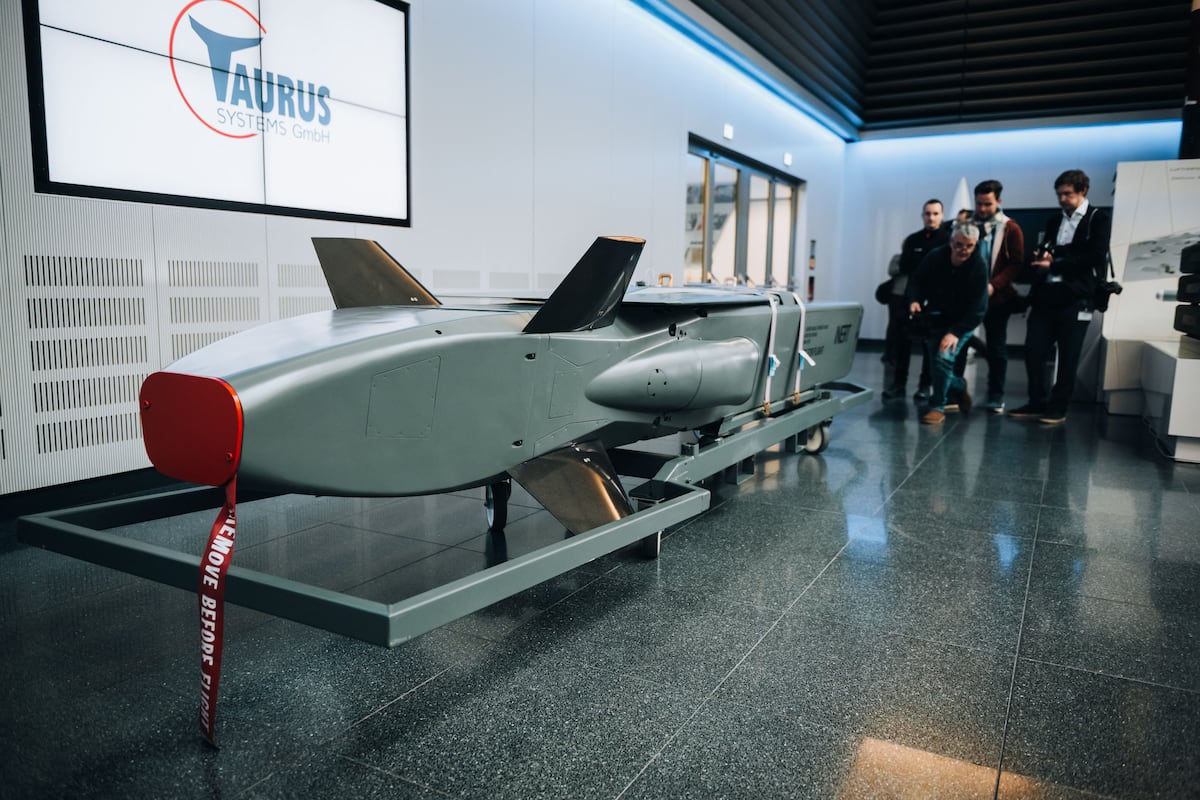
COLOGNE, Germany — German Chancellor Olaf Scholz is reiterating his opposition to supplying Kyiv with German Taurus cruise missiles, arguing the long-range weapons would require a level of tactical assistance from Berlin that contravenes NATO nations’ mantra of containing the war in Ukraine.
Speaking at a March 13 parliamentary question-and-answer session, Scholz stuck to his long-held talking points for Taurus, a bunker-busting, terrain-hugging missile with a range of 500 kilometers that can fly below the radar of air defenses. He argued the complex sequence of identifying targets and programming the weapon to strike them, theoretically as far away as Moscow, should remain in Bundeswehr hands.
Scholz’s remarks drew a sharp rebuke from opposition lawmakers of the Christian Democratic Union, who accused him of mistrusting Ukraine and disregarding the possibility local forces could eventually use the weapon entirely without German assistance.
Ukrainian officials have said there are no plans to hit targets in Moscow. Instead, they want Taurus missiles for striking Russian ammunition depots behind the front line and for attacking resupply routes, like the Kerch Bridge, that fuel Moscow’s assault.
The chancellor’s remarks in Berlin came after Russian state media publicized an intercepted conversation in which four German air force officials discussed options for minimizing the German government’s fingerprints if the weapons were to be given to Ukraine.
While experts here have hotly debated the details of the call, including whether German involvement in using the weapons could be avoided altogether, the conversation suggested it would be tricky for German officials to donate Taurus with no strings attached.
Germany ranks as Europe’s biggest supplier of military aid to Ukraine. By the government’s own accounting, roughly €28 billion worth of equipment has already been provided or is earmarked over the next few years.
Sebastian Sprenger is associate editor for Europe at Defense News, reporting on the state of the defense market in the region, and on U.S.-Europe cooperation and multi-national investments in defense and global security. Previously he served as managing editor for Defense News. He is based in Cologne, Germany.
德国科隆——德国总理奥拉夫·朔尔茨重申了他反对向基辅提供德国金牛座巡航导弹的立场,他认为这种远程武器需要柏林提供一定程度的战术援助,这违背了北约国家遏制乌克兰战争的原则。
在3月13日的议会问答环节中,朔尔茨重申了他长期以来对“金牛座”导弹的立场。“金牛座”导弹是一种能够穿透掩体、贴地飞行、射程达500公里且能躲避防空雷达探测的导弹。他认为,识别目标并编写程序使其能够攻击目标(理论上远至莫斯科)的复杂流程应该由德国联邦国防军掌控。
舒尔茨的言论遭到了基督教民主联盟反对派议员的强烈谴责,他们指责他不信任乌克兰,并且无视当地部队最终可能完全在没有德国援助的情况下使用该武器的可能性。
乌克兰官员表示,他们没有袭击莫斯科目标的计划。相反,他们希望获得金牛座导弹,用于打击前线后方的俄军弹药库,以及攻击为莫斯科进攻提供补给的通道,例如刻赤大桥。
在俄罗斯国家媒体公布了一段被截获的对话后,德国总理在柏林发表了上述言论。对话中,四名德国空军官员讨论了如果将武器移交给乌克兰,如何最大限度地减少德国政府的痕迹。
虽然这里的专家们对通话的细节进行了激烈的辩论,包括是否可以完全避免德国参与使用这些武器,但谈话内容表明,德国官员很难在不附加任何条件的情况下捐赠金牛座导弹。
德国是欧洲对乌克兰最大的军事援助提供国。据德国政府统计,未来几年内,德国已向乌克兰提供或计划提供价值约280亿欧元的军事装备。
塞巴斯蒂安·斯普伦格是《防务新闻》欧洲版副主编,负责报道该地区的防务市场状况,以及美欧在防务和全球安全领域的合作和多国投资。此前,他曾担任《防务新闻》执行主编。他现居德国科隆。