Meet Southeast Asia's first okapi calf, born at Singapore's Rainforest Wild Adventure来认识一下东南亚第一只霍加狓宝宝吧!它出生在新加坡的雨林野生探险乐园。
The male calf was born on the morning of Jul 27, 2026, to first-time okapi parents seven-year-old Kisala and four-year-old Xandor.
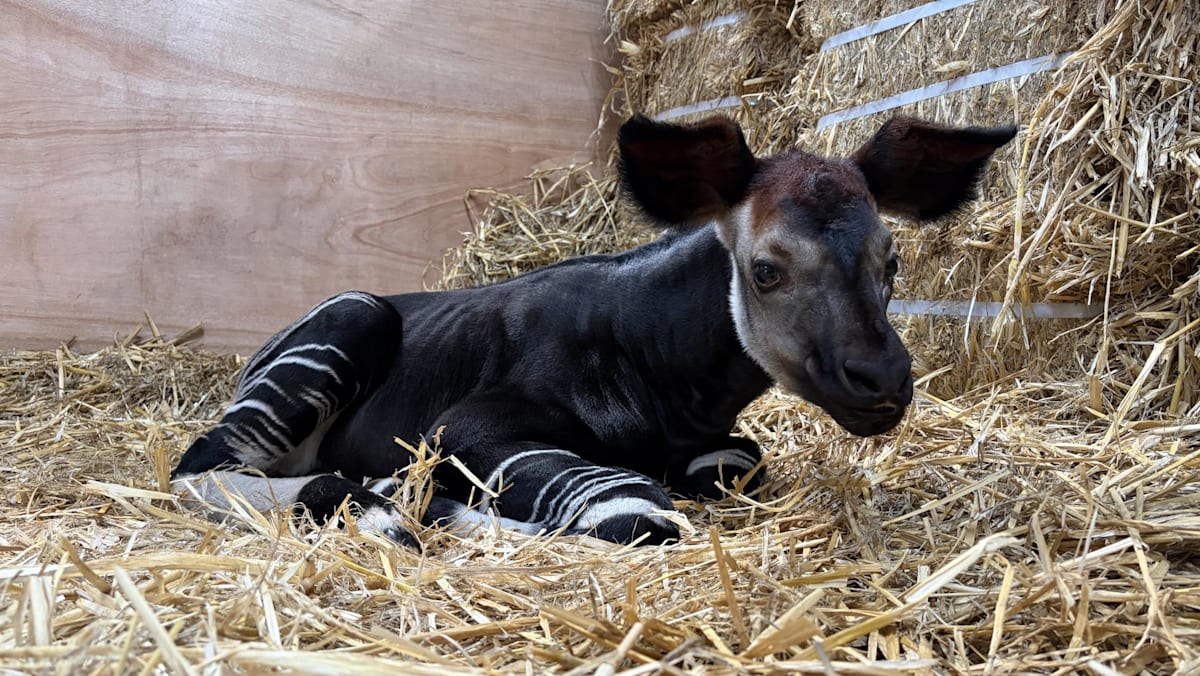
The male calf was born on the morning of Jul 27, 2026, to first-time okapi parents seven-year-old Kisala and four-year-old Xandor.
The male okapi calf was born on the morning of Jul 27, 2026. (Photo: Mandai Wildlife Group)
This audio is generated by an AI tool.
Rainforest Wild Adventure has welcomed a new member of the family: The first okapi born in Southeast Asia.
The male calf was born on Jul 27 to first-time parents Kisala, a seven-year-old female, and Xandor, a four-year-old male. Nearly two months later, he has more than doubled his birth weight, from about 20kg at his first weigh-in to 48kg. Details of his birth were announced by Mandai Wildlife Group on Thursday (Sep 24).
Kisala and Xandor came to Singapore under the EAZA Ex situ Programme, a coordinated breeding programme for threatened species.
The newborn male okapi calf during his first weigh-in on Jul 28, 2026. (Photo: Mandai Wildlife Group)
Okapis are native to the northeastern Democratic Republic of the Congo and are listed as Endangered on the International Union for Conservation of Nature (IUCN) Red List. They have zebra-like striped legs, but they're the closest living relatives of giraffes. The two species share characteristics including long, flexible tongues and ossicones, the bony, horn-like structures found on the heads of male okapis.
Baby okapis are also known to shy away from attention. In the wild, calves spend much of their first few months hidden and still to avoid attracting predators, with their mothers returning only a few times each day to nurse them. Newborns are also believed to have very little scent, helping them stay undetected.
The male okapi calf's father, four-year-old Xandor. (Photo: Mandai Wildlife Group)
To give the new calf a similar hidden environment, his care team at Rainforest Wild Adventure created a quiet, secluded calving box where he can rest and feed undisturbed. The setup draws on practices used by other zoological institutions that have successfully bred okapis.
The species also takes its time arriving: An okapi pregnancy lasts about 440 days, or 14 to 15 months, one of the longest gestation periods among hoofed mammals.
The mother-and-son duo, Kisala and her calf. (Photo: Mandai Wildlife Group)
The baby okapi spends most of his time in the box built by his care team. (Photo: Mandai Wildlife Group)
Mandai Wildlife Group curator Cecilia Tang said Kisala's care team began preparing for a possible pregnancy after noticing changes in her appetite and body condition. An ultrasound in July confirmed she was expecting.
"Kisala has been an excellent mother, and her calf is thriving, gaining nearly a kilogramme a day on average," Tang said.
The mother-and-son pair have recently been given access to their outdoor habitat, although visitors shouldn't necessarily expect the calf to make an appearance on cue.
"We're allowing him to explore and build confidence at his own pace, so it may take some time before visitors see more of him," Tang added.
View this post on Instagram
Kisala and her calf in their off-exhibit den at Rainforest Wild Adventure. (Photo: Mandai Wildlife Group)
That's still to be decided. However, the public gets a say.
Mandai is currently asking members of the public to vote on their Facebook and Instagram pages for one of three names: Imara, meaning "strong" in Swahili; Mayaka, meaning "pearl" in Lingala; and Kiah, meaning "dawn", "new beginnings" or "start of the season" in Swahili.
Those hoping to catch a glimpse of the calf can also visit Hidden Forest at Rainforest Wild Adventure East, where he shares a habitat with Kisala. Xandor lives separately nearby. But if the little one decides he'd rather stay out of sight, visitors can check a "baby monitor" showing a live feed from his off-exhibit den.
Daily Okapi Ranger Talks are also held at 10.30am and 3pm.
Okapi-themed merchandise to celebrate the birth. (Photo: Mandai Wildlife Group)
Okapi-inspired cake will be available at selected dining outlets. (Photo: Mandai Wildlife Group)
And because this historic okapi birth calls for celebration, an okapi-inspired dessert will be available from October at selected Mandai dining outlets, including Rangers Pitstop, Rangers Retreat and Owa Bistro. The entremet takes inspiration from the animal's distinctive stripes and combines blueberry, mascarpone chantilly and cassis. Okapi-themed soft toys, tumblers, lanyards and other merchandise will also be available.
The calf isn't Rainforest Wild Adventure's only new arrival. The park has also welcomed sitatungas, a swamp-dwelling antelope species, while crowned lemurs and red-bellied lemurs are expected to make their debut at Lemur Land by November.
A single handpicked story that we think you shouldn't miss. Just one a day.
这头雄性小狓于 2026 年 7 月 27 日上午出生,它的父母是七岁的基萨拉和四岁的桑多尔,这是它们第一次当父母。
这只雄性霍加狓幼崽于2026年7月27日上午出生。(图片:万代野生动物保护小组)
这段音频是由人工智能工具生成的。
雨林野生探险公司迎来了一位新成员:东南亚出生的第一只霍加狓。
这头雄性小牛于7月27日出生,它的父母分别是7岁的雌性小牛基萨拉和4岁的雄性小牛赞多,它们都是第一次当父母。近两个月后,它的体重已经翻了一番还多,从出生时的约20公斤增加到48公斤。曼代野生动物保护组织于周四(9月24日)公布了它的出生详情。
Kisala 和 Xandor 是根据 EAZA 异地保护计划来到新加坡的,该计划是一项针对濒危物种的协调繁殖计划。
2026年7月28日,新生雄性霍加狓幼崽首次称重。(图片:万代野生动物保护组织)
霍加狓原产于刚果民主共和国东北部,被列入世界自然保护联盟(IUCN)红色名录的濒危物种。它们拥有类似斑马的条纹腿,但却是长颈鹿现存最近的亲缘物种。这两个物种的共同特征包括长而灵活的舌头以及雄性霍加狓头部的骨质角状结构。
幼年霍加狓也以害羞著称,它们不喜欢被人关注。在野外,幼崽出生后的头几个月大多时间都躲藏起来,一动不动,以避免吸引捕食者,它们的母亲每天只回来几次哺乳。据信,新生幼崽身上几乎没有气味,这也有助于它们不被发现。
这只雄性霍加狓幼崽的父亲是四岁的桑多尔。(图片:曼代野生动物保护小组)
为了给新生的小霍加狓提供类似的隐蔽环境,雨林野生探险中心的护理团队专门建造了一个安静僻静的产仔箱,让它可以不受干扰地休息和进食。这种做法借鉴了其他成功繁殖霍加狓的动物园的经验。
该物种的孕期也很长:霍加狓的妊娠期约为 440 天,即 14 至 15 个月,是蹄类哺乳动物中妊娠期最长的物种之一。
母子二人,基萨拉和她的小牛。(图片:曼代野生动物保护组织)
这只小霍加狓大部分时间都待在饲养团队搭建的箱子里。(图片:曼代野生动物保护组织)
万代野生动物保护小组管理员塞西莉亚·唐表示,基萨拉的护理团队在注意到她的食欲和身体状况发生变化后,就开始为她可能怀孕做准备。7月份的超声波检查证实她怀孕了。
“基萨拉是一位优秀的母亲,她的小牛犊长势喜人,平均每天增重近一公斤,”唐说道。
这对母子最近获准进入它们的户外栖息地,不过游客们不应该期望小牛会按计划出现。
唐补充道:“我们让他按照自己的节奏探索和建立自信,所以游客可能需要一段时间才能更多地看到他。”
在 Instagram 上查看此帖子
基萨拉和她的小牛在雨林野生探险中心的非展区洞穴里。(图片:曼代野生动物集团)
此事尚未决定。不过,公众有发言权。
Mandai 目前在其 Facebook 和 Instagram 页面上邀请公众投票选出以下三个名字之一:Imara,在斯瓦希里语中意为“强壮”;Mayaka,在林加拉语中意为“珍珠”;以及 Kiah,在斯瓦希里语中意为“黎明”、“新的开始”或“季节的开始”。
想要一睹小象风采的游客可以前往雨林野生探险东部的隐秘森林,它和基萨拉(Kisala)共用一个栖息地。赞多(Xandor)则住在附近单独的区域。如果小家伙不想露面,游客可以查看“婴儿监视器”,观看它非展区洞穴的实时画面。
每天上午 10:30 和下午 3 点还会举行霍加狓巡护员讲解会。
为庆祝霍加狓宝宝的诞生,推出了以霍加狓为主题的周边商品。(图片:万代野生动物集团)
以霍加狓为灵感的蛋糕将在指定餐饮场所供应。(图片:万代野生动物保护组织)
为了庆祝这只具有历史意义的霍加狓宝宝的诞生,曼代(Mandai)指定餐饮场所,包括 Rangers Pitstop、Rangers Retreat 和 Owa Bistro,将于10月起供应一款以霍加狓为灵感的甜点。这款甜点以霍加狓独特的条纹为灵感,融合了蓝莓、马斯卡彭奶油和黑醋栗。此外,还将推出霍加狓主题的毛绒玩具、水杯、挂绳和其他周边商品。
这头小牛并不是雨林野生探险公园唯一的“新成员”。公园还迎来了生活在沼泽中的羚羊物种——西塔通加羚羊,而冕狐猴和红腹狐猴预计将于11月在狐猴乐园首次亮相。
每天一篇,我们精心挑选一篇您不容错过的精彩故事。