Children at 5 Jurong schools to get headstart on tackling diabetes by learning how choices matter裕廊五所学校的孩子们将通过学习“选择的重要性”来提前应对糖尿病。
The programme will go beyond telling children to eat less sugar, to helping them understand what impacts their blood sugar. Read more at straitstimes.com.
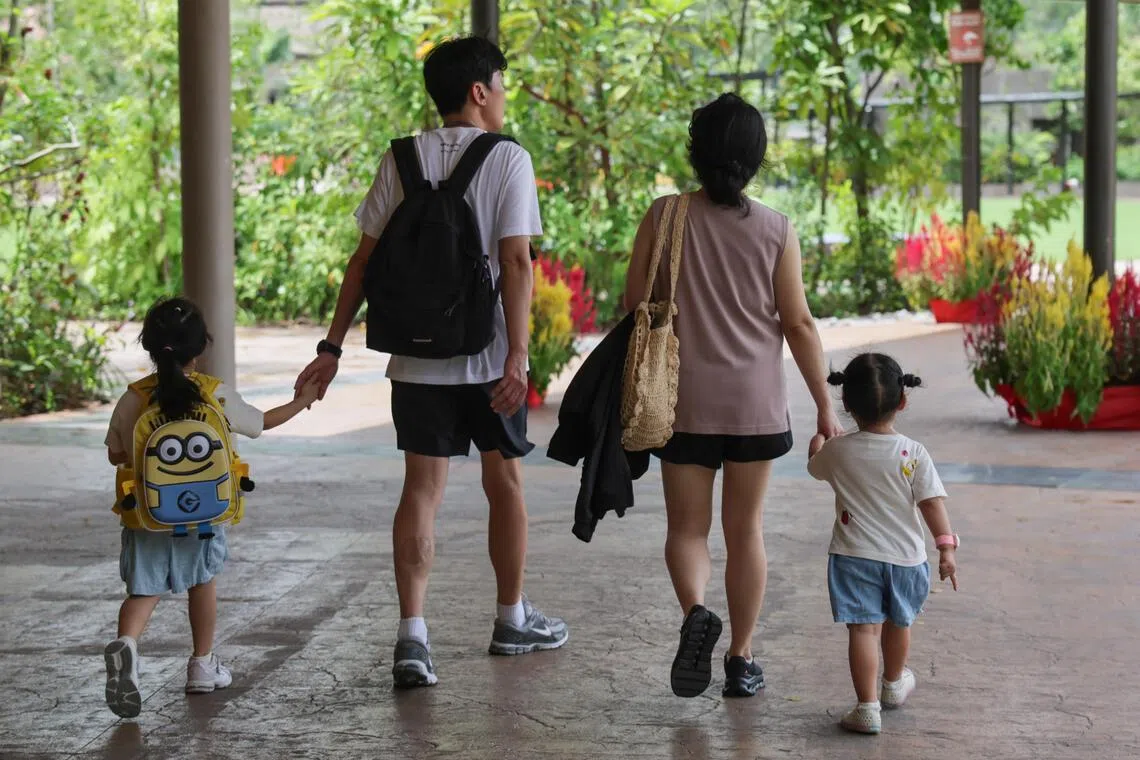
It is also far less costly to prevent the onset of diabetes by shaping everyday lifestyle choices, rather than trying to tackle the condition once it is advanced, said President Tharman Shanmugaratnam on Sept 25 at the 55th anniversary gala dinner of Diabetes Singapore.
Published Sep 25, 2026, 09:00 PM
Updated Sep 25, 2026, 09:00 PM
Children at five Jurong West schools will join a pilot programme teaching how food and exercise affect blood sugar, using games, talks, and activities to build healthy habits.
The Sugar Smart Schools programme will involve parents and teachers to reinforce lessons at home, aiming to reduce diabetes risk among youth by explaining blood sugar management.
The initiative hopes to expand islandwide, promoting healthier communities by educating children on diabetes and empathy for affected classmates.
SINGAPORE - Children at five schools in Jurong West will learn how everyday choices about food and exercise affect blood sugar, as part of a new effort to tackle diabetes .
Sugar Smart Schools, a one-year pilot by non-profit group Diabetes Singapore, will involve talks and outreach to parents and teachers alongside the children, so the habits taught in school can be reinforced at home.
At the programme’s launch during Diabetes Singapore’s 55th anniversary gala dinner on Sept 25, its patron President Tharman Shanmugaratnam said that the nation has to do more to bring down the prevalence of diabetes.
More can be done through upstream efforts to change the habits of children when they are young, and to detect the onset of diabetes, said President Tharman.
He said that the medical, social and economic case for early preventative actions are compelling, as it is better for the well being of individuals, families and society.
It is also far less costly to prevent the onset of diabetes by altering everyday lifestyle choices, rather than trying to tackle the condition once it is advanced, and once other complications come in its wake, such as heart attack, stroke, blindness, kidney failure and lower limb amputations, he pointed out.
“We need to step up especially in helping children develop healthier habits, starting from the earliest years. Research shows that habits formed then have effects on health through life ,” he said, citing a recent UK study that limiting sugar exposure during the first 1,000 days of life will lower risk of developing Type 2 diabetes by about 35 per cent.
“There is nothing wrong with the occasional sweet treat, but what we’ve got to avoid is it becoming a part of a child’s regular diet, ” President Tharman added.
Executive director of Diabetes Singapore Priscilla Gan said: “Many young people believe diabetes is a condition that only affects their parents or grandparents, but the reality is very different. We are seeing more adolescents and young adults developing diabetes and pre-diabetes at an earlier age, often without fully understanding the serious and lifelong consequences.”
According to the Ministry of Health’s National Population Health Survey 2024 report, 1.8 per cent of residents aged 30 to 39 had diabetes in 2023–2024.
The figure worsens with age. About one in every four of those aged 70 to 74 years is affected by diabetes.
The participating schools under the pilot are two PCF Sparkletots preschools in Jurong Spring, as well as Gek Poh, Corporation Primary School, Rulang Primary School and Westwood Secondary School.
Gan said the programme will go beyond telling children to eat less sugar. It aims to help them understand how food, exercise and other daily habits affect their blood sugar.
For example, children will learn that fibre slows the rise in blood sugar after a meal, and that eating vegetables and protein before carbohydrates can help reduce a sharp spike. They will also learn why exercise should include activities that build muscle. This is because muscles use glucose from the bloodstream, helping the body regulate blood sugar.
For preschoolers aged four and above, the concepts will be introduced through games and storytelling.
Primary and secondary school students will attend talks and visit booths with quizzes and activities. Diabetes Singapore also hopes to work with school canteen operators to reduce the range of fried foods and sugary drinks on offer.
Teachers and parent support groups will help Diabetes Singapore adapt the material for different ages, while teachers will be encouraged to incorporate the lessons into everyday school activities and model the habits themselves.
“We hope to equip young people with the knowledge, skills and confidence to make healthier choices today, so they can reduce their risk of developing diabetes and other chronic diseases in the future,” said Gan.
To promote empathy and understanding for those with diabetes, the programme will also help children understand why a classmate with Type 1 diabetes may need regular insulin injections, wear a glucose sensor or pump, or suddenly feel shaky when his or her blood sugar drops.
Gan hopes the programme can be scaled up islandwide to other schools after its initial pilot run, and is planning to work with the Ministry of Education to do so.
West Coast-Jurong West GRC MP Hamid Razak, who is MP of the area, said: “When we equip our young people with the right knowledge and habits, they can bring these lessons home, share them with their families, and help build a healthier community together.”
新加坡糖尿病协会主席尚达曼于9月25日在新加坡糖尿病协会成立55周年庆典晚宴上表示,通过改变日常生活习惯来预防糖尿病的发生,成本要低得多,远比等到病情发展到晚期再去治疗要划算得多。
发布于2026年9月25日晚上9点
更新于2026年9月25日晚上9点
裕廊西五所学校的孩子们将参加一项试点计划,该计划将通过游戏、讲座和活动,教授食物和运动如何影响血糖,从而培养健康的生活习惯。
“糖分健康学校”计划将让家长和教师参与进来,在家中强化课程内容,旨在通过讲解血糖管理来降低青少年患糖尿病的风险。
该计划希望扩展到全岛,通过教育儿童了解糖尿病并培养他们对患病同学的同理心,来促进更健康的社区。
新加坡——裕廊西五所学校的孩子们将学习日常饮食和运动选择如何影响血糖,这是应对糖尿病的一项新举措。
“糖分智能学校”是由非营利组织新加坡糖尿病协会发起的一项为期一年的试点项目,该项目将包括与家长和老师进行交流和推广,以便巩固在学校学到的习惯,并在家中加以强化。
在9月25日新加坡糖尿病协会55周年庆典晚宴上,该计划正式启动。其赞助人、总统尚达曼表示,国家必须采取更多措施来降低糖尿病的患病率。
尚达曼总统表示,可以通过上游努力,从小改变儿童的生活习惯,并及早发现糖尿病的早期症状,从而取得更大的成效。
他表示,从医学、社会和经济角度来看,早期预防措施是十分必要的,因为这有利于个人、家庭和社会的福祉。
他还指出,通过改变日常生活方式来预防糖尿病的发生,成本要低得多,远比等到糖尿病发展到晚期,并伴随出现心脏病、中风、失明、肾衰竭和下肢截肢等并发症时再去应对要划算得多。
“我们尤其需要加大力度,帮助儿童从幼年时期就开始养成更健康的生活习惯。研究表明,那时养成的习惯会对一生的健康产生影响,”他说道,并引用了英国最近的一项研究,该研究表明,在生命最初的1000天内限制糖的摄入量,可以将患2型糖尿病的风险降低约35%。
“偶尔吃点甜食没什么错,但我们必须避免的是让它成为孩子日常饮食的一部分,”尚达曼总统补充道。
新加坡糖尿病协会执行董事Priscilla Gan表示:“许多年轻人认为糖尿病只会影响他们的父母或祖父母,但事实并非如此。我们看到越来越多的青少年和年轻人过早地患上糖尿病和糖尿病前期,他们往往并不完全了解糖尿病的严重后果和终身影响。”
根据卫生部2024年全国人口健康调查报告,2023-2024年,30至39岁居民中有1.8%患有糖尿病。
随着年龄增长,这一比例还会上升。70至74岁的人群中,大约四分之一患有糖尿病。
参与试点的学校包括裕廊春的两所 PCF Sparkletots 幼儿园,以及 Gek Poh 小学、Corporation 小学、Rulang 小学和 Westwood 中学。
甘女士表示,该计划不仅仅是告诉孩子们少吃糖,而是旨在帮助他们了解食物、运动和其他日常习惯如何影响血糖水平。
例如,孩子们会了解到膳食纤维可以减缓餐后血糖的上升速度,在摄入碳水化合物之前先吃蔬菜和蛋白质有助于减少血糖的急剧升高。他们还会了解到为什么运动应该包括锻炼肌肉的活动。这是因为肌肉会利用血液中的葡萄糖,帮助身体调节血糖。
对于四岁及以上的学龄前儿童,我们将通过游戏和讲故事的方式来介绍这些概念。
中小学生将参加讲座,并参观设有问答和互动环节的展位。新加坡糖尿病协会也希望与学校食堂合作,减少油炸食品和含糖饮料的种类。
教师和家长支持团体将帮助新加坡糖尿病协会调整教材以适应不同年龄段,同时鼓励教师将课程融入日常学校活动中,并以身作则地示范这些习惯。
“我们希望让年轻人掌握知识、技能和信心,让他们今天就能做出更健康的选择,从而降低将来患糖尿病和其他慢性疾病的风险,”甘说。
为了增进对糖尿病患者的同情和理解,该计划还将帮助孩子们理解为什么患有 1 型糖尿病的同学可能需要定期注射胰岛素、佩戴血糖传感器或胰岛素泵,或者在血糖下降时突然感到颤抖。
甘希望该计划在最初的试点运行后能够推广到全岛其他学校,并计划与教育部合作实现这一目标。
西海岸-裕廊西集选区议员哈米德·拉扎克(Hamid Razak)表示:“当我们为年轻人提供正确的知识和习惯时,他们就可以将这些经验带回家,与家人分享,并共同帮助建设一个更健康的社区。”