Russia could be ready for NATO conflict year after Ukraine, Dutch warn荷兰方面警告:乌克兰事件发生一年后,俄罗斯可能已做好与北约冲突的准备。
Moscow's goal would not be to defeat the alliance militarily, but to divide it through limited territorial gains, a new intelligence report states.
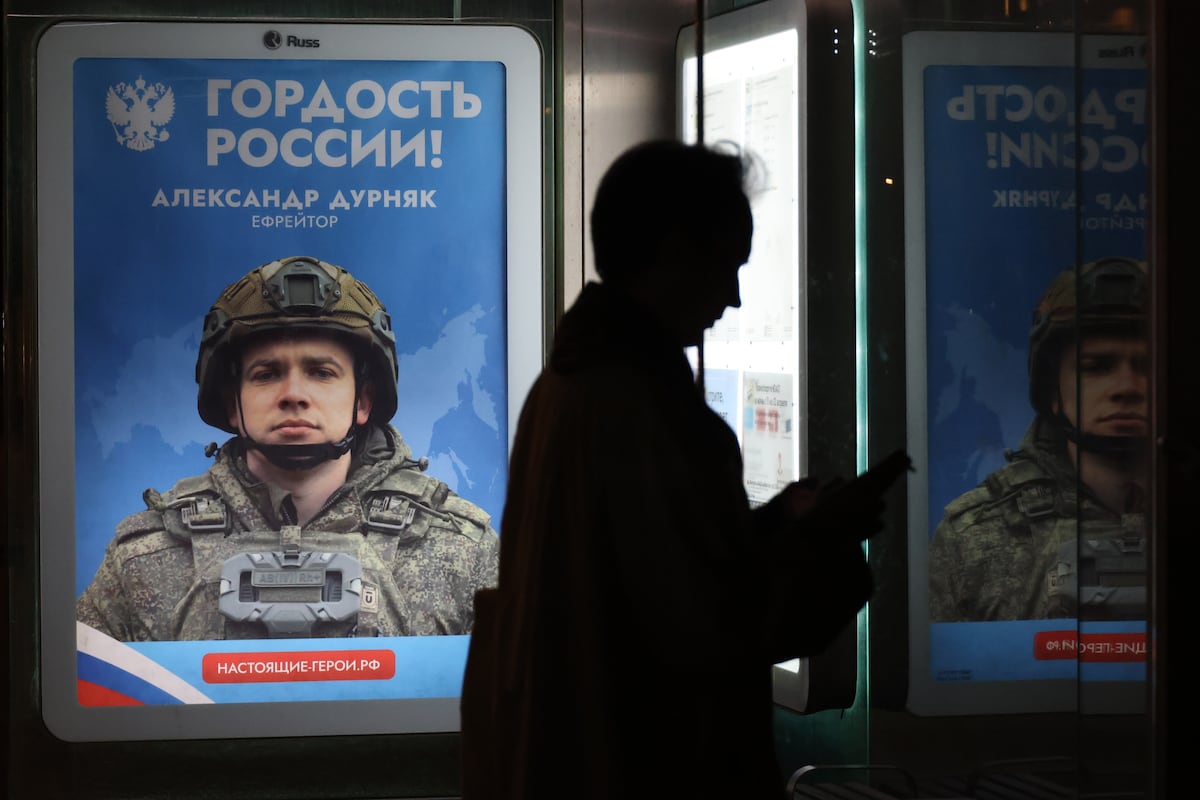
PARIS — Russia could be ready to start a regional conflict with NATO within a year after the end of hostilities in Ukraine, with the aim of creating political division in the alliance, according to Dutch military intelligence service MIVD.
Under the most favorable conditions for Russia, it could build up enough combat power for a regional challenge to NATO within a year after fighting stops in Ukraine, the MIVD wrote in its annual report . Russia’s goal would not be to defeat the alliance militarily, but to divide it through limited territorial gains, if necessary under threat of nuclear weapons use, the MIVD said.
As long as Russia is fighting in Ukraine, a conventional war against NATO is “virtually out of the question,” the Dutch intelligence service wrote in the report published on Tuesday. However, the MIVD said Russia is already making concrete preparations for a possible conflict with the alliance
“Russia poses the greatest and most direct threat to peace and stability in Europe, and thus to our national security and our interests,” MIVD Director Vice Adm. Peter Reesink said in a preamble to the report.
Western intelligence services broadly agree that Russia is actively preparing for potential conflict with NATO, though there’s less agreement on timing. Estonia’s Foreign Intelligence Service said in February it doesn’t expect Russia to militarily attack any NATO member state in the coming year, indicating the assessment will likely be similar next year as Europe bolsters its deterrence.
The war in Ukraine is part of a long-standing effort to “fundamentally alter” Europe’s security architecture, according to the MIVD. With Russia seeking a multipolar world in which it is one of the superpowers, and with liberal-democratic values posing a threat to Russia’s leadership and internal stability, the war in Ukraine takes on an existential character, it said.
Conflict-mitigating factors in place during the Cold War, such as a clear world order, arms control and structured dialogue, now appear largely absent, the report said. At the same time, the world is on the eve of a technological revolution around artificial intelligence, quantum computing and bio-science “whose consequences are not yet fully foreseeable.”
Russia’s use of methods just below the threshold of open conflict “creates a real risk of unintended and therefore difficult-to-control escalation,” the MIVD said, adding that the current unpredictable United States security policy could influence Moscow’s cost-benefit calculations.
Russia in October tested a nuclear-powered cruise missile and a nuclear-powered torpedo that will be equipped with nuclear warheads in the future, and has likely stationed the Oreshnik intermediate range ballistic missile in Belarus, according to the MIVD, which said “these weapons have an extremely destabilizing effect during crises, partly due to the extremely short warning time.”
Russia suffered about 1.2 million permanent casualties since 2022, including more than 500,000 deaths, compared to about half a million Ukrainian permanent casualties, according to the MIVD which noted a “concerning” convergence in daily combat-death ratios in 2025 that’s unfavorable to Ukraine.
Despite the losses in Ukraine, Russia still expanded its armed forces in 2025 by recruiting and training personnel, producing heavy weapon systems, and preparing strategic ammunition reserves, according to the report. The economic feasibility remains to be seen, and ongoing high material and personnel losses in Ukraine could frustrate the planned growth, it said.
“As long as the Ukrainian defense holds, the build-up of a potential Russian military threat toward NATO territory is thereby delayed,” the MIVD said.
Combat experience gained in Ukraine and the ability to integrate this into training have resulted in a “significant qualitative improvement” in the Russian armed forces, particularly in unmanned systems, according to the MIVD.
The Zapad-2025 exercise in Belarus in September showed improvements in command and control and integration of unmanned systems at all levels, and the MIVD assesses the Russian forces are “demonstrating a strong adaptive capacity.”
“The Russian armed forces have not only grown larger but have also become more effective than before the war in Ukraine,” the MIVD said.
Russia has managed to keep up large-scale weapons production despite sanctions and limited access to raw materials and components, and large-scale deployment of one-way attack drones show the country capable of maintaining “an adaptive weapons industry both quantitatively and qualitatively.”
The Russian space industry has significantly weakened due to economic sanctions and a brain drain of highly-educated technical personnel, and a lack of independently developed satellites for intelligence, surveillance and reconnaissance (ISR) means Russia “cannot fully achieve the pace required for modern warfare.”
To compensate, Russia is turning to solutions including publicly available satellite imagery, buying off-the-shelf satellites and satellite imagery from Chinese companies, and deploying alternative intelligence sensors such as unmanned aerial vehicles.
“The MIVD observes a concerning collaboration between Chinese companies and the Russian state in the field of space technology,” the report said. “This collaboration is expected to intensify further in the coming years.”
China maintains a position of “pseudo-neutrality” regarding the war in Ukraine, but in practice has “significantly intensified” military cooperation with Russia over the past year, according to the MIVD. The experience of Russian forces in Ukraine is of “great interest” to the People’s Liberation Army, which has little combat experience, the Dutch intelligence service said.
The MIVD said indications are of Chinese leadership drawing a connection between the theaters in Europe and East Asia, meaning the threat posed by China is “broadening and deepening.”
The People’s Liberation Army reorganized its cyber units in 2024, which the MIVD assesses allowed China to better integrate offensive cyber capabilities with military operations, and the country is now likely on par with the U.S. in terms of offensive cyber capabilities.
Chinese cyber espionage systemically targets the Western defense industry, according to the MIVD. The service estimates likely only a “limited portion” of Chinese cyber operations against Dutch interests are detected and mitigated.
The world is in the early stages of a new nuclear arms race, with a substantial expansion of China’s strategic nuclear arsenal, according to the intelligence services.
Weak arms control, the prospect of China as a third nuclear super power and advancing technology, “particularly the potential impact of artificial intelligence and quantum computing on nuclear decision-making processes,” create such a complicated security situation “that this arms race will be more difficult to curb than during the Cold War,” the MIVD said.
Rudy Ruitenberg is a Europe correspondent for Defense News. He started his career at Bloomberg News and has experience reporting on technology, commodity markets and politics.
巴黎——据荷兰军事情报局 (MIVD) 称,俄罗斯可能准备在乌克兰敌对行动结束后一年内与北约发动地区冲突,目的是在北约内部制造政治分裂。
俄罗斯军事情报局在其年度报告中指出,在对俄罗斯最有利的条件下,乌克兰战事结束后一年内,俄罗斯即可积蓄足够的战斗力,对北约发起区域性挑战。该报告还指出,俄罗斯的目标并非在军事上击败北约,而是通过有限的领土扩张来分裂北约,必要时甚至会以核武器相威胁。
荷兰情报机构周二发布的报告指出,只要俄罗斯仍在乌克兰作战,与北约发生常规战争“几乎是不可能的”。然而,荷兰内政部表示,俄罗斯已经在为可能与北约发生的冲突做具体准备。
“俄罗斯对欧洲的和平与稳定构成最大、最直接的威胁,因此也对我们的国家安全和利益构成威胁,”军事情报局局长彼得·里辛克海军中将在报告的前言中写道。
西方情报机构普遍认为,俄罗斯正在积极备战与北约的潜在冲突,但对于冲突发生的具体时间,各方意见不一。爱沙尼亚对外情报局今年2月表示,预计俄罗斯在未来一年内不会对任何北约成员国发动军事攻击,这表明随着欧洲加强威慑,明年的评估结果可能与此类似。
据俄罗斯联邦政治、民主和政治部(MIVD)称,乌克兰战争是长期以来旨在“从根本上改变”欧洲安全架构的行动的一部分。该部门表示,鉴于俄罗斯寻求建立一个多极世界,并力图成为超级大国之一,而自由民主价值观对俄罗斯的领导地位和内部稳定构成威胁,乌克兰战争具有了生死攸关的意义。
报告指出,冷战时期存在的冲突缓解因素,例如明确的世界秩序、军备控制和结构化对话,如今似乎大多已不复存在。与此同时,世界正处于一场围绕人工智能、量子计算和生物科学的技术革命的前夜,“其后果尚无法完全预见”。
俄罗斯国防部表示,俄罗斯使用游走在公开冲突门槛之下的方法“造成了意外升级的真正风险,因此也难以控制”,并补充说,当前难以预测的美国安全政策可能会影响莫斯科的成本效益计算。
据俄罗斯国防部称,俄罗斯在10月份测试了一枚核动力巡航导弹和一枚未来将配备核弹头的核动力鱼雷,并且可能已经在白俄罗斯部署了“奥列什尼克”中程弹道导弹。国防部表示,“这些武器在危机期间具有极强的破坏性作用,部分原因是其预警时间极短。”
据乌克兰内政部统计,自 2022 年以来,俄罗斯遭受了约 120 万永久性伤亡,其中包括超过 50 万例死亡,而乌克兰的永久性伤亡约为 50 万例。内政部指出,到 2025 年,两国每日战斗死亡人数将出现“令人担忧的”趋同,这对乌克兰不利。
报告指出,尽管在乌克兰遭受损失,俄罗斯仍计划在2025年通过招募和训练人员、生产重型武器系统以及储备战略弹药来扩充其武装力量。报告称,此举的经济可行性仍有待观察,而乌克兰持续的大量物资和人员损失可能会阻碍这一既定增长计划。
“只要乌克兰的防御能够守住,俄罗斯对北约领土的潜在军事威胁就会被延缓,”乌克兰国防部表示。
据俄罗斯军事工业部称,在乌克兰获得的实战经验以及将其融入训练的能力,使俄罗斯武装部队,特别是无人系统,取得了“显著的质量提升”。
9 月在白俄罗斯举行的 Zapad-2025 演习表明,各级指挥控制和无人系统集成能力均有所提高,俄罗斯国防部评估认为,俄罗斯军队“展现出了强大的适应能力”。
“俄罗斯武装部队不仅规模扩大了,而且比乌克兰战争之前更加高效,”俄罗斯军事情报局表示。
尽管受到制裁,且原材料和零部件获取受限,俄罗斯仍然设法维持了大规模的武器生产,大规模部署单向攻击无人机表明,该国有能力在数量和质量上维持“适应性武器工业”。
由于经济制裁和高学历技术人才流失,俄罗斯航天工业严重衰弱,而且缺乏独立研发的情报、监视和侦察 (ISR) 卫星,这意味着俄罗斯“无法完全达到现代战争所需的速度”。
为了弥补这一不足,俄罗斯正在寻求各种解决方案,包括利用公开的卫星图像、从中国公司购买现成的卫星和卫星图像,以及部署无人机等替代情报传感器。
报告称:“俄罗斯联邦航天工业和工业部注意到中国企业与俄罗斯政府在航天技术领域存在令人担忧的合作。预计未来几年这种合作将进一步加强。”
据荷兰军事情报局(MIVD)称,中国在乌克兰战争问题上保持着“伪中立”立场,但实际上在过去一年中与俄罗斯的军事合作“显著加强”。该情报机构表示,俄罗斯军队在乌克兰的经验对缺乏实战经验的中国人民解放军“意义重大”。
军事情报与安全部表示,种种迹象表明,中国领导层正在将欧洲和东亚的战区联系起来,这意味着中国构成的威胁正在“扩大和加深”。
中国人民解放军于 2024 年重组了网络部队,MIVD 评估认为,这使得中国能够更好地将进攻性网络能力与军事行动相结合,而中国现在在进攻性网络能力方面可能已经与美国不相上下。
荷兰国防工业部(MIVD)指出,中国网络间谍活动系统性地针对西方国防工业。该部门估计,针对荷兰利益的中国网络行动中,可能只有“有限一部分”能够被发现和应对。
据情报部门称,世界正处于新一轮核军备竞赛的早期阶段,中国的战略核武库正在大幅扩张。
军事情报与安全部表示,薄弱的军控、中国成为第三个核超级大国的前景以及技术的进步,“特别是人工智能和量子计算对核决策过程的潜在影响”,造成了如此复杂的安全形势,“以至于这场军备竞赛将比冷战时期更难遏制”。
鲁迪·鲁伊滕贝格是《防务新闻》的欧洲记者。他的职业生涯始于彭博新闻社,拥有报道科技、大宗商品市场和政治方面的经验。