How a missed 2,000-kueh order pushed a heritage Singapore brand to adopt AI一笔漏接的2000份糕点订单如何促使新加坡一家历史悠久的品牌采用人工智能
Discover how heritage brand HarriAnns Nonya Table adopted AI to streamline orders, reduce errors, and modernise its traditional kueh business in Singapore. Read more at straitstimes.com.
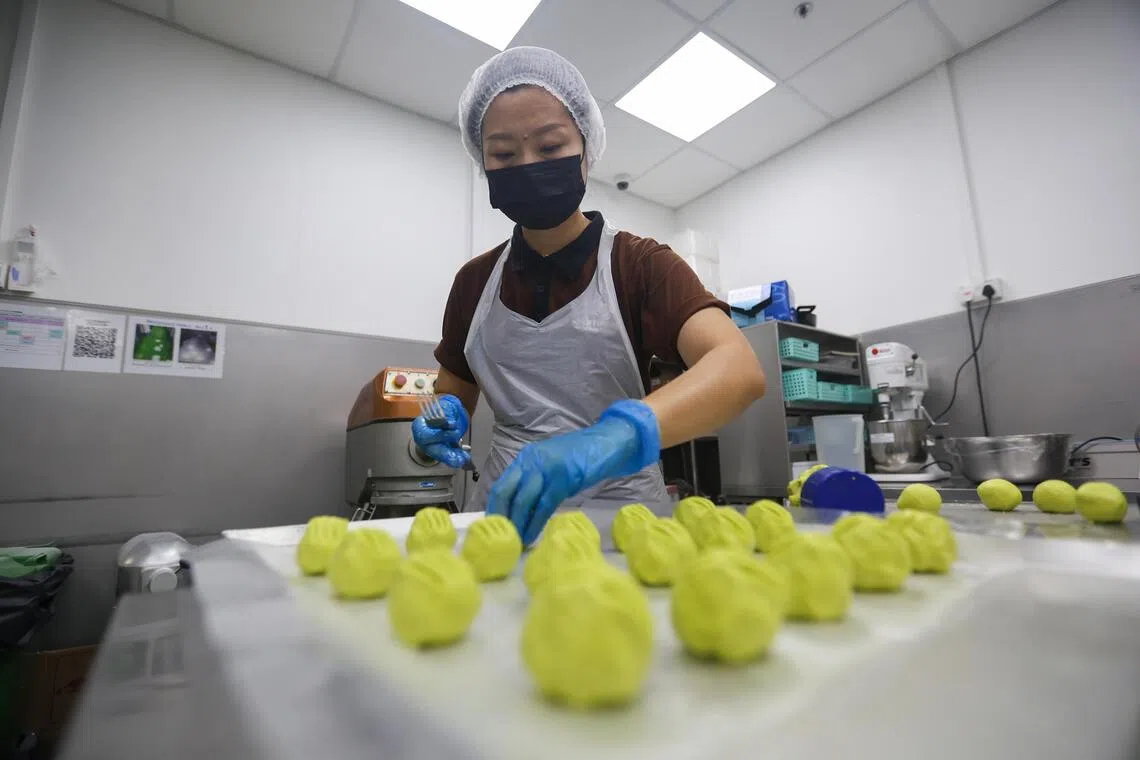
HarriAnns Nonya Table central kitchen staff making kueh bugis in JTC Bedok Food City.
Published Sep 26, 2026, 05:00 AM
Updated Sep 26, 2026, 05:00 AM
SINGAPORE – A phone call from the chef of a major hotel in March 2025 marked a stressful turning point for Alan Tan.
The chief executive officer of heritage food and beverage brand HarriAnns Nonya Table was told a major 2,000-kueh order had been missed.
The firm, which supplies freshly made traditional cakes and dishes to hotels, was supposed to have prepared the food the day before. In Singapore, kueh is a Hokkien dialect term for steamed cakes.
The mistake happened as several pages of the hotel’s purchase order had not been printed. Therefore , they were left out of the daily tally that administrative staff manually compiled for the central kitchen.
“I told my kitchen staff: ‘I don’t care, you have to make the order right now’,” said Tan.
HarriAnns Nonya Table benefited from Enterprise Singapore’s Enterprise Development Grant, which covered half the cost of the AI system, which cost less than $50,000 to develop. ST PHOTOS: JASEL POH
HarriAnns Nonya Table benefited from Enterprise Singapore’s Enterprise Development Grant, which covered half the cost of the AI system, which cost less than $50,000 to develop.
ST PHOTOS: JASEL POH
Chaos ensued. The kitchen team had to blast-chill the traditional cakes, which would usually take up to five hours to set, while drivers scrambled on just two hours’ notice to rush the delivery to the hotel.
The impact quickly snowballed. Chefs worked overtime to catch up on regular orders, some of the company’s eight cafe outlets ran short of kueh, and staff morale took a hit, said Tan.
“The entire ecosystem of the company centres on the ordering system,” said Sharon Goh, co-owner of HarriAnns and Tan’s wife.
The incident exposed cracks in an ordering process that relied on e-mails, printed orders and manual tallies on Microsoft Excel. It provided a wake-up call to digitalise, but many of the company’s clients are big hotels with rigid operations.
“Hotels deal with many suppliers, and everything is streamlined for their benefit. For us, the opportunity is not to push our own ordering portal, but to use AI to integrate into their ecosystem,” said Tan.
Typically, hotels send purchase orders as attachments to e-mails. Even within the same hotel, different restaurants or departments generate separate purchase orders. These advance orders – whether for the next day or the following week – are printed out and manually tabulated on a spreadsheet daily for the central kitchen.
Things get more complicated when customers use different terms to refer to the same items. Ondeh ondeh, for instance, may be listed as sweet potato balls or coconut balls. Curry chicken noodles could be referred to as curry noodles or Nonya curry.
It takes two administrative staff to manually comb through the variations to finalise the next day’s delivery.
HarriAnns Nonya Table’s staff manually compiling orders through a spreadsheet at their central kitchen at JTC Bedok Food City on April 9. ST PHOTO: JASEL POH
HarriAnns Nonya Table’s staff manually compiling orders through a spreadsheet at their central kitchen at JTC Bedok Food City on April 9.
HarriAnns makes all its cakes the night before their scheduled delivery, as they take time to cool down before they can be sliced and packed.
The incident prompted Tan, the third-generation owner of the business, to turn to artificial intelligence tools. Development of the platform by Singapore tech consultancy Knovel Engineering began around July 2025.
The move earned HarriAnns a prominent mention by Prime Minister Lawrence Wong in his February Budget 2026 speech as a prime example of AI adoption among local businesses.
The platform combs through all the purchase orders that arrive in the e-mail, tallies the numbers and works out the number of kueh the central kitchen has to make for the next day in under two hours.
The system has been trained to recognise all the naming variations of over 120 unique product codes on HarriAnn’s menu for corporate clients and cafe outlets. The system was rolled out in June to consolidate online orders as well as those from its eight cafes.
With the new AI software, staff can directly upload purchase orders, which will be analysed by the software. Details of the purchase orders, such as the quantities of different kueh and delivery dates, will then be reflected on the site. ST PHOTOS: JASEL POH
With the new AI software, staff can directly upload purchase orders, which will be analysed by the software. Details of the purchase orders, such as the quantities of different kueh and delivery dates, will then be reflected on the site.
The company benefited from Enterprise Singapore’s Enterprise Development Grant, which covered half the cost of the AI system, which cost less than $50,000 to develop.
“That reduced a whole day’s work for my admin staff to just two hours. They just have to spend time checking the AI’s output,” said Tan.
The AI platform can also spot anomalies in ordering patterns – such as when a hotel client misses out on a particular product that they usually order. An alert can be sent so the administrative staff can give the client a call to check if that was a genuine change or a forgotten order.
The AI system will also provide better visibility of consumer trends and demands for future planning, said Tan.
He believes that the latest milestone for HarriAnns, whose roots date back to the 1940s, will take the brand into the digital age.
HarriAnns Nonya Table's kueh salat and rainbow kueh being wrapped in individual packaging in JTC Bedok Food City. ST PHOTO: JASEL POH
HarriAnns Nonya Table's kueh salat and rainbow kueh being wrapped in individual packaging in JTC Bedok Food City.
The legacy began with Tan’s grandmother, who sold handmade kueh and glutinous rice from a pushcart. The business later moved to Tiong Bahru Food Centre in the 1950s under his father, before Tan opened its first cafe in Bugis Junction in 2014 and grew it into an eight-outlet chain.
“We are a heritage brand and we sell traditional food, but we don’t have to do things the traditional way. We are always trying to be at the forefront because we are worried about being obsolete in the future,” said Goh.
AI/artificial intelligence
Artificial Intelligence
HarriAnns Nonya Table 中央厨房工作人员在 JTC Bedok 美食城制作粿布吉斯。
发布于 2026 年 9 月 26 日上午 5:00
更新于2026年9月26日上午5:00
新加坡——2025 年 3 月,一位知名酒店主厨打来的电话,标志着艾伦·谭人生的一个压力巨大的转折点。
传统食品饮料品牌 HarriAnns Nonya Table 的首席执行官被告知,他们漏掉了一笔 2000 份糕点的订单。
这家向酒店供应新鲜传统糕点和菜肴的公司,本应在前一天准备好食物。在新加坡,“kueh”是福建话中对蒸糕的称呼。
出错的原因是酒店采购订单的几页没有打印出来。因此,这些页面没有被计入行政人员手动为中央厨房统计的每日总数中。
“我告诉我的厨房员工:‘我不管了,你们现在必须马上完成订单’,”谭说道。
HarriAnns Nonya Table餐厅受益于新加坡企业发展局的企业发展补助金,该补助金涵盖了人工智能系统一半的费用,而该系统的开发成本不到5万新元。(海峡时报照片:Jasel Poh)
HarriAnns Nonya Table 受益于新加坡企业发展局的企业发展补助金,该补助金涵盖了人工智能系统一半的费用,而该系统的开发成本不到 5 万美元。
ST 摄影:Jasel Poh
现场一片混乱。厨房团队不得不快速冷冻通常需要五个小时才能凝固的传统蛋糕,而司机们则在接到通知仅两个小时后,争分夺秒地将蛋糕送到酒店。
谭表示,影响迅速扩大。厨师们加班加点以赶上正常订单,公司旗下八家咖啡店中部分出现了糕点短缺,员工士气也受到了打击。
“公司的整个生态系统都围绕着订购系统展开,”HarriAnns 的共同所有人、Tan 的妻子 Sharon Goh 说。
此次事件暴露了公司订购流程的缺陷,该流程依赖于电子邮件、纸质订单和在微软Excel上手动统计。这给公司敲响了数字化转型的警钟,但该公司许多客户都是运营模式僵化的大型酒店。
“酒店与众多供应商打交道,所有流程都经过优化,以方便他们。对我们来说,机会不在于推广我们自己的订购平台,而在于利用人工智能融入他们的生态系统,”谭说道。
通常情况下,酒店会将采购订单作为电子邮件附件发送。即使在同一家酒店内,不同的餐厅或部门也会生成不同的采购订单。这些提前订购的订单——无论是第二天的还是下周的——都会被打印出来,并由中央厨房每天手动整理到电子表格中。
当顾客用不同的词语指代同一种食物时,情况就变得更加复杂了。例如,Ondeh ondeh 可能被称作红薯球或椰子球。咖喱鸡肉面可能被称为咖喱面或娘惹咖喱。
需要两名行政人员手动梳理各种差异,才能最终确定第二天的交货安排。
4月9日,HarriAnns Nonya Table的员工在位于JTC Bedok Food City的中央厨房,通过电子表格手动整理订单。(海峡时报摄影:JASEL POH)
4月9日,HarriAnns Nonya Table的员工在JTC Bedok Food City的中央厨房通过电子表格手动整理订单。
HarriAnns 的所有蛋糕都是在预定送货的前一天晚上制作的,因为蛋糕需要时间冷却才能切片和包装。
这一事件促使这家企业的第三代传人谭先生转向人工智能工具。该平台由新加坡科技咨询公司Knovel Engineering于2025年7月左右开始开发。
此举让哈里安公司在2026年2月的财政预算案演讲中被总理黄循财重点提及,称其为本地企业采用人工智能的典范。
该平台会仔细查看所有通过电子邮件收到的采购订单,统计数量,并在不到两个小时内计算出中央厨房第二天需要制作的糕点数量。
该系统经过训练,能够识别HarriAnn面向企业客户和咖啡馆门店提供的菜单上120多种独特产品代码的所有名称变体。该系统于6月投入使用,用于整合线上订单以及来自其八家咖啡馆的订单。
借助这套全新的人工智能软件,员工可以直接上传采购订单,软件将自动进行分析。订单详情,例如不同糕点的数量和交货日期,随后都会显示在网站上。ST 摄影:JASEL POH
借助这套全新的人工智能软件,员工可以直接上传采购订单,软件将对订单进行分析。订单详情,例如不同糕点的数量和交货日期,随后将显示在网站上。
该公司受益于新加坡企业发展局的企业发展补助金,该补助金涵盖了人工智能系统一半的费用,而该系统的开发成本不到 5 万美元。
“这使我的行政人员原本一天的工作量减少到了两个小时。他们只需要花时间检查人工智能的输出结果,”谭说道。
人工智能平台还能识别订单模式中的异常情况,例如酒店客户漏订了他们通常会订购的特定产品。系统会发出警报,以便管理人员致电客户确认这是否是客户的真实订单变更或遗漏订单。
谭表示,人工智能系统还将更好地展现消费者趋势和需求,以便进行未来规划。
他认为,HarriAnns(其历史可以追溯到 20 世纪 40 年代)的最新里程碑将带领该品牌进入数字时代。
在裕廊集团勿洛美食城,HarriAnns Nonya Table 的娘惹糕点和彩虹糕正在被分装成独立包装。海峡时报摄影:Jasel Poh
在 JTC Bedok Food City,HarriAnns Nonya Table 的娘惹糕点和彩虹糕点正在被单独包装。
这份传承始于陈氏的祖母,她最初推着小车售卖手工糕点和糯米饭。20世纪50年代,陈氏的父亲将生意搬到了中峇鲁美食中心。2014年,陈氏在武吉士购物中心开设了第一家咖啡馆,并将其发展成为拥有八家分店的连锁店。
“我们是一个拥有悠久历史的品牌,销售传统食品,但我们不必墨守成规。我们始终努力走在时代前沿,因为我们担心将来会被淘汰,”吴先生说道。
人工智能
人工智能