How Stage 4 lung cancer changed this former nightlife boss: From 5 litres of beer a night to Everest Base Camp四期肺癌如何改变了这位前夜店老板:从每晚5升啤酒到珠穆朗玛峰大本营
After spending decades running pubs and F&B businesses, Michael Chuah’s lung cancer diagnosis made him rethink his priorities. Now he finds meaning in hugging trees, travelling, hiking and supporting other cancer patients.
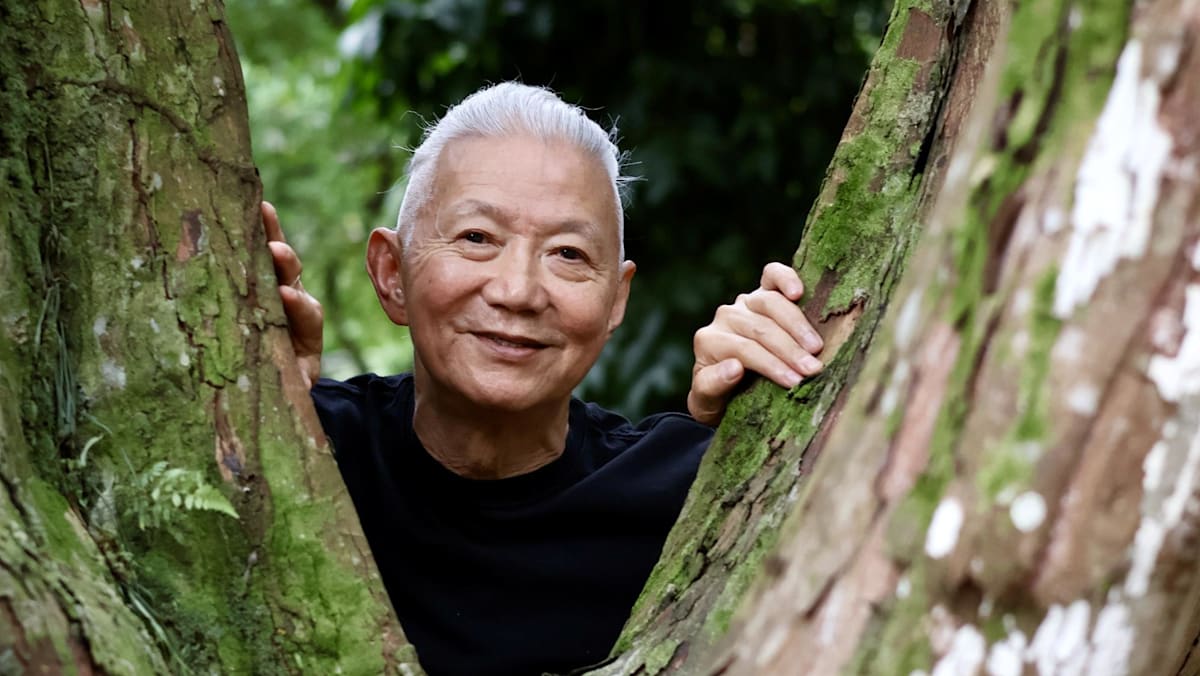
After spending decades running pubs and F&B businesses, Michael Chuah’s lung cancer diagnosis made him rethink his priorities. Now he finds meaning in hugging trees, travelling, hiking and supporting other cancer patients.
Michael Chuah's lung cancer diagnosis made him rethink his priorities after spending decades running pubs and F&B businesses. (Photo: Eveline Gan)
This audio is generated by an AI tool.
“Go on, try hugging it,” Michael Chuah said, gesturing to a tree at Singapore Botanical Gardens where the interview took place.
Sensing this writer’s hesitation, the 67-year-old demonstrated, gently wrapping his arms around the trunk, eyes closed and forehead rested against the rough bark.
Five years ago, this would not have been the Michael his family and social circle knew. This was the man who once ran Singapore’s liveliest pubs including the former JJ Mahoney.
Back then, days revolved around the nightlife business. Nights were spent weaving through crowds, socialising and clinking beer glasses under bar lights.
At the peak of his career, drinking five litres of beer every night was not unusual. Before he turned 50, he was also smoking two packs of cigarettes a day.
Michael Chuah in front of Brauhaus Restaurant & Pub, which he ran with his wife, back in 2007. (Photo: Michael Chuah)
After a Stage 4 lung cancer diagnosis in 2021, followed by two relapses, Chuah now spends his days mostly outdoors. He hikes, meditates, does qigong, hugs trees and plans solo overseas expeditions. He even made it to Mount Everest Base Camp last year.
Instead of making small talk with customers, he now exchanges information and offers support to fellow lung cancer patients through a WhatsApp chat group he set up.
Cancer, he told CNA Lifestyle, made him rethink his life, priorities and relationships around him.
“I feel like a 360-degree changed man,” he said. “I’m grateful for every day, and want to enjoy whatever time I have and appreciate the people around me.”
A STAGE 4 DIAGNOSIS THAT CHANGED HIS LIFE
Before his cancer diagnosis, Chuah’s world revolved around running his businesses “seven days a week” over three decades. That all changed when he was diagnosed with Stage 4 lung cancer in December 2021.
It started with pain in his left leg. He was also experiencing pain in his left shoulder, which he initially attributed to a weight-training injury.
An MRI scan revealed a lump in his left lung. Further checks showed that the cancer had spread to his bones, lymph nodes and adrenal glands.
Chuah thought the doctor had made a mistake. “I just couldn’t understand how I could have Stage 4 lung cancer when I didn’t feel any symptoms or pain in my lungs,” he said.
The hardest change of all was learning to be alone. I reached a very dark place.
Lung cancer is the third most common cancer among both men and women in Singapore, with majority of cases detected only when the cancer has spread. Based on Singapore Cancer Registry data, approximately three in five cases are diagnosed at Stage 4.
The lungs are hidden within the rib cage, and as such, small lung tumours are not palpable (touched or felt through physical examination) and unlikely to cause any symptoms, said Dr Tan Chee Seng, senior medical oncologist at OncoCare Cancer Centre
“By the time (the tumours) grow to a sizeable mass, or metastasise to other body parts, to cause symptoms, it would have been in later stages,” he explained.
According to Dr Tan, who treated Chuah, lung cancer typically spreads to areas such as the brain, bone, lymph node, level and adrenal glands. Lung cancer that has spread to the bone can cause pain in the affected area, and any movement can aggravate pain.
RETHINKING FRIENDSHIPS, SUCCESS AND WHAT MATTERS
By the time he was diagnosed, Chuah found himself unable to walk and was using a wheelchair. The hardest part for the extrovert, who was used to being surrounded by people, was the isolation.
“The hardest change of all was learning to be alone. Suddenly everything stopped… I reached a very dark place,” he said.
Michael Chuah. (Photo: Eveline Gan)
Chuah underwent intensive treatment of targeted therapy, then chemotherapy and immunotherapy.
One of the illusions that fell away during this time was the idea he had many good friends.
“After I went through this journey, I tell you, I can count my good friends – not even five fingers. I was quite shocked, but I don’t blame anyone anymore,” he said. The handful of friends who consistently showed up, he added, were “enough”.
He also realised how much his family cared for him. His wife Sanni, who was also his business partner, took over most of his work responsibilities at Brauhaus Restaurant & Pub. They ran the business together since 1989.
Michael Chuah in 2019, the 30th anniversary of Brauhaus Restaurant and Pub. (Photo: Michael Chuah)
His youngest son, then 22, quit his job as a chef at another restaurant to help the family business.
“They told me if necessary, they would sell the house to pay for my treatment. At my lowest point, knowing my family was standing behind me gave me a lot of strength. I wasn’t fighting this battle alone,” Chuah said.
A turning point came when he started walking independently again after beginning targeted therapy.
“I told myself ‘Now that I can walk again, I want to continue walking’. I realised that perhaps my life wasn’t over yet. I could still move forward, one step at a time,” he said.
These days, his routine consists of 30 minutes of stretching each morning, five-kilometre walks in the evenings, as well as regular qigong and gym sessions.
Michael Chuah's fitness routine these days includes gym sessions. (Photo: Michael Chuah)
LEARNING TO LIVE AGAIN
In an unexpected twist, Chuah said that cancer gave him the impetus to retire early and rediscover travelling, something he enjoyed in his younger days.
About two years after his diagnosis, he travelled to Taiwan to hike, and has not stopped since. He has since travelled to Xining, Tibet, Nepal and Bhutan, and reached the Mount Everest Base Camp last year without supplemental oxygen.
Michael Chuah at Mt Everest Base Camp in June 2025. (Photo: Michael Chuah)
Exploring these places, he said, is a reminder that “I am still living”.
“My wife and friends were very worried because I have lung cancer and was still going through treatment. But I told myself ‘I have cancer, but cancer doesn’t have to stop me from living,” he said.
He is now planning another solo trip, from Antarctica to Argentina, with stops in Paraguay, Bolivia, Peru, Ecuador, Uruguay and Brazil along the way.
Michael Chuah in Tibet in June 2025. (Photo: Michael Chuah)
To plan for these trips, Chuah spends time preparing himself physically and mentally. Before his Tibet trip for example, he spent two years preparing and researching how other travellers managed the journey and acclimatised to the high altitude. Chuah also consulted with his doctors extensively before embarking on those trips.
While researching ways to deal with stress and recovery during his cancer journey, Chuah came across accounts of other cancer survivors who practised tree hugging.
“I decided to try it myself during my daily walks. To my surprise, I felt really good afterwards, and felt more grounded, calmer and energised. It became a way of connecting with nature and clearing my mind,” he said.
Hugging a Bodhi tree at Thimphu Monastery in Bhutan in June 2025. (Photo: Michael Chuah)
SUPPORTING OTHER LUNG CANCER PATIENTS
The experience of having to navigate the disease also prompted Chuah to do something for other patients.
At one local organisation he approached, Chuah recalled one staff member telling him the support programme had been discontinued, who bluntly added that survival rates for lung cancer were low.
He researched extensively online but wanted to hear from people living in Singapore who understood what it was like to live with disease here.
In April 2025, he started the Learn Lung Cancer Chat Group. The informal WhatsApp chat group currently has 26 members, mostly patients introduced through word of mouth.
“I wanted newly diagnosed patients to have somewhere they could go to share their experiences, and feel there are other people walking the same journey as them,” he said.
Sometimes I forget I have cancer. I live for today.
Chuah continues to receive immunotherapy. His latest scan in April 2026 showed “sustained partial remission”, said Dr Tan, which means that his condition is “stable” and tumours do not appear to be progressing.
Dr Tan said that lung cancer treatment has come a long way with personalised therapies now available based on each patient’s molecular profile. He urged patients to focus on getting timely and appropriate treatment, especially in the initial phases.
“I hope to let patients and their families know that even in the most dire situations such as Stage 4 lung cancer, one should not lose hope,” said Dr Tan. “Stage 4 lung cancer’s prognosis used to be in short months but we have increased survival to years. Some (patients) even achieve long and durable remission.”
For Chuah, the uncertainty of living with the cancer has not disappeared. But neither has his resolve to appreciate each day.
“Sometimes I forget I have cancer. I live for today,” he said.
A single handpicked story that we think you shouldn't miss. Just one a day.
在经营酒吧和餐饮业数十年后,迈克尔·蔡被诊断出肺癌,这让他重新思考人生的重心。如今,他从拥抱树木、旅行、徒步和支持其他癌症患者中找到了生活的意义。
在经营酒吧和餐饮业数十年后,Michael Chuah被诊断出肺癌,这让他重新思考自己的人生重心。(图片:Eveline Gan)
这段音频由人工智能工具生成。
“来吧,试着抱抱它,”迈克尔·蔡说道,同时指向新加坡植物园的一棵树,采访就是在那里进行的。
察觉到这位作者的犹豫,这位 67 岁的老人示范道,他轻轻地用双臂环抱住树干,闭上眼睛,额头抵着粗糙的树皮。
五年前,这并非他的家人和社交圈所认识的迈克尔。他曾是新加坡最热闹的几家酒吧的老板,其中包括之前的JJ Mahoney酒吧。
那时候,白天的生活都围绕着夜生活展开。夜晚,人们穿梭在人群中,在酒吧灯光下社交、碰杯畅饮。
在他事业的巅峰时期,每晚喝五升啤酒并不稀奇。不到五十岁,他每天还要抽两包烟。
2007年,Michael Chuah站在他和妻子共同经营的Brauhaus餐厅酒吧前。(照片:Michael Chuah)
2021年,蔡先生被诊断出患有四期肺癌,之后又两次复发。如今,他大部分时间都待在户外。他徒步旅行、冥想、练习气功、拥抱树木,还计划独自出国探险。去年,他甚至到达了珠穆朗玛峰大本营。
他现在不再与顾客闲聊,而是通过他建立的 WhatsApp 聊天群与肺癌患者交流信息并提供支持。
他告诉 CNA Lifestyle,癌症让他重新思考自己的人生、优先事项以及周围的人际关系。
“我觉得自己焕然一新,”他说。“我感恩每一天,想珍惜拥有的每一分每一秒,也感激身边的人。”
改变他一生的四期诊断
在确诊癌症之前,蔡先生三十多年来一直忙于经营自己的生意,一周七天无休。这一切在他2021年12月被诊断出患有四期肺癌后发生了改变。
最初是左腿疼痛。他的左肩也感到疼痛,起初他以为是举重训练造成的损伤。
核磁共振扫描显示他的左肺有一个肿块。进一步检查表明,癌细胞已经扩散到他的骨骼、淋巴结和肾上腺。
蔡先生认为医生弄错了。“我没有任何症状,肺部也没有疼痛感,我实在无法理解为什么我会得了四期肺癌,”他说。
最难的改变是学会独处。我一度陷入了非常黑暗的境地。
在新加坡,肺癌是男性和女性中第三大常见癌症,大多数病例在确诊时已扩散。根据新加坡癌症登记处的数据,大约五分之三的肺癌病例在确诊时已处于第四期。
肺部隐藏在肋骨内,因此,肺部的小肿瘤通常无法触及(通过体格检查触摸或感觉),也不太可能引起任何症状,OncoCare癌症中心高级肿瘤内科医生陈志成博士说道。
他解释说:“等到(肿瘤)长成相当大的肿块,或者转移到身体其他部位,引起症状时,就已经到了晚期了。”
据曾为蔡医生诊治的陈医生介绍,肺癌通常会扩散到脑、骨、淋巴结、淋巴结和肾上腺等部位。扩散到骨骼的肺癌会导致患处疼痛,任何活动都可能加剧疼痛。
重新思考友谊、成功和什么才是最重要的
确诊时,蔡先生已经无法行走,只能依靠轮椅出行。对于这个习惯了与人交往的外向者来说,最难熬的是孤独。
“最难的改变是学会独处。突然间一切都停止了……我陷入了非常黑暗的境地,”他说。
迈克尔·蔡. (摄影:甘伊芙琳)
Chuah 先接受了靶向治疗,然后接受了化疗和免疫治疗。
在此期间,他逐渐破灭的一个幻想是,他有很多好朋友。
“经历了这一切之后,我告诉你,我的好朋友屈指可数——连五根手指头都数得过来。我当时很震惊,但现在我不再责怪任何人了,”他说。他还补充道,那些始终陪伴在他身边的朋友就“足够了”。
他也意识到家人有多么关心他。他的妻子桑妮同时也是他的生意伙伴,承担了他在布劳豪斯餐厅酒吧的大部分工作。自1989年以来,他们一直共同经营这家餐厅。
2019年,Michael Chuah出席了Brauhaus餐厅酒吧成立30周年庆典。(照片:Michael Chuah)
他最小的儿子当时 22 岁,辞去了在另一家餐厅当厨师的工作,来帮助家族生意。
“他们告诉我,如有必要,他们会卖掉房子来支付我的治疗费用。在我最艰难的时候,知道家人在我身后支持我,给了我很大的力量。我不是孤军奋战,”蔡女士说道。
接受针对性治疗后,他开始能够再次独立行走,这是一个转折点。
“我告诉自己,‘既然我能再次行走,我就想继续走下去’。我意识到,也许我的生命还没有结束。我仍然可以一步一步地向前走,”他说。
如今,他的日常作息包括每天早上 30 分钟的拉伸运动,晚上 5 公里的步行,以及定期的气功和健身锻炼。
迈克尔·蔡(Michael Chuah)近期的健身计划包括去健身房锻炼。(照片:迈克尔·蔡)
重新学习生活
出乎意料的是,蔡先生表示,癌症促使他提前退休,重新拾起旅行的乐趣,这是他年轻时就非常喜欢的事情。
确诊大约两年后,他前往台湾徒步旅行,此后便从未停止过登山的脚步。他先后到访过西宁、西藏、尼泊尔和不丹,并于去年无氧抵达珠穆朗玛峰大本营。
2025年6月,迈克尔·楚阿在珠穆朗玛峰大本营。(照片:迈克尔·楚阿)
他说,探索这些地方让他意识到“我还活着”。
“我的妻子和朋友都很担心,因为我得了肺癌,还在接受治疗。但我告诉自己,‘我得了癌症,但癌症不一定要阻止我活下去,’”他说。
他现在正计划另一次独自旅行,从南极洲到阿根廷,沿途将在巴拉圭、玻利维亚、秘鲁、厄瓜多尔、乌拉圭和巴西停留。
2025 年 6 月,Michael Chuah 在西藏。(照片:Michael Chuah)
为了筹备这些旅行,朱阿会花时间做好身心准备。例如,在去西藏之前,他花了两年时间准备和研究其他旅行者是如何完成旅程并适应高海拔的。朱阿在出发前也与医生进行了充分的咨询。
在研究如何应对癌症治疗期间的压力和康复方法时,蔡先生偶然发现了其他癌症幸存者通过拥抱树木来缓解压力的案例。
“我决定在日常散步时亲自尝试一下。令我惊讶的是,之后我感觉非常好,感觉更加踏实、平静和精力充沛。这成了我亲近自然、清空思绪的一种方式,”他说。
2025年6月,在不丹廷布寺拥抱菩提树。(摄影:Michael Chuah)
支持其他肺癌患者
与疾病抗争的经历也促使蔡先生为其他患者做些事情。
蔡先生回忆说,他曾联系过一家当地机构,其中一名工作人员告诉他,援助计划已经停止,并直言不讳地补充说,肺癌的生存率很低。
他做了很多网上调查,但还是想听听住在新加坡的人怎么说,了解在这里与疾病共存是什么感觉。
2025年4月,他创建了“肺癌学习聊天群”。这个非正式的WhatsApp聊天群目前有26名成员,大部分是患者通过口口相传加入的。
他说:“我希望新确诊的患者能有一个可以分享他们经历的地方,让他们感受到还有其他人与他们走着同样的道路。”
有时候我会忘记自己得了癌症。我活在当下。
蔡先生仍在接受免疫疗法。陈医生表示,他于2026年4月进行的最新扫描结果显示“持续部分缓解”,这意味着他的病情“稳定”,肿瘤似乎没有进展。
陈医生表示,肺癌治疗已经取得了长足的进步,现在可以根据每位患者的分子特征制定个性化治疗方案。他敦促患者重视及时接受适当的治疗,尤其是在疾病初期。
“我希望让患者及其家属明白,即使在最危急的情况下,例如肺癌晚期,也不应该失去希望,”陈医生说。“过去,肺癌晚期患者的生存期只有几个月,但现在我们已经将生存期延长至数年。有些患者甚至可以获得长期且持久的缓解。”
对蔡来说,与癌症抗争的不确定性依然存在,但他珍惜每一天的决心也从未改变。
“有时候我会忘记自己得了癌症。我活在当下,”他说。
每天一篇,我们精心挑选一篇您不容错过的精彩故事。