Akmal Nasrullah: Removing 30pc Bumiputera equity rule for private education will not weaken empowerment agenda阿克马尔·纳斯鲁拉:取消私立教育中土著30%的股权比例规定不会削弱赋权议程。
SUBANG JAYA, Sept 26 — The removal of the 30 per cent Bumiputera equity requirement for private education institutions (IPS) will not undermine the government’s agenda to...
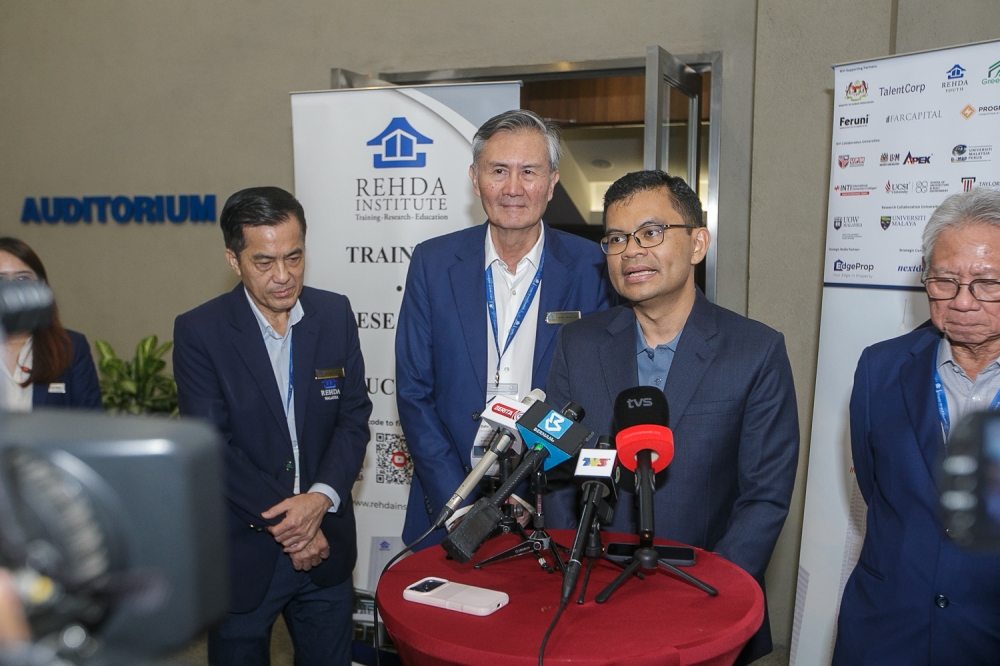
Economy Minister Akmal Nasrullah Mohd Nasir assured that the removal of the 30 percent Bumiputera equity requirement for private education institutions will not compromise the government's commitment to Bumiputera economic empowerment.
He emphasized strengthening the community's economic participation through capacity-building initiatives.
Meanwhile, the RIYI 2026 report unveiled a disparity between student preparedness and employer expectations, highlighting a need for better university-industry collaboration.
The report also noted the rising influence of artificial intelligence on entry-level employment and underscored support for salary transparency and structured career development.
SUBANG JAYA, Sept 26 — The removal of the 30 per cent Bumiputera equity requirement for private education institutions (IPS) will not undermine the government’s agenda to empower the community, Economy Minister Akmal Nasrullah Mohd Nasir said today.
He said implementation and follow-up measures arising from the removal of the requirement would be handled by the relevant ministries according to their respective jurisdictions.
Akmal Nasrullah said the Bumiputera empowerment agenda should instead be viewed in terms of strengthening the community’s capacity to participate in and expand its presence in the economy.
“The government will continue to strengthen the Bumiputera empowerment agenda through approaches that can increase their capacity to continue growing and participating in economic activities,” he said.
He was speaking to reporters after attending the closing ceremony of the Rehda Institute Youth Initiative (RIYI) 2026 here.
Akmal Nasrullah said the government remained focused on increasing Bumiputera participation and capabilities in economic activities, and that removing the equity requirement did not signal any reduction in its commitment to the community’s economic empowerment.
At the event, the minister was also presented with the RIYI 2026 closing summary report, which highlighted a gap between students’ expectations and employers’ assessments of graduates’ workplace readiness.
The survey found that 41.6 per cent of student respondents considered one to three months a realistic period for fresh graduates to begin adding commercial value at work, compared with just 2.9 per cent of employers who held the same view.
Meanwhile, 62 per cent of students said they felt adequately prepared by their universities, while only 32.3 per cent of employers agreed that local universities sufficiently prepared graduates for workplace realities.
The survey involved students and recent graduates from 21 Malaysian universities as well as employers, although the report cautioned that the findings came from targeted surveys and were not nationally representative.
The report also highlighted the growing impact of artificial intelligence on entry-level employment. Some 76.4 per cent of student respondents said they regularly used AI tools, while half of the employers surveyed expected AI to reduce the number of entry-level positions they would hire for over the next three years.
On career development, 79.4 per cent of employers said they were willing to provide structured training and a clear career path in return for a commitment from employees to stay, while 67.6 per cent of students said they would accept such an arrangement.
The survey also found that 82.4 per cent of students and 58.3 per cent of employers supported compulsory salary-range disclosure in job advertisements, while 57.1 per cent of students said they were likely or very likely to work outside Malaysia within five years.
The findings form part of RIYI 2026’s focus on narrowing the gap between universities and industry, with the initiative bringing students together with industry leaders to gain exposure to workplace expectations, career development and the skills needed in a technology-driven economy.
Rehda Institute chairman Datuk Jeffrey Ng Tiong Lip said closer collaboration between universities and industry was needed to give students earlier exposure to workplace realities.
“A university qualification provides an important foundation, but young people also need to understand how workplaces operate, how decisions are made and what employers expect from them.
“This is where RIYI plays an important role in bringing students closer to industry through direct engagement and mentorship, while helping them develop the judgement, resilience, communication and adaptability needed to build sustainable careers,” he said.
The RIYI 2026 programme brought together students from more than 21 universities, with its final session focusing on AI’s impact on junior roles, productivity, decision-making and the capabilities expected of future leaders.
Sarawak to set up authority to manage and develop lakes, says Abang Johari
Kuskop channels nearly RM10b to 270,000 entrepreneurs as of August, seeks bigger Budget 2027 allocation, says minister
Over 86pc of Perlis patients seen within an hour under digital medical record pilot, says Fahmi
经济部长阿克马尔·纳斯鲁拉·莫哈末·纳西尔保证,取消私立教育机构30%的土著股权要求不会损害政府对土著经济赋权的承诺。
他强调要通过能力建设举措来加强社区的经济参与。
与此同时,RIYI 2026 报告揭示了学生准备情况与雇主期望之间的差距,凸显了加强大学与产业界合作的必要性。
该报告还指出人工智能对入门级就业的影响日益增强,并强调支持薪酬透明化和结构化的职业发展。
梳邦再也,9月26日讯——经济部长阿克马尔·纳斯鲁拉·莫哈末·纳西尔今天表示,取消私立教育机构30%的土著股权要求不会损害政府赋予社区权力的议程。
他表示,取消该项要求后产生的后续实施和跟进措施将由相关部委根据各自的管辖范围进行处理。
阿克马尔·纳斯鲁拉表示,土著赋权议程应该从增强土著群体参与经济活动和扩大其在经济中影响力的能力角度来看待。
他说:“政府将继续通过各种方式加强土著赋权议程,以提高土著人民持续发展和参与经济活动的能力。”
他在出席2026年雷达学院青年倡议(RIYI)闭幕式后接受了记者的采访。
阿克马尔·纳斯鲁拉表示,政府仍然致力于提高土著居民参与经济活动的能力,取消股权要求并不意味着政府对增强土著社区经济实力的承诺有所减弱。
在活动中,部长还收到了 RIYI 2026 结业总结报告,该报告强调了学生的期望与雇主对毕业生就业准备情况的评估之间存在差距。
调查发现,41.6% 的受访学生认为,应届毕业生在一到三个月内开始在工作中创造商业价值是一个现实的时间,而持相同观点的雇主仅占 2.9%。
与此同时,62%的学生表示他们觉得自己的大学让他们做好了充分的准备,而只有32.3%的雇主认为当地大学让毕业生为职场现实做好了充分的准备。
该调查对象包括来自马来西亚 21 所大学的学生和应届毕业生以及雇主,但报告提醒,调查结果来自有针对性的调查,并不具有全国代表性。
该报告还强调了人工智能对入门级就业日益增长的影响。约76.4%的受访学生表示他们经常使用人工智能工具,而半数受访雇主预计,未来三年人工智能将减少他们招聘的入门级职位数量。
在职业发展方面,79.4% 的雇主表示,他们愿意提供结构化的培训和清晰的职业发展道路,以换取员工的留任承诺;而 67.6% 的学生表示,他们会接受这样的安排。
调查还发现,82.4% 的学生和 58.3% 的雇主支持在招聘广告中强制披露薪资范围,而 57.1% 的学生表示他们很可能或非常有可能在五年内到马来西亚以外的地方工作。
这些研究结果是 RIYI 2026 致力于缩小大学与产业之间差距的一部分,该计划旨在让学生与行业领袖齐聚一堂,了解职场期望、职业发展以及技术驱动型经济所需的技能。
马来西亚房地产发展商协会主席拿督吴忠立表示,大学与产业界需要更紧密的合作,让学生更早地接触到职场现实。
“大学学历提供了一个重要的基础,但年轻人也需要了解工作场所的运作方式、决策是如何做出的以及雇主对他们的期望。
他说:“RIYI 正是在这方面发挥着重要作用,它通过直接参与和指导,让学生更贴近行业,同时帮助他们培养建立可持续职业生涯所需的判断力、韧性、沟通能力和适应能力。”
RIYI 2026 项目汇聚了来自 21 所大学的学生,其最后一节课重点讨论了人工智能对初级职位、生产力、决策以及未来领导者所需能力的影响。
阿邦佐哈里表示,砂拉越将设立机构管理和开发湖泊。
截至8月,Kuskop已向27万名企业家输送了近100亿令吉资金,部长表示,他正在寻求2027年财政预算案中增加拨款。
法米表示,在数字医疗记录试点项目下,超过86%的玻璃市患者在一小时内就诊,这得益于玻璃市的这项试点项目。