'I receive way more than I've given': The psychologist helping teenage girls through trauma others may not see“我得到的远比我付出的多”:一位心理学家帮助少女走出创伤,而其他人可能看不到这一点。
As the head of the home HCSA Dayspring, Ms Valerie Wong works with teenage girls who have experienced abuse, neglect and other forms of trauma. She tells CNA TODAY why she keeps showing up – and why we should look beyond appearances when it comes to young people in distress.
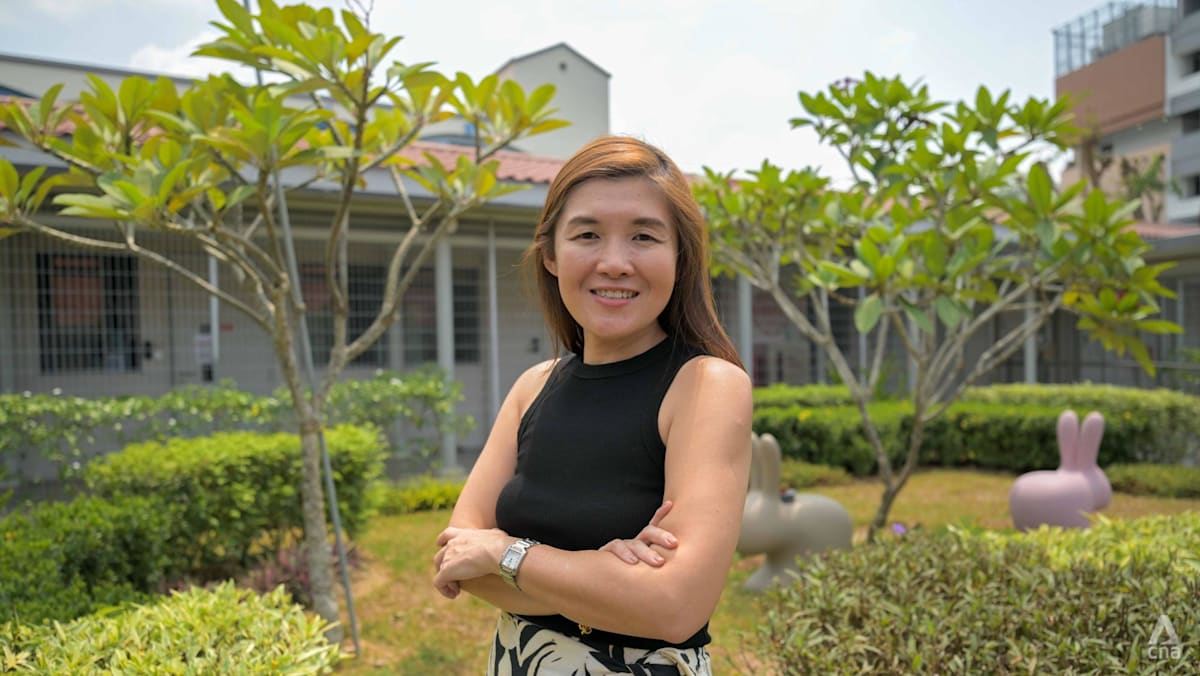
As the head of the home HCSA Dayspring, Ms Valerie Wong works with teenage girls who have experienced abuse, neglect and other forms of trauma. She tells CNA TODAY why she keeps showing up – and why we should look beyond appearances when it comes to young people in distress.
Head of HCSA Dayspring Valerie Wong on Aug 25, 2026. (Photo: CNA/Lim Li Ting)
This audio is generated by an AI tool.
In 2002 , Ms Valerie Wong, then 19, was an intern at a banking institution in the central business district. She was earning S$700 (US$548) a month, more than many of her peers received for similar internships and attachments at the time.
It was a "fancy pants" job at an office near Millenia Walk, one that put her in the same league as well-dressed office workers who patronised expensive gyms and dining establishments.
It was on the pathway to everything she had ever wanted. It was also the "most dreadful month" of her life.
Ms Wong, now 43, had chosen to study finance in a bid to make her family proud. She was pursuing a polytechnic diploma in banking and finance at the time.
But she recalls sitting alone during lunch hours at her internship thinking: "This is what I've been asking to do … How come I feel so disconnected?"
CNA Games Guess Word Crack the word, one row at a time Buzzword Create words using the given letters Mini Sudoku Tiny puzzle, mighty brain teaser Mini Crossword Small grid, big challenge Word Search Spot as many words as you can Show More Show Less
Ms Wong is now on a very different path as the head of HCSA Dayspring, a therapeutic group home in Potong Pasir for teenage girls who have suffered complex trauma, abuse or neglect.
When I visit on a weekday afternoon, Dayspring is quiet. Most of its 20 or so residents – all girls aged 12 to 18 – had not yet returned from school, explained Ms Wong.
She led me to a garden that filled out the foyer, with a lemon tree and an orange swing. Next to those, she pointed out a time capsule marking Singapore's 60th birthday, filled with 60 letters of well-wishes for trauma survivors.
From the way Ms Wong lights up when she talks about her work rehabilitating teen girls who have suffered complex trauma, it's clear that she's proud of the path she's on now as a mental health practitioner.
But while many may praise her for these endeavours, her choice of career wasn't always received with unabashed support – especially, and perhaps most surprisingly, from her own family.
When I asked whether her parents were initially on board with her pivot from finance to psychology, Ms Wong laughed and answered quickly: "No way."
"My parents were business people. They always had this thought: 'You study (psychology) because it's your interest'."
Despite her parents' initial objection to pursuing a career in mental health, Ms Wong went on to pursue higher education in psychology in Australia and eventually became a counselling psychologist.
HCSA Dayspring on Aug 25, 2026. (Photo: CNA/Lim Li Ting)
STUDYING TO BE A PSYCHOLOGIST
As a child, Ms Wong and her younger sister grew up largely in the care of their grandmother as both their parents were working – including her father, who was often busy at his business seven days a week.
Having observed members of her extended family undertaking all sorts of careers, from church workers to nurses and business owners, she was initially torn on what path to follow.
Ms Wong has a distinct memory of sitting at a big table with her relatives shortly after completing her O-Level exams, with everyone discussing what she should pursue next.
"Somebody who's in marketing would say: 'This is the best'. Someone whose brother was in engineering would say engineering is the best," she recalled.
She eventually settled on banking and finance, which sounded safe and practical.
But at 17, she witnessed a schoolmate – who was grappling with depression – abruptly disappear from classes and meet-ups with friends. Ms Wong recalls herself and her friends spending anywhere from 20 minutes to half a day trying to get in touch with this schoolmate, often to no avail.
"She would make an appointment with us and not turn up, or we'll end up having to call her for 20 minutes, half a day, just to find out: 'Hey, what's going on?"
Watching her friend cycle through periods of depression over the years, her moods and weight fluctuating with her highs and lows, spurred Ms Wong to find out more about this struggle.
"It was real. This is not somebody just going through a break-up, or teenage (angst) or a change of job.
"It was something that she really suffered from, so that also got me curious. What is this? What is mental health?"
Over the years, Ms Wong would occasionally share mental health interventions she learnt with her friend, with whom she still keeps in touch, and learnt from her friend's experience as a recipient of mental health services.
When she wanted to learn psychology, Ms Wong said the societal understanding of mental health was a far cry from what it is today.
As a teen, she recalls mental illness often being stigmatised and associated with Woodbridge Hospital, since renamed the Institute of Mental Health.
This was at the core of many "difficult conversations" Ms Wong had with her parents, who initially urged her not to pursue formal studies in mental health and to limit her interest to volunteerism instead.
She recalled her parents putting her up to meeting various people for guidance, including a priest and a psychologist, in a bid to dissuade her.
"In the end, I felt that these sessions were never about counselling me. It was actually for my parents."
Ms Valerie Wong, after graduating from her Bachelor of Arts (BA) Psychology and Sociology at the University of Sydney in 2006. (Photo: Valerie Wong)
In the end, Ms Wong's determination won over her parents. With their support, she pursued a bachelor's degree in psychology and sociology at the University of Sydney, later returning to Australia to do a master's in applied psychology at the University of Queensland.
She would go on to work as a psychologist in Australia for close to four years before returning to Singapore, where she served as a senior counselling psychologist at the Ministry of Social and Family Development (MSF) before eventually joining charity HCSA Community Services in 2024.
As a young psychologist, Ms Wong conducted fieldwork in rural communities in halfway houses in Australia and worked with patients dealing with addictions at the Singapore Anti-Narcotics Association.
One common thread she noticed in her fieldwork was that various diagnoses of bipolar disorder or alcoholism often belied a story of trauma – a tragic adversity at childhood that was not addressed.
Her early days at MSF took a toll as she saw report after report of traumatic situations that others would not be privy to, given that psychologists tend to operate solo.
"I remember sitting in (the) office, looking at stacks of reports, and I was flabbergasted. I'm like, what in the world?"
Working with primary school-aged children in her early 30s, Ms Wong was seeing a side of Singapore many might never encounter.
"I thought it was so sad that just a 20-minute drive from my house, there were children living … with no parents, in environments that are so overly simple."
It took Ms Wong years to get to a point where she was able to read and listen to trauma stories day in and day out without burning out.
What makes her work particularly complex is that she must consider not just the child at the centre of the case, but the whole family or household.
As a trauma-informed practitioner, she is trained to understand what lies behind the behaviour of both child and family, such as a parent who might hit their child, and help other professionals see the subtler effects of trauma.
She highlighted that the national discourse typically focuses on "big" issues such as physical or sexual abuse and domestic violence.
However, for the girls that end up in Dayspring, much of the adversity they face may not be recorded in any headline-making statistic – being removed from their home at a young age, growing up with limited financial circumstances, having a parent with a mental health condition, and so on.
"We may think this happens to just a very specific small group of the population. But it's actually not very true."
Casting back to her old schoolmate who struggled with depression, Ms Wong recalls how her friend's pains seemed acute despite coming from a good home with a family that offered her support.
"All these other women and people that have mental health struggles, with no support and no insights, no friends – I can imagine how lonely that journey must be."
At the home, the girls receive intensive treatment for around 18 to 20 months, and are later reintegrated into their families or the community where possible.
At times, bearing witness to the girls' struggle to make sense of the pain, grief and trauma they've endured can be overwhelming, acknowledged Ms Wong.
"After 10 years, I've read a lot of stories, I've seen a lot of cases. Every now and then, you still read a case, and then you're like: 'Oh my gosh, I can't breathe'."
Despite the emotionally and mentally taxing nature of her work, giving up has never crossed her mind.
"Some days it will be like: 'Why are we here? (Then we do it), and it's like: 'So good, let's do it again'."
Many of the home’s alumni have told her that due to their difficult family backgrounds, Ms Wong's home had provided many sentimental firsts for them: opening presents, celebrating festivities such as Christmas or Chinese New Year with others, or even simply having a meal together.
We may think this happens to just a very specific small group of the population. But it's actually not very true.
Beyond residential placement – followed by six months of after-care support – the home's OWENA Alumni Programme allows former residents to receive continued support as they reintegrate into society.
Ms Wong takes plenty of heart from "graduates" of the home returning to volunteer or bring current residents gifts once they have jobs of their own, or stepping forward to share their stories to encourage corporate donors to support the home's work.
"From a child welfare protection standpoint … nobody wants to stay in (a) children's home," said Ms Wong.
"But the fact that (my alumni) are willing to come back tells me there's something right that the home is doing, and (my thought is then) how do we then multiply that."
Running a residential home, Ms Wong said, is very different from meeting patients in a clinic.
She spends her days – and often nights too – receiving and assessing data points on the girls' conditions and needs, meeting with them at the home and attending to their basic psychological needs.
"I see myself as being that consistent adult who needs to show up for these young ladies, so we can help them through that journey."
She also serves as an advocate for the home in fundraising efforts and meeting would-be corporate donors.
One misconception she often encounters outside of the home and with volunteers is an expectation that children and teens undergoing adversity will present in a certain way.
"A common comment would be: 'Oh, she looks so normal. She's all dressed up like any other teenager'. But what do you expect?"
Ms Wong has also heard pointed comments about someone from a lower-income background spending on seemingly non-essential items such as bubble tea.
"What they didn't (see) was that bubble tea was the only thing she had for the whole day. So that bubble tea, for four bucks, was the happiest thing that she could have that day."
She added: "That's how we all cope with life. We don't always show how we feel."
Ms Valerie Wong (far right) and a team of staff at the opening of HCSA Dayspring's campus at Wan Tho Avenue in 2025. (Photo: Valerie Wong)
"I RECEIVE MORE THAN I'VE GIVEN"
In the past, Ms Wong's parents were reluctant to support her choice of career not only for the stigma surrounding it, but also what they perceived as significantly lower earning potential given the high cost of her studies.
"There's not much return as compared to an engineering, a finance or a business degree," she said.
Having seen the impact of Ms Wong's work on people in need and their loved ones over the years, her parents have since come around.
She recalls a conversation she had with her father about 10 years ago: "In a very casual passing remark, he said: 'I'm sorry, because in those years, I thought that you weren't serious about it'."
These days, Ms Wong has a "very strong" relationship with her parents, who often pitch in to look after her two children while she is busy running the residential home.
Her family has also attended a charity gala she organised for the home and seen her grow from a specialist role to a leadership role, providing support and encouragement along the way.
Her work with teen girls has also taught her many valuable lessons that she takes home as a parent to a seven-year-old boy and five-year-old girl of her own.
"Beyond family, it's so important for a girl to understand that she's worthy and what she has – what we call self-confidence and self-esteem."
Ms Wong added that her work has taught her how even little things can greatly impact the way young children see themselves and relate to each other – for instance, the language parents use around and to their children.
"I receive way more than I've given," she said with a smile.
Get our pick of top stories and thought-provoking articles in your inbox
Stay updated with notifications for breaking news and our best stories
Join our channel for the top reads for the day on your preferred chat app
作为HCSA Dayspring之家的负责人,黄女士致力于帮助遭受虐待、忽视和其他创伤的少女。她向CNA TODAY讲述了她为何坚持不懈,以及为何在面对困境中的青少年时,我们应该超越外表去看待他们。
2026年8月25日,HCSA Dayspring负责人Valerie Wong。(图片:CNA/Lim Li Ting)
这段音频由人工智能工具生成。
2002年,当时19岁的黄女士在中央商务区的一家银行机构实习。她每月收入700新加坡元(548美元),比当时许多同龄人在类似实习岗位上的收入要高。
这是一份在千禧步道附近办公室里的“体面”工作,让她与那些经常光顾高档健身房和餐厅的衣着光鲜的上班族处于同一阶层。
那条路通往她梦寐以求的一切。但同时,那也是她一生中“最糟糕的一个月”。
现年43岁的黄女士选择学习金融是为了让家人感到骄傲。当时她正在攻读理工学院的银行与金融文凭。
但她回忆起实习期间,午休时间独自一人坐在那里想:“这就是我一直想做的事情……为什么我感觉如此脱节?”
CNA游戏 猜词游戏 逐行破解单词 流行词游戏 用给定的字母组成单词 迷你数独 小小谜题,挑战你的大脑 迷你填字游戏 小方格,大挑战 单词搜索 尽可能多地找出单词 显示更多 显示更少
黄女士现在走上了一条截然不同的道路,她是 HCSA Dayspring 的负责人,这是一个位于波东巴西的治疗性集体宿舍,专门收容遭受过复杂创伤、虐待或忽视的少女。
我工作日下午去拜访时,戴斯普林很安静。黄女士解释说,那里大约有20名住户——都是12岁到18岁的女孩——大部分都还没放学回来。
她领我来到门厅里一个花园,花园里有一棵柠檬树和一个橘子秋千。在它们旁边,她指着一个纪念新加坡建国60周年的时间胶囊,里面装着60封写给创伤幸存者的祝福信。
黄女士在谈到她帮助遭受复杂创伤的少女进行康复工作时,脸上洋溢着光彩,显然,她为自己现在作为一名心理健康从业者所走的道路感到自豪。
虽然许多人可能会称赞她的这些努力,但她的职业选择并非总是得到毫不掩饰的支持——尤其是,也许最令人惊讶的是,来自她自己的家人。
当我问她父母最初是否支持她从金融转向心理学时,黄女士笑着迅速回答:“绝对不行。”
“我的父母都是商人。他们一直认为:‘你学习(心理学)是因为你对此感兴趣。’”
尽管黄女士的父母最初反对她从事心理健康方面的工作,但她还是前往澳大利亚深造心理学,最终成为了一名咨询心理学家。
2026年8月25日,HCSA Dayspring。(图片:CNA/林丽婷)
攻读心理学专业
黄女士和她的妹妹小时候主要由祖母照顾,因为她们的父母都在工作——包括她的父亲,他经常一周七天都在忙于自己的生意。
看到她的大家庭成员从事各种各样的职业,从教会工作人员到护士和企业主,她一开始很纠结自己要走哪条路。
黄女士清楚地记得,在完成 O 水准考试后不久,她和亲戚们围坐在一张大桌子旁,大家都在讨论她接下来应该追求什么。
她回忆说:“从事市场营销的人会说:‘这是最好的’。而哥哥是工程师的人则会说工程才是最好的。”
她最终选择了银行和金融行业,这听起来既安全又实用。
但17岁那年,她亲眼目睹一位患有抑郁症的同学突然从课堂和与朋友的聚会中消失。黄女士回忆说,她和朋友们曾花费20分钟到半天的时间试图联系这位同学,但往往无果。
“她会和我们约好时间,但不会来,或者我们最终不得不给她打电话 20 分钟,甚至半天,才能弄清楚:‘嘿,到底发生了什么事?’”
多年来,目睹朋友在抑郁情绪中反复波动,情绪和体重也随着情绪的起伏而波动,这促使黄女士想要更多地了解这种困境。
“这是真的。这不仅仅是某人正在经历分手、青春期烦恼或换工作。”
“她深受其扰,这也让我很好奇。这到底是什么?什么是心理健康?”
多年来,黄女士偶尔会与她的朋友分享她学到的心理健康干预措施,她与这位朋友至今仍保持联系,并从她朋友作为心理健康服务接受者的经历中学习。
黄女士说,当初她想学习心理学时,社会对心理健康的理解与今天相比还相差甚远。
她回忆说,青少年时期,精神疾病常常被污名化,并与伍德布里奇医院(现已更名为精神健康研究所)联系在一起。
这正是黄女士与父母之间许多“艰难对话”的核心所在。起初,她的父母劝她不要在心理健康领域进行正规学习,而是将兴趣限制在志愿服务上。
她回忆说,为了劝阻她,她的父母安排她去见各种各样的人寻求指导,包括牧师和心理学家。
“最后,我觉得这些咨询根本不是为了我,而是为了我的父母。”
瓦莱丽·王女士于2006年毕业于悉尼大学,获得心理学和社会学文学学士学位。(照片:瓦莱丽·王)
最终,黄女士的决心赢得了父母的认可。在他们的支持下,她在悉尼大学攻读心理学和社会学学士学位,之后又回到澳大利亚,在昆士兰大学攻读应用心理学硕士学位。
之后,她在澳大利亚担任了近四年的心理学家,然后返回新加坡,在社会及家庭发展部 (MSF) 担任高级咨询心理学家,最终于 2024 年加入慈善机构 HCSA 社区服务。
作为一名年轻的心理学家,黄女士曾在澳大利亚的农村社区的中途之家进行实地考察,并在新加坡禁毒协会与有成瘾问题的患者一起工作。
她在实地考察中发现的一个共同点是,各种双相情感障碍或酗酒的诊断往往掩盖着一段创伤故事——童年时期一段没有得到解决的悲惨逆境。
她在无国界医生组织的早期工作经历让她身心俱疲,因为她目睹了一系列令人痛心的创伤性事件,而其他人却无缘得见,因为心理学家往往是单独行动的。
“我记得当时坐在办公室里,看着一摞摞的报告,我简直惊呆了。我心想,这到底是怎么回事?”
黄女士三十出头就和小学年龄段的孩子们一起工作,看到了新加坡许多人可能永远不会接触到的一面。
“我觉得很悲哀,离我家只有 20 分钟车程的地方,竟然有孩子生活在……没有父母、极其简陋的环境中。”
黄女士花了数年时间才达到能够日复一日地阅读和聆听创伤故事而不感到疲惫的程度。
她的工作的复杂性在于,她不仅要考虑案件中心的孩子,还要考虑整个家庭或住户。
作为一名具有创伤知情意识的从业者,她接受过培训,能够理解儿童和家庭行为背后的原因,例如父母可能会打孩子,并帮助其他专业人士看到创伤的微妙影响。
她强调,全国性的讨论通常集中在“重大”问题上,例如身体或性虐待和家庭暴力。
然而,对于最终来到 Dayspring 的女孩们来说,她们所面临的许多逆境可能不会被记录在任何引人注目的统计数据中——比如年幼时就被带离家乡,在有限的经济条件下长大,父母患有精神疾病等等。
“我们可能认为这种情况只会发生在一小部分特定人群中。但实际上并非如此。”
回想起她那位曾与抑郁症作斗争的老同学,黄女士回忆说,尽管她的朋友出身良好,家人给予她支持,但她的痛苦似乎仍然很剧烈。
“所有其他有心理健康问题的女性和人们,没有支持,没有见解,没有朋友——我可以想象这段旅程该有多么孤独。”
在收容所里,女孩们会接受大约 18 到 20 个月的强化治疗,之后尽可能地重新融入她们的家庭或社区。
黄女士承认,有时亲眼目睹女孩们努力理解她们所遭受的痛苦、悲伤和创伤,会让人感到难以承受。
“十年过去了,我读过很多故事,也见过很多案例。但偶尔,你读到某个案例时,还是会觉得:‘我的天哪,我喘不过气来’。”
尽管她的工作在情感和精神上都非常耗费精力,但她从未想过放弃。
“有时候我们会想:‘我们为什么在这里?’(然后我们去做),然后又会想:‘太棒了,我们再来一次吧。’”
很多曾入住该机构的儿童都告诉她,由于他们家庭背景艰难,黄女士的家为他们提供了许多充满温情的“第一次”:打开礼物、与他人一起庆祝圣诞节或中国新年等节日,甚至只是一起吃饭。
我们可能认为这种情况只会发生在极少数特定人群中。但实际上并非如此。
除了提供住宿安置(随后提供六个月的后续护理支持)之外,该机构的 OWENA 校友计划还允许前居民在重新融入社会时获得持续的支持。
黄女士从那些从养老院“毕业”后回来做志愿者或给现在的住户带礼物,或者站出来分享他们的故事以鼓励企业捐助者支持养老院的工作中,得到了很多鼓舞。
黄女士说:“从儿童福利保护的角度来看……没有人愿意待在儿童之家。”
“但是(我的校友们)愿意回来,这说明养老院的做法是正确的,(我的想法是)我们该如何扩大这种成功。”
黄女士表示,经营一家养老院与在诊所接待病人截然不同。
她日夜不停地接收和评估有关女孩们状况和需求的各种数据,到女孩们的家中与她们见面,并满足她们的基本心理需求。
“我把自己看作是需要始终如一地陪伴这些年轻女孩的成年人,这样我们才能帮助她们度过这段旅程。”
她还积极参与养老院的筹款活动,并与潜在的企业捐助者会面,为养老院争取权益。
她经常在家庭之外和志愿者中遇到的一种误解是,人们期望经历逆境的儿童和青少年会以某种特定的方式表现出来。
人们常说:“哦,她看起来很正常。她的穿着打扮和其他青少年没什么两样。” 但你还能指望什么呢?
黄女士还听到了一些尖锐的评论,批评一些低收入家庭的人花钱购买看似非必需品,比如珍珠奶茶。
“他们没看到的是,那杯珍珠奶茶是她那天唯一吃的东西。所以,那杯四美元的珍珠奶茶,是她那天最幸福的事。”
她补充道:“我们都是这样应对生活的。我们并不总是会表现出自己的感受。”
2025年,黄女士(最右)与HCSA Dayspring位于万寿道的新校区开幕式上的工作人员合影。(照片:黄女士)
“我得到的比我付出的更多”
过去,黄女士的父母不愿支持她选择的职业,不仅是因为这个职业带有社会偏见,还因为他们认为考虑到她高昂的学费,这个职业的收入潜力会低得多。
“与工程、金融或商业学位相比,这个专业的回报并不高,”她说。
多年来,黄女士的工作对有需要的人及其家人产生了积极的影响,她的父母也逐渐理解了她。
她回忆起大约 10 年前与父亲的一次谈话:“他很随意地说:‘对不起,因为在那些年里,我以为你对这件事并不认真。’”
如今,黄女士与父母的关系“非常牢固”,在她忙于经营养老院时,父母经常帮忙照顾她的两个孩子。
她的家人也参加了她为养老院组织的慈善晚会,并见证了她从一名专业人员成长为一名领导者,一路给予她支持和鼓励。
她与少女们的相处经历也教会了她许多宝贵的经验,她将这些经验带回家,作为她自己七岁儿子和五岁女儿的母亲,这些经验也同样适用。
“除了家庭之外,对一个女孩来说,明白自己的价值和所拥有的东西——我们称之为自信和自尊——是非常重要的。”
黄女士补充说,她的工作让她明白,即使是很小的事情也会对幼儿看待自己和彼此相处的方式产生巨大的影响——例如,父母在孩子身边和与孩子交谈时使用的语言。
“我得到的远远比我付出的要多,”她笑着说。
订阅我们的邮件,即可获取精选热点新闻和引人深思的文章。
订阅通知,第一时间获取突发新闻和精彩报道。
加入我们的频道,即可在您常用的聊天应用上获取当日热门文章。