Finance is key barrier to roll out solutions to weather extreme heat: UNEP climate head资金是推广应对极端高温解决方案的关键障碍:联合国环境规划署气候负责人
Discover how financing energy-efficient cooling solutions can combat extreme heat and reduce emissions amid rising global temperatures and El Nino impacts. Read more at straitstimes.com.
新闻视频
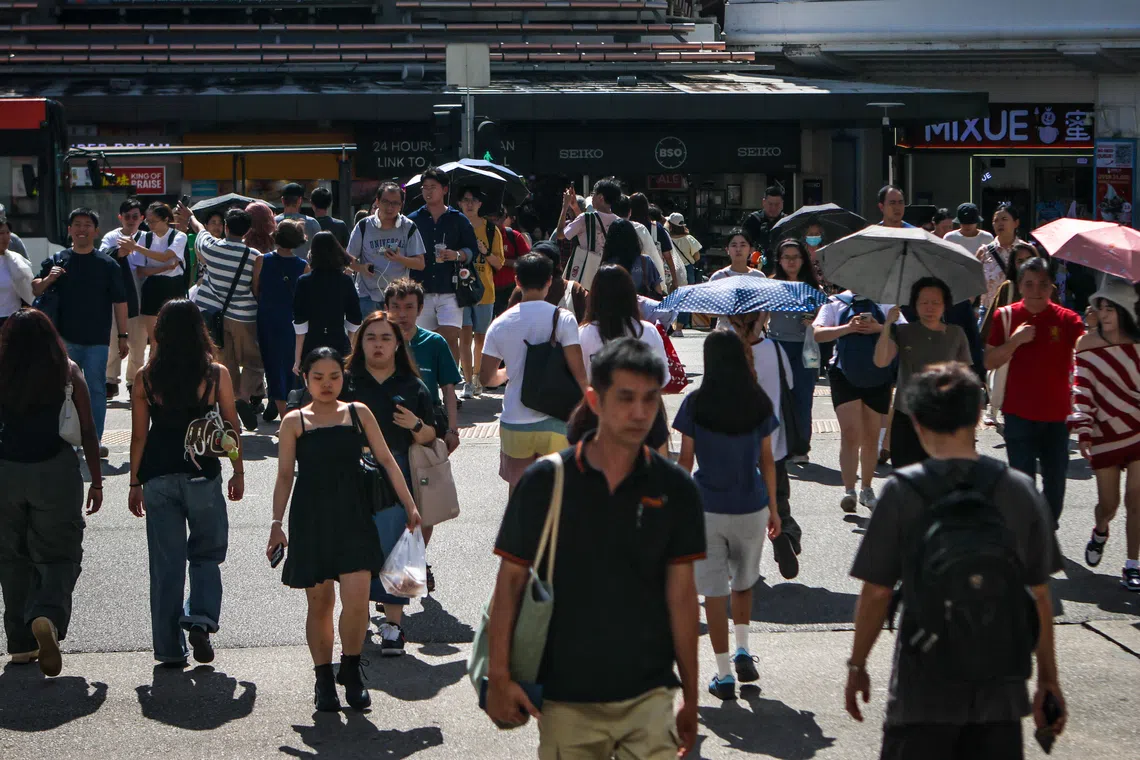
Rising temperatures due to climate change are expected to be worsened by the ongoing warming El Nino event.
PHOTO: LIANHE ZAOBAO
Published Sep 27, 2026, 12:00 PM
Updated Sep 27, 2026, 12:00 PM
UNEP highlights financing as the biggest barrier to deploying effective cooling solutions like energy-saving air-conditioners.
The Global Cooling Pledge aims to cut cooling emissions by 68% by 2050.
Innovative financing methods, including carbon credit sales, are being explored to support sustainable cooling.
SINGAPORE – Energy-saving air-conditioners, cool paint and heatwave warning systems are among measures that the United Nations wants countries to roll out to protect people in a rapidly warming world.
But the most widespread cooling technologies now tend to be energy-guzzling air-conditioners, as they are cheaper.
This is why the roll-out of alternative solutions needs financing not just from governments , but also the private sector , said Martin Krause, the United Nations Environment Programme’s (UNEP) climate change division director.
“The inefficient equipment, unfortunately, often is cheaper, and that is why the uptake from the market is higher. But we need to find a way to turn that around,” he said in an interview with The Straits Times on Sept 18.
“The scarcity of funding is maybe the biggest challenge we have when it comes to putting in place (cooling) measures that we know are working,” Krause added.
He noted that in South-east Asia, the share of less efficient air-conditioners is around 75 per cent.
The technology exists, but they need ways to scale, he added.
Beyond greener air-conditioning, other solutions that require financing include heat-reflective paint and construction materials that reduce the transfer of heat to buildings, he said.
According to a 2024 report by UNEP and the International Finance Corporation, the market for cooling solutions in developing economies is expected to grow from around US$300 billion (S$383 billion) to at least US$600 billion, per year by 2050 .
Rising temperatures due to climate change are expected to be worsened by the ongoing warming El Nino event, which is set to become one of the strongest on record, turbocharging extreme weather, heat and drought.
The Malaysian meteorological service had warned in early September that Malaysia could face extreme heat of up to 40 deg C between January and May of 2027, driven by the super El Nino.
Other than private sector involvement, Krause also pointed to the role of development banks, such as the Asian Development Bank and the World Bank, to help fund these new products that will be friendlier to the environment.
“There is always a risk with a new product line, and so companies might face higher interest if they borrow. But that is where development banks come in,” he said.
“They should take part of that risk on themselves to lower the interest rates for companies who want to borrow to establish a new product line with highly efficient (technologies).”
Krause was in Singapore to help lead the inaugural Global Cooling Pledge Assembly hosted by UNEP and the Singapore Government. It was held at the Parkroyal on Beach Road hotel from from Sept 15 to 18 .
UNEP climate change division director Martin Krause speaking during the inaugural Global Cooling Pledge Assembly on Sept 17. ST PHOTO: LIM YAOHUI
UNEP climate change division director Martin Krause speaking during the inaugural Global Cooling Pledge Assembly on Sept 17.
ST PHOTO: LIM YAOHUI
Representatives from around 60 countries, including Cambodia, Bangladesh and Japan, gathered to develop ways to cut carbon emissions from air-conditioning, while protecting populations from extreme heat risks.
Financing cooling measures, especially for vulnerable groups like rural farmers and construction workers, was a key talking point at the assembly .
At a high-level session at the assembly on Sept 18, a few novel ways to unlock finance for heat resilience and sustainable cooling were discussed.
One is the use of revenue from the sale of carbon credits.
B y replacing energy-guzzling cooling technologies with more efficient ones, the reduction in emissions can be sold as carbon credits. These credits are then purchased by polluters elsewhere to offset their carbon footprint.
Financing cooling measures, especially for vulnerable groups like rural farmers and construction workers, was a key talking point at the assembly. ST PHOTO: LIM YAOHUI
Financing cooling measures, especially for vulnerable groups like rural farmers and construction workers, was a key talking point at the assembly.
Such a scheme is being explored between Switzerland and Ghana.
Under it, the West African nation is rolling out air-conditioners that uses a green refrigerant with an ultra-low global warming potential.
The carbon “savings” are sold to Switzerland, to help the Alpine country meet its climate goals.
Singapore has set out measures to protect people from the heat. By 2030, all housing estates will be coated with cool paint that can reduce ambient temperatures by up to 2 deg C. Employers have to ensure that their outdoor workers are kept safe with shaded rest areas and acclimatisation.
From Dec 1, 2026, employers must also ensure their outdoor workers wear breathable, sweat-wicking uniforms, with ice packs or water sprays available on site in case of a heat illness scare.
Krause hopes to see more steps being taken in South-east Asia to prevent the worst impacts of heatwaves brought about by El Nino in the coming months.
These include setting up cooling shelters in advance for the more vulnerable populations in rural areas, improving early warning for heatwaves and putting a stop to outdoor work when the temperatures reach record-breaking levels.
Krause said: “Nobody has a pre-fabricated solution at this moment because this challenge with extreme heat – I wouldn’t say it’s a completely new challenge – but it is a challenge that we are now taking much more seriously than we have ever done before.”
Shabana Begum is a correspondent, with a focus on environment and science, at The Straits Times.
气候变化导致的气温上升预计将因持续的厄尔尼诺现象而加剧。
图片来源:联合早报
发布于 2026 年 9 月 27 日下午 12:00
更新于2026年9月27日中午12:00
联合国环境规划署指出,资金是推广节能空调等有效制冷解决方案的最大障碍。
全球制冷承诺的目标是到 2050 年将制冷排放量减少 68%。
正在探索包括碳信用额度销售在内的创新融资方式,以支持可持续制冷。
新加坡——节能空调、冷色调涂料和热浪预警系统是联合国希望各国推广的措施之一,旨在保护人们在气候快速变暖的世界中免受伤害。
但目前最普及的制冷技术往往是耗能巨大的空调,因为它们价格更便宜。
联合国环境规划署(UNEP)气候变化司司长马丁·克劳斯表示,正因如此,替代解决方案的推广不仅需要政府的资金支持,还需要私营部门的资金支持。
“不幸的是,低效的设备往往更便宜,这就是为什么它们的市场接受度更高。但我们需要找到扭转这种局面的方法,”他在9月18日接受《海峡时报》采访时表示。
克劳斯补充说:“资金短缺可能是我们在实施我们知道有效的(降温)措施时面临的最大挑战。”
他指出,在东南亚,低效空调的比例约为 75%。
他补充说,这项技术是存在的,但他们需要找到扩大规模的方法。
他说,除了更环保的空调之外,其他需要融资的解决方案还包括隔热涂料和减少热量传递到建筑物的建筑材料。
根据联合国环境规划署和国际金融公司 2024 年的一份报告,到 2050 年,发展中经济体的制冷解决方案市场预计将从每年约 3000 亿美元(3830 亿新元)增长到至少 6000 亿美元。
气候变化导致气温上升,而持续的厄尔尼诺现象预计将加剧这一趋势,并可能成为有记录以来最强烈的厄尔尼诺现象之一,从而加剧极端天气、高温和干旱。
马来西亚气象部门在 9 月初曾发出警告,受超级厄尔尼诺现象的影响,马来西亚在 2027 年 1 月至 5 月期间可能会面临高达 40 摄氏度的极端高温。
除了私营部门的参与外,克劳斯还指出,亚洲开发银行和世界银行等开发银行也发挥着作用,可以帮助为这些对环境更加友好的新产品提供资金。
“推出新产品线总会存在风险,因此企业如果借贷可能会面临更高的利率。但这正是开发银行发挥作用的地方,”他说道。
“他们应该承担一部分风险,降低那些想要借款建立采用高效(技术)的新产品线的公司的利率。”
克劳斯当时在新加坡,协助领导由联合国环境规划署和新加坡政府主办的首届全球降温承诺大会。大会于9月15日至18日在滨海路宾乐雅酒店举行。
联合国环境规划署气候变化司司长马丁·克劳斯于9月17日在首届全球降温承诺大会上发表讲话。(海峡时报摄影:林耀辉)
联合国环境规划署气候变化司司长马丁·克劳斯于9月17日在首届全球降温承诺大会上发表讲话。
ST 照片:林耀辉
来自包括柬埔寨、孟加拉国和日本在内的约 60 个国家的代表齐聚一堂,探讨如何在减少空调碳排放的同时,保护民众免受极端高温风险的影响。
为降温措施提供资金,特别是为农村农民和建筑工人等弱势群体提供资金,是大会上的一个关键讨论点。
在9月18日举行的大会高级别会议上,与会者讨论了一些为提高抗暑能力和实现可持续制冷而释放资金的新方法。
一种方法是利用出售碳信用额度的收入。
通过用更高效的制冷技术取代耗能巨大的传统制冷技术,减少的排放量可以作为碳信用额出售。这些碳信用额随后会被其他地方的污染者购买,以抵消其碳排放。
为降温措施提供资金,特别是针对农村农民和建筑工人等弱势群体,是本次大会的重点议题。海峡时报摄影:林耀辉
为降温措施提供资金,特别是为农村农民和建筑工人等弱势群体提供资金,是大会上的一个重点讨论议题。
瑞士和加纳正在探讨这样的方案。
根据这项计划,这个西非国家正在推广使用全球变暖潜能值极低的绿色制冷剂的空调。
这些碳“节省量”被出售给瑞士,以帮助这个阿尔卑斯山国家实现其气候目标。
新加坡已制定措施保护民众免受高温侵袭。到2030年,所有住宅区都将涂上隔热涂料,可将环境温度降低至多2摄氏度。雇主必须确保户外工作人员的安全,例如提供遮荫休息区和适应性训练。
从 2026 年 12 月 1 日起,雇主还必须确保其户外工作人员穿着透气、吸汗的制服,并在现场备有冰袋或水喷雾,以防发生中暑事件。
克劳斯希望看到东南亚采取更多措施,以防止未来几个月厄尔尼诺现象带来的热浪造成最严重的影响。
这些措施包括提前为农村地区较弱势群体设立避暑场所,改进热浪预警,以及在气温达到破纪录水平时停止户外工作。
克劳斯说:“目前还没有人有现成的解决方案,因为应对极端高温的挑战——我不会说这是一个全新的挑战——但我们现在比以往任何时候都更加认真地对待这个挑战。”
沙巴娜·贝古姆是《海峡时报》的记者,主要关注环境和科学领域。