The pager at the pulpit — Abbi Kanthasamy讲坛上的寻呼机——坎塔萨米神父
SEPTEMBER 26 — Benjamin Netanyahu went to the United Nations to explain why Israel is fighting on seven fronts, why its army is the most moral in the world, why its critics are...
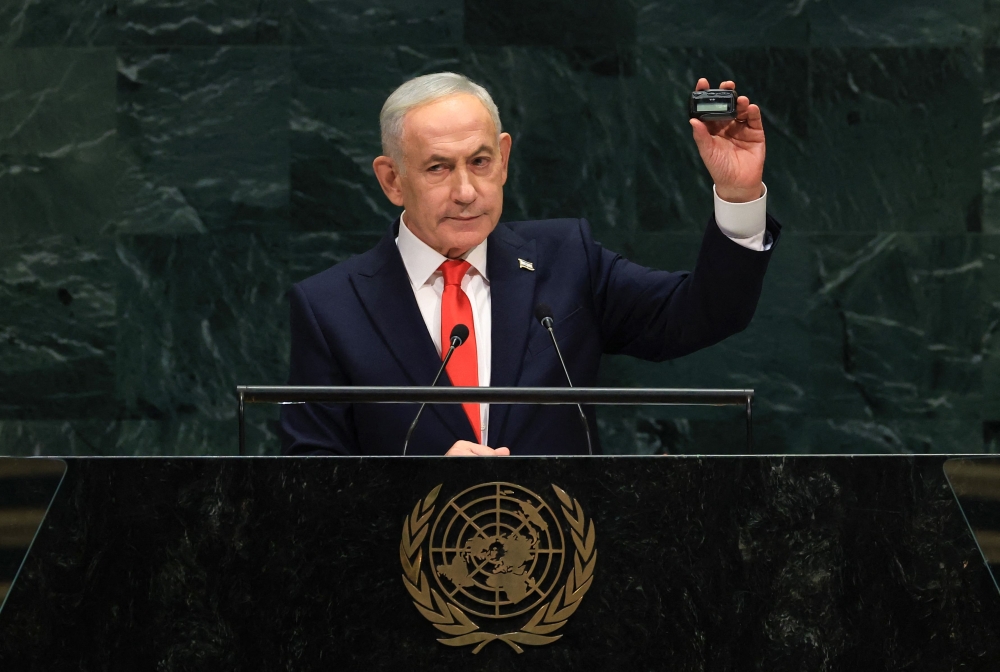
In a speech at the United Nations, Israeli Prime Minister Benjamin Netanyahu defended Israel's military actions and criticized international dissenters.
He controversially used a pager as a prop, referencing past operations tied to civilian casualties, prompting U.N. delegates to walk out.
Criticism arose over Israel's military strategy and policies, with calls for accountability given the high civilian toll in Gaza.
The address highlighted ongoing tensions, with Netanyahu framing criticism as an affront while others demanded scrutiny and humane discourse on the conflict's impact.
SEPTEMBER 26 — Benjamin Netanyahu went to the United Nations to explain why Israel is fighting on seven fronts, why its army is the most moral in the world, why its critics are cowards, and why the people walking out of the room are the real problem.
Then he held up a pager.
“Remember the beepers?” he asked, smiling like a man producing the rabbit at the end of a magic trick.
The trick, of course, was that the rabbit had been wired with explosives.
In September 2024, thousands of pagers and walkie-talkies exploded across Lebanon and Syria in an operation widely attributed to Israel. At least 37 people were killed and more than 3,000 injured. Children were among the dead. So were civilians. The blasts tore through homes, shops and streets. UN human-rights experts warned the attacks could constitute war crimes, including indiscriminate attacks. That is not a final court judgment. It is a warning that should have made any leader think twice before turning the device into a prop. Netanyahu looked at it and saw a punchline.
“Remember the beepers?”
Yes, Prime Minister. People remember the blood, too.
There is something grotesque about bringing a weapon associated with civilian deaths into the world’s diplomatic chamber and treating it like a championship belt. Imagine an accused arsonist arriving at a fire-safety conference, twirling the match and asking the audience if it remembers the flames. Imagine a pickpocket addressing a room of victims with, “Remember the wallets?” That isn’t wit. It’s a man so pleased with the performance that he has forgotten what the performance is about.
The United Nations is not a showroom for clever weapons. It is not a comedy club where the dead are the setup and the surviving families are expected to laugh at the punchline. It is supposed to be a place where leaders make the case for peace, or at least pretend to have read the menu.
No wonder delegates walked out. Netanyahu called them “moral cowards”. Perhaps it was easier than asking why so many chose the corridor over his speech. A walkout is not an argument, but neither is a pager held aloft like a party favour. Sometimes an empty chair is the most honest thing in the room.
His speech was a masterclass in changing the subject. Seven fronts. Seven enemies. Seven reasons the world should stop asking questions and start applauding. Israel, he said, was fighting everyone else’s fight. Hamas, Hezbollah, Iran, the Houthis, militias, terrorists: all packed into one vast, convenient silhouette called the enemy. Any Israeli action could then be placed beneath the same enormous umbrella labelled self-defence.
Hamas’s murder and kidnapping of Israeli civilians on October 7 was horrific. Israeli families deserve to grieve, and hostages deserved to come home. Saying so should not require a footnote. But grief is not a government’s lifetime licence to act without scrutiny. One atrocity does not turn every later decision into a moral blank cheque.
Netanyahu called criticism an “eighth front”, a war for truth. It is an elegant device: disagree with the government and you are no longer a critic; you are an enemy combatant in the information war. He said Israel sent millions of warnings to civilians. Those warnings matter. So do the dead, the displaced, the shattered neighbourhoods and the people who had nowhere safe to run. A leaflet is not a force field. A phone call telling a family to flee does not make the road out safe, or create a safe place at the other end.
Here is the arithmetic the speech cannot make disappear. Gaza’s Health Ministry reported 73,910 Palestinians killed by September 20, 2026. The total does not distinguish combatants from civilians. Unicef reported at least 21,700 children killed by June 30. And on September 24, after reviewing its records, the Committee to Protect Journalists documented 189 Palestinian journalists and media workers killed in Gaza. These figures have different cut-off dates and definitions; CPJ’s count does not mean every journalist was deliberately targeted. They are still numbers too large to hide behind a podium.
Twenty-one thousand seven hundred children: say it slowly. These are not units in a briefing. They are names someone called at dinner. Shoes left by a door. A school uniform with no child left to wear it. One child dead is a family’s entire world ending. Multiply that by tens of thousands and you have not made the grief smaller. You have only made it harder to look at.
And the journalists? CPJ’s revised Gaza count is 189. That does not establish that everyone was targeted for their work; it does tell you how many reporters and media workers are no longer there to describe what they saw. When the people with cameras keep dying, and foreign journalists cannot freely enter Gaza, the world is left arguing over the pictures while the witnesses disappear. The facts need investigation. The journalists deserved protection. Their deaths should not be waved away as another hostile talking point.
Then there is NAZA, the documentary by Israeli filmmakers examining civilian deaths and Israeli military targeting in Gaza. The film wins an award at Venice; the government’s response is to threaten the filmmakers’ citizenship. Netanyahu says he wants laws that could strip citizenship from people who “smear” Israeli soldiers. Imagine the confidence required to claim your army has nothing to hide while threatening the people who made a film about what it does. If the filmmakers are wrong, answer them. Bring evidence. Make the case. A passport is not a rebuttal.
Defence Minister Israel Katz has been less subtle. He described the government’s language in Gaza and Lebanon as “evacuating the population, destroying the infrastructure and taking the territory.” He has also threatened to evacuate Gaza City’s million residents and destroy its buildings if one Israeli is kidnapped. There is no need to write a satirical version of that statement. The official version is already a black joke with the laughter removed.
Let’s be clear about what is being criticised here. This is not an indictment of Jews. Jewish people are not a single political bloc, and many Jews — including Israelis — criticise Netanyahu and oppose his government’s actions. Antisemitism is real and vicious; it must be confronted wherever it appears. But criticism of a government, its military conduct or the political ideology used to justify domination is not automatically hatred of Jews. Turn every criticism into antisemitism and the accusation becomes a shield for power instead of protection for people.
The Iran passage had its own curious little problem. Israel and the United States opened this latest round with strikes on Iran, described by Israel as “pre-emptive”, as Washington and Tehran were again negotiating over the nuclear dispute. Iran’s threats and actions do not vanish from the record. But if you strike first, then stand at the UN describing yourself as the civilisation-saving victim of aggression, you should expect a few people to check the timeline.
And the nuclear question: Israel is widely believed to possess nuclear weapons, though it officially confirms neither their existence nor its arsenal. The British House of Commons Library says Israel’s capability was developed outside the Non-Proliferation Treaty. Iran, for all the serious concerns about its nuclear programme, is a party to that treaty. The region’s only widely believed nuclear-armed state outside the NPT does not get to lecture its neighbours as if only their secrets count.
Britain has its own ghost in this room. The Balfour Declaration and the British Mandate helped shape the road to Israel’s creation; Britain did not create Israel single-handedly, but it played a pivotal and deeply contradictory role in Palestine’s fate. Now London objects, Netanyahu ignores it, and the former imperial midwife looks like a retired landlord arriving with a clipboard after the locks have been changed. The empire that helped write the prologue has discovered it no longer controls the plot.
That is the speech’s real spectacle: the man with the pager tells the world he is the only one brave enough to defend civilisation; the man threatening citizenship for filmmakers calls everyone else dishonest; the man whose country’s actions draw grave legal scrutiny insists the problem is the people asking questions.
The delegates walked out. Netanyahu called them cowards. He may prefer that story. It puts him at the centre, where he likes to stand, and turns the empty seats into props for his next scene.
But the pager remains. So do the dead. So do the children, the reporters, the families, the people beneath the rubble and the people still trying to tell their stories.
“Remember the beepers?” he asked.
We will remember the beepers.
We will also remember who held one up, who made it a joke, and who was missing from the punchline.
* This is the personal opinion of the writers or publication and does not necessarily represent the views of Malay Mail.
Collecting a country, one stamp at a time — Norhafiza Roslan
Malaysia’s economy is an F1 car on paper, a sedan on the ground — Mohd Zaidi Md Zabri
The haze is back — and the root cause is global warming — Ahmad Ibrahim
Foreign male dancers nabbed as Immigration raids Jalan Klang Lama club charging patrons up to RM700
Why your electricity bill is not as simple as what TNB pays for power
Families of 55 missing Malaysians return to Wisma Putra for latest Nepal search update
以色列总理本雅明·内塔尼亚胡在联合国发表讲话,为以色列的军事行动辩护,并批评了国际异议人士。
他颇具争议地使用寻呼机作为道具,提及过去与平民伤亡有关的行动,导致联合国代表愤然离场。
以色列的军事战略和政策受到了批评,鉴于加沙地带平民伤亡惨重,人们呼吁追究其责任。
此次讲话凸显了持续不断的紧张局势,内塔尼亚胡将批评视为一种冒犯,而其他人则要求对冲突的影响进行审查和人道的讨论。
9 月 26 日——本杰明·内塔尼亚胡前往联合国,解释以色列为何在七个战线上作战,为何其军队是世界上最有道德的军队,为何其批评者是懦夫,以及为何离开会议室的人才是真正的问题。
然后他举起了一个寻呼机。
“还记得寻呼机吗?”他问道,脸上带着魔术师在最后变出兔子时的那种笑容。
当然,诀窍在于兔子身上被植入了炸药。
2024年9月,数千部寻呼机和对讲机在黎巴嫩和叙利亚各地爆炸,这场行动被广泛认为是以色列所为。至少37人死亡,3000多人受伤,其中包括儿童和平民。爆炸摧毁了房屋、商店和街道。联合国人权专家警告说,这些袭击可能构成战争罪,包括无差别攻击。这并非最终的法庭判决,而是一个警告,任何领导人在将这些设备当作道具之前都应该三思。内塔尼亚胡却只看到了一个笑料。
“还记得寻呼机吗?”
是的,首相先生。人们也记得流血事件。
将一件与平民伤亡相关的武器带入世界外交殿堂,并像炫耀冠军腰带一样对待它,这本身就令人作呕。试想一下,一个被指控纵火的嫌疑人来到消防安全会议,一边旋转着火柴,一边问听众是否还记得那场大火。试想一下,一个扒手对着一群受害者说:“还记得那些钱包吗?”这并非幽默,而是一个对自己的表演沾沾自喜,以至于忘记了表演的真正目的的人。
联合国不是展示精巧武器的展厅,也不是以死者为笑料、让幸存家属捧腹大笑的喜剧俱乐部。它应该是各国领导人阐述和平理念的地方,或者至少应该假装读过相关议程。
难怪代表们纷纷离场。内塔尼亚胡称他们为“道德懦夫”。或许,与其追问为何如此多的人选择离开走廊而不是聆听他的演讲,不如直接这么说来得简单。离场并非抗议,就像高举寻呼机作为派对纪念品一样。有时,空椅子才是房间里最诚实的东西。
他的演讲堪称转移话题的典范。七条战线,七个敌人,七个理由让全世界停止质疑,开始鼓掌。他说,以色列在替所有人打仗。哈马斯、真主党、伊朗、胡塞武装、民兵组织、恐怖分子:所有这些都被统统归为“敌人”这一庞大而方便的范畴。这样一来,以色列的任何行动都可以被归入“自卫”这一巨大的范畴。
哈马斯10月7日对以色列平民的谋杀和绑架令人发指。以色列家属理应悲痛,人质也理应回家。这一点无需赘述。然而,悲痛并非政府可以终身不受监督地行事的通行证。一次暴行并不能使日后的所有决定都成为道德上的空白支票。
内塔尼亚胡称批评是“第八战场”,一场争取真相的战争。这是一种巧妙的策略:如果你不同意政府的观点,你就不再是批评者,而是信息战中的敌方战斗人员。他说以色列向平民发出了数百万份警告。这些警告很重要。但死者、流离失所者、被摧毁的社区以及无处可逃的人们同样重要。传单并非屏障。一个电话通知一家人逃离并不能使逃生之路变得安全,也不能在另一端创造一个安全的地方。
以下是演讲无法掩盖的残酷现实。加沙卫生部报告称,截至2026年9月20日,已有73910名巴勒斯坦人丧生。该数字并未区分战斗人员和平民。联合国儿童基金会报告称,截至6月30日,至少有21700名儿童遇害。9月24日,保护记者委员会在审查其记录后,确认有189名巴勒斯坦记者和媒体工作者在加沙遇害。这些数字的截止日期和定义各不相同;保护记者委员会的统计并不意味着每位记者都是蓄意谋杀的目标。但这些数字仍然庞大,无法用讲台掩盖。
两万一千七百个孩子:慢慢念。这不是简报里的数字,而是餐桌上有人呼唤的名字,是门口遗落的鞋子,是无人穿着的校服。一个孩子的离世,就如同一个家庭的整个世界崩塌。乘以数万,悲痛丝毫未减,只会让人更加难以承受。
那么记者呢?保护记者委员会(CPJ)修正后的加沙遇难人数为189人。这并不能证明所有人都因工作而成为袭击目标;但它确实表明,有多少记者和媒体工作者已经无法再描述他们所目睹的一切。当那些手持摄像机的人不断死去,外国记者又无法自由进入加沙时,世界只能争论照片,而目击者却消失得无影无踪。事实需要调查。记者们理应受到保护。他们的死不应被轻描淡写地当作又一个敌对势力的攻击点而置之不理。
还有一部名为《纳扎》(NAZA)的纪录片,由以色列电影人拍摄,探讨了加沙地带平民的死亡和以色列军队的军事行动。该片在威尼斯电影节获奖;然而,以色列政府的回应却是威胁要剥夺电影人的公民身份。内塔尼亚胡声称,他希望通过法律,剥夺那些“抹黑”以色列士兵的人的公民身份。试想一下,一边威胁拍摄了一部揭露以色列军队所作所为的影片的人,一边又声称自己的军队没有任何秘密,这需要多么大的自信啊!如果电影人错了,那就回应他们。拿出证据。阐明事实。护照并不能反驳他们。
以色列国防部长卡茨的措辞则更加直白。他将政府在加沙和黎巴嫩的言论描述为“撤离民众、摧毁基础设施和占领领土”。他还威胁说,如果任何一名以色列人被绑架,他将撤离加沙城的百万居民并摧毁城内所有建筑物。无需再用讽刺的笔法来形容这份声明。官方的说法本身就是一个黑色笑话,只是少了笑料而已。
让我们明确一下这里批评的是什么。这并非是对犹太人的控诉。犹太人并非一个单一的政治集团,许多犹太人——包括以色列人——都批评内塔尼亚胡,反对他的政府行为。反犹主义真实存在且十分恶劣,无论出现在哪里都必须予以打击。但是,批评一个政府、其军事行为或用来为统治辩护的政治意识形态,并不等同于仇恨犹太人。如果将所有批评都解读为反犹主义,那么这种指控就会成为权力的盾牌,而非对人民的保护。
伊朗问题本身就存在一个颇为棘手的小问题。以色列和美国率先对伊朗发动了打击,以色列称此举为“先发制人”,而此时华盛顿和德黑兰正就核争端再次展开谈判。伊朗的威胁和行动不会从历史记录中消失。但是,如果你先发制人,然后在联合国声称自己是文明的拯救者,是侵略的受害者,那么你理应预料到会有人仔细核查时间线。
至于核问题:以色列普遍被认为拥有核武器,尽管以色列官方既未承认核武器的存在,也未透露其核武库。英国下议院图书馆指出,以色列的核能力是在《不扩散核武器条约》之外发展起来的。伊朗虽然其核计划令人担忧,但它却是该条约的缔约国。作为该地区唯一一个被广泛认为拥有核武器但未加入《不扩散核武器条约》的国家,伊朗无权对邻国指手画脚,仿佛只有邻国的秘密才重要似的。
英国在这间屋子里也有自己的幽灵。《贝尔福宣言》和英国托管统治塑造了以色列建国的道路;英国并非以色列的缔造者,但它在巴勒斯坦的命运中扮演了至关重要且充满矛盾的角色。如今伦敦提出反对,内塔尼亚胡置之不理,这位昔日的帝国“助产士”如今却像个退休房东,在门锁被换后才拿着写字板出现。曾经参与谱写序幕的帝国,如今发现自己已无法掌控剧情走向。
这才是演讲真正的看点:拿着寻呼机的人告诉全世界,他是唯一一个有勇气捍卫文明的人;威胁要剥夺电影制作人公民身份的人称其他人都是不诚实的;国家行为受到严重法律审查的人坚持认为,问题出在提出质疑的人身上。
代表们愤然离席。内塔尼亚胡称他们是懦夫。他或许更喜欢这种说法。这让他成为众矢之的,也让空荡荡的座位成为他接下来行动的道具。
但寻呼机还在。死者还在。孩子们、记者、家属、废墟下的人们,以及仍在努力讲述他们故事的人们,都还在。
“还记得寻呼机吗?”他问道。
我们会记住这些寻呼机。
我们还会记得是谁举起了它,是谁把它当成了笑话,以及谁没能成为笑点。
* 这是作者或出版方的个人观点,并不一定代表《马来邮报》的观点。
收集一个国家的邮票,一张一张地收集——诺哈菲扎·罗斯兰
马来西亚的经济纸面上像一辆F1赛车,实际表现却像一辆轿车——莫哈末·扎伊迪·莫哈末·扎布里
雾霾又来了——而其根源在于全球变暖——艾哈迈德·易卜拉欣
移民局突击检查Jalan Klang Lama夜总会,逮捕多名外籍男舞者,该夜总会向顾客收取高达700令吉的费用。
为什么你的电费账单并非仅仅是国家能源公司(TNB)支付的电费那么简单?
55名失踪马来西亚人的家属返回布特拉大厦,了解尼泊尔搜寻工作的最新进展