NATO has a munitions problem, and Europe needs to step up北约面临弹药短缺问题,欧洲需要加大力度。
Opinion: There are at least three competing munitions demands on the European defense industry that require immediate attention.
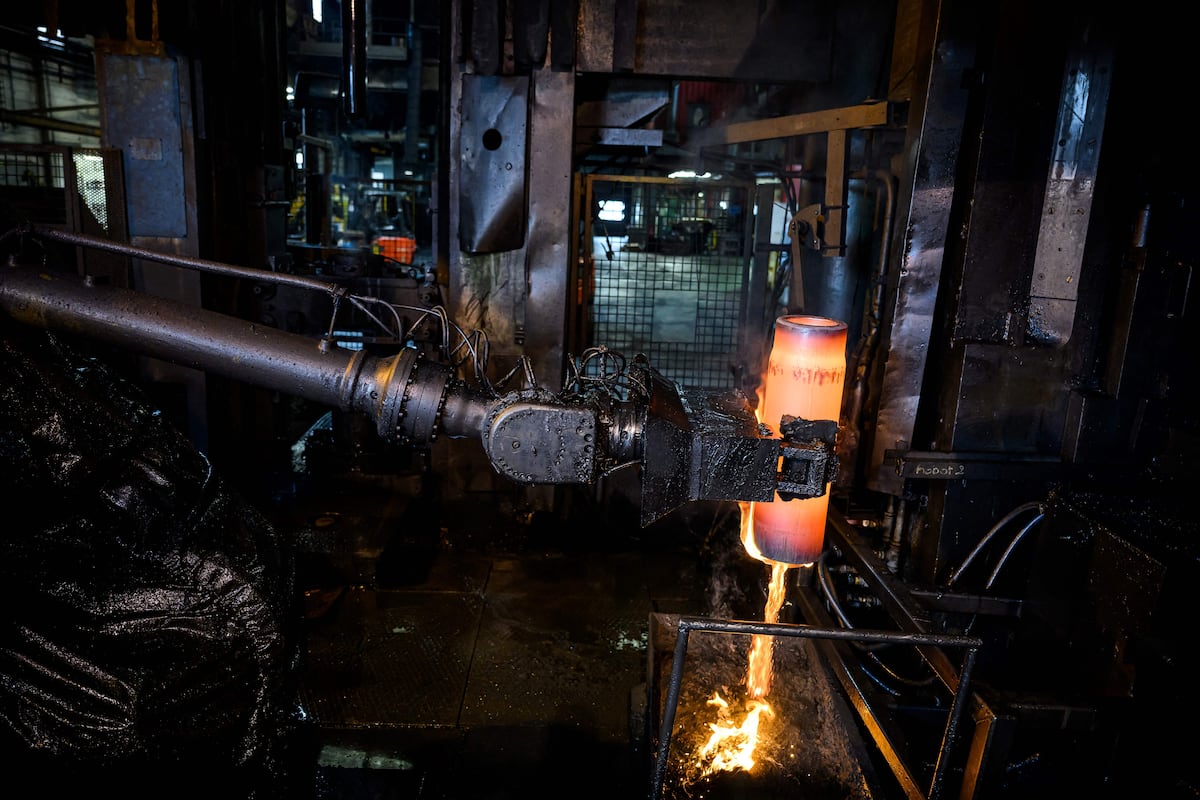
In March, European Union countries pledged to supply Ukraine with 1 million artillery shells by spring 2024. It is now clear that the EU is unlikely to deliver on its promise. Meanwhile on the other side of the Atlantic, between 2022 and 2023 the U.S. Army succeeded in doubling monthly production of 155mm shells.
The war in Ukraine has provided desperately needed momentum to renew the European defense industry. Efforts to supply the Ukrainian Armed Forces with weaponry have exposed startling gaps in Europe’s readiness for large-scale conflict. European nations have been found lacking not only adequate munition stockpiles , but also the industrial base required to refill inventories to keep up with Ukraine’s continued pleas for weapons. At the same time, the United States’ own production challenges and competing regional priorities suggest European NATO members cannot count on Washington to save the day.
NATO has a munitions problem, and the European defense industry needs to step up. Now is the time to think big.
While much of the conversation about European munitions center on the manufacture and supply of 155mm artillery shells , a narrow focus on artillery shells fails to capture the full scope of improvements needed in Europe’s munitions capacity for NATO to maintain a credible deterrence. For some European NATO members, artillery shells are just the tip of the munitions inventory and weapons industry iceberg.
There are at least three competing munitions demands on the European defense industry that require immediate attention. First, European states, NATO and the European Union must continue to supply weapons to Ukraine. The sources of these munitions include continued pulling from (dwindling) stockpiles, the transfer of previously existing orders to Ukraine, and new orders of munitions whose production has scaled up relatively quickly, such as 155mm shells .
Second, European NATO members must refill their own inventories of weapons depleted by transfers to Ukraine, including artillery shells, anti-tank missiles, longer-range rockets and surface-to-air missiles. Some of these weapons dated from the Cold War and were nearing obsolescence; others were more current. In either case, nations must purchase modern versions of these weapons or pursue other capabilities that accomplish the same missions.
This is an urgent requirement: NATO cannot plan on Russia being too weak or distracted to be a threat. If Europe’s industrial base cannot meet these demands quickly enough to ensure NATO’s near-term readiness requirements, members should consider foreign suppliers or purchases of alternate capabilities, like novel loitering munitions or air defense solutions.
Third, European NATO members must build up larger stocks of modern and future weapons to meet revised defense requirements through the end of the decade. The Russia-Ukraine conflict has exposed the inadequacy of Europe’s previous war reserves: It is not enough to refill stocks — they need to be expanded.
Ukrainian welders work at a shop for repairing military vehicles in the Donetsk region on Jan. 25, 2024, amid the Russian invasion of Ukraine. (Roman Pilipey/AFP via Getty Images)
Sustained munitions requirements for protracted conflict are likely much higher than previously assessed, as NATO’s secretary general admitted last year. To fill these requirements, European nations must build a modern arsenal sized for a protracted conflict in the next decade. This begins with precision-guided munitions, cruise missiles and other long-range strike capabilities . Group purchases of weapons, such as the NATO-supported purchase of Patriot missiles, would increase European buying power and potentially reduce unit costs.
While purchasing currently fielded weapons, NATO members must also simultaneously develop the next generation of munitions and pursue advanced technologies such as hypersonic, autonomous and low-cost weapons. The production timelines of existing weapons and the development timelines of future weapons require Europe to invest now to attain sufficient stockpiles by the end of the decade. Given uncertainties about future threats, these development programs should focus on versatile and modular weapons that afford military planners increased flexibility across a wide range of scenarios.
Moreover, in addition to performance requirements, NATO militaries should prioritize European manufacturability and true interoperability as design criteria for future munitions programs.
Finally, in pursuing these three priorities now, Europe must foster a munitions-industrial base capable of competing with a mobilized Russian industrial base . Commentators often point to Europe’s gross domestic product being nearly eight times that of Russia , but GDP alone does not produce weapons. Working alongside the European Union, NATO — given its convening power and its role in setting munitions requirements and standards for much of Europe — should lead conversations about how to support a European defense industry scaled not only to refill and increase stockpiles but also to provide high-tech weapons in the future.
Built into a strategic approach to the European munitions industry is the recognition that not all munitions are the same and Europe may need to pay for the maintenance of excess or “surge” capacity. The production capacity of some weapons — like artillery shells — can be increased more quickly and so can be more fungible, though do require regular investment from governments. Other production lines — like for cruise and interceptor missiles — are less flexible, so orders must be consistent over time to ensure that NATO has enough when it needs them.
Two years into the Ukraine war, European defense officials are coming around to the reality of these varied demands. This is a positive sign, but European NATO members must move quickly to make good on pledges to increase defense spending and provide a sustained demand signal for critical munitions. Russia is well ahead of Europe in expanding its munitions production capacity . It is time for European NATO members to acknowledge the true scale of their weapon requirements and adopt a strategic approach to meeting them in the near and long term.
Katherine Kjellström Elgin is a fellow at the Center for Strategic and Budgetary Assessments think tank where she focuses on U.S. and European defense strategies. She is the author of the forthcoming CSBA report “More of the Same? The Future of the Russian Military and its Ability to Change.” Tyler Hacker is a research fellow at CSBA, where he focuses on great power conflict. He is the author of “ Beyond Precision: Maintaining America’s Strike Advantage in Great Power Conflict .”
今年3月,欧盟国家承诺在2024年春季前向乌克兰提供100万枚炮弹。现在看来,欧盟不太可能兑现这一承诺。与此同时,在大西洋彼岸,美国陆军在2022年至2023年间成功地将155毫米炮弹的月产量翻了一番。
乌克兰战争为重振欧洲国防工业提供了亟需的动力。向乌克兰武装部队提供武器的努力暴露了欧洲在应对大规模冲突方面的惊人不足。欧洲各国不仅缺乏足够的弹药储备,也缺乏补充库存所需的工业基础,无法满足乌克兰持续不断的武器需求。与此同时,美国自身的生产挑战以及与其他地区优先事项的冲突表明,欧洲北约成员国不能指望华盛顿来力挽狂澜。
北约面临弹药短缺问题,欧洲国防工业需要迎头赶上。现在正是制定宏伟计划的时候。
尽管关于欧洲弹药的讨论大多集中在155毫米炮弹的生产和供应上,但仅仅关注炮弹并不能全面反映欧洲弹药能力提升的必要性,而这对于北约维持可信的威慑力至关重要。对一些欧洲北约成员国而言,炮弹仅仅是其弹药储备和武器工业冰山一角。
欧洲国防工业至少面临三项相互冲突的弹药需求,亟需立即应对。首先,欧洲各国、北约和欧盟必须继续向乌克兰供应武器。这些弹药的来源包括:持续从(日益减少的)库存中提取、将先前已订购的弹药转移给乌克兰,以及订购一些产量增长相对较快的新型弹药,例如155毫米炮弹。
其次,欧洲北约成员国必须补充因转移至乌克兰而减少的武器库存,包括炮弹、反坦克导弹、远程火箭弹和地对空导弹。其中一些武器是冷战时期遗留下来的,已接近过时;另一些则较为新近。无论哪种情况,各国都必须购买这些武器的现代化版本,或寻求其他能够完成相同任务的能力。
这是当务之急:北约不能指望俄罗斯实力削弱或注意力分散到无法构成威胁的地步。如果欧洲的工业基础无法迅速满足这些需求,以确保北约近期战备状态,成员国应考虑从国外供应商采购或购买其他替代能力,例如新型巡飞弹或防空解决方案。
第三,欧洲北约成员国必须建立更大规模的现代化和未来武器储备,以满足本十年末修订后的国防需求。俄乌冲突暴露了欧洲以往战争储备的不足:仅仅补充库存是不够的——必须扩大储备规模。
2024年1月25日,在俄罗斯入侵乌克兰期间,乌克兰焊工在顿涅茨克地区的一家军用车辆修理厂工作。(Roman Pilipey/AFP via Getty Images)
正如北约秘书长去年承认的那样,持久冲突所需的持续弹药需求可能远高于之前的评估。为了满足这些需求,欧洲各国必须在未来十年内建立一个足以应对持久冲突的现代化武器库。这首先要从精确制导武器、巡航导弹和其他远程打击能力入手。集体采购武器,例如北约支持的“爱国者”导弹采购,将增强欧洲的购买力,并有可能降低单位成本。
北约成员国在采购现有武器的同时,还必须同步研发下一代弹药,并追求高超音速、自主和低成本武器等先进技术。现有武器的生产周期和未来武器的研发周期都要求欧洲现在就进行投资,以便在十年末之前获得充足的库存。鉴于未来威胁的不确定性,这些研发项目应侧重于多用途和模块化武器,从而使军事规划者在各种情况下都能拥有更大的灵活性。
此外,除了性能要求外,北约军队还应将欧洲制造能力和真正的互操作性作为未来弹药计划的设计标准。
最后,在推进这三项优先事项的同时,欧洲必须建立一个能够与俄罗斯动员起来的工业基础相抗衡的军火工业基础。评论人士经常指出,欧洲的国内生产总值几乎是俄罗斯的八倍,但仅靠国内生产总值并不能生产武器。鉴于北约的召集能力及其在为欧洲大部分地区制定军火需求和标准方面所发挥的作用,北约应与欧盟携手合作,引领关于如何支持欧洲国防工业发展的讨论,使其不仅能够补充和增加库存,还能在未来提供高科技武器。
欧洲军火工业的战略方针中蕴含着这样的认识:并非所有军火都相同,欧洲可能需要为维持过剩或“应急”产能买单。某些武器(例如炮弹)的产能可以更快地提升,因此更具可替代性,但这确实需要政府的定期投资。其他生产线(例如巡航导弹和拦截导弹)的灵活性较差,因此必须保持订单的长期稳定性,以确保北约在需要时拥有充足的弹药。
乌克兰战争爆发两年后,欧洲国防官员开始正视这些多样化的需求。这是一个积极的信号,但欧洲北约成员国必须迅速履行增加国防开支的承诺,并持续发出关键弹药的需求信号。俄罗斯在扩大弹药生产能力方面远远领先于欧洲。现在是欧洲北约成员国正视自身武器需求的真实规模,并采取战略性措施来满足近期和长期需求的时候了。
凯瑟琳·谢尔斯特伦·埃尔金是战略与预算评估中心(CSBA)的研究员,主要研究美国和欧洲的国防战略。她即将发表CSBA报告《老调重弹?俄罗斯军队的未来及其变革能力》。泰勒·哈克也是CSBA的研究员,主要研究大国冲突。他著有《超越精确打击:在大国冲突中保持美国的打击优势》一书。