House eyes higher dollar thresholds for arms sales notices to Congress众议院考虑提高向国会提交的武器销售通知的美元门槛。
House efforts to speed up arms transfers by raising congressional notification thresholds has irked some arms control advocates who say it cedes oversight.
WASHINGTON ― A House task force established to speed up the foreign military sales process will debate its first bill in the Foreign Affairs Committee next week, marking what could be the next legislative step in untangling arms deals backlogs.
The bill raises the dollar threshold at which the president can approve an arms transfer without notifying Congress, while requiring the drawdown of weapons from U.S. stockpiles to compensate for delayed foreign military sales. It has generated pushback among some arms control advocates who fear the legislation would chip away at a key congressional oversight mechanism used to track weapons deals with other countries.
As head of the task force established last year , Rep. Mike Waltz, R-Fla., introduced the Tiger Act in December.
“The tempo of conventional high-intensity war that we’re seeing means that countries are burning through their defense equipment much faster,” a Waltz staffer told Defense News, speaking on the condition of anonymity to discuss the bill. “That is something that we on the Hill were taken by surprise [by] in places like Ukraine: the shortage of precision munitions, the shortage of 155mm shells.”
In addition to Ukraine, the Biden administration has transferred thousands of munitions to Israel since Hamas’ Oct. 7 attacks even as it seeks to rush arms to Taiwan to deter a potential Chinese invasion.
The bill raises the threshold for which the executive branch can approve an arms sale of major defense equipment without congressional notification from $14 million to $23 million. It also raises the threshold for the sale of defense articles, upgrades, related training or other services without congressional notification from $50 million to $83 million. The staffer said the numbers were selected to reflect inflation since 2003, when Congress last adjusted the thresholds.
“Ensuring that countries have the ability to purchase some of these weapons without, as years go on, being increasingly penalized by rising inflation rates seems to be common sense,” the staffer said.
But arms control advocates argue the bill would cede congressional oversight authority.
“Notification thresholds are really at the core of Congress’ arms sale oversight regime,” John Chappell, an advocacy and legal fellow at the Washington-based Center for Civilians in Conflict, told Defense News.
“Raising the threshold would undercut Congress’ ability to be aware of the proposed arms transfer. That would mean Congress wouldn’t be able to conduct oversight, and they would lose the opportunity to ask questions about specific arms sales, to put informal holds on them and to raise concerns about issues related to civilian harm, human rights, armed conflict and other issues,” he said.
Chappell noted many U.S. arms sales to Israel since Oct. 7 have fallen below the existing notification thresholds. He also highlighted a 2020 State Department Inspector General report , which found the Trump administration approved 4,221 below-threshold arms transfers to Saudi Arabia and the United Arab Emirates amounting to $11.2 billion between Jan. 2017 and Aug. 2020.
Waltz’s legislation emerged from a bipartisan taskforce of three Republicans and two Democrats who sit on the Foreign Affairs, Armed Services and defense appropriations committees. But Rep. Gregory Meeks of New York, the top Democrat on the Foreign Affairs Committee, declined to comment on the legislation.
The Waltz bill also requires the secretary of state to use drawdown authority from U.S. stockpiles to transfer weapons to a security partner or ally if a sale has been delayed for three years or more. However, the secretary of state may waive this provision so long as he or she explains why to Congress.
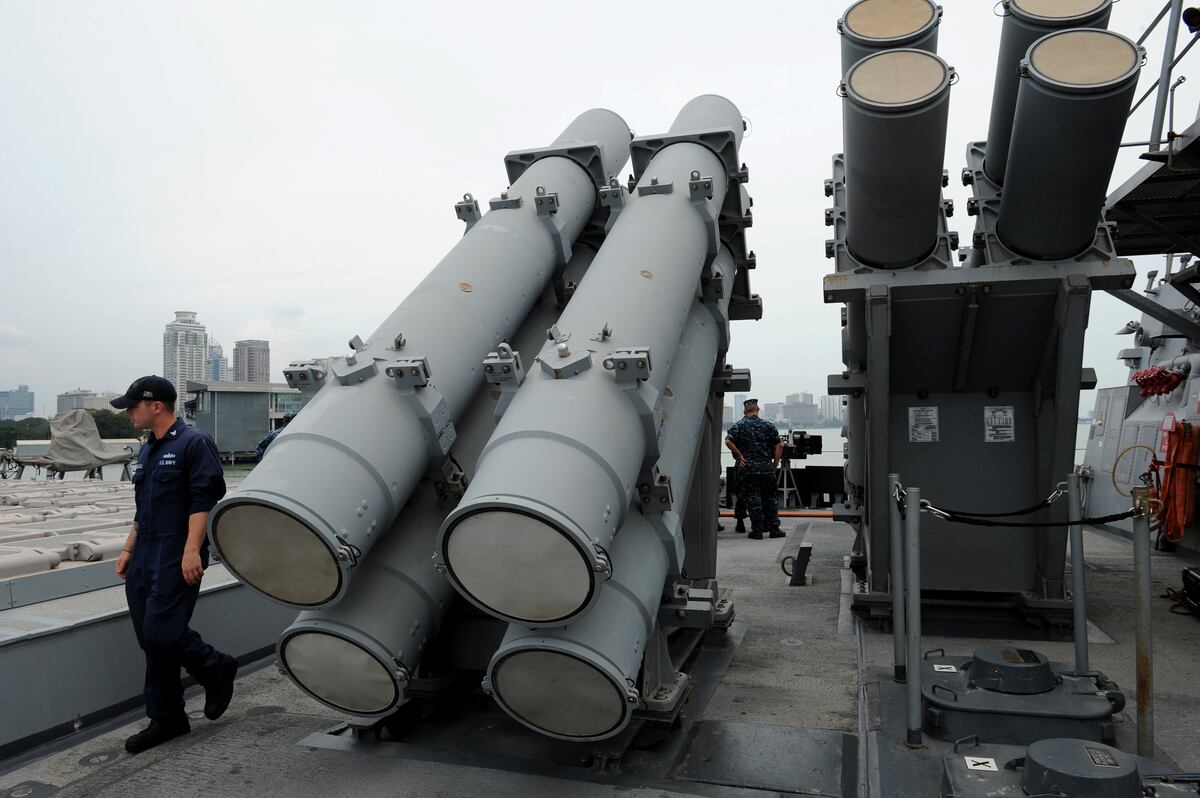
“What this is saying is if there’s a long-running [foreign military sale], the secretary must explain why it can’t be prioritized,” said the Waltz staffer. “Let’s say you have the sale of Harpoons to Taiwan that have been outstanding for three years, and we have Harpoons in our arsenal.”
The staffer noted the drawdown language is still under negotiation and the legislation may change via amendments in the Foreign Affairs Committee markup next week.
Harpoon anti-ship missiles comprise part of the roughly $19 billion foreign military sale backlog to Taiwan , caused in part by contracting delays and U.S. industrial base constraints . Several other U.S. partners, including in the Middle East, have been hit with arms sales delays.
But Chappell argued the provision would make “presidential drawdown authority specifically a routine occurrence” and could be used to circumvent congressional holds on an arms transfers that top lawmakers on the foreign affairs committees sometimes place over human rights concerns.
Additionally, the bill seeks to beef up the Special Defense Acquisition Fund, a revolving account used for foreign military sale procurement that the Pentagon hopes to lean on more as it works to expedite the process. The Pentagon released the results of its own Tiger team task force to speed up arms sales last year and has a separate task force focused on Taiwan. It’s also recently established another Tiger team task force to speed up arms transfers to Israel, according to The Intercept .
The Foreign Affairs Committee will debate and vote on the legislation next week, potentially referring it to the House floor for consideration.
The Waltz staffer noted the task force seeks to make additional legislative adjustments to the foreign military sales process later this year as Congress drafts the fiscal 2025 defense policy bill.
The FY24 defense policy bill , which Congress passed in December, includes a provision authorizing each combatant commander to hire up to two acquisition specialists as part of a bid to speed Pentagon contracting of foreign military sales.
Bryant Harris is the Congress reporter for Defense News. He has covered U.S. foreign policy, national security, international affairs and politics in Washington since 2014. He has also written for Foreign Policy, Al-Monitor, Al Jazeera English and IPS News.
华盛顿——为加快对外军售进程而成立的众议院特别工作组将于下周在外交事务委员会就其首个法案进行辩论,这标志着解决军售积压问题可能迈出了立法的下一步。
该法案提高了总统无需通知国会即可批准武器转让的美元门槛,同时要求削减美国武器库存以弥补延迟的对外军售。一些军控倡导者对此表示反对,他们担心该法案会削弱国会用于追踪与其他国家武器交易的关键监督机制。
作为去年成立的特别工作组的负责人,佛罗里达州共和党众议员迈克·沃尔兹于去年 12 月提出了《老虎法案》。
“我们目前看到的常规高强度战争节奏意味着各国消耗国防装备的速度要快得多,”一位沃尔兹的幕僚在匿名接受《防务新闻》采访时表示。他要求匿名讨论这项法案。“在乌克兰等地,我们国会山的人对此感到措手不及:精确制导武器短缺,155毫米炮弹短缺。”
除了乌克兰,自哈马斯 10 月 7 日发动袭击以来,拜登政府还向以色列转移了数千件弹药,同时还试图向台湾紧急提供武器,以阻止中国可能的入侵。
该法案将行政部门无需国会批准即可销售大型国防装备的门槛从1400万美元提高到2300万美元。同时,它也将无需国会批准即可销售国防物品、升级、相关培训或其他服务的门槛从5000万美元提高到8300万美元。工作人员表示,这些数字的调整是为了反映自2003年国会上次调整门槛以来的通货膨胀情况。
“确保各国有能力购买这些武器,而随着时间的推移,不会因通货膨胀率上升而受到越来越大的惩罚,这似乎是常识,”该工作人员说。
但军控倡导者认为,该法案将削弱国会的监督权。
“通知门槛实际上是国会武器销售监督制度的核心,”位于华盛顿的冲突中平民中心的倡导和法律研究员约翰·查佩尔告诉《防务新闻》。
他说:“提高门槛会削弱国会了解拟议武器转让的能力。这意味着国会将无法进行监督,他们将失去就具体武器销售提出问题、非正式地搁置这些销售以及就平民伤害、人权、武装冲突和其他问题提出关切的机会。”
查佩尔指出,自10月7日以来,美国对以色列的许多武器销售都低于现有的申报门槛。他还重点提及了2020年国务院监察长的一份报告,该报告发现,在2017年1月至2020年8月期间,特朗普政府批准了4221笔低于申报门槛的武器转让给沙特阿拉伯和阿拉伯联合酋长国的交易,总额达112亿美元。
沃尔兹提出的这项法案出自一个由三名共和党人和两名民主党人组成的跨党派工作组,他们分别来自众议院外交事务委员会、军事委员会和国防拨款委员会。但众议院外交事务委员会首席民主党议员、纽约州众议员格雷戈里·米克斯拒绝就该法案置评。
沃尔兹法案还要求,如果武器销售被延迟三年或三年以上,国务卿必须动用美国武器库的削减权,将武器转移给安全伙伴或盟友。但是,国务卿可以豁免此项规定,只要他/她向国会解释原因即可。
“这说明,如果存在长期未完成的对外军售,部长必须解释为什么不能优先处理,”沃尔兹的幕僚说。“比如说,向台湾出售鱼叉导弹的交易已经拖延了三年,而我们自己的武库里也有鱼叉导弹。”
该工作人员指出,撤军条款仍在谈判中,相关立法可能会在下周外交事务委员会的审议过程中通过修正案而发生变化。
“鱼叉”反舰导弹是价值约190亿美元的对台军售积压订单的一部分,积压的原因部分是合同签订延迟和美国工业基础的限制。包括中东在内的其他几个美国伙伴也受到了军售延迟的影响。
但查佩尔认为,该条款将使“总统撤军权成为一种常规做法”,并可能被用来规避国会因人权问题而对武器转让的冻结。
此外,该法案旨在加强“特别国防采购基金”(Special Defense Acquisition Fund),这是一个用于对外军售采购的循环账户,五角大楼希望在加快军售进程的过程中更多地依赖该基金。五角大楼去年公布了其“老虎小组”(Tiger Team)工作组的成果,旨在加快武器销售,此外,五角大楼还设立了一个专门针对台湾的工作组。据《拦截》(The Intercept)报道,五角大楼最近还成立了另一个“老虎小组”工作组,以加快对以色列的武器转让。
外交事务委员会将于下周对该法案进行辩论和投票,并有可能将其提交众议院全体会议审议。
沃尔兹的幕僚指出,该工作组寻求在今年晚些时候,随着国会起草 2025 财年国防政策法案,对对外军售流程进行额外的立法调整。
国会于 12 月通过的 2024 财年国防政策法案包含一项条款,授权每个作战司令部最多雇用两名采购专家,以加快五角大楼对外军售的合同签订。
布莱恩特·哈里斯是《防务新闻》的国会记者。自2014年以来,他一直在华盛顿报道美国外交政策、国家安全、国际事务和政治。他还曾为《外交政策》、《Al-Monitor》、《半岛电视台英语频道》和IPS新闻撰稿。