Boom gates, guardhouses and access cards: Here are 23 rules guarded Klang Valley neighbourhoods must follow道闸、警卫室和门禁卡:以下是巴生谷地区所有有保安巡逻的社区必须遵守的23条规则
KUALA LUMPUR, Sept 28 — Guardhouses, boom gates and security guards have become a familiar sight in residential neighbourhoods across the Klang Valley, but putting them in place...
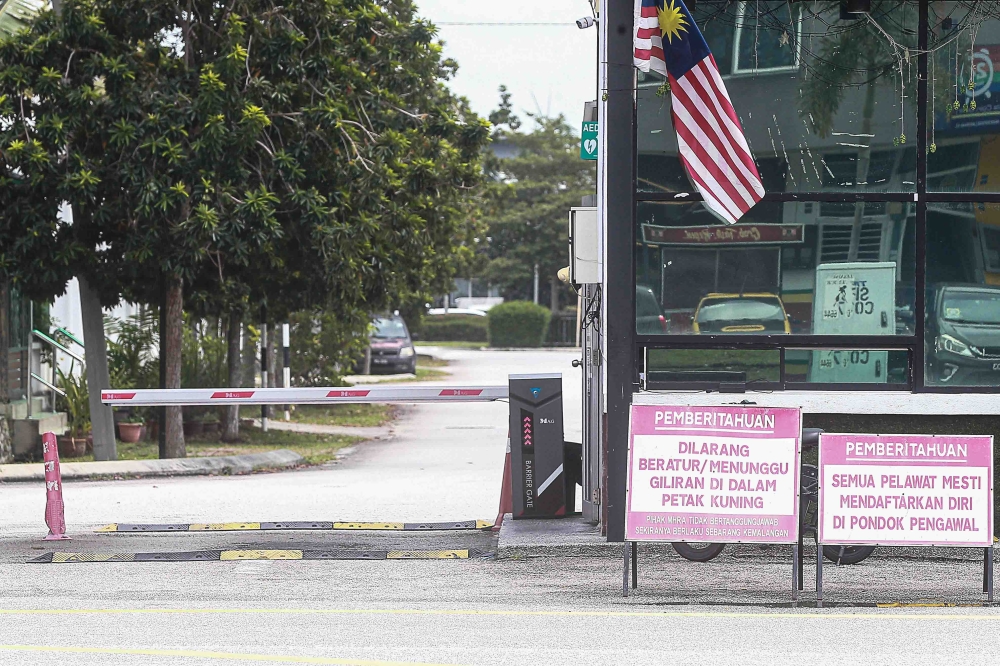
The article outlines the regulations governing the establishment of guarded residential communities in the Klang Valley, emphasizing variations in guidelines across Kuala Lumpur and Selangor.
It highlights the need for substantial resident consent, distinctions between manual and automatic security systems, and non-coercive participation.
Additionally, it discusses permissible infrastructure such as guardhouses, boom gates, and speed bumps, while stressing the importance of local authority approvals and the prohibition of permanent perimeter fencing.
Overall, the article underscores the complexities and specific legal frameworks involved in creating and managing such communities.
KUALA LUMPUR, Sept 28 — Guardhouses, boom gates and security guards have become a familiar sight in residential neighbourhoods across the Klang Valley, but putting them in place is not simply a matter of getting enough neighbours to agree and hiring a security company.
There are rules governing how guarded communities are established, where a guardhouse can be built, when a boom gate can be closed, whether residents can be forced to participate and even where speed bumps can be placed.
And the rules are not exactly the same across Kuala Lumpur and Selangor.
In Kuala Lumpur, City Hall (DBKL) uses the PLANMalaysia guideline as a reference for guarded neighbourhoods.
The four Selangor local authorities Malay Mail is focusing on — Ampang Jaya Municipal Council (MPAJ), Subang Jaya City Council (MBSJ), Shah Alam City Council (MBSA) and Petaling Jaya City Council (MBPJ) — generally follow the Selangor Housing and Property Board (LPHS) framework, with individual councils setting additional requirements according to local conditions.
PLANMalaysia’s 2019 guideline was introduced to guide state and local authorities, technical agencies and residents’ associations in establishing and managing guarded communities in non-strata housing. It replaced the 2010 guideline.
The guideline itself notes that its implementation must be read together with existing laws and other relevant guidelines, and that local authorities can impose conditions according to their respective jurisdictions.
Here is what residents need to know.
1. First, how many residents have to agree?
This is one of the biggest differences.
Under the PLANMalaysia guideline, at least 85 per cent of residents must agree before an application can be made.
The percentage is calculated based on occupied homes. Residents are defined as homeowners or tenants living in the proposed guarded community, while homes that are not continuously occupied are excluded.
In Selangor, the LPHS framework provides for:
75 per cent consent for a guarded community using a manual boom gate; and
100 per cent consent for an automatic boom gate or access-card system.
The Selangor government has confirmed that the LPHS guideline remains the applicable framework, with individual local authorities able to impose more detailed requirements according to their respective areas and circumstances.
For DBKL, the current publicly cited requirement is at least 81 per cent consent for a guarded neighbourhood scheme, while automatic boom gates using facial recognition require 100 per cent consent.
So a neighbourhood does not necessarily need unanimous support simply to establish a guarded community.
But it is a different story if residents want an automatic access system.
2. Getting the required percentage does not mean residents can be forced to join
This is an important protection for residents who disagree.
The PLANMalaysia guideline says the process of obtaining consent must not involve coercion or pressure on residents who do not agree.
The Selangor framework likewise states that there should be no coercion to join the scheme.
So if a neighbourhood reaches the required threshold, that does not mean every resident has automatically agreed to participate.
3. A resident who does not join cannot be locked out
This is perhaps the most important practical rule.
The PLANMalaysia guideline states that residents who do not participate in the scheme cannot be prevented from entering their homes at any time.
That means a resident who refuses to join cannot be denied access to his or her home merely for not participating in the scheme.
The Selangor guidelines contain the same basic principle.
4. A boom gate cannot simply be used to block access
The guidelines also prohibit vehicles from being obstructed when entering or leaving the neighbourhood.
This is significant because a guarded community does not automatically turn a public residential road into a private one.
PLANMalaysia’s guideline requires the scheme to have access arrangements that do not obstruct traffic, while its management conditions state that public authorities and members of the public must be allowed to enter and use public roads and facilities.
The Selangor guidelines similarly prohibit guards from denying lawful access to residents, members of the public and authorities.
This does not prevent an approved guarded scheme from operating security procedures at its entrance, but those arrangements cannot be used to bar people who are entitled to enter.
5. The boom gate is generally supposed to operate only from midnight to 6am
Under the PLANMalaysia guideline, a boom gate is generally allowed to operate from midnight to 6am.
A local authority may consider allowing it to remain closed 24 hours a day, but only if security guards are stationed there around the clock and can open the barrier whenever necessary.
This means a neighbourhood cannot simply install a boom gate and keep it permanently closed because residents prefer tighter access control.
6. Automatic access systems are a different matter
The PLANMalaysia guideline says automatic access cards can only be allowed if 100 per cent of residents agree.
Selangor’s LPHS framework similarly sets 100 per cent consent for automatic boom gates or access-card systems.
The Selangor government has said the higher threshold is intended to protect residents’ rights and avoid disputes over access between participating and non-participating households.
This contrasts with manual boom gates, for which the Selangor framework sets a 75 per cent consent threshold.
7. An automatic system does not necessarily mean one lane for everyone
This is where individual council rules become more detailed.
MBPJ’s guidelines allow an access-card arrangement to be considered with two separate lanes — one for residents and another for visitors — provided there are 24-hour guards and the other MBPJ conditions are met.
MPAJ also has requirements governing arrangements for residents and visitors when considering automated access systems.
So while the basic PLANMalaysia guideline does not prescribe a universal “resident lane” and “visitor lane” for every guarded community, individual councils may set more detailed conditions when automatic access is proposed.
8. There are even rules on where speed bumps can go
This is another detail many residents may not know.
PLANMalaysia allows speed breakers or road humps to be installed before and after the guardhouse.
But the guideline does not give residents a free hand to put them wherever they want. They must comply with specifications issued by the relevant local authority.
MBSA, for example, gives specific dimensions based on road width.
Its guideline states that for a 50ft road, the road hump should be 5ft wide, while for a 66ft road, it should be 10ft wide.
So even something as seemingly simple as a speed bump outside a guardhouse is subject to council requirements.
9. The guardhouse itself cannot just be built anywhere
PLANMalaysia says the guardhouse should be located on the road shoulder and must not obstruct traffic.
It cannot be built on or in the middle of the road under the national guideline.
The guideline also says the guardhouse cannot be built until the relevant temporary construction permit or approval has been obtained.
The national guideline specifies a maximum size of 1.8m by 2.4m, although Selangor councils have their own specifications.
For example, MPAJ, MBSJ and MBPJ generally use a 6ft by 8ft specification, while MBSA has different dimensions depending on whether a toilet is included.
10. A permanent guardhouse needs another layer of approval
If a guardhouse occupies the road shoulder and is a permanent structure, the residents’ association may need a Temporary Occupation Licence (TOL) from the District and Land Office under Section 65 of the National Land Code 1965.
The PLANMalaysia guideline also requires the guardhouse location to be shown on plans submitted to the relevant land office and local authority.
So a residents’ association cannot simply construct a permanent guardhouse on the road reserve because residents have voted for it.
11. There should be at least two access routes for emergencies
PLANMalaysia’s technical requirements say a guarded community should have at least two entry and exit routes for emergency purposes.
This is separate from the question of whether there is a residents’ lane and a visitors’ lane.
The requirement is about ensuring sufficient access in an emergency, rather than simply creating a convenient arrangement for residents and visitors.
12. Entrance gateways may require separate approval
The PLANMalaysia guideline restricts structures that span or obstruct the entrance road as part of a guarded-neighbourhood scheme.
However, individual councils may have their own procedures for considering entrance gateways.
MBPJ, for example, allows applications for entrance gateways to be considered separately through the planning-permission process, subject to the necessary technical approvals.
So residents should not assume that approval for a guarded-community scheme automatically allows them to build a large gateway or arch over the entrance road.
13. You cannot simply build a wall around the neighbourhood
Perimeter fencing is generally prohibited.
PLANMalaysia says perimeter fencing that surrounds the guarded community and blocks access is not allowed.
However, a local authority can consider fencing where there are legitimate safety concerns, such as a large drain, river or highway.
The Selangor councils have adopted broadly similar provisions.
14. Guards cannot demand your identity card
Security guards are not allowed to keep or demand a member of the public’s or a resident’s identity card simply as a condition of entering the neighbourhood.
The PLANMalaysia guideline says it is sufficient for guards to record a visitor’s name and vehicle registration number.
MBSA goes further by prohibiting guards from scanning identity cards.
15. Government officers and emergency services cannot simply be turned away
The guideline requires security guards to allow members of the public and authorities to enter the housing area and use public roads and facilities.
This means a guardhouse is not a checkpoint with the authority to decide that government officers, enforcement personnel or other authorised parties cannot enter.
MBPJ’s guidelines also specifically require residents’ associations to brief guards on the identities of agencies such as MBPJ, the police, the Fire and Rescue Department, the Land Office and ambulance services.
16. The neighbourhood generally has to be a cul-de-sac
PLANMalaysia says guarded communities should only be established in residential areas that do not have roads connecting them to neighbouring communities.
In other words, the model is intended for areas where roads effectively terminate within the neighbourhood rather than forming an important through-route.
The guideline describes this as allowing only cul-de-sac-type areas, subject to the local authority’s discretion.
17. Public facilities can disqualify an area
A guarded community is generally not supposed to be established in an area containing public facilities such as schools, mosques, public halls and public open spaces, or areas served by public bus routes.
The principle is that a security arrangement for one residential community should not prevent wider public access to shared facilities.
The Selangor councils have adapted this differently.
For example, MBSA allows certain smaller shared facilities such as small surau and Rukun Tetangga posts, while excluding larger facilities such as schools, halls and football fields.
18. The security company must be properly registered
The residents’ association cannot simply hire anyone to stand at the guardhouse.
PLANMalaysia requires the appointed security company to be registered with the Home Ministry (KDN), with the employment and operation of guards subject to the relevant requirements.
The guideline also states that the appointment of security guards must comply with the Private Agencies Act 1971 and KDN requirements.
19. Guards cannot use dogs for patrols
This may come as a surprise to some residents.
The PLANMalaysia guideline specifically says security guards are not allowed to use dogs for patrol and security purposes.
20. A guarded community is not supposed to be permanent by default
PLANMalaysia says guarded communities are not encouraged as a long-term arrangement.
The national guideline also provides for a permit system rather than treating the scheme as a permanent change to the neighbourhood.
Under PLANMalaysia’s application procedure, the permit is valid for one year and runs alongside the expiry of the Temporary Occupation Licence for the guardhouse.
The Selangor councils have their own approval periods, generally allowing temporary schemes for a limited period and requiring renewal.
21. The residents’ association has to put up a notice before applying
It is not simply an internal residents’ association decision.
PLANMalaysia requires the applicant to put up a banner informing residents at the main entrance for 30 days after submitting the application.
The application itself also has to go through the local authority’s One Stop Centre (OSC).
22. The approval permit has to be displayed
Once approved, the residents’ association has to display the valid permit at the guardhouse or on the notice board at the main entrance so it can be inspected by the authorities.
Operating a guarded community without the necessary permit, or constructing a guardhouse without approval, can result in enforcement action.
23. What happens if the scheme is cancelled?
The neighbourhood is supposed to be returned to its original condition.
PLANMalaysia says that when guarded-community status is removed, the residents’ association must notify the local authority and remove the guardhouse, boom gate and fencing, where applicable.
Family spokesman: Malaysia sought wider Nepal search for 55 uncontactable citizens, but access was limited
Man dies of rabies in Kedah’s first human case in 28 years
All Malaysian Indian Progressive Front seeks BN membership — and a shot at contesting Penang seats
文章概述了巴生谷地区建立保安住宅社区的相关规定,重点介绍了吉隆坡和雪兰莪在指导方针上的差异。
它强调了获得居民的充分同意、区分手动和自动安全系统以及非强制性参与的必要性。
此外,它还讨论了允许的基础设施,如警卫室、栏杆和减速带,同时强调了地方当局批准的重要性以及禁止永久性周界围栏。
总的来说,这篇文章强调了创建和管理此类社区所涉及的复杂性和具体法律框架。
吉隆坡,9月28日讯——在巴生谷各地的住宅区,警卫室、栏杆和保安人员已成为常见的景象,但安装这些设施并非仅仅是获得足够多的邻居同意并雇用一家保安公司那么简单。
对于如何建立有保安的社区、在哪里可以建造保安室、何时可以关闭道闸、是否可以强制居民参与,甚至在哪里可以设置减速带,都有相应的规定。
而且吉隆坡和雪兰莪的规则并不完全相同。
在吉隆坡,市政厅(DBKL)以马来西亚规划局(PLANMalaysia)的指导方针作为保安社区的参考。
《马来邮报》重点关注的雪兰莪州四个地方政府——安邦再也市议会(MPAJ)、梳邦再也市议会(MBSJ)、莎阿南市议会(MBSA)和八打灵再也市议会(MBPJ)——通常遵循雪兰莪州房屋及物业局(LPHS)的框架,各个市议会根据当地情况制定额外的要求。
PLANMalaysia 于 2019 年推出的指导方针旨在指导州和地方当局、技术机构和居民协会在非分层房屋中建立和管理保安社区。该方针取代了 2010 年的指导方针。
该指南本身指出,其实施必须与现行法律和其他相关指南一并解读,地方当局可以根据各自的管辖范围施加条件。
以下是居民需要了解的信息。
1. 首先,需要有多少居民同意?
这是最大的区别之一。
根据马来西亚规划指南,至少 85% 的居民必须同意才能提出申请。
该百分比是根据已入住房屋计算的。居民是指居住在拟建安保社区内的房主或租户,而未持续有人居住的房屋则不包括在内。
在雪兰莪州,LPHS框架规定:
75% 的居民同意建立配备手动栏杆的保安社区;
自动道闸或门禁卡系统获得100%同意。
雪兰莪州政府已确认,LPHS 指南仍然是适用的框架,各个地方当局可以根据各自的地区和情况制定更详细的要求。
对于吉隆坡市政局来说,目前公开引用的要求是,保安社区计划至少需要 81% 的同意,而使用人脸识别的自动栏杆则需要 100% 的同意。
因此,建立一个有治安的社区并不一定需要获得一致支持。
但如果居民想要的是自动门禁系统,情况就不同了。
2. 达到所需比例并不意味着可以强制居民加入
这对持不同意见的居民来说是一项重要的保障。
PLANMalaysia 指南指出,获取同意的过程不得涉及对不同意的居民的胁迫或压力。
雪兰莪州的框架也规定,不应强迫任何人加入该计划。
因此,即使一个社区达到了所需的门槛,也不意味着每个居民都自动同意参与。
3. 未加入的居民不能被拒之门外。
这或许是最重要的实用规则。
PLANMalaysia 指南规定,不得阻止未参与该计划的居民随时进入自己的家。
这意味着,即使居民拒绝加入该计划,也不能仅仅因为其不参与该计划就剥夺其进入自己家的权利。
雪兰莪州的指导方针也包含同样的基本原则。
4. 不能简单地使用栏杆来阻挡通道。
该准则还禁止车辆在进出社区时被阻挡。
这一点意义重大,因为保安社区并不会自动将公共住宅道路变成私人道路。
PLANMalaysia 的指导方针要求该方案的准入安排不得阻碍交通,而其管理条件规定必须允许公共机构和公众进入和使用公共道路和设施。
雪兰莪州的相关规定也同样禁止保安人员拒绝居民、公众和当局的合法通行。
这并不妨碍经批准的安保方案在其入口处实施安全程序,但这些安排不能用来阻止有权进入的人。
5. 一般情况下,道闸只应在午夜至凌晨6点之间运行。
根据马来西亚规划局的指导方针,一般允许道闸从午夜至早上 6 点运行。
地方当局可能会考虑允许其全天 24 小时关闭,但前提是必须有保安人员 24 小时驻守,并在必要时可以打开栅栏。
这意味着,一个社区不能仅仅因为居民更喜欢更严格的出入控制,就简单地安装一个栏杆并将其永久关闭。
6. 自动门禁系统则另当别论。
PLANMalaysia 指南规定,只有在 100% 的居民同意的情况下,才能允许使用自动门禁卡。
雪兰莪州的 LPHS 框架也类似地规定,自动栏杆或门禁卡系统必须获得 100% 的同意。
雪兰莪州政府表示,提高门槛是为了保护居民的权利,避免参与家庭和非参与家庭之间因准入问题而产生纠纷。
这与人工栏杆形成对比,雪兰莪州的框架规定,人工栏杆的通行许可门槛为 75%。
7. 自动系统并不一定意味着所有人都共用一条车道。
这里就涉及到各个理事会的具体规定了。
MBPJ 的指导方针允许考虑采用门禁卡制度,设置两条独立的通道——一条供居民使用,另一条供访客使用——前提是必须有 24 小时保安,并且满足 MBPJ 的其他条件。
MPAJ在考虑自动门禁系统时,也对居民和访客的安排有相关要求。
因此,虽然马来西亚规划的基本指导方针没有规定每个保安社区都必须设置统一的“居民通道”和“访客通道”,但各个委员会在提出自动访问方案时可以制定更详细的条件。
8. 甚至连减速带的设置位置都有规定。
这是许多居民可能不知道的另一个细节。
PLANMalaysia 允许在警卫室前后安装减速带或路障。
但该指南并未赋予居民随意摆放这些设施的自由。他们必须遵守相关地方当局发布的规范。
例如,MBSA 根据道路宽度给出具体尺寸。
该指南规定,对于 50 英尺宽的道路,路障宽度应为 5 英尺;而对于 66 英尺宽的道路,路障宽度应为 10 英尺。
因此,即使是像警卫室外的减速带这样看似简单的事情,也需要遵守市政当局的规定。
9. 岗亭本身不能随意建造。
PLANMalaysia表示,警卫室应设在路肩上,不得阻碍交通。
根据国家规定,该建筑不能建在道路上或道路中间。
该指南还规定,在获得相关的临时施工许可证或批准之前,不得建造警卫室。
国家指导方针规定最大尺寸为 1.8 米 x 2.4 米,但雪兰莪州议会有自己的规定。
例如,MPAJ、MBSJ 和 MBPJ 通常采用 6 英尺乘 8 英尺的规格,而 MBSA 的尺寸则根据是否包含厕所而有所不同。
10. 设立永久性警卫室需要额外一层审批。
如果警卫室占用路肩且为永久性建筑,则居民协会可能需要根据 1965 年《国家土地法》第 65 条从地区和土地局获得临时占用许可证 (TOL)。
PLANMalaysia 指南还要求在提交给相关土地局和地方当局的规划图中标明警卫室的位置。
因此,居民协会不能仅仅因为居民投票赞成就在道路用地上建造永久性警卫室。
11. 至少应有两条应急通道。
PLANMalaysia 的技术要求规定,有保安的社区应至少有两个出入口,以备紧急情况之需。
这与是否存在居民车道和访客车道的问题是两回事。
这项要求是为了确保在紧急情况下有足够的通行能力,而不仅仅是为了给居民和访客创造便利的安排。
12. 入口大门可能需要单独审批。
PLANMalaysia 指南限制了在封闭式社区方案中建造跨越或阻碍入口道路的建筑物。
但是,各个地方议会可能有自己的入口大门审批程序。
例如,MBPJ允许通过规划许可程序单独考虑入口大门的申请,但需获得必要的技术批准。
因此,居民不应认为获得保安社区方案的批准就自动允许他们在入口道路上建造大型大门或拱门。
13. 你不能简单地在社区周围建一堵墙。
一般情况下,禁止设置围栏。
PLANMalaysia表示,在有保安的社区周围设置围栏并阻止人员进入是不允许的。
但是,如果存在合理的安全隐患,例如大型排水沟、河流或公路,地方当局可以考虑设置围栏。
雪兰莪州各市议会也采纳了大致类似的规定。
14. 警卫不能要求你出示身份证
保安人员不得以允许公众或居民进入社区为条件,扣留或要求其出示身份证件。
PLANMalaysia 指南指出,保安人员只需记录访客姓名和车辆登记号码即可。
MBSA更进一步,禁止保安扫描身份证。
15. 政府官员和紧急服务人员不能被简单地拒之门外。
该准则要求保安人员允许公众和有关部门人员进入住宅区,并使用公共道路和设施。
这意味着警卫室不是检查站,没有权力决定政府官员、执法人员或其他授权人员是否可以进入。
MBPJ 的指导方针还特别要求居民协会向保安人员简要介绍 MBPJ、警察、消防救援部门、土地局和救护车服务等机构的身份。
16. 该社区通常必须是死胡同
PLANMalaysia表示,只有没有道路连接邻近社区的住宅区才应该建立保安社区。
换句话说,该模型适用于道路实际上在社区内终止,而不是形成重要通道的区域。
该指南将其描述为仅允许在死胡同类型的区域进行建设,具体由地方当局酌情决定。
17. 公共设施可能导致某个区域失去资格
一般而言,不应在有学校、清真寺、公共礼堂、公共开放空间等公共设施的区域,或有公共巴士线路服务的区域建立保安社区。
原则是,一个住宅社区的安全安排不应妨碍公众更广泛地使用共享设施。
雪兰莪州各地方议会采取了不同的应对措施。
例如,MBSA 允许一些较小的共享设施,如小型祈祷室和 Rukun Tetangga 哨所,但不允许较大的设施,如学校、礼堂和足球场。
18. 保安公司必须已正式注册
居民协会不能随便雇佣任何人来守卫岗亭。
PLANMalaysia 要求指定的保安公司在内政部 (KDN) 注册,保安人员的雇用和运营须符合相关要求。
该指南还规定,保安人员的任命必须符合 1971 年《私人机构法》和 KDN 的要求。
19. 警卫人员不得使用警犬进行巡逻
这或许会让一些居民感到惊讶。
PLANMalaysia 的指导方针明确规定,保安人员不得使用犬只进行巡逻和安保工作。
20. 默认情况下,封闭式社区不应是永久性的。
PLANMalaysia表示,不鼓励将保安社区作为长期安排。
国家指导方针还规定采用许可制度,而不是将该方案视为对社区的永久性改变。
根据马来西亚规划局的申请程序,许可证有效期为一年,与警卫室临时占用许可证的到期日相同。
雪兰莪州各地方议会都有自己的审批期限,通常允许临时方案实施一段时间,并需要续期。
21. 居民协会在申请前必须张贴公告。
这不仅仅是居民协会内部的决定。
PLANMalaysia 要求申请人在提交申请后的 30 天内,在主入口处张贴横幅告知居民。
申请本身也必须通过地方政府的一站式服务中心(OSC)进行审批。
22. 批准许可证必须公示。
获得批准后,居民协会必须将有效的许可证张贴在警卫室或正门的公告栏上,以便有关部门进行检查。
未经许可经营保安社区,或未经批准建造警卫室,都可能导致执法行动。
23. 如果该计划被取消会发生什么?
该街区应该恢复到原来的状态。
PLANMalaysia 表示,当保安社区地位被取消时,居民协会必须通知地方当局,并拆除保安室、栏杆和围栏(如适用)。
家属发言人:马来西亚曾请求尼泊尔扩大搜寻范围,寻找55名失联公民,但搜寻范围有限。
吉打州28年来首例人类狂犬病病例,一名男子死亡
全马来西亚印度人进步阵线寻求加入国阵,并希望有机会竞选槟城议席。