Mohamad Hasan warns West Asia war, Hormuz closure ripple globally, urges UN reforms穆罕默德·哈桑警告称,西亚战争和霍尔木兹海峡关闭将在全球范围内产生连锁反应,并敦促联合国进行改革。
NEW YORK, Sept 28 — Conflicts in West Asia and the closure of the Strait of Hormuz are no longer issues affecting only the region concerned, as their repercussions are also being...
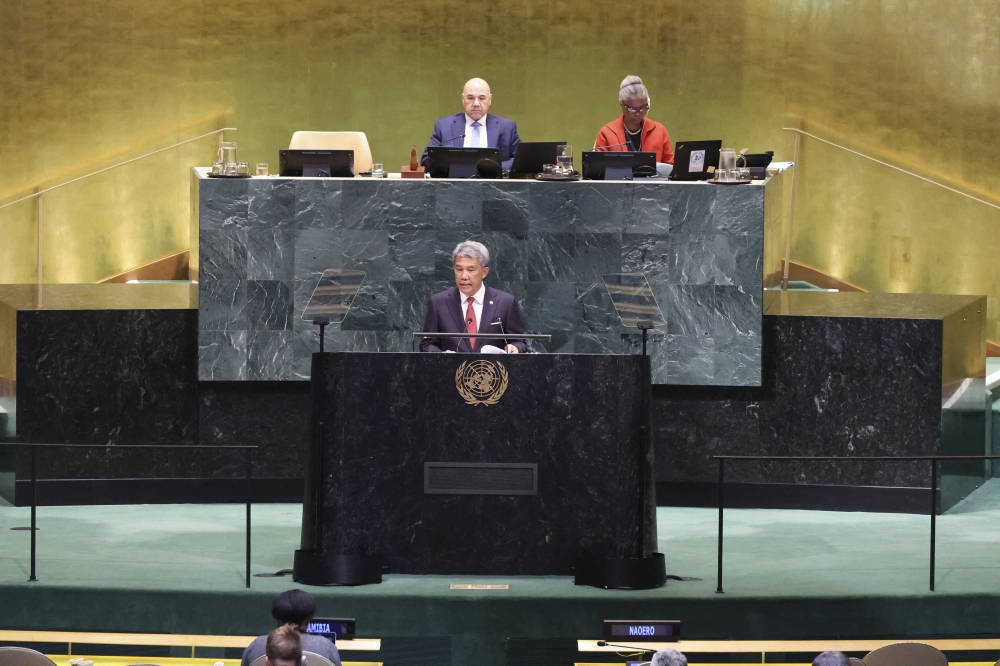
In a recent address at the United Nations General Assembly, Malaysia's Foreign Minister Datuk Seri Mohamad Hasan emphasized that conflicts in West Asia and the blockade of the Strait of Hormuz have global ramifications, affecting economies even in distant regions.
He criticized the declining trust in the UN and called for reforms, especially in the Security Council's use of veto power on matters like genocide and crimes against humanity.
Mohamad also highlighted the need for regulatory frameworks around artificial intelligence to prevent its misuse in warfare, underscoring the interconnectedness of today's global challenges.
NEW YORK, Sept 28 — Conflicts in West Asia and the closure of the Strait of Hormuz are no longer issues affecting only the region concerned, as their repercussions are also being felt far beyond its borders, said Datuk Seri Mohamad Hasan.
The Foreign Minister said the developments showed that the impact of wars today is no longer confined to the countries or regions directly involved, but also affects people around the world in terms of the economy and daily life due to increasing interconnectedness among countries.
“In the past, the effects and suffering of war were felt by those directly involved, but now, because the world is interconnected, war is not only confined to the respective regions but its effects are also felt elsewhere.
“The war, the closure of the Strait of Hormuz and the conflict in West Asia are also being felt by families in Southeast Asia through rising prices of goods, higher fuel prices and various other impacts,” he said.
He said this at a press conference after delivering Malaysia’s national statement at the General Debate of the 81st session of the United Nations General Assembly (UNGA) here on Saturday.
Meanwhile, Mohamad said the United Nations (UN) needed to return to the principles on which it was founded to ensure that the lessons of war remained at the heart of efforts to prevent human suffering and destruction.
He said that after several decades, the world appeared to be increasingly forgetting the suffering caused by wars, even as conflicts continued in Europe, Africa and West Asia.
“Many have forgotten the suffering endured by people around the world, and how war brings suffering and destruction,” he said.
Mohamad said international confidence in the UN was declining, with what he described as a serious “trust deficit” emerging.
He also called for reforms at the UN and particularly its Security Council (UNSC), especially regarding the use of veto power, which should not be exercised arbitrarily, particularly in matters involving crimes against humanity, genocide and other crimes.
He said numerous resolutions had been passed at the UN level, but decisions could be stalled when they reached the Security Council and were vetoed, even when they had received broad support from UN members.
“Even when more than two-thirds of the votes at the United Nations approve a resolution, it still does not become a reality,” he said.
Mohamad said the situation could also be seen in the continued violations of international law and international humanitarian law, while appropriate action could not be taken.
He said if the situation was not addressed, the UN would continue to fail to fulfil the objectives expected of it by the international community.
Meanwhile, Mohamad said developments in artificial intelligence (AI) needed to be regulated with clear guidelines to prevent it from being misused as a weapon that could harm humanity, particularly in the context of warfare.
“AI needs to be regulated. If it is not regulated, it will become another force capable of causing harm,” he said. — Bernama
King and Queen of Malaysia express condolences on passing of Dr Siti Hasmah
Dr Siti Hasmah dies aged 100 at IJN
Mohamad Hasan says Malaysia sought for Hague Group role due to firm legal stance
马来西亚外交部长拿督斯里穆罕默德·哈桑在最近于联合国大会上发表的讲话中强调,西亚冲突和霍尔木兹海峡封锁具有全球性影响,甚至影响到遥远地区的经济。
他批评了人们对联合国信任度的下降,并呼吁进行改革,特别是安理会在种族灭绝和危害人类罪等问题上使用否决权的问题。
穆罕默德还强调了围绕人工智能建立监管框架的必要性,以防止其在战争中被滥用,并强调了当今全球挑战的相互关联性。
纽约,9 月 28 日——拿督斯里·穆罕默德·哈桑表示,西亚冲突和霍尔木兹海峡的关闭不再仅仅是影响相关地区的问题,其影响也远远超出了该地区的边界。
外交部长表示,事态发展表明,如今战争的影响不再局限于直接卷入战争的国家或地区,而且由于各国之间日益密切的联系,战争也会在经济和日常生活方面影响到世界各地的人们。
“过去,战争的影响和苦难是由直接卷入战争的人感受到的,但现在,由于世界相互联系,战争不仅限于相关地区,其影响也会波及其他地方。
他说:“战争、霍尔木兹海峡的关闭以及西亚的冲突也通过物价上涨、燃料价格上涨以及其他各种影响,给东南亚家庭带来了压力。”
他在周六于此地举行的联合国大会第81届会议一般性辩论中代表马来西亚发表国家声明后举行的新闻发布会上发表了上述讲话。
与此同时,穆罕默德表示,联合国需要回归其创立的原则,以确保战争的教训仍然是防止人类苦难和破坏的核心。
他说,几十年过去了,世界似乎越来越忘记战争造成的苦难,尽管欧洲、非洲和西亚的冲突仍在继续。
他说:“许多人已经忘记了世界各地人民所遭受的苦难,以及战争带来的苦难和破坏。”
穆罕默德表示,国际社会对联合国的信心正在下降,他称之为严重的“信任赤字”正在出现。
他还呼吁对联合国,特别是其安全理事会(安理会)进行改革,尤其是在否决权的使用方面,否决权不应被任意行使,尤其是在涉及危害人类罪、种族灭绝罪和其他罪行的事项上。
他表示,联合国层面通过了许多决议,但即使这些决议得到了联合国成员国的广泛支持,它们在提交安理会后仍可能被否决,从而导致决议搁浅。
他说:“即使联合国超过三分之二的投票通过了一项决议,它仍然无法成为现实。”
穆罕默德表示,这种情况还可以从持续违反国际法和国际人道主义法,却无法采取适当行动的情况中看出。
他表示,如果这种情况得不到解决,联合国将继续无法实现国际社会对其的期望目标。
与此同时,穆罕默德表示,人工智能 (AI) 的发展需要有明确的指导方针进行监管,以防止其被滥用为可能伤害人类的武器,尤其是在战争背景下。
“人工智能需要监管。如果不加以监管,它将成为另一种可能造成危害的力量,”他说道。——马新社
马来西亚国王和王后对西蒂·哈斯玛博士的逝世表示哀悼
茜蒂哈斯玛博士在 IJN 去世,享年 100 岁
穆罕默德·哈桑表示,马来西亚寻求在海牙集团中发挥作用是因为其坚定的法律立场。