Singapore factory output jumps in August, driven by sustained AI demand受人工智能需求持续增长的推动,新加坡8月份工厂产出大幅提升。
Singapore’s manufacturing output rose 15.4% in August, led by electronics and precision engineering amid strong AI demand, despite a decline in chemicals. Read more at straitstimes.com.
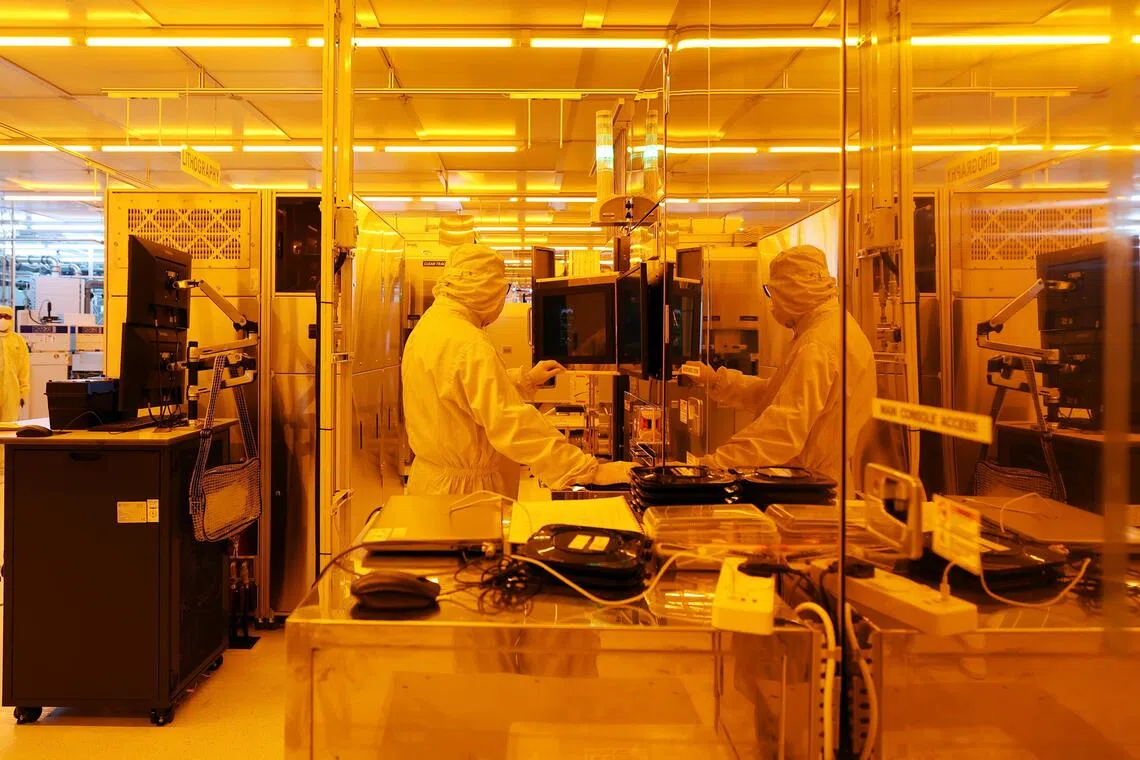
Output from the precision engineering cluster saw the largest growth in August, jumping 33.9% year on year.
PHOTO: LIANHE ZAOBAO FILE
Published Sep 28, 2026, 01:00 PM
Updated Sep 28, 2026, 01:24 PM
SINGAPORE – Singapore’s manufacturing output expanded in August, as all clusters except chemicals recorded output growth.
Total factory output climbed 15.4% year on year in August, after a revised 6.9% rise in July. However, the expansion missed the 17.1% growth forecast by economists in a Bloomberg poll.
Excluding the biomedical manufacturing industry, output increased 17%, data from the Economic Development Board on Sept 28 showed.
Output from the precision engineering cluster saw the largest growth in August, jumping 33.9% year on year, driven mostly by higher production of semiconductor equipment in the machinery and systems segment.
Within the cluster, the precision modules and components segment saw higher output of dies, moulds, tools, jigs and fixtures as well as precision components for the electronics industry.
The electronics industry saw an increase of 28.5% year on year, supported by strong production of servers and related products, semiconductors and data storage products amid robust artificial intelligence-related demand.
Within the cluster, semiconductor output surged 26.1%, while infocomms and consumer electronics added 66.3%, and computer peripherals and data storage expanded 20.4%.
Other electronic modules and components fell 6%.
Transport engineering grew 9.5%, led by the land and aerospace segments. In particular, the aerospace segment recorded higher production of aircraft parts and sustained maintenance, repair and overhaul jobs from commercial airlines.
General manufacturing output increased 1.5%, supported by higher production of beverage products, commercial printing and metal doors and windows.
Biomedical manufacturing output inched 0.4% higher from a year ago.
The medical technology segment recorded higher output of medical devices amid stronger export demand. This was partially offset by a decline in the pharmaceuticals segment due to a different mix of active pharmaceutical ingredients being produced.
Beyond electronics and the other clusters that grew, the chemicals cluster declined 12.7%, weighed down by the petroleum and petrochemicals segments.
Petroleum output was affected by plant maintenance, while petrochemicals production continued to be constrained by softer demand and feedstock supply disruptions. In contrast, the specialities segment recorded output growth on account of higher production of industrial gases and food additives.
Singapore economic data
8 月份,精密工程集群的产出增幅最大,同比增长 33.9%。
照片:联合早报档案
发布于2026年9月28日下午1点
更新于2026年9月28日下午1:24
新加坡——8月份新加坡制造业产出扩张,除化工行业外,所有产业集群的产出均实现增长。
8月份工厂总产出同比增长15.4%,高于7月份修正后的6.9%。然而,这一增幅低于彭博社调查中经济学家预测的17.1%的增长预期。
经济发展委员会9月28日公布的数据显示,剔除生物医药制造业后,经济产出增长了17%。
8 月份,精密工程集群的产出增幅最大,同比增长 33.9%,这主要得益于机械和系统领域半导体设备产量的增加。
在该产业集群中,精密模块和组件领域的模具、工具、夹具和工装以及电子行业精密组件的产量均有所提高。
受强劲的人工智能相关需求推动,服务器及相关产品、半导体和数据存储产品产量强劲增长,电子行业同比增长 28.5%。
在该产业集群中,半导体产量增长了 26.1%,信息通信和消费电子产品增长了 66.3%,计算机外围设备和数据存储产品增长了 20.4%。
其他电子模块和元件下降了 6%。
交通运输工程行业增长9.5%,其中陆地和航空航天领域增长最为显著。特别是航空航天领域,飞机零部件产量增加,并且来自商业航空公司的维护、修理和大修业务也保持稳定增长。
受饮料产品、商业印刷和金属门窗产量增加的推动,一般制造业产出增长了1.5%。
生物医药制造业产值比去年同期微增0.4%。
受出口需求强劲的推动,医疗技术板块的医疗器械产量有所增长。但由于活性药物成分组合的变化,制药板块的产量有所下降,部分抵消了这一增长。
除了电子和其他增长的产业集群之外,化工产业集群下降了 12.7%,受到石油和石化行业的拖累。
石油产量受到工厂维护的影响,而石化产品产量则持续受到需求疲软和原料供应中断的制约。相比之下,特种化学品领域由于工业气体和食品添加剂产量增加而实现产量增长。
新加坡经济数据