USAF’s Deadliest F-16 Pilot Talks F-15 Retirement, Syria, and Pilot Shortage美国空军最致命的F-16飞行员谈F-15退役、叙利亚和飞行员短缺问题
We go in-depth with Dan Hampton, one of the most decorated fighter pilots of our time, on everything from air combat to geopolitics.
Updated Jul 3, 2020 4:20 AM EDT
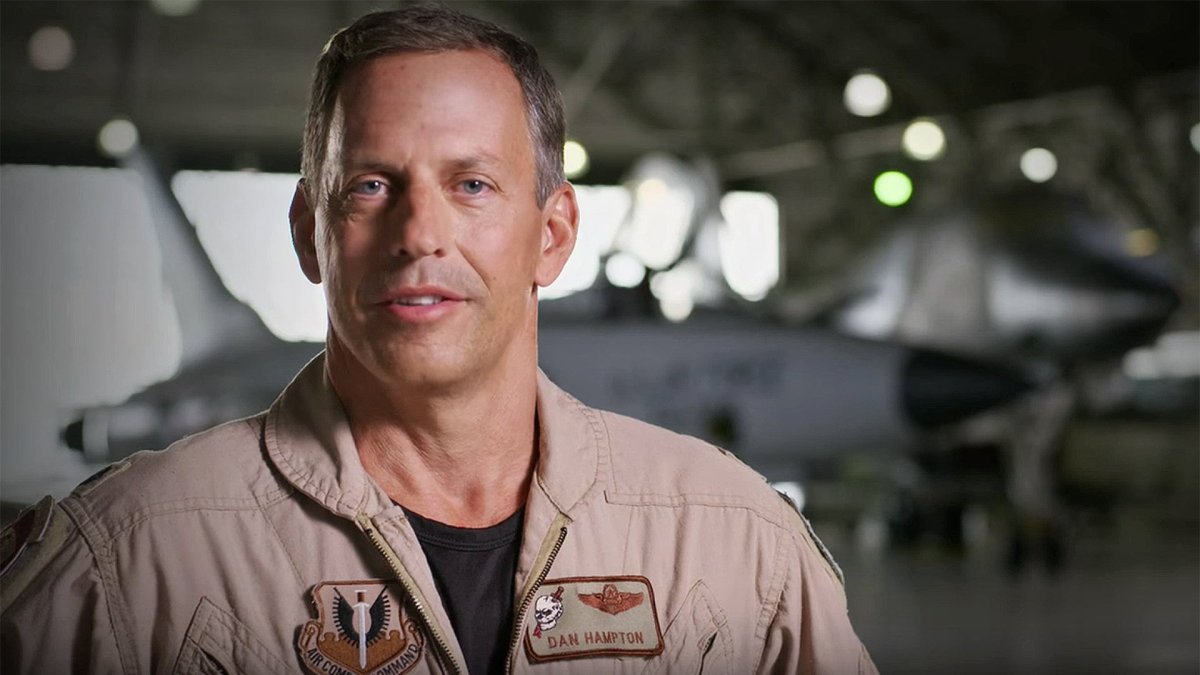
Often referred to as the deadliest F-16 pilot, outspoken best selling author Dan Hampton is back to discuss a wide range of issues. Last time we talked , our conversation ranged from women in the cockpit to employing his beloved F-16 to kill the enemy. This time around we cover everything from the USAF’s plan to keep a portion of its F-16s flying until 2048, to the service’s pilot retention woes, to America’s strategy in Iraq. As usual, “Two Dogs” has strong views, and is unafraid to share them.
Hampton wrote one of the best air combat memoirs of all time, Viper Pilot , and has had continued success as an author with Lords of Sky and The Hunter Killers . He also writes a a well-reviewed fiction series based on the mercenary pilot mysteriously known as the Sandman. With his upcoming book about Charles Lindbergh’s historic voyage—aptly titled The Flight —set for release next month, Hampton spent nearly an hour talking The War Zone. It was a lively discussion, to say the least.
Bold italics are the author’s questions, Dan Hampton’s responses are seen in normal text:
The United States Air Force is looking to replace the F-15C/D fleet with existing F-16s upgraded with an active electronically scanned array (AESA) radar. The plan has been viewed as highly controversial. What are your thoughts on using modernized F-16s to fill the role that is currently filled by the F-15C/D Eagle fleet?
Well, we could spend 45 minutes talking about the Air Force and its collective lack of leadership, but it kind of goes to that. Here on the one hand they’re pushing the F-35, and possibly an upgraded F-22, and yet they don’t want to get rid of older 1970s vintage F-15s, right? That’s because for a long time the Air Force was run by what’s called the Eagle Mafia, which were the guys that always wanted to be the white scarf in the wind, air-to-air dog fighting kings. Unfortunately that pretty much went out with Vietnam. You could even argue that it went out with Korea. But they never really grasped that fact, so they never really thought too much of aircraft that did air-to-ground missions or swing-role airplanes like the F-16 that were quite capable of doing their single air-to-air mission, and close air support, and all the other stuff that multi-role fighters do.
F-16 and F-15 aggressors over the Nellis Range Complex. The F-15 has already been retired form the adversary role. , USAF
I think the situation is illustrating a lot of the issues with the Air Force, and I think the F-16 is more than capable. Northrup Grumman has an APG-80 AESA radar (used on the Block 60 F-16E/F) and their new SABR ( APG-83 Scaleable Agile Beam Radar ) for the F-16. The only thing the Eagle can do that the F-16 can’t do is it can carry more weapons. But then again if the weapons are so much more accurate and dependable now, then what’s the point?
I mean, I watched an Eagle shoot off six AIM-7s in the first Gulf War and five of them just dropped off the wings and fell to the ground. So carrying more weapons isn’t necessarily a good thing if the weapons don’t work. Now an AIM-7 is not an AIM-120 obviously, but the principle is the same. With an F-16 you get a very active, very versatile fighter in conjunction with some sort of AESA radar. Then you can get away with carrying six missiles and you don’t need ten, right?
These upgraded F-16s would include about 300 Block 40 and 50 jets already in service, and the AESA upgrade would likely go along with the structural and avionics upgrades. So it kind of gives us new life in the F-16. The USAF says they would fly the type till 2048 under the plan— but potentially at the expense of the F-15C/D fleet.
You’re along the right track, and airplanes and equipment are so expensive these days. Almost prohibitively so. But you can’t afford to keep a bunch of aging F-15s around for sentimental purposes and that’s essentially what they’re doing. They’re not needed. When was the last time there was a big dogfight?
We had some air-to-air action in the first Gulf War but I wouldn’t really call it dog fighting when they’re shooting them down with BVR missiles from 15 miles away. I would say the money is better spent on multirole aircraft that can swing from mission-to-mission as required.
What are your thoughts on the USAF’s initiative to possibly field light air support aircraft like the A-29 Super Tucano or AT-6 Coyote? And what do you think about the close air support fly-off that is still planned between the F-35 and the A-10?
I think it’s yet another glaring example of those in charge who just don’t really get it. And here’s what I mean. An F-35 costs upwards of, what, over $100 million each? Yeah, it can do close air support and it’s a multirole fighter and that’s fine, but you’re never going to have enough of them to do the sort of dirty-hand grunt work, close air support stuff that at least I saw in the wars that I was a part of. There’s nothing wrong with the A-10 that can’t be solved by some upgrading and modernization, for crying out loud. I mean we’ve still got B-52s flying. B-52s took their first flight, what, over a decade before I was born.
A-29 Super Tucano., USAF
I would say this. Again money isn’t endless the way that it used to be. I would scrap the notion of an improved Raptor, whatever that means, because we definitely do not need single mission aircraft. And what were the numbers for the F-35, like 1,700 was what the Air Force contract called for?
Yeah, 1,763 is the number the Air Force still has as a target.
Yeah, at a $100 million each, that’s going to happen. So what you need is a mix. You need to keep the A-10s around as long as you can. I would have bought the Block 60 F-16E/F version for the U.S. Air Force. I flew that thing. It’s superb. Everything that we complained about for years has been fixed and it’s got the new and better version in it. But the Air Force didn’t buy it because they were in love with the Raptor and the F-35. Maybe somebody is going to look at this again and say, “well, you know what, maybe we were a bit hasty and we need some of each.”
As far as the light aircraft thing, this is classic L et’s fight the last conflict mentality. And this is what makes the drone thing kind of dangerous, too. We haven’t had a real enemy to fight since 2003. I mean, an enemy that had MIGs and SAMs and Triple A. So we’ve gotten used to making do with drones plinking targets with little bombs—Hellfire missiles or whatever—and now the idea that, hey, what we really need is some sort of light attack turboprop.
Well, okay, that will work against certain enemies, but the enemies that we’re going to have to fight later, I hope not sooner, they’re going to have MIGs, they’re going to have SAMs, they’re going to have anti-aircraft systems and IADS (Integrated Air Defense Systems). Those kinds of planes just aren’t going to live through it.
F-16E Block 60 flown by the UAE. , Tyler Rogoway
So I would say for the light attack stuff, you subcontract it. There’s plenty of mercenary companies out there, including mine, that do that sort of thing and we do it a lot cheaper and a lot easier and in fact better than the big military does. In fact, the Air Force is on its heels so badly at the moment that they’re going to end up contracting probably all of the adversary air requirements to private military companies , right?
I would say stick with jets and high tech and research and development for the big threat and have enough aircraft of all kinds that you can use them if you need to. But keep in mind the private option for threats that don’t require such a big hammer, rather than swing the force all one way and then be left holding the bag open when you get hit in the face by Russia or China somewhere down the road. Does that make sense?
Then you let the Russians and the Chinese bankrupt themselves trying to keep up with us technically which they’ve never been able to do. That’s what killed the Soviet Union to a large degree. They’ll never be able to do it and then that side of the force is ready to fight that war when and if it happens or at least act as a very sizable deterrent and you haven’t sacrificed anything in the meantime.
Again, I don’t know where this current group of general officers and their ilk come from, but they didn’t come from the same place that I did.
Do you see a high-end, penetrating, unmanned combat air vehicle — even if it’s just to go after fixed targets—as part of that concept?
Yeah, and under certain circumstances I’m all for it. The strength of manned aircraft is in the tactical environment, okay. You’ve got a human who can think faster than a computer and react accordingly with all the right training and everything else that we use to have. We don’t have it so much anymore. The tactical environment is where manned aircraft really are king. You can use the unmanned stuff for the other things. To a large degree some of the strategic level attacks that we’d have to do, certainly stimulating IADS, that sort of thing. I mean all that stuff could be done, fixed targeting, hitting things that don’t move like buildings, bridges, etc. And again, leave the tactical stuff to the humans.
The United States Air Force cannot retain pilots . It’s facing basically a crippling shortage of qualified air crews in the near term and the medium term. What can the United States Air Force do to make staying in its pilot cadre more attractive?
Oh, boy. Yeah, you’re right. It’s to the danger level and people don’t realize that. I think most people don’t realize that you just can’t go get somebody off the street and toss them into an airplane. I mean, this takes years to learn how to do and these are people that have something that most others don’t have to begin with. I don’t know what that something is, I just know that it’s the ability to pull nine Gs and think while you’re doing it, and a perfect willingness, even an eagerness, to put yourself in harms way to go kill the bad guy.
Unfortunately the Air Force’s mentality in recent years has been “well, everybody’s equal, everybody’s the same.” A lawyer or a logistician is just as important. And before people scream about that, let me say that I know very well I could never fight a war without a logistician. A lawyer, yeah, that’s debatable. You’ve got to have the support folks. You’ve got to have everything that puts this in motion. I’m not denigrating that at all. But in the end, they are not the ones who go out and get shot out, whose wives become widows, whose kids become orphans. It’s the pilots that do that.
You’re not going to attract the kind of person that can do that in the current environment that the Air Force has made for itself. It’s just ludicrous. They’ve got something called a Green Dot Training Program now where everybody sits around I think and they listen to statements and decide what would be potentially offensive to somebody. I mean it’s just ludicrous.
The Air Force’s Chief of Personnel, Gina Grosso—what a ridiculous individual. Her solution to the pilot training, or the pilot retention problem, was to somehow magically ask the airlines to stop recruiting pilots.
You hear that and your mouth falls open. Where does this clown come from and who put her in charge of this? It’s not about the money, it’s not about even deploying or anything like that. It’s the way that they have been basically hounded out and treated since this ultra left-wing wave of political correctness swung through the Air Force. I’m not saying there wasn’t some room for housecleaning, because there was, okay, but it’s gone way too far to the other side.
And I think most of the guys I know are out now and the ones that are getting ready to get out, they all decry the Air Force leadership and the way that this is being dealt with. The way that people are getting promoted and kept in and basically trying to kill off the fighter pilot once and for all. In the name of what? I don’t know, the drone, the lawyer, the psychologist? All I know is if we have to fight somebody there’s not going to be anybody left to do the fighting. And they should remember that I think.
Does the Air Force even have enough aircraft now to fight a major conflict? It seems like there’s an idea out there that we can do the same amount of work with half the fleet that we had 10 years ago. Any comment on that?
Well, that’s a complex question which you probably intended and I would say again it goes down to who you wish to fight, who you intend to fight. God knows, the people that have actually fought, like me, don’t want to fight. I mean, if there’s a way to avoid it, then we avoid it. But you have to be ready to do it if you have to. So the worst enemy on our stage has been the Soviet Union, or Russia now. China to a lesser degree. I don’t think China is really going to attack us they own too much of our national debt for that.
A division of F-16CJ Block 50s over Iraq during Operation Iraqi Freedom, just like Dan flew., USAF
You have to prepare for the worst and in preparing for the worst then you can theoretically handle anything less than the worst, right? So who are out potential enemies in the future? I would say we always have to look to the east, we always have to assume it’s going to be Russia in some form or another. Or a surrogate of Russia that they have created and one of our surrogates gets into it and that’s, again, how a Vietnam starts.
The F-16 production line remains open, and Lockheed has announced they will be moving it to South Carolina —a process which will start by the end of this year. There’s a real opportunity for the United States Air Force to purchase brand new, highly advanced F-16s like the Block 60—I think now the Block 70 is what they call it for the Indian tender, or the F-16V for other buyers. Would it be a smart strategy to buy these jets alongside a reduced F-35 buy, sort of as part of a high-low capability mix like what we saw during the Cold War?
No, I think that’s an excellent idea. I think you need a wing in the Pacific, you need a wing in Europe and then the rest of them stay within the United States, F-35s, and you cut the buy by what? Maybe 50%, maybe 60% of the original number.
And you use the money saved then to invest in tried and true technology that works against everything short of the best that Russia can throw at us and that’s for the F-35 and the F-22. And use the Block 50, 60 and even the Block 70 F-16 for the foreseeable future. I mean that airplane is so adaptable and it’s proven the concept—the modular concept—and the ease of upgrade. Everything that they intended it to do it can do. So there’s no reason to suppose that it can’t continue doing that in the future.
I would caveat that by saying I remember in 1991 going to war and seeing half a dozen different types of fighters out on the ramp. That’s too much, okay. A mix, as you put it, of two different types, that’s not so far fetched at all. Maybe three, okay. It’s very doable and it makes sense fiscally.
You took the Viper to war in Iraq in 2003, and in doing so you were highly decorated for your acts. Your efforts over there were detailed brilliantly in your book Viper Pilot. What are your thoughts on Iraq today and the ongoing fight against ISIS in Mosul? What do you think will happen once ISIS is no longer a common enemy among the different groups that make up the country—including Shiite, Sunni and Kurdish factions—not to mention the external actors that are actively wielding influence over the country?
If and when that happens, and I’d like to caveat my answer by saying that this could have been solved five to seven years ago, maybe even longer, if it had been handled right. But the fact is that we’re left with one messy sandwich right now. To answer your question, I think that they’ll fight each other. They generally always have and they probably always will. If I was a Kurdish leader I would think to myself there is no better time to establish an independent Kurdistan than now. And they may do just that.
Dan standing in front of his Viper loaded out for a wild weasel mission over Iraq during the 2003 invasion., Dan Hampton
As far as what’s left in Iraq, I don’t know if I said this last time we talked, but I did an essay for an agency of our government about alternatives for Iraq. And even five or six years ago I said what Iraq needs is a king. The so-called experiment with democracy was never really going to work in the Bush-Brenner fiasco right after the second Gulf War ended. They don’t have experience with democracy, they don’t understand it, and to be honest, the forcible implementation of a democracy in Iraq for the last decade or so has left a really, really, really bad taste in their mouth.
I’m sure people can understand that given what’s going on over there. They associate all their current problems pretty much with democracy and the fact that they don’t have a strong leader. They don’t respond to a president, they don’t respond to voting, they don’t really have a moderately educated electorate which is sort of a necessity for a democracy. What they need is a king.
I think what I said in the essay was there is a crown prince. The crown prince of the Hashemite Iraqi Royal Family. He lives in Jordan. I don’t know why he’d volunteer to go in and do this. I wouldn’t if I were him. A very smart guy. I think he went to Johns Hopkins University here in the United States and he’s got a Ph.D. from Cambridge. He married an American. He could certainly do it. I think he’s permanently attached to the UN still.
But that’s what they need, whether it’s him or somebody else, they need a legitimate, strong, central figure to hold Iraq together. It was never really it’s own country anyway. If you don’t want to split it up into different pieces you’ve got to have some sort of strong central figure and I think a king with a constitutional monarchy is the best choice.
And our ISIS strategy in Mosul, obviously this is an outgrowth of Obama’s strategy that sort of gestated. What are your thoughts on it?
You know it’s so convoluted and messy now compared to what it could have been. I’m not going to say it would have been easy to solve a decade ago, but it would have been easier than now. Now there is no alternative but to go in and just clean out the snake pit and I think the best way to do that would be through indigenous folks there on the ground who have a vested personal interest in getting rid of these clowns. And in my mind, the Kurds are still the best option.
Much of Mosul is now in ruins and the humanitarian toll from the operation to liberate the city has been high., AP
I spent some time in Kurdistan. I know a little bit about the Kurdish people. I have some friends there. They’re great fighters. They would be dependable if they thought they could trust us and I don’t blame them for doubting. But I would have used them to rid their own backyard so to speak of ISIS and just basically given them free reign to do what they needed to do.
If Trump had some advisors that had some experience, or maybe he does and he’s not listening to them, I think he should have started with ISIS rather than tackling some of these more contentious issues. If he would have started with something that everybody can agree on, it’s going to do him nothing but good. But he didn’t do that.
Well that’s a good jumping off point for us to head to Syria. What are your thoughts on America’s strategy in Syria, and especially on the Trump administration’s recent Tomahawk strike on Assad’s airfield in response to the chemical weapon attack in Idlib province?
I think Tomahawk missiles have limited utility. They’re okay for what he’s using them for. Remember Clinton did the same thing. It’s a way to look like you’re actually doing something without really doing a whole lot or risking a lot. And sometimes, in some places that’s okay. I wouldn’t send one American into say the Sudan or Somalia , I’d wail away on them with cruise missiles all day long, but the situation is a lot less complicated then it is in central Syria.
I follow it fairly well and even I’m confused now about who’s good, who’s bad, and who’s on who’s side. It’s such a mess. I don’t really have an answer except to say that if this had been handled differently during the previous administration, we probably wouldn’t be facing the mess we are now.
Russia already has S-300 and S-400 batteries installed in western Syria, as well as Pantsir S-1 point air defense systems, and now Moscow is saying they’re going to go and protect Assad’s air space with those assets. Before the cruise missile strike, those systems were supposedly there to solely protect Russia’s own airfield and port facility in the country. Then on top of that, because of these strikes, Russia says they are going to now rearm Assad with better surface-to-air missile systems and basically give him an integrated defense system for what sounds like free of charge. You’re one of the most renowned Wild Weasels of all time. How hard would it be in the future for the US to go back in and actually try to neuter Assad’s military capability with those advanced assets now pointing at our aircraft?
Couple of things. It sounds an awful lot like North Vietnam in 1964 doesn’t it? The Russians did almost the same thing with the SA-2 that they’re doing now. And you notice from the Tomahawk strikes, how well did their vaunted air defense system work?
Either they purposely didn’t use it because they didn’t want to give any of their weaknesses and strengths away, which we already know anyhow. Or it’s really not as good as they make it out to be, or some combination of the two. I kind of tend towards the latter explanation. These things are never as good as their touted to be. It doesn’t mean you underestimate them, but it means you take that for what it’s worth and you analyze what you know. We’ve already done that.
S-400 and Pantsir-S1 deployed to Russia’s airbase south of Latakia, Syria., AP
There are ways in and around those systems and I will go back to one of my life-long premises—anything that kills a SAM or part of a SAM can be a Wild Weasel. So it doesn’t necessarily mean it’s me in a tactical airframe. It might be special forces teams on the ground blowing up radars. It might be naval warships standing offshore if they’re within range of their guns and just blasting the hell out of them.
It could even be, and this is my favorite use for a drone, a suicide drone . A drone that’s been armed and sent in to do one thing and that’s dive into something and explode . I love to use drones for things like that.
Drones are useful. I love the idea of sending drones in to stir up an IADS (Integrated Air Defense System). Then you locate the radars, you locate the guns and then you send in the real aircraft to destroy them because drones aren’t going to survive very long in an environment like that.
I would say this, the short answer without getting into the technical end of killing those systems, is this: Russia has tried this before and it’s never worked well for them. I think Putin’s a chess player like most Russians are and I think he’s playing chess and to some degree he’s bluffing on the lack of an American plan and America’s national will to get involved with Syria. I could go round and round on that too. But the fact is, Russia is trying to resurrect themselves, as you very well know, as a new world power, and saying ‘hey we’re back in the game.’
They never got over the fact that their world collapsed in the early ’90s and this is Putin’s way of keeping himself in power. He has too. He’s running out of cash. His GDP is down and inflation is up. I think what, a quarter of the Russian banks fell out of the market in 2015. It is not a strong economy, it’s never been a strong economy. They could send guys into outer space but they can’t get crops in from the fields to the markets before they rot, okay.
Russia is what, 68% dependent on petroleum? We’re eight. There’s a lot of ways to cripple them and they know it. So I think a lot of this is a poker game and it could have been solved with some competent diplomacy five or eight years ago, but it wasn’t.
You spent a lot of time in Egypt, as detailed that in your memoir, training Egyptian Air Force pilots on how to fly the F-16. The Obama administration turned away from the el-Sisi government because it seized power from the Muslim Brotherhood undemocratically through a coup. In our absence, Russia stepped in, they’ve deepened their ties to the Egyptian government and they’ve sold them advanced MIG-29s and other aircraft and weapon systems. The French have too with the Rafael. These likely would have been F-16 orders if the US had stayed engaged. Now the Trump Administration is turning back towards the el-Sisi government and treating Cairo like a close ally once again. So from the guy that was there for years and has the military connections, what are your thoughts about the changing relationship between the U.S. and Egypt? How do you close the military ties with Egypt impact our interests in the region?
Well, I think the failure of the previous administration to keep those ties strong is another glaring example of their amateurism, incompetence and hypocrisy too. I mean you’re willing to support regime X in Libya or half a dozen in Sub-Saharan Africa that have no concept of democracy, and yet you’re going to use that (coming to power via a coup) as an excuse for backing away from Egypt. I mean, give me a break.
An Egyptian Viper pulls up behind a USAF KC-135 tanker during joint training exercises in 2007., USAF
Egypt is obviously in a prime strategic place. The Suez Canal isn’t as important really as it use to be, but it’s still vital to the region. And more importantly, as part of Africa, Egypt can do a lot as far as stability goes especially with its neighbor. It’s close to Libya, it has an interest in seeing Libya stabilized. Egypt could do a lot. So I think it’s well worth having them as an ally and if that means continuing to strength them, then so be it.
I mean face it, when one pulls out there’s a vacuum. And when we pulled out the Russians tried to move in as they try to move in everywhere, which is one reason why I’m going to go against the grain here to say that some sort of better accommodation with the Syrian regime probably would have been a better idea because it was a foregone conclusion that if we pulled out of there and threw up our hands and said we’re done, the Russians would move in. You’ve got to expect that. They tried it in Egypt.
So I think that the Egyptian regime, as long as it’s playing somewhat by the rules—and nobody’s hands are clean over there—it’s a matter of pragmatism. Okay. As long as they’re somewhat playing by the rules, the rules we make because we’re helping them, then they’re worth supplying, they’re worth training, they’re worth keeping on our side. Better have them with us then against us, right?
Again, I’m going to go against the grain here to say that the same thing about Iran. Iran has been a pariah basically since the late ’70s. Well, it’s been time for some time to just put that aside. The bottom line is as bad as the embassy seizure was, they didn’t kill anybody. Okay, I mean, everybody came back. They could have just as easily drug them out in the street and executed them all, but they didn’t do that.
I think some 70% of the population in Iran is under age 35. They don’t remember the Shah, they don’t remember the revolution. They’re tired of not having cell phones and computers and being told they can’t dance and hold hands with girls and all the things that they want to do. I think Iran would be a tremendous ally to the United States if it was handled right. Everybody’s goobered up over the nuclear issue.
Iran still flies the F-14A Tomcat decades after all support for the jets as embargoed. Roughly two dozen remain in active service., Shahram Sharifi/Wikicommons
Well, they’re going to get it one way or another. If they got it from us at least we would know what they have, right? And if they got it from us along with some reasonable terms and conditions, then again it’s better to have them with us then against us. And if they don’t get it from us, they’re going to get it from the Chinese or the Russians and that’s bad for everyone.
Iranians, they’re not Arabs, you know that but a lot of people don’t… They would go a long way towards stabilizing that end of the region too. So there’s a lot of things that could be done if we had competent people kind of leading the charge from Washington which we haven’t had and my vote’s still out on whether or not we have it now or not. They seem more interested in squabbling amongst themselves then they do in actually leading.
Now most importantly, we want to know what you’re up to. Viper Pilot and Lords Of The Sky were really big hits. I read them and I know a lot of other people that did too. What new projects are on the horizon? What can you share with us?
Well, The Hunter Killers came out, what, in 2015? That did really, really well and I had already moved on to writing The Flight which is about Charles Lindbergh’s trip across the Atlantic. It is due out in a month. May 16th is when I think it goes on sale. And I’m under contract to write another book about test pilots which I have to deliver sometime in 2018. Then, what else happened? Let’s see, I did a Breitling commercial. They got six pilots from around the world. They called me and asked me if I wanted to do it and I said have you really looked at my face, are you sure? And they kind of chuckled and said yeah. It was a lot of fun. It’s in most of the airline magazines now and online.
Then I went out to the South Pacific in December on behalf of a major network, can’t say who yet, to find out what happened to Amelia Earhart. So look for that in probably June. It’ll come out through, like I said, through a major cable network.
Tell us a little bit about your other company, what are your objectives with it?
Oh, the private military stuff. Well, we’re involved in West Africa. There’s some counter-piracy and other issues over there that they like to use us for. And water is becoming a big deal in West Africa. Oil always has been. We’ve got some options on the table for helping some of those companies stay protected and stay safe so they can deliver what they need to. Not a place I’d go on vacation, but it’s good for business.
Contact the editor: Tyler@thedrive.com
Comments couldn’t be loaded. Please refresh the page.
更新于美国东部时间2020年7月3日凌晨4:20
被誉为最致命的F-16飞行员、直言不讳的畅销书作家丹·汉普顿再次做客,畅谈诸多话题。上次我们聊天时,话题涵盖了女性飞行员如何驾驶他心爱的F-16战机打击敌人。这次,我们探讨的内容包罗万象,从美国空军计划让部分F-16战机服役至2048年,到空军飞行员流失的困境,再到美国在伊拉克的战略,无所不谈。一如既往,“双雄”丹·汉普顿观点鲜明,并且毫不掩饰。
汉普顿创作了史上最佳空战回忆录之一《蝰蛇飞行员》,并凭借《天空之王》和《猎杀者》等作品持续获得成功。他还创作了一部广受好评的小说系列,讲述了神秘的雇佣兵飞行员“沙人”的故事。他的新书《飞行》(暂译)讲述了查尔斯·林白的历史性飞行,将于下个月出版。汉普顿在《战区》杂志上花了近一个小时谈论此事。毫不夸张地说,这是一场精彩纷呈的讨论。
粗斜体字是作者提出的问题,丹·汉普顿的回答以正文显示:
美国空军正计划用现有的F-16战斗机替换现有的F-15C/D“鹰”式战斗机,并升级其雷达系统,加装有源相控阵雷达(AESA)。这项计划引发了巨大争议。您如何看待用现代化升级的F-16战斗机来承担目前由F-15C/D“鹰”式战斗机承担的任务?
嗯,我们可以花45分钟聊聊空军及其集体缺乏领导的问题,但其实也差不多。一方面,他们力推F-35,甚至可能升级F-22,但另一方面,他们又不想淘汰老旧的70年代F-15,对吧?这是因为长期以来,空军一直被所谓的“鹰派帮”掌控,这些人总是想成为空中缠斗的王者。不幸的是,随着越战的结束,这种局面基本结束了。你甚至可以说,从朝鲜战争开始就结束了。但他们始终没有真正意识到这一点,所以他们从未真正重视过那些执行对地任务的飞机,或者像F-16这样的多用途飞机——这些飞机完全能够胜任单一的空对空任务、近距离空中支援以及所有其他多用途战斗机能做的事情。
F-16 和 F-15 假想敌战机在内利斯靶场上空进行演练。F-15 已从假想敌角色中退役。(美国空军)
我认为这种情况凸显了空军的诸多问题,而且我认为F-16的性能绰绰有余。诺斯罗普·格鲁曼公司为F-16配备了APG-80有源相控阵雷达(用于Block 60 F-16E/F)以及新型SABR雷达(APG-83可扩展敏捷波束雷达)。F-16唯一不如“鹰”式战斗机的地方在于它能携带更多武器。但话说回来,如果现在的武器精度和可靠性都大幅提升,那携带更多武器还有什么意义呢?
我的意思是,我亲眼见过一架F-16在第一次海湾战争中发射六枚AIM-7导弹,其中五枚直接从机翼上脱落,掉到地上。所以,如果武器不好用,携带更多武器未必是好事。当然,AIM-7和AIM-120肯定不一样,但原理是一样的。F-16本身就是一款非常活跃、用途广泛的战斗机,再加上某种AESA雷达,那么携带六枚导弹就足够了,没必要带十枚,对吧?
这些升级后的F-16战机将包括约300架已服役的Block 40和Block 50型战机,AESA雷达的升级很可能与结构和航电系统的升级同步进行。这相当于为F-16战机注入了新的活力。美国空军表示,根据该计划,他们将把F-16战机服役至2048年——但这可能会以牺牲F-15C/D机队为代价。
你的想法是对的,现在的飞机和装备确实很贵,贵得几乎让人望而却步。但你不可能为了怀旧而保留一大堆老旧的F-15战机,而他们实际上就是这么做的。这些战机已经没必要了。上次发生大规模空战是什么时候?
第一次海湾战争期间我们确实发生过一些空战,但用超视距导弹从15英里外击落敌机,我并不认为那算是真正的近距离缠斗。我认为把钱花在能根据需要灵活切换任务的多用途飞机上会更好。
您如何看待美国空军可能部署A-29“超级巨嘴鸟”或AT-6“郊狼”等轻型空中支援飞机的计划?您对F-35和A-10之间仍在计划中的近距离空中支援飞行比拼有何看法?
我认为这又是一个显而易见的例子,说明那些掌权者根本不明白问题所在。我的意思是,一架F-35的造价超过1亿美元?没错,它能执行近距离空中支援任务,也是一款多用途战斗机,这当然很好,但你永远不可能拥有足够多的F-35来执行那些脏活累活,比如近距离空中支援——至少在我参与过的战争中,我亲眼见过这些任务。A-10的问题完全可以通过升级和现代化改造来解决,我的天哪!我的意思是,我们现在还有B-52轰炸机在飞。B-52的首飞比我出生早了十多年。
美国空军 A-29 超级巨嘴鸟攻击机
我想说的是,资金不像以前那样取之不尽用之不竭了。我会放弃改进猛禽战斗机的想法,不管那改进意味着什么,因为我们绝对不需要单一用途的飞机。还有,F-35的订单数量是多少?空军合同上写的是1700架吗?
是的,1763仍然是空军设定的目标数字。
没错,每架1亿美元,这肯定会发生。所以你需要的是多种机型混搭。A-10需要尽可能长时间地服役。我会为美国空军购买Block 60版本的F-16E/F。我飞过那架飞机,它非常棒。我们多年来抱怨的所有问题都得到了解决,而且它还配备了更新更好的版本。但空军最终没有购买,因为他们更青睐猛禽和F-35。也许有人会重新审视这个问题,然后说:“好吧,也许我们当时有点草率了,我们需要每种都买一些。”
至于轻型飞机这件事,这完全是典型的“让我们重演上次冲突”的思维模式。而这也正是无人机发展起来的危险之处。自2003年以来,我们一直没有真正意义上的敌人。我的意思是,没有那种拥有米格战机、地空导弹和三重攻击机的敌人。所以我们已经习惯了用无人机投掷小型炸弹——比如地狱火导弹之类的——来打靶,而现在却有人认为,嘿,我们真正需要的是一种轻型攻击涡轮螺旋桨飞机。
好吧,这招对付某些敌人或许管用,但我们以后要面对的敌人——我希望不会这么快——他们会拥有米格战机、地空导弹、防空系统和综合防空系统(IADS)。那些飞机根本扛不住。
阿联酋空军使用的F-16E Block 60战斗机。泰勒·罗戈威
所以我觉得轻型攻击方面,应该外包出去。有很多雇佣兵公司,包括我们公司,都做这类事情,而且我们做得更便宜、更简单,实际上也比军方做得更好。事实上,空军现在处境非常艰难,他们最终可能会把所有假想敌空中作战需求都外包给私人军事公司,对吧?
我的建议是,面对重大威胁,应该继续依靠喷气式飞机、高科技和研发,并拥有足够数量的各种机型,以便在必要时使用。但也要记住,对于不需要如此强大力量的威胁,可以考虑私人渠道,而不是把所有资源都投入到单一方向,以免将来被俄罗斯或中国反击时措手不及。你明白我的意思吗?
然后你就让俄罗斯人和中国人为了在技术上赶上我们而破产,而他们从来就做不到。苏联解体很大程度上就是因为这个原因。他们永远也做不到,这样一来,这部分力量就能在战争爆发时随时投入战斗,或者至少能起到相当大的威慑作用,而你在此期间也没有付出任何代价。
再说一遍,我不知道现在这批将军和他们的同僚来自哪里,但他们肯定和我来自不同的地方。
您是否认为高端、穿透力强的无人作战飞行器(即使只是用来攻击固定目标)也是该概念的一部分?
是的,在某些情况下我完全赞成。有人驾驶飞机的优势在于战术环境,没错。人类的思维速度比电脑快,而且经过适当的训练和其他我们过去拥有的技能,能够做出相应的反应。我们现在很少拥有这些技能了。战术环境才是有人驾驶飞机真正称霸的领域。你可以用无人机执行其他任务。在很大程度上,一些我们必须执行的战略级攻击,比如刺激综合防空系统(IADS)之类的,都可以用无人机完成。我的意思是,所有这些任务都可以用无人机完成,比如固定目标打击,攻击建筑物、桥梁等静止目标。再说一遍,战术任务还是留给人类吧。
美国空军留不住飞行员。短期和中期内,它都面临着合格飞行员严重短缺的困境。美国空军可以采取哪些措施来提高飞行员队伍的吸引力?
哎呀,我的天。没错,你说得对。这已经到了危险的程度,但人们却没意识到。我觉得大多数人都没意识到,你不可能随便从街上拉个人就把他扔进飞机里。我的意思是,这需要多年的学习才能掌握,而且这些人本身就具备大多数人所不具备的特质。我不知道那是什么特质,我只知道那是一种能在承受九个G的重力加速度时还能保持思考的能力,以及一种完全愿意,甚至是渴望,把自己置于危险之中去干掉坏人的能力。
不幸的是,近年来空军的心态是“人人平等,人人都一样”。律师和后勤人员同样重要。在有人对此大加挞伐之前,我想说,我非常清楚,没有后勤人员,我根本无法打赢一场战争。至于律师,嗯,这还有待商榷。你必须要有后勤人员的支持。你必须要有所有能让一切运转起来的要素。我绝无贬低律师的意思。但归根结底,真正冲锋陷阵、让妻子成为寡妇、让孩子成为孤儿的,不是他们。是飞行员。
在空军目前这种环境下,你根本吸引不到能做到这一点的人。这简直太荒谬了。他们现在搞了个叫“绿点训练计划”的东西,好像就是让大家围坐在一起,听别人发言,然后决定哪些话可能会冒犯到别人。我的意思是,这简直太荒唐了。
空军人事主管吉娜·格罗索——真是个荒唐的人。她解决飞行员培训或飞行员留任问题的办法,竟然是想方设法让航空公司停止招募飞行员。
你听到这话肯定会目瞪口呆。这小丑是从哪儿冒出来的?谁让她负责这事儿的?这跟钱没关系,也跟部署什么的都没关系。问题在于,自从这股极左的政治正确浪潮席卷空军以来,他们基本上就被排挤和对待了。我不是说之前不需要整顿,确实需要,但现在已经矫枉过正了。
我觉得我认识的大多数人现在都退役了,那些即将退役的也一样,他们都对空军领导层以及处理这件事的方式感到不满。他们提拔和留用人员的方式,基本上就是想彻底扼杀战斗机飞行员这个职业。这究竟是为了什么?我不知道,无人机?律师?心理学家?我只知道,如果我们真的要和别人打仗,到时候就没人能打了。他们应该记住这一点。
空军现在的飞机数量还足够打赢一场大规模冲突吗?似乎有人认为,我们用十年前一半的机队就能完成同样的任务。对此有何评论?
嗯,这的确是个复杂的问题,或许你也正是想问这个。我还是要说,这最终取决于你想和谁打仗,你打算和谁打仗。说实话,像我这样真正打过仗的人,其实并不想打仗。我的意思是,如果能避免,我们当然会避免。但如果必须打仗,就必须做好准备。所以,我们面临的最大敌人一直是苏联,或者现在的俄罗斯。中国在某种程度上也算一个。我不认为中国真的会攻击我们,毕竟他们欠了我们太多的国债。
就像丹当年驾驶的那架一样,一支F-16CJ Block 50战斗机编队在“伊拉克自由行动”期间飞越伊拉克上空。(美国空军)
你必须做好最坏的打算,做好了最坏的打算,理论上你就能应对任何比最坏情况稍好的情况,对吧?那么,我们未来的潜在敌人是谁?我认为我们必须始终关注东方,始终要假设敌人是俄罗斯,或者以某种形式存在。也可能是俄罗斯扶植的某个代理人,而我们的某个代理人卷入其中,这,就像越南战争一样,就是这样开始的。
F-16生产线仍在运营,洛克希德·马丁公司已宣布将生产线迁至南卡罗来纳州——这一过程将于今年年底前启动。美国空军现在有机会采购全新的、高度先进的F-16战机,例如Block 60——我记得现在印度招标时他们称之为Block 70,其他买家则称之为F-16V。如果采购这些战机的同时减少F-35的采购量,从而形成类似冷战时期的高低能力组合,这是否是一个明智的策略?
不,我觉得这是个绝妙的主意。我认为你需要一个太平洋战区联队,一个欧洲战区联队,剩下的F-35战机就留在美国本土,然后采购数量削减多少?也许50%,也许60%。
然后,你可以把省下来的钱投资到久经考验的成熟技术上,这些技术足以应对除俄罗斯最顶尖的战机之外的所有威胁,比如F-35和F-22。在可预见的未来,我们还可以继续使用Block 50、Block 60甚至Block 70的F-16。我的意思是,这款飞机的适应性非常强,它已经证明了模块化设计理念的可行性,以及升级的便捷性。它能够完成所有预期的任务。因此,我们没有理由认为它未来不能继续胜任这些任务。
我得补充一点,我记得1991年去打仗的时候,在停机坪上看到过六七种不同的战斗机。这太多了,好吧。像你说的,两种不同类型的战斗机混编,这倒也说得通。三种也行。这完全可行,而且从财政角度来看也合理。
2003年,您驾驶着Viper战机参加了伊拉克战争,并因此荣获多项勋章。您在《Viper飞行员》一书中精彩地记录了您在伊拉克的经历。您如何看待今天的伊拉克以及在摩苏尔持续进行的打击ISIS的战斗?您认为,一旦ISIS不再是伊拉克各派系(包括什叶派、逊尼派和库尔德派)的共同敌人,更不用说那些积极影响伊拉克局势的外部势力,伊拉克将会发生什么?
如果真到了那一天,我想先说明一点,如果处理得当,这个问题五到七年前,甚至更久以前就能解决。但事实是,我们现在面临的是一个棘手的局面。回答你的问题,我认为他们会互相争斗。他们一直以来都是如此,而且可能以后也会如此。如果我是库尔德领导人,我会想,现在正是建立独立库尔德斯坦的最佳时机。他们或许真的会这么做。
丹·汉普顿站在他的蝰蛇战机前,这架战机已装满弹药,准备在2003年入侵伊拉克期间执行一次“野鼬鼠”行动。
至于伊拉克现在的情况,我不知道上次我们谈话时我有没有说过,但我曾为我们政府的一个机构写过一篇关于伊拉克未来发展方向的文章。甚至五六年前我就说过,伊拉克需要的是一位国王。在第二次海湾战争结束后,布什-布伦纳政府推行的所谓“民主实验”从一开始就注定失败。他们没有民主经验,也不理解民主,说实话,过去十年左右在伊拉克强行推行民主的做法,已经让他们感到非常非常非常反感了。
鉴于那里的现状,我相信人们能够理解。他们几乎把所有的问题都归咎于民主制度以及缺乏强有力的领导人。他们不听从总统的指示,不重视投票,他们的选民受教育程度不高,而这对于民主制度来说是必不可少的。他们需要的是一位国王。
我想我在文章里说的是,伊拉克哈希姆王室有一位王储。他住在约旦。我不明白他为什么会自愿去执行这项任务。如果我是他,我也不会去。他非常聪明。我记得他曾在美国的约翰·霍普金斯大学就读,并在剑桥大学获得了博士学位。他娶了一位美国人。他当然可以胜任。我想他现在仍然在联合国任职。
但这正是他们需要的,无论是他还是其他人,他们需要一个合法、强有力的核心人物来维系伊拉克的团结。伊拉克本来就不是一个真正独立的国家。如果你不想让它分裂成不同的部分,就必须有一个强有力的核心人物,我认为实行君主立宪制的国王是最佳选择。
我们在摩苏尔的ISIS战略,显然是奥巴马战略的延伸和发展。您对此有何看法?
你知道,现在的情况比以前复杂混乱得多。我不是说十年前就能轻松解决,但肯定比现在容易。现在除了彻底清除这个祸害之外别无他法,我认为最好的办法就是依靠当地土著居民,他们与清除这些蠢货有着切身的利益关系。在我看来,库尔德人仍然是最佳人选。
摩苏尔大部分地区如今已成废墟,解放该城的行动造成了惨重的人道主义伤亡。(美联社)
我在库尔德斯坦待过一段时间,对库尔德人略知一二,在那里也有一些朋友。他们都是优秀的战士,如果他们相信我们,他们肯定会非常可靠,我也不怪他们心存疑虑。但我本来会利用他们清除自己家园的ISIS势力,基本上让他们全权负责,去做他们需要做的事情。
如果特朗普有一些经验丰富的顾问(或许他有,但他没听取他们的意见),我认为他应该先从打击ISIS入手,而不是先处理这些更具争议性的问题。如果他能从大家都能达成共识的事情入手,对他只有好处。但他并没有这样做。
这的确是我们前往叙利亚的一个很好的切入点。您对美国在叙利亚的战略有何看法?特别是对特朗普政府最近因伊德利卜省发生化学武器袭击而对阿萨德空军基地发动的“战斧”导弹袭击有何看法?
我认为战斧导弹的用途有限。就他目前的使用方式而言,它们还算可以。别忘了克林顿也做过同样的事。这是一种表面上看起来有所作为,但实际上却没做什么或冒多大风险的方法。有时,在某些地方,这样做也行得通。我不会派一个美国人去苏丹或索马里,我会用巡航导弹整天轰炸他们,但那里的局势远比叙利亚中部简单得多。
我一直都比较关注这件事,但现在连我都搞不清楚谁是好人谁是坏人,谁又站在哪一边。真是乱成一团。我实在想不出什么答案,只能说,如果上一届政府处理这件事的方式不同,我们或许就不会面临现在这种局面了。
俄罗斯已经在叙利亚西部部署了S-300和S-400防空导弹系统,以及“铠甲S-1”近程防空系统。现在莫斯科声称,他们将利用这些装备保护阿萨德的领空。在巡航导弹袭击之前,这些系统原本只是用来保护俄罗斯在叙利亚的机场和港口设施。不仅如此,由于这次袭击,俄罗斯还表示将为阿萨德重新部署更先进的地对空导弹系统,基本上是免费提供一套综合防御系统。您是史上最著名的“野鼬鼠”(Wild Weasel,指美国历史上著名的反恐专家)。未来,如果美国再次试图利用这些瞄准我们飞机的先进装备来削弱阿萨德的军事能力,难度会有多大?
有几点。这听起来很像1964年的北越,不是吗?苏联人当年用SA-2导弹做的几乎和现在一样。而且你从战斧导弹的袭击中也看到了,他们引以为傲的防空系统到底有多有效?
要么他们故意不用,因为他们不想暴露自己的优缺点,反正我们早就知道了。要么它根本没他们吹嘘的那么好,或者两者兼而有之。我比较倾向于后一种解释。这些东西从来都不像他们吹嘘的那么好。这并不意味着你要低估它们,而是要理性看待,分析你已知的信息。我们已经这么做了。
美联社报道,S-400和“铠甲-S1”防空系统已部署至俄罗斯位于叙利亚拉塔基亚以南的空军基地。
绕过这些系统的方法有很多,我还要重申我一直以来的一个观点——任何能摧毁地空导弹或其部件的东西都可能是“野鼬鼠”。所以这并不一定意味着是我驾驶战术飞机干的。也可能是地面特种部队摧毁雷达。或者如果海军舰艇在射程之内,就停泊在近海,对地空导弹进行猛烈轰炸。
它甚至可以——这也是我最喜欢的无人机用途——成为自杀式无人机。一架装有武器的无人机被派去执行一个任务:冲进目标并爆炸。我喜欢用无人机做这类事情。
无人机很有用。我喜欢用无人机干扰综合防空系统(IADS)的想法。这样就能定位雷达和火炮,然后派出真正的战机摧毁它们,因为无人机在这种环境下生存不了多久。
我会这样说,不深入探讨摧毁那些系统的技术细节,简而言之:俄罗斯以前尝试过,但从未成功。我认为普京和大多数俄罗斯人一样,是个棋手,他正在下棋,某种程度上是在虚张声势,假装美国没有计划,也没有介入叙利亚的意愿。关于这一点,我还可以继续深入探讨。但事实是,正如你所知,俄罗斯正试图重振雄风,成为新的世界强国,并宣告“嘿,我们又回来了”。
他们始终无法释怀上世纪90年代初世界崩塌的事实,而这正是普京维持权力的手段。他自己也一样。他的资金正在枯竭。GDP下降,通货膨胀上升。我记得,2015年有四分之一的俄罗斯银行倒闭了。俄罗斯经济并不强劲,从来就不是强劲的。他们能把人送上太空,却无法在农作物腐烂之前把它们从田里运到市场,好吧。
俄罗斯68%的经济依赖石油,而我们只有8%。有很多方法可以削弱他们,他们也知道这一点。所以我认为这很大程度上是一场博弈,本来五到八年前通过有效的外交手段就能解决,但并没有。
正如您在回忆录中详细描述的那样,您曾在埃及待了很长时间,负责训练埃及空军飞行员驾驶F-16战斗机。奥巴马政府之所以疏远塞西政府,是因为它通过政变从穆斯林兄弟会手中夺取了政权,而这种政变并不民主。在我们缺席期间,俄罗斯介入了埃及事务,加深了与埃及政府的关系,并向其出售了先进的米格-29战斗机以及其他飞机和武器系统。法国也向埃及出售了阵风战斗机。如果美国继续参与,这些订单很可能最终会变成F-16战斗机。现在,特朗普政府正在重新与塞西政府接触,再次将开罗视为亲密盟友。那么,作为一位在埃及生活多年且与军方关系密切的人士,您如何看待美埃关系的转变?您认为美埃关系的恶化会对我们在该地区的利益产生怎样的影响?
我认为,前任政府未能维系这些关系,也再次暴露了他们的业余、无能和虚伪。我的意思是,你们愿意支持利比亚的X政权,或者撒哈拉以南非洲其他六个毫无民主概念的政权,却又以此为借口(通过政变上台)疏远埃及。真是岂有此理!
2007年,在联合训练演习中,一架埃及蝰蛇战斗机跟在一架美国空军KC-135加油机后面。(美国空军)
埃及显然占据着重要的战略位置。苏伊士运河的重要性虽然不如以往,但对该地区仍然至关重要。更重要的是,作为非洲的一部分,埃及在维护地区稳定方面可以发挥重要作用,尤其是在与邻国利比亚的关系上。埃及与利比亚距离很近,也希望看到利比亚局势稳定。埃及可以为此做出很多贡献。所以我认为,与埃及结盟非常值得,如果这意味着要继续加强埃及的实力,那就应该这样做。
我的意思是,面对现实吧,一方撤军后就会出现权力真空。我们撤军后,俄罗斯人就试图趁虚而入,就像他们总是试图在任何地方插手一样。这也是为什么我要在这里唱反调,说与叙利亚政权达成某种更好的妥协或许是更好的主意。因为如果我们撤军,束手无策,俄罗斯人肯定会趁虚而入,这是必然的。你必须预料到这一点。他们在埃及就试过这招。
所以我认为,只要埃及政权在某种程度上遵守规则——当然,那里谁都不是清白的——那就是务实的问题。好吧。只要他们在某种程度上遵守规则,也就是我们因为帮助他们而制定的规则,那么我们就值得为他们提供援助,值得培训他们,值得让他们站在我们这边。和他们并肩作战总比和他们为敌要好,对吧?
我又要唱反调了,说说伊朗的情况。伊朗基本上从70年代末就成了国际社会的弃儿。好吧,是时候把这些都抛到脑后了。说到底,尽管大使馆被占领事件很糟糕,但他们并没有杀人。我的意思是,所有人都回来了。他们完全可以把这些人拖到街上处决,但他们没有这么做。
我认为伊朗大约70%的人口年龄在35岁以下。他们不记得国王,也不记得革命。他们厌倦了没有手机和电脑,厌倦了被告知不能跳舞、不能和女孩牵手,以及所有他们想做的事情。我认为如果处理得当,伊朗会成为美国强大的盟友。现在大家都被核问题搞得晕头转向了。
尽管伊朗对F-14A“雄猫”战斗机的所有支持都已被禁运数十年,但伊朗仍然在使用这种战机。目前大约还有二十几架F-14A仍在服役。(图片来源:Shahram Sharifi/Wikicommons)
好吧,他们迟早都会得到。如果他们从我们这里得到,至少我们能知道他们掌握了什么,对吧?如果他们从我们这里得到的时候还附带了一些合理的条款和条件,那当然是和他们合作总比和他们对抗要好。如果他们得不到我们的,他们就会从中国人或俄罗斯人那里得到,这对谁都没好处。
伊朗人不是阿拉伯人,你知道这一点,但很多人不知道……他们也能为稳定该地区做出巨大贡献。所以,如果我们华盛顿有能干的人来领导,很多事情都可以做,但我们一直没有这样的人,至于现在有没有这样的人,我还在犹豫。他们似乎更热衷于内讧,而不是真正地领导。
现在最重要的是,我们想知道你最近在忙些什么。《毒蛇飞行员》和《天空之王》都非常受欢迎。我读过,我知道很多人也读过。接下来有什么新项目吗?可以和我们分享一下吗?
嗯,《猎杀潜航》是2015年出版的吧?那本书卖得非常好,我当时已经开始写《飞行》了,这本书讲的是查尔斯·林白横跨大西洋的飞行。这本书下个月就要出版了,我记得是5月16号发售。我还签了合同,要写另一本关于试飞员的书,得在2018年交稿。然后呢?还有什么事儿?嗯,我拍了个百年灵的广告。他们找了六个来自世界各地的飞行员。他们打电话问我愿不愿意拍,我说,你们真的看过我的脸吗?你们确定吗?他们笑了笑,说,当然。拍广告很有意思。现在大多数航空杂志和网上都能看到这个广告。
然后,去年十二月我代表一家大型电视网(暂时不能透露是哪家)去了南太平洋,调查阿梅莉亚·埃尔哈特究竟发生了什么事。所以,大概六月份就能看到相关报道了。就像我刚才说的,会通过一家大型有线电视网播出。
请您简单介绍一下您的另一家公司,以及您对它的目标是什么?
哦,私人军事方面的事儿。嗯,我们在西非有业务。那边有一些反海盗和其他问题,他们喜欢让我们帮忙。水资源在西非越来越重要了。石油一直都很重要。我们有一些方案可以帮助一些公司保障自身安全,确保他们能够按时交付所需物资。我个人不会去那里度假,但对生意有好处。
联系编辑:Tyler@thedrive.com
评论加载失败,请刷新页面。