An Essential Guide To The Truths And Myths Of Chemical Weapons化学武器真相与迷思指南
Chemical warfare is a very nasty business, but it's also widely misunderstood. So we brought in an expert to give us the bottom line.
Updated Dec 1, 2019 7:11 AM EST
If you were to ask the average person on the street to tell you about chemical weapons, odds are you’ll hear far more in the way of legend, born out of popular culture, than you will anything resembling fact. For most people, the only information they have on chemical weapons comes from movies like The Rock, episodes of 24 , or trashy spy thrillers. Worse still, because that level of background knowledge is so low, even those people who can speak with even a basic level of understanding can often be taken as credible, even as they rattle off incredibly misleading information.
I should know this. Before I started really working in the weapons of mass destruction (WMD) field, I wasn’t much better. When I first joined the U.S. Army as an artillery officer, my sum total of chemical defense training was a short period of instruction as a cadet at Fort Lewis. That very limited instruction reinforced the fact that chemical protective suits are awful to wear more than conveying any real functional knowledge about chemical agents and their effects.
Since moving into the WMD field, I’ve had the fortune to receive a great deal of education on chemical weapons at Lawrence Livermore National Labs, Aberdeen Proving Ground’s Edgewood Area, and a multitude of training courses across the country. I also had the honor of being selected as a National Defense University Countering Weapons of Mass Destruction Graduate Fellow, where I was able to spend two years studying the ins and outs of WMDs at a technical and policy level. Because of this, I’ve been able to work with some of the most brilliant men and women across academia, government, and the military.
What I hope to debunk here are some of the persistent myths that arise whenever chemical weapons are mentioned in our national discourse. I also must note that I am currently an Army Reservist. As such, it is important to make clear that my views are my own and do not reflect those of the United States Army, the Department of Defense, or the United States Government.
Chemical Weapons Basics
If we’re going to myth-bust about chemical weapons, it might prove helpful to understand some the nuts and bolts that make up the topic. So, to start, understand that chemical agents can be categorized in two ways. The first is by their persistence and the second is by their mechanism of action.
Persistence, as the name implies, is a measure as to how long they’ll remain in the environment. Typically agents are categorized as “persistent” and “nonpersistent,” but it’s important to realize that there’s not a hard line that separates the two categories. It’s more of a spectrum. The longer an agent remains in the environment, the more persistent it is. The quicker an agent disperses, the less persistent it is.
Chemical weapons can also be categorized by their effects on the human body. There are four major types: pulmonary agents, blood agents, vesicants, and nerve agents.
1.) Pulmonary Agents: These were the first chemical weapons to be used on the battlefield. Sometimes also called “choking agents,” these weapons either kill or incapacitate by destroying the lining of the lungs and thus causing them to fill with fluid, preventing the lungs from being able to absorb oxygen. Pulmonary agents include chlorine, phosgene, and chloropicrin. Pulmonary agents are almost all non-persistent, clearing very quickly after release.
2.) Blood Agents: These agents kill by preventing the blood from being able to absorb oxygen. Think back to basic anatomy. Blood is circulated through the lungs, where it releases carbon dioxide for the body to exhale and collects oxygen to then distribute around the body. While choking agents prevent that oxygen from reaching the blood by destroying the lung lining, blood agents, in turn, affect the red blood cells, preventing them from being able to absorb oxygen. The most common (and well known) agent is hydrogen cyanide. Blood agents are also extremely non-persistent. When this lack of persistence is combined with the relatively high concentrations needed to create casualties, it’s easy to see why blood agents never saw really wide use on the battlefield.
A pyrotechnician of the Society for The Disposal of Chemical Agents and Military Waste (GEKA) prepares a munition for an X-ray examination at a facility in Germany in 2013., AP
3.) Vesicants: These are otherwise known as “blister agents,” and cause severe chemical burns on any exposed skin. The most common vesicant is Sulfur Mustard, otherwise known in popular culture as “Mustard Gas” (which is a misnomer—Sulfur Mustard is actually a liquid), but other vesicants such as Lewisite also exist.
It’s worth noting that while vesicants can kill you, the percentage of victims who will die is considerably small, around three percent. Death is typically caused by secondary infections caused by the chemical burns. Further, symptoms of Mustard exposure might not appear for several hours, so victims may have moved past their exposure location , as a group of BBC reporters discovered in during the Iran-Iraq war. Depending on their level of contamination, they might actually contaminate others. This can result in victims with contaminated clothing further contaminating other people and locations. As an example of this, Iranian chemical casualties were reported at the time as contaminating the medical staff at rear-area hospitals.
Unlike pulmonary and blood agents, however, vesicants are persistent, with mustard sometimes taking days to weeks to clear. Consequently, vesicants have been used historically almost like minefields; if you contaminate major routes used for resupply, crossroads, or key equipment, then you can impact their operation. This means reinforcements heading to the front might become casualties as they move along contaminated roads. If you contaminate artillery positions, the crew needs to either take time to decontaminate or will have to work in protective chemical gear, which makes them move slower. This is something the Iraqis did during the Iran-Iraq War, mirroring an Imperial German tactic during the 1918 Michael Offensive during World War I.
4.) Nerve agents: These are the most deadly chemical weapons currently in existence. They degrade the body’s ability to control its own muscles. To put the process somewhat simplistically, imagine you want to ball your hand into a fist. Your body will use a chemical called Acetylcholine, which is used to tell the muscles to contract. If you want to then relax your hand, the body releases an enzyme known as acetylcholinesterase, which binds to the Acetylcholine and inactivates it, which then allows your muscle to relax. Nerve agents target acetylcholinesterase, binding to it and rendering it unusable. As such, if you were exposed to a sufficient amount of nerve agent, you would find it difficult to relax your fist. But, more critically, your body’s ability to pump air in and out of your lungs is impacted, as is the beating of your heart. This is also why one of the telltale signs of nerve agent exposure is pinpoint pupils regardless of the amount of ambient light; the muscles that control the iris of the eye have been commanded to fully constrict.
There are two broad classes of nerve agent: G-Series and V-Series. The G-Series (“G” stands for “German,” since it was Nazi scientists who invented this class of chemicals) include Tabun, Sarin, Soman, and Cyclosarin. The V-Series (“V” stands for “Venomous”) include most prominently VX.
G-Series agents tend to be nonpersistent (though that persistence varies, more on that later), and V-Series agents tend to be very persistent. As such, G-Series tends to be used more against military objectives that will have to be captured relatively quickly after an attack (imagine attacking a defended hillside, a trench line, bunker complex), whereas V-Series get used against more operational targets (such as airfields, ports, supply routes, major supply depots).
A chemical warfare training exercise in Iran seen through a gas mask., AP
Again, like sulfur mustard, none of these agents are a “gas,” but are instead liquids. That said, if you want to annoy your local chemical officer, refer to “nerve gas” in his or her presence. At a minimum, you’ll get them to twitch.
So, these are the broad details you need to know to be able to understand what we’re going to talk about next. Here are a few myths that keep getting repeated, often by people who ought to know better.
Definitions Matter: Not Every Unpleasant Weapon is a Chemical One
Watching the news, you’ll hear plenty of people assert that chemical weapons have been used, be it the use of tear gas in any number of domestic protests in the United States to the use of battlefield obscurants , shells that generate clouds of smoke which prevent the enemy from being able to see, either with the naked eye or with thermal sights. But are these actually chemical weapons?
The short answer? No. The long answer? Nooooo! Here’s why.
Tear gas is classified as a “riot control agent” under the Chemical Weapons Convention . A riot control agent is defined as “Any chemical not listed in a Schedule, which can produce rapidly in humans sensory irritation or disabling physical effects which disappear within a short time following termination of exposure.” States are prohibited to use these on the battlefield, but are permitted for domestic policing purposes. Unpleasant or no, crowd control is a legitimate government responsibility. But it seems strange that an agent that’s permitted for domestic policing would be prohibited on the battlefield Why is this?
Turkish police fire off tear gas during demonstrations in Istanbul back in 2013. , AP
Simple. During World War I, riot control agents were used in “mask-breaker attacks ” which were intended to improve the effectiveness of chemical weapons. Combatants would mix in riot control agents with lethal chemical agents, the intent being that victims would get a lung-full of a riot control agent, then be forced to remove their masks to cough or vomit. In doing so, the victim would then be exposed to a lethal chemical agent, which they would then inhale. It is possible Saddam Hussein did the same during the Iran-Iraq War. He used riot control agents against the Iranians, but it is not clear if he mixed in lethal chemical agents.
White phosphorus, on the other hand, is not intended to have either a lethal or riot-control effect at all. It is intended primarily to screen friendly troops from enemy observation and is intended to have a secondary incendiary effect (which is actually not prohibited under the Convention on Certain Conventional Weapons ). Though the idea of being killed in an incendiary attack is unpleasant, it is distinct from that of a chemical attack. More on this when we get to myth #4.
The ‘Kitchen Sarin’ Myth
The most common description of nerve agents is that they are colorless, odorless, and invisible when in the atmosphere. This is true for Sarin, though other agents in the same family as Sarin will have a tell-tale odor (Tabun smells a little like fruit, and Soman smells like mothballs). But this is only when the chemical agents are both pure and on their own.
Sarin itself might not be produced as a pure agent. Pure nerve agent could theoretically be stored for decades, but the more impurities the shorter the shelf-life. Iraqi, for example, during the Iran-Iraq War produced nerve agents as cheaply as possible, but with a high level of impurity, which meant that nerve agent used at the front had to be rushed from the production facility to the firing line.
These impurities were noticeable. When delivered on the battlefield, they would appear as either a dirty-white cloud or with a yellowish-brown hue. Those impurities didn’t impact the effectiveness of the agent; they allowed the Iraqi Republican Guard to win key battles throughout the Iran-Iraq War, including the recapture of the strategically-vital Majnoon Islands in the al Faw Peninsula.
Another example, albeit from a non-state actor, was the first Sarin attack carried out by the Japanese religious cult Aum Shinrkyo . Prior to their attack on the Tokyo subway system, Aum also attacked the small town of Matsumoto north of Tokyo, in revenge for local leaders suing the cult over a fraudulent land deal. The resulting cloud, due to impurities in the Sarin, resulted in a plume that looked not unlike fog , similar to the Iraqi agent used on the Majnoon Islands. In addition, Aum’s production was of a scale not unlike that of a state actor, with a large and complex manufacturing plant established for producing Sarin. This was perhaps a byproduct of just how unique Aum was, given the large number of specialty engineers that called the cult home.
Photo taken in September 1998 shows the Satyam 7 facility at the AUM Shinrikyo cult’s complex in Kamikuishiki, west of Tokyo. The cult mass produced Sarin nerve gas at the facility. , AP
In short, this argument seems to be built on the assumption that if a state is producing a chemical agent, it must be doing so in that agent’s pure form, and conversely, an impure CW agent must point to a non-state actor. As the Iraqi experience shows, states that are at war and under pressure will often skip the expense of producing pure agent and will manufacture with an “as needed” approach. Depending on the agent, some states aren’t even so picky as to turn their nose up at dumpster diving: the Egyptian chemical weapons program in the 1960s acquired its initial batch of sulfur mustard by cracking open artillery shells abandoned by the British military in Egypt at the end of World War I.
Even the United States fell prey to this. When rushing to produce its M55 Sarin rockets during the late 1950s to counter a perceived Soviet advantage in chemical weapons, the Army recycled Sarin from other munitions, which resulted in the introduction of chemical impurities . Those impurities would eventually result in the rockets becoming leaky and unusable, eventually requiring the rockets to be dumped at sea . The environmental rules back then were far more forgiving.
In short, there is a wide gap between the battlefield and the lab. Though the idea of a mad genius mixing together chemical weapons on his kitchen stove is frightening, the practical constraints are actually far more significant than most might think. And while governments have to be on the lookout for extremists who might be capable enough to produce chemical agents, there’s a reason why the majority of attacks using chemical weapons have come from state actors.
Rescuers wearing gas masks take part in a countrywide Russian Emergency Situations Ministry’s drills in Petropavlovsk-Kamchtsky, Russia, October 3, 2018., AP
Ironically enough, the impurities associated with chemical agents in Syria are often used as supposed evidence that the agent must have been made by the rebels and not the Syrian regime. Of course, this Analysis of the Syrian Government’s own declarations to the OPCW indicates their production method likely only resulted in an agent that was about 60% pure at best, putting it on par with 1980s Iraqi production quality. If a well-advanced state program struggled to get above 60%, what does that tell you about an extremist group’s chances?
Lack of Proper Protective Equipment Points to a False Flag
A common assertion made when defenders of the Assad regime want to distract attention away from a chemical attack is to argue that the Assad regime is not responsible for attacking with chemical weapons because the first responders are not wearing the kinds of protective gear that U.S. first responders would employ if faced with a similar threat. “If they’re not wearing a full chemical suit and mask, how is it they didn’t die immediately upon arrival?” Simple: persistency.
Remember that nonpersistent agents evaporate quickly and are used when you need to move into an area quickly after a chemical attack. If you use a nonpersistent agent like Sarin, the agent will evaporate away into the environment in as little as a half hour. As an example, during the Iran-Iraq War the Iraqi Army used non-persistent nerve agents in this manner to capture the Majnoon Islands , killing hundreds of Iranian troops. The agent dissipated quickly enough to allow Iraqi troops to rush in and capture the objective.
It was this rapid dissipation that had attracted the U.S. military to Sarin in the 1950s, with Edgewood Arsenal scientists arguing that the volatility of this particular agent would be such that it would rapidly spread into the surrounding environment (thus affecting the maximum number of targets before they had a chance to put on protective equipment) and then dissipate just as quickly. Soman , a much more dangerous nerve agent, was specifically rejected in part because it evaporated too slowly.
So what does this have to do with this particular myth? If you’re moving into an area that has been attacked by nonpersistent agents like Sarin or Chlorine, you’re only going to need full protective suits if you expect exposure to drops or pools of liquid agent. This is most likely during an attack and immediately after, when the agent is being sprayed by its delivery munition. After that point, so long as you don’t touch any puddles of agent, Sarin is primarily an inhalation hazard. Even then, it takes a much larger amount of agent on the skin to cause lethal effects.
Up until the 1980s, in fact, U.S. troops were trained to simply cut away any part of their clothes splashed with nerve agent, since protective clothing back then was essentially just normal uniforms that had been waterproofed. Say what you will about how unpleasant modern chemical suits are to wear, it could be a lot worse.
U.S. Soldiers in their warfighting NBC suits prior to Operation Desert Storm. , DoD
Another example of this is when U.S. Army Chemical Corps soldiers used to perform visual inspections of containers of Sarin stored in the open air with only a gas mask and wearing their normal uniform. Yet another example is this U.S. chemical weapons scientist placing a drop of nerve agent into a rabbit cage. Though he wears gloves and a mask, he is wearing a normal lab coat and much of the skin around his wrist and neck are exposed. Also, observe these chemical troops handling leaking Sarin bombs: though they’re wearing chemical gear to protect against the splash hazard, the backs of their heads are fully exposed.
Also, remember that exposure to chemical agents isn’t a binary thing. The dose matters. Depending on your overall size, age, and health, just being exposed may not be enough to kill or even incapacitate you. If the dose is small enough, you might not even notice. If you’re arriving at the scene of an attack and the chemical agent has faded away to only a small level, you might inhale a dose and not be affected, or inhale such a small dose that you might only feel the effects later. This happened at Khan Sheikhoun, where first responders who had been at the scene of the attack arrived at the hospital and then had to seek treatment themselves. This was also a common occurrence during the Tokyo subway attack.
Assuming you’re a rebel in the middle of Syria and you’re expecting a chemical attack, why wouldn’t you just buy a suit and mask from eBay just to be safe? Simple answer: sustainment.
You need to remember that most modern chemical protective equipment has a shelf-life . The Joint Service Lightweight Integrated Suit Technology (JSLIST) suits the United States uses are issued in vacuum-sealed bags for a reason. These suits are designed to ensure that the individual user is somewhat comfortable while wearing them. Comfort is, of course, a relative term—there are very few service members who will react with excitement at the prospect of having to don their suits. To accomplish this, the suits are semi-permeable and have an activated charcoal liner. This is designed to allow (some) air to pass through the suit, but for chemical contaminants to be trapped by the liner. The problem is, the longer a suit is exposed to the outside air, the more environmental contaminants the liner will absorb. At a certain point, the charcoal won’t absorb any more agent, which in turn means that those agents will simply soak through and reach a soldier’s skin.
Airmen don Mission Oriented Protective Posture (MOPP) protective gear at the Alpena Combat Readiness Traning Center, Alpena, Michigan during a chemical warfare training exercise. , USAF
Worse, sufficient localized exposure can overwhelm the charcoal of a given area. There is a reason why you’re not supposed to kneel when wearing a JSLIST suit. If you do, and the ground is wet, the fluid will soak right through to the skin, carrying with it any contaminants that might be in the area. Charcoal might slow down permeation, but it won’t stop it.
A common rejoinder might be asking me what protective steps I would take if I were going into an environment I knew to be contaminated. In a perfect world, I’d want to be in a full Mission Oriented Protective Posture (MOPP) suit. Failing that, I’d want to be in Tony Stark’s Iron Man suit. That said, however, if we’re really playing this game, then I’d say that more ideally I’d rather to be at home safe on my couch, and letting somebody else handle it. No matter what, as we sit at home and watch the Syrian Civil War unfold, we’re not faced with the same dilemma as people on the ground there. For us, we might want a full chemical suit. For them, they likely understand that one won’t be forthcoming and standing around while people slowly die isn’t an option.
“Why Do We Make Such a Big Deal About Chemical Weapons When Thousands Are Killed by Conventional Weapons?”
Another popular observation surrounding chemical weapons is the assertion that it’s silly to worry about chemical weapons attacks, especially in places like Syria, when conventional weapons cause so many more deaths. While this seems to make some degree of sense on the surface, once you dig a little deeper you will discover that it’s far more complicated.
Chemical agents are a uniquely horrible form of warfare. The PTSD rates for combatants and noncombatants alike forced to fight and survive in a chemical environment are high , and exceed that even of high-intensity conventional warfare, and it is an effect that is passed from the survivors to their children. To deliberately deploy ignorant tropes to either protect the perpetrators or flat out deny that victims even exist is morally reprehensible.
Chemical weapons are actually uniquely suited to targeting civilian populations. Even a semi-modern military can relatively effectively provide defenses to their troops against chemical weapons. You field protective masks and suits, you create vehicles with sealed interiors, and you provide decontamination assets to allow any chemically-exposed troops to clean themselves off. Yet providing the same amount of protection to an entire civilian population is extraordinarily cost prohibitive.
Knowledge of how to use chemical equipment is also a perishable skill. It’s far harder to ensure that a civilian population knows how to use chemical protective equipment, even if you could afford to provide it to the bulk of the population. Consider that more Israeli civilians died from misusing their own gas masks than they did from Iraq’s Scuds themselves during Desert Storm. Chemical gear isn’t foolproof. It requires training on the part of the user. It’s far easier to factor in training for military formations than it is for a civilian populace.
Israeli citizens periodically train to dawn gas masks at a moments notice. , IDF
Given the scale problem with defenses, consider then a conventional weapon placed next to a chemical one. Generally speaking, you can offer similar protection to a civilian from bomb damage about as much as you can a uniformed combatant. After all, a wall or basement offers the same protection against shell fragmentation to a combatant as it does a civilian. A chemical weapon, however, potentially offers the scenario where a combatant will likely be safely protected by his or her protective mask, while a civilian likely will not.
Of course, the world has been very lucky in that chemical attacks against civilian targets have been relatively restrained. We can, in part, thank the norm against chemical use for this. When chemical weapons use risks international outrage, it incentivizes the user to try to keep the scale as low as possible. This, in turn, helps reduce the death toll. When chemical weapons use becomes normalized, the potential for increased civilian casualties rises dramatically.
“Why Would Assad Use Chemical Weapons? What Does He Have to Gain?”
This is a topic I’ve written about previously , but it is still almost inevitable that whenever there is a report of a chemical weapon attack in Syria, people will inevitably ask “what does Assad have to gain using chemical weapons?” Often, this question is not raised honestly. That said, it preys on ignorance both about the war in Syria and chemical weapons in particular. Simply put, chemical weapons have been a useful tool to the Syrian regime.
Given all we’ve talked about up to this point, this shouldn’t be too surprising a proposition. Insurgents and their host populations can’t protect themselves against chemical weapons nearly as well as they can conventional bombs. More to the point, the sheer terror factor of chemical attacks have their own utility. Counterinsurgents seek to defeat their adversaries by separating them from the population. In doing so, insurgents lose their necessary support base and are denied the natural concealment afforded by being able to blend into population centers. The Assad regime has used indiscriminate strikes on civilian population centers, from cluster munitions to barrel bombs , to affect such a population drain.
Hazardous chemicals that are used to produce chemical weapons. , AP
Idlib, the last remaining area outside of Syrian Regime control, actually stands testament to how well this works. The sheer number of refugees that have crowded into Idlib have in turn come from other areas subjected to similar indiscriminate population attacks. Defenders of the regime will often point to the fact that civilians fleeing from these areas were provided with buses to help with their evacuation. But the entire point of these air attacks was to make such transfers seem attractive, so as to drain the final sources of rebel support. Small chemical attacks, then, serve a key purpose despite their comparatively low body counts.
Finally, this myth also shows a real ignorance of the dynamics of the Syrian conflict. For most western political audiences, there have only been a couple of chemical attacks. There was the Ghouta attack in 2013 (which resulted in the Syrian regime cynically joining the CWC while essentially continuing their chemical campaign), the Khan Sheikhoun attack in 2017, and the Douma attack in 2018. Those last two attacks resulted in retaliatory strikes by the United States and its allies. Yet there have actually been at least 50 chemical attacks across Syria since the start of the civil war. Other open source researchers have identified over 250 attacks. Chemical attacks in Syria aren’t the one-off things that conspiracy theorists like to pretend they are.
Despite the Chemical Weapons Convention, it is likely that the world will have to deal with chemical weapons for the foreseeable future. Multiple countries, such as Egypt, Israel, and North Korea, remain outside the Convention. Further, signatories like Syria continue to flaunt their obligations under the convention. In addition, given events in the news, it seems that chemical weapons remain an attractive
option for state actors even at low-levels.
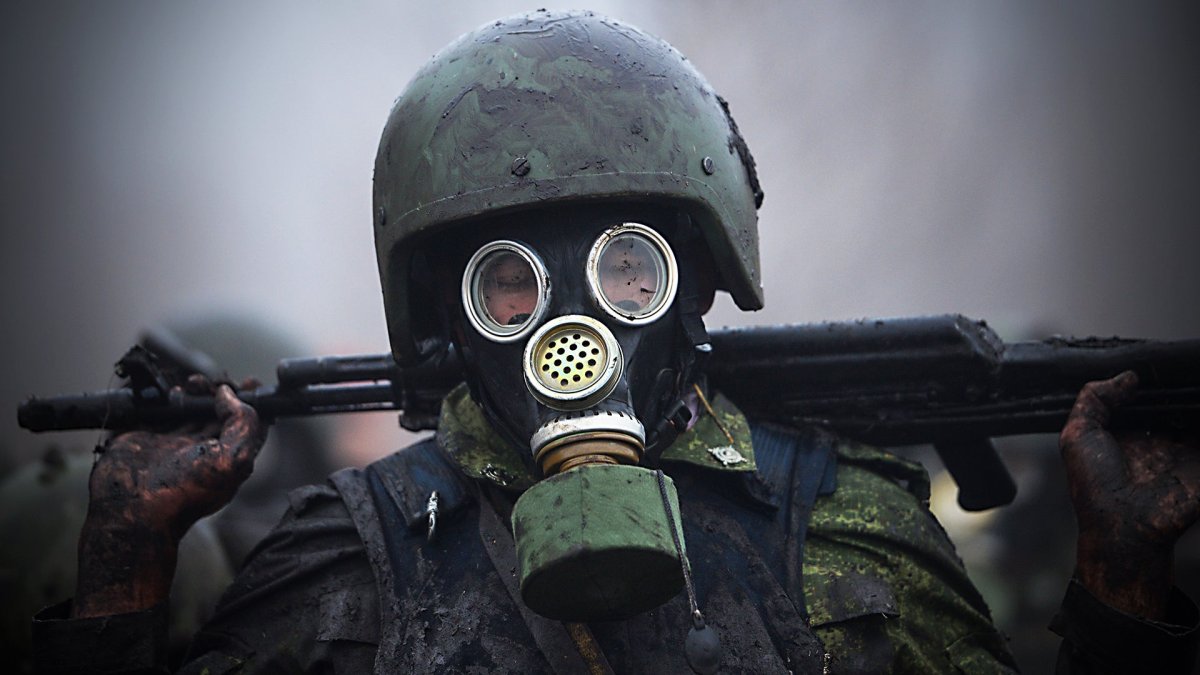
Russian soldier geared up for a chemical warfare combat enviroment., AP
Despite this, the international norm against chemical weapons matters. The stronger that norm is, the harder it is for states to get away with using chemical weapons, which means that they’ll ever eschew them completely or be forced to limit the scale of their use. There are numerous projects, such as CSIS’ Restoring Restraint , which seek to find ways to strengthen these norms further. But in order to do this, the public at large have to understand what chemical weapons are, what they aren’t, and what they can and can’t do. Education, in other words, is crucial. Hopefully, this quick explainer can play some role in that process.
Luke J. O’Brien is an analyst and military historian, a CSIS Project on Nuclear Issues Mid-Career Cadre, and is a contributing editor at War on the Rocks. He is also an officer in the US Army Reserve, and as such his views are his own and not those of the Army, the Department of Defense, or the United States Government. He can be found on Twitter as @luke_j_obrien .
Contact the editor of The War Zone: Tyler@thedrive.com
Comments couldn’t be loaded. Please refresh the page.
更新于美国东部时间2019年12月1日上午7:11
如果你随便问一个路人关于化学武器的问题,你听到的很可能是一些源自流行文化的传说,而不是什么事实。对大多数人来说,他们对化学武器的了解仅限于《勇闯夺命岛》之类的电影、《24小时》的剧集,或是一些低俗的间谍惊悚片。更糟糕的是,由于这种背景知识的匮乏,即使是那些略懂皮毛的人,也常常会被人当真,尽管他们说的都是些极其误导性的信息。
我应该很清楚这一点。在我真正开始从事大规模杀伤性武器(WMD)领域的工作之前,我的知识也好不到哪里去。我最初以炮兵军官的身份加入美国陆军时,接受的化学防御训练仅限于在刘易斯堡当学员时的一段短暂课程。那段极其有限的训练与其说是传授了关于化学制剂及其影响的任何实际操作知识,不如说是让我更加确信化学防护服穿起来有多么难受。
自从进入大规模杀伤性武器领域以来,我有幸在劳伦斯·利弗莫尔国家实验室、阿伯丁试验场埃奇伍德地区以及全国各地的众多培训课程中接受了大量的化学武器方面的教育。我还荣幸地被选为美国国防大学反大规模杀伤性武器研究生研究员,在那里我得以用两年时间从技术和政策层面深入研究大规模杀伤性武器的方方面面。正因如此,我才有机会与学术界、政府和军方一些最杰出的人士共事。
我希望在此澄清一些在国家讨论中提及化学武器时经常出现的常见误解。此外,我必须说明,我目前是一名陆军预备役军人。因此,我必须明确指出,我的观点仅代表我个人,并不反映美国陆军、国防部或美国政府的立场。
化学武器基础知识
如果我们想要破除关于化学武器的迷思,了解一些构成这一主题的基本概念或许会有所帮助。首先,我们需要了解化学制剂可以从两个方面进行分类:一是其持久性,二是其作用机制。
顾名思义,持久性衡量的是个体在环境中停留的时间长短。通常,个体被分为“持久型”和“非持久型”两类,但需要注意的是,这两类之间并没有一条泾渭分明的界限,而更像是一个连续谱。个体在环境中停留的时间越长,其持久性就越强;个体扩散的速度越快,其持久性就越弱。
化学武器还可以根据其对人体的影响进行分类。主要有四类:肺部毒剂、血液毒剂、糜烂性毒剂和神经毒剂。
1)肺部毒剂:这是最早在战场上使用的化学武器。这类武器有时也被称为“窒息性毒剂”,它们通过破坏肺部内膜,导致肺部充满液体,从而阻止肺部吸收氧气,最终造成人员死亡或丧失行动能力。肺部毒剂包括氯气、光气和氯化苦。几乎所有肺部毒剂都不持久,释放后会迅速清除。
2. 血液毒剂:这类毒剂通过阻止血液吸收氧气来杀伤人体。回想一下基本的人体解剖结构。血液在肺部循环,释放二氧化碳供人体呼出,并吸收氧气输送到全身。窒息性毒剂通过破坏肺内膜来阻止氧气进入血液,而血液毒剂则反过来影响红细胞,阻止其吸收氧气。最常见(也是最广为人知)的毒剂是氰化氢。血液毒剂的持久性也极低。鉴于其持久性低,再加上需要相对较高的浓度才能造成伤亡,就不难理解为什么血液毒剂从未在战场上得到广泛应用。
2013年,德国一家化学制剂和军事废弃物处理协会(GEKA)的一名烟火技师在一家工厂准备一枚弹药进行X光检查。(美联社)
3)糜烂性毒剂:这类毒剂又称“起泡剂”,会对任何暴露的皮肤造成严重的化学灼伤。最常见的糜烂性毒剂是芥子气,在通俗文化中也被称为“芥子气”(其实芥子气是液体,名称有误),此外还有其他糜烂性毒剂,例如路易氏剂。
值得注意的是,虽然糜烂性毒剂会致人死亡,但死亡率相当低,约为3%。死亡通常是由化学灼伤引起的继发感染造成的。此外,芥子气中毒的症状可能在数小时后才会出现,因此受害者可能已经离开了中毒地点,正如BBC记者在两伊战争期间发现的那样。根据污染程度,他们甚至可能将毒剂传染给其他人。这会导致受害者穿着受污染的衣物,进一步污染其他人和其他场所。例如,当时有报道称,伊朗化学武器伤亡人员的毒剂污染了后方医院的医务人员。
然而,与肺部和血液毒剂不同,糜烂性毒剂的残留时间很长,芥子气有时需要数天甚至数周才能清除。因此,糜烂性毒剂在历史上几乎被当作雷区使用;如果污染了用于补给、十字路口或关键设备的主要道路,就会影响其运作。这意味着前往前线的增援部队可能会在沿受污染的道路行进时伤亡。如果污染了炮兵阵地,炮兵要么需要时间进行去污,要么必须穿着化学防护服工作,这会降低他们的行动速度。伊拉克在两伊战争期间就曾这样做过,这与第一次世界大战期间德意志帝国在1918年米歇尔攻势中使用的战术如出一辙。
4.) 神经毒剂:这是目前最致命的化学武器。它们会削弱人体控制自身肌肉的能力。简单来说,想象一下你想握紧拳头。你的身体会利用一种叫做乙酰胆碱的化学物质来控制肌肉收缩。如果你想放松手,身体会释放一种叫做乙酰胆碱酯酶的酶,它会与乙酰胆碱结合并使其失活,从而使肌肉放松。神经毒剂的作用靶点就是乙酰胆碱酯酶,它会与乙酰胆碱酯酶结合并使其失去活性。因此,如果你接触到足够剂量的神经毒剂,你会发现很难放松拳头。但更重要的是,你的呼吸功能,包括呼吸和心跳,都会受到影响。这也是为什么无论环境光线如何,接触神经毒剂的典型症状之一是瞳孔缩小。控制眼睛虹膜的肌肉已被命令完全收缩。
神经毒剂大致分为两类:G系列和V系列。G系列(“G”代表“德国”,因为这类化学物质是由纳粹科学家发明的)包括塔崩、沙林、梭曼和环沙林。V系列(“V”代表“剧毒”)中最著名的当属VX。
G系列特工的持久性通常较弱(尽管持久性因情况而异,稍后会详细介绍),而V系列特工的持久性则非常强。因此,G系列特工通常用于攻击那些需要在攻击后迅速夺取的军事目标(例如攻击防御严密的山坡、战壕或碉堡群),而V系列特工则用于攻击更具作战意义的目标(例如机场、港口、补给线和大型补给站)。
透过防毒面具看到的伊朗化学战训练演习。(美联社)
同样,和芥子气一样,这些化学制剂都不是“气体”,而是液体。话虽如此,如果你想惹恼当地的化学武器官员,就在他/她面前提到“神经毒气”这个词。至少,你会让他/她感到不安。
所以,以上是你需要了解的基本情况,以便理解我们接下来要讨论的内容。以下是一些经常被重复的误解,而这些误解往往出自那些本应更了解情况的人之口。
定义很重要:并非所有令人不快的武器都是化学武器。
看新闻时,你会听到很多人声称使用了化学武器,无论是美国国内各种抗议活动中使用的催泪瓦斯,还是战场上使用的遮蔽弹——这种炮弹会产生烟雾,使敌人无法用肉眼或热成像仪观察目标。但这些真的是化学武器吗?
简单来说?不。详细来说?绝对不行!原因如下。
根据《化学武器公约》,催泪瓦斯被归类为“防暴剂”。防暴剂的定义是“任何未列入附表的化学品,能够迅速对人体产生感官刺激或致残性生理影响,且这些影响在停止接触后短时间内消失”。各国被禁止在战场上使用催泪瓦斯,但允许用于国内治安。无论是否令人不适,控制人群都是政府的合法职责。但令人费解的是,一种允许用于国内治安的制剂却被禁止用于战场。这是为什么呢?
2013年,土耳其警方在伊斯坦布尔的示威活动中发射催泪瓦斯。(美联社)
很简单。第一次世界大战期间,防暴剂被用于“破除面罩攻击”,旨在提高化学武器的效力。交战人员会将防暴剂与致命化学制剂混合,目的是让受害者吸入大量防暴剂,然后被迫摘下面罩咳嗽或呕吐。这样一来,受害者就会接触到致命化学制剂,并最终吸入其中。萨达姆·侯赛因在两伊战争期间可能也使用了类似的手段。他确实对伊朗使用了防暴剂,但尚不清楚他是否在其中混入了致命化学制剂。
另一方面,白磷弹并非旨在产生致命或镇压骚乱的效果。它的主要目的是掩护友军免受敌方侦察,其次才是产生燃烧效果(实际上,《特定常规武器公约》并未禁止这种燃烧效果)。虽然死于燃烧弹袭击令人不快,但这与化学袭击截然不同。我们将在讨论误区四时对此进行更详细的阐述。
“厨房沙林”的迷思
神经毒剂最常见的描述是无色、无味、在空气中不可见。沙林的确如此,但与沙林同属一类的其他毒剂则会散发出明显的气味(例如,塔崩闻起来有点像水果,索曼闻起来像樟脑丸)。但这仅限于纯净且单独存在的化学毒剂。
沙林本身可能并非以纯净状态生产。理论上,纯净的神经毒剂可以保存数十年,但杂质越多,保质期就越短。例如,在两伊战争期间,伊拉克为了尽可能降低成本而生产神经毒剂,但其杂质含量很高,这意味着前线使用的神经毒剂必须从生产设施迅速运送到交战前线。
这些杂质非常明显。当投放到战场上时,它们会呈现出脏白色的云雾状或黄褐色。这些杂质并未影响药剂的效力;它们反而帮助伊拉克共和国卫队在两伊战争中赢得了关键战役,包括夺回了法奥半岛上具有重要战略意义的马季努恩群岛。
另一个例子,尽管并非来自国家行为体,是日本奥姆真理教实施的首次沙林毒气袭击。在袭击东京地铁系统之前,奥姆真理教还袭击了东京北部的小镇松本,以报复当地领导人就一起土地交易欺诈案起诉该教派。由于沙林毒气中含有杂质,产生的烟雾看起来像雾,类似于伊拉克在马季努恩群岛使用的毒气。此外,奥姆真理教的沙林毒气生产规模堪比国家行为体,他们建立了一座大型且复杂的工厂来生产沙林毒气。考虑到该教派拥有大量专业工程师,这或许正是奥姆真理教独特性的体现。
这张摄于1998年9月的照片显示了位于东京以西上久敷市奥姆真理教邪教建筑群内的Satyam 7工厂。该邪教曾在此大规模生产沙林神经毒气。(美联社)
简而言之,这种论点似乎建立在这样的假设之上:如果一个国家在生产化学制剂,那么它生产的必然是该制剂的纯净形式;反之,如果生产的是不纯净的化学制剂,则必然指向非国家行为体。正如伊拉克的经验所表明的那样,处于战争状态且面临压力的国家往往会忽略生产纯净制剂的成本,而采取“按需生产”的方式。根据制剂的不同,一些国家甚至不惜从垃圾堆里翻找:例如,埃及在20世纪60年代的化学武器计划,其最初的芥子气就是通过打开第一次世界大战结束后英国军队遗弃在埃及的炮弹获得的。
就连美国也未能幸免。20世纪50年代末,为了应对苏联在化学武器方面的优势,美国陆军急于生产M55沙林火箭。为了应对这一局面,他们从其他弹药中回收沙林,导致火箭中混入了化学杂质。这些杂质最终导致火箭泄漏,无法使用,最终只能被倾倒进大海。当时的环保法规远比现在宽松得多。
简而言之,战场与实验室之间存在着巨大的鸿沟。尽管一个疯狂的天才在自家厨房炉灶上混合化学武器的想法令人恐惧,但实际操作中的限制远比大多数人想象的要大得多。虽然各国政府必须警惕那些可能具备制造化学制剂能力的极端分子,但大多数化学武器袭击都来自国家行为体,这其中自有原因。
2018年10月3日,在俄罗斯堪察加彼得罗巴甫洛夫斯克,戴着防毒面具的救援人员参加俄罗斯紧急情况部在全国范围内举行的演习。(美联社)
具有讽刺意味的是,叙利亚化学制剂中存在的杂质常常被用作所谓证据,证明该制剂一定是反叛分子而非叙利亚政权制造的。当然,对叙利亚政府向禁止化学武器组织提交的声明进行分析后发现,他们的生产方法最多只能制造出纯度约为60%的制剂,与20世纪80年代伊拉克生产的制剂质量相当。如果一个技术成熟的国家项目都难以达到60%以上的纯度,那么这又说明了极端组织的成功率有多低呢?
缺乏适当的防护装备指向一场伪旗行动
阿萨德政权的辩护者在试图转移人们对化学武器袭击的注意力时,常常会提出这样的论点:阿萨德政权不应为使用化学武器袭击负责,因为第一批救援人员没有穿戴美国救援人员在面对类似威胁时会使用的防护装备。“如果他们没有穿全套化学防护服和防毒面具,为什么他们到达现场后没有立即死亡?”答案很简单:坚持不懈。
请记住,非持久性毒剂挥发迅速,适用于在化学袭击后需要快速进入目标区域的情况。例如,如果您使用沙林等非持久性毒剂,它会在短短半小时内挥发到环境中。举例来说,在两伊战争期间,伊拉克军队就曾使用非持久性神经毒剂攻占马季努恩岛,造成数百名伊朗士兵死亡。毒剂迅速消散,使得伊拉克军队能够迅速进入并占领目标区域。
正是这种快速消散的特性,在20世纪50年代吸引了美国军方对沙林的关注。埃奇伍德兵工厂的科学家们认为,这种毒剂的挥发性极强,能够迅速扩散到周围环境中(从而在目标人员有机会穿戴防护装备之前,尽可能多地影响他们),然后又迅速消散。而索曼,一种危险性更高的神经毒剂,之所以被排除在外,部分原因就是它的挥发速度太慢。
那么,这和这个特定的谣言有什么关系呢?如果你要进入一个曾遭受沙林或氯气等非持久性毒剂袭击的地区,只有当你预计会接触到滴落或积聚的液态毒剂时,才需要穿戴全套防护服。这种情况最有可能发生在袭击期间和袭击结束后,也就是毒剂被运载弹药喷洒的时候。在那之后,只要你不接触任何毒剂积水,沙林毒剂主要通过吸入途径造成危害。即使如此,也需要皮肤接触到大量的毒剂才会致命。
事实上,直到20世纪80年代,美军士兵接受的训练是直接剪掉衣服上沾染神经毒剂的部分,因为当时的防护服基本上只是经过防水处理的普通制服。尽管现代化学防护服穿着起来很不舒服,但情况可能比以前糟糕得多。
沙漠风暴行动前,美国士兵身穿核生化防护服。(美国国防部)
另一个例子是,美国陆军化学兵团的士兵过去常常只戴着防毒面具,穿着普通制服,就对露天存放的沙林容器进行目视检查。还有一个例子是,一位美国化学武器科学家将一滴神经毒剂滴入兔笼。尽管他戴着手套和防毒面具,但他穿着普通的实验服,手腕和脖子周围的大部分皮肤都暴露在外。此外,请观察这些处理泄漏沙林炸弹的化学兵:尽管他们穿着化学防护服以防止飞溅,但他们的后脑勺却完全暴露在外。
此外,请记住,接触化学制剂并非非此即彼。剂量至关重要。根据您的体型、年龄和健康状况,仅仅接触可能不足以致命,甚至不会使您丧失行动能力。如果剂量足够小,您可能根本不会察觉。如果您到达袭击现场时,化学制剂的浓度已经降至很低,您可能吸入一定剂量但不会受到影响,或者吸入的剂量极小,以至于您可能要过一段时间才会感受到影响。这种情况在汗谢洪事件中就发生过,当时赶到现场的救援人员到达医院后,自己也需要接受治疗。东京地铁爆炸案中也经常出现这种情况。
假设你是一名身处叙利亚中部的反叛分子,并且预料到会遭到化学武器袭击,为什么不直接从 eBay 上买一套防护服和面罩以确保安全呢?答案很简单:为了生存保障。
你需要记住,大多数现代化学防护装备都有保质期。美国使用的联合轻型一体化防护服(JSLIST)采用真空密封袋包装是有原因的。这些防护服的设计旨在确保使用者穿着时有一定的舒适度。当然,舒适度是一个相对的概念——很少有军人会因为要穿上防护服而感到兴奋。为了达到这个目的,这些防护服采用半透气设计,并配有活性炭内衬。这样的设计允许(部分)空气通过防护服,同时将化学污染物截留在内衬中。问题在于,防护服暴露在空气中的时间越长,内衬吸收的环境污染物就越多。当达到一定程度时,活性炭将无法再吸收任何污染物,这意味着这些污染物会直接渗透到防护服内部,接触到士兵的皮肤。
在密歇根州阿尔佩纳的阿尔佩纳作战准备训练中心,空军人员正在穿戴任务导向型防护姿态(MOPP)防护装备,参加化学战训练演习。
更糟糕的是,局部长时间暴露会导致活性炭失效。这就是为什么穿JSLIST防护服时不能跪着的原因。如果跪着,而地面又是湿的,液体会直接渗到皮肤上,并将周围环境中的污染物带入皮肤。活性炭或许能减缓渗透速度,但无法完全阻止。
人们可能会问我,如果我要进入一个已知已被污染的环境,我会采取哪些防护措施。理想情况下,我希望穿上全套任务导向防护服(MOPP)。如果做不到,我希望穿上托尼·斯塔克的钢铁侠战衣。不过话说回来,如果真要讨论这个问题,我更希望待在家里,舒舒服服地躺在沙发上,让别人去处理。无论如何,当我们坐在家里看着叙利亚内战的局势发展时,我们面临的困境与身处战火中的人们截然不同。对我们来说,我们可能需要一套完整的化学防护服。但对他们来说,他们可能明白这是不可能的,眼睁睁看着人们慢慢死去绝非明智之举。
“为什么我们对化学武器如此重视,而常规武器却造成数千人死亡?”
关于化学武器,另一种流行的观点是,担心化学武器袭击是愚蠢的,尤其是在像叙利亚这样的地方,因为常规武器造成的死亡人数要多得多。虽然这种说法乍听之下似乎有一定道理,但只要深入探究,就会发现事情远比这复杂得多。
化学武器是一种极其可怕的战争形式。被迫在化学环境下作战和求生的战斗人员和非战斗人员的创伤后应激障碍(PTSD)发生率很高,甚至超过高强度常规战争,而且这种影响还会遗传给幸存者的子女。故意散布无知的陈词滥调来保护施害者或彻底否认受害者的存在,在道德上是应受谴责的。
化学武器实际上特别适合用来攻击平民。即使是半现代化的军队也能相对有效地保护其部队免受化学武器的侵害。例如,可以部署防护面罩和防护服,制造内部密封的车辆,并提供去污设备,以便任何接触过化学物质的士兵都能自行清洗。然而,要为全体平民提供同样的保护,成本却极其高昂。
化学防护装备的使用方法也是一项容易退化的技能。即使有能力为大多数民众提供化学防护装备,也很难确保平民掌握正确的使用方法。想想看,在“沙漠风暴”行动中,因误用防毒面具而丧生的以色列平民比死于伊拉克“飞毛腿”导弹的平民还要多。化学防护装备并非万无一失,使用者需要接受培训。对军事单位进行培训远比对平民进行培训容易得多。
以色列公民定期接受训练,以便在接到通知后立即佩戴防毒面具。
考虑到防御规模的问题,不妨设想一下,如果将一枚常规武器与一枚化学武器并排放置会是什么情况。一般来说,对平民和身着制服的战斗人员提供防护的能力大致相同,都能有效抵御炸弹的伤害。毕竟,墙壁或地下室对战斗人员和平民抵御炮弹碎片的效果是一样的。然而,化学武器可能会造成这样一种局面:战斗人员很可能因为佩戴防护面罩而受到保护,而平民则很可能无法得到这种保护。
当然,世界非常幸运,针对平民目标的化学袭击相对较少。这在一定程度上要归功于反对使用化学武器的普遍共识。当使用化学武器可能引发国际社会的强烈谴责时,使用者就会力求将规模控制在最低限度。这反过来又有助于减少死亡人数。一旦使用化学武器成为常态,造成平民伤亡的可能性就会急剧上升。
“阿萨德为什么要使用化学武器?他能从中获得什么好处?”
我之前也写过这个话题,但几乎每次叙利亚发生化学武器袭击事件,人们总会忍不住问:“阿萨德使用化学武器有什么好处?” 通常,这个问题并非出于真心。它利用了人们对叙利亚战争以及化学武器的无知。简而言之,化学武器一直是叙利亚政权的得力工具。
鉴于我们之前讨论的所有内容,这应该不会让人感到太意外。叛乱分子及其所在社区的居民对化学武器的防御能力远不如对常规炸弹的防御能力。更重要的是,化学武器袭击本身就具有恐怖效应。反叛乱部队试图通过将叛乱分子与民众隔离来击败他们。这样做可以削弱叛乱分子的必要支持基础,并剥夺他们融入人口中心所带来的天然隐蔽性。阿萨德政权曾使用集束炸弹和桶装炸弹等手段,对平民聚居区进行无差别打击,以达到这种人口流失的目的。
用于生产化学武器的危险化学品。(美联社)
伊德利卜是叙利亚政权控制之外的最后一块区域,它恰恰证明了这种策略的有效性。涌入伊德利卜的大量难民来自其他遭受类似无差别人口袭击的地区。政权的支持者常常会指出,逃离这些地区的平民得到了巴士的帮助。但这些空袭的全部目的在于使这种转移显得更有吸引力,从而耗尽反叛分子最后的支持。因此,尽管小型化学武器袭击造成的伤亡相对较低,但它们仍然发挥着关键作用。
最后,这种说法也暴露出对叙利亚冲突动态的无知。对大多数西方政治受众而言,他们只知道叙利亚发生过几起化学武器袭击事件。例如2013年的古塔袭击(叙利亚政权因此虚伪地加入了《化学武器公约》,但实际上仍在继续其化学武器行动)、2017年的汗谢洪袭击以及2018年的杜马袭击。后两起袭击都引发了美国及其盟友的报复性打击。然而,自叙利亚内战爆发以来,该国至少发生了50起化学武器袭击事件。其他开源研究人员则发现了超过250起袭击事件。叙利亚的化学武器袭击并非阴谋论者所宣称的那样是孤立事件。
尽管有《化学武器公约》,但在可预见的未来,世界可能仍将不得不面对化学武器问题。埃及、以色列和朝鲜等多个国家仍未加入该公约。此外,叙利亚等缔约国继续藐视其在公约下的义务。而且,鉴于新闻报道中的事件,化学武器似乎仍然具有吸引力。
即使是低层级的国家行为体也可以选择这样做。
一名俄罗斯士兵全副武装,准备应对化学战环境。(美联社)
尽管如此,禁止化学武器的国际准则仍然至关重要。该准则越强有力,各国就越难逃脱使用化学武器的制裁,这意味着它们要么最终会彻底放弃使用化学武器,要么会被迫限制其使用规模。目前有许多项目,例如战略与国际研究中心(CSIS)的“恢复克制”(Restoring Restraint)项目,致力于寻找进一步加强这些准则的方法。但要做到这一点,公众必须了解化学武器的定义、用途以及其局限性。换句话说,教育至关重要。希望这篇简短的解释能在这一过程中发挥一定作用。
卢克·J·奥布莱恩是一位分析师和军事历史学家,也是战略与国际研究中心(CSIS)核问题项目的中期职业干部,同时还是“战争岩石”(War on the Rocks)网站的特约编辑。他同时也是美国陆军预备役军官,因此他的观点仅代表他个人,并不代表陆军、国防部或美国政府的立场。他的推特账号是@luke_j_obrien。
联系《战区》编辑:Tyler@thedrive.com
评论加载失败,请刷新页面。