Relief for PM as Constitutional Court upholds February 8th General Election despite a barcode warning尽管有条形码警告,宪法法院仍维持2月8日大选的合法性,总理松了一口气。
Anutin’s government escapes a nationwide election rerun as the Constitutional Court upholds the February 8 poll. Judges clear QR codes 9-0 and barcodes 8-1, but… Read More ›
新闻视频
September 28, 2026 at 9:26 pm
in Living , Media , Politics , Thailand
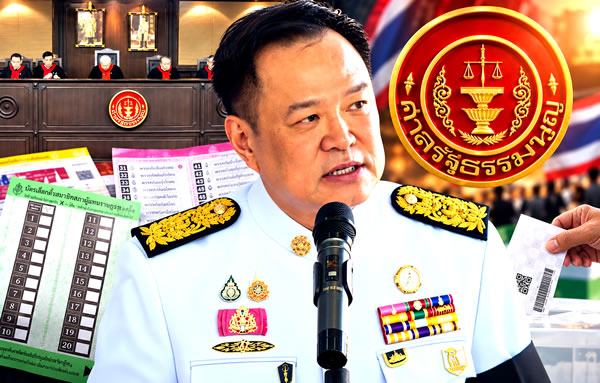
Prime Minister Anutin Charnvirakul won major political relief on Monday as Thailand’s Constitutional Court upheld the February 8 election, killing off the threat of a nationwide rerun. The House and his coalition survive intact after judges cleared QR codes 9-0 and party-list barcodes 8-1. However, the Election Commission escaped with a warning. The Court acknowledged concerns that ballot information could potentially identify voters when combined with other records. It told the EC to tighten safeguards and avoid future ballot markings capable of linking voters with their choices. The ruling ends a dangerous legal challenge for Mr Anutin as his poll support slides and separate political pressures mount.
Prime Minister Anutin Charnvirakul wins major relief as the Constitutional Court upholds the February 8 election, blocking a rerun. Judges clear QR codes 9-0 and barcodes 8-1. ( Source: Matichon )
Thailand’s Constitutional Court on Monday upheld the February 8 general election, removing the threat of a nationwide election rerun. The decision leaves the election result and House of Representatives intact. It also removes a major legal threat facing Prime Minister Anutin Charnvirakul’s coalition government.
Crucially, though, the Election Commission did not receive an unrestricted endorsement. The Court told it to rethink future ballot designs and tighten safeguards around sensitive election records.
The ruling followed a challenge involving barcodes and QR codes printed on ballot papers. Twenty-two complaints questioned whether those codes could identify individual voters. Such identification could breach the constitutional requirement for secret voting. Instead, the Court found safeguards surrounding the February election sufficient. The nationwide poll consequently remains valid.
Court splits 8-1 on party-list barcodes after unanimously clearing QR codes used in February election
The nine judges were unanimous on QR codes. They ruled 9-0 that their use presented no constitutional problem. By contrast, the Court divided 8-1 over barcodes printed on party-list ballots. Eight judges found they did not violate constitutional rights or freedoms. Judge Noppadol Thepphitak dissented. He raised concerns that barcode information could potentially be traced to individual voters.
Notably, the Court did not find that tracing information was technologically impossible. Evidence showed that ordinary smartphones could scan both QR codes and barcodes. Yet scanning produced numerical information rather than a voter’s identity. Identifying somebody required access to additional election records. That distinction became central to the majority ruling.
Three separate records would have to be connected. They were the used ballot, its original stub and the relevant voter registration list. Importantly, election procedures required those records to be stored separately. Possession of a used ballot and its barcode was therefore insufficient. Anyone seeking a voter’s identity would need all three records.
As part of its examination, the Court traced those documents through the entire election process. Judges considered distribution, voting, counting, transfers and storage. They also heard senior Election Commission officials. In parallel, executives from companies printing the ballots gave evidence. The Court then examined how each coding system operated.
Judges find QR codes cannot identify individual voters while party-list barcodes require three records
For constituency ballots, QR codes could identify groups containing 20 ballot papers. The code could not establish which individual voter cast a particular ballot. Accordingly, judges concluded that QR codes could not reveal each voter’s choice. That finding produced the unanimous 9-0 ruling.
Party-list barcodes posed a more complicated problem. A barcode could provide a unique ballot book number. Nevertheless, that number did not independently reveal the voter. The original ballot stub and voter registration list were also required. Only by combining all three could somebody potentially identify an individual voter.
Against that background, the Court examined whether anybody could realistically obtain the necessary records. Its judgment followed their movement through polling stations, district offices and provincial election offices. At each stage, judges considered access and physical security. They also examined whether officials or outsiders could secretly combine the information.
At polling stations, personnel first checked voters against registration records. Officials verified voter information before providing ballot papers. Voters then entered private areas and marked their choices. Afterwards, they folded their ballots and placed them inside ballot boxes. At that point, matching individual ballots with corresponding stubs was effectively impossible, according to the Court.
Separately, polling stations involved several groups rather than one controlling official. They included election personnel, security officers, voters and political party representatives. That mixture created another obstacle to secretly assembling and scanning the required documents. In addition, records had to be transferred promptly after voting. The opportunity to match all three sets of information was consequently limited.
District and provincial storage safeguards make tracing individual voters increasingly difficult
Once voting ended, election materials moved to district offices. Ballots and associated records from numerous polling stations were then brought together. As a result, the volume of documents increased sharply. That created another practical obstacle to identifying individual voters.
At district level, the material was placed inside outer bags protected by plastic sealing. Documents also had to move onward within specified periods. Meanwhile, records from different polling stations continued arriving. Finding and matching one voter’s documents therefore became increasingly difficult. The Court found these district-level arrangements sufficiently secure.
The documents subsequently entered the provincial election system. Again, the volume of material increased. Storage bags were secured with cable ties and signed by election officials. Ballot papers were also stored separately from other relevant records. Taken together, the Court found these measures provided sufficient protection.
At that stage, provincial officials could not simply access all three records and identify voters. The documents would ultimately remain stored for two years. Afterwards, they would be destroyed under the relevant procedures. These arrangements created additional barriers against unauthorised tracing.
Court finds outsiders need illegal help to link ballot barcodes with individual voter identities
On another front, judges examined whether outsiders could scan barcodes during vote counting. Technically, such scanning was possible. A scanned number, however, did not identify the voter. An outsider still needed the ballot stub and voter registration records.
More significantly, obtaining those documents would require cooperation from election officials. Such cooperation would itself be illegal. Existing procedures also required separate and confidential storage. The Court therefore found individual identification extremely difficult. No evidence showed anyone had successfully combined the three records during the February election.
That evidential gap became important. The petitioners questioned whether the system created a possibility of tracing votes. The Court instead examined whether that possibility actually defeated constitutional ballot secrecy. By an 8-1 majority on barcodes, judges found it did not.
The Court then turned to the Election Commission’s reasons for introducing ballot codes. The EC identified several security and management purposes. First, the codes helped prevent counterfeit ballots entering the voting system. They also prevented ballots allocated elsewhere from being improperly used across constituencies.
Beyond that, the system helped control ballot quantities and printing. Millions of papers had to be produced within a limited period. Codes also allowed officials to identify ballot sets allocated to particular polling stations. The EC maintained that these functions strengthened election management.
Judges accept ballot codes as legitimate safeguards against counterfeiting and cross-district use
The Court accepted those purposes as legitimate. Even so, judges still had to balance election security against ballot secrecy. The Constitution requires voting to be direct and secret. Voters must therefore make their political choices without those decisions being exposed.
At its core, secret voting protects citizens from intimidation and improper influence. The state must prevent individual choices being connected with identifiable voters. If that connection becomes possible in practice, secret voting is compromised. The Court therefore scrutinised both technical capability and practical safeguards.
In this context, the judges considered different approaches to ballot security. Under absolute secrecy, ballot papers would contain no identifying codes. Identical ballots, however, could increase the risk of counterfeit papers or other fraud.
Alternatively, limited coding can support management, verification and anti-forgery controls. Such systems must still prevent outsiders or officials from discovering individual choices. The majority found the February system remained within that constitutional boundary.
On the QR code issue, individual voters could not be traced. With barcodes, more specific information was available. Even then, two additional protected records were needed. Officials could not easily access all three. Outsiders faced even greater barriers.
Court balances ballot secrecy against anti-fraud controls and finds February system constitutional
At the same time, the Court examined whether other security measures could perform similar functions. Watermarks and QR codes were among the alternatives considered. The judges nevertheless found barcodes effective for controlling ballot papers. They assisted printing, distribution and anti-counterfeiting measures.
On balance, the majority did not consider their use excessive. The decisive question was whether those benefits destroyed ballot secrecy. Eight judges concluded they did not. Identifying one voter required obtaining and matching three protected records. No evidence established that this had happened.
The constitutional challenge therefore failed. Yet the Court’s decision did not end with validation of the February election. Instead, judges addressed weaknesses exposed by the dispute. They noted the case had affected public confidence in election management.
In response, the Court advised the Election Commission to change its approach before future polls. Future ballots should avoid marks or symbols capable of connecting voters with their choices. Anti-forgery safeguards should instead operate without creating that potential link.
Likewise, the Court called for strict security surrounding stored ballots and related records. Such measures should prevent illegal access to information capable of identifying voters. The EC therefore won the immediate constitutional case but received clear instructions for future elections.
Election Commission wins constitutional case but is told to change ballot safeguards for future polls
The distinction carries considerable practical importance. The Court found the February system constitutional because several protected records were required for identification. At the same time, it advised the EC to avoid creating that possibility again. The February election survived, but the controversial ballot feature now faces change.
Politically, the immediate effect is substantial. Nearly 38 million people voted nationwide on February 8. Bhumjaithai emerged as the largest party. Mr Anutin subsequently formed a coalition controlling more than 290 seats in the 500-member House.
Monday’s ruling removes a serious legal threat hanging over the political structure produced by that election. A successful challenge could have raised fundamental questions over the nationwide poll. Instead, the result remains intact. The House continues and Mr Anutin’s coalition remains in government.
For the Prime Minister, the timing is also significant. He is facing pressure on several unrelated fronts. A recent NIDA survey placed his support as preferred prime minister at 13.76%. The election judgment now removes one source of uncertainty.
Elsewhere, controversy continues over the Election Commission’s handling of the 2024 Senate selection investigation. Earlier this month, the EC majority did not refer Mr Anutin for Supreme Court proceedings. Mr Anutin has denied wrongdoing in that affair.
Ruling removes major threat to Anutin coalition as separate Senate selection controversy continues
Those matters remain separate from Monday’s Constitutional Court case. The judges considered coded ballots and constitutional protections surrounding secret voting. Their ruling does not determine the other disputes. It does, however, settle this challenge to the February general election.
Procedurally, the Court also resolved objections against two judges before considering the main dispute. Mr Polkan Setthabundee challenged Sarawut Songsivilai and Police Lieutenant General Chakrapong Wiwatvanich. The Court found no legal grounds for either objection. Both were consequently dismissed.
The full bench then considered the QR code question. All nine judges upheld their use. They included Udom Sithvisawadtham, Wirul Sangthian, Jiraniti Hawanont and Banjongsak Wongprach. Udom Rattanamrit, Sumet Roykulcharoen and Sarawut Songsivilai also joined the unanimous ruling. Police Lieutenant General Chakrapong Wiwatvanich and Noppadol Thepphitak completed the bench.
When the Court moved to barcodes, the division appeared. Eight judges upheld their constitutionality. Judge Noppadol alone dissented. His concern focused on the possibility that barcode information could ultimately identify individual voters. The majority, however, found existing security barriers sufficient.
Full bench rejects objections to two judges before dividing 8-1 over the party-list ballot barcode issue
The case followed months of proceedings over an election held only seven months ago. The Ombudsman brought the matter after receiving 22 complaints. Those petitions sought constitutional examination of the EC’s conduct during the February 8 election.
Earlier on Monday, the judges began oral proceedings, deliberations and voting. Election Commission Chairman Narong Klanwarin attended for the ruling. The Court then delivered its decision later that day.
Significantly, its examination went far beyond whether smartphones could scan ballot codes. Judges instead asked whether scanned information could realistically identify individual voters. That required detailed scrutiny of the entire election document chain.
For QR codes, the answer was particularly clear. A constituency code related to a book containing 20 ballots. It could therefore narrow information to a group. It could not identify which voter had marked a specific paper.
For barcodes, scanning produced more precise ballot information. Yet an individual voter still could not be identified from that information alone. The original ballot stub and voter list remained essential. Without those records, the barcode could not reveal a person’s vote.
During storage, those three records did not remain together. Different procedures governed their handling and movement. Moreover, document volumes increased sharply as materials passed through district and provincial offices. Matching one ballot to one voter therefore became progressively harder.
Court traces ballot records through election system and finds individual voter identification difficult
Physical safeguards strengthened those barriers. At provincial level, bags were secured with cable ties and signed. Ballots were stored separately from associated documentation. The Court found these procedures sufficiently robust for the constitutional question before it.
For an outsider, the hurdles were higher still. The person would require illegal assistance from election personnel. They would then need access to every relevant record. Even with a scanned ballot number, the remaining documents would still have to be located and matched.
Ultimately, no evidence showed such a process occurred. The Court therefore found the claim insufficient to establish a constitutional violation. That conclusion kept the February 8 election intact.
The stakes extended far beyond ballot printing. The disputed system had operated nationwide. This was not a challenge involving one constituency or several disputed papers. It concerned procedures used across the election producing the present House and government.
Thailand also has precedents for national elections being invalidated following constitutional challenges. The April 2006 general election was annulled. Issues in that case included polling arrangements affecting voting secrecy.
Physical safeguards and lack of evidence leave nationwide challenge unable to overturn February poll
Later, the February 2014 election was invalidated on separate constitutional grounds. Voting could not be completed nationwide on the same day. Against that history, Monday’s challenge carried potentially wide consequences.
This time, the Court upheld the poll. The February 8 result remains intact. The House remains in place. Mr Anutin’s coalition also continues in government. Most immediately, the threat of a nationwide rerun from this case has disappeared.
The Election Commission, meanwhile, leaves the case with specific work ahead. Its anti-fraud systems must continue protecting ballot integrity. Future ballot designs, though, should avoid symbols capable of connecting voter identities with electoral choices.
Alongside that requirement, the Court wants strict protection for stored election documents. Ballots, stubs and voter lists must remain protected from illegal access. That instruction directly addresses the vulnerability examined throughout the proceedings.
Past election annulments frame ruling as Court keeps February result and Anutin coalition intact
In practical terms, the majority’s reasoning rested on several findings. QR codes did not identify individual voters. Barcodes required three separate sets of information. Those records were stored separately and protected by election procedures.
Additionally, security increased as records moved from polling stations into district and provincial storage. Outsiders could not obtain the necessary information without illegal assistance. Above all, no evidence showed the three records were combined to identify individual voters.
The constitutional challenge therefore failed and the February 8 general election stands. For Mr Anutin, one immediate legal threat to his government has been removed. For the Election Commission, the result is more qualified.
Its February ballot system survived constitutional scrutiny. Its next ballot system must take account of the Court’s warning.
Crucial ballot decision of Constitutional Court on Monday could upend government and Thai politics
Court throws out one bar code case but more serious challenges to the February 8th poll remain in play
Anutin’s full term triumph tempered by new Sword of Damocles as Constitutional Court takes barcode case
Former Justice Minister urges Election agency to act swiftly or risk February 8th poll being seen as fraud
Kla Tham leader warns of ‘nightmares’ for political enemies as his party is excluded from new cabinet
Kla Tham and Thamanat fear being left out in the cold. Deputy PM warns the election is not yet certified
Rising chance Feb 8th General Election will be voided as Ombudsman writes to the Election Commission
Poll could be voided if court cases underway succeed. Public however has faith in Election Commission
People’s Party and Pheu Thai Party call for Election Commission to back up Sunday’s election outcome
Outcry as anomalies and errors detected in Sunday’s General Election. Spontaneous protests break out
Thrilled with the result. PM set to lead a government focused on stability and security. Barter trade in focus
Trade expert warns the government on barter deals with China being pursued by the Commerce Ministry
Joseph Anthony is an expat from Ireland who has lived in Thailand for the last decade. He has worked extensively in the media including editorial positions in Ireland and Thailand. He is focused on economic and business stories in Thailand as well as the expat lifestyle.
All posts by Joseph O' Connor
Bombshell Supreme Court ruling links Bhumjaithai Party figure with orchestrated Senate poll collusion September 25, 2026 Supreme Court exposes corrupt conduct in the 2024
Prime Minister and his team grilled by Wall Street on Thailand’s geopolitical stance and growth plans September 25, 2026 Hard-boiled Wall Street investors put PM Anutin and
Four sentenced to life for deadly 2022 insurgency bombing in Pattani. Death sentences commuted to life September 24, 2026 Death sentences for four men are reduced to life
Bhumjaithai political overlord in Prachin Buri to spend life in prison after death sentence is commuted by court September 24, 2026 Ex-minister Sunthorn Wilawan, 87, gets life after his
Prime Minister Anutin readies defences as Thamanat Prompow’s Kla Tham Party positions for government September 24, 2026 Capt Thamanat Prompow’s 58-MP Kla Tham moves towards
Canadian arrested for rape of a UK tourist in Chiang Mai just hours before he was due to leave Thailand September 24, 2026 Police swoop on Canadian Aldo Ochoa Saenz, 38, at his
Oil fund bleeds nearly 5 billion baht a week as the government struggles to cope with Middle East crisis September 23, 2026 Thailand’s Oil Fuel Fund bleeds ฿700 million daily
Interior Ministry probes Israeli network of Chabad in Thailand with reports of southern land purchases September 23, 2026 Polpeera widens Thailand’s Israeli-linked land probe
Concerns for the plight of the King’s third son whose health is reported to have declined in Malaysia September 22, 2026 Dr Chakriwat, King Maha Vajiralongkorn’s third son,
Local government examination scandal moves closer to a crunch. Rangsiman Rome calls on PM for answers September 22, 2026 Pressure mounts on Anutin over the ฿4.5bn local exam
Light at end of the tunnel for Thai flight attendant Meena arrested in Melbourne for drug trafficking offences September 22, 2026 Meena Kondo’s Australian drug case takes a hopeful
Anutin heads to New York but no sign yet of news on the US Thai trade deal as problems simmer at home September 21, 2026 Washington adds a fresh condition to Thailand’s US
Vietnam is taking Thailand’s quality tourists in huge numbers while Bangkok flails about with crackdowns September 21, 2026 Vietnam’s tourism boom is closing the gap on
Serving police officer investigated over commotion and shots fired on Saturday morning at Pattaya condo September 21, 2026 Gunfire tears through a South Pattaya apartment as a
Engineers work through night after Sunday’s fire on Bangkok’s Blue Line saw more damage than thought September 20, 2026 Race to save Bangkok’s Monday commute after MRT fire
Thailand’s Royal Navy announces ambitious South Korean deal to build next frigate partly at home September 20, 2026 Thailand turns to South Korea for a ฿16.73 billion
Irate daughter in law kills mother in law at home and also tried to execute estranged partner and others September 20, 2026 Durian dispute turns deadly as Thanyathorn Songserm
33 year old sets fire to Honda Scooby in Udon Thani after mother refused to buy him a more powerful ride September 25, 2026
Ministers accused of neglecting Thai farmers. Crucial aid support has not yet reached the cabinet table September 25, 2026
Prime Minister Anutin Charnvirakul formally summoned by parliament over local government exam scandal September 24, 2026
Former Justice Minister hails major bankruptcy bill which could help reduce the household debt burden September 24, 2026
Nene Royal wins big for Thailand with blistering ‘Seven Nation Army’ final act. Nets $1 million prize September 24, 2026
Chinese men arrested on rape and extortion charges after Pattaya raid. Woman locked up and chained September 23, 2026
Digital Minister (36) and heir to powerful Chidchob dynasty has a fortune of hundreds of millions September 23, 2026
Latest cannabis bill agreed by cabinet on Tuesday to rein in the out of control weed industry in Thailand September 23, 2026
Legal heavyweights plan seminar to review Election Commission’s move to let top politicians off the hook September 22, 2026
Culture Minister’s press briefing rebuffs use of 120 year old photo of Thai women by Cambodian Ms Universe pageant September 22, 2026
Family of murdered 35 year old Thai woman in Taiwan seek return of her ashes and financial compensation September 22, 2026
Thai women ‘Freya Ice Queen’ sex trafficking ring smashed by London’s Metropolitan police after tip off September 21, 2026
Spider Man ‘peace’ protest and arrest the latest news from the ongoing Koh Samui animal park controversy September 21, 2026
Assistant Headman dies in Yala attack on night of mayhem in the southern province into Sunday September 20, 2026
Phuket drug checkpoint scandal. Defence Corps unit set up to target the menace is accused of extortion September 20, 2026
Thaksin era minister reflects on Thailand’s 2006 coup d’état. Calls for a democracy dedicated to people September 20, 2026
45 year old Australian Simon Peter Carman is refused bail as he pleaded not guilty to murder in Pattaya September 19, 2026
Time for government to tighten its belt as debt ceiling looms and public debt surges from the pre Covid era September 18, 2026
Thailand prepares to impose a 30% tax on EVs built outside the kingdom in a move to boost its auto base September 18, 2026
Good Samaritan in Pattaya gets punched for his trouble by erratic farang after he lost motorbike keys with girlfriend September 17, 2026
Purchaser of foreclosed Chiang Mai property shocked on Tuesday to find skeletal remains of former owner September 17, 2026
Mother urges police to find Chinese national involved in road traffic crash that claimed her son’s life September 17, 2026
© 2026 Thai Examiner. All rights reserved.
2026年9月28日晚上9点26分
在生活、媒体、政治、泰国
周一,泰国宪法法院裁定2月8日大选结果有效,总理阿努廷·查恩维拉库尔(Anutin Charnvirakul)获得重大政治胜利,避免了全国重新选举的威胁。在法官以9比0的投票结果认定二维码合法,并以8比1的投票结果认定政党名单条形码合法后,国会及其执政联盟得以保全。然而,选举委员会仅受到警告。法院承认,选票信息与其他记录结合使用时,可能泄露选民身份,因此要求选举委员会加强安全措施,避免未来出现任何可能将选民与其选择联系起来的选票标记。随着阿努廷的支持率下滑,以及来自其他政治压力的增加,这项裁决结束了他面临的一场危险的法律挑战。
宪法法院维持2月8日大选结果,阻止重新选举,总理阿努廷·查恩维拉库尔迎来重大利好。法官以9比0的投票结果裁定二维码合法,以8比1的投票结果裁定条形码合法。(来源:Matichon)
泰国宪法法院周一裁定2月8日大选结果有效,消除了全国重新选举的威胁。该裁决维持了选举结果和众议院的正常运作,同时也消除了总理阿努廷·查恩维拉库尔领导的联合政府面临的一项重大法律威胁。
但至关重要的是,选举委员会并未获得完全的认可。法院责令其重新考虑未来的选票设计,并加强对敏感选举记录的保护措施。
此前,有人质疑选票上印有条形码和二维码,引发争议。共有22起投诉,质疑这些代码是否可以识别特定选民的身份。这种身份识别可能违反宪法规定的秘密投票原则。但法院最终认定,2月份选举的各项保障措施已足够完善,因此,全国范围内的投票结果仍然有效。
法院就政党名单条形码的合法性问题以8比1的投票结果做出裁决,此前曾一致裁定2月份选举中使用的二维码合法。
九位法官对二维码的适用性达成一致意见。他们以9比0的投票结果裁定,二维码的使用不存在任何宪法问题。相比之下,最高法院对印在政党名单选票上的条形码则以8比1的投票结果出现分歧。八位法官认为条形码并未侵犯宪法权利或自由。诺帕多尔·特皮塔克法官持不同意见。他提出担忧,认为条形码信息可能被追溯到特定选民。
值得注意的是,法院并未认定追踪信息在技术上不可行。证据表明,普通智能手机可以扫描二维码和条形码。然而,扫描结果只能提供数字信息,而非选民身份信息。要识别某人的身份,需要查阅其他选举记录。这一区别成为多数派裁决的核心。
需要将三份独立的记录关联起来:已使用的选票、选票存根以及相关的选民登记册。重要的是,选举程序要求这些记录必须分开保存。因此,仅持有已使用的选票及其条形码是不够的。任何想要确认选民身份的人都需要这三份记录。
作为审查的一部分,法院追溯了这些文件在整个选举过程中的流转。法官们审议了分发、投票、计票、转移和存储等环节。他们还听取了选举委员会高级官员的证词。与此同时,负责印制选票的公司的管理人员也提供了证据。随后,法院审查了每个编码系统的运作方式。
法官认为二维码无法识别单个选民,而政党名单条形码则需要三份记录。
对于选区选票,二维码可以识别包含20张选票的组。但二维码无法确定具体是哪位选民投了哪张选票。因此,法官们得出结论,二维码不能泄露每位选民的选择。这一结论促成了9比0的一致裁决。
政党名单条形码带来了一个更为复杂的问题。条形码可以提供唯一的选票编号,但该编号本身并不能识别选民。还需要原始选票存根和选民登记册。只有将这三者结合起来,才有可能识别出特定选民。
在此背景下,法院审查了是否有人能够切实获取所需记录。其判决依据这些记录在投票站、区办事处和省选举办公室的流转情况。在每个阶段,法官都考虑了获取途径和人身安全问题。他们还审查了官员或外部人员是否有可能秘密整合这些信息。
在投票站,工作人员首先核对选民登记信息。官员在发放选票前会确认选民信息。之后,选民进入私密区域,勾选自己的选项。随后,他们将选票折叠起来,放入投票箱。法院认为,此时将每张选票与相应的存根进行匹配实际上已不可能。
此外,投票站并非由单一官员统一管理,而是由多个群体组成,包括选举工作人员、安保人员、选民和政党代表。这种人员混杂的情况给秘密收集和扫描所需文件带来了又一障碍。而且,投票结束后必须立即移交记录。因此,将这三组信息进行比对的机会十分有限。
地区和省级的存储安全措施使得追踪单个选民变得越来越困难。
投票结束后,选举材料被运往各区办公室。来自众多投票站的选票和相关记录被集中起来。结果,文件数量急剧增加。这给识别每位选民带来了又一个实际困难。
在区级层面,材料被装入外袋,并用塑料密封保护。文件还必须在规定的时间内流转。与此同时,来自不同投票站的记录仍在不断到达。因此,查找和匹配某个选民的文件变得越来越困难。法院认为这些区级安排足以保障选民安全。
这些文件随后进入省选举系统。材料数量再次增加。储存袋用扎带封好,并由选举官员签字。选票也与其他相关记录分开存放。法院认为,这些措施综合起来提供了充分的保护。
当时,省级官员无法直接查阅全部三份记录并识别选民身份。这些文件最终将被保存两年,之后将按照相关程序销毁。这些安排为防止未经授权的追踪行为设置了额外的障碍。
法院裁定,外部人员需要非法帮助才能将选票条形码与选民个人身份信息关联起来。
另一方面,法官们审查了外部人员是否可以在计票过程中扫描条形码。从技术上讲,这种扫描是可行的。然而,扫描到的号码并不能识别选民身份。外部人员仍然需要选票存根和选民登记记录。
更重要的是,获取这些文件需要选举官员的合作。而这种合作本身就是非法的。现行程序也要求单独且保密地存储这些文件。因此,法院认为识别个人身份极其困难。没有任何证据表明有人在二月份的选举期间成功地将这三份记录合并在一起。
这一证据缺口变得至关重要。请愿者质疑该系统是否会造成选票被追踪的可能性。而法院则审查了这种可能性是否真的会破坏宪法规定的投票秘密性。最终,法官以8比1的多数票裁定,条形码并未造成这种破坏。
法院随后审理了选举委员会引入选票代码的理由。选举委员会列举了几个安全和管理方面的目的。首先,这些代码有助于防止伪造选票进入投票系统。其次,它们还能防止分配给其他选区的选票被不当使用。
除此之外,该系统还有助于控制选票数量和印刷量。数百万张选票必须在限定时间内印制完成。编码系统还允许官员识别分配给特定投票站的选票。选举委员会坚称,这些功能加强了选举管理。
法官们认可选票代码作为防止伪造和跨区使用的合法保障措施。
法院认可这些目的的合法性。即便如此,法官们仍然需要在选举安全与投票保密之间取得平衡。宪法要求投票必须直接且秘密进行。因此,选民必须在不被外界知晓的情况下做出政治选择。
秘密投票的核心在于保护公民免受恐吓和不正当影响。国家必须防止个人选择与可识别的选民身份关联起来。如果这种关联在实践中成为可能,秘密投票的有效性就会受到损害。因此,法院对技术可行性和实际保障措施都进行了审查。
在此背景下,法官们考虑了不同的选票安全方案。在绝对保密的情况下,选票上不会包含任何识别码。然而,相同的选票可能会增加伪造选票或其他舞弊行为的风险。
或者,有限的编码可以支持管理、验证和防伪控制。此类系统仍必须防止外部人员或官员发现个人选择。多数意见认为,二月份的系统仍在宪法框架之内。
关于二维码问题,无法追踪单个选民。条形码可以提供更具体的信息。即便如此,仍需另外两种受保护的记录。官员们难以轻易获取所有三种记录。外来人员面临的障碍则更大。
法院权衡了投票保密性和反舞弊措施,裁定二月份的投票制度符合宪法。
与此同时,法院也审查了其他安全措施是否能发挥类似作用。水印和二维码都是考虑的替代方案。然而,法官们最终认为条形码在控制选票方面最为有效。条形码有助于选票的印刷、分发和防伪。
总的来说,多数法官认为这些措施的使用并不算过度。决定性的问题在于这些措施是否破坏了投票的秘密性。八位法官最终认定并没有。识别一名选民需要获取并比对三份受保护的记录。但没有证据表明这种情况发生过。
因此,宪法挑战失败了。然而,法院的裁决并未就此结束,也并未确认二月份的选举结果。相反,法官们还指出了这场争议暴露出的诸多缺陷。他们指出,此案影响了公众对选举管理的信心。
对此,法院建议选举委员会在未来的选举前改变做法。未来的选票应避免使用任何可能将选民与其选择联系起来的标记或符号。防伪措施应在不建立这种潜在联系的情况下发挥作用。
同样,法院要求对存储的选票和相关记录采取严格的安全措施。这些措施应防止非法获取能够识别选民身份的信息。因此,选举委员会赢得了这场直接的宪法诉讼,但也收到了关于未来选举的明确指示。
选举委员会赢得宪法诉讼,但被要求修改未来选举的选票保障措施。
这一区别具有重要的实际意义。法院认定二月份的选举制度符合宪法,因为该制度需要使用多项受保护的记录进行身份识别。与此同时,法院建议选举委员会避免再次出现类似情况。二月份的选举得以保留,但这项备受争议的选票机制如今面临改变。
从政治角度来看,其直接影响十分显著。2月8日,全国近3800万人参与投票。泰自豪党成为最大党。随后,阿努廷先生组建联盟,在500个议席的国会中掌控了超过290个席位。
周一的裁决消除了笼罩在本次选举产生的政治体制上的严重法律威胁。如果挑战成功,可能会引发对全国选举结果的根本性质疑。然而,选举结果得以维持。众议院继续运作,阿努廷先生的执政联盟也继续执政。
对总理而言,时机也至关重要。他正面临来自多个方面的压力,而这些压力并非都与总理职位相关。NIDA最近的一项民调显示,他作为首选总理的支持率仅为13.76%。如今,选举结果的公布消除了一个不确定因素。
另一方面,围绕选举委员会处理2024年参议院候选人遴选调查的争议仍在继续。本月初,选举委员会多数成员没有将阿努廷先生的案件提交最高法院审理。阿努廷先生否认在此事中有任何不当行为。
裁决消除了对阿努廷联盟的主要威胁,但参议院席位遴选争议仍在继续。
这些事项与周一宪法法院的案件无关。法官们审议了加密选票和有关秘密投票的宪法保护。他们的裁决并未解决其他争议,但确实解决了针对二月份大选的这项挑战。
在程序上,法院在审理主要争议之前,还处理了针对两名法官的异议。波尔坎·塞塔邦迪先生对萨拉武特·宋西维莱和警察中将查克拉蓬·维瓦特瓦尼奇提出了质疑。法院认为这两项异议均无法律依据,因此予以驳回。
然后全体法官考虑了二维码问题。所有九名法官都支持使用它们。他们包括 Udom Sithvisawadtham、Wirul Sangthian、Jiraniti Hawanont 和 Banjongsak Wongprach。 Udom Rattanamrit、Sumet Roykulcharoen 和 Sarawut Songsivilai 也加入了一致裁决。警察中将 Chakrapong Wiwatvanich 和 Noppadol Thepphitak 完成了替补席。
当最高法院审理条形码案件时,出现了意见分歧。八位法官支持条形码的合宪性,只有诺帕多尔法官持反对意见。他担心条形码信息最终可能泄露个人选民身份。然而,多数法官认为现有的安全措施已经足够。
全体法官驳回了两名法官提出的异议,随后以8比1的投票结果就政党名单选票条形码问题作出裁决。
此案源于一场仅七个月前举行的选举,此前已进行了数月的调查。监察专员在收到22起投诉后提起诉讼。这些投诉要求对选举委员会在2月8日选举期间的行为进行宪法审查。
周一早些时候,法官们开始进行口头审理、审议和投票。选举委员会主席纳隆·克兰瓦林出席了裁决听证会。法院随后于当天晚些时候宣判。
值得注意的是,此次审查远不止于智能手机能否扫描选票条形码。法官们更关注的是,扫描的信息是否能够真正识别出个别选民。这需要对整个选举文件链进行详细审查。
对于二维码来说,答案尤其明确。一个选区代码对应一本包含20张选票的册子。因此,它可以将信息范围缩小到特定群体,但无法识别是哪位选民在哪张选票上做了标记。
条形码扫描可以提供更精确的选票信息。然而,仅凭这些信息仍然无法识别特定选民。原始选票存根和选民名单仍然至关重要。如果没有这些记录,条形码就无法揭示某人的投票情况。
在保存期间,这三份档案并未放在一起,而是按照不同的程序进行处理和流转。此外,随着档案材料在区级和省级办事处流转,文件数量急剧增加,因此将每张选票与一位选民对应起来变得越来越困难。
法院通过选举系统追踪选票记录,发现难以识别单个选民的身份。
实体安全措施加强了这些屏障。在省级层面,选票袋用扎带固定并签名。选票与相关文件分开存放。法院认为这些程序足以应对其面前的宪法问题。
对于局外人来说,障碍更大。他们需要选举工作人员的非法协助,还需要获取所有相关记录。即使有了扫描的选票编号,仍然需要找到并核对其余文件。
最终,没有证据表明存在这样的过程。因此,法院认为该指控不足以构成违宪。这一结论维持了2月8日选举的有效性。
此事的影响远不止选票印刷那么简单。争议的选票印刷系统在全国范围内运行。这并非仅涉及一个选区或几份有争议的选票,而是关乎整个选举过程中所使用的程序,而正是这些程序产生了现任议会和政府。
泰国也有过因宪法挑战而宣布全国选举无效的先例。2006年4月的大选就被宣布无效。该案的问题包括影响投票保密性的投票安排。
由于缺乏物理安全措施和证据,全国范围内的挑战无法推翻二月份的选举结果。
后来,2014年2月的选举因其他宪法理由被宣布无效。当时全国范围内的投票无法在同一天完成。鉴于此,周一的挑战可能产生广泛的影响。
这一次,法院维持了选举结果。2月8日的选举结果保持不变。议会继续有效运作。阿努廷先生的执政联盟也继续执政。最直接的问题是,此案引发全国范围内重新选举的威胁已经消除。
与此同时,选举委员会也指出,此案还有具体的后续工作要做。其反舞弊系统必须继续维护选票的公正性。此外,未来的选票设计应避免使用任何可能将选民身份与选举选择联系起来的符号。
除了上述要求外,法院还要求对存储的选举文件提供严格保护。选票、存根和选民名单必须防止非法访问。该指示直接针对诉讼过程中审查的漏洞。
过去的选举无效案例为本次裁决奠定了基础,法院维持了二月份的选举结果,并保住了阿努廷的联盟。
实际上,多数派的论证基于以下几点:二维码无法识别单个选民;条形码需要三套不同的信息;这些记录分别存储,并受到选举程序的保护。
此外,随着记录从投票站转移到区级和省级存储机构,安保措施也得到了加强。外人若没有非法协助,无法获取必要信息。最重要的是,没有任何证据表明这三份记录被合并以识别特定选民。
因此,宪法挑战失败,2月8日的大选结果有效。对阿努廷先生而言,其政府面临的一项直接法律威胁已经消除。而对选举委员会来说,选举结果则更具争议性。
其二月份的投票制度经受住了宪法审查。其下一次投票制度必须考虑到法院的警告。
周一宪法法院的关键投票裁决可能颠覆泰国政府和政坛。
法院驳回了一起条形码案件,但针对2月8日大选的更严重挑战仍然悬而未决。
阿努廷任期圆满结束,但宪法法院受理条形码案件,新的“达摩克利斯之剑”为其蒙上了一层阴影。
前司法部长敦促选举机构迅速采取行动,否则2月8日的选举可能被视为舞弊。
克拉坦党领袖警告称,由于其政党被排除在新内阁之外,政治对手将面临“噩梦”。
克拉·塔姆和塔玛纳担心被冷落。副总理警告说,选举结果尚未得到认证。
监察专员致函选举委员会,2月8日大选结果可能被宣布无效的可能性越来越大。
如果正在进行的诉讼成功,选举结果可能无效。然而,公众对选举委员会抱有信心。
人民党和为泰党呼吁选举委员会确认周日的选举结果。
周日大选出现异常和错误,引发强烈抗议。自发抗议活动爆发。
对结果非常满意。首相将领导一个致力于稳定与安全的政府,并将以物易物贸易作为重点。
贸易专家警告政府,商务部正在推进与中国的易货贸易协议。
约瑟夫·安东尼是一位来自爱尔兰的侨民,过去十年一直居住在泰国。他曾在爱尔兰和泰国的媒体行业担任过编辑职务,拥有丰富的媒体从业经验。他主要关注泰国的经济和商业新闻,以及侨民的生活方式。
约瑟夫·奥康纳的所有帖子
最高法院重磅裁决将泰自豪党成员与精心策划的参议院选举舞弊案联系起来 2026年9月25日 最高法院揭露2024年选举中的腐败行为
2026年9月25日,华尔街就泰国的地缘政治立场和增长计划对总理及其团队进行了质询。强硬的华尔街投资者对阿努廷总理及其团队提出了质疑。
四人因2022年北大年府致命叛乱爆炸案被判处终身监禁。2026年9月24日,四人的死刑被改判为终身监禁。
2026年9月24日,巴真府泰自豪党政治领袖桑通·维拉旺(Sunthorn Wilawan)的死刑被法院改判为终身监禁。这位87岁的前部长此前被判处死刑。
2026年9月24日,塔玛纳·普罗姆波领导的克拉塔姆党准备组建政府,总理阿努廷严阵以待。塔玛纳·普罗姆波领导的拥有58名议员的克拉塔姆党正朝着这一目标迈进。
2026年9月24日,一名加拿大男子在清迈被捕,他涉嫌强奸一名英国游客,当时距离他离开泰国仅几个小时。警方突袭了38岁的加拿大男子阿尔多·奥乔亚·萨恩斯(Aldo Ochoa Saenz)的住所。
泰国石油基金每周亏损近50亿泰铢,政府疲于应对中东危机 2026年9月23日 泰国石油基金每日亏损7亿泰铢
泰国内政部对以色列在泰国的哈巴德运动网络展开调查,此前有报道称该网络在泰国南部购买土地(2026年9月23日)。泰国内政部扩大了对与以色列有关联的土地的调查范围。
2026年9月22日,马来西亚国王玛哈·哇集拉隆功的第三子查克里瓦特博士健康状况恶化,引发各方关注。
地方政府考试丑闻逼近关键时刻。Rangsiman Rome呼吁首相给出解释(2026年9月22日)。Anutin因45亿泰铢的地方考试丑闻面临越来越大的压力。
泰国空姐米娜因涉嫌贩毒在墨尔本被捕,隧道尽头出现曙光 2026年9月22日 米娜·近藤的澳大利亚毒品案出现希望
阿努廷前往纽约,但美泰贸易协议仍未传出任何消息,国内问题持续发酵。2026年9月21日,华盛顿为泰国的贸易协议附加了新的条件。
越南正大量吸引泰国的优质游客,而曼谷却在打击非法游客方面举步维艰 2026年9月21日 越南旅游业的蓬勃发展正在缩小与泰国的差距
2026年9月21日星期六上午,芭堤雅一处公寓发生骚乱和枪击事件,一名在职警官因此接受调查。枪声响彻芭堤雅南部一处公寓。
2026年9月20日,曼谷地铁蓝线周日发生火灾,损失比预想的更为严重,工程师们连夜抢修。为挽救曼谷地铁周一的通勤,各方争分夺秒。
泰国皇家海军宣布与韩国达成一项雄心勃勃的协议,将在泰国本土部分建造下一代护卫舰。2026年9月20日,泰国向韩国寻求价值167.3亿泰铢的援助。
2026年9月20日,因榴莲纠纷引发致命冲突,Thanyathorn Songserm 在家中杀害婆婆,并试图处决分居伴侣和其他人。
2026年9月25日,一名33岁男子因母亲拒绝给他买一辆动力更强的车,在乌隆他尼纵火焚烧了自己的本田史酷比汽车。
部长们被指责忽视泰国农民。关键援助资金尚未提交内阁审议(2026年9月25日)
2026年9月24日,总理阿努廷·查恩维拉库尔因地方政府考试丑闻被议会正式传唤。
前司法部长称赞一项重大破产法案,该法案有望减轻家庭债务负担 2026年9月24日
妮妮·罗亚尔凭借精彩绝伦的《七国军队》压轴表演为泰国赢得大奖,斩获100万美元奖金(2026年9月24日)。
芭堤雅突袭行动后,几名中国男子因涉嫌强奸和敲诈勒索被捕。一名女子于2026年9月23日被关押并戴上镣铐。
数字部长(36岁)兼强大的奇德乔布王朝继承人拥有数亿美元的财富 2026年9月23日
泰国内阁周二通过最新大麻法案,旨在遏制该国失控的大麻产业(2026年9月23日)
法律界重量级人物计划举办研讨会,审查选举委员会让高层政客免于追究责任的举措(2026年9月22日)
文化部长在新闻发布会上驳斥柬埔寨环球小姐选美大赛使用120年前泰国女性照片的做法 2026年9月22日
2026年9月22日,一名35岁泰国女子在台湾遇害,其家人要求归还骨灰并索要经济赔偿。
2026年9月21日,伦敦警察厅根据线报捣毁了以泰国女子“冰雪女王弗蕾雅”为名的性交易团伙。
蜘蛛侠“和平”抗议及逮捕事件:苏梅岛动物园争议最新进展(2026年9月21日)
2026年9月20日星期日,南部省份亚拉发生骚乱,一名助理村长在当晚的袭击中丧生。
普吉岛毒品检查站丑闻。为打击毒品犯罪而设立的国防军小组被指控敲诈勒索。2026年9月20日
他信时代部长回顾泰国2006年政变,呼吁建立以人民为中心的民主制度。2026年9月20日
2026年9月19日,45岁的澳大利亚男子西蒙·彼得·卡曼在芭堤雅被控谋杀,但他拒不不认罪,保释申请被拒绝。
随着债务上限临近,公共债务较新冠疫情前水平大幅飙升,政府是时候勒紧裤腰带了。(2026年9月18日)
泰国准备对境外生产的电动汽车征收30%的税,以促进其汽车产业发展(2026年9月18日)
2026年9月17日,芭堤雅一名好心人因帮女友找回丢失的摩托车钥匙,被一名行为怪异的外国人殴打。
2026年9月17日,一名买家在清迈购买了一处法拍房产,周二震惊地发现前房主遗骸。
2026年9月17日,一位母亲敦促警方寻找涉嫌造成其儿子死亡的交通事故的中国公民。
© 2026 Thai Examiner。版权所有。