Bus, train fares to rise by up to 13 cents for adults from Dec 26 due to higher energy prices由于能源价格上涨,自12月26日起,成人公交车和火车票价将上涨至多13美分。
Bus and train fares in Singapore will rise by up to 13 cents from Dec 26 due to higher energy costs amid the Middle East crisis, with concessions for seniors and students. Read more at straitstimes.com.
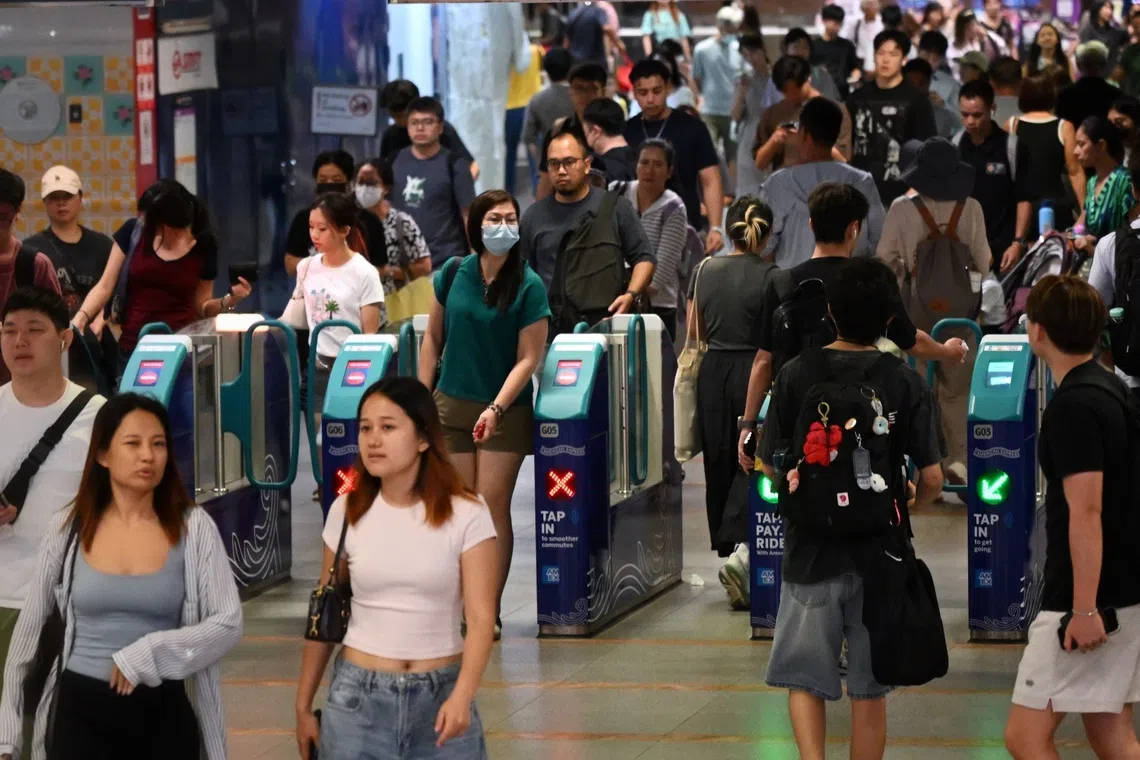
This is the highest fare increase so far, after fares rose by up to 11 cents in the 2023 fare review exercise.
ST PHOTO: KUA CHEE SIONG
Published Sep 29, 2026, 05:00 PM
Updated Sep 29, 2026, 05:00 PM
SINGAPORE – Adult commuters will pay 12 or 13 cents more for bus and train rides from Dec 26, as public transport fares climb by 7% on the back of higher energy costs driven by the Middle East crisis .
Seniors, students, as well as commuters with disabilities who use the Persons with Disabilities card will pay 5 cents more for each journey.
This is the highest fare increase so far, after fares rose by up to 11 cents in the 2023 fare review exercise .
If using cash, adults will pay 20 cents more for each journey, while seniors, students and people with disabilities will pay 10 cents more.
There will be no change in fares for low-wage workers who are charged concession fares under the Workfare Transport Concession scheme, the Public Transport Council (PTC) said on Sept 29.
The price of a monthly travel pass will also remain unchanged, at $122 for adults and $55 for seniors and those with disabilities.
At a press briefing on Sept 29, the PTC said it approved a fare increase of 7% this year, which is less than half of the allowable maximum hike of 14.7%.
PTC said: “Over the past five years, the PTC has moderated fare increases to strike a balance between keeping public transport fares affordable for commuters and ensuring the financial sustainability of Singapore’s public transport system amid rising operating and energy costs .
“Commuters have been shielded from the full increase in costs, whenever fares were not fully adjusted by the quantum determined by the fare formula.”
To cushion the impact of the higher fares for low-income families, Public Transport Vouchers will go up in value from $60 to $80.
Eligibility criteria for the vouchers has been widened this year, with households with a per capita income of $2,100 qualifying for the vouchers, instead of the current per capita income of $1,800.
This works out to 60,000 more households becoming eligible for the vouchers, said the Transport Ministry in a statement.
Adult commuters will pay an additional 12 cents for shorter journeys of up to 3.2km, while any distance further than that will cost an extra 13 cents.
When the fare rise kicks in, an MRT ride from Tanah Merah to Bedok, which is about 2km, will cost $1.40, up from $1.28 for an adult commuter who pays by card.
If the adult commuter heads from Tanah Merah to Jurong East – a 26.2km ride – the fare will be $2.55 instead of the current $2.42.
Seniors will pay 74 cents for journeys of up to 3.2km, instead of 69 cents currently, while any journey longer than 7.2km will cost $1.12, up from $1.07 now.
The 7% fare increase comprises a 5.3% quantum determined by the fare adjustment formula, and 1.7% quantum that the PTC granted out of the 9.4% that was deferred from 2025.
In 2025, the fare formula output was 1.5%, with fares rising by 5% overall.
To cover the 7.7% portion that will be deferred to future fare review exercises, the Government will provide additional fare subsidies amounting to nearly $200 million in 2027.
This is in addition to the more than $2 billion it provides in operating subsidies for public transport annually.
The PTC said the largest contributor to the higher fare formula output in its latest review was a “substantial increase in energy prices” between July 2025 and June 2026 due to the Middle East conflict.
Energy prices worldwide have soared since the conflict broke out at the end of February 2026 , and a chokehold on the Strait of Hormuz disrupted the flow of a fifth of the world’s oil and natural gas supplies.
PTC chairperson Janet Ang said the year-on-year change in the monthly price of diesel fluctuated drastically during the time period taken into account for the fare review exercise, swinging from -14% to 138%.
“We recognise that it’s a difficult and challenging environment for everyone, but… public transport is a very energy-intensive industry,” she added.
Commuters affected by the fare increases will be given support, she said, but at the same time, there is also a need to look ahead.
“The objective of keeping fares affordable must go hand in hand with sustaining a high-quality transport system that Singaporeans can continue to depend on in the years ahead, and none of those are a walk in the park,” she said.
Aqil Hamzah is a transport journalist at The Straits Times. He is also interested in issues related to crime and technology.
这是迄今为止最高的票价涨幅,此前在 2023 年的票价审查中,票价涨幅最高达到 11 分。
《海峡时报》摄影:郭志雄
发布于2026年9月29日下午5:00
更新于2026年9月29日下午5:00
新加坡——由于中东危机导致能源成本上涨,公共交通票价上涨7%,从12月26日起,成年通勤者乘坐公共汽车和地铁将多支付12或13分钱。
老年人、学生以及使用残疾人卡的残疾通勤者每次行程将多支付 5 分钱。
这是迄今为止最高的票价涨幅,此前在 2023 年的票价审查中,票价涨幅最高达到 11 分。
如果使用现金,成人每次出行将多付 20 美分,而老年人、学生和残疾人每次出行将多付 10 美分。
公共交通理事会(PTC)于9月29日表示,根据“工作补贴交通优惠计划”享受优惠票价的低收入工人的票价将保持不变。
月票价格也将保持不变,成人票价为 122 美元,老年人和残疾人票价为 55 美元。
在 9 月 29 日的新闻发布会上,PTC 表示已批准今年票价上涨 7%,这还不到允许的最高涨幅 14.7% 的一半。
PTC表示:“过去五年,PTC一直控制票价上涨幅度,以在保持公共交通票价对通勤者来说负担得起和确保新加坡公共交通系统在运营和能源成本不断上涨的情况下实现财务可持续性之间取得平衡。
“只要票价没有按照票价公式确定的幅度进行完全调整,通勤者就不会承担全部成本上涨的影响。”
为了缓解票价上涨对低收入家庭的影响,公共交通代金券的价值将从 60 美元提高到 80 美元。
今年的代金券资格标准扩大了,人均收入达到 2100 美元的家庭有资格获得代金券,而不是目前的人均收入 1800 美元。
交通部在一份声明中表示,这意味着将有 6 万户家庭有资格获得代金券。
成年通勤者短途出行(3.2公里以内)需额外支付12美分,超过3.2公里则需额外支付13美分。
票价上涨后,从丹那美拉到勿洛(约 2 公里)的地铁车程,成人乘客刷卡支付的费用将从 1.28 美元上涨至 1.40 美元。
如果成年通勤者从丹那美拉前往裕廊东(26.2公里),车费将为2.55美元,而不是目前的2.42美元。
老年人乘坐 3.2 公里以内的车辆,票价将从目前的 69 美分上涨至 74 美分;而任何超过 7.2 公里的行程,票价将从目前的 1.07 美元上涨至 1.12 美元。
7% 的票价上涨包括根据票价调整公式确定的 5.3% 的涨幅,以及 PTC 从 2025 年推迟的 9.4% 中批准的 1.7% 的涨幅。
2025 年,票价公式输出为 1.5%,票价总体上涨 5%。
为了弥补将推迟到未来票价审查工作中支付的 7.7% 的部分,政府将在 2027 年提供近 2 亿美元的额外票价补贴。
此外,该机构每年还向公共交通提供超过20亿美元的运营补贴。
PTC表示,在最近的审查中,导致票价公式计算结果上涨的最大因素是,由于中东冲突,2025年7月至2026年6月期间“能源价格大幅上涨”。
自 2026 年 2 月底冲突爆发以来,全球能源价格飙升,霍尔木兹海峡的封锁中断了全球五分之一的石油和天然气供应。
PTC主席Janet Ang表示,在票价审查期间,柴油月价格的同比变化剧烈波动,从-14%到138%不等。
“我们意识到这对每个人来说都是一个艰难且充满挑战的环境,但是……公共交通是一个非常耗能的行业,”她补充道。
她表示,受票价上涨影响的通勤者将得到支持,但与此同时,也需要展望未来。
她表示:“保持票价亲民的目标必须与维持新加坡人在未来几年可以继续依赖的高质量交通系统齐头并进,而这两件事都不是一件容易的事。”
阿基尔·哈姆扎是《海峡时报》的交通记者。他也对犯罪和科技相关议题感兴趣。