Thai Airways admits it got it wrong as Suvarnabhumi Airport public areas are swamped by a baggage flood泰国航空公司承认其应对失误,素万那普机场公共区域被大量行李淹没。
Chaos spreads from Suvarnabhumi baggage belts to the Thai Airways flight schedule as 5,600 bags pile up. Capacity is slashed by up to 40%, 37… Read More ›
新闻视频
September 30, 2026 at 12:27 am
by James Morris and Son Nguyen
in Economy , Living , Media , Politics , Thailand
Thai Airways was fighting a major operational crisis at Suvarnabhumi Airport on Tuesday as 5,600 bags piled up and dozens of flights were cancelled. Almost every flight was delayed during the worst two days, with fewer than 3% leaving on time. The flag carrier slashed capacity by up to 40% as staff shortages crippled ground operations and luggage overflowed into passenger areas. Meanwhile, military personnel were drafted in as anger mounted at Government House. Tourism and Sports Minister Surasak Phancharoenworakul blamed poor operational readiness and challenged executives to resign if they could not fix the crisis. Thai Airways Chief Executive Officer Chai Eamsiri admitted the airline initially misjudged the impact and pledged to clear the baggage within 72 hours.
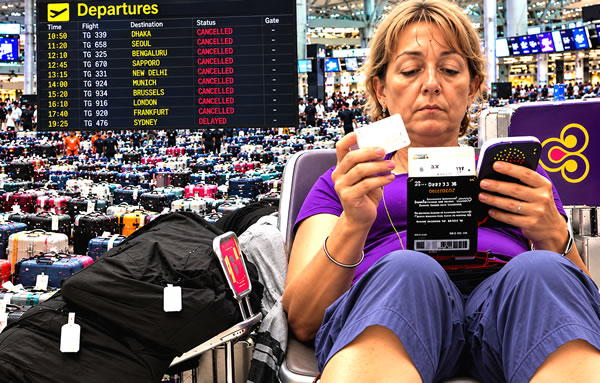
Passengers are stranded in a Suvarnabhumi terminal flooded with 5,600 bags as Thai Airways CEO Chai Eamsiri admits the airline misjudged the crisis. ( Source: Khaosod )
Thai Airways faced a deepening crisis Tuesday as 5,600 stranded bags overwhelmed its operation at Suvarnabhumi Airport. Luggage overflowed conveyor belts and spread across passenger areas as the airline struggled with severe staff shortages.
At the same time, hundreds of flights were disrupted across its domestic and international network. Almost every Thai Airways flight was delayed during the worst two days. Fewer than 3% departed on time.
By Tuesday night, the national flag carrier had cut operating capacity by 30–40%. The airline cancelled flights, combined services and transferred passengers as it tried to regain control. Notably, a later announcement listed another 37 cancellations between September 29 and October 1. Domestic, Asian, European and Australian services were affected. The disruption had therefore spread far beyond the original baggage breakdown.
Government anger grows as Thai Airways baggage chaos spreads across Suvarnabhumi passenger areas
The crisis also triggered open anger inside the government. Tourism and Sports Minister Surasak Phancharoenworakul sharply criticised Thai Airways management on Tuesday. He accepted that flooding had prevented some employees from reaching work.
However, he blamed inadequate operational readiness and management preparation for worsening the breakdown. Mr Surasak also experienced the disruption personally after returning from Japan. His own luggage failed to arrive.
Separately, Deputy Transport Minister Siripong Angkasakulkiat delivered a direct warning to the national flag carrier. “If Thai Airways chooses not to look after its passengers, the business repercussions and damage will ultimately rebound on the company itself,” he said. Mr Surasak went further and challenged the airline’s senior management. He suggested executives should resign if they were unwilling to resolve the problems.
Inside Suvarnabhumi, the scale of the breakdown was clearly visible. Thousands of bags accumulated after overflowing from conveyor belts. Subsequently, luggage spread across the second floor of the passenger terminal. Normal baggage areas became emergency sorting and storage zones. It came as Thai Airways and Airports of Thailand began separating luggage according to flight and date.
Thai Airways chief admits impact was misjudged as severe shortages hit ground crews and loadmasters
Thai Airways Chief Executive Officer Chai Eamsiri apologised as the disruption entered its third day. Crucially, he acknowledged that the airline’s initial assessment of the impact had been inaccurate. The carrier was missing hundreds of ground workers. It had also lost access to many specialised employees holding licences needed for aircraft operations.
Thai Airways normally requires about 45 licensed loadmasters each day. During the disruption, only around 20 were available. As a result, licensed executives were sent to supervise aircraft operations themselves. The broader ground workforce was also severely depleted. Thai Airways normally requires more than 500 workers. Yet only about 200–300 were available.
Mr Chai blamed flooding around employees’ homes for the staffing collapse. Many workers could not reach Suvarnabhumi. Others were dealing with problems affecting their homes and families. Nevertheless, he specifically rejected suggestions of industrial action or employees refusing duty. Instead, Thai Airways introduced incentives to encourage skilled workers to return.
Staff shortages were only one part of the breakdown. Cargo had accumulated inside warehouses because outside contractors could not collect it. Consequently, goods and hauling equipment became trapped within the cargo system. Equipment needed for baggage operations was therefore unavailable. That shortage further slowed luggage arriving aboard aircraft.
Thai Airways cuts capacity by up to 40% as delays spread and domestic cancellations hit key routes
In parallel, delays accumulated throughout the Thai Airways network. On September 27 and 28, almost 100% of its flights were delayed. Fewer than 3% departed on schedule, according to Mr Chai. About 330 flights were reported affected during the wider disruption. By September 28, accumulated delays had become too extensive for the existing schedule.
Thai Airways responded that night with a major reduction in capacity. The carrier cut operations by approximately 30–40%. Some services were cancelled, while others were combined. Passengers were transferred to alternative flights where possible. Other operators were also asked to handle airlines normally receiving Thai Airways ground services.
The aim was to free staff and equipment for the airline’s own operation. However, cancellations then spread across its domestic and international schedules. Five international departures were listed for cancellation on September 29. These included TG339 from Bangkok to Dhaka and TG658 to Seoul. TG325 to Bengaluru was also listed. TG670 to Sapporo and TG331 to New Delhi were included.
The September 30 schedule faced much heavier cuts. Domestic cancellations included TG201, TG205 and TG217 from Bangkok to Phuket. In addition, TG102 to Chiang Mai was affected. TG040 to Khon Kaen was listed for cancellation. TG020 to Ubon Ratchathani and TG002 to Udon Thani were also included.
International cancellations spread across Europe and Asia as 5,600 stranded bags swamp Suvarnabhumi
On another front, international cancellations reached major European and Asian destinations. European services affected included Munich, Brussels, Copenhagen, Zurich, Amsterdam, London and Frankfurt. Asian cancellations included Hong Kong, Taipei, Osaka and Seoul. Tokyo Narita and Tokyo Haneda services were also listed.
Other affected destinations included Kuala Lumpur, Singapore and Manila. New Delhi and Mumbai services were also on the cancellation list. Sydney was included as well. Thus, the operational cuts reached short-haul, regional and long-haul services.
The disruption was also set to continue into October. TG930 from Bangkok to Paris was listed for cancellation on October 1. TG934 to Brussels was also included. Likewise, TG940 to Milan and TG960 to Stockholm were affected. The cancellations therefore extended beyond the original three-day disruption.
At Suvarnabhumi, the immediate challenge remained approximately 5,600 stranded bags. Mr Chai set a 72-hour target to clear the backlog. Doing so required a large emergency operation inside the terminal. Thai Airways began working with Airports of Thailand to remove luggage from overloaded conveyor belts.
As part of this, bags were transferred into designated areas and sorted according to flight and date. Passengers could then identify their luggage using baggage tags. Newly arriving bags were separated from the existing backlog. That measure was intended to prevent fresh luggage from joining the accumulation.
Thai Airways expands baggage delivery operation as passengers arrive hours early amid flight delays
Thai Airways also expanded its baggage delivery operation. Passengers registering through a QR code could request delivery to homes or hotels. The carrier increased the number of delivery providers from two to three. Thailand Post joined the operation. Even so, thousands of bags remained inside Suvarnabhumi on Tuesday.
For departing passengers, the uncertainty created another problem. Many began arriving several hours early because they feared delays or cancellations. At approximately 4 pm, large crowds had formed around Thai Airways check-in counters. Some travellers had seen reports about the disruption before leaving home. Accordingly, they allowed several additional hours before their scheduled departures.
Queues stretched around the airline’s service area. Some passengers remained standing for extended periods. Others eventually sat because they could no longer remain on their feet. Meanwhile, airport information screens continued showing numerous Thai Airways delays.
Among those listed were TG661, TG931, TG308, TG344, TG260, TG637 and TG103. TG551, TG204, TG206, TG302 and TG659 were also displayed as delayed. Some other flights remained confirmed. Others had already arrived.
Passengers waited hours for missing bags before being sent home and told to return the following day
Arriving passengers encountered a different problem. One tour company representative landed at Suvarnabhumi at approximately 6.15 pm on September 28. He had returned from Guangzhou with clients. Initially, passengers were instructed to collect their luggage from conveyor belt 12.
Their bags never appeared. The passenger approached staff and asked when the luggage would arrive. He was told to continue waiting. Consequently, he remained inside the baggage collection area for another three to four hours. His flight details initially remained visible on the baggage screen. Later, they disappeared.
Eventually, passengers were told to leave the airport without their luggage. They were instructed to return the following day. No additional documentation was required. However, passengers were told to retain their passports and boarding passes.
The tour representative returned to Suvarnabhumi on Tuesday. By then, his luggage was waiting on a conveyor belt. He presented his boarding pass and was escorted inside. His clients also had to return personally because each held an individual boarding pass.
The group had already encountered disruption before returning to Bangkok. Their outbound flight had previously been cancelled. Fortunately, their eventual departure went ahead. Their return journey, however, ended with another lengthy baggage delay.
Thai Airways cites its Suvarnabhumi hub exposure as military personnel join the baggage recovery effort
Compounding the problem, reaching Suvarnabhumi again proved difficult. The representative travelled from Bangkok’s Ramintra area with friends. They had to wade through floodwater while travelling to the airport. At first, he believed flooding and staff shortages explained the baggage problems.
After observing operations, he questioned why other airlines appeared able to handle luggage normally. Thai Airways subsequently offered its explanation for the disparity. Mr Chai said Bangkok was the airline’s principal production base. Its exposure at Suvarnabhumi was therefore much greater than that of foreign carriers.
Thai Airways conducts baggage handling at the airport. Its cargo warehousing operation is also based there. Furthermore, catering operations are centred at Suvarnabhumi. Foreign airlines generally conduct their principal activities at their home airports. Mr Chai said they could therefore turn aircraft around faster after arriving in Thailand.
Even so, Thai Airways faced simultaneous problems across several operations at its home base. Ground handling was disrupted by missing staff. Cargo operations became congested. Baggage equipment was tied up elsewhere. Catering also required additional personnel.
In response, government agencies were drawn directly into the recovery effort. Around 100 Royal Thai Air Force and Ministry of Defence personnel were deployed. They assisted with catering, cargo operations and baggage sorting. Thai Airways headquarters employees were also transferred into operational roles.
Government assistance sparks dispute as Surasak criticises Thai Airways over support for military staff
Airports of Thailand personnel joined the effort as well. They helped match baggage tags with passenger information. AOT also provided additional space for the expanding baggage operation. Yet the deployment of government personnel produced another dispute between ministers and Thai Airways.
Mr Surasak said several government agencies had offered assistance. He accused Thai Airways of failing to respond adequately. More pointedly, he said the airline failed to provide food or accommodation for deployed military personnel. The soldiers consequently had to return to their units for meals.
“Every agency tried to step in and help, yet there was no positive response or cooperation from Thai Airways,” Mr Surasak said. He then demanded a more proactive response from the airline’s executives.
“I believe Thai Airways executives need to adopt a more proactive approach,” he said. The minister then delivered a direct challenge to management.
“If they feel their term is ending and are unwilling to resolve these issues, they should consider resigning so that others who are truly committed can step in to manage the situation.”
Surasak questions ground-handling priorities as Thai Airways shortages deepen despite airport staying open
Mr Surasak also raised questions about Thai Airways’ ground-handling contracts with other airlines. Thai Airways provides ground services to several carriers at Suvarnabhumi. He suggested its personnel continued servicing those customers during the crisis.
According to Mr Surasak, this may have been done to avoid contractual penalties. He said Thai Airways passengers consequently suffered particularly severe delays. Subsequently, the carrier arranged for other operators to share ground-handling work involving its airline customers.
That change allowed Thai Airways to redirect more resources towards its own services. Still, Mr Surasak rejected flooding as a complete explanation for the breakdown. He acknowledged that employees had been prevented from travelling normally. He instead pointed to operational readiness and management preparation.
Significantly, Mr Chai had already acknowledged that the airline’s initial impact assessment was inaccurate. Suvarnabhumi Airport itself also remained operational throughout the disruption. Aircraft continued arriving and departing. The central problem was therefore not closure of the airport.
Instead, Thai Airways’ ground operation suffered severe shortages. The airline was missing hundreds of workers. It had fewer than half its normal number of licensed loadmasters. Cargo congestion also trapped equipment required for baggage handling.
Thai Airways launches compensation response as baggage backlog and reduced flight programme continue
In turn, luggage accumulated faster than available workers could process it. Thousands of bags then backed up through the airport. Flight delays spread across the network. Ultimately, Thai Airways cut capacity by as much as 40%. Dozens of cancellations followed.
Government agencies then became part of the recovery operation. Military personnel helped sort and move luggage. AOT supplied additional space and personnel. Thai Airways headquarters staff were reassigned to airport duties. Extra delivery companies were also recruited.
Beyond the operational response, Thai Airways began preparing compensation arrangements for affected passengers. Mr Chai said dedicated service points would handle delayed baggage and flight claims. The centres were scheduled to open Tuesday afternoon. They were being established inside and outside the passenger terminal.
Thai Airways apologised to affected passengers and customers. Its immediate priority was restoring operations at Suvarnabhumi. Yet it was attempting that recovery while operating a sharply reduced flight programme.
The baggage backlog remained substantial. Approximately 5,600 bags still required sorting, collection or delivery. Thai Airways had also imposed a 72-hour deadline on itself to clear them. Its flight schedule remained under heavy pressure.
Government criticism grows as passengers face cancellations, missing bags and long queues
Domestic routes had been cancelled. Asian routes were affected. Long-haul European services were cut. Australian flights were also included. Furthermore, cancellations stretched into October.
Against that backdrop, government criticism became increasingly direct. Mr Surasak questioned management preparation and the deployment of ground-handling staff. He also criticised the airline’s response to government assistance. Deputy Transport Minister Siripong separately warned about the commercial consequences of failing passengers.
For travellers, the effects remained visible throughout Suvarnabhumi. Queues persisted around Thai Airways counters. Flight information screens continued displaying delays. Thousands of bags remained stacked across parts of the terminal.
Some passengers had waited hours after landing before being sent home without luggage. Others returned through floodwater the following day to retrieve their belongings. Departing passengers arrived hours early because they feared further cancellations.
By Tuesday night, Thai Airways was fighting problems across much of its Suvarnabhumi operation. It had 5,600 stranded bags to clear and hundreds of missing ground workers. It also needed to release equipment trapped by the cargo backlog.
Thai Airways battles continuing delays as military personnel assist and 5,600 bags await clearance
At the same time, the carrier had to stabilise a network already hit by extensive delays. Dozens of cancellations extended into October. Capacity had been reduced by 30–40%. During the worst two days, fewer than 3% of flights departed on time.
Government personnel were now directly involved in the recovery. Military officers were working inside the operation. Airports of Thailand staff were assisting with stranded baggage. The Tourism and Sports Minister was publicly challenging Thai Airways management.
Suvarnabhumi itself remained open throughout the disruption. Thai Airways’ ground operation, however, remained under severe pressure. The carrier aimed to clear the 5,600 stranded bags within 72 hours. Reduced flight operations would continue while staffing, equipment and baggage handling recovered.
For passengers, the disruption had already moved beyond the weekend flooding. Flights had been delayed or cancelled. Thousands of travellers had been separated from their luggage. Some were sent home after waiting hours beside baggage belts.
Others faced another journey to Suvarnabhumi simply to retrieve their belongings. Departing passengers confronted crowded counters and uncertain schedules. Dozens of flights had disappeared from the programme.
By Tuesday night, Thai Airways was still cutting services while clearing thousands of bags from Thailand’s principal international gateway. At Government House, ministers were simultaneously turning their attention towards the airline’s management and its handling of the crisis.
Thai Airways CEO apologises for ongoing flooding crisis issues with defective carts and delayed flights
Military operations are expanded at Suvarnabhumi Airport as crisis is still not brought under control
Tourism minister directs acute airport baggage crisis caused by workers who failed to turn up for shifts
Royal Thai Army deployed to Suvarnabhumi Airport after baggage chaos gets the better of exhausted staff
Bangkok airports open and flights running but there are delays and baggage issues at Suvarnabhumi
Flooding tragedy in Samut Prakan near Bangkok. Two die from electrocution after family car is submerged
Engineers work through night after Sunday’s fire on Bangkok’s Blue Line saw more damage than thought
State Railway company brings charges against private drivers linked to last Saturday’s Bangkok train disaster
Police to review 58 rail crossings after 8 people died in train bus smash. Train driver had a drug habit
Police probe into train bus smash in Bangkok focuses on the train driver as police still find body parts
Rail crash in central Bangkok kills eight. Train struck a bus stuck in traffic. Junction barriers failed to lower
Prime Minister calls for contractors on high speed line to be blacklisted after 32 die in express rail disaster
Italian Thai boss and 16 others arrested on Thursday charged with Auditor General building deaths
Arrested man linked with Chatuchak building collapse now tells police he is a Chinese state employee
James Morris is a pename for an international writer based in Bangkok who works on various international news media. He is a sub editor with the Thai Examiner news website since it began in 2015. Son Nguyen is an international writer and news commentator specialising in Thai news and current affairs. He commenced working with the Thai Examiner News Desk in May 2018.
All posts by James Morris and Son Nguyen
Bangkok flooding eases as front moves to Myanmar but Governor warns city needs 2-3 days to recover September 27, 2026 The Thai capital races to drain vast floodwater after
Figures for opening 8 months of 2026 show a gaping trade deficit as Thailand imports more from China September 27, 2026 Prime Minister Anutin Charnvirakul visited London
PM directs flash flooding crisis which has hit Bangkok making all 50 districts disaster zones from London September 26, 2026 Bangkok battles severe flooding after almost 300mm of
Prime Minister Anutin’s US visit this week yielded a closer ties pact between Bangkok and Wall Street September 26, 2026 Wall Street opens its doors to closer Thai links as
Horror in Phuket as policeman’s Glock gun misfires in slider action fatally wounding his 49 year old mother September 25, 2026 Phuket policeman faces a fatal shooting probe after
Bombshell Supreme Court ruling links Bhumjaithai Party figure with orchestrated Senate poll collusion September 25, 2026 Supreme Court exposes corrupt conduct in the 2024
Prime Minister and his team grilled by Wall Street on Thailand’s geopolitical stance and growth plans September 25, 2026 Hard-boiled Wall Street investors put PM Anutin and
Four sentenced to life for deadly 2022 insurgency bombing in Pattani. Death sentences commuted to life September 24, 2026 Death sentences for four men are reduced to life
Bhumjaithai political overlord in Prachin Buri to spend life in prison after death sentence is commuted by court September 24, 2026 Ex-minister Sunthorn Wilawan, 87, gets life after his
Prime Minister Anutin readies defences as Thamanat Prompow’s Kla Tham Party positions for government September 24, 2026 Capt Thamanat Prompow’s 58-MP Kla Tham moves towards
Canadian arrested for rape of a UK tourist in Chiang Mai just hours before he was due to leave Thailand September 24, 2026 Police swoop on Canadian Aldo Ochoa Saenz, 38, at his
Oil fund bleeds nearly 5 billion baht a week as the government struggles to cope with Middle East crisis September 23, 2026 Thailand’s Oil Fuel Fund bleeds ฿700 million daily
Interior Ministry probes Israeli network of Chabad in Thailand with reports of southern land purchases September 23, 2026 Polpeera widens Thailand’s Israeli-linked land probe
Concerns for the plight of the King’s third son whose health is reported to have declined in Malaysia September 22, 2026 Dr Chakriwat, King Maha Vajiralongkorn’s third son,
Local government examination scandal moves closer to a crunch. Rangsiman Rome calls on PM for answers September 22, 2026 Pressure mounts on Anutin over the ฿4.5bn local exam
Light at end of the tunnel for Thai flight attendant Meena arrested in Melbourne for drug trafficking offences September 22, 2026 Meena Kondo’s Australian drug case takes a hopeful
Anutin heads to New York but no sign yet of news on the US Thai trade deal as problems simmer at home September 21, 2026 Washington adds a fresh condition to Thailand’s US
Crucial ballot decision of Constitutional Court on Monday could upend government and Thai politics September 27, 2026
American arrested in Pattaya after a joint agency raid found an illicit narcotics factory in his suburban home September 26, 2026
Warning in Thailand over fake cough syrup bottles. Police smash counterfeit medicine empire in 4 raids September 26, 2026
Spanish chef (32) who murdered and dismembered a Colombian surgeon on Koh Phangan loses appeal September 26, 2026
Dizziness, headaches in a Pattaya locale after a cannabis farm fire at a residence on Friday morning guts the property September 25, 2026
33 year old sets fire to Honda Scooby in Udon Thani after mother refused to buy him a more powerful ride September 25, 2026
Ministers accused of neglecting Thai farmers. Crucial aid support has not yet reached the cabinet table September 25, 2026
Prime Minister Anutin Charnvirakul formally summoned by parliament over local government exam scandal September 24, 2026
Former Justice Minister hails major bankruptcy bill which could help reduce the household debt burden September 24, 2026
Nene Royal wins big for Thailand with blistering ‘Seven Nation Army’ final act. Nets $1 million prize September 24, 2026
Chinese men arrested on rape and extortion charges after Pattaya raid. Woman locked up and chained September 23, 2026
Digital Minister (36) and heir to powerful Chidchob dynasty has a fortune of hundreds of millions September 23, 2026
Latest cannabis bill agreed by cabinet on Tuesday to rein in the out of control weed industry in Thailand September 23, 2026
Legal heavyweights plan seminar to review Election Commission’s move to let top politicians off the hook September 22, 2026
Culture Minister’s press briefing rebuffs use of 120 year old photo of Thai women by Cambodian Ms Universe pageant September 22, 2026
Family of murdered 35 year old Thai woman in Taiwan seek return of her ashes and financial compensation September 22, 2026
Thai women ‘Freya Ice Queen’ sex trafficking ring smashed by London’s Metropolitan police after tip off September 21, 2026
Spider Man ‘peace’ protest and arrest the latest news from the ongoing Koh Samui animal park controversy September 21, 2026
Assistant Headman dies in Yala attack on night of mayhem in the southern province into Sunday September 20, 2026
Phuket drug checkpoint scandal. Defence Corps unit set up to target the menace is accused of extortion September 20, 2026
Thaksin era minister reflects on Thailand’s 2006 coup d’état. Calls for a democracy dedicated to people September 20, 2026
45 year old Australian Simon Peter Carman is refused bail as he pleaded not guilty to murder in Pattaya September 19, 2026
© 2026 Thai Examiner. All rights reserved.
2026年9月30日凌晨12:27
作者:詹姆斯·莫里斯和孙阮
经济、生活、媒体、政治、泰国
周二,泰国航空公司在素万那普机场遭遇重大运营危机,5600件行李堆积如山,数十个航班被迫取消。在情况最严重的两天里,几乎所有航班都延误了,只有不到3%的航班准点起飞。由于人手短缺导致地面运营瘫痪,行李溢出到旅客区域,这家泰国国家航空公司不得不削减高达40%的运力。与此同时,随着政府高层的愤怒情绪日益高涨,军方也被调派到现场。旅游与体育部长素拉萨·潘查伦沃拉库尔将危机归咎于航空公司运营准备不足,并要求高管如果无法解决危机就辞职。泰国航空公司首席执行官柴·埃姆西里承认,航空公司最初误判了危机的影响,并承诺在72小时内清理行李。
由于5600件行李被困在素万那普机场航站楼,乘客滞留。泰国航空首席执行官柴·伊姆西里承认,航空公司对此次危机的估计有误。(来源:考索德报)
周二,泰国航空公司在素万那普机场遭遇了日益严重的危机,5600件滞留行李使其运营不堪重负。由于人手严重短缺,行李堆积在传送带上,并散落在旅客区域。
与此同时,泰国航空国内和国际航线网络数百个航班受到影响。在情况最糟糕的两天里,几乎所有泰国航空的航班都延误了,只有不到3%的航班准点起飞。
截至周二晚间,这家国家航空公司已削减了30%至40%的运力。为了控制局面,该航空公司取消了航班、合并了航线并转移了乘客。值得注意的是,随后发布的公告显示,9月29日至10月1日期间又有37个航班被取消。国内、亚洲、欧洲和澳大利亚的航班均受到影响。因此,此次航班中断的影响范围远远超出了最初的行李故障。
泰国航空行李混乱蔓延至素万那普机场旅客服务区,政府愤怒情绪日益高涨。
这场危机也引发了政府内部的公开愤怒。旅游与体育部长素拉萨·潘查伦沃拉库尔周二严厉批评了泰国航空公司的管理层。他承认洪水确实导致一些员工无法上班。
然而,他将此次故障恶化归咎于运营准备不足和管理准备不充分。苏拉萨克先生从日本返回后也亲身经历了此次中断,他的行李未能送达。
此外,交通部副部长西里蓬·昂卡萨库尔基亚特(Siripong Angkasakulkiat)直接向泰国国家航空公司发出警告。他表示:“如果泰国航空公司选择不照顾乘客,最终造成的商业后果和损失将反噬公司自身。” 苏拉萨克先生更进一步,对航空公司高层管理人员提出质疑。他建议,如果高管们不愿解决问题,就应该辞职。
在素万那普机场内,故障的严重程度显而易见。数千件行李从传送带上溢出,堆积如山。随后,行李散落在航站楼二层。原本的行李存放区变成了紧急分拣和存放区。此前,泰国航空公司和泰国机场管理局已开始根据航班和日期对行李进行分类。
泰国航空公司首席执行官承认,由于地勤人员和装卸长严重短缺,影响被低估。
泰国航空首席执行官柴·伊姆西里在航班中断进入第三天之际公开道歉。至关重要的是,他承认航空公司最初对影响的评估并不准确。该航空公司数百名地勤人员缺勤,许多持有飞机运营所需执照的专业人员也无法正常工作。
泰国航空通常每天需要约45名持证装卸长。但在航班中断期间,只有约20名装卸长能够到岗。因此,公司不得不派遣持证管理人员亲自监督飞机运行。此外,地勤人员也严重短缺。泰国航空通常需要500多名地勤人员,但当时只有约200至300人能够到岗。
柴先生将员工人数锐减归咎于员工家乡附近的洪水。许多员工无法抵达素万那普机场。其他员工则面临着影响家庭的各种问题。尽管如此,他明确拒绝了员工采取罢工或拒绝上班的提议。相反,泰国航空公司推出了一系列激励措施,鼓励技术工人返回工作岗位。
人员短缺只是故障的一部分原因。由于外部承包商无法提取货物,货物积压在仓库内。结果,货物和运输设备被困在货运系统中。行李处理所需的设备因此无法使用。这种短缺进一步延缓了飞机行李的到达速度。
由于航班延误蔓延,国内航线取消频发,泰国航空削减运力高达40%。
与此同时,泰国航空整个航线网络都出现了延误。9月27日和28日,几乎所有航班都延误了。据柴先生称,只有不到3%的航班按时起飞。据报道,此次大范围航班中断影响了约330个航班。到9月28日,累计延误已超出现有航班计划的承受范围。
当晚,泰国航空采取了大幅削减运力的应对措施。该航空公司减少了约30%至40%的航班运营。部分航班被取消,另一些航班则被合并。乘客尽可能被安排到其他航班。此外,泰国航空还要求其他航空公司接手通常由其提供的地面服务。
此举旨在腾出人员和设备用于航空公司自身的运营。然而,随后航班取消的情况蔓延至其国内和国际航班。9月29日,共有五个国际航班被取消,其中包括曼谷飞往达卡的TG339航班、飞往首尔的TG658航班、飞往班加罗尔的TG325航班、飞往札幌的TG670航班以及飞往新德里的TG331航班。
9月30日的航班时刻表大幅缩减。国内航班取消包括曼谷至普吉岛的TG201、TG205和TG217航班。此外,飞往清迈的TG102航班也受到影响。飞往孔敬的TG040航班被列入取消名单。飞往乌汶府的TG020航班和飞往乌隆府的TG002航班也受到影响。
国际航班取消潮蔓延至欧洲和亚洲,5600件滞留行李涌入素万那普机场。
另一方面,国际航班取消波及欧洲和亚洲的主要目的地。受影响的欧洲航线包括慕尼黑、布鲁塞尔、哥本哈根、苏黎世、阿姆斯特丹、伦敦和法兰克福。亚洲航线包括香港、台北、大阪和首尔。东京成田机场和东京羽田机场的航班也受到影响。
其他受影响的目的地包括吉隆坡、新加坡和马尼拉。新德里和孟买的航班也被取消。悉尼也包含在内。因此,此次航班削减波及短途、区域和长途航线。
航班中断预计将持续到10月份。10月1日,曼谷飞往巴黎的TG930航班被列入取消名单。飞往布鲁塞尔的TG934航班也受到影响。同样,飞往米兰的TG940航班和飞往斯德哥尔摩的TG960航班也受到影响。因此,航班取消的影响范围超过了最初计划的三天。
在素万那普机场,当务之急是处理大约5600件滞留行李。柴先生设定了72小时的目标来清理积压的行李。这需要在航站楼内展开大规模的紧急行动。泰国航空公司开始与泰国机场管理局合作,将行李从超负荷运转的传送带上卸下。
作为这项措施的一部分,行李被转移到指定区域,并按航班和日期进行分类。乘客随后可以使用行李标签识别自己的行李。新到达的行李与已有的积压行李分开存放。此举旨在防止新的行李加入积压的行列。
由于航班延误,乘客提前数小时抵达,泰国航空扩大了行李运送服务。
泰国航空也扩大了行李递送服务。乘客可通过扫描二维码注册,申请将行李递送至家中或酒店。该航空公司将递送服务商的数量从两家增加到三家,泰国邮政也加入了这项服务。即便如此,周二仍有数千件行李滞留在素万那普机场内。
对于即将出发的旅客来说,这种不确定性带来了另一个问题。许多人因为担心航班延误或取消,提前几个小时就抵达了机场。下午4点左右,泰国航空的值机柜台周围已经聚集了大量人群。一些旅客在出发前就已经看到了有关航班延误或取消的报道,因此他们预留了比预定起飞时间多几个小时的时间。
航空公司服务区外排起了长队。一些乘客长时间站着,另一些乘客则因为实在站不住了而最终坐下。与此同时,机场信息屏幕持续显示着泰国航空的众多航班延误信息。
延误航班包括TG661、TG931、TG308、TG344、TG260、TG637和TG103。TG551、TG204、TG206、TG302和TG659也显示延误。部分航班仍处于确认状态,另一些航班则已抵达。
乘客们苦等数小时寻找丢失的行李,之后被遣送回家,并被告知第二天再来。
抵达的旅客则遇到了不同的问题。一位旅行社代表于9月28日下午6点15分左右抵达素万那普机场。他带着客户从广州返回。起初,旅客被告知要到12号传送带领取行李。
他们的行李始终没有出现。这位乘客找到工作人员询问行李何时到达,被告知继续等待。于是,他又在行李提取区待了三四个小时。起初,他的航班信息还显示在行李查询屏幕上,但后来就消失了。
最终,乘客被告知无需携带行李即可离开机场,并被告知第二天再来。无需提供其他文件,但乘客被告知要保留好护照和登机牌。
旅游代表周二返回素万那普机场。那时,他的行李已经放在传送带上。他出示了登机牌,随后被工作人员引导进入机场。他的客户也必须亲自返回,因为每位客户都持有单独的登机牌。
该团在返回曼谷之前就已经遭遇了行程延误。他们去程的航班此前已被取消。所幸的是,最终他们还是顺利出发了。然而,他们的返程却因行李延误而告终。
泰国航空公司表示,由于军方人员参与行李回收工作,其素万那普机场枢纽的风险敞口较大。
雪上加霜的是,再次抵达素万那普机场也困难重重。这位代表和朋友从曼谷的拉明特拉区出发,前往机场的途中不得不趟过洪水。起初,他认为洪水和人手短缺是行李延误的原因。
在观察了运营情况后,他质疑为何其他航空公司似乎都能正常处理行李。随后,泰国航空对此差异做出了解释。柴先生表示,曼谷是该航空公司的主要生产基地,因此其在素万那普机场的风险敞口远大于外国航空公司。
泰国航空在该机场负责行李处理,其货物仓储业务也设于此。此外,餐饮服务也集中在素万那普机场。外国航空公司通常在其母港机场开展主要业务。柴先生表示,因此,外国航空公司抵达泰国后可以更快地完成飞机周转。
即便如此,泰国航空在其总部仍面临多项运营问题。地面服务因人员短缺而中断;货运业务拥堵;行李设备被占用;餐饮服务也需要额外人手。
为此,政府机构直接参与了救援工作。约100名泰国皇家空军和国防部人员被部署到现场,协助进行餐饮、货物运输和行李分拣。泰国航空公司总部员工也被调派到一线岗位。
政府援助引发争议,素拉萨批评泰国航空公司对军方人员的支持。
泰国机场管理局(AOT)的工作人员也参与了这项工作。他们协助核对行李标签与乘客信息。AOT还为不断扩大的行李处理业务提供了额外的空间。然而,政府人员的部署又引发了部长与泰国航空公司之间的另一场争端。
苏拉萨克先生表示,多个政府机构已提供援助。他指责泰国航空公司未能做出充分回应。更确切地说,他指出该航空公司未能为部署的军人提供食物和住宿。因此,士兵们不得不返回部队用餐。
苏拉萨克先生表示:“所有相关机构都试图介入提供帮助,但泰国航空方面却没有任何积极回应或配合。” 他随后要求航空公司高管采取更积极主动的应对措施。
“我认为泰航高管需要采取更积极主动的方式,”他说道。随后,这位部长直接向管理层提出了挑战。
“如果他们觉得自己的任期即将结束,并且不愿意解决这些问题,他们应该考虑辞职,以便让真正有决心的人来处理这种情况。”
尽管机场保持开放,但泰国航空地面服务人员短缺问题日益严重,苏拉萨克质疑泰国航空地面服务人员的优先事项。
苏拉萨克先生还对泰国航空与其他航空公司签订的地面服务合同提出了质疑。泰国航空为素万那普机场的多家航空公司提供地面服务。他指出,在危机期间,泰国航空的员工仍在继续为这些客户提供服务。
苏拉萨克先生表示,此举可能是为了规避合同违约责任。他说,泰国航空的乘客因此遭受了特别严重的延误。随后,该航空公司安排其他运营商分担其航空公司客户的地面服务工作。
这一调整使泰航能够将更多资源投入到自身服务中。不过,苏拉萨克先生并不认为洪水是造成此次服务中断的全部原因。他承认员工的正常出行受到影响,但他强调运营准备和管理方面的不足。
值得注意的是,柴先生此前已承认航空公司最初的影响评估并不准确。素万那普机场本身在整个中断期间也保持运营,飞机继续起降。因此,问题的核心并非机场关闭。
然而,泰航的地面运营却遭遇了严重的短缺。该航空公司数百名员工缺勤,持证装卸长的数量不足正常水平的一半。货物拥堵也导致行李处理所需的设备滞留。
泰国航空启动赔偿方案,应对行李积压和航班减少问题。
行李堆积速度超过了工作人员的处理能力。成千上万的行李堵塞了机场通道,航班延误蔓延至整个航线网络。最终,泰国航空削减了多达40%的运力,随后数十个航班被取消。
随后,政府机构也参与到救援行动中。军方人员协助整理和搬运行李。AOT提供了额外的场地和人员。泰国航空公司总部员工被调派到机场工作。此外,还招募了额外的快递公司。
除了运营方面的应对措施外,泰国航空也开始着手为受影响的乘客制定赔偿方案。柴先生表示,将设立专门的服务点处理行李延误和航班延误索赔事宜。这些服务点计划于周二下午开放,分别位于航站楼内外。
泰国航空向受影响的乘客和客户致歉。其当务之急是恢复素万那普机场的运营。然而,在努力恢复运营的同时,泰国航空不得不大幅缩减航班计划。
行李积压情况依然严重。约有5600件行李仍需分拣、收集或派送。泰国航空已给自己设定了72小时的最后期限来清理这些行李。其航班时刻表仍然面临巨大压力。
乘客面临航班取消、行李丢失和长时间排队等问题,政府受到的批评日益增多。
国内航线已被取消。亚洲航线受到影响。欧洲长途航线服务被削减。飞往澳大利亚的航班也受到影响。此外,航班取消的情况一直持续到10月份。
在此背景下,政府的批评日益直接。苏拉萨克先生质疑管理层的准备工作和地勤人员的部署,并批评了航空公司对政府援助的回应。交通部副部长西里蓬也单独警告说,如果航空公司辜负乘客,将会造成严重的商业后果。
对旅客而言,素万那普机场处处可见疫情的影响。泰国航空柜台前依然排着长队。航班信息屏幕持续显示延误信息。数千件行李仍然堆放在航站楼的各个角落。
一些乘客在飞机降落数小时后才被遣送回家,行李也无法取回。另一些乘客则在第二天冒着洪水返回取回行李。由于担心航班进一步取消,一些即将离境的乘客提前数小时抵达机场。
截至周二晚间,泰国航空素万那普机场的大部分运营环节都面临问题。该公司有5600件滞留行李需要清理,数百名地勤人员失踪。此外,它还需要释放被货物积压困住的设备。
泰国航空在军方协助下,航班持续延误,5600件行李等待清关。
与此同时,该航空公司还必须稳定一个已经遭受严重延误的航线网络。数十个航班的取消一直持续到10月份。运力减少了30%至40%。在最糟糕的两天里,准点起飞的航班不足3%。
政府人员已直接参与救援行动。军方人员也参与其中。泰国机场工作人员正在协助处理滞留行李。旅游和体育部长公开质问泰国航空公司管理层。
素万那普机场本身在航班中断期间一直保持开放。然而,泰国航空的地面运营仍然面临巨大压力。该航空公司计划在72小时内处理掉滞留的5600件行李。在人员配备、设备和行李处理恢复期间,航班数量将减少。
对旅客而言,周末的洪水过后,航班延误或取消,数千名旅客与行李失散。一些人在行李传送带旁苦等数小时后,最终被遣送回家。
还有一些人不得不再次前往素万那普机场,仅仅是为了取回他们的行李。离境旅客面临着拥挤的柜台和不确定的航班时刻表。数十个航班已经从航班计划中消失。
截至周二晚间,泰国航空仍在削减航班,同时从泰国的主要国际门户机场清理数千件行李。与此同时,在总理府,部长们正将注意力转向该航空公司的管理层及其对危机的处理。
泰国航空公司首席执行官就持续不断的洪水危机问题、缺陷推车和航班延误致歉。
由于危机仍未得到控制,素万那普机场的军事行动范围已扩大。
旅游部长指示处理因工作人员未按时上班而导致的机场行李严重短缺危机。
行李混乱导致疲惫不堪的工作人员不堪重负,泰国皇家陆军已部署至素万那普机场。
曼谷机场已开放并有航班运行,但素万那普机场出现延误和行李问题。
曼谷附近北榄府发生洪灾悲剧,一辆汽车被淹,两人触电身亡。
周日曼谷地铁蓝线发生火灾,损失比预想的要严重,工程师们连夜抢修。
泰国国家铁路公司对与上周六曼谷火车事故有关的私人司机提起诉讼。
警方将对58个铁路道口进行审查,此前一起火车与巴士相撞事故造成8人死亡。火车司机曾有吸毒史。
曼谷火车与巴士相撞事故,警方调查重点转向火车司机,目前仍在搜寻遇难者遗体。
曼谷市中心发生火车相撞事故,造成8人死亡。火车撞上一辆堵在路上的公交车。路口护栏未能放下。
在造成32人死亡的高铁事故后,总理呼吁将高铁线路承包商列入黑名单。
周四,一名意大利籍泰国籍老板和其他16人因涉嫌在审计长大楼内造成人员死亡而被捕。
因与乍都乍周末市场大楼倒塌事件有关的被捕男子现在告诉警方,他是中国国家雇员。
詹姆斯·莫里斯(James Morris)是一位常驻曼谷的国际作家,笔名,他为多家国际新闻媒体撰稿。自2015年泰国新闻网站Thai Examiner成立以来,他一直是该网站的副编辑。孙阮(Son Nguyen)是一位国际作家和新闻评论员,专长于泰国新闻和时事。他于2018年5月加入Thai Examiner新闻编辑部。
James Morris 和 Son Nguyen 的所有帖子
随着锋面移向缅甸,曼谷洪水有所缓解,但曼谷市长警告称,该市需要2-3天才能恢复正常。2026年9月27日,泰国首都曼谷正全力排水。
2026年前8个月的数据显示,由于泰国从中国的进口增加,贸易逆差巨大。2026年9月27日,泰国总理阿努廷·查恩维拉库尔访问伦敦。
总理指示应对袭击曼谷的突发性洪水危机,曼谷所有50个区均被列为灾区(2026年9月26日,伦敦报道)。曼谷在近300毫米降雨后正与严重洪灾作斗争。
阿努廷总理本周访美,促成了曼谷与华尔街之间更紧密联系的协议。2026年9月26日,华尔街向泰国敞开大门,寻求更紧密的联系。
2026年9月25日,普吉岛发生一起骇人听闻的事件:一名警察的格洛克手枪在滑套动作中走火,导致其49岁的母亲不幸身亡。事发后,这名普吉岛警察将面临致命枪击案的调查。
最高法院重磅裁决将泰自豪党成员与精心策划的参议院选举舞弊案联系起来 2026年9月25日 最高法院揭露2024年选举中的腐败行为
2026年9月25日,华尔街就泰国的地缘政治立场和增长计划对总理及其团队进行了质询。强硬的华尔街投资者对阿努廷总理及其团队提出了质疑。
四人因2022年北大年府致命叛乱爆炸案被判处终身监禁。2026年9月24日,四人的死刑被改判为终身监禁。
2026年9月24日,巴真府泰自豪党政治领袖桑通·维拉旺(Sunthorn Wilawan)的死刑被法院改判为终身监禁。这位87岁的前部长此前被判处死刑。
2026年9月24日,塔玛纳·普罗姆波领导的克拉塔姆党准备组建政府,总理阿努廷严阵以待。塔玛纳·普罗姆波领导的拥有58名议员的克拉塔姆党正朝着这一目标迈进。
2026年9月24日,一名加拿大男子在清迈被捕,他涉嫌强奸一名英国游客,当时距离他离开泰国仅几个小时。警方突袭了38岁的加拿大男子阿尔多·奥乔亚·萨恩斯(Aldo Ochoa Saenz)的住所。
泰国石油基金每周亏损近50亿泰铢,政府疲于应对中东危机 2026年9月23日 泰国石油基金每日亏损7亿泰铢
泰国内政部对以色列在泰国的哈巴德运动网络展开调查,此前有报道称该网络在泰国南部购买土地(2026年9月23日)。泰国内政部扩大了对与以色列有关联的土地的调查范围。
2026年9月22日,马来西亚国王玛哈·哇集拉隆功的第三子查克里瓦特博士健康状况恶化,引发各方关注。
地方政府考试丑闻逼近关键时刻。Rangsiman Rome呼吁首相给出解释(2026年9月22日)。Anutin因45亿泰铢的地方考试丑闻面临越来越大的压力。
泰国空姐米娜因涉嫌贩毒在墨尔本被捕,隧道尽头出现曙光 2026年9月22日 米娜·近藤的澳大利亚毒品案出现希望
阿努廷前往纽约,但美泰贸易协议仍未传出任何消息,国内问题持续发酵。2026年9月21日,华盛顿为泰国的贸易协议附加了新的条件。
宪法法院周一的关键投票裁决或将颠覆泰国政府和政治格局 2026年9月27日
2026年9月26日,一名美国公民在芭堤雅被捕,此前联合执法机构突袭了他的郊区住宅,在其住所内发现了一个非法制毒窝点。
泰国警方发出警告,警惕假冒止咳糖浆。2026年9月26日,警方在四次突击行动中捣毁了一个假药帝国。
2026年9月26日,在帕岸岛谋杀并肢解哥伦比亚外科医生的32岁西班牙厨师上诉被驳回。
2026年9月25日星期五上午,芭堤雅一处民宅发生大麻种植场火灾,房屋被烧毁,当地居民出现头晕、头痛等症状。
2026年9月25日,一名33岁男子因母亲拒绝给他买一辆动力更强的车,在乌隆他尼纵火焚烧了自己的本田史酷比汽车。
部长们被指责忽视泰国农民。关键援助资金尚未提交内阁审议(2026年9月25日)
2026年9月24日,总理阿努廷·查恩维拉库尔因地方政府考试丑闻被议会正式传唤。
前司法部长称赞一项重大破产法案,该法案有望减轻家庭债务负担 2026年9月24日
妮妮·罗亚尔凭借精彩绝伦的《七国军队》压轴表演为泰国赢得大奖,斩获100万美元奖金(2026年9月24日)。
芭堤雅突袭行动后,几名中国男子因涉嫌强奸和敲诈勒索被捕。一名女子于2026年9月23日被关押并戴上镣铐。
数字部长(36岁)兼强大的奇德乔布王朝继承人拥有数亿美元的财富 2026年9月23日
泰国内阁周二通过最新大麻法案,旨在遏制该国失控的大麻产业(2026年9月23日)
法律界重量级人物计划举办研讨会,审查选举委员会让高层政客免于追究责任的举措(2026年9月22日)
文化部长在新闻发布会上驳斥柬埔寨环球小姐选美大赛使用120年前泰国女性照片的做法 2026年9月22日
2026年9月22日,一名35岁泰国女子在台湾遇害,其家人要求归还骨灰并索要经济赔偿。
2026年9月21日,伦敦警察厅根据线报捣毁了以泰国女子“冰雪女王弗蕾雅”为名的性交易团伙。
蜘蛛侠“和平”抗议及逮捕事件:苏梅岛动物园争议最新进展(2026年9月21日)
2026年9月20日星期日,南部省份亚拉发生骚乱,一名助理村长在当晚的袭击中丧生。
普吉岛毒品检查站丑闻。为打击毒品犯罪而设立的国防军小组被指控敲诈勒索。2026年9月20日
他信时代部长回顾泰国2006年政变,呼吁建立以人民为中心的民主制度。2026年9月20日
2026年9月19日,45岁的澳大利亚男子西蒙·彼得·卡曼在芭堤雅被控谋杀,但他拒不不认罪,保释申请被拒绝。
© 2026 Thai Examiner。版权所有。