Odes to KL city, underground subcultures, and ‘Tbaka Daghat’: How Malaysian zine makers are documenting the country吉隆坡城市颂歌、地下亚文化和“Tbaka Daghat”:马来西亚独立杂志制作者如何记录这个国家
KUALA LUMPUR, September 30 — Zine culture has existed in Malaysia since the pre-internet days and it is still surviving — some might even say flourishing — in today’s...
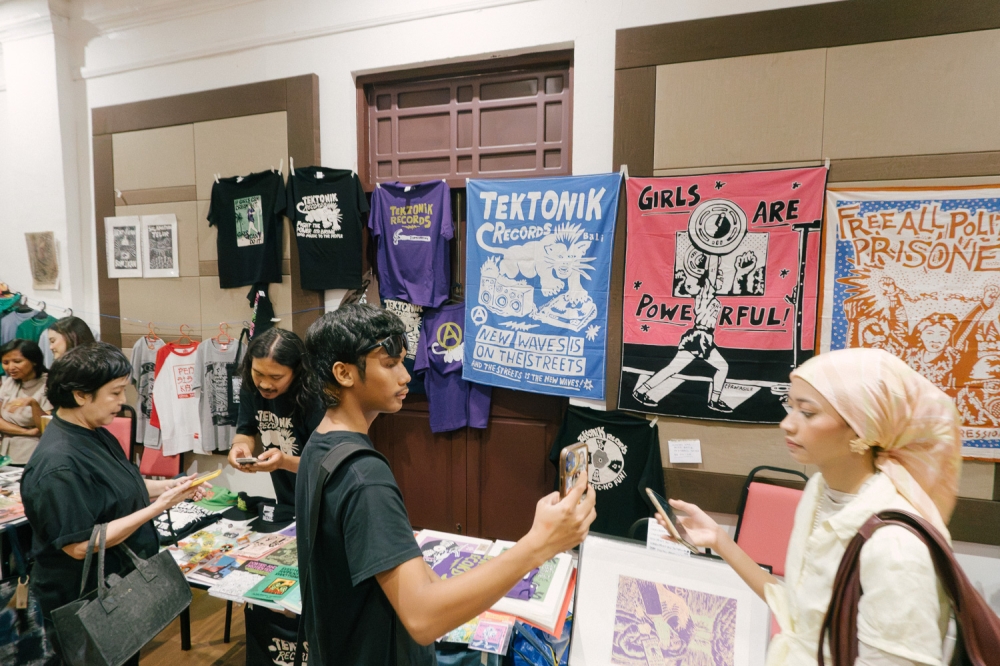
Malaysian zine culture, existing since pre-internet days, continues to thrive in the digital era, focusing on DIY publications covering niche subjects and local heritage archiving.
Abdul Mutalib Jaamat is archiving Malaysia's underground music history, focusing on vinyl releases, to preserve the contributions of these bands to the nation's cultural landscape.
Creators like Zaidi Musa and Victor Chin Fung Vui document local culture and history through zines, emphasising the importance of preserving niche cultural narratives amidst inadequate national archiving efforts.
KUALA LUMPUR, September 30 — Zine culture has existed in Malaysia since the pre-internet days and it is still surviving — some might even say flourishing — in today’s digital era.
Historically known as a “fanzine” — a blend of “fan” and “magazine” — a zine is a self-published work created by enthusiasts, usually in the form of a do-it-yourself (DIY) publication, to cover niche subjects like punk rock, heavy metal, science fiction, or sports.
Over the years, Malaysian zines have evolved far beyond gig and band reviews into a rich tapestry of socio-political essays, poetry, illustration, photography, and even high-concept art.
More recently, some Malaysian zine makers use them as a form of grassroots archiving. For them, documenting local heritage and subcultures is essential — because history belongs to everyday people, not just the winners.
Malay Mail got in touch with several of these zine makers to learn more about how they are doing their part in archiving local culture; this includes views from a local underground music enthusiast, a Kelantan-based independent book publisher and an architecture lecturer turned archiver.
Archiving 30 years’ worth of Malaysian underground music
Malaysia has always boasted a vibrant music scene. Beyond mainstream icons like Datuk Seri Siti Nurhaliza and Datuk M. Nasir, indie crossovers such as Butterfingers, Hujan, Yuna, and Aizat Amdan have all successfully captured nationwide audiences.
Yet, that is just the tip of the iceberg; across the country, a wide range of underground subcultures — from punk and hardcore to heavy metal and metalcore — thrive.
Despite little to no mainstream media coverage, their tight-knit communities and DIY ethos have kept them alive for decades.
As there is little documentation about these underground bands, 42-year-old Abdul Mutalib Jaamat, a zinemaker and the founder of the underground blog “Altar Aksara”, is on a mission to archive all releases by local underground bands, specifically their vinyl releases, in a book series.
“Because it is kind of hard for me to document all the physical releases of these bands I decided to focus on vinyl as I myself am a vinyl collector and I’ve been collecting them for years now.
“Plus, if I were to document all physical releases which include cassette tapes and CDs, it would be too much,” Mutalib told Malay Mail.
Mutalib pointed out that despite Malaysia no longer having any vinyl pressing plants today (the last one being the Kings Studio pressing plant in Petaling Jaya which closed down in the 90s), local underground bands would still find ways to release vinyl.
“Some would commission their vinyl from Europe, some would do it in the United States.
“And most of them did this based on their network or circle of friends that they have,” he said.
Mutalib also shared some interesting facts about the early vinyl releases by underground bands where the first ever band to release a vinyl was The Bollocks from Kuala Pilah back in 1996 which was in the form of a seven-inch Extended Play (EP) vinyl titled My Friend .
The first full album released on vinyl by an underground band goes to the Selangor-based street punk and Oi band Roots n Boots back in 2000, when they released their first album Working Class Heroes via a 12-inch vinyl.
“So what I am trying to do with this project is to document the 30 years worth of history where I will compile all the research and documentation including some fun facts about each release.
“Then I realised that it’s just too many to compile into just one book, I decided to break it into two volumes where the first volume would cover the first 20 years which is between 1996 to 2015 and the second volume would cover from 2016 onwards,” he said.
Mutalib added that the reason he’s doing this is due to the fact that these bands are part of Malaysia’s history and he doesn’t want them to go unnoticed due to poor archiving or documentation in the country.
However, Mutalib noted that while others like Adly Syairi Ramly and Joe Kidd (from Carburetor Dung) have diligently documented some of these local underground bands, he felt compelled as a long-time enthusiast to give back and contribute his own piece to the community’s history as well.
“I treat this like a social responsibility because we don’t have much documentation on these and we can’t rely on anybody else to do this, so we do our part lah.
“Initially, if I were to follow my ethics, I thought about going full DIY with this project but this is part of our history, so it needs to be properly published,” he said.
Immortalising one of Kelantan’s last few tobacco farmers
Forty-four-year-old Zaidi Musa is the owner of a small independent bookstore called Kedai Hitam Putih in Kota Bharu, Kelantan where he also does small-scale publishing and in recent years, he has been actively documenting some interesting parts of the Cik Siti Wan Kembang state.
This includes working on a local documentary on the last match factory in Sungai Keladi which has been operating since 1933 and one of his more recent works comes in the form of a postcard series where one of it is focused on Kelantan’s rokok daun (leaf tobacco) industry.
Talking to Malay Mail , Zaidi said that he first learned about the tobacco farm at a farmers market after a conversation with a retired teacher who introduced him to Mok Chu Romah, a second generation tobacco farmer from Kampung Serendah in Kelantan.
“So I went there and met with this mak cik and I’ve learned that she is a second generation tobacco farmer.
“I took some photos of her and gathered some information — which is how I learned that it is called tembakau darat (terrestrial tobacco) or ‘Tbaka Daghat’ in the Kelantan dialect, which was also used to differentiate between Siamese tobacco.
“I then turned it into an informative postcard where people could easily learn about Tbaka Daghat,” Zaidi said.
Through his Tbaka Daghat postcard series, Zaidi explained that tobacco farming has been going on in Kelantan since the pre-Merdeka days and it is one of the main producers of local tobacco in the country alongside states such as Terengganu, Kedah and Sabah, where each has its own distinctive flavours.
Usually, the tobacco is planted once a year and it would require around seven to eight months for it to reach maturity.
“The cultivation process from seeding to harvesting, drying, cutting and grading, all are done manually.
“Once processed, the tobacco is usually purchased in bulk by traders.
“In Kelantan, these traders are traditionally women, and the finished tobacco is often smoked wrapped in nipah leaves, known by locals as leaf tobacco or cigarette,” he said.
Zaidi also pointed out that although Mok Chu Romah still farms, the business is currently being handled by her children, who are the third generation and he added that they usually grow the tobacco just beside their houses.
Similar to Mutalib, Zaidi said that the reason he chose to document all of this is because of the poor archiving in Malaysia especially when it comes to niche local culture.
Do it now before all is gone!
Kuching-born interior architecture lecturer Victor Chin Fung Vui has been documenting parts of Kuala Lumpur and its people for around three years now through his numerous zines.
Among his highlighted works is the KL Pretty series, which not only offers glimpses into forgotten pockets of the city like Dang Wangi, but also serves as a sharp commentary on Kuala Lumpur’s neglected spaces — underscoring why thoughtful design is essential for a truly livable city.
Talking to Malay Mail , the 34-year-old said that one of the main reasons for his zines was not only to preserve the memory or history of the places but also to offer something tangible for future generations to refer to.
“Because a lot of things I do, especially the Dang Wangi one, it is actually inspired by all those stories I heard about Dang Wangi in the first place – like what people said about Dang Wangi, what people said when they were in and living in Dang Wangi and what they’ve been through.
“And for me, I feel sad because the only memory I could see or hear is only from word of mouth… I do not have something physical to hold on to.
“So I want to document that and maybe in the future when someone mentions Dang Wangi, they have something like my zines to refer to,” he said.
Chin pointed out that zines provide an unfiltered, independent space where creators can freely share their real perspective on topics without fear of public judgment.
He also said that the tactile meaningfulness behind physical media carries a sense of weight, care and lasting value that ephemeral social media posts such as Instagram or TikTok lack.
“When we go into a physical realm instead of Instagram or TikTok posts, there’s a certain level of meaningfulness to things that you do.
“When you do things like an Instagram or TikTok post, it feels like it needs to follow a certain trend but when it comes to zines, there’s no trend.
“It’s more like whether you have a good topic or whether you have a good interesting setup to create your booklet and that is all that matters,” he said.
What is UMP? How Malaysia’s new free medicine delivery service works and how to apply
Universiti Malaya becomes first Malaysian university to break into Times Higher Education Top 200
After Finance Ministry says no duty due on K8 cargo, Maritime Network asks Customs dept to put ruling on record
马来西亚的独立杂志文化自互联网时代之前就已存在,如今在数字时代依然蓬勃发展,专注于以DIY形式出版小众主题和本地文化遗产。
阿卜杜勒·穆塔利卜·贾马特正在整理马来西亚地下音乐的历史,重点关注黑胶唱片的发行,以保存这些乐队对国家文化景观的贡献。
像 Zaidi Musa 和 Victor Chin Fung Vui 这样的创作者通过杂志记录当地文化和历史,强调在国家档案工作不足的情况下,保存小众文化叙事的重要性。
吉隆坡,9月30日讯——马来西亚的独立杂志文化早在互联网时代之前就已存在,如今在数字时代依然存在,甚至有人说它还在蓬勃发展。
zine(zine)历史上被称为“fanzine”(由“fan”和“magazine”组合而成),是由爱好者创作的自出版作品,通常以DIY(自己动手)出版物的形式,涵盖朋克摇滚、重金属、科幻小说或体育等小众主题。
多年来,马来西亚的独立杂志已经远远超越了演出和乐队评论的范畴,发展成为涵盖社会政治散文、诗歌、插图、摄影,甚至是高概念艺术的丰富多彩的作品。
近年来,一些马来西亚独立杂志制作者将它们作为一种草根档案形式。对他们而言,记录当地遗产和亚文化至关重要——因为历史属于普通民众,而不仅仅是成功者的。
《马来邮报》联系了几位这样的独立杂志制作者,以了解他们如何为保存当地文化贡献力量;其中包括一位当地地下音乐爱好者、一位吉兰丹州的独立图书出版商和一位从建筑讲师转型为档案管理员的人的观点。
收录马来西亚地下音乐三十年历史
马来西亚一直拥有充满活力的音乐氛围。除了 Datuk Seri Siti Nurhaliza 和 Datuk M. Nasir 等主流偶像之外,Butterfingers、Hujan、Yuna 和 Aizat Amdan 等独立跨界音乐人都成功吸引了全国观众。
然而,这只是冰山一角;在全国各地,各种各样的地下亚文化——从朋克和硬核到重金属和金属核——蓬勃发展。
尽管主流媒体几乎没有报道,但他们紧密的社区和DIY精神使他们存活了几十年。
由于关于这些地下乐队的资料很少,42 岁的 Abdul Mutalib Jaamat(一位独立杂志制作人,也是地下博客“Altar Aksara”的创始人)致力于将当地地下乐队的所有发行作品,特别是他们的黑胶唱片发行作品,整理成一系列书籍进行存档。
“因为我很难记录这些乐队的所有实体发行版本,所以我决定专注于黑胶唱片,因为我自己就是黑胶唱片收藏家,而且我已经收藏多年了。
“此外,如果我要记录所有实体发行版本,包括磁带和 CD,那工作量就太大了,”穆塔利布告诉《马来邮报》。
穆塔利布指出,尽管马来西亚如今已没有任何黑胶唱片压制厂(最后一家是位于八打灵再也的 Kings Studio 压制厂,该厂于 90 年代关闭),但当地的地下乐队仍然会想方设法发行黑胶唱片。
“有些人会委托欧洲制作黑胶唱片,有些人则会在美国制作。”
他说:“他们中的大多数人这样做都是基于他们的人脉或朋友圈。”
Mutalib 还分享了一些关于地下乐队早期黑胶唱片发行的有趣事实,其中第一个发行黑胶唱片的乐队是来自 Kuala Pilah 的 The Bollocks,他们在 1996 年发行了一张名为《My Friend》的七英寸迷你专辑 (EP)。
2000 年,雪兰莪的街头朋克和 Oi 乐队 Roots n Boots 发行了他们的首张专辑《Working Class Heroes》,这是地下乐队首次以黑胶唱片的形式发行完整专辑。
“因此,我希望通过这个项目记录这 30 年的历史,我会整理所有的研究和资料,包括关于每次发行的一些趣闻轶事。
“后来我意识到内容太多,无法汇编成一本书,所以我决定将其分成两卷,第一卷涵盖前 20 年,即 1996 年至 2015 年,第二卷涵盖 2016 年及以后,”他说。
穆塔利布补充说,他这样做的原因是这些乐队是马来西亚历史的一部分,他不希望由于该国糟糕的档案或记录而使它们被忽视。
然而,穆塔利布指出,虽然像阿德利·沙伊里·拉姆利和乔·基德(来自化油器粪乐队)这样的人已经认真地记录了一些当地的地下乐队,但作为一名长期爱好者,他感到有义务回馈社会,并为社区的历史贡献自己的一份力量。
“我把这当作一种社会责任,因为我们在这方面没有太多资料,我们也不能指望别人来做这件事,所以我们尽自己的一份力啦。”
“起初,如果我要遵循我的职业道德,我考虑过完全自己动手完成这个项目,但这毕竟是我们历史的一部分,所以需要妥善出版,”他说。
纪念吉兰丹州最后几位烟农之一
44岁的扎伊迪·穆萨在吉兰丹州哥打巴鲁拥有一家名为“Kedai Hitam Putih”的小型独立书店,他还在那里进行小规模出版。近年来,他一直积极记录着吉兰丹州西蒂·万·肯邦的一些有趣之处。
这包括参与制作一部关于 Sungai Keladi 最后一家火柴厂的本地纪录片,该火柴厂自 1933 年以来一直在运营;他最近的作品之一是一系列明信片,其中一张明信片聚焦于吉兰丹的烟叶产业。
Zaidi 在接受《马来邮报》采访时表示,他是在农贸市场与一位退休教师交谈后,第一次了解到烟草农场的。这位退休教师向他介绍了来自吉兰丹州甘榜斯伦达的第二代烟农 Mok Chu Romah。
“所以我去了那里,见到了这位阿姨,我了解到她是第二代烟农。”
“我给她拍了一些照片,并收集了一些信息——我就是这样了解到,它在吉兰丹方言中被称为 tembakau darat(陆生烟草)或‘Tbaka Daghat’,这也被用来区分暹罗烟草。
“然后我把它做成了一张信息丰富的明信片,人们可以轻松地从中了解特巴卡达加特,”扎伊迪说。
Zaidi 通过他的 Tbaka Daghat 明信片系列解释说,吉兰丹的烟草种植历史可以追溯到独立前时期,它是该国主要的本地烟草生产地之一,与登嘉楼、吉打和沙巴等州属并列,每个州都有其独特的口味。
通常情况下,烟草一年种植一次,大约需要七到八个月才能成熟。
“从播种到收割、干燥、切割和分级,整个种植过程都是人工完成的。
“加工完成后,烟草通常会被贸易商批量收购。
他说:“在吉兰丹,这些贸易商传统上是女性,成品烟草通常用尼帕树叶包裹着吸食,当地人称之为烟叶或香烟。”
Zaidi 还指出,虽然 Mok Chu Romah 仍在务农,但目前这项生意由她的孩子们经营,他们是第三代。他还补充说,他们通常在自家房子旁边种植烟草。
与穆塔利布类似,扎伊迪表示,他之所以选择记录这一切,是因为马来西亚的档案保存状况不佳,尤其是在小众地方文化方面。
趁现在还来得及!
出生于古晋的室内建筑讲师 Victor Chin Fung Vui 在过去三年里,通过他的众多独立出版物,记录了吉隆坡及其人民的点点滴滴。
在他的众多优秀作品中,有“吉隆坡美丽”系列,该系列不仅展现了吉隆坡被遗忘的角落,如当旺宜,而且还对吉隆坡被忽视的空间进行了尖锐的评论——强调了为什么周到的设计对于一个真正宜居的城市至关重要。
这位 34 岁的男子在接受《马来邮报》采访时表示,他制作杂志的主要原因之一不仅是为了保存这些地方的记忆或历史,也是为了给后代提供一些可以参考的实物资料。
“因为我做的很多事情,特别是关于 Dang Wangi 的事情,实际上都是受到我最初听到的关于 Dang Wangi 的所有故事的启发——比如人们对 Dang Wangi 的评价,人们在 Dang Wangi 生活时所说的话,以及他们所经历的事情。
“对我来说,我感到悲伤,因为我能看到或听到的唯一记忆都只是口口相传……我没有实物可以留存。”
“所以我想把这些记录下来,也许将来有人提到 Dang Wangi 的时候,他们可以参考像我的这些小册子,”他说。
Chin指出,独立杂志提供了一个未经过滤的独立空间,创作者可以在这里自由地分享他们对各种话题的真实看法,而不用担心公众的评判。
他还表示,实体媒体所蕴含的触感意义,体现了一种分量感、关怀感和持久价值,这是Instagram或TikTok等转瞬即逝的社交媒体帖子所缺乏的。
“当我们进入现实世界而不是在 Instagram 或 TikTok 上发帖时,你所做的事情就具有了一定的意义。”
“当你发布 Instagram 或 TikTok 帖子时,感觉好像需要遵循某种潮流,但对于独立杂志来说,却没有潮流可言。”
“更重要的是你有没有一个好的主题,或者你有没有一个好的、有趣的方式来制作你的小册子,这才是最重要的,”他说。
UMP是什么?马来西亚这项全新的免费送药服务如何运作?如何申请?
马来亚大学成为首个跻身《泰晤士高等教育》全球200强大学的马来西亚大学
财政部宣布K8货物无需缴纳关税后,海事网络要求海关部门将裁定正式记录在案。