Flooding crisis another black eye for Thai governance as Prime Minister Anutin faces rising criticism洪灾危机再次给泰国政府蒙上阴影,总理阿努廷面临越来越多的批评
Flood fury closes in on PM Anutin as Bangkok battles rising waters. Fifteen years after the 2011 disaster, vital defences remain unfinished while ageing canals… Read More ›
新闻视频
September 30, 2026 at 11:32 am
in Economy , Living , Media , Politics , Thailand
Prime Minister Anutin Charnvirakul is fighting a widening flood crisis as anger mounts over warnings, drainage failures and government coordination. But behind the flooded roads lies a far bigger story. Fifteen years after the catastrophic 2011 floods, critical protection projects remain unfinished across Thailand’s economic heartland. Ageing canals still cannot handle major flood flows, while huge diversion projects remain incomplete. Now Bangkok is battling serious flooding again as Thailand pitches itself for record foreign investment in data centres, electronics and advanced manufacturing. The World Bank is still pressing for critical Chao Phraya projects to be completed. Meanwhile, a $1.6 billion Asian Development Bank (ADB) programme is moving forward to upgrade an ageing canal network. Thailand knew the risks, drew up the plans and committed vast resources. Yet many of the defences remain unfinished as another major flood emergency strikes.
Prime Minister Anutin Charnvirakul faces a widening flood crisis as unfinished defences and ageing canals raise fresh questions over Thailand’s infrastructure readiness. ( Source: Daily News )
Prime Minister Anutin Charnvirakul faced rising criticism on Wednesday as Thailand struggled with a widening flood emergency. Bangkok and surrounding provinces remained under severe pressure after exceptional rainfall overwhelmed drainage systems.
Yet the political fallout now extends far beyond the government’s immediate response. It has reopened questions left unresolved since the catastrophic floods of 2011.
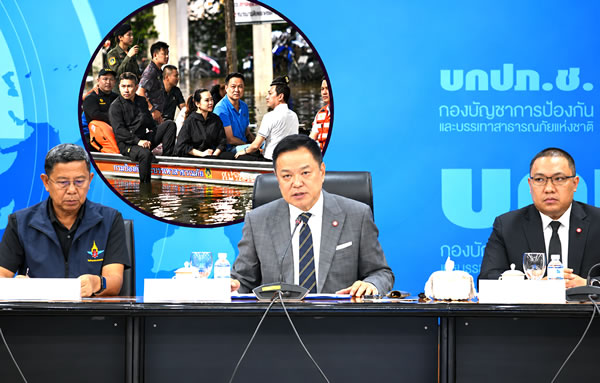
Mr Anutin acknowledged the growing anger at an 8 am meeting on Wednesday. The Prime Minister and Minister of Interior chaired the National Disaster Prevention and Mitigation Command in Bangkok. Notably, it was the command’s first meeting during the present emergency. Mr Anutin told officials to accept public criticism and remain patient. He said they should not take offence at angry comments. He had also personally encountered anger while visiting flooded communities.
Anutin orders agencies to bridge gaps as national flood command takes control of the worsening crisis
The meeting assembled senior disaster-management, security and Bangkok officials. Defence Minister Lieutenant General Adul Bunthamcharoen attended alongside Bangkok Governor Chadchart Sittipunt. National police chief Police General Kittirat Panpetch was also present. Senior Interior Ministry officials and military commanders joined them. In parallel, provincial governors participated by video conference.
Mr Anutin said the government wanted to “bridge gaps” between agencies. He stressed effective communication and public safety. As part of this, he ordered officials to coordinate information and water management. The Prime Minister specifically warned against agencies independently releasing water. Such actions, he said, could waste resources and compound Bangkok’s problems.
Mr Anutin compared the new daily meetings with government coordination during the COVID-19 crisis. Initially, he said, daily meetings could appear burdensome. After several days, however, information would become centralised. Officials could then manage the emergency more effectively. Above all, he wanted agencies to know what other agencies were doing.
That requirement is crucial during the present emergency. Bangkok must pump enormous quantities of water from flooded areas. At the same time, the Royal Irrigation Department controls flows towards the capital from the north. Reservoir releases, rivers, canals and Bangkok drainage systems therefore require close coordination.
Anutin backs Bangkok governor as public anger grows and flood warnings come under sharper scrutiny
On another front, Mr Anutin rejected suggestions that Bangkok should handle the crisis alone. Bangkok has special administrative status under Governor Chadchart. Even so, the Prime Minister said the national government remained responsible for Bangkok residents. He pledged full support for the governor. He also rejected leaving the capital to manage the disaster independently.
Public anger has become increasingly visible. Residents shouted criticism during Mr Anutin’s visits to flooded Bangkok communities. Separately, Thai PBS social-listening analysis showed considerable online attention focused on the Prime Minister. Mr Anutin appeared in more than 5,014 flood-related messages in its dataset. Governor Chadchart appeared in 3,725.
Those figures do not constitute an opinion poll. Nonetheless, they show where much online attention has concentrated during the emergency. The criticism has also reached Parliament. Government and opposition MPs are demanding discussion of flood management. In response, the government whip agreed to allow MPs to raise the emergency.
Warnings have become another major focus. In particular, questions have arisen over Thailand’s Cell Broadcast warning system. Critics said warnings reached some residents after serious flooding had already developed. The messages advised people to move possessions to higher ground. Consequently, questions are being asked about forecasting and the speed of public warnings.
Government confidence fades as opposition targets pumps, blocked waterways and wider flood management
The government had initially projected confidence about managing the emergency. Deputy Prime Minister Songsak Thongsri earlier said the government was prepared. Later, he acknowledged that officials could not contain the situation. By then, roads, homes and vehicles had been inundated.
Opposition leader Nattapong Ruangpanyawut has concentrated his criticism on operational management. He inspected drainage infrastructure in neighbouring Nonthaburi. There, he identified pumps not working at full effectiveness and blocked waterways. Additionally, he highlighted problems moving water from communities into secondary canals.
Mr Nattapong called for integrated management across the entire river system. He also called for daily public explanations of the government’s water strategy. Meanwhile, the scale of the rainfall has complicated operations throughout Bangkok and surrounding provinces.
More than 300 millimetres of rain fell over roughly 48 hours. Simultaneously, high sea levels and strong Gulf winds impeded drainage towards the sea. Those conditions placed enormous pressure on Bangkok’s drainage network. They also exposed the system’s limited margin when several adverse conditions occur together.
Bangkok drainage strains under extreme rainfall as Thailand’s post-2011 flood record returns to focus
Bangkok relies heavily on canals, pumps and drainage tunnels to move water towards the sea. When heavy rainfall coincides with elevated sea levels, discharge becomes considerably harder. Against this backdrop, marine academic Thon Thamrongnawasawat called for planning based on worst-case conditions. He argued against relying principally on historical rainfall assumptions.
The emergency also follows another major flood disaster in southern Thailand. Hat Yai suffered devastating flooding last year. Subsequently, a House subcommittee was established to examine that disaster. It has held ten meetings since May and produced a draft report. However, there remains no clear date for that report to reach Parliament.
Thailand’s flood-management record since 2011 has consequently returned to the centre of attention. That disaster was among the most economically damaging events in modern Thai history. Huge areas of central Thailand disappeared beneath floodwater. Industrial estates were inundated, factories closed and international supply chains were disrupted.
Almost 14 million people across 65 provinces were affected. The Asian Development Bank estimated economic damage and losses at approximately $45 billion. Manufacturing alone accounted for around $32 billion. In the aftermath, flood prevention became an urgent economic and investment priority.
Thailand’s ฿350 billion post-2011 flood programme faced delays as structural weaknesses persisted
Thailand responded with a national Master Plan on Water Resource Management. The government also authorised ฿350 billion for water-management and flood-prevention investment. At the time, that amounted to approximately $11.5 billion. The scale reflected the enormous economic damage caused by the disaster.
The programme included floodways and water-retention areas. It also covered rivers, canals, reservoirs and flood barriers. Beyond construction, forecasting systems and institutional reforms formed part of the response. Contemporary plans envisaged approximately ฿120 billion for major flood diversion channels alone.
Implementation then ran into serious difficulties. Some projects faced land acquisition and community opposition. Others required environmental and health assessments. Furthermore, the Administrative Court identified shortcomings in required public consultation for parts of the programme.
Those obstacles did not remove Thailand’s underlying flood vulnerability. Instead, international assessments continued identifying weaknesses during the following decade. The World Bank again examined Thailand’s flood and drought resilience in 2023. It acknowledged progress but also identified persistent structural problems.
Specifically, the bank described a “fragmented institutional landscape”. It highlighted weaknesses involving staffing and funding. Likewise, it identified inadequate operation and maintenance of ageing water infrastructure. The assessment called for greater infrastructure investment and improved flood-risk planning.
World Bank findings revive scrutiny of unfinished Chao Phraya flood plans and mounting economic risks
Those findings echoed problems identified after the 2011 catastrophe. Ageing infrastructure and deferred maintenance had already contributed to failures in Chao Phraya flood protection. Accordingly, reconstruction and redesign were recommended more than a decade ago. Several major components remain unfinished today.
Thailand still has a Lower Chao Phraya flood-mitigation programme comprising nine major plans. These are not responses devised during the current emergency. Rather, they form part of Thailand’s long-term effort to reduce flooding across its economic heartland.
The projects include upstream water-retention capacity and an Ayutthaya bypass. Another involves a Bangkok outer-ring-road diversion. Elsewhere, the programme includes a Pa Sak-to-Gulf diversion canal. Higher dykes, upgraded irrigation structures and river improvements are also included.
The World Bank estimates the entire programme at approximately $12.3 billion. Crucially, it says full implementation could substantially reduce future flood losses. The bank has specifically called for Thailand to prioritise critical flood-management plans.
Its economic calculations underline the scale involved. Without further measures, direct physical flood losses could average approximately $811 million annually. Wider economic disruption could add another $488 million. Combined annual losses could therefore approach $1.3 billion.
Major Ayutthaya flood canal remained 58.73% complete as Lower Chao Phraya upgrades moved too slowly
By contrast, the World Bank found that completing all nine projects could eliminate most losses during many years. The construction record, however, shows how slowly some major works have progressed.
The Bang Ban-Bang Sai flood diversion canal in Ayutthaya provides a clear example. It forms part of the wider Lower Chao Phraya strategy. The project was designed to carry 1,200 cubic metres of water every second. Construction began in 2019 under an eight-year programme.
Royal Irrigation Department information showed the project was only 58.73% complete in 2025. Its purpose is to relieve flooding across the lower basin. Six years after construction began, however, a substantial portion remained unfinished.
Another critical programme concerns the Lower East Chao Phraya irrigation network. The Royal Irrigation Department was already advancing improvements during 2023. The planned six-year programme covered 26 canals stretching roughly 490 kilometres. Its objective was to enlarge canals and increase drainage capacity.
Existing irrigation canals, however, remain inefficient at carrying major flood flows. ADB describes the ageing network as poorly equipped for increasingly intense flooding. As a result, another enormous infrastructure programme is moving forward.
ADB advances $1.6 billion Lower Chao Phraya upgrade as ageing canals struggle with major flood flows
ADB lists the Lower East Chao Phraya Irrigation System Improvement programme at approximately $1.6 billion. The proposed engineering works are extensive. Plans involve upgrading 314 kilometres of canals and 11 water-control structures.
Alongside this, separate Thai government works would operate with the programme. Together, the improvements would almost double flood-conveyance capacity. Current capacity is approximately 210 cubic metres per second. The target is 400 cubic metres per second.
The programme also includes improved flood forecasting and modern water-management technology. A real-time early-warning system is another component. Strikingly, these are systems facing renewed scrutiny during the current emergency.
ADB published a procurement roadshow for the programme only this week. Implementation is expected to require more than six years. The programme could also contain as many as 60 separate subprogrammes. Substantial flood-protection construction could therefore continue well into the next decade.
A separate major diversion project remains on the government’s agenda. The Chai Nat-Pa Sak-Gulf of Thailand drainage project carries an estimated ฿160 billion price tag. At present, the government has also approved ฿4 billion for immediate flood relief.
Emergency relief runs alongside huge unfinished flood projects as Thailand again confronts old weaknesses
The contrast is significant. Emergency money is again being deployed while enormous long-term infrastructure projects remain unfinished. At the same time, Parliament is questioning the effectiveness of existing flood-management systems.
Thailand therefore enters the latest emergency with many solutions already identified. The engineering requirements have been extensively studied. The economic risks have also been quantified. Equally important, large government funding programmes date back to the aftermath of 2011.
International institutions have repeatedly supported improvements. ADB provided post-2011 technical assistance for planning, monitoring and implementation. Separately, an ADB and Japan-supported programme provided $2 million for community flood-risk management in the Chao Phraya basin.
More than a decade later, the World Bank was still calling for critical Chao Phraya projects to be prioritised. Now, the Lower East Chao Phraya network requires another major modernisation programme.
There is also an important investment dimension. Thailand is conducting an aggressive international campaign for foreign capital. The country is promoting itself as an infrastructure-ready Southeast Asian production base. It is targeting advanced manufacturing, electronics, logistics, cloud computing and data centres.
Foreign investment drive raises the stakes as Thailand promotes infrastructure-intensive industries
Foreign investment applications have risen sharply. Board of Investment figures show FDI applications jumped 80% during the first half of 2026. Applications reached approximately ฿1.37 trillion across 877 projects. Much of that proposed investment involves infrastructure-intensive industries.
Digital infrastructure alone accounted for approximately $33 billion of applications during the first half. At the same time, Thailand is courting some of the world’s largest technology investors. The country is promoting data centres, cloud facilities and artificial-intelligence infrastructure.
These projects involve huge capital commitments and long operating lives. For that reason, infrastructure reliability forms part of investment planning. Electricity, water, telecommunications, transport and drainage all affect operating resilience.
The 2011 floods demonstrated those risks on an enormous scale. Manufacturing plants closed and suppliers stopped production. Roads became impassable. More broadly, international supply chains suffered disruption far beyond Thailand.
Current floods spare major industrial estates but put Thailand’s infrastructure reliability under scrutiny
The current flooding is nowhere near that industrial scale. Major Eastern Economic Corridor industrial estates have largely avoided serious disruption. There is also no evidence that foreign investors are abandoning Thailand because of this week’s floods.
One economist assessing the damage said significant FDI effects were unlikely if flooding remained short-lived. Even so, the disruption comes during an important investment drive. Bangkok roads have again been inundated while officials face questions about warnings and operational readiness.
At the same moment, Thailand is promoting its infrastructure reliability to international investors. The contrast is particularly relevant for large technology projects. Data centres require continuous electricity, reliable water, fibre connections and dependable road access.
Advanced electronics manufacturing has similar requirements. Suppliers must remain connected to factories and distribution networks. Likewise, logistics companies depend on reliable links between Bangkok, Suvarnabhumi Airport, ports and industrial estates.
Flood resilience therefore forms part of the wider infrastructure picture presented to investors. After 2011, ADB explicitly linked reconstruction and flood prevention with maintaining investor confidence. It also highlighted the importance of stronger institutional arrangements.
Fifteen years after 2011, unfinished flood works again confront Anutin as pressure spreads nationwide
Fifteen years later, the World Bank is still calling for critical Chao Phraya flood projects to be implemented. ADB, meanwhile, is advancing a $1.6 billion programme to modernise ageing Lower Chao Phraya canals.
Those canals still lack sufficient capacity for major flood flows. The proposed works would almost double flood-conveyance capacity. In addition, they would introduce improved forecasting and real-time warning systems.
The immediate political pressure now falls on Mr Anutin. The infrastructure record, however, crosses successive governments. The Prime Minister inherited projects, agencies and weaknesses developed over many years.
Successive governments also inherited the lessons of 2011. They inherited detailed plans for protecting Bangkok and the Lower Chao Phraya basin. They also inherited an economy whose industrial supply chains had already suffered catastrophic flood disruption.
Nevertheless, crucial parts of the strategy remain unfinished. Thailand has continued to suffer serious flooding elsewhere. Northern provinces have repeatedly faced damaging floods. Hat Yai suffered its major disaster last year. Now, Bangkok and surrounding provinces are again under severe pressure.
Anutin centralises flood response as longstanding coordination and infrastructure weaknesses return
Mr Anutin has responded by taking direct command of national coordination. He has accepted that criticism must be heard. He has also promised full government backing for Governor Chadchart.
His decision to convene daily coordination meetings highlights the operational problems now confronting the government. Mr Anutin wants agencies working from the same information. He wants water releases coordinated. Above all, he wants gaps between agencies closed.
Those requirements closely resemble weaknesses previously identified in assessments of Thailand’s water-management system. The World Bank has highlighted institutional fragmentation. It has also identified ageing infrastructure, maintenance shortcomings, funding weaknesses and coordination problems.
Wednesday’s meeting therefore came against a much longer record. The government was again centralising operations during a major flood. Meanwhile, infrastructure identified after the 2011 catastrophe remains unfinished.
Thailand has had 15 years since that disaster. During that period, it produced national master plans and detailed engineering proposals. Hundreds of billions of baht were also committed to water management.
International technical and financial support followed. Detailed studies identified the required floodways, canals, retention areas and water-control structures. Yet the Lower Chao Phraya still requires enormous additional investment.
Major diversion works remain incomplete. Ageing canals still require upgrading. In key areas, flood-conveyance capacity still needs almost doubling. Forecasting and real-time warning systems also remain part of major new improvements.
Fresh flood complaints collide with investment drive as critical protection works remain unfinished
At the same time, the present emergency has produced fresh complaints about warnings and inter-agency coordination. These are not new subjects in Thailand’s flood-management record.
The investment backdrop makes the timing particularly awkward. Thailand is asking foreign companies to commit billions of dollars to projects lasting decades. Many depend heavily on infrastructure reliability and uninterrupted logistics.
Meanwhile, another flood emergency has exposed weaknesses already documented after previous disasters. Some protection projects conceived after 2011 remain unfinished. Other ageing systems are only now approaching major upgrades.
For Mr Anutin, the immediate challenge is the current flood emergency. Rising criticism, however, now extends far beyond water covering Bangkok’s roads.
It reaches back to the aftermath of 2011. It encompasses unfinished diversion works, ageing canals, delayed upgrades and institutional coordination. It also comes as Thailand seeks record levels of foreign investment.
Fifteen years after Thailand’s defining modern flood disaster, several critical protection projects remain unfinished. Now another government is again fighting serious flooding across Bangkok and the Lower Chao Phraya basin.
Race against time and water flows as PM Anutin works round the clock tackling flooding emergency
Prime Minister Anutin wades into flood hit areas to be met with a mixed reaction including seething anger
NIDA opinion poll shows rising apathy among the Thai public as Prime Minister Anutin’s base crashes
NIDA opinion poll puts ‘Teng’ on top in choice for PM and the People’s Party way ahead of Bhumjaithai
People’s Party figures urge caution after prosecutors declined to pursue case against former candidate
People’s Party candidate in Bangkok arrested on Monday over links to money laundering network
Poll shows there’s still a chance for a Pheu Thai People’s Party coalition but it will take a bit of luck
Chuwit described the People’s Party’s leadership as ‘childish’ and says the party was spoilt by voters
Constitutional crisis again as Bhumjaithai MPs vote to uphold the veto power of the Senate over reform
Joseph Anthony is an expat from Ireland who has lived in Thailand for the last decade. He has worked extensively in the media including editorial positions in Ireland and Thailand. He is focused on economic and business stories in Thailand as well as the expat lifestyle.
All posts by Joseph O' Connor
Bangkok flooding eases as front moves to Myanmar but Governor warns city needs 2-3 days to recover September 27, 2026 The Thai capital races to drain vast floodwater after
Figures for opening 8 months of 2026 show a gaping trade deficit as Thailand imports more from China September 27, 2026 Prime Minister Anutin Charnvirakul visited London
PM directs flash flooding crisis which has hit Bangkok making all 50 districts disaster zones from London September 26, 2026 Bangkok battles severe flooding after almost 300mm of
Prime Minister Anutin’s US visit this week yielded a closer ties pact between Bangkok and Wall Street September 26, 2026 Wall Street opens its doors to closer Thai links as
Horror in Phuket as policeman’s Glock gun misfires in slider action fatally wounding his 49 year old mother September 25, 2026 Phuket policeman faces a fatal shooting probe after
Bombshell Supreme Court ruling links Bhumjaithai Party figure with orchestrated Senate poll collusion September 25, 2026 Supreme Court exposes corrupt conduct in the 2024
Prime Minister and his team grilled by Wall Street on Thailand’s geopolitical stance and growth plans September 25, 2026 Hard-boiled Wall Street investors put PM Anutin and
Four sentenced to life for deadly 2022 insurgency bombing in Pattani. Death sentences commuted to life September 24, 2026 Death sentences for four men are reduced to life
Bhumjaithai political overlord in Prachin Buri to spend life in prison after death sentence is commuted by court September 24, 2026 Ex-minister Sunthorn Wilawan, 87, gets life after his
Prime Minister Anutin readies defences as Thamanat Prompow’s Kla Tham Party positions for government September 24, 2026 Capt Thamanat Prompow’s 58-MP Kla Tham moves towards
Canadian arrested for rape of a UK tourist in Chiang Mai just hours before he was due to leave Thailand September 24, 2026 Police swoop on Canadian Aldo Ochoa Saenz, 38, at his
Oil fund bleeds nearly 5 billion baht a week as the government struggles to cope with Middle East crisis September 23, 2026 Thailand’s Oil Fuel Fund bleeds ฿700 million daily
Interior Ministry probes Israeli network of Chabad in Thailand with reports of southern land purchases September 23, 2026 Polpeera widens Thailand’s Israeli-linked land probe
Concerns for the plight of the King’s third son whose health is reported to have declined in Malaysia September 22, 2026 Dr Chakriwat, King Maha Vajiralongkorn’s third son,
Local government examination scandal moves closer to a crunch. Rangsiman Rome calls on PM for answers September 22, 2026 Pressure mounts on Anutin over the ฿4.5bn local exam
Light at end of the tunnel for Thai flight attendant Meena arrested in Melbourne for drug trafficking offences September 22, 2026 Meena Kondo’s Australian drug case takes a hopeful
Anutin heads to New York but no sign yet of news on the US Thai trade deal as problems simmer at home September 21, 2026 Washington adds a fresh condition to Thailand’s US
Crucial ballot decision of Constitutional Court on Monday could upend government and Thai politics September 27, 2026
American arrested in Pattaya after a joint agency raid found an illicit narcotics factory in his suburban home September 26, 2026
Warning in Thailand over fake cough syrup bottles. Police smash counterfeit medicine empire in 4 raids September 26, 2026
Spanish chef (32) who murdered and dismembered a Colombian surgeon on Koh Phangan loses appeal September 26, 2026
Dizziness, headaches in a Pattaya locale after a cannabis farm fire at a residence on Friday morning guts the property September 25, 2026
33 year old sets fire to Honda Scooby in Udon Thani after mother refused to buy him a more powerful ride September 25, 2026
Ministers accused of neglecting Thai farmers. Crucial aid support has not yet reached the cabinet table September 25, 2026
Prime Minister Anutin Charnvirakul formally summoned by parliament over local government exam scandal September 24, 2026
Former Justice Minister hails major bankruptcy bill which could help reduce the household debt burden September 24, 2026
Nene Royal wins big for Thailand with blistering ‘Seven Nation Army’ final act. Nets $1 million prize September 24, 2026
Chinese men arrested on rape and extortion charges after Pattaya raid. Woman locked up and chained September 23, 2026
Digital Minister (36) and heir to powerful Chidchob dynasty has a fortune of hundreds of millions September 23, 2026
Latest cannabis bill agreed by cabinet on Tuesday to rein in the out of control weed industry in Thailand September 23, 2026
Legal heavyweights plan seminar to review Election Commission’s move to let top politicians off the hook September 22, 2026
Culture Minister’s press briefing rebuffs use of 120 year old photo of Thai women by Cambodian Ms Universe pageant September 22, 2026
Family of murdered 35 year old Thai woman in Taiwan seek return of her ashes and financial compensation September 22, 2026
Thai women ‘Freya Ice Queen’ sex trafficking ring smashed by London’s Metropolitan police after tip off September 21, 2026
Spider Man ‘peace’ protest and arrest the latest news from the ongoing Koh Samui animal park controversy September 21, 2026
Assistant Headman dies in Yala attack on night of mayhem in the southern province into Sunday September 20, 2026
Phuket drug checkpoint scandal. Defence Corps unit set up to target the menace is accused of extortion September 20, 2026
Thaksin era minister reflects on Thailand’s 2006 coup d’état. Calls for a democracy dedicated to people September 20, 2026
45 year old Australian Simon Peter Carman is refused bail as he pleaded not guilty to murder in Pattaya September 19, 2026
© 2026 Thai Examiner. All rights reserved.
2026年9月30日上午11:32
经济、生活、媒体、政治、泰国
泰国总理阿努廷·查恩维拉库尔正努力应对日益严重的洪灾危机,民众对预警、排水系统故障和政府协调不力等问题日益不满。然而,在被洪水淹没的道路背后,隐藏着一个更为宏大的故事。2011年那场灾难性的洪灾已经过去15年,但泰国经济核心地带的关键防洪工程仍然未能完工。老化的运河依然无法应对大规模洪水,而大型分流工程也尚未竣工。如今,曼谷再次遭受严重洪灾的侵袭,而泰国正积极吸引创纪录的外国投资,投资领域涵盖数据中心、电子产品和先进制造业。世界银行仍在敦促泰国尽快完成湄南河的关键项目。与此同时,亚洲开发银行(亚行)一项价值16亿美元的项目正在推进,旨在升级老化的运河网络。泰国早已知晓风险,制定了相关计划并投入了大量资源。然而,在又一次重大洪灾来袭之际,许多防洪设施仍然处于未完工状态。
泰国总理阿努廷·查恩维拉库尔面临着日益严重的洪灾危机,未完工的防洪设施和老化的运河引发了人们对泰国基础设施应对能力的新质疑。(来源:《每日新闻》)
周三,泰国总理阿努廷·查恩维拉库尔面临越来越多的批评,因为泰国正努力应对不断扩大的洪灾紧急情况。由于异常强降雨导致排水系统不堪重负,曼谷及其周边省份仍然承受着巨大的压力。
然而,政治影响如今远远超出了政府的直接应对措施。它重新引发了自2011年那场毁灭性洪灾以来悬而未决的问题。
阿努廷先生在周三上午8点的会议上承认了民众日益增长的愤怒情绪。总理兼内政部长在曼谷主持召开了国家防灾减灾指挥部会议。值得注意的是,这是该指挥部在本次紧急状态期间召开的首次会议。阿努廷先生告诉官员们要接受公众的批评,保持耐心。他说,他们不应该对愤怒的言论感到冒犯。他本人在走访受灾社区时也亲身感受到了民众的愤怒。
阿努廷命令各机构弥合差距,国家防洪指挥部接管了日益恶化的危机应对工作。
此次会议汇集了灾害管理、安保和曼谷市政府的高级官员。国防部长阿杜尔·本塔姆查伦中将和曼谷市长查查·西提蓬出席了会议。国家警察总长吉迪拉·潘佩奇上将也出席了会议。内政部高级官员和军方指挥官也参加了会议。与此同时,各府府尹通过视频会议参加了会议。
阿努廷先生表示,政府希望“弥合”各部门之间的差距。他强调了有效沟通和公共安全的重要性。为此,他命令官员们协调信息和水资源管理。总理特别警告各部门不得擅自放水。他指出,此类行为可能浪费资源,并加剧曼谷的用水问题。
阿努廷先生将新的每日例会比作新冠疫情危机期间的政府协调工作。他表示,起初,每日例会可能会让人感到负担。但几天后,信息就会集中起来。官员们届时就能更有效地应对紧急情况。最重要的是,他希望各机构能够了解其他机构的工作进展。
在当前的紧急情况下,这一要求至关重要。曼谷必须从洪水泛滥的地区抽取大量积水。与此同时,皇家灌溉厅还要控制从北部流向首都的水流。因此,水库泄洪、河流、运河和曼谷排水系统都需要密切协调。
随着公众愤怒情绪日益高涨,洪水预警受到更严格的审查,阿努廷力挺曼谷市长。
另一方面,阿努廷总理驳斥了曼谷应独自应对危机的建议。曼谷在查察特省长的领导下享有特殊的行政地位。尽管如此,总理表示,中央政府仍对曼谷居民负有责任。他承诺全力支持省长,并拒绝让首都曼谷独自应对灾难。
公众的愤怒情绪日益高涨。阿努廷总理视察曼谷洪灾社区期间,居民们纷纷高声表达不满。此外,泰国公共电视台(Thai PBS)的社交媒体监听分析显示,网络舆论对总理的关注度相当高。在其数据集中,阿努廷总理出现在超过5014条与洪灾相关的消息中,而查查特省长则出现在3725条消息中。
这些数据并非民意调查,但它们反映了紧急情况下网络关注的焦点所在。批评之声也传到了议会。政府和反对党议员都要求讨论防洪问题。作为回应,政府党鞭同意允许议员们提出这一紧急情况。
预警已成为另一个重点关注领域。尤其令人质疑的是泰国的手机广播预警系统。批评人士指出,一些居民在洪水已经严重泛滥后才收到预警信息。这些信息建议人们将财物转移到地势较高的地方。因此,人们开始质疑天气预报的准确性和预警发布的速度。
随着反对派将矛头指向水泵、阻塞的水道和更广泛的防洪措施,政府的信心逐渐减弱。
政府最初对应对紧急情况表现出信心。副总理颂萨·通斯里早前表示政府已做好准备。但后来他承认,官员们未能控制住局面。到那时,道路、房屋和车辆已被洪水淹没。
反对党领袖纳塔蓬·鲁昂帕尼亚武特将批评重点放在了运营管理上。他视察了邻近的暖武里府的排水基础设施,发现那里的水泵效率低下,堵塞了水道。此外,他还指出了将社区用水输送到二级渠道方面存在的问题。
纳塔蓬先生呼吁对整个河流系统进行综合管理。他还呼吁政府每日向公众解释其水资源战略。与此同时,强降雨也给曼谷及其周边府的各项工作带来了复杂局面。
约48小时内降雨量超过300毫米。与此同时,海平面上升和强劲的海湾风阻碍了雨水向大海的排放。这些情况给曼谷的排水系统带来了巨大的压力。当多种不利因素同时出现时,也暴露了该系统的有限承受能力。
曼谷排水系统在极端降雨下不堪重负,泰国自2011年以来最严重的洪灾再次成为关注焦点。
曼谷严重依赖运河、水泵和排水隧道将水排入大海。当暴雨与海平面上升同时发生时,排水难度会显著增加。在此背景下,海洋学者通·塔姆隆纳瓦萨瓦特呼吁制定基于最坏情况的规划。他认为不应主要依赖历史降雨量的假设。
此次紧急状态紧随泰国南部另一场重大洪灾之后。去年,合艾市遭受了毁灭性的洪灾。随后,国会成立了一个小组委员会来调查这场灾难。自五月以来,该委员会已召开了十次会议,并起草了一份报告。然而,这份报告何时提交国会仍未可知。
因此,泰国自2011年以来的防洪记录再次成为关注焦点。那场灾难是泰国现代史上经济损失最惨重的事件之一。泰国中部大片地区被洪水淹没,工业园区被淹,工厂停工,国际供应链中断。
此次洪灾波及65个省份,近1400万人受灾。亚洲开发银行估计,经济损失约为450亿美元,其中制造业损失约320亿美元。灾后,防洪成为一项紧迫的经济和投资重点。
泰国耗资3500亿泰铢的2011年洪灾后重建计划因结构性缺陷持续存在而遭遇延误。
泰国随即制定了国家水资源管理总体规划。政府还批准了3500亿泰铢用于水资源管理和防洪投资。当时,这笔投资约合115亿美元。其规模反映了这场灾害造成的巨大经济损失。
该计划涵盖了泄洪道和蓄水区,还包括河流、运河、水库和防洪堤坝。除了建设之外,预测系统和体制改革也是应对措施的一部分。当时的规划仅主要防洪渠道就预计耗资约1200亿泰铢。
随后,项目实施遇到了诸多严重困难。一些项目面临土地征用和社区反对,另一些项目则需要进行环境和健康评估。此外,行政法院还指出,该项目部分环节的公众咨询程序存在缺陷。
这些障碍并未消除泰国固有的洪灾脆弱性。相反,在接下来的十年里,国际评估持续指出泰国的薄弱环节。世界银行在2023年再次评估了泰国的防洪抗旱能力。评估报告肯定了泰国取得的进展,但也指出了持续存在的结构性问题。
具体而言,该银行指出“机构格局分散”,并强调了人员配备和资金方面的不足。同时,它也指出老旧供水基础设施的运营和维护存在缺陷。评估报告呼吁加大基础设施投资,并改进防洪规划。
世界银行的调查结果再次引发人们对湄南河防洪计划未完成以及日益加剧的经济风险的关注。
这些调查结果与2011年洪灾后发现的问题相呼应。基础设施老化和维护滞后早已导致湄南河防洪系统失效。因此,早在十多年前就有人建议进行重建和重新设计。时至今日,一些主要工程仍未完工。
泰国目前仍实施着湄南河下游防洪计划,该计划包含九项主要方案。这些方案并非应对当前紧急情况而制定,而是泰国为减少其经济核心地带的洪灾而长期努力的一部分。
这些项目包括上游蓄水能力建设和阿瑜陀耶绕城公路。另一项工程涉及曼谷外环路改道。此外,该计划还包括一条从帕萨克到孟加拉湾的引水渠。其他项目还包括加高堤坝、升级灌溉设施和改善河道环境。
世界银行估计整个项目总投资约为123亿美元。至关重要的是,世界银行表示,全面实施该项目可大幅减少未来的洪灾损失。世界银行特别呼吁泰国优先考虑关键的防洪计划。
其经济计算凸显了问题的严重性。如果不采取进一步措施,洪水造成的直接物质损失平均每年约为8.11亿美元。更广泛的经济破坏可能还会造成4.88亿美元的损失。因此,年度总损失可能接近13亿美元。
由于湄南河下游升级改造工程进展缓慢,大城府主要防洪渠的建设进度仍仅为58.73%。
相比之下,世界银行发现,完成所有九个项目可以消除多年内的大部分损失。然而,施工记录显示,一些大型工程的进展速度非常缓慢。
大城府的邦班-邦赛防洪渠就是一个鲜明的例子。它是湄南河下游防洪战略的重要组成部分。该项目设计泄洪量为每秒1200立方米。工程于2019年开工,工期为八年。
皇家灌溉部门的数据显示,截至2025年,该项目仅完成了58.73%。其目的是缓解下游流域的洪水灾害。然而,开工六年之后,仍有相当一部分工程尚未完工。
另一项重要计划涉及湄南河东岸下游灌溉网络。泰国皇家灌溉厅已于2023年启动了相关改进工程。这项为期六年的计划涵盖26条渠道,总长约490公里。其目标是拓宽渠道,提高排水能力。
然而,现有的灌溉渠道在应对大规模洪水流量方面效率仍然低下。亚洲开发银行指出,老化的灌溉网络难以应对日益严重的洪灾。因此,另一项规模庞大的基础设施建设项目正在推进中。
亚洲开发银行推进16亿美元湄南河下游升级改造项目,以应对老化的运河难以承受的洪灾流量。
亚洲开发银行将湄南河东段灌溉系统改善项目预算定为约16亿美元。拟建工程规模庞大,计划升级改造314公里长的渠道和11座水利控制设施。
与此同时,泰国政府的其他一些工程也将与该项目配合实施。这些改进措施加起来将使泄洪能力几乎翻一番。目前的泄洪能力约为每秒210立方米,目标是每秒400立方米。
该计划还包括改进的洪水预报和现代化的水资源管理技术。实时预警系统是其另一组成部分。值得注意的是,在当前的紧急情况下,这些系统正面临着重新审视。
亚洲开发银行本周才发布了该项目的采购路演信息。预计项目实施将耗时六年以上。该项目还可能包含多达60个独立的子项目。因此,大规模的防洪工程建设可能会持续到下一个十年。
另一项大型分流工程仍在政府议程上。柴纳-帕萨克-泰国湾排水工程预计耗资1600亿泰铢。目前,政府还批准了40亿泰铢用于紧急防洪救灾。
泰国再次面临旧有弱点,紧急救援工作与尚未完工的大型防洪工程同时进行。
这种对比十分鲜明。紧急资金再次被投入使用,而规模庞大的长期基础设施项目却仍未完工。与此同时,议会正在质疑现有防洪系统的有效性。
因此,泰国在应对此次紧急情况时,已制定了多项解决方案。工程方面的要求已得到广泛研究,经济风险也已量化。同样重要的是,政府早在2011年地震后就启动了大规模的资助项目。
国际机构多次支持相关改进措施。亚洲开发银行在2011年后为规划、监测和实施提供了技术援助。此外,亚洲开发银行和日本共同支持的一个项目向湄南河流域的社区防洪风险管理提供了200万美元的资金。
十多年过去了,世界银行仍在呼吁优先推进湄南河的关键项目。如今,湄南河东下游河网又需要一项重大现代化改造计划。
此外,投资也是一个重要的考量因素。泰国正积极开展国际招商引资活动,力图将自身打造成为基础设施完善的东南亚生产基地,重点发展先进制造业、电子产品、物流、云计算和数据中心等领域。
泰国大力发展基础设施密集型产业,吸引外资,提高投资门槛
外国投资申请数量大幅增长。泰国投资促进委员会的数据显示,2026年上半年外国直接投资申请数量激增80%,涉及877个项目,总额约1.37万亿泰铢。这些拟议投资大多涉及基础设施密集型产业。
仅数字基础设施一项,上半年就贡献了约330亿美元的投资额。与此同时,泰国正积极吸引全球一些最大的科技投资者。该国大力推进数据中心、云计算设施和人工智能基础设施建设。
这些项目涉及巨额资金投入和较长的运营周期。因此,基础设施可靠性是投资规划的重要组成部分。电力、水、电信、交通和排水等各个环节都会影响运营的稳定性。
2011年的洪灾以惊人的规模展现了这些风险。工厂停工,供应商停止生产,道路无法通行。更广泛地说,国际供应链的中断影响范围远远超出了泰国。
目前的洪水虽然没有波及主要工业区,但却使泰国的基础设施可靠性受到考验。
目前的洪灾规模远不及工业区。东部经济走廊的主要工业园区基本未受严重影响。也没有证据表明外国投资者因本周的洪灾而撤离泰国。
一位评估损失的经济学家表示,如果洪水持续时间较短,则不太可能对外国直接投资产生重大影响。即便如此,此次灾害仍发生在重要的投资活动期间。曼谷的道路再次被洪水淹没,官员们也面临着关于预警和应对准备工作的质疑。
与此同时,泰国正积极向国际投资者宣传其基础设施的可靠性。这种对比对于大型科技项目尤为重要。数据中心需要持续稳定的电力供应、可靠的供水、光纤连接和便捷的道路交通。
先进电子产品制造业也有类似的要求。供应商必须与工厂和分销网络保持联系。同样,物流公司也依赖于曼谷、素万那普机场、港口和工业园区之间可靠的交通连接。
因此,防洪能力是向投资者展示的更广泛基础设施蓝图的一部分。2011年之后,亚洲开发银行明确将重建和防洪与维护投资者信心联系起来,并强调了加强制度安排的重要性。
2011年过去15年后,随着压力蔓延至全国,未完工的防洪工程再次困扰着阿努廷。
十五年后,世界银行仍在呼吁实施湄南河防洪的关键项目。与此同时,亚洲开发银行正在推进一项16亿美元的计划,用于改造老旧的湄南河下游运河。
这些运河的泄洪能力仍然不足。拟建工程将使泄洪能力几乎翻一番。此外,还将引入更先进的预报和实时预警系统。
目前,阿努廷先生面临着迫在眉睫的政治压力。然而,基础设施建设的成败却与历届政府息息相关。总理接手的是多年来积累的项目、机构和各种弊端。
历届政府也都继承了2011年的教训。他们继承了保护曼谷和湄南河下游流域的详细计划。他们也继承了一个工业供应链已经遭受洪灾严重破坏的经济体。
然而,该战略的关键部分仍未完成。泰国其他地区持续遭受严重洪灾。北部各府屡遭破坏性洪灾。合艾去年遭受了重大灾害。如今,曼谷及其周边府再次面临巨大压力。
阿努廷将防洪工作集中化,长期存在的协调和基础设施薄弱环节再次出现。
阿努廷先生的回应是亲自指挥全国协调工作。他承认必须听取批评意见,并承诺政府将全力支持查查特州长。
他决定召开每日协调会议,凸显了政府目前面临的运作难题。阿努廷先生希望各部门能够基于相同的信息开展工作,希望水资源释放工作能够协调一致,最重要的是,他希望消除各部门之间的信息鸿沟。
这些要求与之前对泰国水资源管理系统评估中发现的弱点非常相似。世界银行强调了机构分散的问题,并指出了基础设施老化、维护不足、资金短缺和协调不力等问题。
因此,周三的会议是在一段更长的时间跨度内召开的。政府再次在特大洪灾期间集中开展各项工作。与此同时,2011年灾难后确定的基础设施建设至今仍未完工。
泰国自那场灾难发生以来已经过去了15年。在此期间,泰国制定了国家总体规划和详细的工程方案,并投入了数千亿泰铢用于水资源管理。
随后,国际社会提供了技术和资金支持。详细的研究确定了所需的泄洪道、运河、蓄水区和水利设施。然而,湄南河下游工程仍需巨额额外投资。
主要分流工程尚未完工。老化的运河仍需升级改造。在关键区域,泄洪能力仍需提升近一倍。预报和实时预警系统也是亟待改进的重要环节。
新的洪灾投诉与投资推进相冲突,关键的防护工程仍未完工
与此同时,当前的紧急情况也引发了人们对预警和跨部门协调的新抱怨。这些问题在泰国的防洪管理记录中并非新问题。
当前的投资环境使得时机显得尤为尴尬。泰国正要求外国公司投入数十亿美元用于持续数十年的项目。许多项目严重依赖基础设施的可靠性和不间断的物流。
与此同时,另一场洪灾暴露了此前灾害后已记录在案的薄弱环节。一些2011年之后启动的防护工程至今仍未完工。其他一些老化的系统也才刚刚开始进行重大升级。
对阿努廷先生而言,眼下的挑战是当前的洪灾紧急情况。然而,日益高涨的批评声浪如今已远远超出曼谷道路被淹的范围。
这个问题可以追溯到2011年之后,涵盖了尚未完工的引水工程、老化的运河、延误的升级改造以及机构协调不力等诸多方面。与此同时,泰国正寻求吸引创纪录的外国投资。
泰国近代史上最具代表性的洪灾已过去十五年,但多项关键的防洪工程仍未完工。如今,新一届政府再次面临曼谷及湄南河下游流域的严重洪灾。
与时间赛跑,与洪水搏斗,阿努廷总理夜以继日地应对洪灾紧急情况
阿努廷总理涉水进入洪灾地区,遭遇了包括强烈愤怒在内的各种反应。
NIDA民意调查显示,随着总理阿努廷的基地被撞毁,泰国公众的冷漠情绪日益加剧。
NIDA民意调查显示,邓小平在总理人选和人民党候选人中遥遥领先于泰自豪党。
人民党人士敦促谨慎行事,此前检方决定不起诉前候选人
曼谷人民党候选人周一因涉嫌与洗钱网络有关联被捕
民调显示,为泰人民党仍有可能组建联合政府,但这需要一些运气。
楚维特形容人民党的领导层“幼稚”,并表示该党已被选民宠坏了。
泰自豪党议员投票维持参议院对改革的否决权,宪政危机再度爆发。
约瑟夫·安东尼是一位来自爱尔兰的侨民,过去十年一直居住在泰国。他曾在爱尔兰和泰国的媒体行业担任过编辑职务,拥有丰富的媒体从业经验。他主要关注泰国的经济和商业新闻,以及侨民的生活方式。
约瑟夫·奥康纳的所有帖子
随着锋面移向缅甸,曼谷洪水有所缓解,但曼谷市长警告称,该市需要2-3天才能恢复正常。2026年9月27日,泰国首都曼谷正全力排水。
2026年前8个月的数据显示,由于泰国从中国的进口增加,贸易逆差巨大。2026年9月27日,泰国总理阿努廷·查恩维拉库尔访问伦敦。
总理指示应对袭击曼谷的突发性洪水危机,曼谷所有50个区均被列为灾区(2026年9月26日,伦敦报道)。曼谷在近300毫米降雨后正与严重洪灾作斗争。
阿努廷总理本周访美,促成了曼谷与华尔街之间更紧密联系的协议。2026年9月26日,华尔街向泰国敞开大门,寻求更紧密的联系。
2026年9月25日,普吉岛发生一起骇人听闻的事件:一名警察的格洛克手枪在滑套动作中走火,导致其49岁的母亲不幸身亡。事发后,这名普吉岛警察将面临致命枪击案的调查。
最高法院重磅裁决将泰自豪党成员与精心策划的参议院选举舞弊案联系起来 2026年9月25日 最高法院揭露2024年选举中的腐败行为
2026年9月25日,华尔街就泰国的地缘政治立场和增长计划对总理及其团队进行了质询。强硬的华尔街投资者对阿努廷总理及其团队提出了质疑。
四人因2022年北大年府致命叛乱爆炸案被判处终身监禁。2026年9月24日,四人的死刑被改判为终身监禁。
2026年9月24日,巴真府泰自豪党政治领袖桑通·维拉旺(Sunthorn Wilawan)的死刑被法院改判为终身监禁。这位87岁的前部长此前被判处死刑。
2026年9月24日,塔玛纳·普罗姆波领导的克拉塔姆党准备组建政府,总理阿努廷严阵以待。塔玛纳·普罗姆波领导的拥有58名议员的克拉塔姆党正朝着这一目标迈进。
2026年9月24日,一名加拿大男子在清迈被捕,他涉嫌强奸一名英国游客,当时距离他离开泰国仅几个小时。警方突袭了38岁的加拿大男子阿尔多·奥乔亚·萨恩斯(Aldo Ochoa Saenz)的住所。
泰国石油基金每周亏损近50亿泰铢,政府疲于应对中东危机 2026年9月23日 泰国石油基金每日亏损7亿泰铢
泰国内政部对以色列在泰国的哈巴德运动网络展开调查,此前有报道称该网络在泰国南部购买土地(2026年9月23日)。泰国内政部扩大了对与以色列有关联的土地的调查范围。
2026年9月22日,马来西亚国王玛哈·哇集拉隆功的第三子查克里瓦特博士健康状况恶化,引发各方关注。
地方政府考试丑闻逼近关键时刻。Rangsiman Rome呼吁首相给出解释(2026年9月22日)。Anutin因45亿泰铢的地方考试丑闻面临越来越大的压力。
泰国空姐米娜因涉嫌贩毒在墨尔本被捕,隧道尽头出现曙光 2026年9月22日 米娜·近藤的澳大利亚毒品案出现希望
阿努廷前往纽约,但美泰贸易协议仍未传出任何消息,国内问题持续发酵。2026年9月21日,华盛顿为泰国的贸易协议附加了新的条件。
宪法法院周一的关键投票裁决或将颠覆泰国政府和政治格局 2026年9月27日
2026年9月26日,一名美国公民在芭堤雅被捕,此前联合执法机构突袭了他的郊区住宅,在其住所内发现了一个非法制毒窝点。
泰国警方发出警告,警惕假冒止咳糖浆。2026年9月26日,警方在四次突击行动中捣毁了一个假药帝国。
2026年9月26日,在帕岸岛谋杀并肢解哥伦比亚外科医生的32岁西班牙厨师上诉被驳回。
2026年9月25日星期五上午,芭堤雅一处民宅发生大麻种植场火灾,房屋被烧毁,当地居民出现头晕、头痛等症状。
2026年9月25日,一名33岁男子因母亲拒绝给他买一辆动力更强的车,在乌隆他尼纵火焚烧了自己的本田史酷比汽车。
部长们被指责忽视泰国农民。关键援助资金尚未提交内阁审议(2026年9月25日)
2026年9月24日,总理阿努廷·查恩维拉库尔因地方政府考试丑闻被议会正式传唤。
前司法部长称赞一项重大破产法案,该法案有望减轻家庭债务负担 2026年9月24日
妮妮·罗亚尔凭借精彩绝伦的《七国军队》压轴表演为泰国赢得大奖,斩获100万美元奖金(2026年9月24日)。
芭堤雅突袭行动后,几名中国男子因涉嫌强奸和敲诈勒索被捕。一名女子于2026年9月23日被关押并戴上镣铐。
数字部长(36岁)兼强大的奇德乔布王朝继承人拥有数亿美元的财富 2026年9月23日
泰国内阁周二通过最新大麻法案,旨在遏制该国失控的大麻产业(2026年9月23日)
法律界重量级人物计划举办研讨会,审查选举委员会让高层政客免于追究责任的举措(2026年9月22日)
文化部长在新闻发布会上驳斥柬埔寨环球小姐选美大赛使用120年前泰国女性照片的做法 2026年9月22日
2026年9月22日,一名35岁泰国女子在台湾遇害,其家人要求归还骨灰并索要经济赔偿。
2026年9月21日,伦敦警察厅根据线报捣毁了以泰国女子“冰雪女王弗蕾雅”为名的性交易团伙。
蜘蛛侠“和平”抗议及逮捕事件:苏梅岛动物园争议最新进展(2026年9月21日)
2026年9月20日星期日,南部省份亚拉发生骚乱,一名助理村长在当晚的袭击中丧生。
普吉岛毒品检查站丑闻。为打击毒品犯罪而设立的国防军小组被指控敲诈勒索。2026年9月20日
他信时代部长回顾泰国2006年政变,呼吁建立以人民为中心的民主制度。2026年9月20日
2026年9月19日,45岁的澳大利亚男子西蒙·彼得·卡曼在芭堤雅被控谋杀,但他拒不不认罪,保释申请被拒绝。
© 2026 Thai Examiner。版权所有。