GovTech launches dating pilot to match public officers政府科技局推出约会试点项目,旨在为公职人员牵线搭桥。
GovTech has launched the FirstDate pilot for public officers aged 21 to 35. Read more at straitstimes.com.
新闻视频
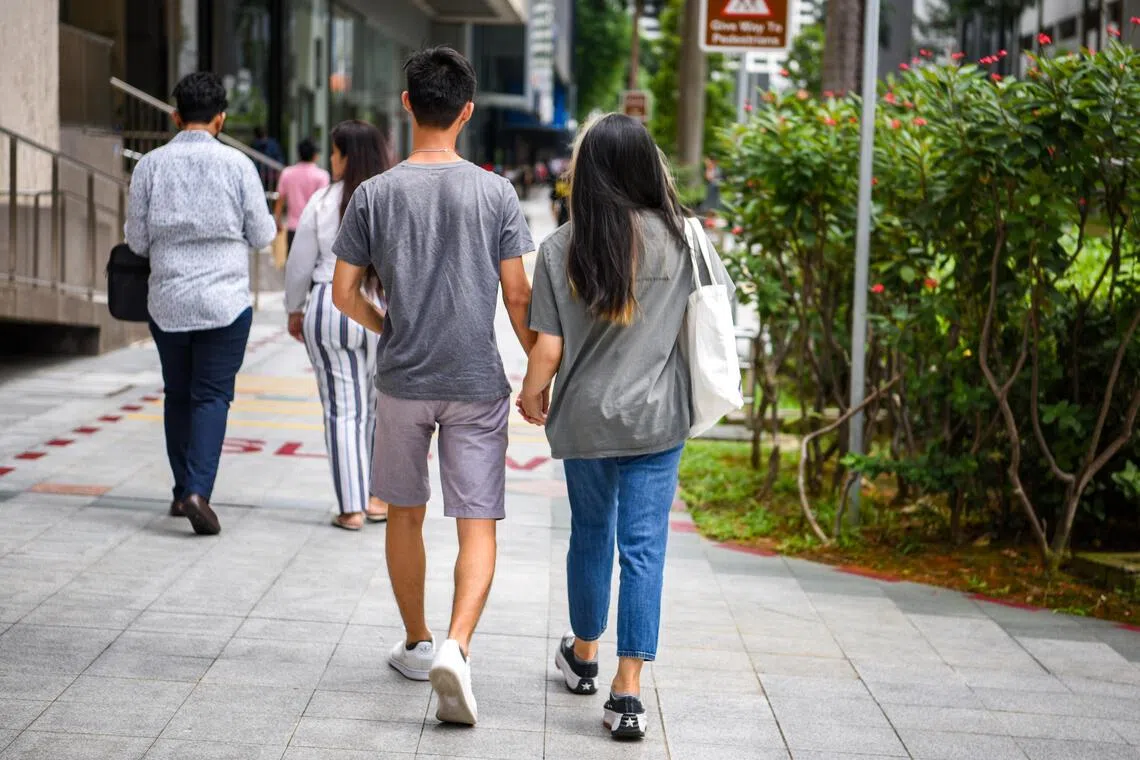
GovTech has launched a pilot called FirstDate for public officers aged 21 to 35.
Published Sep 30, 2026, 04:55 PM
Updated Sep 30, 2026, 04:55 PM
GovTech launched FirstDate, a Singpass-verified pilot using the Gale-Shapley Stable Marriage algorithm to match public officers aged 21-35, aiming to reduce swipe fatigue and foster meaningful connections.
Users complete a detailed questionnaire and receive one match per cycle with compatibility scores; matches require mutual consent and offer activities with potential vouchers to encourage meetings.
This initiative addresses Singapore’s low birth rate and delayed marriages, aligning with past government efforts and similar measures in countries like Japan and South Korea.
SINGAPORE - Some civil servants here may receive in their email inbox an invitation to find a date through a new, Singpass-verified initiative by Government Technology Agency (GovTech) to help singles along in their dating journey.
The statutory board has launched a pilot called FirstDate to matchmake public officers aged 21 to 35 through an algorithm . The project, which is being tested across the public service , aims to put an end to “swipe fatigue” associated with some dating apps and build “a thoughtful connection,” according to its website.
FirstDate started as an idea at the GovTech annual hackathon to explore the challenges people face when meeting someone new.
The Straits Times has asked GovTech for more details about the pilot and if it will be available to the wider public.
To get a match, users have to sign in with Singpass, and complete a questionnaire about their interests, habits, values and preferences - which may include those around religion, age and dealbreakers . Applications close on Oct 5. Eligible applicants include singles as well as those who are widowed or divorced.
The service uses the Gale-Shapley Stable Marriage algorithm, a mathematical approach that pairs participants based on their preferences. Users can receive one match per matchmaking ‘cycle’ - a round of algorithmic matching by GovTech - accompanied by a compatibility score, a description and a personal note. A match is not guaranteed in every cycle, however.
The algorithm, which won a Nobel Prize in 2012, establishes a system by which all participants are able to find the person they most prefer from among those who prefer them.
Under the GovTech pilot, both users receive an SMS and have three days to accept. Their profiles are visible only to their assigned matches, and contact details are shared only if both agree. After each match, users receive a short feedback survey, including questions about whether they met in person.
Those who meet can try ‘Date Quests’, suggested activities to help break the ice. Under the service’s terms, matched pairs may qualify for vouchers during promotional periods by completing an activity such as trying a dish neither has eaten before.
Users can deactivate their accounts and request removal of their information at any time.
The experiment comes as more Singaporeans are marrying later or staying single, with efforts by the Government to reverse its record low birth rate through more financial support and leave provisions for parents.
Separately, in 2019, undergraduates in computer science and psychology at NUS had come up with the Aphrodite Project , an online platform designed to help university students find compatible partners through a comprehensive questionnaire.
The survey, which also uses the Gale-Shapley Stable Marriage algorithm, is composed of more than 60 questions. It delves into lifestyle preferences, values, future plans and deal-breakers to generate the best possible match.
The free platform is available to students and alumni of over 10 universities worldwide. In Singapore, it is available only to those from NUS, NTU and SMU. Overseas, it is open to students and alumni of Harvard University and the University of Toronto, among others.
In its latest run in 2026, the Aphrodite Project worked to match 1,916 participants. “Our efforts are only as good as the size of the matching pool. This year, there was also a greater gender ratio imbalance,” the team running the initiative said on Telegram.
The Government has made moves in the past to bring singles together.
The Social Development Unit was set up in 1984 to encourage graduate singles to mingle at dinners, dances and overseas trips. The unit was formed as more university-educated women remained single, a trend which then-Prime Minister Lee Kuan Yew linked to concerns about the country’s future talent pool. SDU moved away from direct matchmaking in recent years with the rise of dating apps.
Other countries struggling with low birth rates have tried similar measures. Tokyo’s metropolitan government launched its own dating application in 2024. In South Korea, local governments have organised dating events and offered marriage incentives.
Shermaine Ang is a journalist at The Straits Times, covering social issues in Singapore.
GovTech 为 21 至 35 岁的公务员推出了一项名为 FirstDate 的试点项目。
发布于 2026 年 9 月 30 日下午 4:55
更新于2026年9月30日下午4:55
政府科技局推出了 FirstDate,这是一个经 Singpass 验证的试点项目,使用 Gale-Shapley 稳定婚姻算法为 21-35 岁的公务员进行匹配,旨在减少滑动疲劳并促进有意义的联系。
用户填写详细的问卷,每个周期获得一个匹配对象,并根据匹配度评分进行匹配;匹配需要双方同意,并提供活动和潜在的代金券以鼓励见面。
这项举措旨在解决新加坡的低出生率和晚婚问题,与政府过去的努力以及日本和韩国等国的类似措施相一致。
新加坡——新加坡政府科技局 (GovTech) 推出了一项新的、经 Singpass 认证的计划,旨在帮助单身人士开启约会之旅,部分公务员可能会在电子邮件收件箱中收到邀请。
该法定机构推出了一项名为“FirstDate”的试点项目,旨在通过算法为21至35岁的公务员进行配对。该项目正在公共服务部门进行测试,其网站称,该项目旨在消除某些约会应用程序带来的“滑动疲劳”,并建立“有意义的联系”。
FirstDate 最初是 GovTech 年度黑客马拉松上的一个想法,旨在探索人们在结识新朋友时面临的挑战。
《海峡时报》已向政府科技局询问有关该试点项目的更多细节,以及该项目是否会向更广泛的公众开放。
用户需使用Singpass账号登录,并填写一份关于兴趣爱好、习惯、价值观和偏好的问卷,其中可能包括宗教信仰、年龄以及择偶禁忌等信息。申请截止日期为10月5日。单身人士以及丧偶或离异人士均可申请。
该服务采用盖尔-沙普利稳定婚姻算法,这是一种根据参与者偏好进行配对的数学方法。用户在每个匹配“周期”(即由政府科技局进行的算法匹配轮次)中可获得一个匹配对象,并附带匹配度评分、描述和个人留言。但并非每个周期都能保证匹配成功。
该算法于 2012 年获得诺贝尔奖,它建立了一个系统,使所有参与者都能从喜欢自己的人中找到自己最喜欢的人。
根据政府科技局的试点项目,双方用户都会收到短信,并有三天时间确认是否接受匹配。他们的个人资料仅对匹配对象可见,联系方式也仅在双方同意的情况下才会共享。每次匹配成功后,用户都会收到一份简短的反馈调查问卷,其中包括是否线下见面等问题。
见面后,双方可以尝试“约会任务”,这些任务会提供一些建议活动来帮助打破僵局。根据服务条款,配对成功的情侣在促销期间完成一些活动(例如尝试彼此都没吃过的菜肴)即可获得代金券。
用户可以随时停用自己的账户并申请删除自己的信息。
这项实验正值新加坡人结婚年龄越来越晚或选择单身之际,政府正努力通过增加财政支持和为父母提供休假规定来扭转该国创纪录的低生育率。
另外,2019 年,新加坡国立大学计算机科学和心理学专业的本科生推出了“阿芙罗狄蒂计划”,这是一个旨在通过综合问卷帮助大学生找到合适伴侣的在线平台。
这项调查还采用了盖尔-沙普利稳定婚姻算法,包含60多个问题。它深入探讨了生活方式偏好、价值观、未来计划和婚姻禁忌,以生成最佳匹配。
这个免费平台面向全球十多所大学的学生和校友开放。在新加坡,目前仅对新加坡国立大学(NUS)、南洋理工大学(NTU)和新加坡管理大学(SMU)的学生开放。在海外,哈佛大学和多伦多大学等高校的学生和校友也可以使用。
在2026年的最新一期活动中,阿芙罗狄蒂计划成功匹配了1916名参与者。“我们的工作成效取决于匹配对象的数量。今年,性别比例失衡的情况也更加严重,”该计划的团队在Telegram上表示。
政府过去曾采取措施促进单身人士的结合。
社会发展单位成立于1984年,旨在鼓励大学毕业生单身人士通过晚宴、舞会和海外旅行等活动进行社交。该单位的成立源于当时受过大学教育的女性单身人数的增加,时任总理李光耀认为这一趋势与国家未来人才储备的担忧密切相关。近年来,随着约会软件的兴起,社会发展单位逐渐减少了直接牵线搭桥的做法。
其他面临低生育率问题的国家也尝试过类似的措施。东京都政府于2024年推出了自己的约会应用程序。在韩国,地方政府组织约会活动并提供结婚优惠。
Shermaine Ang是《海峡时报》的记者,负责报道新加坡的社会问题。