Rethinking ageing: It’s not about just adding years to life, but adding life to years重新思考衰老:它不仅仅是延长寿命,更是提升寿命的品质。
Explore why healthy longevity depends on preserving function, purpose and engagement rather than just adding years to life in Singapore’s ageing society. Read more at straitstimes.com.
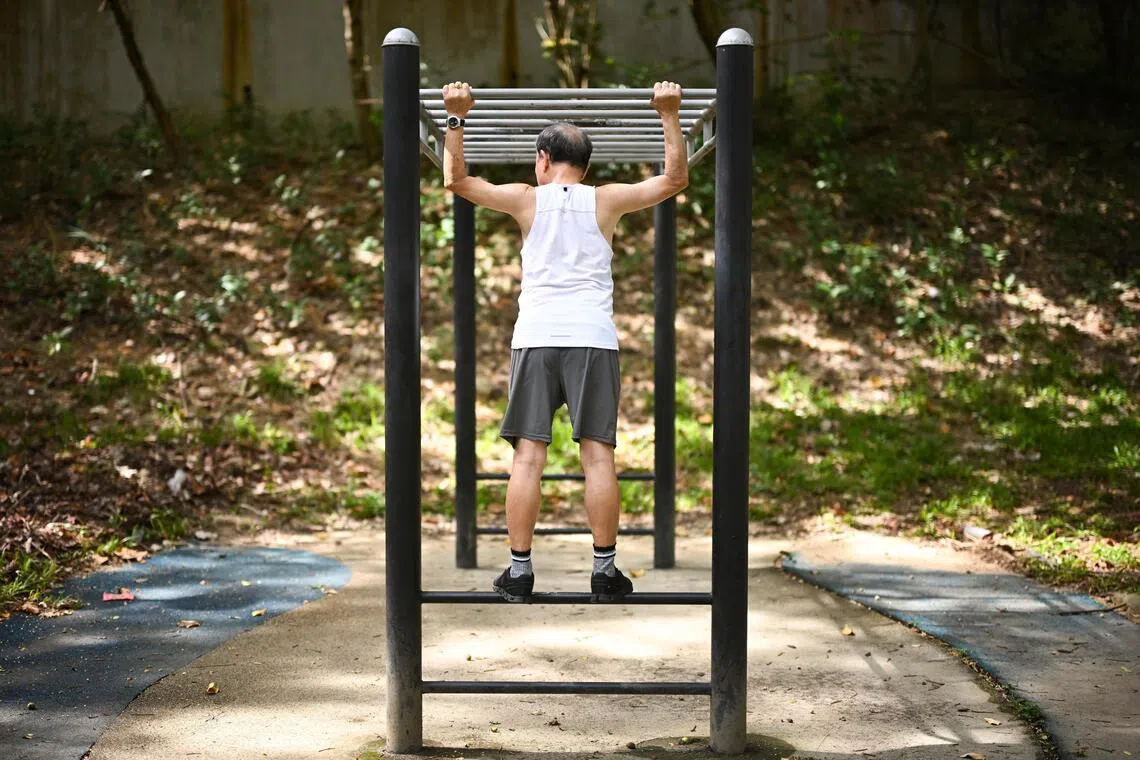
An individual who is managing daily activities independently and contributing meaningfully, at home, work, or in the community, is living out “healthy longevity”, the writer says.
ST PHOTO: LIM YAOHUI
Published Sep 05, 2026, 05:00 AM
Updated Sep 05, 2026, 05:00 AM
Ageing should be viewed by function and biological health, not just age, focusing on preserving strength, independence, and meaningful engagement.
Singapore’s ageing population requires policies supporting flexible retirement and active involvement in community and work.
Existing longevity medicine and preventive care can improve healthy lifespan if applied early and consistently, emphasising adding life to years rather than years to life.
SINGAPORE – When my father turned 90 this year, we wished him “长命百岁” ( chang ming bai sui – “May you live a long life of a hundred years”), “身体健康” ( shen ti jian kang – “Good health”), and “寿比南山” ( shou bi nan shan – “May your longevity be as great as the southern mountains”). These traditional blessings reflect a universal aspiration: not just to live longer, but to live well.
Today, Singapore ranks among the world’s most rapidly ageing populations. Living past 100 years old is no longer the stuff of science fiction, or traditional Chinese best wishes . We are living well into our 80s, with women living longer than men.
Recent debates over raising the retirement age and extending working years are, therefore, not merely policy discussions, but fundamental questions about how we define a productive, meaningful life.
Is ageing a disease?
There has been considerable debate over whether ageing should be considered a disease. Some advocates, such as David Sinclair, a professor at Harvard University, argue that doing so would drive research, funding, and intervention. Others worry this approach goes too far.
To me, age is just a number. A healthy 100-year-old should not be considered diseased simply because of his or her age. However, if we define ageing as progressive biological deterioration and loss of function, then someone at 50 suffering multiple age-related deteriorations could reasonably be seen as having an “ageing disease”.
When we examine ageing through the lens of biology rather than chronology, the picture becomes clearer.
In Singapore, this biological and functional view of ageing increasingly guides research and translation efforts.
At the Regenerative Medicine Institute, Singapore (REMEDIS), where I serve as co-director, we focus on understanding and intervening in the cellular and tissue processes that determine whether people age with strength, resilience, or decline. The distinction is crucial.
For example, when cardiovascular deterioration manifests as cardiovascular weakness or heart failure, we recognise this as an age-related disease. Similarly, sarcopenia, characterised by a significant loss of muscle mass and strength with age, is increasingly treated as a condition requiring intervention when it becomes functionally limiting and clinically meaningful.
Seen this way, ageing is not a single disease, but a collection of biological processes that progressively impair function.
The longevity medicine we already have
We already use biological markers to identify risks early to intervene before irreversible harm occurs. High blood pressure signals stroke and heart disease risk. Abnormal cholesterol predicts cardiovascular complications. Elevated blood glucose warns of diabetes and its devastating complications.
Looking ahead, we will identify many more biological markers of ageing and decline. This is not speculative science.
In Singapore, multidisciplinary teams are studying biomarkers such as telomere dynamics, cellular senescence, stem cell reserve, immune ageing, and frailty indices – work that bridges laboratory discovery and real-world clinical applications. Much of this translational work is aimed at disease prevention and not just prediction.
Many people ask whether there is a “magic pill” that can help us live longer. I think it already exists. In fact, we have not one, but several “magic pills”. Statins for cholesterol and medications for blood pressure and diabetes are longevity drugs that extend life by preventing disease and preserving function.
Therefore, our challenge is not the absence of longevity medicine but applying it too late.
Redefining healthy longevity
What, then, constitutes healthy longevity?
Consider someone who recovered from cancer and now runs marathons. Is he or she considered unhealthy? Or what about someone with well-controlled hypertension, who is living an active lifestyle? Many of my patients who have undergone bone marrow transplantation for leukaemia are, in fact, healthier than people who never had cancer.
Healthy longevity, in my opinion, should be defined functionally, not by disease history.
As a clinician-scientist involved in regenerative medicine and ageing research, I see this functional definition of health play out daily with my patients. For instance, an individual who is managing daily activities independently and contributing meaningfully, at home, work, or in the community, is living out “healthy longevity”.
My father exemplifies this. At 90, he visits coffee shops daily and reads multiple newspapers. While not “productive” economically, he lives an engaged life with regular medical “tune-ups”, but I would not consider him unhealthy.
Until recently, my mother, at 88, was still working. Her work gave her purpose and allowed her to continue contributing to those around her. A recent fall, however, has meant that she has had to step away from work for the time being.
For me, this has made the meaning of healthy longevity even more tangible. Chronological age tells only part of the story. What matters just as much is whether we can preserve function, independence, purpose and engagement as we grow older.
Policy implications for Singapore
Evidence suggests people should choose when they wish to retire. Many older Singaporeans still have much to offer, making compulsory retirement for well-functioning individuals potentially a loss of human capital.
While some older individuals may take on reduced responsibilities, there is merit in enabling older people to remain engaged, if they wish to, for as long as their health and circumstances allow. Not necessarily through formal employment, but through family, community, volunteering, mentoring or work.
Such engagement gives purpose while allowing society to continue benefiting from their accumulated experience.
The proportion of Singaporeans aged 80 and older has increased by about 60 per cent over the past decade. By 2030, about 24 per cent of Singaporeans will be aged 65 and above. If healthy longevity is our goal, our national policies must support not just individuals living longer lives, but also more engaged and purposeful lives.
As a rapidly ageing society, Singapore needs to think about healthy longevity at a systems level, linking biomedical research, preventive care, workforce policy, and social engagement into a cohesive framework that augments cross-sector thinking, where science informs policy and practice.
Achieving this kind of longevity does not require futuristic medicine. Much of it is already within our grasp: going for recommended health screenings, heeding medical advice, staying physically active, and, where appropriate, taking medications that reduce long-term risk. The barrier is not a lack of knowledge but of consistent implementation and sustained everyday health choices.
From living longer to living well
Whether we refer to ageing as a disease is ultimately, not as important as how we respond to ageing. The challenge is not adding years to life at all costs but adding life to years.
If we align science, medicine, and policy around function rather than fear, Singapore’s ageing population transforms from being a burden to unlocking opportunities. Longevity becomes not something we have to manage but something to steward wisely.
In this way, age will truly be just a number and function is everything.
Healthy longevity, therefore, should not be measured by the absence of disease, but by the presence of function, purpose, and engagement.
So perhaps, to the traditional Chinese blessing “寿比南山” , we might add a wish for “长乐未央” ( chang le wei yang ) – that is, may this longevity be as filled with enduring joy and meaning as it is lasting.
Perhaps healthy longevity is ultimately about preserving, for as long as we can, the things that allow us to remain ourselves – our independence, our relationships, our sense of purpose and our place in the lives of others.
William Hwang is a senior consultant in the department of haematology at Singapore General Hospital and National Cancer Centre Singapore, a professor at Duke-NUS Medical School, and the co-director of SingHealth Duke-NUS Regenerative Medicine Institute of Singapore.
作者说,一个人如果能够独立处理日常事务,并在家庭、工作或社区中做出有意义的贡献,那么他就是在过着“健康长寿”的生活。
ST 照片:林耀辉
发布于 2026 年 9 月 5 日上午 5:00
更新于2026年9月5日上午5:00
应该从功能和生理健康的角度看待衰老,而不仅仅是年龄,重点在于保持力量、独立性和有意义的参与。
新加坡人口老龄化需要制定政策,支持灵活退休并积极参与社区和工作。
现有的长寿医学和预防保健如果及早且持续地应用,可以提高健康寿命,重点在于增加生命质量,而不是增加生命年限。
新加坡——今年父亲九十岁生日,我们祝他“长命百岁”、“身体健康”和“寿比南山”。这些传统祝福体现了人们普遍的愿望:不仅要长寿,更要健康长寿。
如今,新加坡是世界上人口老龄化速度最快的国家之一。百岁高龄不再是科幻小说里的情节,也不再是华人传统的美好祝愿。我们很多人都能活到八十多岁,而且女性的寿命比男性更长。
因此,最近关于提高退休年龄和延长工作年限的争论不仅仅是政策讨论,而是关于我们如何定义富有成效、有意义的生活的根本问题。
衰老是一种疾病吗?
关于衰老是否应被视为一种疾病,一直存在着激烈的争论。一些支持者,例如哈佛大学教授大卫·辛克莱尔,认为将衰老视为一种疾病将推动相关研究、资金投入和干预措施的实施。而另一些人则担心这种做法矫枉过正。
对我而言,年龄只是一个数字。一个健康的百岁老人不应该仅仅因为年龄就被视为患病。然而,如果我们把衰老定义为渐进性的生物学衰退和功能丧失,那么一个50岁就出现多种与年龄相关的衰退症状的人,就可以合理地被视为患有“衰老性疾病”。
当我们从生物学的角度而不是时间顺序的角度来审视衰老时,情况就变得清晰多了。
在新加坡,这种生物学和功能性的衰老观日益指导着研究和转化工作。
我在新加坡再生医学研究所(REMEDIS)担任联合主任,我们致力于了解并干预决定人们衰老过程中是保持强健体魄、增强韧性还是衰退的细胞和组织过程。这种区别至关重要。
例如,当心血管功能恶化表现为心血管虚弱或心力衰竭时,我们将其视为一种与年龄相关的疾病。同样,肌少症的特征是随着年龄增长肌肉量和力量显著下降,当其严重影响功能并具有临床意义时,也越来越被视为需要干预的疾病。
从这个角度来看,衰老不是一种单一的疾病,而是一系列逐渐损害机体的生物过程。
我们现有的长寿药物
我们已开始利用生物标志物早期识别风险,以便在造成不可逆转的损害之前进行干预。高血压预示着中风和心脏病风险。胆固醇异常预示着心血管并发症。血糖升高则预示着糖尿病及其毁灭性并发症的发生。
展望未来,我们将发现更多衰老和衰退的生物学标志物。这并非臆测性的科学。
在新加坡,多学科团队正在研究端粒动态、细胞衰老、干细胞储备、免疫衰老和衰弱指数等生物标志物——这项工作连接了实验室发现和现实世界的临床应用。这些转化研究大多旨在预防疾病,而不仅仅是预测疾病。
很多人都在问,有没有什么“灵丹妙药”能让我们延年益寿。我认为它已经存在了。事实上,我们拥有的不止一种,而是好几种“灵丹妙药”。他汀类药物(用于降低胆固醇)以及降血压药和糖尿病药物都是延年益寿的药物,它们通过预防疾病和维持身体机能来延长寿命。
因此,我们面临的挑战不是缺乏长寿医学,而是应用长寿医学为时过晚。
重新定义健康长寿
那么,健康长寿的构成要素是什么?
想想看,如果有人从癌症中康复,现在还能跑马拉松,他/她会被认为不健康吗?或者想想看,如果有人高血压控制得很好,而且生活方式积极健康呢?事实上,我的许多接受过白血病骨髓移植的患者,比从未得过癌症的人还要健康。
我认为,健康长寿应该从功能上定义,而不是从疾病史上定义。
作为一名从事再生医学和衰老研究的临床科学家,我每天都能在我的患者身上看到这种健康的功能性定义。例如,一个人如果能够独立处理日常活动,并在家庭、工作或社区中做出有意义的贡献,那么他就是在践行“健康长寿”。
我父亲就是个很好的例子。他90岁高龄,每天都去咖啡馆,阅读好几份报纸。虽然他在经济上不算“有生产力”,但他生活充实,定期进行体检,但我并不认为他身体不好。
直到最近,我88岁的母亲还在工作。工作让她感到生活充实,也让她能够继续为身边的人做出贡献。然而,最近一次摔倒意味着她不得不暂时离开工作岗位。
对我而言,这让我对健康长寿的意义有了更真切的理解。年龄只是故事的一部分。同样重要的是,随着年龄的增长,我们能否保持身体机能、独立性、生活目标和积极参与社会活动的能力。
对新加坡的政策启示
有证据表明,人们应该自主选择何时退休。许多新加坡老年人仍然能够做出很多贡献,因此,强制那些身体健康的人退休可能会造成人力资本的损失。
虽然有些老年人可能会减少承担的责任,但如果他们愿意,在健康状况和条件允许的情况下,尽可能长时间地保持参与社会活动是很有益处的。这不一定非要通过正式就业,也可以通过家庭、社区、志愿服务、指导或工作来实现。
这种参与既能赋予社会意义,又能让社会继续从他们积累的经验中受益。
过去十年间,新加坡80岁及以上人口的比例增长了约60%。到2030年,约有24%的新加坡人将达到65岁及以上。如果我们以健康长寿为目标,那么我们的国家政策不仅要支持个人延长寿命,更要支持他们拥有更充实、更有意义的生活。
作为一个快速老龄化的社会,新加坡需要从系统层面思考健康长寿的问题,将生物医学研究、预防保健、劳动力政策和社会参与联系起来,形成一个连贯的框架,以增强跨部门思维,让科学指导政策和实践。
实现这种长寿并不需要尖端医学。很多方法我们其实已经掌握在手中:定期进行健康检查、听从医嘱、保持运动,并在适当情况下服用降低长期风险的药物。真正的障碍不在于缺乏知识,而在于能否持之以恒地践行这些健康理念,并长期坚持日常的健康选择。
从延长寿命到健康生活
我们是否将衰老称为一种疾病,最终并不像我们如何应对衰老那样重要。真正的挑战不是不惜一切代价延长寿命,而是提升寿命的质量。
如果我们以功能而非恐惧为导向来协调科学、医学和政策,新加坡的老龄化人口就能从负担转变为机遇。长寿不再是我们需要应对的问题,而是需要明智管理的资源。
这样一来,年龄将真正只是一个数字,而功能才是最重要的。
因此,衡量健康长寿的标准不应该是没有疾病,而是功能、目标和参与度。
所以,或许我们可以在传统的中国祝福“寿比南山”之外,加上“长乐未央”的愿望——也就是说,愿长寿如同长寿本身一样,充满持久的快乐和意义。
或许,健康长寿的最终意义在于,尽可能长久地保留那些让我们保持自我的东西——我们的独立性、我们的人际关系、我们的目标感以及我们在他人生活中的位置。
黄伟伦是新加坡中央医院和新加坡国立癌症中心血液科的高级顾问,杜克-新加坡国立大学医学院的教授,以及新加坡保健集团杜克-新加坡国立大学再生医学研究所的联合主任。