Ex-EPF CEO proposes employers pay higher EPF contributions for low-wage workers while reducing contributions for high-income staff前雇员公积金局首席执行官提议,雇主应提高低收入员工的公积金缴款额,同时降低高收入员工的缴款额。
KUALA LUMPUR, Sept 30 — To help lower-salary workers save up more money for their retirement through the Employees Provident Fund (EPF), their employers could help put in more...
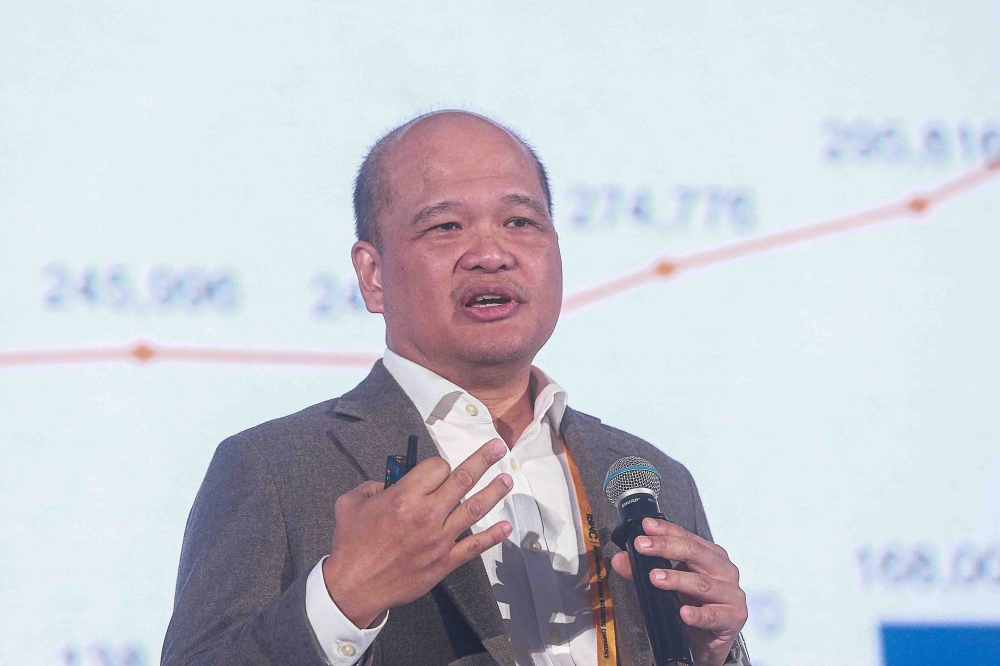
Shahril Ridza Ridzuan suggested employers could increase EPF contributions for lower-income workers to boost retirement savings and proposed progressive wage policies to ensure fair economic distribution.
He proposed higher EPF contributions for workers earning below RM5,000 and lower contributions for higher earners, saying this would help balance retirement funds between different income levels.
For gig workers, Shahril suggested implementing a revenue tax on gig platforms to fund EPF contributions, addressing the issue of them facing an "invisible tax" due to non-contribution by these platforms.
KUALA LUMPUR, Sept 30 — To help lower-salary workers save up more money for their retirement through the Employees Provident Fund (EPF), their employers could help put in more money towards their EPF savings, former EPF CEO Tan Sri Shahril Ridza Ridzuan said today.
Shahril, currently Axiata Group Berhad’s chairman, noted that Malaysia currently has one of the highest contribution rates from employees and their employers for retirement savings in EPF.
Currently in Malaysia, the law requires Malaysian employees below age 60 to contribute 11 per cent of their salary into their EPF retirement savings, while employers will have to contribute 13 per cent of the salary (if the employee’s salary is below RM5,000) or 12 per cent (if above RM5,000).
“So the contribution rate itself is not the problem. The problem has always been for the last 50, 60 years, the fact really that wages have not grown fast enough in Malaysia. So when your base is small, no matter how big your contribution rate, you are just not building your retirement savings fast enough,” he said as a speaker at EPF’s International Social Wellbeing Conference 2026 here titled “The Long Horizon”.
He commended the current federal government for its efforts on working towards having a progressive wage policy to make sure workers get a fair share of the economy: “And we need to continue that. We need to have much better progressive policies to make sure that the minimum wage keeps going up.”
Later, Shahril suggested that a progressive wage policy would not just cover workers’ income levels, and proposed that it be used to set policies on EPF contribution rates from employers.
“And I would actually propose and suggest basically that employers pay a much higher contribution rate for workers below a certain threshold, and compensated really by then having a much lower contribution rate for workers past the threshold.
“So for instance, if you are earning below RM5,000, why shouldn’t employers contribute say 15 per cent or 16 per cent to your EPF?
“That helps basically in terms of building your retirement savings. It’s progressive in the sense of basically allowing for lower-income workers to build their savings faster,” he said.
“But you can then compensate by saying, for instance, that any worker above, for instance RM10,000, employers should only contribute four per cent,” he said when giving a hypothetical example to illustrate his point.
He said this would also help to cap the amount of money that EPF manages for high-income workers, such as those who are already earning RM10,000 and if they are well on their way to achieving their financial retirement plans.
He said this would be a better method than the hypothetical method of giving different investment yields for those with lower and higher total EPF savings.
“So instead of basically differentiating between account yields for those with higher balances in EPF and lower balances, actually what you should do is to start capping this contributions of high-income earners to reduce the size of their balance sheet,” he said in giving his proposed solution.
Shahril was responding to a question on how lower-income workers and informal workers can also achieve a dignified retirement through their retirement savings.
Earlier during his session, Shahril said he believed that having differentiated yields for EPF accounts will never be the right solution, as the EPF base is too big in terms of the number of EPF contributors it has.
He also said introducing differentiated yields on EPF accounts would carry a “very high risk” of outflow of funds from top EPF account holders.
He said this hypothetical scenario leading to funds outflow would be bad for all EPF members, as part of the reason for EPF’s success is that a bigger Assets Under Management (AUM) or total assets managed would translate to lower cost for all.
Shahril said the actual debate should be about improving wealth inequality in Malaysia and a better transfer of wealth between capital owners and workers: “So the fight is not really about between whether you are high-wage earner or whether you are low-wage earner. It’s really between, are you an owner of capital and business, and whether you are essentially paying a fair share to the state in order to support these policies.”
As for gig workers, Shahril said they face an “invisible tax” as gig platforms do not contribute to EPF savings towards those working on their platforms, which means the platforms have a lower operating cost and can then outcompete traditional brick-and-mortar businesses and Mom-and-Pop stores.
He proposed that a revenue tax be imposed on gig platforms, and that the money raised from this tax could then be used to provide for EPF contributions for gig workers.
“So I think there are ways of doing it right? It’s just a matter of being creative around understanding the maths and understanding how to push those boundaries for the betterment of those workers and those gig workers who are probably under-covered at this point in time,” he said.
Several areas in Johor Bahru hit by flash floods following heavy rain (VIDEO)
EPF CEO outlines four priorities for Malaysia as Malaysians live longer, says all have role to play
Fahmi asks MCMC to clarify Meta’s response on WhatsApp issues
沙里尔·里扎·里祖安建议雇主可以增加低收入工人的公积金缴款,以促进退休储蓄,并提出渐进式工资政策以确保公平的经济分配。
他提议提高月收入低于 5000 令吉的工人的公积金缴款额,降低月收入较高工人的公积金缴款额,称这将有助于平衡不同收入水平工人的退休基金。
对于零工工作者,Shahril 建议对零工平台征收收入税,以资助其缴纳公积金,从而解决由于这些平台不缴纳公积金而导致他们面临“隐形税”的问题。
吉隆坡,9月30日讯——前雇员公积金局首席执行官丹斯里沙里尔·里扎·里祖安今天表示,为了帮助低收入工人通过雇员公积金(EPF)积累更多退休金,他们的雇主可以帮助他们向雇员公积金账户存入更多资金。
现任亚通集团有限公司董事长沙里尔指出,马来西亚目前是雇员及其雇主为公积金退休储蓄缴纳比例最高的国家之一。
目前马来西亚法律规定,60岁以下的马来西亚雇员必须将工资的11%存入公积金退休储蓄账户,而雇主则必须缴纳工资的13%(如果雇员的工资低于5000令吉)或12%(如果高于5000令吉)。
“所以缴款率本身并不是问题所在。真正的问题在于过去五六十年里,马来西亚的工资增长速度一直不够快。因此,当你的基数较小时,无论你的缴款率有多高,你的退休储蓄都无法快速积累,”他在2026年雇员公积金局国际社会福祉大会上发表题为“长远规划”的演讲时说道。
他赞扬了现任联邦政府为推行进步工资政策所做的努力,以确保劳动者获得经济的公平份额:“我们需要继续这样做。我们需要制定更好的进步政策,以确保最低工资持续上涨。”
后来,沙里尔建议,渐进式工资政策不仅要涵盖工人的收入水平,还要用它来制定雇主缴纳公积金的政策。
“我实际上建议,雇主应该为低于一定门槛的员工缴纳更高的缴费率,并通过为超过门槛的员工缴纳较低的缴费率来补偿。
“例如,如果你的收入低于 5000 令吉,为什么雇主不应该为你缴纳 15% 或 16% 的公积金呢?”
他说:“这基本上有助于积累退休储蓄。从某种意义上说,这是进步的,因为它基本上允许低收入工人更快地积累储蓄。”
“但你可以这样补偿,例如,规定任何月薪超过 10,000 令吉的员工,雇主只需缴纳 4% 的工资,”他举了一个假设的例子来说明他的观点。
他还表示,这也有助于限制公积金为高收入工人(例如月收入已达 10,000 令吉且正在稳步实现退休财务计划的工人)管理的资金数额。
他表示,这种方法比假设对公积金总额较低和较高的人给予不同的投资收益率的方法要好得多。
“所以,与其区别对待公积金账户余额较高和较低者的收益,实际上应该做的是限制高收入者的缴款额,以减少他们的资产负债表规模,”他在提出解决方案时说道。
沙里尔是在回答一个问题,即低收入工人和非正规就业工人如何通过退休储蓄实现体面的退休生活。
沙里尔早些时候在会议上表示,他认为对公积金账户实行差异化收益率永远不会是正确的解决方案,因为公积金的缴款人数太多,基数太大。
他还表示,对公积金账户实行差异化收益率将带来“极高的风险”,即导致高额公积金账户持有人的资金外流。
他表示,这种导致资金外流的假设情景对所有公积金会员来说都是不利的,因为公积金成功的部分原因是,更大的资产管理规模(AUM)或管理的总资产将转化为所有人的更低成本。
沙里尔表示,真正的辩论应该围绕如何改善马来西亚的财富不平等问题,以及如何更好地在资本所有者和劳动者之间转移财富展开:“所以,争论的焦点并非你是高收入者还是低收入者,而是你是否拥有资本和企业,以及你是否向国家缴纳了合理的份额来支持这些政策。”
沙里尔表示,对于零工工作者来说,他们面临着一种“隐形税”,因为零工平台不会为在其平台上工作的人员缴纳公积金,这意味着这些平台的运营成本较低,因此可以胜过传统的实体店和夫妻店。
他提议对零工平台征收收入税,并将这笔税收用于为零工工作者缴纳公积金。
“所以我觉得肯定有办法解决这个问题,对吧?关键在于要有创造力,理解其中的数学原理,并懂得如何突破这些界限,从而改善那些目前可能保障不足的工人和零工的境况,”他说。
新山多地遭遇暴雨引发的突发洪水(视频)
马来西亚雇员公积金局(EPF)首席执行官概述了马来西亚在人口寿命延长背景下的四项优先事项,并表示每个人都应发挥作用。
法赫米要求马来西亚通信与多媒体委员会(MCMC)澄清Meta对WhatsApp问题的回应