Lifelong friendships and memories: How NS shaped this writer’s life and sense of belonging终生的友谊和回忆:NS如何塑造了这位作家的生活和归属感
Discover how national service forged lifelong friendships and a lasting sense of belonging for this writer. Read more at straitstimes.com.
新闻视频
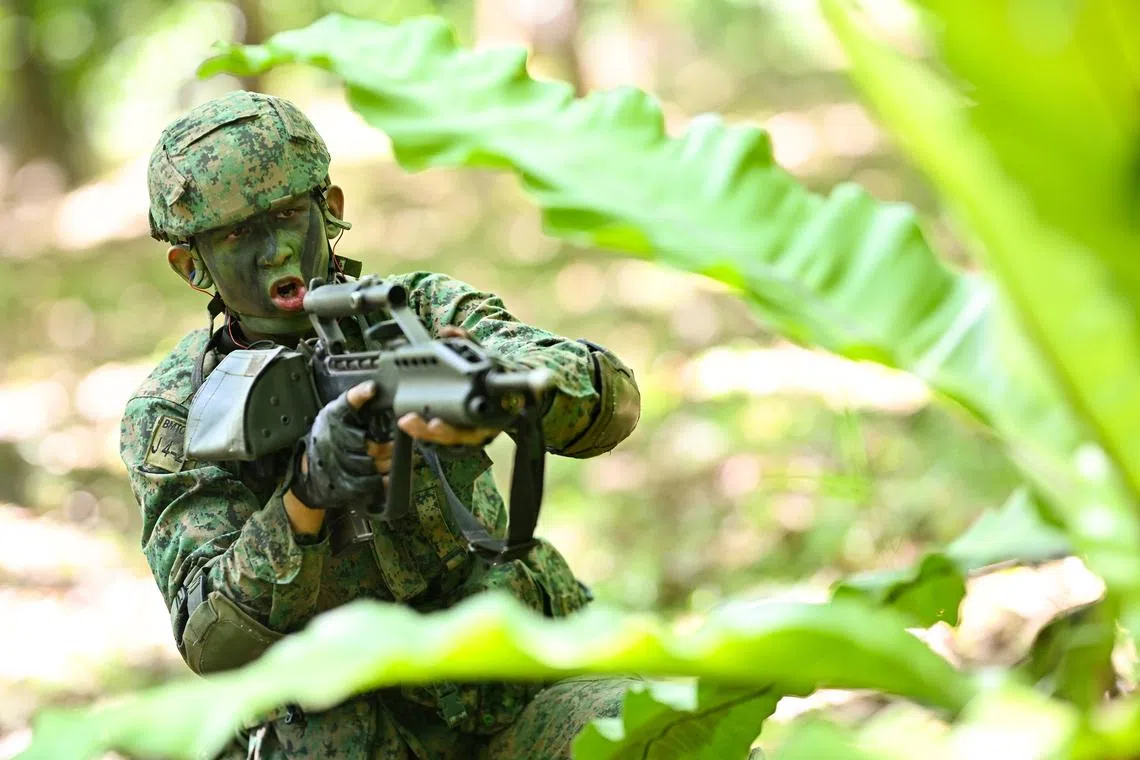
Friendships, memories and a ‘can-do’ attitude remain long after the writer’s stint.
The physical and mental adversity experienced during NS was a lesson in resilience and adaptability, says the writer.
ST PHOTO: LIM YAOHUI
Published Jul 28, 2026, 05:00 AM
Updated Jul 28, 2026, 05:04 PM
Reporting sick on the first full day of national service was probably the worst start I could have had.
All the farewell parties meant waking up with a throat infection on enlistment day in 1999. So I spent most of my 10 weeks in basic military training (BMT) fighting to get well instead of fighting to excel.
While my NS experience began with pain, the journey I would undertake in the years ahead left me with unique, long-lasting friendships and grounded me with a sense of belonging wherever I go.
These feelings usually come to the fore around Singapore Armed Forces Day in July, when my social media feeds will be filled with friends recounting their army days. Similar sentiments are also felt around Aug 9, when I watch the National Day Parade on TV with my family.
I was born and bred in Singapore, and was the first in my family to serve NS as my dad was too old to be enlisted, so I did not have the benefit of first-hand advice from home.
Instead, what I received as “legacy” were two big bags of army stuff from dad, who had gone with mum to buy them at the Beach Road army market before my enlistment. I had no idea then what most of the items were, but I knew he cared.
Two things I remember about BMT: There were four women trainees in my platoon, and we were the last BMT batch in Nee Soon camp who helped move everything to Pulau Tekong, including the weights in the gym.
Starting out ill meant an uphill struggle to qualify for Officer Cadet School or the School of Infantry Specialists. Instead, I was posted to be a reconnaissance trooper with an armour brigade, where I would spend my NS and reservist days.
Though disappointed to have missed out on a commander role, it was there that I found friends who have stayed with me through life’s seasons – birthdays, weddings, funerals, newborns, career changes, or just the random catch-up.
The writer (centre) with his reconnaissance teammates having a breather during his training in Singapore while he was serving his national service. PHOTO: COURTESY OF ALVIN FOO
The writer (centre) with his reconnaissance teammates having a breather during his training in Singapore while he was serving his national service.
PHOTO: COURTESY OF ALVIN FOO
Friendships through adversity
Scientific research shows that men bond best through shared challenges. And I found this to be true in NS. Through the stress of navigating a jungle overseas, dealing with difficult people or tasks, and coping with tough physical challenges, I made buddies for life.
It has been more than 25 years since we completed our full-time service, yet not a day passes without an exchange in our WhatsApp chat group on random topics such as Lionel Messi’s latest exploits at the recent World Cup, Manchester United’s transfer news, the best dentists in Johor Bahru, or the latest news about others who have also served NS.
These friendships have been a constant presence in my life – whether as a prominent group at my 21st birthday party and my wedding day, or familiar faces at corporate dinners. These are friends I have relied on to lend a non-judgmental listening ear or to laugh with after a hard day’s work.
These strong bonds make returning for every reservist cycle easier. Rather than view them as a disruption, the fortnights away from civilian life allowed me not just to be introduced to the latest army technology and processes, but also to spend time with friends.
Gaining a broader perspective
Training often takes full-time servicemen out of land-scarce Singapore, to countries such as the US, India, Australia and Germany, and this was the highlight of my NS days.
In one location, I witnessed the locals’ deep respect for soldiers. One night, my team of five encountered a severe thunderstorm and had to seek shelter on the porch of a family’s house. To our surprise, the occupants were warm and hospitable, and even made cup noodles for us.
In another, I learnt how residents care for the land and picked up jungle survival skills, such as how to collect river water and use a purification tablet. The training was gruelling and intense, but there were also memorable moments, such as catching a rare glimpse of a Rafflesia flower – the world’s largest – and conquering hills and trails while carrying a load more than half my body weight.
These overseas experiences challenged me to think outside the box and adopt a broader perspective. Later, they would also partially influence my parenting style – to not overprotect my children from the rough and tumble of life, and to teach them the importance of being among nature.
The physical and mental adversity experienced during NS was also a lesson in resilience and adaptability. At work, when I am asked to do tasks that seem impossible, I recall how I passed the army motorcycle course despite not even knowing how to cycle.
To qualify to take the course, you had to make figures of eight with an old bicycle. I bought a cheap mountain bike, found the nearest gentle slope, and sacrificed precious weekend “book-out” time going up and down the slope until I not only succeeded, but could also do figures of eight.
Influence without authority
Another skill I gained is how to influence without authority – guiding or persuading others to act without having direct power over them. I had no rank to pull, so I had to learn how to influence my peers and commanders by understanding their perspective, finding common ground and building long-term trust.
Through countless chats in the training shed or on long drives on “tonner” trucks, I learnt how to appreciate, communicate and work with people from different family, ethnic and educational backgrounds. It was a skill that would prove especially useful in my future career as a journalist and communications professional.
Bringing skills home
Some lessons from NS even have a place in the home, such as the importance of staying hydrated. Each of my family members now carries a water bottle when going out. Sometimes, I allow the children to eat dessert or treats only after they have finished their water bottle.
Another useful skill is map reading and navigation, especially as my partner loves hiking. These days, it is far easier to use GPS, but there are times when the old-school method still comes into play, such as in places with a poor cellphone signal.
And those motorcycle skills? They came in handy during family vacations at an Indonesian resort, when I ferried the family around on an electric motorbike.
Common speak and a sense of belonging
Canteen break, off-pass, SOP, wayang, ninja van, cookhouse, standby bed, and area cleaning – those who have served NS will know these terms.
These phrases have stuck long after the uniform has come off, filtering into everyday life. For example, I will tell my friends, “Let me apply for an off-pass from my wife so I can join you for football”, which means that I will check with my partner whether we have plans before committing to a game.
Common lingo aside, NS has given me a strong sense of belonging to Singapore. Recollections of camaraderie, common speech and combat-readiness, gathered through 2½ years of full-time service and many reservist cycles, have forged a fond attachment to home. This is especially so as I live overseas, which reminds me more clearly of my national identity.
The shared experience from NS has also enabled me to quickly find common ground when meeting other Singaporeans overseas, such as during my university days in London. I recall one conversation with a Singaporean schoolmate who asked what I had taken with me from my NS experience.
I paused to consider my reply, before answering: “It’s not NS that makes you a man. It’s what you make of NS that makes you a man.”
Elevated insights from seasoned perspectives. Crafted by journalists. Powered by Purpose: The Straits Times Signature Series is a new editorial project helmed by experienced journalists to shine a light on people, themes and ideas that rarely get the attention they deserve in everyday news cycles.
This article is part of a special collaboration between The Straits Times and Nexus – the lead agency that drives Singapore’s national education and Total Defence efforts – to spotlight national issues.
The writer was a journalist at The Straits Times’ business and sports desks, and currently resides in Australia.
友谊、回忆和积极进取的态度,在作家的任期结束后依然长久留存。
作者表示,国民服役期间经历的身心逆境,是对韧性和适应能力的一次深刻考验。
ST 照片:林耀辉
发布于 2026 年 7 月 28 日上午 5:00
更新于2026年7月28日下午5:04
在国民服役的第一天就请病假,这可能是我最糟糕的开局了。
所有的告别派对都导致我在 1999 年入伍那天早上醒来就得了咽喉炎。因此,我在基础军事训练 (BMT) 的 10 周里,大部分时间都在努力康复,而不是努力取得优异成绩。
虽然我的国民服役经历始于痛苦,但在接下来的几年里,我所经历的这段旅程让我结识了独特而持久的友谊,并让我无论走到哪里都有一种归属感。
这些感受通常会在7月新加坡武装部队日前后涌上心头,那时我的社交媒体上到处都是朋友们回忆他们当兵时的照片。8月9日左右,我和家人一起观看国庆庆典时,也会有类似的感受。
我在新加坡出生长大,是家里第一个服兵役的人,因为我父亲年纪太大不能入伍,所以我没有机会从家里得到第一手的建议。
相反,我收到的“遗产”是爸爸送的两大袋军用品。在我入伍前,他陪妈妈去海滩路军需市场买的。当时我根本不知道这些东西大多是什么,但我知道他是真心关心我的。
关于新兵训练营,我记得两件事:我的排里有四名女学员,我们是义顺营地最后一批新兵训练营的学员,我们帮忙把所有东西都搬到了德光岛,包括健身房里的器械。
一开始就体弱多病,意味着我很难通过考入军官学员学校或步兵特种兵学校的考验。最终,我被分配到装甲旅担任侦察兵,在那里度过了我的国民服役和预备役生涯。
虽然很遗憾没能担任指挥官一职,但正是在那里,我结识了一些朋友,他们陪伴我度过了人生的各个阶段——生日、婚礼、葬礼、新生儿的诞生、职业的转变,或者只是随意的叙旧。
照片中,作者(中)与侦察队队友在新加坡服兵役期间的训练间隙休息。照片由艾文·傅提供
作者(中)与他的侦察队队友在新加坡服兵役期间的训练间隙休息。
照片:由艾尔文·福提供
逆境中的友谊
科学研究表明,男性在共同挑战中更容易建立深厚的友谊。我在国民服役期间也深有体会。在海外丛林求生、应对棘手的人和事、克服艰苦的体能挑战的过程中,我结交了终生挚友。
我们完成全职服役已经超过 25 年了,但我们每天都会在 WhatsApp 聊天群里交流各种话题,比如梅西在最近的世界杯上的最新表现、曼联的转会新闻、新山最好的牙医,或者其他服过国民服役的人的最新消息。
这些友谊一直是我生活中不可或缺的一部分——无论是在我21岁生日派对和婚礼上作为主要嘉宾,还是在公司晚宴上作为熟悉的面孔。这些朋友总能在我倾诉心事时给予我倾听,不加评判,也能在我一天辛苦工作后与我开怀大笑。
这些牢固的友谊让每次预备役轮换都变得更加轻松。我并没有把这视为一种干扰,反而觉得这两周远离平民生活的时间不仅让我接触到了最新的军队技术和流程,也让我有机会与朋友们共度时光。
获得更广阔的视角
训练经常将全职军人从土地稀缺的新加坡带到美国、印度、澳大利亚和德国等国家,这成为了我国民服役期间的亮点。
在某个地方,我亲眼目睹了当地人对军人的深深敬意。一天晚上,我们五人小队遭遇了一场猛烈的雷暴,不得不到一户人家的门廊避雨。令我们惊讶的是,这家的主人热情好客,甚至还给我们煮了杯面。
在另一个训练营里,我学习了当地居民如何照料土地,并掌握了一些丛林生存技能,例如如何取河水和使用净水片。训练艰苦而强度很大,但也留下了许多难忘的回忆,例如有幸一睹世界上最大的花——大王花的风采,以及背负着超过自身体重一半的负重征服山丘和山路。
这些海外经历促使我跳出固有思维模式,拥有更广阔的视野。后来,它们也在一定程度上影响了我的育儿方式——不去过度保护孩子,让他们免受生活的磨难,并教会他们亲近自然的重要性。
服兵役期间经历的身心磨难也让我学会了坚韧和适应。在工作中,每当被要求完成看似不可能的任务时,我都会想起自己当年是如何在连骑车都不会的情况下通过军队摩托车课程的。
要获得参加这门课程的资格,你必须用一辆旧自行车画出“8”字形。我买了一辆便宜的山地车,找到附近一个缓坡,牺牲了宝贵的周末休闲时间,在坡上反复练习,直到我不仅成功通过了考试,而且还能画出“8”字形。
在没有权威的情况下施加影响
我掌握的另一项技能是如何在没有职权的情况下施加影响——在不直接控制他人的情况下引导或说服他们采取行动。我没有军衔可以动用,所以我必须学会通过理解同僚和指挥官的视角、寻找共同点并建立长期信任来影响他们。
在训练棚里或长途货车上无数次的交谈中,我学会了如何欣赏、沟通和与来自不同家庭、种族和教育背景的人们共事。这项技能在我未来作为记者和传播专业人士的职业生涯中发挥了尤为重要的作用。
将技能带回家
有些国民服役期间学到的东西甚至可以运用到家庭生活中,比如保持水分的重要性。现在,我的每个家庭成员出门都会带上水瓶。有时,我会等孩子们喝完水后才允许他们吃甜点或零食。
另一项实用技能是地图阅读和导航,尤其是我伴侣酷爱徒步旅行。如今,使用GPS导航方便得多,但在某些情况下,例如手机信号不好的地方,传统的导航方法仍然有用武之地。
至于我的摩托车驾驶技能?在印尼度假村与家人度假时派上了用场,当时我骑着电动摩托车载着全家人四处游览。
通俗易懂的语言和归属感
食堂休息、外出通行证、标准作业程序、皮影戏、忍者车、炊事房、待命床位和区域清洁——凡是服过国民服役的人都会知道这些术语。
这些短语在我脱下球衣后依然根深蒂固,渗透到日常生活中。例如,我会对朋友说:“让我跟老婆申请个外出通行证,这样我才能和你们一起踢球”,意思是说,在决定去踢球之前,我会先跟老婆确认一下我们有没有安排。
抛开日常用语不谈,国民服役让我对新加坡产生了强烈的归属感。两年半的全职服役和多次预备役经历,让我回忆起战友间的深厚情谊、共同的语言习惯以及战备训练,这些都让我对家乡充满了眷恋。尤其是在我旅居海外之后,这种感觉更加强烈,也让我更加清晰地意识到自己的国家身份。
国民服役的共同经历也让我能够很快地在海外结识其他新加坡人时找到共同话题,比如我在伦敦上大学期间。我记得有一次和一位新加坡同学聊天,他问我从国民服役的经历中学到了什么。
我停顿了一下,思考了一下该如何回答,然后说道:“不是国民服役本身让你成为男人,而是你如何看待国民服役,这才能让你成为男人。”
资深记者以独到的视角,带来深刻的见解。由资深记者精心打造,秉持“使命驱动”的理念:《海峡时报》特色系列是《海峡时报》推出的全新编辑项目,旨在聚焦那些在日常新闻报道中鲜少获得应有关注的人物、主题和观点。
本文是《海峡时报》与新加坡国家教育和全民防卫牵头机构 Nexus 合作推出的特别专题报道的一部分,旨在聚焦国家议题。
作者曾任《海峡时报》商业和体育版记者,目前居住在澳大利亚。