Penang gazettes Hungry Ghost Festival as state heritage, six sites also set for official recognition槟城将盂兰盆节列为州级遗产,六个遗址也将获得官方认可
GEORGE TOWN, Sept 3 — Penang has gazetted the Teong Guan Phor Thor, or Hungry Ghost Festival, as a state heritage item under the Penang State Heritage Enactment 2011,...
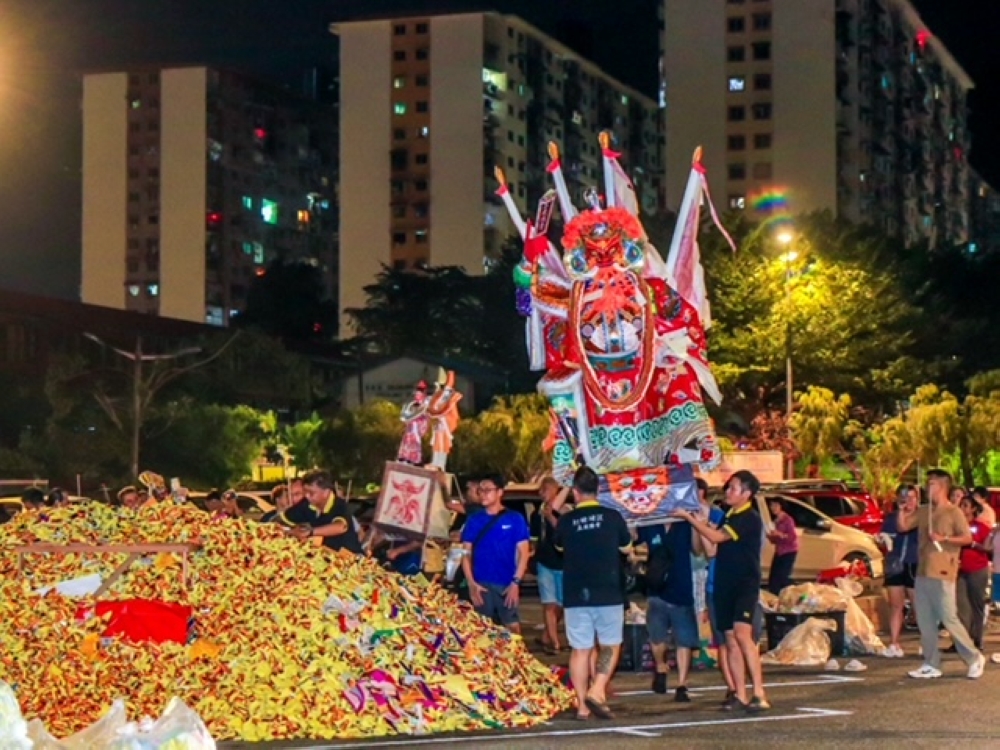
Penang has officially recognized the Teong Guan Phor Thor, or Hungry Ghost Festival, as a state heritage item, marking it under the Penang State Heritage Enactment 2011.
This decision, ratified by the state government, underscores the cultural significance of the festival, which is celebrated widely across the state by Buddhists and Taoists.
In addition to the festival, six heritage sites have also been approved for official gazettement, contributing to Penang's diverse cultural identity.
The recognition aims to preserve traditional practices while also promoting Penang's multicultural heritage, with aspirations for some items to achieve national and potentially UNESCO recognition in the future.
GEORGE TOWN, Sept 3 — Penang has gazetted the Teong Guan Phor Thor, or Hungry Ghost Festival, as a state heritage item under the Penang State Heritage Enactment 2011, recognising a traditional celebration observed by more than 200 groups across the state.
Penang Chief Minister Chow Kon Yeow said the state government approved its nomination on April 8, before it came into force as Penang heritage on June 25.
The Hungry Ghost Festival is observed during the seventh month of the Chinese lunar calendar, when Buddhists and Taoists conduct rituals to honour ancestors and spirits believed to roam during the period.
The festival also involves local communities and traders setting up Tai Su Yeah, or King of Hell, tents and opera or getai stages in public spaces.
“Recognition is not merely to preserve and conserve a traditional practice, but also to elevate the diversity of celebrations in our multiracial society as part of Penang’s identity,” Chow said at a press conference in his office in Komtar here.
He said the nomination was screened by the state’s Intangible Cultural Heritage (Sociocultural) Expert Committee, endorsed by the State Heritage Council and approved by the state executive council.
The state also approved the designation of six heritage sites on April 8, Chow said.
Their gazette notices have been submitted to the state legal adviser’s office for official gazettement.
The sites are the upper and lower stations and funicular railway line of Penang Hill; Dato Koyah’s tomb; Thai Pak Koong Temple (Ng Suk) on King Street; the Fooi Chew Association building; Loo Pun Hong Temple; and Kwangtung and Tengchow Cemetery No. 1.
“The gazettement of the six sites and Hungry Ghost Festival will be officiated on October 10,” Chow said.
State tourism and creative economy executive councillor Wong Hon Wai said the seven newly announced items — one intangible heritage item and six sites — were in addition to 50 heritage items announced earlier this year.
The earlier list comprised 15 heritage sites, 28 food heritage items and seven intangible heritage items.
“This year is a productive year for heritage,” he said.
He added that the 57 items cover the state’s cultural diversity on both Penang island and the mainland.
State Heritage Commissioner Zalena Abdul Aziz said the office hoped to bring the total number of announced heritage items to at least 70 next year, in conjunction with Malaysia’s 70th independence anniversary.
Chow said nominations could originate from the state heritage commissioner’s office, or from owners, associations and practitioners who believe a site or practice merits recognition.
He added that selected state-listed items could subsequently be proposed for consideration under the National Heritage Act, while other efforts could eventually extend to Unesco recognition.
Among the other intangible cultural heritage recognised earlier this year are nasi kandar culture, kopitiam culture, the Thaipusam procession, the Chingay procession, the St Anne’s Feast in Bukit Mertajam, and the Tanjong Penang Malay dialect.
The state has also gazetted traditional foods as state heritage, including nasi kandar , pasembor , char kue kak, oh chien , kerabu bihun, mi hokkien, mi udang, mi sotong, mi jawa and roti benggali.
Court of Appeal sets aside fraud, conspiracy findings in RM52.2m Johor land dispute
SAR area expanded to two nautical miles in search for three missing teenagers in Tanjung Lompat
Asyraf Wajdi says only Zahid can decide whether he should step down as Mara chairman
槟城已正式将中元节(又称鬼节)认定为州级遗产,并将其列入 2011 年槟城州遗产法令。
该决定经州政府批准,凸显了该节日的文化意义,佛教徒和道教徒在全州范围内广泛庆祝该节日。
除了该节日之外,还有六个遗产地也被批准列入官方名录,这为槟城多元化的文化认同做出了贡献。
该项表彰旨在保护传统习俗,同时弘扬槟城多元文化遗产,并希望未来某些项目能够获得国家级乃至联合国教科文组织的认可。
乔治市,9月3日讯——槟城已将中元节(又称鬼节)列入2011年槟城州文物法令的州级文物名录,认可了全州200多个团体庆祝的这一传统节日。
槟城首席部长曹观友表示,州政府于4月8日批准了这项提名,并于6月25日正式将其列为槟城遗产。
中元节(盂兰盆节)是农历七月举行的节日,佛教徒和道教徒会举行仪式祭祀祖先和传说中在节日期间游荡的亡灵。
该节日还包括当地社区和商贩在公共场所搭建大叔爷帐篷和歌剧或歌台舞台。
周先生在光大办公室举行的新闻发布会上表示:“认可不仅仅是为了保护和传承传统习俗,也是为了提升我们多元种族社会中庆祝活动的多样性,使其成为槟城身份认同的一部分。”
他说,该提名经过了州非物质文化遗产(社会文化)专家委员会的审查,得到了州文物委员会的认可,并最终由州行政委员会批准。
周先生表示,州政府还在4月8日批准了六个遗产地的认定。
他们的公告已提交给州法律顾问办公室进行正式公告。
这些景点包括槟城山的上、下站和缆车线路;拿督高雅的陵墓;国王街上的泰伯公庙(五淑庙);福州公社大楼;卢盘鸿庙;以及广东登州第一墓园。
周先生说:“这六个景点的列入宪报以及中元节的庆祝活动将于10月10日正式举行。”
州旅游及创意经济行政议员黄汉伟表示,新公布的七项遗产——一项非物质文化遗产和六处遗址——是在今年早些时候公布的 50 项遗产之外的。
之前的名单包括 15 个遗产地、28 项食品遗产和 7 项非物质文化遗产。
他说:“今年是文化遗产保护丰收的一年。”
他还补充说,这 57 件展品涵盖了槟城岛和槟城大陆的文化多样性。
州文物专员扎莱娜·阿卜杜勒·阿齐兹表示,为庆祝马来西亚独立70周年,该办公室希望明年公布的文物总数至少达到70件。
周先生表示,提名可以来自州文物专员办公室,也可以来自认为某个遗址或实践值得认可的业主、协会和从业人员。
他还补充说,一些被列入国家名录的项目随后可能会被提议根据《国家遗产法》进行审议,而其他努力最终可能会扩展到联合国教科文组织的认可。
今年早些时候获得认可的其他非物质文化遗产包括椰浆饭文化、咖啡店文化、大宝森节游行、妆艺游行、武吉默塔占的圣安妮节以及丹戎槟城马来语方言。
该州还将传统食品列为国家遗产,包括nasi kandar、pasembor、char kue kak、oh chien、kerabu bihun、mi hokkien、mi udang、mi sotong、mi jama和roti benggali。
上诉法院推翻了柔佛州5220万令吉土地纠纷案中的欺诈和串谋指控。
在丹戎隆帕特地区搜寻三名失踪青少年的搜救范围扩大至两海里。
阿什拉夫·瓦吉迪表示,只有扎希德才能决定他是否应该辞去马拉主席一职。