Singapore eyes role in global fusion energy industry新加坡着眼于在全球聚变能源产业中扮演角色
Singapore has built up expertise and a strong talent pipeline in areas relevant to fusion, such as precision engineering, advanced manufacturing and plasma diagnostics, says Energy, Trade and Industry Minister Tan See Leng.
Singapore has built up expertise and a strong talent pipeline in areas relevant to fusion, such as precision engineering, advanced manufacturing and plasma diagnostics, says Energy, Trade and Industry Minister Tan See Leng.
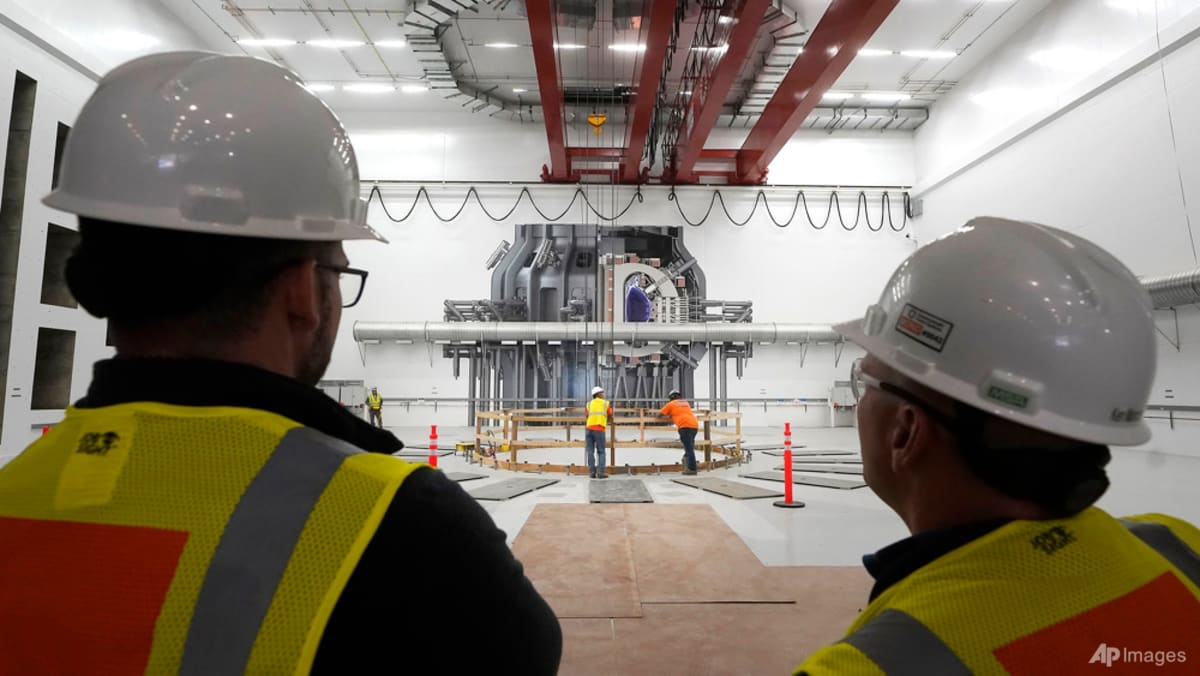
Workers stand behind a device that will use magnets to create the conditions for fusion energy to happen, at Commonwealth Fusion Systems in Devens, Massachusetts, United States. (Photo: AP/Steven Senne)
This audio is generated by an AI tool.
SINGAPORE: Singapore is positioning itself to capture opportunities in the emerging global fusion energy industry, leveraging its talent, research and industrial capabilities, even though commercially operating fusion power plants may be years away.
Speaking at the FusionX:APAC event on Thursday (Oct 1), Minister for Trade and Industry (Energy and Industry) Tan See Leng said the country could support the wider fusion economy even without hosting its own fusion reactor.
"Singapore has built up expertise and a strong talent pipeline in areas relevant to fusion," said Dr Tan.
"This includes in precision engineering, advanced manufacturing, and plasma diagnostics."
CNA Games Guess Word Crack the word, one row at a time Buzzword Create words using the given letters Mini Sudoku Tiny puzzle, mighty brain teaser Mini Crossword Small grid, big challenge Word Search Spot as many words as you can Show More Show Less Unlike nuclear fission, which generates energy from splitting the nuclei of atoms, fusion produces energy by combining them. While the science behind fusion energy has been well-established since the 1960s, it has "proven to be extremely challenging because the atoms need to be held at high energy and pressure to fuse", said Dr Tan. "Moreover, these reactions need to be maintained at stable conditions, for extended periods, to achieve an overall net-positive return on energy". But in recent years, the world has seen significant strides made in overcoming these challenges, such as advancements in key technologies like gyrotrons and superconducting magnets to help companies achieve milestones in temperature and plasma confinement. "Encouragingly, a fusion reactor has demonstrated net energy gain under experimental conditions," Dr Tan said. The technical progress has led to growing commercial interest, with the fusion ecosystem forecasted to reach a value of around US$420 billion by the end of the decade. As such, Singapore is closely monitoring developments in this space, with Dr Tan also pointing out its attractive aspects, including its potential to generate lower levels of radioactive waste and its limited risk of runaway reactions. "Energy is an existential resource for Singapore that requires long-term planning to secure," said Dr Tan. "Global developments have given us new impetus to leave no option unexplored in our energy transition, and diligently study and build capabilities in more nascent energy pathways. Fusion energy is one potential pathway we are following closely." While a commercial fusion power plant has yet to be built, fusion technologies have already created new economic opportunities. Dr Tan cited how Aliena CEO Dr Mark Lim, who is a trained plasma scientist, has helped develop plasma-based propulsion for spacecraft. The company has since tripled its operational footprint in Singapore, deepening its R&D and building full propulsion systems for global customers. "This is the sort of cross-sector innovation that can be unlocked by developing capabilities in fusion technologies," the minister said. "We are seeing countries starting to position themselves across the wider fusion value chain - not just to build reactors, but to capture value from the technologies, supply chains, and capabilities that will underpin this advanced industry." Having visited Commonwealth Fusion Systems in Boston and the Institute of Plasma Physics in Hefei, China, Dr Tan said he was encouraged by the progress made and hopeful about fusion energy's role in future energy systems.
Unlike nuclear fission, which generates energy from splitting the nuclei of atoms, fusion produces energy by combining them.
While the science behind fusion energy has been well-established since the 1960s, it has "proven to be extremely challenging because the atoms need to be held at high energy and pressure to fuse", said Dr Tan.
"Moreover, these reactions need to be maintained at stable conditions, for extended periods, to achieve an overall net-positive return on energy".
But in recent years, the world has seen significant strides made in overcoming these challenges, such as advancements in key technologies like gyrotrons and superconducting magnets to help companies achieve milestones in temperature and plasma confinement.
"Encouragingly, a fusion reactor has demonstrated net energy gain under experimental conditions," Dr Tan said.
The technical progress has led to growing commercial interest, with the fusion ecosystem forecasted to reach a value of around US$420 billion by the end of the decade.
As such, Singapore is closely monitoring developments in this space, with Dr Tan also pointing out its attractive aspects, including its potential to generate lower levels of radioactive waste and its limited risk of runaway reactions.
"Energy is an existential resource for Singapore that requires long-term planning to secure," said Dr Tan.
"Global developments have given us new impetus to leave no option unexplored in our energy transition, and diligently study and build capabilities in more nascent energy pathways. Fusion energy is one potential pathway we are following closely."
While a commercial fusion power plant has yet to be built, fusion technologies have already created new economic opportunities.
Dr Tan cited how Aliena CEO Dr Mark Lim, who is a trained plasma scientist, has helped develop plasma-based propulsion for spacecraft. The company has since tripled its operational footprint in Singapore, deepening its R&D and building full propulsion systems for global customers.
"This is the sort of cross-sector innovation that can be unlocked by developing capabilities in fusion technologies," the minister said.
"We are seeing countries starting to position themselves across the wider fusion value chain - not just to build reactors, but to capture value from the technologies, supply chains, and capabilities that will underpin this advanced industry."
Having visited Commonwealth Fusion Systems in Boston and the Institute of Plasma Physics in Hefei, China, Dr Tan said he was encouraged by the progress made and hopeful about fusion energy's role in future energy systems.
GROWING DEVELOPMENTS
Singapore is already building capabilities and partnerships in the field.
Dr Tan highlighted the establishment of the Singapore Alliance with France for Fusion Energy in 2023, a partnership that combined the Nanyang Technological University's experience in AI and computing with the French Alternative Energies and Atomic Energy Commission's strengths in plasma physics.
This has provided Singapore researchers with opportunities to deepen their expertise and work with international fusion facilities such as France’s WEST tokamak. According to the US Department of Energy, a tokamak is a machine that uses powerful magnetic fields to contain hot plasma in a doughnut shape to produce controlled nuclear fusion.
Singapore’s research and engineering capabilities have also been applied successfully to overcome real-world technical challenges in fusion, Dr Tan noted, citing A*STAR's work with US fusion company Realta Fusion in delivering a diagnostic tool to measure plasma velocities.
By measuring turbulence in the plasma, researchers can better understand and control conditions within a fusion system, and both A*STAR and Realta are exploring further collaboration in advanced plasma diagnostics and deployment.
ST Engineering produces tokamak components for Commonwealth Fusion Systems’ SPARC demonstration reactor, while A*STAR and Commonwealth recently signed a memorandum of understanding to develop commercial fusion power plants.
A*STAR is also exploring a strategic research collaboration with VDL Enabling Technologies Group, a global advanced manufacturing company.
"Together, they will combine their strengths in research, engineering and industrialisation to develop advanced materials, advanced manufacturing and diagnostic technologies for the demanding conditions required for fusion," said Dr Tan.
Singapore also boasts a "vibrant" deep tech ecosystem that brings together research, industry, talent and capital. This matters for emerging technologies like fusion, where turning scientific breakthroughs into commercial opportunities requires not just technical expertise, but patient capital and strong industry partnerships, Dr Tan said.
Platforms like SGInnovate can help bring these different parts of the ecosystem together by connecting deep tech companies with talent, investors, and industry partners, the minister added.
For example, SGInnovate held its first "Fusion School" initiative on Wednesday to introduce students and young professionals to the fusion sector.
Singapore is also stepping up efforts to prepare for a review of its nuclear capabilities by the International Atomic Energy Agency (IAEA) in 2027.
Government agencies are building expertise in areas ranging from reactor engineering to safety and regulation, although the country has not decided whether to build a nuclear power plant.
The FusionX:APAC event coincided with the first day of the newly renamed Ministry of Energy, Trade and Industry (METI), which Dr Tan said reflected the growing importance of energy security and resilience.
Get our pick of top stories and thought-provoking articles in your inbox
Stay updated with notifications for breaking news and our best stories
Join our channel for the top reads for the day on your preferred chat app
新加坡能源、贸易和工业部长陈思龙表示,新加坡在与聚变相关的领域,如精密工程、先进制造和等离子体诊断方面,已经积累了专业知识和强大的人才储备。
在美国马萨诸塞州德文斯市的联邦聚变系统公司,工人们站在一台利用磁体创造聚变能产生条件的装置后面。(图片:美联社/史蒂文·塞内)
这段音频由人工智能工具生成。
新加坡:新加坡正利用其人才、研究和工业能力,为抓住新兴的全球聚变能源产业的机遇做好准备,尽管商业运营的聚变发电厂可能还需要数年时间才能建成。
周四(10 月 1 日),贸易和工业部长(能源和工业)陈思龙在 FusionX:APAC 活动上发表讲话时表示,即使没有自己的聚变反应堆,该国也可以支持更广泛的聚变经济。
“新加坡在聚变相关领域积累了丰富的专业知识和强大的人才储备,”陈博士说。
“这包括精密工程、先进制造和等离子体诊断。”
CNA游戏 猜词游戏 逐行破解单词 流行词游戏 用给定的字母组成单词 迷你数独 小谜题,脑力挑战 迷你填字游戏 小方格,大挑战 单词搜索 尽可能多地找出单词 显示更多 显示更少 与通过分裂原子核产生能量的核裂变不同,聚变是通过原子核的结合产生能量。虽然聚变能背后的科学原理自20世纪60年代以来就已相当成熟,但谭博士表示,聚变“已被证明极具挑战性,因为原子需要在高能量和高压下才能发生聚变”。“此外,这些反应需要在稳定的条件下维持较长时间,才能实现整体的净能量收益。” 但近年来,世界在克服这些挑战方面取得了显著进展,例如回旋管和超导磁体等关键技术的进步,帮助企业在温度和等离子体约束方面取得了里程碑式的成就。谭博士说:“令人鼓舞的是,聚变反应堆已在实验条件下展现出净能量增益。”技术进步引发了日益增长的商业兴趣,预计到本十年末,聚变生态系统的价值将达到约4200亿美元。因此,新加坡正密切关注该领域的发展。陈博士也指出了聚变的诸多优势,包括其产生放射性废物量较低的潜力以及失控反应风险有限。陈博士表示:“能源是新加坡的生存资源,需要长期规划才能保障。全球发展趋势促使我们在能源转型过程中不放过任何可能性,并认真研究和构建新兴能源路径的能力。聚变能源是我们正在密切关注的潜在路径之一。”虽然商业聚变电站尚未建成,但聚变技术已经创造了新的经济机遇。陈博士举例说,Aliena公司首席执行官林马克博士是一位训练有素的等离子体科学家,他帮助开发了用于航天器的等离子体推进系统。该公司此后将其在新加坡的业务规模扩大了三倍,深化了研发,并为全球客户建造完整的推进系统。 “这种跨领域的创新可以通过发展聚变技术能力来释放,”部长表示。“我们看到各国开始在更广泛的聚变价值链中定位自身——不仅仅是建造反应堆,而是要从支撑这一先进产业的技术、供应链和能力中获取价值。”谭博士访问了位于波士顿的联邦聚变系统公司和位于中国合肥的等离子体物理研究所后表示,他对已取得的进展感到鼓舞,并对聚变能源在未来能源系统中的作用充满希望。
与通过分裂原子核产生能量的核裂变不同,核聚变通过结合原子核产生能量。
谭博士说,虽然聚变能源背后的科学原理自 20 世纪 60 年代以来就已相当成熟,但“事实证明,它极具挑战性,因为原子需要保持在高能量和高压下才能发生聚变”。
“此外,这些反应需要在稳定的条件下维持较长时间,才能实现整体的净正能量回报。”
但近年来,世界在克服这些挑战方面取得了重大进展,例如回旋管和超导磁体等关键技术的进步,帮助企业在温度和等离子体约束方面取得了里程碑式的成就。
“令人鼓舞的是,聚变反应堆在实验条件下已经展现出净能量增益,”谭博士说。
技术进步引发了日益增长的商业兴趣,预计到本十年末,聚变生态系统的价值将达到约 4200 亿美元。
因此,新加坡正密切关注这一领域的发展,陈博士也指出了其吸引人的方面,包括产生较低水平放射性废物的潜力以及失控反应的风险有限。
“能源是新加坡的生存资源,需要长期规划来保障,”陈博士说。
“全球形势的发展促使我们在能源转型过程中不放过任何可能性,并认真研究和构建新兴能源领域的能力。聚变能源是我们正在密切关注的潜在途径之一。”
虽然商业聚变发电厂尚未建成,但聚变技术已经创造了新的经济机遇。
陈博士举例说,Aliena公司首席执行官林马克博士是一位受过专业训练的等离子体科学家,他曾帮助开发用于航天器的等离子体推进系统。此后,该公司在新加坡的业务规模扩大了三倍,深化了研发工作,并为全球客户打造完整的推进系统。
部长表示:“这种跨领域的创新可以通过发展聚变技术能力来释放。”
“我们看到各国开始在更广泛的聚变价值链中定位自己——不仅仅是建造反应堆,而是从支撑这一先进产业的技术、供应链和能力中获取价值。”
谭博士访问了位于波士顿的联邦聚变系统公司和位于中国合肥的等离子体物理研究所后表示,他对所取得的进展感到鼓舞,并对聚变能源在未来能源系统中的作用充满希望。
发展中
新加坡已在该领域建立能力和合作伙伴关系。
陈博士重点介绍了新加坡与法国于 2023 年成立的聚变能源联盟,该联盟将南洋理工大学在人工智能和计算方面的经验与法国替代能源和原子能委员会在等离子体物理方面的优势相结合。
这为新加坡研究人员提供了深化专业知识并与法国WEST托卡马克等国际聚变装置合作的机会。据美国能源部介绍,托卡马克是一种利用强磁场将高温等离子体约束在甜甜圈形状的装置,用于产生可控核聚变。
陈博士指出,新加坡的研究和工程能力也已成功应用于克服聚变领域的实际技术挑战,例如新加坡科技研究局 (A*STAR) 与美国聚变公司 Realta Fusion 合作开发了一种用于测量等离子体速度的诊断工具。
通过测量等离子体中的湍流,研究人员可以更好地了解和控制聚变系统内部的条件,A*STAR 和 Realta 正在探索在先进等离子体诊断和部署方面进一步合作。
新加坡科技工程公司为联邦聚变系统公司的 SPARC 示范反应堆生产托卡马克组件,而新加坡科技研究局和联邦公司最近签署了一份谅解备忘录,以开发商业聚变发电厂。
新加坡科技研究局(A*STAR)也在探索与全球先进制造公司VDL Enabling Technologies Group开展战略研究合作。
“他们将结合各自在研究、工程和工业化方面的优势,共同开发先进材料、先进制造和诊断技术,以满足聚变所需的苛刻条件,”谭博士说。
新加坡还拥有一个充满活力的深度科技生态系统,将研究、产业、人才和资本汇聚在一起。陈博士表示,这对于核聚变等新兴技术至关重要,因为将科学突破转化为商业机会不仅需要技术专长,还需要耐心投入的资金和强大的产业合作伙伴关系。
部长补充说,像 SGInnovate 这样的平台可以将尖端科技公司与人才、投资者和行业合作伙伴联系起来,从而帮助将生态系统的不同部分聚集在一起。
例如,SGInnovate 于周三举办了首届“融合学校”活动,向学生和年轻专业人士介绍融合领域。
新加坡也在加紧努力,为国际原子能机构(IAEA)在 2027 年对其核能力进行的审查做准备。
尽管该国尚未决定是否建造核电站,但政府机构正在反应堆工程、安全和监管等领域积累专业知识。
FusionX:APAC 活动恰逢新更名的能源、贸易和工业部 (METI) 成立的第一天,陈博士表示,这反映了能源安全和韧性日益增长的重要性。
订阅我们的邮件,即可获取精选热点新闻和引人深思的文章。
订阅通知,第一时间获取突发新闻和精彩报道。
加入我们的频道,即可在您常用的聊天应用上获取当日热门文章。