Swee Xiang Restaurant, Klang: This ‘hong bak’ is king in ‘bak kut teh’ country巴生瑞祥餐厅:这家“红烧肉”在“肉骨茶”之乡堪称王者。
KLANG, Sept 3 — My friend and colleague Keertan, who has the biggest collection of colourful shirts in the office, recently graduated with a Master of Public Policy degree. It...
The article highlights a celebration of a friend's recent graduation and a long-awaited meal at Swee Xiang Restaurant in Klang, renowned for its distinctive hong bak, a traditional Hokkien braised pork dish.
Despite initial hesitations, the visit proved to be a delightful culinary experience, especially with unique dishes like braised tendons and alkaline kuih.
The meeting strengthened their camaraderie, enriched by sharing personal experiences over the meal.
KLANG, Sept 3 — My friend and colleague Keertan, who has the biggest collection of colourful shirts in the office, recently graduated with a Master of Public Policy degree.
It was a moment of celebration not just for him, but for me too, as it had been the main thing putting off our long-overdue makan appointment.
It was one that I was determined to make him keep, as he’s the only person I know willing to make the 30-plus minute trip to Klang on a weekday for lunch with me.
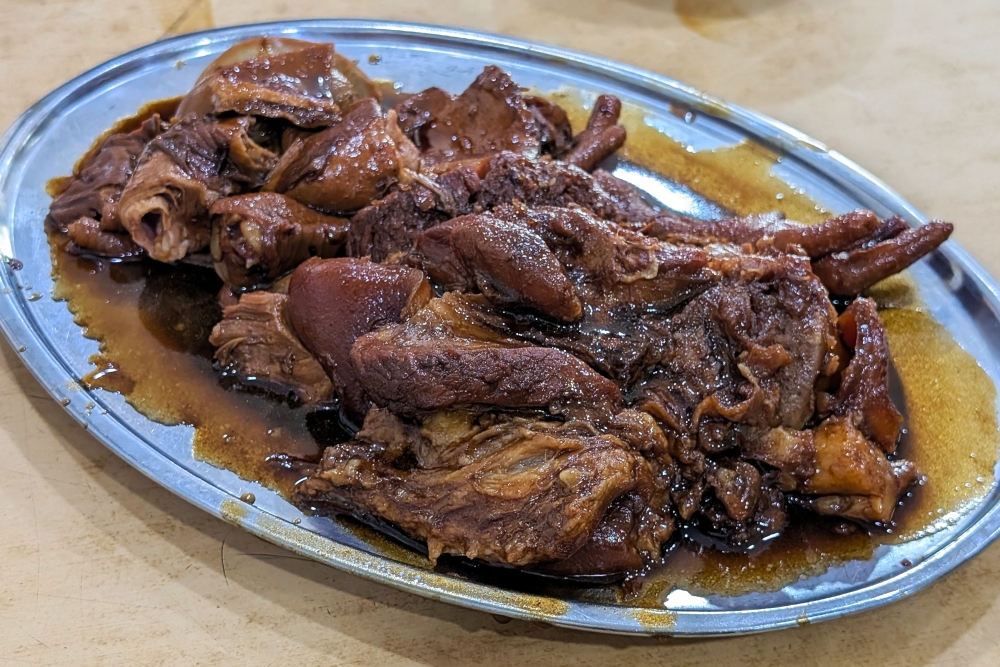
Which is why, on a recent Monday, we found ourselves at Swee Xiang Restaurant in Taman Klang Utama, staring down a plate of braised pig’s trotter, stomach and intestines in all their messy glory.
I hadn’t told Keertan what we were going to eat; this being Klang, he naturally assumed we’d be having bak kut teh , which Swee Xiang does serve. But I was following a tip that told me to come for the hong bak instead.
If you’ve only heard of hong bak in a Penang context, especially the Peranakan variant where tau cheo (fermented soybean paste) and sand ginger are the main flavour components, this will seem quite alien.
Hong bak is simply Hokkien – and most Peranakan Chinese in Penang are Hokkien – for braised meat.
In this context, it’s also a braised pork dish, but one that uses every part of the pig, especially the gelatinous bits and bobs, in a thick, sticky sauce heavy with soy sauce and warm spices like cinnamon and star anise.
Go to the right place, and you can get it with chewy alkaline rice cakes, or kee ya kuih , another traditional Hokkien speciality.
Rather than the intoxicating, medicinal aroma of bak kut teh, it’s the smell of hong bak that greets you at Swee Xiang.
Sure, some tables might have bak kut teh . But nearly every table here will have some form of hong bak. The standard portion of braised trotter (RM84) serves four and comes with pig tendons, intestines, stomach, chicken feet and hard boiled eggs; our thoughtful server, though, fixed us with a two-person serving (RM36) instead, tendons not included, so we ordered a separate portion of those (RM20).
To this, we added the faithful accompaniment of alkaline kuih (RM3), as well as long bean rice (RM2), one of two kiam peng (Hokkien savoury rice) options available on odd days of the week. Mustard green rice (RM2) is available on even days.
Keertan was well and truly outside his comfort zone, and it showed on his face when the hulking plate of trotter arrived, glistening from the sauce and jiggling under its own weight.
Press a spoon onto the meat and it resists a light level of pressure before giving way like a hot knife through butter.
The sauce, which coats the alkaline kuih like maple syrup on pancakes, is so full of fat and gelatin that a thin film, or “skin” begins to form on the surface if it’s left to sit even for a while.
I began describing the pieces of offal to Keertan; he replied that it might be better if he didn’t know what he was eating.
The stomach is inoffensive enough, with a satisfying snap, but the intestines were a tad chewy for him.
I enjoyed them just fine, although I concur that their wrinkled appearance doesn’t help their case.
Chicken feet were a step too far, however; the sticky, rubbery texture of the skin didn’t appeal to him, and I’m sure my juvenile toe-sucking innuendos helped matters greatly.
But the surprise for both of us was how much he enjoyed the tendons: soft and almost luscious without completely falling apart, braised into tender, melting submission.
“Wow, I would never have tried these if you had told me what they were,” he said, “but now I’m really liking them.”
The long bean rice was a dependable filler, and just to cover all bases, the fried meatball (RM15) is a crowd-pleaser that anyone and everyone is bound to enjoy: crisp exterior, juicy, crunchy pork mince interior studded with water chestnut and carrots for sweetness.
We spent the rest of the time having multiple rounds of tea; he told me about his experiences moving into his first home, and I replied the only way I know how, with stories from college, when my life peaked.
All that was left to do was reflect on that while staving off the post-lunch temptation to doze off during the 30-minute drive back.
Swee Xiang Restaurant
7, 9, Lintang Sungai Keramat 10A/KU6,
Open daily, 7am-3pm. Open till 8pm from Friday to Sunday.
Facebook: Restoran Swee Xiang
* This is an independent review where the writer paid for the meal.
* Follow us on Instagram @eatdrinkmm for more food gems.
* Follow Ethan Lau on Instagram @eatenlau for more hong bak adventures.
Sungai Siput’s Hai Ying Restaurant brings stellar homemade pork meatballs paired with a bowl of beef brisket soup and yam rice to Bandar Menjalara, Kepong
Head to Kak Dah Nasi Berlauk in Ampang for ‘ori Kelate’ flavours and the rarely seen ‘kerabu sare’
Jason Yeoh on two decades in Malaysian food TV, why he’s not afraid of losing tradition and his new series, ‘Axian’s Local Eats’
Penang gazettes Hungry Ghost Festival as state heritage, six sites also set for official recognition
Court of Appeal sets aside fraud, conspiracy findings in RM52.2m Johor land dispute
SAR area expanded to two nautical miles in search for three missing teenagers in Tanjung Lompat
这篇文章重点介绍了朋友最近毕业的庆祝活动,以及在巴生瑞祥餐厅享用期待已久的晚餐。瑞祥餐厅以其独特的红烧肉而闻名,红烧肉是一道传统的福建卤肉菜肴。
尽管最初有些犹豫,但这次探访却成为了一次令人愉快的美食体验,尤其是品尝到了红烧牛筋和碱糕等特色菜肴。
这次会面加深了他们的友谊,大家在用餐时分享了各自的经历,增进了彼此的感情。
巴生,9月3日讯——我的朋友兼同事基尔坦(Keertan)拥有办公室里最多的彩色衬衫,他最近获得了公共政策硕士学位。
这不仅对他来说是一个值得庆祝的时刻,对我来说也是如此,因为这正是我们期待已久的聚餐约会迟迟未能成行的主要原因。
我决心让他留下来,因为他是我认识的唯一一个愿意在工作日花 30 多分钟的时间到巴生和我一起吃午饭的人。
因此,就在不久前的一个星期一,我们来到了 Taman Klang Utama 的 Swee Xiang 餐厅,盯着一盘红烧猪蹄、猪肚和猪肠,它们看起来狼狈不堪,却又无比美味。
我没告诉基尔坦我们要吃什么;这里是巴生,他自然而然地以为我们会吃肉骨茶,瑞祥餐厅确实有这道菜。但我听从了别人的建议,来这里尝尝红烧肉。
如果你只听说过槟城的红肉,尤其是娘惹菜,其中豆酱和沙姜是主要调味成分,那么这道菜看起来会很陌生。
Hong bak 就是福建话里的卤肉,而槟城的大多数土生华人都是福建人。
从这个意义上讲,它也是一道红烧猪肉菜,但它用到了猪的各个部位,尤其是胶质的肉块,用浓稠粘稠的酱汁烹制而成,酱汁中加入了大量的酱油和肉桂、八角等温暖的香料。
去对了地方,你就能吃到它,还有嚼劲十足的碱米糕,也就是另一种传统的福建特色小吃——糯米糕(kee ya kuih)。
在瑞香,迎接你的不是肉骨茶令人陶醉的药香,而是红肉的味道。
当然,有些桌可能会点肉骨茶。但几乎每桌都会有红烧肉。标准的卤猪蹄(84令吉)是四人份,配有猪筋、猪肠、猪肚、鸡爪和水煮蛋;不过,我们那位贴心的服务员给我们换成了双人份(36令吉),不含猪筋,所以我们又单独点了一份猪筋(20令吉)。
此外,我们还提供经典的碱糕(3令吉)和长豆饭(2令吉),长豆饭是单数日供应的两种咸饭之一。双数日则供应芥菜饭(2令吉)。
基尔坦完全不在自己的舒适区,当那一大盘猪蹄端上来时,他的脸上就露出了这种表情。猪蹄闪着酱汁的光泽,在自身的重量下颤抖着。
用勺子按压肉块,会感觉到轻微的压力,然后像热刀切黄油一样轻松切开。
这种酱汁像枫糖浆淋在煎饼上一样裹在碱性糕点上,它富含脂肪和明胶,即使静置一段时间,表面也会开始形成一层薄膜或“皮”。
我开始向基尔坦描述这些内脏;他回答说,如果他不知道自己吃的是什么,也许会更好。
胃的味道还算可以接受,咬下去会发出令人满意的脆响,但是肠子对他来说有点嚼不动。
我挺喜欢它们的,虽然我也同意它们皱巴巴的外观确实不太好看。
然而,鸡爪就有点过分了;鸡皮黏糊糊、像橡胶一样的质感让他很不感兴趣,而且我敢肯定,我那些幼稚的、关于吮吸脚趾的暗示也起到了很大的作用。
但令我们俩都感到惊讶的是,他非常喜欢这些牛筋:柔软而几乎令人垂涎,却又不会完全散架,炖煮得软嫩入味,入口即化。
“哇,如果你早告诉我这些是什么,我肯定不会尝试的,”他说,“但我现在真的很喜欢它们。”
长豆饭是一道可靠的饱腹菜,为了面面俱到,炸肉丸(15令吉)是一道老少咸宜的菜肴,每个人都一定会喜欢:外皮酥脆,内馅是多汁爽脆的猪肉碎,还点缀着荸荠和胡萝卜,增添了一丝甜味。
剩下的时间我们喝了好几轮茶;他跟我讲述了他搬进第一套房子的经历,而我则用我唯一知道的方式回应他,讲起了我大学时期的故事,那是我人生的巅峰时期。
剩下的事情就是反思这件事,同时还要努力克制午饭后打瞌睡的冲动,在30分钟的返程车程中保持清醒。
瑞香餐厅
7, 9, 林塘双溪克拉玛 10A/KU6,
每日营业时间:上午7点至下午3点。周五至周日营业至晚上8点。
Facebook:瑞祥餐厅
* 这是一篇独立评论,作者自行支付了餐费。
* 关注我们的Instagram账号@eatdrinkmm,获取更多美食资讯。
* 关注 Ethan Lau 的 Instagram 账号 @eatenlau,了解更多香港美食之旅。
Sungai Siput 的海鹰餐厅将一流的自制猪肉丸搭配一碗牛腩汤和芋头饭带到甲洞 Bandar Menjalara
前往安邦的 Kak Dah Nasi Berlauk 品尝“ori Kelate”风味和罕见的“kerabu sare”
Jason Yeoh谈在马来西亚美食电视节目中从业二十年,为何不惧失去传统,以及他的新系列节目《Axian's Local Eats》。
槟城将盂兰盆节列为州级遗产,六个遗址也将获得官方认可
上诉法院推翻了柔佛州5220万令吉土地纠纷案中的欺诈和串谋指控。
在丹戎隆帕特地区搜寻三名失踪青少年的搜救范围扩大至两海里。