Can’t start, won’t start: Over 150 new military programs face delay under a CR无法启动,也不愿启动:超过150个新的军事项目因一项持续拨款法案而面临延期。
The Defense Department will be operating under a continuing resolution until lawmakers successfully pass a fiscal 2027 budget.
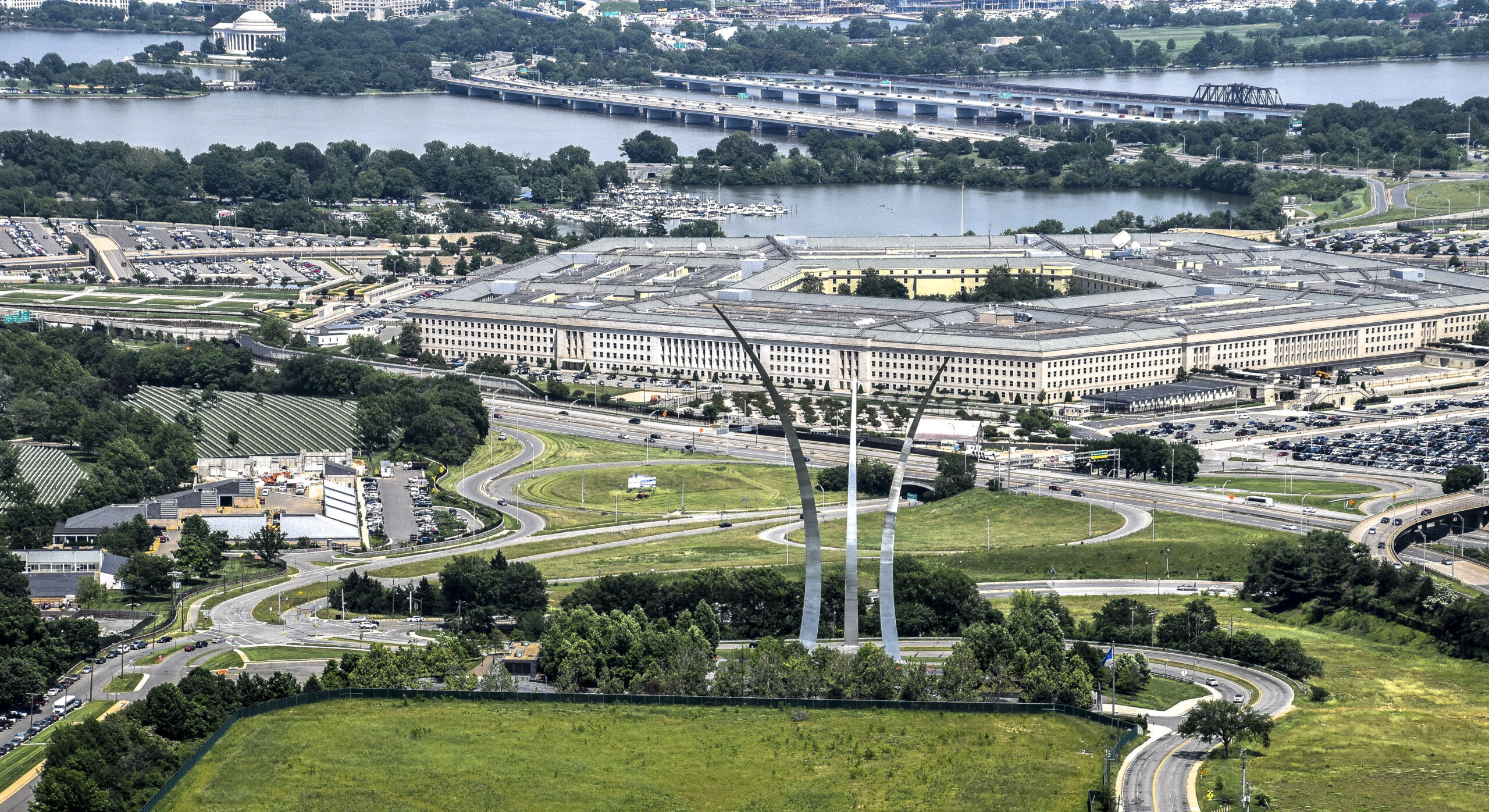
The Pentagon is seen in a file photo from 2016. (U.S. Army photo by Sgt. 1st Class Marisol Walker)
WASHINGTON — The federal government rang in a new fiscal year on Thursday, and, as has been the norm for years, the government will now be operating under a continuing resolution (CR).
And if there’s one thing military leaders like to remind everyone about, at every opportunity, it’s that a CR means the Pentagon cannot begin funding new programs, also known as “new starts,” at a time when the department is pursuing novel technologies.
Breaking Defense reached out to the Pentagon and the services to ask for details on new starts that will be impacted by the CR, but a list was not provided by press time. However, new starts are listed as such in the fiscal 2027 budget request, and a search under that phrase of both procurement and research, development, test and evaluation (RDT&E) budget documents turned up over 150 results.
While imperfect, given that Pentagon budget documents have been known to include errors, the method provides a sense of the quantity and quality of items affected by the CR — including billions of dollars for new drones, the Golden Fleet program and hypersonic weapons.
“It’s gonna slow us down, and the threat is not slowing down, so we have to continue to get after that,” Space Force Gen. Douglass Schiess, the newly minted Chief of Space Operations, said in a briefing with reporters Sept. 15. “So I just urge our congressional colleagues and folks to get after getting us the budget.”
The CR is in place through Dec. 11, but there’s no guarantee programs can commence once it ends. Lawmakers could pass another CR, or, if the impasse persists, the government could face another shutdown.
“We are going to be in a mad dash to try and avoid a full-year CR,” Connecticut Sen. Chris Coons, the lead Democrat on the Senate Appropriations defense subcommittee, told reporters Wednesday.
Biodefense is force protection: Ready today, prepared for tomorrow
A decorated combat aviator and biotech CEO advocates preparing for novel viral threats before the next crisis.
“The Pentagon — the senior leadership, OSD [the Office of the Secretary of Defense] — keeps insisting they’re going to get $350 billion dollars in reconciliation. They will not, and they keep insisting they’re going to get more than $100 billion in a supplemental. I think that is very unlikely as long as the war continues,” Coons added. “And so there is likely to be somewhere between a $500 [billion] and $700 billion gap between what the Pentagon is planning on and continuing to insist on, and what they will actually get in appropriations.”
Until a fiscal 2027 budget is passed, here’s a roundup of the programs that will be in limbo.
Perhaps the poster child for being stalled out under a CR is the Golden Dome missile defense shield, one of President Donald Trump’s signature defense priorities. Golden Dome was initially funded through the 2025 reconciliation pot, and the administration then laid out plans to spend $17.5 billion on the national air defense shield in FY27.
However, less than $400 million of that total is found in the base budget, with the rest up in the air along with the reconciliation effort.
“I will tell you that if they don’t figure it out, there’s no Golden Dome, because there is no funding,” Space Force Gen. Michael Guetlein, who is charged with leading the sprawling program, told an audience at the Space and Missile Defense Symposium in August.
“Without continued funding, Golden Dome will stop with everything we’ve already built and delivered,” he later told reporters.
A spokesperson for his office did not respond to questions about the program now that the CR is in effect.
The Pentagon’s plans to roll out the new Defense Autonomous Warfare Group (DAWG) drone initiative could also be sidelined.
The DAWG is designed to essentially absorb the Biden-era Replicator initiative established to acquire thousands of low-cost “attritable” drones, particularly for use in the Indo-Pacific. Pentagon leaders were loodfeking to supercharge development investments in FY27 through a $54.6 billion ask for research-and-development dollars — $1 billion in the base budget and $53.6 billion coming from the more flexible reconciliation pot. (That represents a staggering 24,070 percent increase over FY26 spending on DAWG.)
Without a new budget and no reconciliation bill, the Pentagon’s ambitions for DAWG will likely need to be scaled back considerably.
The Army collectively has 29 new start programs listed in budget documents — 17 under procurement and 12 from RDT&E funds.
Two of those new starts are for the service’s High Accuracy Detection and Exploitation System (HADES) — a spy plane based on Bombardier’s Global 6500 aircraft tricked out with advanced, deep-sensing capabilities for multi-domain operations developed by the Sierra Nevada Corporation. The Army requested $131.7 million for platform and system integration, as well as $15.3 million for micro-high altitude balloons and payloads for the platform.
Another big procurement freeze: $21 million to buy 34 heavy variants of the service’s Infantry Squad Vehicle (ISV). In July, the Army awarded Other Transaction Authority agreements to three vendors to provide three prototype variants each by March 30, 2027.
The rest of the Army’s procurement new starts are for unmanned and autonomous ground systems, general engineering support, ammunition and other small arms fire. The largest ticket item is $145 million for work at the Holston Army Ammunition Plant in Tennessee.
Under RDT&E, the Army’s biggest new start is$921.9 million for Terminal High Altitude Aerial Defense (THAAD), along with $132.1 million for the AN/TPY-2 sensor, which serves as the “brain and eyes” for the THAAD system. The next-largest request is$108.1 million for the Maneuver-Short Range Air Defense (M-SHORAD) Increment 4 program, which is specifically tasked with protecting dismounted maneuver forces.
The remaining new starts under RDT&E are for directed energy enhancements, tactical bridging, the Joint Light Tactical Vehicle, Arctic mobility sustainment and other programs.
Underlining the bureaucratic nature of these definitions is the Army’s Future Long Range Assault Aircraft (FLRAA). The program was originally listed as a $127.2 million new start under procurement, but the Army ultimately requested that those funds be reallocated into RDT&E.. Since the service has allocated RDT&E funding toward the aircraft for multiple years, FLRAA is not considered a new start — and therefore not impacted by the CR.
Navy and Marine Corps
There are 17 new starts listed for the Department of the Navy in the FY27 budget documents. Among them: some of the Navy and Trump administration’s biggest initiatives to advance the Golden Fleet, including the Trump-class battleship.
Specifically, the Navy wants approximately $1 billion in advance procurement and roughly $837 million in research-and-development funds for the Trump-class battleship in FY27. The service plans to ask for approximately $17 billion in procurement funding for the first ship in FY28.
“Adding capability at the highest end of the Golden Fleet high-low mix, the Battleship’s primary role is to deliver high-volume, long-range offensive fires and serve as a robust, survivable forward command and control platform,” budget documents stated.
The Navy also is seeking funds for a submarine tender under a new start program that will “be designed to conduct steady state and wartime sustained, forward-based / expeditionary tending, resupply, depot and intermediate level repair operations on submarines while anchored or pier side,” according to the FY27 request. In total, the service is seeking$4.4 billion for two submarine tenders to support both Virginia and Columbia-class submarines, as well as future submarine classes.
Additionally, the Navy wants $450 million in FY27 for its bulk fuel vessel, with plans to purchase one vessel in FY27 and another in FY28. Budget documents show that the service is considering foreign shipbuilding designs for the vessels it wants to request those years, and wants the vessels to operate under Military Sealift Command to haul fuel from shore to forward operating areas and conduct at-sea fuel transfers. The program will leverage an existing commercial tanker design in an effort to streamline the acquisition timeline, budget documents said.
“The tankers will be capable of supporting consolidated replenishment (CONSOL) operations, enabling commercial or logistics tankers to transfer fuel to fleet oilers at sea. This capability allows fleet oilers to remain on station for longer periods and continue conducting underway replenishment operations to support combatant ships, rather than returning to port to reload fuel,” budget documents stated.
Likewise, the Navy’s Conventional Prompt Strike (CPS) hypersonic missile program is seeking $750 million in FY27 to purchase the first 12 weapons. The service is updating its Zumwalt-class destroyers with a vertical launch system for the CPS missiles and plans to include CPS onto some Virginia-class submarines.
Across RDT&E and procurement accounts, roughly 100 Air Force new start programs are affected by the CR.
Many of these programs are relatively small efforts, like incorporating new communications equipment or post-production modifications to weapon systems. But some of the service’s top priorities are also at risk, including its two major hypersonic efforts.
A hypersonic glide weapon known as the ARRW was slated to begin a new round of research for a second “increment” in FY27, alongside another effort to develop an air-launched ballistic missile, according to budget documents. Those projects will be stalled, as will plans to begin buying a separate hypersonic cruise missile dubbed HACM .
Other munition programs like the Family of Affordable Mass Missiles are in a similar boat. The Air Force plans to buy tens of thousands of FAMM weapons in the coming years and wants to kickstart development of what budget documents call the Air Force Long Range Missile under the FAMM program in FY27.
The Air Force is also poised to take over the Navy’s mission of maintaining airborne command posts that can launch ground-based nuclear missiles. The service wants to commence that program, known as Looking Glass – Next , in FY27.
Personnel isolated behind enemy lines use a handheld radio called the Combat Survivor Evader Locator (CSEL), which the Air Force is replacing with the Next Generation Survival Radio for the entire joint force. Budget documents note the Air Force plans to kick off rapid fielding for the system in FY27 — a need potentially underscored by the rescue of an F-15 aircrew downed in Iran earlier this year — but that will have to wait, since the documents say its fielding is a new start.
Protection for mobility fleets has emerged as a top priority for the Air Force, and the service is now exploring how to incorporate active defenses under the Large Aircraft Survivability System (LASS). The Air Force is poised to launch development work for LASS in FY27.
The Air Force is additionally recapitalizing its executive airlift fleet. The Air Force plans to buy a single C-37 in FY27, according to budget documents. That procurement requires passing the spending bill to move forward.
And finally, some programs will be impacted although they are not formally new starts. After selecting General Atomics and Anduril earlier this year to build the Air Force’s first Collaborative Combat Aircraft drone wingmen, the program’s production phase will be limited without an FY27 budget, according to a top service official.
“You can’t go do production without production funding,” Brig. Gen. Timothy Helfrich, the Air Force’s portfolio acquisition executive for its Fighters and Advanced Aircraft Directorate, said Monday during a virtual event hosted by the Mitchell Institute. “So that does provide limitations on what we can execute.”
While the Space Force is seeking a massive $71 billion in FY27, much of that funding is targeted at programs that have recently launched. However, there are a total of nine new starts cited in the budget justification documents, some stand-alone programs and others projects falling underneath a larger program.
The biggest Space Force FY27 new start is development of a sweeping software-centric program called Autonomous Tactical Fabric, budgeted at $1.5 billion in FY27 and a whopping $6.8 billion through 2031.
“The Fabric creates a common, defined, consistent operating system to maximize data sharing by unifying and integrating any sensor to any effector via any transport,” according to budget documents.
If that language sounds familiar, it should — it essentially describes the Pentagon’s former Joint All Domain Command and Control (JADC2) effort that over the past couple of years seems to have simply disappeared from DoD and industry lexicons.
Another large RDT&E effort slated to begin next year is the Resilient Ground Architecture program, which is budgeted to receive a total of $196 million under two budgetary program elements: Next-Gen OPIR Ground and Joint Tactical Ground Systems.
The Commercial Geostationary EO/IR project, budgeted at $37.9 million, is designed to acquire commercial electro-optical and infrared satellite capabilities as a less-expensive follow-on to the Space Force’s bespoke EWS-G weather satellite, expected to reach its end of life in 2030. The project is specifically aimed at allowing timely forecasting for Indo-Pacific and Central Commands.
The Space Force also hopes to use $10.6 million to kickstart a Space Force TENCAP (Tactical Exploitation of National Capabilities) program separate from that of the Air Force. TENCAP programs across the services are designed to rapidly exploit intelligence agency information — specifically from sensor systems carried by spy satellites — for battlefield use. The effort is designed to integrate this data “into Space Domain Awareness, Offensive Space Operations, and Defensive Space Operations” and develop “operational prototypes delivered directly to the warfighter, intelligence community, and a program of record inside of two years.”
On the procurement side of the budget, the Space Force’s biggest new start is a program to build and equip four “relocatable” facilities to temporarily house personnel assigned to operations centers under construction in New Mexico, Nebraska, Alabama and Colorado. Those projects have a total budget of $350 million.
The service also is planning a “deployable” SCIF (Sensitive Compartmented Information Facility), with a FY27 budget of $2 million.
The service also wants to spend almost $140 million in advanced procurement of long lead items for the Evolved Strategic SATCOM (ESS) system’s third and fourth satellites. ESS is designed to replace the aging Advanced Extremely High Frequency (AEHF) satellites for encrypted, nuclear-survivable national security communications.
Finally, the Space Force hopes to procure one new Bounty Hunter “BH-Secondary” unit for $8.9 million. Bounty Hunter is designed to geolocate and report sources of electromagnetic interference with US military and commercial satellites. A first Bounty Hunter was deployed by the Air Force to PACOM in 2018; a second to CENTCOM in 2019.
According to the service’s budget documents, BH-Secondary is a smaller, more autonomous version of the system that “allows for remote operators to conduct mission activities and / operations.”
这张摄于2016年的资料照片显示的是五角大楼。(美国陆军一级军士长玛丽索尔·沃克摄)
华盛顿——联邦政府于周四开启了新的财政年度,并且像多年来的惯例一样,政府现在将在持续决议(CR)下运作。
如果说军方领导人喜欢抓住一切机会提醒大家一件事,那就是,持续拨款决议意味着五角大楼不能在国防部正在研发新技术的时候开始资助新项目,也就是所谓的“新启动”。
Breaking Defense联系了五角大楼和各军种,询问受持续拨款决议影响的新项目详情,但截至发稿时尚未收到相关清单。不过,2027财年预算申请中已将新项目列为“新项目”,并且在采购和研发、测试与评估(RDT&E)预算文件中使用该关键词进行搜索,结果超过150条。
虽然这种方法并不完美(众所周知,五角大楼的预算文件存在错误),但它能够反映出受 CR 影响的项目的数量和质量——包括数十亿美元的新无人机、黄金舰队计划和高超音速武器。
“这会拖慢我们的步伐,而威胁却丝毫没有减弱,所以我们必须继续努力,”新任太空作战部长、太空军上将道格拉斯·希斯在9月15日的记者会上说。“所以我敦促我们的国会同僚和各位同仁赶紧争取到预算。”
这项临时拨款法案的有效期至12月11日,但法案结束后,各项计划能否顺利启动尚无定论。立法者可能会通过另一项临时拨款法案,或者,如果僵局持续下去,政府可能面临再次停摆。
“我们将全力以赴,力求避免一整年的持续拨款法案,”康涅狄格州参议员克里斯·库恩斯(Chris Coons)周三告诉记者。库恩斯是参议院拨款委员会国防小组委员会的首席民主党议员。
生物防御就是部队防护:今日做好准备,明日应对。
一位功勋卓著的战斗机飞行员兼生物技术公司首席执行官倡导在下一次危机到来之前,为应对新型病毒威胁做好准备。
“五角大楼——包括高级领导层和国防部长办公室——一直坚称他们将获得3500亿美元的预算协调拨款。他们不会得到这笔钱,而且他们还一直坚持说他们将获得超过1000亿美元的补充拨款。我认为只要战争继续下去,这种情况就极不可能发生,”库恩斯补充道。“因此,五角大楼的计划和他们持续坚持的拨款金额与他们最终获得的拨款金额之间,很可能存在5000亿至7000亿美元的缺口。”
在 2027 财年预算通过之前,以下是一些将处于停滞状态的项目汇总。
或许,因持续拨款法案(CR)而陷入停滞的典型案例就是“金穹顶”导弹防御系统,这是唐纳德·特朗普总统的标志性国防优先事项之一。“金穹顶”最初的资金来自2025财年的预算协调基金,随后,特朗普政府制定了在2027财年为国家防空系统拨款175亿美元的计划。
然而,这笔总额中只有不到 4 亿美元包含在基本预算中,其余部分以及预算协调工作都悬而未决。
“我可以告诉你们,如果他们不解决这个问题,就不会有金顶,因为没有资金,”负责领导这项庞大计划的太空部队将军迈克尔·盖特莱因在 8 月份的太空和导弹防御研讨会上对听众说。
“如果没有持续的资金支持,金穹顶项目将停止我们已经建成和交付的一切,”他后来告诉记者。
他的办公室发言人没有回应有关该计划在 CR 生效后的相关问题。
五角大楼推出新的国防自主作战小组(DAWG)无人机计划的方案也可能被搁置。
DAWG 的设计初衷是为了吸收拜登时代设立的“复制者”计划,该计划旨在采购数千架低成本的“消耗型”无人机,尤其是在印太地区使用。五角大楼领导人正试图通过申请 546 亿美元的研发经费来大幅增加 2027 财年的研发投资——其中 10 亿美元来自基本预算,536 亿美元来自更灵活的预算协调基金。(这比 2026 财年 DAWG 的支出增加了惊人的 24070%。)
如果没有新的预算和协调法案,五角大楼对国防援助工作组 (DAWG) 的雄心壮志可能需要大幅缩减。
陆军在预算文件中列出了 29 个新启动项目——其中 17 个属于采购项目,12 个来自研发测试与评估资金。
这两项新启动的项目都与该军种的高精度探测与利用系统(HADES)有关——这是一款基于庞巴迪环球6500飞机的侦察机,配备了由内华达山脉公司开发的先进的深度感知能力,可用于多域作战。陆军申请了1.317亿美元用于平台和系统集成,以及1530万美元用于该平台的微型高空气球和有效载荷。
另一项重大采购冻结:削减2100万美元用于购买34辆重型步兵班组车辆(ISV)。今年7月,陆军向三家供应商授予了其他交易授权协议,要求各供应商在2027年3月30日前交付三辆原型车。
陆军其余的新采购项目包括无人和自主地面系统、通用工程支持、弹药和其他小型武器装备。其中最大的一笔是价值1.45亿美元的田纳西州霍尔斯顿陆军弹药厂项目。
在研发、测试与评估(RDT&E)框架下,陆军最大的新项目是价值9.219亿美元的末段高空防空系统(THAAD),以及价值1.321亿美元的AN/TPY-2传感器,该传感器是THAAD系统的“大脑和眼睛”。第二大项目是价值1.081亿美元的机动短程防空系统(M-SHORAD)第四阶段升级计划,该计划专门用于保护徒步机动部队。
RDT&E 下剩余的新启动项目包括定向能增强、战术桥梁、联合轻型战术车辆、北极机动性保障和其他项目。
陆军未来远程突击飞机(FLRAA)项目凸显了这些定义的官僚性质。该项目最初被列为一项价值1.272亿美元的新采购项目,但陆军最终要求将这笔资金重新分配给研发、测试和评估(RDT&E)。由于陆军多年来已将研发、测试和评估资金用于该飞机项目,因此FLRAA不被视为新项目,也因此不受持续拨款法案(CR)的影响。
海军和海军陆战队
2027财年预算文件中列出了海军部17个新项目。其中包括海军和特朗普政府为推进“黄金舰队”建设而采取的一些最重大举措,例如建造“特朗普”级战列舰。
具体而言,海军希望在2027财年获得约10亿美元的预购资金和约8.37亿美元的研发资金,用于建造“特朗普”级战列舰。海军计划在2028财年申请约170亿美元的采购资金,用于建造首舰。
预算文件指出:“作为黄金舰队高低组合中高端能力的补充,战列舰的主要作用是提供高容量、远程进攻火力,并作为强大的、生存能力强的前沿指挥控制平台。”
根据2027财年预算申请,海军正在寻求资金,用于建造一艘潜艇补给舰。该舰将“旨在对停泊在锚地或码头的潜艇进行持续的、前沿部署/远征的维护、补给、基地维护和中级维修作业”。海军总共寻求44亿美元,用于建造两艘潜艇补给舰,以支持弗吉尼亚级和哥伦比亚级潜艇以及未来的潜艇型号。
此外,海军希望在2027财年获得4.5亿美元的预算,用于建造散装燃料运输船,计划在2027财年和2028财年分别采购一艘。预算文件显示,海军正在考虑采用外国造船厂的设计方案,并希望这些船舶隶属于军事海运司令部,负责将燃料从岸上运送到前沿作战区域,并进行海上燃料转运。预算文件还指出,该项目将借鉴现有的商用油轮设计,以简化采购流程。
预算文件指出:“这些油轮将能够支持联合补给(CONSOL)作业,使商用或后勤油轮能够在海上向舰队油轮输送燃料。这种能力使舰队油轮能够在海上停留更长时间,并持续进行海上补给作业以支援作战舰艇,而无需返回港口补充燃料。”
同样,海军的常规快速打击(CPS)高超音速导弹项目正在寻求2027财年7.5亿美元的预算,用于采购首批12枚导弹。海军正在为其朱姆沃尔特级驱逐舰升级CPS导弹的垂直发射系统,并计划将CPS导弹系统也部署到部分弗吉尼亚级潜艇上。
在研发测试与评估和采购账户中,大约有 100 个空军新启动项目受到 CR 的影响。
这些项目大多规模较小,例如集成新的通信设备或对武器系统进行后期改装。但该军种的一些首要任务也面临风险,包括其两项主要的超音速武器研发计划。
根据预算文件,一种名为ARRW的高超音速滑翔武器原计划在2027财年启动第二阶段的新一轮研发,同时还将开展另一项空射弹道导弹的研发工作。这些项目将被搁置,采购另一种名为HACM的高超音速巡航导弹的计划也将暂停。
其他弹药项目,例如“经济型大规模导弹系列”(FAMM),也面临着类似的困境。空军计划在未来几年采购数万枚FAMM武器,并希望在2027财年启动FAMM项目下预算文件中所谓的“空军远程导弹”的研发工作。
空军也准备接管海军维护能够发射陆基核导弹的空中指挥所的任务。空军计划在2027财年启动这项名为“展望未来”(Looking Glass – Next)的项目。
被困敌后的人员使用一种名为“战斗幸存者逃生定位器”(CSEL)的手持无线电,空军正计划用新一代生存无线电(NGSR)取代它,供整个联合部队使用。预算文件指出,空军计划在2027财年启动该系统的快速部署——今年早些时候在伊朗被击落的F-15机组人员的救援行动可能凸显了这一需求——但由于文件称该系统的部署是一个全新的开始,因此部署工作还需推迟。
保护机动机队已成为美国空军的首要任务,目前空军正在探索如何将主动防御纳入大型飞机生存系统(LASS)体系。空军计划于2027财年启动LASS的研发工作。
此外,空军还在对其行政运输机队进行更新换代。根据预算文件,空军计划在2027财年采购一架C-37运输机。这项采购需要通过支出法案才能推进。
最后,一些项目虽然并非正式启动,但也会受到影响。据一位高级军官透露,今年早些时候,空军选择了通用原子公司和安杜里尔公司来建造其首批协同作战飞机无人机僚机,但由于2027财年预算不足,该项目的生产阶段将受到限制。
“没有生产资金,就无法进行生产,”空军战斗机和先进飞机局采购项目主管蒂莫西·赫尔弗里奇准将周一在米切尔研究所主办的线上活动中表示。“因此,这确实限制了我们能够执行的项目。”
尽管太空部队在2027财年寻求高达710亿美元的预算,但其中大部分资金都用于近期启动的项目。然而,预算说明文件中列出了总共九个新启动的项目,其中一些是独立项目,另一些则隶属于更大的项目计划。
太空部队 2027 财年最大的新举措是开发一项名为“自主战术架构”的以软件为中心的全面计划,该计划在 2027 财年预算为 15 亿美元,到 2031 年预算将高达 68 亿美元。
根据预算文件,“Fabric 创建了一个通用、明确、一致的操作系统,通过任何传输方式将任何传感器统一集成到任何执行器,从而最大限度地共享数据。”
如果这段话听起来很耳熟,那是因为它本质上描述的是五角大楼以前的联合全域指挥与控制(JADC2)计划,而该计划在过去几年里似乎已经从国防部和行业的词汇中消失了。
另一项计划于明年启动的大型研发测试与评估工作是“弹性地面架构”计划,该计划预算总额为 1.96 亿美元,分为两个预算项目:下一代 OPIR 地面系统和联合战术地面系统。
商业地球静止轨道光电/红外项目预算为 3790 万美元,旨在获取商业光电和红外卫星能力,作为太空部队定制的 EWS-G 气象卫星(预计将于 2030 年退役)的低成本后续方案。该项目的具体目标是为印太司令部和中央司令部提供及时的天气预报。
太空军还希望利用1060万美元启动一项独立于空军的太空军TENCAP(国家能力战术利用)计划。各军种的TENCAP计划旨在快速利用情报机构的信息——特别是来自间谍卫星搭载的传感器系统的信息——用于战场。该计划旨在将这些数据整合到“太空领域感知、进攻性太空作战和防御性太空作战”中,并在两年内开发出“直接交付给作战人员、情报机构和正式项目的作战原型”。
在预算的采购方面,太空军最大的新项目是一项计划,旨在建造和配备四个“可移动”设施,用于临时安置分配到正在新墨西哥州、内布拉斯加州、阿拉巴马州和科罗拉多州建设的作战中心的人员。这些项目的总预算为3.5亿美元。
该部门还计划建设一个“可部署的”敏感信息隔离设施 (SCIF),2027 财年预算为 200 万美元。
该部门还计划斥资近1.4亿美元,用于为演进型战略卫星通信(ESS)系统的第三颗和第四颗卫星预先采购长周期部件。ESS旨在取代老旧的先进极高频(AEHF)卫星,用于加密的、可抵御核攻击的国家安全通信。
最后,太空部队希望以890万美元的价格采购一台新的“赏金猎人”(Bounty Hunter)二级系统。“赏金猎人”系统旨在定位并报告对美国军用和商用卫星造成电磁干扰的源。空军于2018年向太平洋司令部部署了第一台“赏金猎人”系统;2019年向中央司令部部署了第二台。
根据该部门的预算文件,BH-Secondary 是该系统的较小、更自主的版本,“允许远程操作员执行任务活动和/或操作”。