TWG Tea opens its first tea museum at Changi Airport with over 170 pieces of antique teawareTWG Tea在樟宜机场开设了首家茶博物馆,展出超过170件古董茶具。
Its new flagship boutique at Terminal 3's departure transit lounge also offers exclusive tea blends and a takeaway counter serving tea-infused ice cream and sorbet.
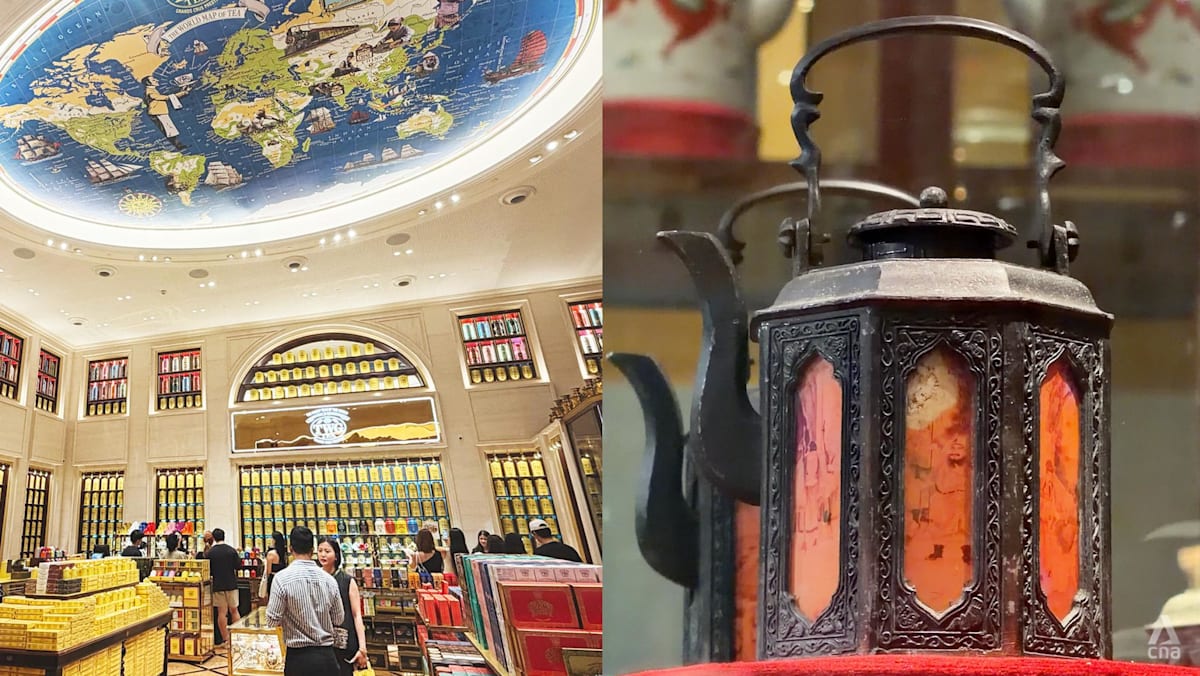
Its new flagship boutique at Terminal 3's departure transit lounge also offers exclusive tea blends and a takeaway counter serving tea-infused ice cream and sorbet.
TWG Tea’s newest flagship boutique houses the brand’s first and only tea museum in the world. (Photo: CNA/Joyee Koo)
This audio is generated by an AI tool.
Home-grown tea brand TWG Tea has opened its largest flagship boutique worldwide at Changi Airport Terminal 3.
The TWG Tea Gallery, which opens to the public on Friday (Oct 2) at Terminal 3's Departure/Transit Lounge North, spans 2,700 sq ft and features a wall displaying more than 1,200 tea tins and a hand-painted world tea map across its high ceiling.
Spanning 2,700 sq ft, this is the brand’s largest flagship boutique in the world. (Photo: CNA/Joyee Koo)
TWG Tea Gallery features a wall displaying more than 1,200 tea tins. (Photo: CNA/Joyee Koo)
The new boutique also features a hand-painted world tea map across its high ceiling. (Photo: CNA/Joyee Koo)
The space also houses the brand’s first museum, showcasing antique teaware, decorative objects and Russian samovars (or metal containers) dating from the 17th to 20th centuries. The collection was personally assembled by Taha Bouqdib, president and CEO of V3 Gourmet and co-founder of TWG Tea, who’s an avid antique collector. He’s been collecting from around the world over the past 15 years for the brand.
Beyond the museum, visitors can browse tea blends, accessories and travel-exclusive gifts, or pick up tea-infused sweet treats, including ice cream and sorbet.
INSIDE THE TWG TEA MUSEUM
The museum showcases more than 170 pieces of antique teaware, offering a glimpse into how craftsmanship and different cultures have shaped tea rituals over the centuries. Visitors can get a short guided tour led by one of the TWG tea trainers.
The boutique houses the brand’s first-ever tea museum, showcasing more than 170 antique teaware and accessories, as well as over 50 antique Russian samovars. (Photo: CNA/Joyee Koo)
Highlights include Yixing teapots, made from unglazed, porous clay that absorbs the tea’s flavours over time, enhancing each brew with repeated use. The collection also features iconic white-and-cobalt-blue teaware, which emerged from exchanges between Islamic and Chinese potters. By the 17th century, Chinese porcelain was so prized in Europe that it became known as “white gold”.
Yixing teapots are made from unglazed, porous clay that absorbs the tea’s flavours over time, enhancing each brew with repeated use. (Photo: CNA/Joyee Koo)
White-and-cobalt-blue teaware emerged from exchanges between Islamic and Chinese potters. Chinese porcelain later became prized as “white gold” in Europe. (Photo: CNA/Joyee Koo)
The collection was personally assembled by Taha Bouqdib, president and CEO of V3 Gourmet and co-founder of TWG Tea. (Photo: CNA/Joyee Koo)
Throughout the museum, visitors can learn how teaware was often smaller in the past, when tea leaves were significantly more expensive. Examples include bachelor teapots made from sterling silver and silver plate. Dating to the 1800s, before the invention of tea bags, these were designed for individual use. Larger vessels, such as Chinese porcelain teapots, emerged as tea drinking became a family ritual.
Teaware was often much smaller in the past, with larger teapots emerging as tea drinking became a shared experience for families and groups. (Photo: CNA/Joyee Koo)
Among the exhibits is a German teapot with a 1930s Art Deco design. Its ceramic body is enclosed in a fitted, felt-lined silver cover that keeps the tea warm, with matching Bakelite feet and finial completing the design. TWG Tea’s Design Teapot reinterprets this concept with polished stainless steel or gold finishes, paired with ceramic or glass teapots.
TWG Tea’s signature teapots were inspired by German Art Deco teapot designs from the 1930s. (Photo: CNA/Joyee Koo)
TWG Tea’s Design Teapot draws inspiration from 1930s German Art Deco teapots. (Photo: CNA/Joyee Koo)
There are also tea caddies, used in 18th-century Britain to keep expensive tea under lock and key in the parlour. These evolved from narrow-necked jars with caps that doubled as measuring devices into what became known as tea caddies. The word “caddy” derives from the Malay word “kati”, a unit of weight by which tea was traditionally sold. A TWG Tea trainer explained during the tour that the lady of the house would also use tea caddies to blend two types of tea together.
The lady of the house would also use tea caddies to blend two types of tea. (Photo: CNA/Joyee Koo)
The collection includes more than 50 antique Russian samovars, which served as both tea-making devices and decorative centrepieces in homes. Among them are pieces from well-known factories in Tula, dating to the 19th and early 20th centuries. Some bear stamps marking awards won by their makers, as well as stamps from countries they travelled to – much like a passport.
The collection includes over 50 antique Russian samovars from the 17th to 20th centuries. (Photo: CNA/Joyee Koo)
EXCLUSIVE TEA BLENDS AND SWEET TREATS
The retail section offers more than 1,000 single-estate teas and exclusive blends, including Grand Voyage Tea (S$45.87), created to mark the boutique’s opening.
Inspired by Singapore’s mix of cultures, the blend has notes of golden orchard fruits, pink rose petals, mallow blossoms and warm spices. It is available as packaged tea or freshly prepared, hot or iced, at the takeaway tea counter. Another exclusive offering is the Singapore Surprise Gift Set (S$89.91), which brings together three of the brand’s popular blends: Singapore Breakfast Tea, Silver Moon Tea and 1837 Black Tea.
The TWG Tea Gallery also introduces the brand’s new takeaway ice cream and sorbet concept, featuring locally inspired flavours such as pandan gula melaka & coconut tea ice cream and soursop & Temi FTGFOP1 sorbet. (Photo: CNA/Joyee Koo)
The boutique offers a selection of exclusive creations, including the Grand Voyage Tea and the Singapore Surprise Gift Set. (Photo: CNA/Joyee Koo)
There's also a selection of tea-infused macarons and chocolate bonbons. (Photo: CNA/Joyee Koo)
Visitors can purchase freshly prepared hot or iced tea at the Takeaway Tea counter. (Photo: CNA/Joyee Koo)
The boutique also introduces the brand’s new takeaway ice cream and sorbet concept. Locally inspired flavours include pandan gula melaka and coconut tea ice cream, as well as soursop and Temi FTGFOP1 sorbet.
Other sweet treats include tea-infused macarons and chocolate bonbons, such as a mango macaron with Alfonso tea-infused chocolate ganache, and pistachio praline with creme brulee tea-infused royal feuilletine crisp.
Taha Bouqdib, president and CEO of V3 Gourmet and co-founder of TWG Tea. (Photo: CNA/Joyee Koo)
Bouqdib described the gallery as “the most definitive expression of TWG Tea to date”.
“ More than a tea boutique, the flagship brings the past, present and future of tea into one immersive experience, celebrating the stories, traditions and artistry that have shaped tea over the centuries, brought to life through its landmark TWG Tea Museum," he said in a statement.
"Singapore has remained central to TWG Tea since its founding, and we are honoured to present our largest global flagship at Changi Airport, an icon of aviation excellence and an extraordinary platform to bring the world of TWG Tea to travellers from around the world.”
TWG Tea Gallery is open 24 hours daily at Changi Airport Terminal 3, Departure/Transit Lounge North, #02-58B.
A single handpicked story that we think you shouldn't miss. Just one a day.
其位于 3 号航站楼出发中转休息室的新旗舰精品店还提供独家混合茶饮和外卖柜台,供应茶味冰淇淋和冰糕。
TWG Tea 最新旗舰店内设有该品牌在全球首家也是唯一一家茶博物馆。(图片:CNA/Joyee Koo)
这段音频是由人工智能工具生成的。
本土茶叶品牌TWG Tea在樟宜机场3号航站楼开设了其全球最大的旗舰精品店。
TWG 茶廊将于周五(10 月 2 日)在 3 号航站楼北出发/中转休息室向公众开放,占地 2700 平方英尺,一面墙上展示了 1200 多个茶叶罐,高高的天花板上绘有一幅手绘的世界茶叶地图。
这家旗舰店占地2700平方英尺,是该品牌在全球最大的旗舰店。(图片:CNA/Joyee Koo)
TWG茶艺廊的一面墙上陈列着超过1200个茶叶罐。(图片:CNA/Joyee Koo)
这家新精品店的高挑天花板上还绘有一幅手绘的世界茶叶地图。(图片:CNA/Joyee Koo)
这里还设有该品牌的首个博物馆,展出17至20世纪的古董茶具、装饰品和俄罗斯萨莫瓦尔(或称金属茶炊)。这些藏品由V3 Gourmet总裁兼首席执行官、TWG Tea联合创始人塔哈·布克迪布亲自搜罗,他本人是一位狂热的古董收藏家。过去15年来,他一直为该品牌从世界各地搜罗古董。
除了博物馆之外,游客还可以浏览茶叶混合物、配件和旅行专属礼品,或者购买茶味甜点,包括冰淇淋和冰糕。
TWG茶博物馆内部
博物馆展出超过170件古董茶具,展现了几个世纪以来,精湛的工艺和不同的文化如何塑造了茶道。游客可以参加由TWG茶艺培训师带领的简短导览。
这家精品店设有该品牌首个茶博物馆,展出超过170件古董茶具和配件,以及50多件俄罗斯古董茶炊。(图片:CNA/Joyee Koo)
亮点包括宜兴紫砂壶,这种茶壶采用无釉多孔的陶土制成,随着时间的推移,会吸收茶叶的香气,使每次冲泡都更加醇香。该系列还包括标志性的白钴蓝茶具,这种茶具源于伊斯兰和中国陶工之间的交流。到了17世纪,中国瓷器在欧洲备受推崇,被誉为“白色黄金”。
宜兴紫砂壶采用未上釉的多孔陶土制成,随着时间的推移,陶土会吸收茶叶的香味,使每次冲泡都更加美味。(图片:CNA/Joyee Koo)
白瓷和钴蓝色茶具源于伊斯兰和中国陶工之间的交流。中国瓷器后来在欧洲被誉为“白色黄金”。(图片:CNA/Joyee Koo)
该系列由 V3 Gourmet 总裁兼首席执行官兼 TWG Tea 联合创始人 Taha Bouqdib 亲自组装。 (照片:CNA/Joyee Koo)
在整个博物馆中,参观者可以了解到,过去茶叶价格昂贵,因此茶具通常较小。例如,博物馆内陈列着一些用纯银和镀银制成的单身汉茶壶。这些茶壶的历史可以追溯到19世纪,在茶包发明之前,是为个人使用而设计的。随着饮茶逐渐成为家庭仪式,像中国瓷茶壶这样的大型茶具也应运而生。
过去的茶具通常比现在小得多,随着饮茶成为家庭和团体共同的娱乐活动,较大的茶壶也随之出现。(图片:CNA/Joyee Koo)
展品中有一款德国茶壶,其设计风格为20世纪30年代的装饰艺术风格。陶瓷壶身包裹在贴合的银色毡衬壶盖内,壶盖可保温,与之相配的胶木壶脚和壶钮则使整体设计更加完整。TWG Tea 的设计茶壶系列以抛光不锈钢或镀金饰面重新诠释了这一理念,并搭配陶瓷或玻璃壶身。
TWG Tea 的标志性茶壶灵感源自 20 世纪 30 年代的德国装饰艺术茶壶设计。 (照片:CNA/Joyee Koo)
TWG Tea 的这款设计茶壶从 20 世纪 30 年代的德国装饰艺术风格茶壶中汲取灵感。(图片:CNA/Joyee Koo)
还有一种叫做茶叶罐的器皿,18世纪的英国人用它来存放昂贵的茶叶,并锁在客厅里。这种器皿最初是由带盖的窄颈罐演变而来,这些罐子既可以作为量杯,也可以作为计量器具。“caddy”(茶叶罐)一词源于马来语“kati”,是茶叶传统的重量单位。TWG Tea的培训师在参观过程中解释说,女主人还会用茶叶罐来混合两种不同的茶叶。
女主人还会用茶叶罐来混合两种茶叶。(图片:CNA/Joyee Koo)
这批藏品包括50多件俄罗斯古董茶炊,它们既是泡茶用具,也是家居装饰的中心摆件。其中一些出自图拉的知名工厂,年代可追溯至19世纪和20世纪初。部分茶炊上盖有印章,记录着制作者获得的奖项,以及他们曾到访过的国家的印章——就像护照一样。
该系列藏品包括50多件17至20世纪的俄罗斯古董茶炊。(图片:CNA/Joyee Koo)
独家茶饮和甜点
零售区提供 1000 多种单一庄园茶叶和独家混合茶,其中包括为庆祝精品店开业而推出的 Grand Voyage Tea(45.87 新元)。
这款茶的灵感源自新加坡多元的文化,融合了金黄果园水果、粉红玫瑰花瓣、锦葵花和温暖香料的芬芳。您可以选择购买包装好的茶饮,也可以在茶饮柜台购买现泡茶饮,冷热皆宜。此外,还有新加坡惊喜礼盒(售价89.91新元),内含该品牌的三款人气茶饮:新加坡早餐茶、银月茶和1837红茶。
TWG茶廊还推出了该品牌全新的外带冰淇淋和雪葩概念,主打本地风味,例如班兰椰糖椰子茶冰淇淋和刺果番荔枝Temi FTGFOP1雪葩。(图片:CNA/Joyee Koo)
这家精品店提供一系列独家产品,包括“环球航海茶”和“新加坡惊喜礼盒”。(图片:CNA/Joyee Koo)
此外,还有一系列茶味马卡龙和巧克力糖果可供选择。(图片:CNA/Joyee Koo)
游客可在外带茶饮柜台购买新鲜冲泡的热茶或冰茶。(图片:CNA/Joyee Koo)
这家精品店还推出了该品牌全新的外带冰淇淋和雪葩概念。灵感源自本地的口味包括班兰椰糖和椰子茶冰淇淋,以及刺果番荔枝和Temi FTGFOP1雪葩。
其他甜点包括茶味马卡龙和巧克力糖果,例如芒果马卡龙配阿方索茶味巧克力甘纳许,开心果果仁糖配焦糖布丁茶味皇家酥脆片。
Taha Bouqdib,V3 Gourmet 总裁兼首席执行官,TWG Tea 联合创始人。 (照片:CNA/Joyee Koo)
布克迪布将该画廊描述为“迄今为止 TWG Tea 最权威的表达”。
“这家旗舰店不仅仅是一家茶叶精品店,它将茶叶的过去、现在和未来融合在一起,打造沉浸式体验,颂扬几个世纪以来塑造茶叶的故事、传统和艺术,并通过其标志性的TWG茶叶博物馆将其生动地呈现出来,”他在一份声明中说道。
“自TWG Tea创立以来,新加坡一直是其核心市场。我们很荣幸能在樟宜机场——航空业的卓越象征,以及将TWG Tea的世界带给世界各地旅客的非凡平台——展示我们全球最大的旗舰店。”
TWG Tea Gallery 每天 24 小时营业,位于樟宜机场 3 号航站楼北出发/中转休息室 #02-58B。
每天一篇,我们精心挑选一篇您不容错过的精彩故事。