Allergic to prawns? A Singapore trial is studying whether you can build up a tolerance对虾过敏?新加坡一项试验正在研究是否可以建立耐受性。
Prawn allergy can mean more than simply skipping the crustacean on your plate, especially when shellfish is common in Singapore cooking. Could gradually exposing the body to prawn offer another way to manage the allergy?
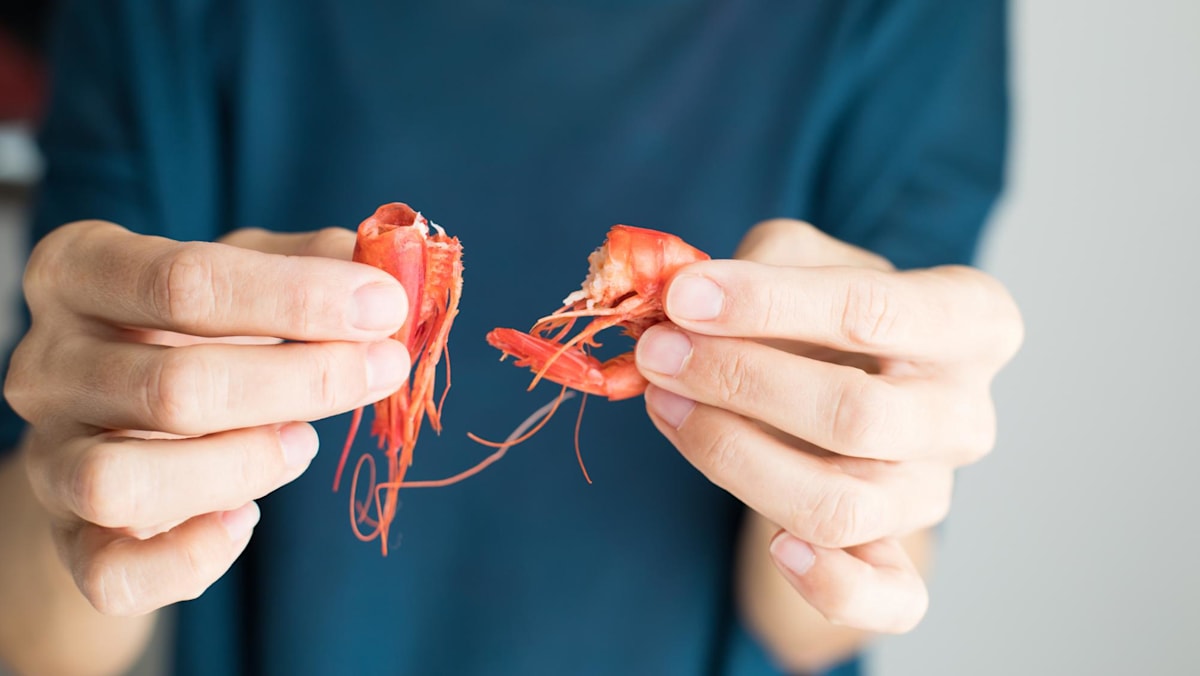
Prawn allergy can mean more than simply skipping the crustacean on your plate, especially when shellfish is common in Singapore cooking. Could gradually exposing the body to prawn offer another way to manage the allergy?
(Photo: iStock/quintanilla)
This audio is generated by an AI tool.
For those with a prawn allergy, avoiding a severe, life-threatening, anaphylactic reaction might sound simple enough: don't eat prawns.
But in Singapore, that can be easier said than done. Shellfish is widely used in local cooking – both as the key ingredient in dishes such as prawn noodle soup, as well as woven into other local favourites such as laksa and rojak. This makes accidental exposure and cross-contamination a concern for people with the allergy.
A new clinical trial in Singapore is offering a seemingly counterintuitive approach: give patients prawn – and even gradually increase the exposure.
The National University Hospital (NUH) has launched Singapore's first clinical trial of oral immunotherapy for prawn allergy to study whether carefully controlled exposure can help patients develop greater tolerance to the food over time.
(Photo: iStock/redonion1515)
WHY IS PRAWN ALLERGY A PARTICULAR CONCERN IN SINGAPORE?
Shellfish allergy is one of the most common food allergies in Singapore, affecting an estimated 90,000 to 150,000 people, according to NUH.
Previous Singapore studies cited by the hospital found that shellfish allergy affects about 5.2 per cent of adolescents. Shellfish is also the leading cause of food-related anaphylaxis seen in Singapore emergency departments, accounting for 14 per cent of food-induced anaphylaxis cases.
Unlike allergies to foods such as milk or eggs, which many children eventually outgrow, shellfish allergy typically develops during adolescence or adulthood and often persists for life. An allergic reaction can range from hives and swelling to potentially life-threatening anaphylaxis.
“For people living with prawn allergy, avoiding prawn is currently the only effective management strategy,” said Dr Lydia Wong, the principal investigator of the study and a consultant with NUH's Division of Paediatric Allergy, Immunology and Rheumatology. “This can be challenging in Singapore, where shellfish is widely used in many local dishes and cross-contamination is difficult to avoid.”
WHAT IS ORAL IMMUNOTHERAPY?
Oral immunotherapy exposes patients to carefully controlled amounts of the food they are allergic to, rather than completely avoiding it. The amount is gradually increased under medical supervision, with the aim of changing how the immune system responds to the allergen.
(Photo: iStock/Doucefleur)
In the NUH study, participants receiving oral immunotherapy will be given gradually increasing doses of specially formulated prawn powder, with researchers studying whether this can help them develop tolerance to prawns over time. The trial's first phase is specifically intended to establish the safety of the approach as well as how well it works.
Importantly, this isn't something people with food allergies should attempt on their own by eating small amounts of the food.
Oral immunotherapy to treat food allergies isn’t new; it has been studied internationally for other allergies involving peanuts, milk and eggs. But evidence for using the treatment for shellfish allergy remains limited. NUH’s study will be among the first in the region to investigate oral immunotherapy specifically for prawn allergy.
WHAT WILL THE PRAWN ALLERGY TRIAL INVOLVE?
The study is intended to answer two fundamental questions: how well does prawn oral immunotherapy work, and is it safe? To do that, NUH plans to recruit up to 30 participants. Of these, 20 will receive oral immunotherapy while another 10 will form the control group.
Those receiving the treatment will undergo therapy for approximately eight to 10 months. Researchers will then monitor them for up to two years to determine whether any improvement is sustained.
(Photo: iStock/Nuttawan Jayawan)
According to NUH, potential participants need to have a convincing history of prawn allergy, meet the study's clinical eligibility criteria and be willing to attend regular follow-up visits throughout the study.
DOES TOLERANCE MEAN YOU'LL BE ABLE TO EAT PRAWNS NORMALLY?
Not necessarily – and this is one of the areas where more research is needed. At this stage, the researchers are investigating whether the treatment can safely increase tolerance and whether any improvement lasts after treatment.
“Through this study, we hope to determine whether oral immunotherapy can safely help patients build tolerance and improve their quality of life,” said Dr Wong.
If oral immunotherapy proves safe and effective, the research could eventually offer another way of thinking about food allergy management. “Beyond evaluating a potential new treatment, the study will help us better understand how oral immunotherapy may benefit patients with shellfish allergy,” said the lead and senior clinical research coordinator Alicia Kang.
For more information or to participate in the prawn allergy trial, visit for.sg/sandit-study .
A single handpicked story that we think you shouldn't miss. Just one a day.
对虾过敏不仅仅意味着餐盘里不能吃虾,尤其是在新加坡,贝类海鲜很常见。逐渐增加对虾的摄入量是否能成为控制过敏的另一种方法呢?
(图片:iStock/quintanilla)
这段音频由人工智能工具生成。
对于对虾过敏的人来说,避免严重的、危及生命的过敏性休克反应听起来很简单:不要吃虾。
但在新加坡,这说起来容易做起来难。贝类在当地烹饪中被广泛使用——既是虾面等菜肴的主要食材,也融入叻沙和罗惹等其他本地美食中。这使得贝类过敏者面临意外接触和交叉污染的风险。
新加坡一项新的临床试验提出了一种看似违反直觉的方法:给患者吃虾——甚至可以逐渐增加摄入量。
新加坡国立大学医院 (NUH) 启动了新加坡首个针对虾过敏的口服免疫疗法临床试验,以研究精心控制的接触是否能帮助患者随着时间的推移对这种食物产生更大的耐受性。
(图片:iStock/redonion1515)
为什么虾类过敏在新加坡是一个特别令人担忧的问题?
据新加坡国立大学医院 (NUH) 统计,贝类过敏是新加坡最常见的食物过敏之一,影响着约 9 万至 15 万人。
医院引用的新加坡先前研究发现,贝类过敏影响约5.2%的青少年。贝类也是新加坡急诊科接诊的食物相关过敏性休克的主要原因,占食物诱发过敏性休克病例的14%。
与牛奶或鸡蛋等食物过敏不同,贝类过敏通常在青春期或成年期出现,而且往往终身存在,许多儿童最终会摆脱这些过敏症状。过敏反应的严重程度不一,轻则出现荨麻疹和肿胀,重则可能危及生命,引发过敏性休克。
“对于虾类过敏患者来说,目前唯一有效的管理策略就是避免食用虾类,”该研究的主要负责人、新加坡国立大学医院儿科过敏、免疫和风湿病科顾问黄莉迪亚医生表示,“这在新加坡可能比较困难,因为贝类广泛用于许多当地菜肴中,很难避免交叉污染。”
什么是口服免疫疗法?
口服免疫疗法并非让患者完全避免食用过敏原,而是让他们接触经过严格控制剂量的过敏原食物。在医生的指导下,逐步增加食物剂量,目的是改变免疫系统对过敏原的反应。
(图片:iStock/Doucefleur)
在新加坡国立大学医院的这项研究中,接受口服免疫疗法的参与者将逐渐服用剂量递增的特制虾粉,研究人员将研究这是否能帮助他们逐渐对虾产生耐受性。该试验的第一阶段旨在确定这种方法的安全性和有效性。
重要的是,食物过敏者不应该自行尝试少量食用这种食物。
口服免疫疗法治疗食物过敏并非新技术;国际上已对其进行过针对花生、牛奶和鸡蛋等其他过敏症的研究。但目前针对贝类过敏的口服免疫疗法疗效证据仍然有限。新加坡国立大学医院的研究将是该地区首批专门针对虾类过敏开展口服免疫疗法研究的项目之一。
对虾过敏试验将包含哪些内容?
这项研究旨在解答两个基本问题:虾口服免疫疗法的效果如何?安全性如何?为此,新加坡国立大学医院计划招募至多30名参与者。其中20名将接受口服免疫疗法,另外10名将作为对照组。
接受治疗的患者将接受大约八到十个月的治疗。之后,研究人员将对他们进行长达两年的监测,以确定疗效是否能够持续。
(照片:iStock/Nuttawan Jayawan)
据新加坡国立大学医院称,潜在参与者需要有令人信服的虾过敏史,符合该研究的临床资格标准,并且愿意在整个研究期间定期参加随访。
耐受性是否意味着你可以正常食用虾?
不一定——这正是需要更多研究的领域之一。目前,研究人员正在调查这种疗法是否能安全地提高耐受性,以及疗效是否能在治疗后持续。
黄医生说:“我们希望通过这项研究确定口服免疫疗法是否能安全地帮助患者建立耐受性并改善他们的生活质量。”
如果口服免疫疗法被证实安全有效,这项研究最终可能会为食物过敏的治疗提供一种新的思路。“除了评估一种潜在的新疗法外,这项研究还将帮助我们更好地了解口服免疫疗法如何使贝类过敏患者受益,”首席研究员兼高级临床研究协调员艾丽西亚·康(Alicia Kang)表示。
如需了解更多信息或参与虾过敏试验,请访问 for.sg/sandit-study。
每天一篇,我们精心挑选一篇您不容错过的精彩故事。