NTU satellite that can use AI to detect forest fires, oil spills, launched by SpaceX rocket新加坡国立大学(NTU)的卫星利用人工智能技术探测森林火灾和石油泄漏,由SpaceX火箭发射升空。
Read more at straitstimes.com.
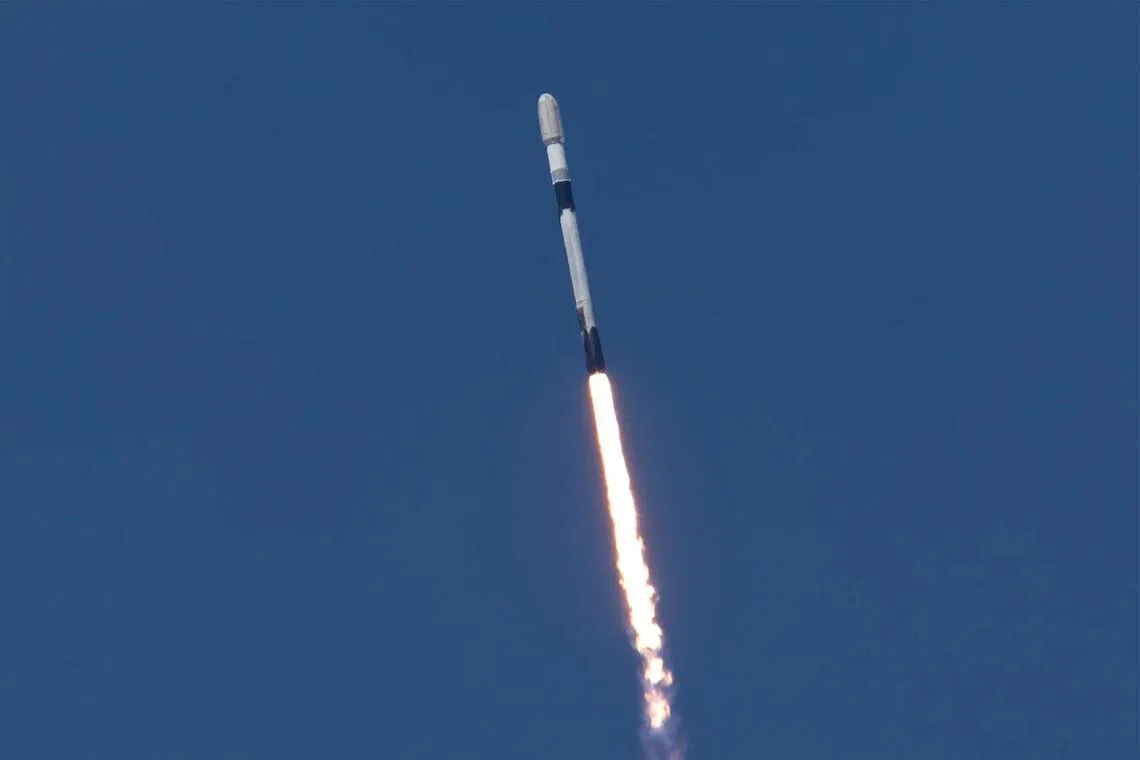
SpaceX’s Falcon 9 rocket took off from California’s Vandenberg Space Force Base on Oct 1, carrying 130 space vehicles.
Published Oct 02, 2026, 06:10 PM
Updated Oct 02, 2026, 06:10 PM
SINGAPORE - A Singapore -made eye in the sky was on Oct 2 launched via a SpaceX rocket into space, where it will keep watch for events such as forest fires and oil spills, and send pings back to Earth if it thinks such disasters are detected.
This shoebox-sized satellite developed by NTU is the first nanosatellite built here to be equipped with AI technologies that can help it analyse and filter cloud-free images, so it only relays useful data.
This cuts out the tedious work for scientists on the ground, who previously needed to sieve through every image.
The satellite, called CRIMSON-1, will be tested during a year-long mission.
Researchers will study how well the 5kg satellite’s computing system manages heat and uses up power under heavy workloads, said NTU and Singapore’s space agency in a joint statement on Oct 2.
The space vehicle will also test a new type of solar cells - which convert solar energy into electricity - in harsh space environments.
The CRIMSON-1 satellite (left) being integrated into the EXOpod Nova system, a satellite deployment system, which deployed the satellite into space after the SpaceX rocket was launched. NTU Singapore
The CRIMSON-1 satellite (left) being integrated into the EXOpod Nova system, a satellite deployment system, which deployed the satellite into space after the SpaceX rocket was launched.
The new solar cells mounted to the satellite are made of an advanced material called perovskite, which are lighter and potentially cheaper than the solar panels used in space, made of gallium arsenide. This technology was developed by NTU researchers and NUS spin-off Singfilm Solar.
Gallium arsenide solar cells can cost between US$250 (S$319) and US$450 per watt, while conventional silicon-based solar cells used on earth are cost less than a dollar per watt.
Perovskites, however, are much thinner and lighter than gallium arsenide, and potentially much cheaper to manufacture, making them attractive for future spacecraft.
CRIMSON-1 will test how well the perovskite cells’ hold up in space and how much electricity they can generate. But the satellite itself will still be powered by gallium-arsenide based panels.
The 30cm-long machine was one of 130 space vehicles that was launched by a single SpaceX rocket from California in the late morning of Oct 1 (2.30am on Oct 2, Singapore time).
CRIMSON-1 was released about 520km away from earth around 55 minutes after SpaceX’s Falcon 9 rocket took off from the Vandenberg Space Force Base.
Close-up of the CRIMSON-1 satellite, where the various perovskite solar cells are being tested at a lab facility. NTU Singapore
Close-up of the CRIMSON-1 satellite, where the various perovskite solar cells are being tested at a lab facility.
This is NTU’s 14th research satellite, and to date, more than 30 Singapore satellites have been launched over the past two decades.
The 30cm by 10cm by 10cm satellite was built by Singapore-based space tech firm Satoro Space, with NTU’s AI technology and perovskite cells plugged into it.
The satellite’s development is among the first projects supported by the National Space Agency of Singapore, which was formed in April 2026, under its $210 million Space Technology Development Programme.
The programme aims to boost the country’s space industry and research ecosystem, while making opportunities for homegrown tech to be tested in space.
Ngiam Le Na, chief executive of the National Space Agency of Singapore, said: “Perovskite solar cells will provide a compelling advantage over conventional solar panels – their thin, lightweight properties make them particularly well-suited for space applications, where every gram matters.”
The team behind CRIMSON-1 at NTU Satellite Research Centre. NTU Singapore
The team behind CRIMSON-1 at NTU Satellite Research Centre.
New solar technologies must prove that they can survive the physical stresses of a rocket launch and endure the harsh conditions of space while generating consistent power, said the space agency and NTU.
“CRIMSON-1 will test the cells’ physical durability and efficiency after their journey from the ground into space and measure how much electrical power they generate,” they added.
The 130 space vehicles carried by the 70m-long Falcon 9 rocket also included mini satellites, two spacecraft, and an AI data centre satellite, which is an experiment by Google.
10 月 1 日,SpaceX 的猎鹰 9 号火箭从加利福尼亚州范登堡太空部队基地发射升空,携带了 130 个航天器。
发布于2026年10月2日 下午6:10
更新于2026年10月2日下午6:10
新加坡——10月2日,新加坡制造的“空中之眼”卫星通过SpaceX火箭发射升空,它将在太空中监测森林火灾和石油泄漏等事件,并在检测到此类灾难时向地球发送信号。
这颗由南洋理工大学开发的鞋盒大小的卫星是这里建造的第一颗配备人工智能技术的纳米卫星,该技术可以帮助它分析和过滤无云图像,使其只传输有用的数据。
这样就省去了实地科学家繁琐的工作,他们以前需要逐一筛选每一张图片。
这颗名为 CRIMSON-1 的卫星将在为期一年的任务中进行测试。
南洋理工大学和新加坡航天局在 10 月 2 日的一份联合声明中表示,研究人员将研究这颗 5 公斤重的卫星的计算系统在高负载下如何管理热量和消耗电力。
该航天器还将测试一种新型太阳能电池——这种电池可以将太阳能转化为电能——在恶劣的太空环境中进行测试。
CRIMSON-1卫星(左图)正在集成到EXOpod Nova系统中。EXOpod Nova是一种卫星部署系统,在SpaceX火箭发射后将卫星部署到太空。新加坡南洋理工大学
CRIMSON-1 卫星(左)正在集成到 EXOpod Nova 系统中,这是一个卫星部署系统,在 SpaceX 火箭发射后将卫星部署到太空。
卫星上安装的新型太阳能电池采用一种名为钙钛矿的先进材料制成,比目前太空中使用的砷化镓太阳能电池板更轻,成本也可能更低。这项技术由南洋理工大学的研究人员和新加坡国立大学的衍生公司Singfilm Solar共同开发。
砷化镓太阳能电池的成本在每瓦 250 美元(319 新元)到 450 美元之间,而地球上使用的传统硅基太阳能电池的成本不到每瓦 1 美元。
然而,钙钛矿比砷化镓更薄更轻,而且制造成本可能也更低,因此对未来的航天器很有吸引力。
CRIMSON-1 将测试钙钛矿电池在太空中的性能以及发电能力。但卫星本身仍将由砷化镓太阳能电池板供电。
这个长 30 厘米的机器是 10 月 1 日上午晚些时候(新加坡时间 10 月 2 日凌晨 2 点 30 分)由 SpaceX 一枚火箭从加利福尼亚州发射的 130 个航天器之一。
CRIMSON-1 在 SpaceX 的猎鹰 9 号火箭从范登堡太空部队基地发射升空约 55 分钟后,在距离地球约 520 公里处释放。
CRIMSON-1卫星的特写镜头,图中可见实验室正在测试各种钙钛矿太阳能电池。新加坡南洋理工大学
CRIMSON-1 卫星的特写镜头,其中各种钙钛矿太阳能电池正在实验室设施中进行测试。
这是南洋理工大学发射的第 14 颗科研卫星,迄今为止,过去二十年间,新加坡已发射了 30 多颗卫星。
这颗 30 厘米 x 10 厘米 x 10 厘米的卫星由新加坡航天科技公司 Satoro Space 制造,并搭载了南洋理工大学的人工智能技术和钙钛矿电池。
该卫星的研发是新加坡国家航天局支持的首批项目之一。新加坡国家航天局成立于 2026 年 4 月,其 2.1 亿美元的空间技术发展计划是该项目的主要资金来源。
该计划旨在促进该国的航天工业和研究生态系统发展,同时为本土技术在太空进行测试创造机会。
新加坡国家航天局首席执行官严黎娜表示:“钙钛矿太阳能电池将比传统太阳能电池板具有显著优势——其轻薄的特性使其特别适合太空应用,因为在太空应用中,每一克都至关重要。”
新加坡南洋理工大学卫星研究中心CRIMSON-1项目团队。
南洋理工大学卫星研究中心 CRIMSON-1 项目的团队。
航天局和南洋理工大学表示,新的太阳能技术必须证明它们能够承受火箭发射的物理压力,并能经受住太空的恶劣条件,同时还能持续发电。
他们补充说:“CRIMSON-1 将测试电池从地面到太空的物理耐久性和效率,并测量它们产生的电量。”
由70米长的猎鹰9号火箭携带的130个航天器还包括微型卫星、两艘航天器和一个人工智能数据中心卫星,这是谷歌的一项实验。