Thai Airways boss fired by the board chaired by Finance Ministry chief on Friday over baggage crisis泰国航空公司首席执行官因行李危机于周五被财政部长主持的董事会解雇。
Chai Eamsiri’s four-decade Thai Airways career hits a dramatic reversal as he is ousted from command after 10,000 bags pile up. The executive who helped… Read More ›
新闻视频
October 2, 2026 at 8:34 pm
in Economy , Living , Media , Politics , Thailand
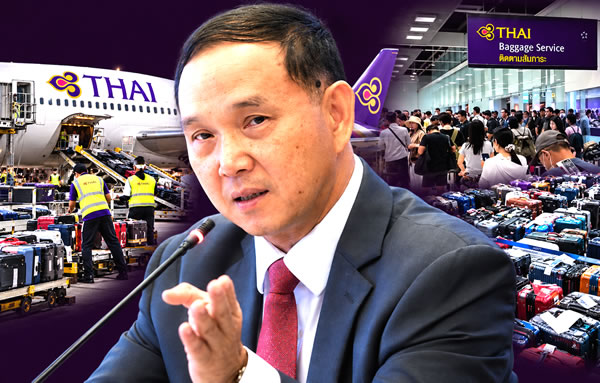
Thai Airways ousted Chief Executive Officer Chai Eamsiri from operational command on Friday after days of chaos stranded thousands of bags, cancelled flights and threatened vital cargo operations at Suvarnabhumi Airport. The dramatic boardroom move came barely 16 months after THAI escaped court rehabilitation, ending Chai’s control after he played a central role in its remarkable financial recovery. Now the 40-year airline veteran faces a fact-finding investigation as director Samrit Samniang takes command. Yet the upheaval reaches far beyond one executive. Government ministers piled pressure on THAI before the board acted, while the Finance Ministry remains its dominant shareholder. Its Permanent Secretary also chairs the board, putting the state’s powerful continuing influence over Thailand’s flag carrier firmly back under the spotlight.
Thai Airways ousts CEO Chai Eamsiri after baggage chaos hits Suvarnabhumi. The 40-year veteran now faces an inquiry as state influence over THAI returns to the spotlight. ( Source: Khaosod )
Thai Airways International removed Chief Executive Officer Chai Eamsiri from executive control on Friday after the crippling Suvarnabhumi baggage crisis. The decision followed days of cancellations, stranded luggage, cargo disruption and mounting government pressure. Yet Chai’s fall reaches far beyond an airport breakdown.
He helped manage THAI’s finances during its rehabilitation and later led its return to profitability. Last year, the airline finally emerged from court supervision. It also returned to normal Stock Exchange of Thailand trading under his leadership.
Now, the executive closely associated with that recovery has lost operational command. Thai Airways’ board made the decision at an extraordinary meeting on October 2. Chairman Lavaron Sangsnit presided over the meeting.
Finance Ministry chief chairs Thai Airways board meeting as Chai loses command and Samrit takes over
Significantly, Lavaron is also Permanent Secretary of the Ministry of Finance. The ministry remains THAI’s dominant shareholder with a 38.90% stake. After the meeting, director Samrit Samniang was appointed acting chief executive with immediate effect.
Chai’s precise employment status, however, is more complicated than an outright dismissal. He said he had not been dismissed as a Thai Airways employee. Instead, the board removed him from CEO duties during a fact-finding investigation.
He also remains a company director. His existing employment contract runs until January 31, 2027. In practical terms, however, Chai no longer controls the airline he led since February 2023.
His removal followed THAI’s worst operational crisis since completing rehabilitation. Severe flooding across Bangkok initially prevented many ground workers from reaching Suvarnabhumi Airport. As a result, the airline suffered acute manpower shortages across its ground-handling operation. What began as weather disruption then developed into a major operational failure. Thousands of bags accumulated as THAI struggled to recover.
Passengers face stranded bags as Thai Airways cuts flights and struggles to restore normal operations
Passengers waited hours for their luggage, while some eventually flew without their bags. At the same time, flights were delayed, rescheduled or cancelled. Cargo operations also came under increasing pressure. At its peak, the baggage backlog reportedly reached about 10,000 items. Almost 40 flights were cancelled or rescheduled during the disruption.
On September 29, Chai acknowledged that about 5,000 bags were already stranded. He apologised publicly and promised to clear the backlog within 72 hours. Instead, the disruption worsened. The number of accumulated bags subsequently moved towards 10,000. Thousands remained outstanding while THAI struggled to rebuild its handling capacity.
In response, the airline reduced its flying programme to match available manpower. Fifteen flights scheduled for October 1 were cancelled. Another nine were cancelled on October 2. Meanwhile, further schedules were reduced as management tried to stabilise operations. Full scheduled services were expected to resume on Saturday, October 3.
The baggage crisis also exposed problems beyond Bangkok’s flooded roads. Other ground-handling companies at Suvarnabhumi continued operating during the disruption. THAI suffered the overwhelming breakdown. Consequently, scrutiny shifted towards staffing, outsourcing, contingency planning and management preparation. The airline’s ability to respond to a severe manpower shortage became a central issue.
Military crews join baggage recovery as ministers turn mounting pressure on Thai Airways management
Military personnel were eventually deployed to help clear the baggage mountain. Separately, Airports of Thailand became involved in the recovery effort. Thailand Post also provided assistance. Government intervention then increased as the breakdown continued. The problem had moved beyond an internal airline crisis.
Tourism and Sports Minister Surasak Phancharoenworakul inspected the situation at Suvarnabhumi. Afterwards, he sharply criticised Thai Airways management. Surasak questioned why THAI staff reportedly continued servicing partner airlines during the disruption. Its own passengers, meanwhile, were enduring serious delays. He demanded urgent corrective action from senior management.
More pointedly, Surasak said executives unwilling or unable to solve the problems should resign. His intervention intensified pressure on Chai and other senior executives. Deputy Transport Minister Siripong Angkasakulkiat also became involved. Together, Surasak and Siripong pressed for an urgent board meeting. Deputy Prime Minister and Transport Minister Phiphat Ratchakitprakarn subsequently intervened as disruption continued.
By Friday, therefore, government pressure surrounding the airline had become intense. Still, the formal decision to remove Chai came from Thai Airways’ board. It was not announced as a cabinet order. That distinction matters because THAI is no longer formally a state enterprise. Even so, Friday’s events highlighted the state’s powerful position within the airline.
Finance Ministry remains dominant Thai Airways shareholder as state influence stays embedded in governance
The Ministry of Finance remains Thai Airways’ largest individual shareholder by a wide margin. Its holding currently stands at 38.90%. In comparison, Bangkok Bank is the second-largest shareholder with 8.49%. Krung Thai Bank and Government Savings Bank are also substantial shareholders. More importantly, the Finance Ministry’s most senior civil servant chairs THAI’s board.
Against that backdrop, Lavaron chaired the extraordinary meeting which ended Chai’s executive command. Cabinet ministers had already demanded accountability from management. However, the supplied material contains no evidence that ministers instructed directors how to vote. Nor does it establish that the government has formally retaken control of Thai Airways.
Legally, THAI remains a listed public company. Its shares continue trading on the Stock Exchange of Thailand. Accordingly, Lavaron stressed that the company remained subject to capital-market disclosure requirements. The board decision therefore had to be disclosed through the appropriate market procedures. Nonetheless, the state remains firmly embedded in the airline’s ownership and governance.
That structure emerged from THAI’s near financial collapse in 2020. The airline had struggled with losses since 2012. Then Covid-19 devastated international aviation and destroyed passenger traffic. Revenue collapsed while substantial debts remained. By 2020, the flag carrier faced a severe financial crisis.
Thai Airways sheds state enterprise status before court rehabilitation tackles about ฿400 billion of debt
At that point, the government made a crucial structural change. On May 22, 2020, the Finance Ministry sold 3.2% of THAI to Vayupak Fund 1. Its holding consequently fell to 47.9%. Government ownership therefore dropped below the 50% threshold. Thai Airways ceased being a conventional state enterprise.
Four days later, the airline petitioned the Central Bankruptcy Court for business rehabilitation. The restructuring ultimately dealt with debts of about ฿400 billion. Thai Airways sharply reduced its workforce and simplified its aircraft fleet. Costs were cut throughout the business. Assets were reorganised, while creditors accepted extensive restructuring of their claims.
The Central Bankruptcy Court approved THAI’s rehabilitation plan on June 15, 2021. Subsequently, an amended rehabilitation plan was approved in October 2022. Thai Airways therefore entered rehabilitation in 2020, not 2022. Nevertheless, 2022 became another critical stage in the restructuring process.
Chai was already near the centre of the financial operation. Born in 1962, he joined Thai Airways in 1985. His career with the carrier eventually stretched beyond four decades. Chai studied business administration at Assumption University, specialising in marketing. Later, he completed an MBA in management at Kasetsart University.
Chai rises through Thai Airways finance ranks to take a central role during the airline’s restructuring
Over time, however, his career increasingly shifted towards finance. That experience became crucial during THAI’s financial collapse. In November 2020, Chai became acting senior finance executive. The appointment came months after the rehabilitation petition. In January 2021, he became Executive Vice President for Finance and Accounting. Four months later, he became Chief Financial and Accounting Officer.
Chai was therefore deeply involved in senior financial management during the restructuring. He was not solely responsible for THAI’s rescue. Creditors, plan administrators, employees and other executives were also central to the process. Even so, Chai occupied a key financial position while the rehabilitation plan was implemented.
His responsibilities increased again on February 1, 2023. Chai became Thai Airways chief executive while the company remained under court-supervised rehabilitation. Commercial performance was already improving. His task was to drive that recovery while completing the remaining rehabilitation requirements.
The subsequent financial results were substantial. During 2023, revenue excluding one-off transactions reached ฿161.07 billion. That represented growth of 53.3%. Operating profit reached ฿40.21 billion. Net profit, meanwhile, rose to ฿28.12 billion after a small loss during 2022.
Passenger traffic and profits surge as Thai Airways clears key financial targets during rehabilitation
Passenger traffic also recovered sharply. Thai Airways carried 13.76 million passengers during 2023, representing growth of 52.7%. Its average cabin factor reached 79.7%. Notably, another important rehabilitation target was comfortably exceeded. EBITDA after aircraft lease payments reached ฿42.88 billion. The rehabilitation plan required at least ฿20 billion.
The improvement continued during 2024. Revenue excluding one-off transactions increased another 16.7% to ฿187.99 billion. Operating profit reached ฿41.52 billion. THAI technically recorded a consolidated net loss of ฿26.9 billion. That figure, however, included a major one-time accounting charge.
Specifically, the charge amounted to ฿45.27 billion and related to debt conversion under the rehabilitation process. Elsewhere on the balance sheet, the change was dramatic. Shareholders’ equity had previously stood at negative ฿43.35 billion. By the end of 2024, it had moved to positive ฿45.50 billion. Another major barrier to completing rehabilitation had disappeared.
Thai Airways then prepared to leave court protection. On April 28, 2025, it petitioned the Central Bankruptcy Court to terminate rehabilitation. The court approved the request on June 16. That decision formally ended almost five years of court-supervised restructuring.
Thai Airways exits court rehabilitation and returns to stock trading as profits and equity strengthen
By then, THAI had repaid approximately ฿94 billion of debt. Around ฿190 billion in obligations remained. Those liabilities were scheduled for repayment over the following decade. Even with those debts, the airline had met the conditions required to leave rehabilitation.
Less than two months later, another milestone followed. Thai Airways shares resumed trading on the Stock Exchange of Thailand on August 4, 2025. The SET removed the suspension and possible-delisting designations. In effect, THAI had travelled from bankruptcy protection back to normal listed-company trading.
Financial improvement continued during 2025. Thai Airways recorded approximately ฿30.91 billion in net profit. Shareholders’ equity climbed further to ฿75.83 billion. Liabilities, meanwhile, declined to ฿228.15 billion. Chai consequently became closely associated with the final stages of THAI’s financial recovery.
That record makes the speed of his downfall particularly striking. The financial rehabilitation took almost five years. The crisis which cost Chai executive control unfolded within days. Yet Friday’s board action was not limited to the baggage breakdown.
A fact-finding committee will examine the operational crisis and senior management responsibility. Investigators are expected to consider why the disruption became so severe. In addition, THAI’s crisis-management arrangements will come under scrutiny. The airline plans to review its management structure following the breakdown.
Thai Airways reviews staffing and outsourcing as Chai also faces scrutiny over major wine procurement
As part of that process, employment arrangements covering ground and warehouse staff will also be examined. Multi-tier subcontracting and external outsourcing are expected to receive particular attention. Those arrangements became important after manpower shortages crippled THAI’s ground operation.
On another front, Chai reportedly faces scrutiny over a separate procurement matter. That inquiry concerns approximately 860,000 bottles of wine worth more than ฿800 million. Reports said the procurement involved a single supplier. However, the supplied material contains no finding that Chai committed wrongdoing. The issue remains under investigation.
Chai has also described what happened inside Friday’s extraordinary board meeting. Senior management initially briefed directors about the flooding and recovery operation. Chai participated in that presentation. However, he was the board’s only executive director. He therefore left while the non-executive directors continued their discussions.
Behind closed doors, those directors considered his position without him. They subsequently decided to remove him from CEO duties. Chai said he learned of the decision afterwards. He also said detailed grounds were not initially provided. He was still awaiting the formal scope of the investigation.
Chai awaits investigation details after directors remove him from CEO duties at extraordinary meeting
From his perspective, investigators could examine why the crisis escalated. They could also consider why its impact was not contained earlier. Additionally, the inquiry could examine why THAI’s crisis-management plan was not effectively activated. Chai stressed that these were his own expectations. The detailed investigation terms had not yet been given to him.
Asked about politics, Chai stopped short of accusing the government of ordering his removal. He acknowledged that politics existed throughout Thailand. However, he made no direct claim of political interference. He also said several people wanted the chief executive position. Those interested parties came from inside and outside Thai Airways.
The timing adds another layer to Friday’s decision. THAI was already recruiting Chai’s permanent successor before the baggage crisis brought his removal. His contract was scheduled to expire on January 31, 2027. Applications for the next CEO reportedly closed on September 30. Two days later, Chai was stripped of executive authority.
For the moment, Samrit has taken command. He was already a Thai Airways director before Friday’s decision. Previously, he served as a senior executive at PTT Exploration and Production. His immediate task is restoring normal operations following the Suvarnabhumi breakdown.
Thai Airways said normal flight schedules would resume on Saturday. It also planned to deliver outstanding delayed baggage by Saturday night. In parallel, arrangements for passengers collecting bags were being changed. Previously, delayed luggage was collected from the Suvarnabhumi terminal.
Chai’s successor takes command as Thai Airways restores flights and changes delayed baggage collection
From Saturday, collection would move to the THAI Ground Service Maintenance building. The facility will operate around the clock. Thai Airways is also continuing efforts to deliver delayed luggage directly to passengers.
Separately, the Transport Ministry has addressed compensation for affected travellers. Siripong told Parliament on Thursday that existing legislation would govern compensation. He cited the International Carriage by Air Act B.E. 2558 and its subsequent amendment. Those provisions cover passenger rights involving delayed flights and baggage.
Thai Airways also reimburses certain essential purchases caused by delayed luggage. Passengers, however, must provide supporting documentation, including receipts. Compensation therefore remains governed by existing airline and legal procedures.
Financial markets showed little immediate alarm on Friday afternoon. THAI shares were trading 0.88% higher at ฿5.70. The management upheaval nonetheless marks another major turning point for Thailand’s flag carrier.
Chai entered Thai Airways in 1985 and rose through decades of expansion, losses and financial crisis. During rehabilitation, he became one of the airline’s senior finance executives. He later took command while THAI remained under court supervision. Under his leadership, revenue surged and operating profits returned.
At the same time, passenger traffic recovered strongly and shareholders’ equity returned to positive territory. Court-supervised rehabilitation subsequently ended. Thai Airways then returned to normal stock-market trading. Those milestones formed the strongest period of Chai’s leadership.
Thai Airways shares hold firm as Chai’s four-decade career culminates in recovery before sudden removal
Days of chaos at Suvarnabhumi then brought his executive tenure to an abrupt halt. Initially, flooding and staff shortages triggered the disruption. Soon afterwards, thousands of bags were stranded. Flights were cancelled, schedules were cut and cargo operations came under pressure.
Outside help then became necessary. Military personnel joined the recovery effort. Airports of Thailand and Thailand Post also became involved. At government level, ministers publicly demanded accountability. THAI’s contingency planning, staffing and outsourcing arrangements subsequently came under scrutiny.
The board then acted. Chai was removed from CEO duties, while Samrit took operational command. Fact-finding investigations were ordered. Thai Airways also announced reviews covering crisis management, staffing and subcontracting. Separately, the wine procurement inquiry remains unresolved.
Friday’s events also place THAI’s post-rehabilitation governance back under close examination. The airline is no longer a state enterprise. The Finance Ministry does not hold a majority stake. Even so, its 38.90% holding makes it the dominant shareholder.
At board level, the connection is equally direct. The Finance Ministry’s Permanent Secretary serves as THAI chairman. State-linked financial institutions are also substantial shareholders. Meanwhile, cabinet ministers became heavily involved as the Suvarnabhumi crisis intensified.
State links remain strong after Chai’s removal as Thai Airways faces fresh scrutiny over its governance
Those are the established governance facts surrounding Friday’s decision. The supplied material does not establish a formal return to state-enterprise status. Likewise, it does not establish that cabinet ministers directed the board vote. The sequence itself, however, is clear.
First came a major operational breakdown at Suvarnabhumi. Government ministers then publicly intervened. Pressure on management intensified before an extraordinary board meeting was convened. The Finance Ministry Permanent Secretary chaired that meeting. Afterwards, Chai no longer controlled the airline.
Attention now turns to the investigations. One will examine the baggage crisis and management response. Another concerns the reported wine procurement. At the same time, Thai Airways must complete the search for its next permanent chief executive.
For Chai, the reversal has been dramatic. He spent more than 40 years inside Thai Airways. During its collapse, he rose to a senior financial position. During its recovery, he became chief executive. He then led THAI through the final stages of rehabilitation.
By the end of that process, the numbers had changed radically. Operating profits had returned. Shareholders’ equity had turned positive. Billions of baht in debt had been repaid. Thai Airways had also returned to the stock exchange.
Now Chai remains an employee and director, but without executive control. His removal came months before his contract expired. It also came two days after applications closed for his successor. His position will now depend on the investigations and subsequent board decisions.
Chai’s dramatic reversal follows five-year rehabilitation as Thai Airways enters another leadership change
The contrast is sharp. Thai Airways spent almost five years escaping court-supervised rehabilitation. Chai stood near the centre of its financial management for much of that period. He then ran the airline during its return to normal corporate life.
Within days, however, the Suvarnabhumi breakdown transformed his position. A weather-driven staff shortage became a baggage crisis. The baggage crisis became a flight and cargo problem. Government ministers then intervened, and the board moved against its chief executive.
Thai Airways therefore enters another leadership transition barely 16 months after leaving rehabilitation. This time, the airline is profitable and publicly traded. Its immediate problems are operational recovery, management accountability and selecting a new chief executive.
At the same time, its ownership structure remains unchanged. The Finance Ministry remains the dominant shareholder. Its Permanent Secretary remains chairman. Thai Airways remains outside formal state-enterprise status.
For Chai, however, Friday changed everything. The finance executive who helped carry THAI through rehabilitation no longer runs the airline. Samrit now holds operational command while investigators examine how the Suvarnabhumi crisis was allowed to grow.
Business leaders pile pressure on Thai Airways over vital air cargo artery for the kingdom’s exports to the world
Government takes a stronger hand as Thai Airways crisis at Suvarnabhumi Airport worsened Wednesday
Thai Airways admits it got it wrong as Suvarnabhumi Airport public areas are swamped by a baggage flood
Thai Airways CEO apologises for ongoing flooding crisis issues with defective carts and delayed flights
Military operations are expanded at Suvarnabhumi Airport as crisis is still not brought under control
Tourism minister directs acute airport baggage crisis caused by workers who failed to turn up for shifts
Royal Thai Army deployed to Suvarnabhumi Airport after baggage chaos gets the better of exhausted staff
Bangkok airports open and flights running but there are delays and baggage issues at Suvarnabhumi
Flooding tragedy in Samut Prakan near Bangkok. Two die from electrocution after family car is submerged
Engineers work through night after Sunday’s fire on Bangkok’s Blue Line saw more damage than thought
State Railway company brings charges against private drivers linked to last Saturday’s Bangkok train disaster
Police to review 58 rail crossings after 8 people died in train bus smash. Train driver had a drug habit
Arrested man linked with Chatuchak building collapse now tells police he is a Chinese state employee
Joseph Anthony is an expat from Ireland who has lived in Thailand for the last decade. He has worked extensively in the media including editorial positions in Ireland and Thailand. He is focused on economic and business stories in Thailand as well as the expat lifestyle.
All posts by Joseph O' Connor
Thai Airways CEO apologises for ongoing flooding crisis issues with defective carts and delayed flights September 29, 2026 Defective baggage equipment and staff shortages hammer
Foreign tourist arrivals already down 3.65% with fears the flooding crisis may impact the Chinese market September 29, 2026 Thailand’s tourism engine sputters into high season
Anutin rejects appeal against deportation made by French man Kevin Dimino despite wife’s submission September 28, 2026 French zoo owner Kevin Dimino faces deportation after
32 year old Ranger killed in one shot incident in Narathiwat on Sunday evening as he took up position September 28, 2026 One gunshot kills Ranger Sukran Lateh, 32, as his
Tourism minister directs acute airport baggage crisis caused by workers who failed to turn up for shifts September 28, 2026 Tourism Minister Surasak rushes to Suvarnabhumi as the
Prime Minister Anutin wades into flood hit areas to be met with a mixed reaction including seething anger September 28, 2026 Bangkok flood victims confront Prime Minister Anutin
Nene Royal after conquering the showbiz world this week returns home to Phuket to her granny’s embrace September 27, 2026 Thailand’s Nene Royal returns to Phuket after
Bangkok airports open and flights running but there are delays and baggage issues at Suvarnabhumi September 27, 2026 Flood chaos hits Suvarnabhumi as passengers wait six
Bangkok flooding eases as front moves to Myanmar but Governor warns city needs 2-3 days to recover September 27, 2026 The Thai capital races to drain vast floodwater after
Figures for opening 8 months of 2026 show a gaping trade deficit as Thailand imports more from China September 27, 2026 Prime Minister Anutin Charnvirakul visited London
PM directs flash flooding crisis which has hit Bangkok making all 50 districts disaster zones from London September 26, 2026 Bangkok battles severe flooding after almost 300mm of
Prime Minister Anutin’s US visit this week yielded a closer ties pact between Bangkok and Wall Street September 26, 2026 Wall Street opens its doors to closer Thai links as
Horror in Phuket as policeman’s Glock gun misfires in slider action fatally wounding his 49 year old mother September 25, 2026 Phuket policeman faces a fatal shooting probe after
Bombshell Supreme Court ruling links Bhumjaithai Party figure with orchestrated Senate poll collusion September 25, 2026 Supreme Court exposes corrupt conduct in the 2024
Prime Minister and his team grilled by Wall Street on Thailand’s geopolitical stance and growth plans September 25, 2026 Hard-boiled Wall Street investors put PM Anutin and
Four sentenced to life for deadly 2022 insurgency bombing in Pattani. Death sentences commuted to life September 24, 2026 Death sentences for four men are reduced to life
Bhumjaithai political overlord in Prachin Buri to spend life in prison after death sentence is commuted by court September 24, 2026 Ex-minister Sunthorn Wilawan, 87, gets life after his
Race against time and water flows as PM Anutin works round the clock tackling flooding emergency September 29, 2026
Thailand moves carefully with AI regulation as US tech warns over key provisions hindering investment September 29, 2026
Military operations are expanded at Suvarnabhumi Airport as crisis is still not brought under control September 28, 2026
PM’s relief as Constitutional Court upholds February 8th General Election despite a barcode warning September 28, 2026
Royal Thai Army deployed to Suvarnabhumi Airport after baggage chaos gets the better of exhausted staff September 28, 2026
Love triangle horror in Chumphon sees all three dead after government officer goes on a killing rampage September 27, 2026
NIDA opinion poll shows rising apathy among the Thai public as Prime Minister Anutin’s base crashes September 27, 2026
Flooding tragedy in Samut Prakan near Bangkok. Two die from electrocution after family car is submerged September 27, 2026
Crucial ballot decision of Constitutional Court on Monday could upend government and Thai politics September 27, 2026
American arrested in Pattaya after a joint agency raid found an illicit narcotics factory in his suburban home September 26, 2026
Warning in Thailand over fake cough syrup bottles. Police smash counterfeit medicine empire in 4 raids September 26, 2026
Spanish chef (32) who murdered and dismembered a Colombian surgeon on Koh Phangan loses appeal September 26, 2026
Dizziness, headaches in a Pattaya locale after a cannabis farm fire at a residence on Friday morning guts the property September 25, 2026
33 year old sets fire to Honda Scooby in Udon Thani after mother refused to buy him a more powerful ride September 25, 2026
Ministers accused of neglecting Thai farmers. Crucial aid support has not yet reached the cabinet table September 25, 2026
Prime Minister Anutin Charnvirakul formally summoned by parliament over local government exam scandal September 24, 2026
Former Justice Minister hails major bankruptcy bill which could help reduce the household debt burden September 24, 2026
Nene Royal wins big for Thailand with blistering ‘Seven Nation Army’ final act. Nets $1 million prize September 24, 2026
Chinese men arrested on rape and extortion charges after Pattaya raid. Woman locked up and chained September 23, 2026
Digital Minister (36) and heir to powerful Chidchob dynasty has a fortune of hundreds of millions September 23, 2026
Latest cannabis bill agreed by cabinet on Tuesday to rein in the out of control weed industry in Thailand September 23, 2026
Legal heavyweights plan seminar to review Election Commission’s move to let top politicians off the hook September 22, 2026
© 2026 Thai Examiner. All rights reserved.
2026年10月2日晚上8:34
经济、生活、媒体、政治、泰国
在素万那普机场混乱数日,导致数千件行李滞留、航班取消,并威胁到重要的货运业务后,泰国航空公司于周五解除了首席执行官柴·埃姆西里的运营指挥权。此次戏剧性的董事会人事变动距离泰航摆脱法院重组仅16个月,此前柴·埃姆西里在泰航令人瞩目的财务复苏中发挥了核心作用,并结束了其控制权。如今,这位拥有40年航空从业经验的老将正面临事实调查,董事萨姆里特·萨姆尼昂接管了公司。然而,此次动荡的影响远不止于一位高管。在董事会采取行动之前,政府部长们就已向泰航施加了巨大压力,而财政部仍然是其最大股东。财政部常务秘书同时也是董事会主席,这使得国家对泰国国家航空公司持续强大的影响力再次成为关注焦点。
泰国航空素万那普机场行李混乱事件后,首席执行官柴·伊姆西里被解职。这位在泰航工作了40年的老将目前面临调查,泰航的政府干预问题再次成为关注焦点。(来源:Khaosod)
在素万那普机场行李危机造成严重后果后,泰国国际航空公司于周五解除了首席执行官柴·伊姆西里的职务。此前数日,航班取消、行李滞留、货运中断,以及政府施加的压力不断增加。然而,柴的下台远不止于机场故障。
他曾协助管理泰航的财务,帮助其度过重组期,并最终带领公司扭亏为盈。去年,泰航终于摆脱了法院监管,并在他的领导下恢复了在泰国证券交易所的正常交易。
如今,与公司复苏密切相关的这位高管失去了运营指挥权。泰国航空董事会在10月2日召开的特别会议上做出了这一决定。董事长拉瓦隆·桑斯尼特主持了会议。
财政部长主持泰国航空董事会会议,此前柴失去领导权,萨姆里特接任。
值得注意的是,拉瓦隆同时也是财政部常务秘书。财政部仍是泰航的最大股东,持有38.90%的股份。会后,董事萨姆里特·萨姆尼昂被任命为代理首席执行官,立即生效。
然而,柴的确切雇佣状态比直接解雇要复杂得多。他表示,他并非被泰国航空解雇,而是在董事会进行事实调查期间,被解除了首席执行官的职务。
他仍担任公司董事。他现有的雇佣合同将于2027年1月31日到期。但实际上,柴已不再控制他自2023年2月起领导的这家航空公司。
在他被解雇之前,泰航遭遇了自完成重建以来最严重的运营危机。曼谷的严重洪灾最初导致许多地勤人员无法抵达素万那普机场。因此,泰航的地勤运营部门出现了严重的人手短缺。最初由天气原因造成的混乱,随后演变成一场重大的运营事故。在泰航努力恢复运营的过程中,数千件行李堆积如山。
由于泰国航空削减航班并努力恢复正常运营,乘客面临行李滞留的问题。
乘客们苦等数小时才拿到行李,有些人最终甚至没带行李就登机了。与此同时,航班延误、改期或取消。货运业务也面临越来越大的压力。据报道,行李积压高峰期达到约1万件。此次混乱期间,近40个航班被取消或改期。
9月29日,柴承认已有约5000件行李滞留。他公开道歉,并承诺在72小时内清理积压行李。然而,情况却进一步恶化。随后,积压行李数量逼近1万件。在泰航努力恢复处理能力的同时,仍有数千件行李滞留在泰国。
为应对疫情,该航空公司缩减了航班计划,以匹配现有的人力。原定于10月1日的15个航班被取消,10月2日又有9个航班被取消。与此同时,为了稳定运营,管理层进一步减少了航班班次。预计所有航班将于10月3日(周六)恢复正常。
行李危机不仅暴露了曼谷被洪水淹没的道路,还暴露了其他问题。素万那普机场的其他地勤公司在混乱期间仍在继续运营,而泰航则遭受了最严重的打击。因此,人们的关注点转向了人员配备、外包、应急计划和管理准备。航空公司应对严重人手短缺的能力成为了核心问题。
随着部长们加大对泰国航空公司管理层的压力,军方人员也加入行李回收行动。
最终,军方人员被派往现场协助清理堆积如山的行李。与此同时,泰国机场管理局也参与了救援工作。泰国邮政也提供了援助。随着混乱局面持续,政府的介入力度也随之加大。问题已经超越了航空公司内部危机的范畴。
旅游与体育部长素拉萨·潘查伦沃拉库尔视察了素万那普机场的情况。随后,他严厉批评了泰国航空公司的管理层。素拉萨质问,为何据报道泰航员工在航班中断期间仍继续为合作航空公司提供服务,而其自身乘客却遭受了严重的延误。他要求高层管理人员立即采取纠正措施。
苏拉萨克更直言不讳地表示,不愿或无力解决问题的管理人员应该辞职。他的介入加大了柴和其他高管的压力。交通部副部长西里蓬·昂卡萨库尔基亚特也介入此事。苏拉萨克和西里蓬共同敦促召开紧急董事会会议。随着混乱局面持续,副总理兼交通部长皮帕·拉差吉帕卡恩随后介入。
因此,到周五,政府对泰国航空的压力已然增大。尽管如此,解除柴正非职务的正式决定仍来自泰国航空董事会,而非内阁命令。这一点至关重要,因为泰国航空在法律上已不再是国有企业。即便如此,周五的事件仍然凸显了政府在泰国航空内部的强大影响力。
财政部仍是泰国航空的主要股东,国家影响力依然深植于公司治理之中。
财政部仍是泰国航空最大的单一股东,持股比例远高于其他股东,目前持股比例为38.90%。相比之下,曼谷银行是第二大股东,持股比例为8.49%。泰京银行和政府储蓄银行也是重要的股东。更重要的是,财政部最高级别的公务员担任泰航董事会主席。
在此背景下,拉瓦隆主持召开了特别会议,结束了柴的行政指挥权。内阁部长们此前已要求管理层承担责任。然而,所提供的材料并未提供任何证据表明部长们曾指示董事们如何投票,也未能证实政府已正式重新接管泰国航空公司。
从法律角度而言,泰航仍然是一家上市公众公司,其股票继续在泰国证券交易所交易。因此,拉瓦隆强调,该公司仍须遵守资本市场的信息披露要求。董事会的决定必须通过相应的市场程序进行披露。然而,国家仍然牢牢掌控着泰航的所有权和治理权。
这种架构源于泰航2020年的濒临破产。自2012年以来,泰航一直苦苦挣扎于亏损之中。随后,新冠疫情重创国际航空业,客运量锐减。收入骤降,而巨额债务却依然存在。到2020年,这家泰国国家航空公司面临着严重的财务危机。
泰国航空在法院重组程序解决其约4000亿泰铢债务之前,已摆脱国有企业地位。
当时,政府进行了一项关键的结构性调整。2020年5月22日,财政部将泰国航空3.2%的股份出售给了Vayupak Fund 1基金。其持股比例因此降至47.9%。政府持股比例也因此跌破50%的门槛。泰国航空不再是一家传统的国有企业。
四天后,该航空公司向中央破产法院申请破产重组。重组最终解决了约4000亿泰铢的债务。泰国航空大幅裁员,简化机队,并削减了各项业务成本。资产进行了重组,债权人也接受了对其债权的全面调整。
2021年6月15日,中央破产法院批准了泰航的重组计划。随后,2022年10月,一份修订后的重组计划获得批准。因此,泰航实际上是在2020年而非2022年进入重组程序的。尽管如此,2022年仍然成为重组过程中的另一个关键阶段。
柴先生当时已是泰国航空财务运营的核心人物之一。他出生于1962年,1985年加入泰国航空,并在该航空公司工作了四十余年。柴先生曾在易三仓大学学习工商管理,主修市场营销。之后,他又在泰国农业大学获得了管理学硕士学位。
Chai在泰国航空的财务部门步步高升,并在航空公司重组过程中发挥了核心作用。
然而,随着时间的推移,他的职业生涯逐渐转向金融领域。这段经历在泰航破产危机期间发挥了至关重要的作用。2020年11月,柴先生被任命为代理高级财务主管。这项任命是在泰航破产重组申请提交数月后做出的。2021年1月,他升任财务与会计执行副总裁。四个月后,他升任首席财务官。
因此,在重组过程中,柴先生深度参与了高层财务管理。他并非泰航获救的唯一负责人。债权人、计划管理人、员工和其他高管也在这一过程中发挥了至关重要的作用。即便如此,在重组计划实施期间,柴先生仍然占据着关键的财务职位。
2023年2月1日,他的职责再次增加。在泰国航空接受法院监管的重组期间,柴明哲出任泰国航空首席执行官。当时,公司的商业业绩已开始改善。他的任务是在完成剩余重组要求的同时,推动公司业绩的复苏。
随后的财务业绩表现显著。2023年,不计一次性交易,公司营收达1610.7亿泰铢,同比增长53.3%。营业利润达402.1亿泰铢。净利润在经历了2022年的小幅亏损后,于2023年回升至281.2亿泰铢。
泰国航空在复苏过程中达成关键财务目标,客运量和利润大幅增长。
客运量也大幅复苏。2023年,泰国航空运送旅客1376万人次,同比增长52.7%。平均客舱利用率达到79.7%。值得注意的是,另一项重要的复兴目标也轻松超额完成。扣除飞机租赁付款后的息税折旧摊销前利润(EBITDA)达到428.8亿泰铢。该复兴计划至少需要200亿泰铢。
2024年业绩持续改善。剔除一次性交易后,营收增长16.7%,达到1879.9亿泰铢。营业利润达415.2亿泰铢。泰航技术性地录得合并净亏损269亿泰铢,但该数字包含了一笔数额巨大的一次性会计费用。
具体而言,该项费用为452.7亿泰铢,与重组过程中的债务转换有关。资产负债表的其他方面也发生了显著变化。股东权益此前为负433.5亿泰铢,到2024年底已转正至正455亿泰铢。完成重组的又一主要障碍已然消除。
随后,泰国航空准备退出破产保护。2025年4月28日,该公司向中央破产法院提出终止破产重组的申请。法院于6月16日批准了该申请。这一决定正式结束了近五年的法院监管重组。
泰国航空结束破产重组程序,重返股市交易,利润和权益均有所增强。
到那时,泰航已偿还约940亿泰铢的债务,但仍有约1900亿泰铢的债务未偿还。这些债务计划在未来十年内偿还。即便如此,泰航也已满足了退出破产重组的各项条件。
不到两个月后,又一个里程碑到来。2025年8月4日,泰国航空的股票在泰国证券交易所恢复交易。泰国证券交易所取消了暂停交易和可能退市的处罚。实际上,泰航已经从破产保护中恢复,重新成为一家正常的上市公司。
2025年,财务状况持续改善。泰国航空录得约309.1亿泰铢的净利润。股东权益进一步攀升至758.3亿泰铢。与此同时,负债下降至2281.5亿泰铢。因此,柴与泰国航空财务复苏的最后阶段密切相关。
这份记录更凸显了他垮台的速度之快。财务重组耗时近五年,而导致柴智英失去高管控制权的危机却在短短几天内爆发。然而,周五的董事会行动并非仅限于行李处理问题。
一个事实调查委员会将对此次运营危机和高层管理人员的责任进行调查。调查人员预计将探究此次混乱局面为何如此严重。此外,泰航的危机管理机制也将受到审查。该航空公司计划在危机发生后对其管理结构进行审查。
泰国航空公司正在审查人员配备和外包情况,与此同时,柴某也因主要葡萄酒采购问题面临审查。
作为该流程的一部分,还将审查涵盖地面和仓库员工的雇佣安排。多层分包和外部外包预计将受到特别关注。在人力短缺严重影响泰航地面运营之后,这些安排变得尤为重要。
另一方面,据报道,柴某还因另一起采购事件面临审查。该调查涉及约86万瓶葡萄酒,价值超过8亿泰铢。报道称,此次采购仅涉及一家供应商。然而,相关调查结果并未显示柴某有任何不当行为。该事件仍在调查中。
柴先生还描述了周五特别董事会会议的情形。高层管理人员首先向董事们简要介绍了洪灾及灾后重建工作。柴先生也参加了汇报。然而,他是董事会中唯一的执行董事。因此,在非执行董事们继续讨论时,他离开了会议。
在闭门会议上,董事们在他缺席的情况下讨论了他的职位。随后,他们决定解除他的首席执行官职务。柴表示,他是事后才得知这一决定的。他还表示,最初并未提供详细的理由。他仍在等待正式的调查范围。
在董事会召开特别会议上解除柴明首席执行官职务后,他正等待调查结果。
从他的角度来看,调查人员可以探究危机升级的原因,也可以考虑为何未能及早控制危机的影响。此外,调查还可以探究泰航的危机管理计划为何未能有效启动。柴强调,这些只是他个人的期望,具体的调查条款尚未告知他。
当被问及政治问题时,柴并未直接指责政府下令将其解职。他承认政治在泰国无处不在,但他并未直接声称受到政治干预。他还表示,有多人觊觎首席执行官一职,这些人既有来自泰国航空内部的,也有来自外部的。
这一时间点为周五的决定增添了更多含义。在行李危机导致柴被解雇之前,泰航就已经开始物色他的正式继任者。柴的合同原定于2027年1月31日到期。据报道,下一任首席执行官的申请已于9月30日截止。两天后,柴被剥夺了执行权。
目前,萨姆里特已接管指挥权。在周五的决定公布之前,他已是泰国航空公司的董事。此前,他曾担任泰国国家石油勘探与生产公司(PTT Exploration and Production)的高级主管。他眼下的首要任务是恢复素万那普机场故障后的正常运营。
泰国航空公司表示,航班将于周六恢复正常时刻表,并计划在周六晚间前送达所有延误的行李。与此同时,旅客领取行李的安排也进行了调整。此前,旅客需在素万那普机场领取延误的行李。
柴的继任者接管公司,泰国航空恢复航班并调整延误行李的领取方式。
从周六起,行李收集点将移至泰航地面服务维护大楼。该设施将24小时运转。泰航也正继续努力,将延误的行李直接送达乘客手中。
此外,交通部已就受影响旅客的赔偿问题作出回应。西里蓬周四在国会表示,现行法律将对赔偿事宜作出规定。他援引了2015年《国际航空运输法》及其后续修正案。这些条款涵盖了航班延误和行李延误等情况下旅客的权利。
泰国航空也会报销因行李延误而产生的某些必要购物费用。但乘客必须提供相关证明文件,包括收据。因此,赔偿事宜仍需遵循现行的航空公司和法律程序。
周五下午,金融市场并未立即表现出恐慌情绪。泰航股价上涨0.88%,至5.70泰铢。然而,此次管理层变动标志着泰国国家航空公司又一个重大转折点。
柴于1985年加入泰国航空,经历了数十年的扩张、亏损和财务危机,并逐步晋升。在公司重组期间,他成为泰国航空的高级财务主管之一。后来,在泰国航空处于法院监管期间,他接管了公司。在他的领导下,公司收入大幅增长,并恢复了营业利润。
与此同时,客运量强劲复苏,股东权益也转正。法院监管下的重组程序随后结束。泰国航空随后恢复了正常的股票交易。这些里程碑事件构成了柴正昌领导时期最为辉煌的篇章。
泰国航空股价坚挺,此前柴明熙长达四十年的职业生涯以股价回升告终,随后他突然离职。
素万那普机场随后发生的一系列混乱导致他的行政任期戛然而止。最初,洪水和人手短缺引发了混乱。不久之后,数千件行李滞留。航班取消,班次缩减,货运业务面临巨大压力。
随后,外部援助势在必行。军方人员加入救援行动。泰国机场和泰国邮政也参与其中。政府层面,部长们公开要求追究责任。泰航的应急计划、人员配备和外包安排随后受到审查。
董事会随后采取行动。柴被解除首席执行官职务,萨姆里特接管运营指挥权。董事会下令展开事实调查。泰国航空还宣布将对危机管理、人员配备和分包等问题进行审查。此外,葡萄酒采购调查仍未得到解决。
周五的事件也让泰航重组后的治理结构再次受到密切关注。这家航空公司不再是国有企业,财政部也不再持有多数股权。即便如此,其38.90%的持股比例仍然使其成为控股股东。
在董事会层面,这种联系同样直接。财政部常务秘书担任泰航董事长。国有金融机构也是泰航的重要股东。与此同时,随着素万那普机场危机加剧,内阁部长们也深度介入其中。
柴明珠被免职后,泰国国家与泰国航空的联系依然紧密,而泰国航空也因其管理方式面临新的审查。
以上是围绕周五决定的既定治理事实。所提供的材料并未证实公司正式恢复国有企业地位,也未证实内阁部长指示了董事会投票。然而,整个过程是清晰的。
首先是素万那普机场发生重大运营故障。随后政府部长公开介入。在召开特别董事会会议之前,管理层面临的压力不断加大。财政部常务秘书主持了此次会议。此后,柴不再掌控该航空公司。
现在各方注意力转向调查。其中一项调查将着重分析行李危机及管理层应对措施,另一项调查则涉及被曝的葡萄酒采购事件。与此同时,泰国航空还必须完成下一任常任首席执行官的遴选工作。
对柴来说,这可谓是戏剧性的转变。他在泰国航空工作了40多年。在泰航倒闭期间,他一路晋升至高级财务职位。在泰航复苏期间,他成为首席执行官。之后,他带领泰航完成了最后的重组阶段。
经过这一过程,各项数据都发生了根本性的变化。营业利润恢复了,股东权益转正,数十亿泰铢的债务得以偿还,泰国航空也重返证券交易所。
柴目前仍是公司员工和董事,但已失去执行控制权。他的离职距离合同到期还有数月,而且距离继任者的申请截止也仅两天。他的未来去向将取决于调查结果和董事会的后续决定。
泰国航空历经五年整顿后,柴的立场发生戏剧性转变,而此时泰航也正经历又一次领导层更迭。
对比鲜明。泰国航空花了近五年时间才摆脱法院监管的重组程序。在此期间的大部分时间里,柴明珠都处于公司财务管理的核心位置。之后,他又负责管理航空公司,使其恢复正常运营。
然而,仅仅几天之内,素万那普机场的故障就彻底改变了他的处境。原本因天气原因导致的人员短缺演变成行李危机,行李危机又演变成航班和货运问题。随后,政府部长介入,董事会也对首席执行官采取了行动。
因此,泰国航空在完成重组仅16个月后,再次面临领导层更迭。这一次,该航空公司已实现盈利并上市交易。其眼下面临的问题是运营恢复、管理层问责以及遴选新的首席执行官。
与此同时,其所有权结构保持不变。财政部仍是控股股东,常务秘书仍担任董事长。泰国航空公司仍不属于正式的国有企业。
然而,对柴来说,星期五改变了一切。这位曾帮助泰航走出困境的财务主管如今已不再掌管这家航空公司。萨姆里特现在负责运营指挥,而调查人员正在调查素万那普机场危机是如何演变成如今的局面。
商界领袖们就泰国航空向世界出口这一至关重要的航空货运通道施加压力
周三,泰国航空公司在素万那普机场的危机进一步恶化,政府采取了更强硬的措施。
泰国航空公司承认其应对失误,素万那普机场公共区域被大量行李淹没。
泰国航空公司首席执行官就持续不断的洪水危机、缺陷推车和航班延误问题致歉。
由于危机仍未得到控制,素万那普机场的军事行动范围已扩大。
旅游部长指示处理因工作人员未按时上班而导致的机场行李严重短缺危机。
行李混乱导致疲惫不堪的工作人员不堪重负,泰国皇家陆军已部署至素万那普机场。
曼谷机场已开放并有航班运行,但素万那普机场出现延误和行李问题。
曼谷附近北榄府发生洪灾悲剧,一辆汽车被淹,两人触电身亡。
周日曼谷地铁蓝线发生火灾,损失比预想的要严重,工程师们连夜抢修。
泰国国家铁路公司对与上周六曼谷火车事故有关的私人司机提起诉讼。
警方将对58个铁路道口进行审查,此前一起火车与巴士相撞事故造成8人死亡。火车司机曾有吸毒史。
因与乍都乍周末市场大楼倒塌事件有关的被捕男子现在告诉警方,他是中国国家雇员。
约瑟夫·安东尼是一位来自爱尔兰的侨民,过去十年一直居住在泰国。他曾在爱尔兰和泰国的媒体行业担任过编辑职务,拥有丰富的媒体从业经验。他主要关注泰国的经济和商业新闻,以及侨民的生活方式。
约瑟夫·奥康纳的所有帖子
泰国航空首席执行官就持续不断的行李搬运车故障和航班延误问题致歉(2026年9月29日) 行李搬运设备故障和人手短缺严重影响了泰国航空的运营。
外国游客到访量已下降3.65%,人们担心洪灾危机可能影响中国市场(2026年9月29日) 泰国旅游业在旺季来临之际步履蹒跚
尽管妻子提交了上诉,但阿努廷驳回了法国男子凯文·迪米诺针对其驱逐出境的上诉 2026年9月28日 法国动物园老板凯文·迪米诺面临被驱逐出境
2026年9月28日星期日晚,32岁的护林员苏克兰·拉特在纳拉提瓦府执勤时遭枪击身亡。
旅游部长指示处理因工人未按时上班而导致的机场行李危机 2026年9月28日 旅游部长素拉萨赶赴素万那普机场
2026年9月28日,阿努廷总理亲临洪灾地区,遭遇民众褒贬不一的反应,其中不乏愤怒之声。曼谷洪灾灾民与阿努廷总理对峙。
泰国女星妮妮·罗亚尔 (Nene Royal) 本周在演艺圈大获成功后,于2026年9月27日返回普吉岛,与祖母团聚。
曼谷机场已开放并恢复航班,但素万那普机场出现延误和行李问题(2026年9月27日)。洪水袭击素万那普机场,乘客等待六小时。
随着锋面移向缅甸,曼谷洪水有所缓解,但曼谷市长警告称,该市需要2-3天才能恢复正常。2026年9月27日,泰国首都曼谷正全力排水。
2026年前8个月的数据显示,由于泰国从中国的进口增加,贸易逆差巨大。2026年9月27日,泰国总理阿努廷·查恩维拉库尔访问伦敦。
总理指示应对袭击曼谷的突发性洪水危机,曼谷所有50个区均被列为灾区(2026年9月26日,伦敦报道)。曼谷在近300毫米降雨后正与严重洪灾作斗争。
阿努廷总理本周访美,促成了曼谷与华尔街之间更紧密联系的协议。2026年9月26日,华尔街向泰国敞开大门,寻求更紧密的联系。
2026年9月25日,普吉岛发生一起骇人听闻的事件:一名警察的格洛克手枪在滑套动作中走火,导致其49岁的母亲不幸身亡。事发后,这名普吉岛警察将面临致命枪击案的调查。
最高法院重磅裁决将泰自豪党成员与精心策划的参议院选举舞弊案联系起来 2026年9月25日 最高法院揭露2024年选举中的腐败行为
2026年9月25日,华尔街就泰国的地缘政治立场和增长计划对总理及其团队进行了质询。强硬的华尔街投资者对阿努廷总理及其团队提出了质疑。
四人因2022年北大年府致命叛乱爆炸案被判处终身监禁。2026年9月24日,四人的死刑被改判为终身监禁。
2026年9月24日,巴真府泰自豪党政治领袖桑通·维拉旺(Sunthorn Wilawan)的死刑被法院改判为终身监禁。这位87岁的前部长此前被判处死刑。
与时间赛跑,与洪水赛跑,阿努廷总理夜以继日地应对洪灾紧急情况 2026年9月29日
泰国谨慎推进人工智能监管,美国科技公司警告称关键条款可能阻碍投资 2026年9月29日
2026年9月28日,由于危机仍未得到控制,素万那普机场的军事行动范围扩大。
尽管有条形码警告,宪法法院仍维持2月8日大选的合法性,总理松了一口气 2026年9月28日
2026年9月28日,行李混乱导致疲惫不堪的机场工作人员不堪重负,泰国皇家陆军被派往素万那普机场。
2026年9月27日,春蓬府发生一起三角恋恐怖事件,一名政府官员突然发狂,三人全部遇害。
2026年9月27日,泰国国家发展研究所(NIDA)民意调查显示,随着总理阿努廷的基地坠毁,泰国公众的冷漠情绪日益加剧。
2026年9月27日,曼谷附近北榄府发生洪水悲剧,一辆汽车被淹,两人触电身亡。
宪法法院周一的关键投票裁决或将颠覆泰国政府和政治格局 2026年9月27日
2026年9月26日,一名美国公民在芭堤雅被捕,此前联合执法机构突袭了他的郊区住宅,在其住所内发现了一个非法毒品工厂。
泰国警方发出警告,警惕假冒止咳糖浆。2026年9月26日,警方在四次突击行动中捣毁了一个假药帝国。
2026年9月26日,在帕岸岛谋杀并肢解哥伦比亚外科医生的32岁西班牙厨师上诉被驳回。
2026年9月25日星期五上午,芭堤雅一处民宅发生大麻种植场火灾,房屋被烧毁,当地居民出现头晕、头痛等症状。
2026年9月25日,一名33岁男子因母亲拒绝给他买一辆动力更强的车,在乌隆他尼纵火焚烧了自己的本田史酷比汽车。
部长们被指责忽视泰国农民。关键援助资金尚未提交内阁审议(2026年9月25日)
2026年9月24日,总理阿努廷·查恩维拉库尔因地方政府考试丑闻被议会正式传唤。
前司法部长称赞一项重大破产法案,该法案有望减轻家庭债务负担 2026年9月24日
妮妮·罗亚尔凭借精彩绝伦的《七国军队》压轴表演为泰国赢得大奖,斩获100万美元奖金(2026年9月24日)。
芭堤雅突袭行动后,几名中国男子因涉嫌强奸和敲诈勒索被捕。一名女子于2026年9月23日被关押并戴上镣铐。
数字部长(36岁)兼强大的奇德乔布王朝继承人拥有数亿美元的财富 2026年9月23日
泰国内阁周二通过最新大麻法案,旨在遏制该国失控的大麻产业(2026年9月23日)
法律界重量级人物计划举办研讨会,审查选举委员会让高层政客免于追究责任的举措(2026年9月22日)
© 2026 Thai Examiner。版权所有。