Xi-Trump summit drew Chinese CEOs. So why couldn’t they get a seat at the table?习近平-特朗普峰会吸引了众多中国企业高管参与。那么,为什么他们没能获得一席之地呢?
Of the 134 guests at White House state dinner, only 19 were part of the Chinese delegation
新闻视频
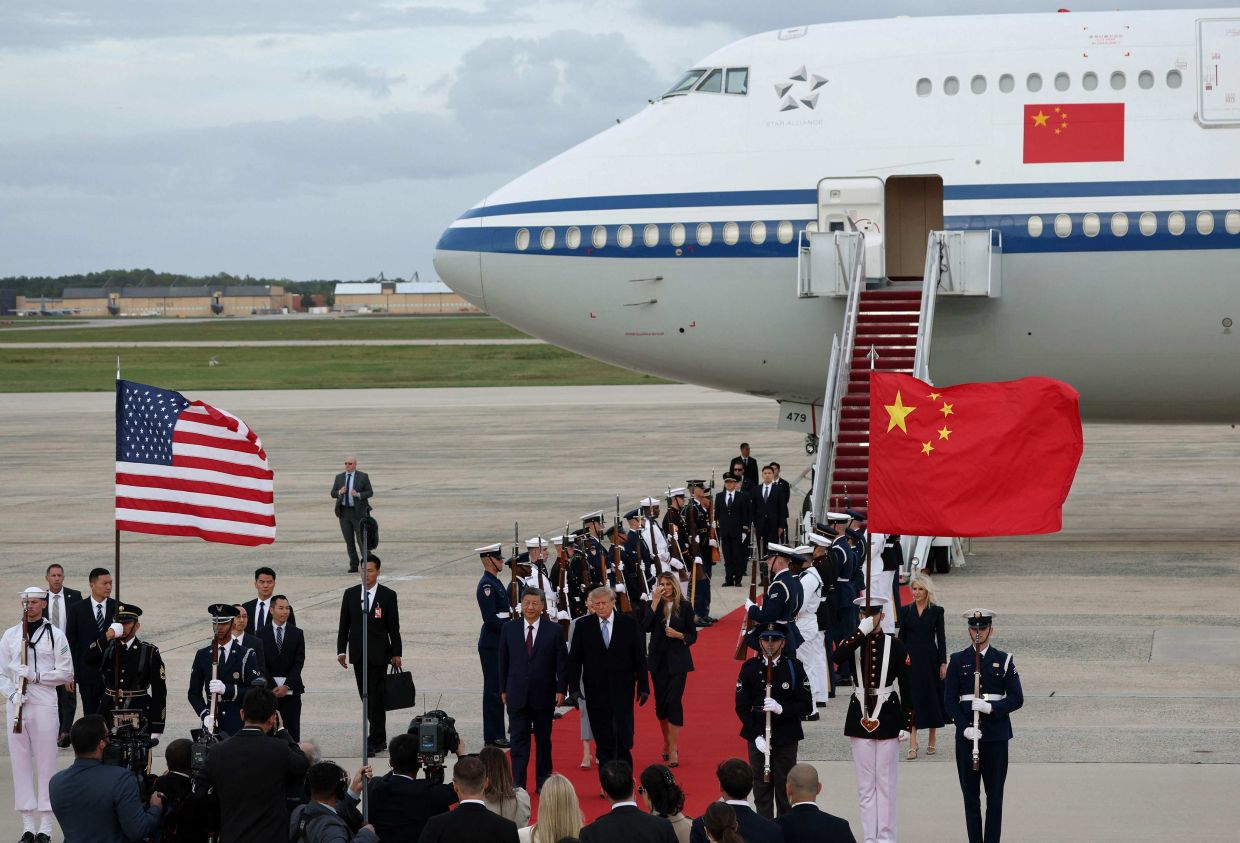
As American billionaires gathered at the White House to honour Chinese President Xi Jinping and his wife Peng Liyuan last Thursday, a group of Chinese business leaders spent the evening on the sidelines.
They had travelled to the US capital to join the state dinner . But their invitations never arrived.
For weeks, their participation was the subject of intense discussion between Washington and Beijing.
While it was under consideration until the summit’s final hours, they were ultimately excluded due to poor communication between the two governments, the two sides’ differing views on reciprocity and the White House’s unclear attitude towards Chinese investments in the United States, according to multiple sources.
More than 130 high-profile guests attended the dinner, including some of America’s most prominent tycoons.
Several were seated at the main table alongside the leaders and first ladies, including Tesla CEO Elon Musk , Nvidia CEO Jensen Huang , Advanced Micro Devices CEO Lisa Su and Apple executive chairman Tim Cook .
Of the 134 guests, only 19 were part of the Chinese delegation.
This was in sharp contrast to Trump’s May state visit to Beijing , where the US delegation featured Musk, Cook, Huang, and David Solomon from Goldman Sachs. They attended several events and meetings, including the banquet at the Great Hall of the People.
The South China Morning Post first reported in August that Chinese and US officials were discussing the possibility of business leaders joining Xi’s delegation .
Figures from some of China’s most prominent firms – including electric vehicle maker BYD, battery maker Contemporary Amperex Technology Limited and smart manufacturing giant Xiaomi – were expected to be part of the Chinese business delegation.
Two sources said that Washington first proposed the idea of inviting Chinese business leaders during the preparations for the summit as a matter of reciprocity – the guiding principle of Xi’s visit – following Trump’s May trip.
The sources added that China accepted the proposal in principle and requested further details from the US regarding planned meetings and official engagements. However, the White House side was slow to address these inquiries.
While frustrated by the delay, the Chinese side told several companies that their executives should be ready to travel to Washington at short notice, the sources said.
Two sources noted that Beijing viewed the lack of communication as evidence of Washington’s reluctance to invite Chinese businesses to the White House.
One source familiar with the matter said the two sides differed over what reciprocity meant in practice.
For Beijing, the American business leaders who accompanied Trump on his May trip were part of the delegation, which set a precedent for Xi’s visit. Washington, however, only wanted to extend this reciprocity to senior government officials, the source said.
The SCMP earlier reported that divergence between Washington and Beijing over potential Chinese investment announcements also created roadblocks for the business delegation’s participation.
A source said that Washington and Beijing remained divided over the Board of Investment , particularly on the terms for potential Chinese investments in the US, further casting a cloud over the delegation’s participation.
The investment forum was one of the outcomes from Xi and Trump’s last summit in Beijing.
Another source said the two sides had discussed potential deals that could be announced during Xi’s visit, including one involving Chinese batteries, but the negotiations failed to make headway.
The official accounts released after the summit confirmed the lack of progress. While the US fact sheet repeated its May reference to the investment board, the Chinese read-out made no mention of it.
Washington’s position on Chinese investments in the US – especially in the auto sector – remained unsettled ahead of the summit, with American carmakers and lawmakers increasingly pushing back against the prospect.
Trump, however, said earlier this month that Chinese carmakers could establish manufacturing plants in the US. “If China wanted to come in and open a plant to build their cars here, I’d be OK with it,” he told Fox News.
Despite Trump’s openness to the idea, his administration was seeking to address concerns at home as its political base remained divided over Chinese investment in the US, a source said.
“In this instance, even Trump could not bend his administration, let alone his party, to his will,” another source added.
Just three days before the visit, US Treasury Secretary Scott Bessent and US Trade Representative Jamieson Greer met Chinese Vice-Premier He Lifeng at JPMorgan’s headquarters in New York to finalise the summit’s deliverables.
Two sources said the issue of the Chinese business delegation came up, but the two sides were unable to reach an agreement.
By that time, the SCMP had already reported that a small group of Chinese CEOs had independently travelled to Washington ahead of Xi’s arrival.
A source familiar with the issue said the group was expected to include representatives of Chinese electric-vehicle companies, which had shown particularly strong interest in investing in the US.
Bessent and He discussed the matter again during a second meeting last Wednesday at the World Bank’s offices in Washington, but made no progress, the sources said.
The business leaders’ presence at that stage became a matter of optics rather than substance, according to another source.
While the optics mattered to Beijing, which was unhappy with Washington’s stance, it chose not to press the issue further and risk overshadowing a state visit otherwise marked by pomp and pageantry.
The Chinese business leaders “should’ve come in numbers and attended the state dinner regardless of what they could achieve or not achieve”, a source said.
“It would’ve been a huge soft power coup.” -- SOUTH CHINA MORNING POST
Thank you for your report!
Trump says China is driving anger at US data centres. These residents disagree, reports SCMP
SMG, SCMP ink MOU aimed at strengthening business ties between M'sia, Hong Kong
SMG and SCMP ink landmark deal
上周四,当美国亿万富翁齐聚白宫,向中国国家主席习近平及其夫人彭丽媛致敬时,一群中国商界领袖则在白宫外度过了当晚的时光。
他们前往美国首都参加国宴,但他们的邀请函却始终没有送达。
数周以来,他们的参与一直是华盛顿和北京之间激烈讨论的话题。
据多方消息来源称,尽管在峰会的最后时刻仍在考虑这些方案,但最终由于两国政府沟通不畅、双方在互惠问题上的看法不同以及白宫对中国在美投资态度不明朗等原因,这些方案被排除在外。
超过 130 位贵宾出席了晚宴,其中包括一些美国最著名的商业巨头。
包括特斯拉首席执行官埃隆·马斯克、英伟达首席执行官黄仁勋、超微半导体首席执行官苏姿丰和苹果公司执行董事长蒂姆·库克在内的几位人士与各国领导人和第一夫人一起坐在主桌旁。
在134位宾客中,只有19位是中国代表团成员。
这与特朗普5月份对北京的国事访问形成了鲜明对比,当时美国代表团成员包括马斯克、库克、黄仁勋和高盛集团的戴维·所罗门。他们出席了多项活动和会议,包括在人民大会堂举行的宴会。
《南华早报》8月份率先报道,中美官员正在讨论商界领袖加入习近平代表团的可能性。
预计中国一些最知名企业的代表,包括电动汽车制造商比亚迪、电池制造商宁德时代科技有限公司和智能制造巨头小米,都将加入中国商务代表团。
两名消息人士称,华盛顿方面在峰会筹备期间首次提出邀请中国商界领袖的想法,这是出于对等原则——也是习近平此次访问的指导原则——此前特朗普曾于五月访问中国。
消息人士补充说,中方原则上接受了这一提议,并要求美方提供有关计划会晤和官方活动的更多细节。然而,白宫方面对这些询问的回应较为迟缓。
消息人士称,尽管中方对延误感到沮丧,但已告知多家公司,其高管应做好随时前往华盛顿的准备。
两名消息人士指出,北京方面认为缺乏沟通是华盛顿不愿邀请中国企业访问白宫的证据。
一位知情人士表示,双方对互惠在实践中的含义存在分歧。
对北京而言,陪同特朗普五月访华的美国商界领袖是代表团成员之一,这为习近平的访问树立了先例。但消息人士称,华盛顿方面只希望将这种对等措施扩展到高级政府官员。
《南华早报》此前报道称,华盛顿和北京在中国潜在投资公告上的分歧也给商务代表团的参与造成了障碍。
一位消息人士称,华盛顿和北京在投资促进委员会问题上仍然存在分歧,尤其是在中国对美潜在投资的条款方面,这进一步给代表团的参与蒙上了一层阴影。
投资论坛是习近平和特朗普上次在北京峰会的成果之一。
另一消息人士称,双方讨论了习近平访问期间可能宣布的潜在交易,其中包括一项涉及中国电池的交易,但谈判未能取得进展。
峰会后发布的官方报告证实了会谈缺乏进展。尽管美国方面的情况说明书再次提及了5月份提到的投资委员会,但中方的报告只字未提。
在峰会召开前,华盛顿对中国在美国的投资——尤其是汽车领域的投资——的立场仍然不明朗,美国汽车制造商和立法者越来越反对这种前景。
然而,特朗普本月早些时候曾表示,中国汽车制造商可以在美国建厂。“如果中国想来这里建厂生产汽车,我不会反对,”他告诉福克斯新闻。
消息人士称,尽管特朗普对这一想法持开放态度,但他的政府仍在努力解决国内的担忧,因为其政治基础在对华投资问题上仍然存在分歧。
另一位消息人士补充说:“在这种情况下,即使是特朗普也无法让他的政府,更不用说他的政党,屈服于他的意志。”
就在访问前三天,美国财政部长斯科特·贝森特和美国贸易代表杰米森·格里尔在纽约摩根大通总部会见了中国国务院副总理何立峰,最终确定了峰会的成果。
两名消息人士称,双方讨论了中国商务代表团的问题,但未能达成一致。
当时,《南华早报》已经报道,一小群中国企业首席执行官在习近平到访华盛顿之前自行前往华盛顿。
一位知情人士表示,该小组预计将包括中国电动汽车公司的代表,这些公司对在美国投资表现出了特别浓厚的兴趣。
消息人士称,贝森特和何在上周三于华盛顿世界银行办公室举行的第二次会议上再次讨论了此事,但没有取得任何进展。
另一位消息人士称,当时商界领袖的出席更多的是出于形象考虑,而非实质内容。
虽然北京方面很在意舆论,对华盛顿的立场感到不满,但它选择不进一步施压,以免使原本以盛大场面和隆重仪式为标志的国事访问黯然失色。
一位消息人士称,中国商界领袖“无论能取得什么成就或不能取得什么成就,都应该踊跃出席国宴”。
“那将是一次巨大的软实力胜利。”——《南华早报》
感谢您的报告!
特朗普称中国煽动民众对美国数据中心的愤怒。据《南华早报》报道,这些居民对此表示反对。
SMG与SCMP签署谅解备忘录,旨在加强马来西亚与香港之间的商业联系
SMG和SCMP签署里程碑式协议