This Singaporean chef moved to Mexico for love. Now she runs the only Singaporean restaurant in Latin America这位新加坡厨师为了爱情移居墨西哥。如今,她在拉丁美洲经营着唯一一家新加坡餐厅。
At Makan, Maryann Yong and her Mexican husband have built a restaurant around the flavours of Singapore. Along the way, she has found herself reconsidering what it means to represent home.
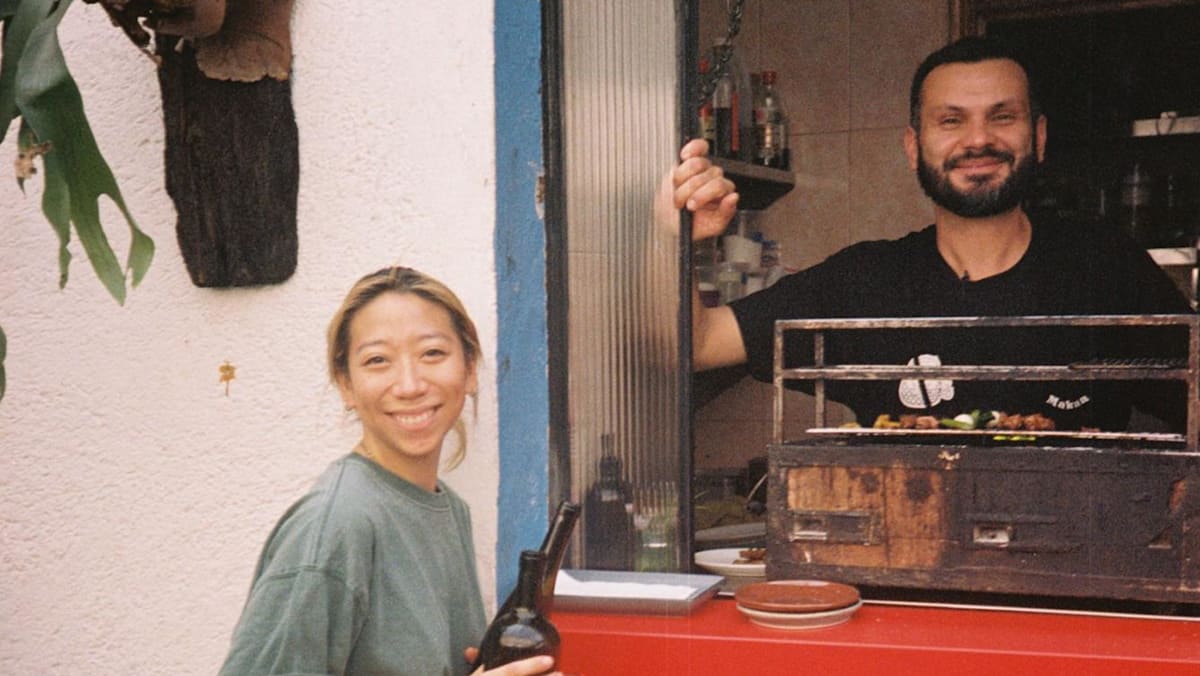
At Makan, Maryann Yong and her Mexican husband have built a restaurant around the flavours of Singapore. Along the way, she has found herself reconsidering what it means to represent home.
Maryann Yong and Mario Malvaez at Makan, the Mexico City restaurant where they explore what Singaporean food can become far from home. (Photo: Romy Messak)
This audio is generated by an AI tool.
When Maryann Yong first served chicken rice at Makan, the restaurant she opened with her husband in Mexico City, she was prepared to defend the authentic recipe with her life.
“It’s going to be white chicken rice. I don’t care,” she recalled thinking.
For someone introducing Singaporean food to a city nearly 17,000km away from home, the stakes felt personal. She had trained as a chef and worked in restaurants in multiple countries, but this was her first time cooking Singaporean food professionally – so getting it right mattered.
There was just one problem: Diners unfamiliar with the cuisine were leaving the skin behind. Her husband, Mexican chef Mario Malvaez, who had helped develop and run Singapore restaurants including Piedra Negra and Lucha Loco, suggested changing the recipe to give it more colour and texture. “I was like, how dare you!” she recalled with a laugh.
Makan’s chicken rice is adapted for Mexico City diners – the chicken is poached in a master stock, then grilled briefly for a crisp skin and a touch of smokiness. (Photo: Jose Miguel Ramirez)
Eventually, she relented. The chicken is now poached in a master stock flavoured with soy sauce, spices, orange peel and rock sugar, giving it a caramel colour. Before serving, it goes briefly onto the grill to crisp the skin and pick up a little smokiness. Everything else – the rice, cucumbers, chilli and cilantro – remains the same.
That small adjustment captures a question Yong and Malvaez have been discussing since they started Makan: What is Singaporean food, and what can it become when the people cooking and eating it are a world away?
For Yong, answering that question has also meant thinking about her own relationship with being Singaporean.
“I’ve spent a lot of time outside of Singapore, and I feel that has made me become more Singaporean in a way,” she explained.
Born in Bellingham, in the US state of Washington, to Singaporean parents, Yong moved between countries as a child because of her father’s work in the energy sector. She lived in Singapore and Bangkok, and spent her school years at the Dover Campus of United World College of South East Asia.
Cooking began with a more immediate concern than identity: She was hungry.
View this post on Instagram A post shared by Yongs (@yongs_mx)
A post shared by Yongs (@yongs_mx)
With both parents working, she experimented with pasta, fried rice and stir-fries after school. Her mother kept the kitchen well stocked, with meat neatly packed in the freezer and fresh produce ready to use. Television cooking shows spurred her on.
“I was really obsessed with watching Yan Can Cook,” she said.
When it came time to choose what to study at university, she had little idea how her interest in cooking might translate into a career. A presentation by Le Cordon Bleu at a university fair changed that. She went home convinced she had found what she wanted to do.
Her father was supportive but practical. Did she understand the hours? The birthdays, Christmases and Chinese New Years she would spend working while everyone else celebrated?
The programme she chose in Melbourne combined culinary training with a business degree, offering her parents some reassurance that she would have options.
Her career eventually brought her into the same kitchens as her future husband, Malvaez, in Singapore. They worked together for several years before moving to Bangkok, where they spent two years at Gaggan.
Maryann Yong and Mario Malvaez with her parents at Makan, where Yong’s memories of Singapore continue to shape the food she serves. (Photo Jose Miguel Ramirez)
The decision to move to Mexico City came after Malvaez’s father died and he returned home to be with his family. Back in Bangkok, he told Yong he was ready to move home and asked whether she would join him – even though she had never been to Mexico.
Still, a childhood spent moving between countries had given her a certain confidence about starting over.
“I feel like I can live anywhere,” she said.
The nerves surfaced in smaller, more ordinary ways. Lying in bed in Bangkok before the move, she found herself thinking about 7-Eleven. In Asia, she knew where to go when she needed something. What would the equivalent be in Mexico?
Before settling there, the couple spent six months travelling, including a month in Kyushu, a cooking engagement in Jakarta and time in France and Spain. By the time they arrived in Mexico City, she felt less attached to any one place – and soon found plenty to be excited about.
Makan started small in a house in Roma, Mexico City, before expanding its team and taking over more space in the property. (Photo: Maryann Yong)
She settled into her new life and worked under chef Eduardo Garcia at Maximo, one of Mexico City’s best-regarded restaurants. There, she discovered the quality and range of Mexican produce – mushrooms, seafood, beef and pork – expanding her understanding of what the country could offer a kitchen.
“Obviously you have to dig for it and find the right people, but you can really find really great stuff here,” she said.
The restaurant also gave her a close view of the city’s diners. Many were well travelled and curious about unfamiliar cuisines. She and Malvaez began thinking about a restaurant of their own, and Singapore offered a natural starting point.
“I just thought that we should say that we were from Singapore because I am Singaporean, and Mario lived in Singapore for so long,” she said.
The original Makan occupied a house in Roma, Mexico City, where several ventures shared the property. (Photo: Maryann Yong)
Makan – which means “to eat” in Malay – began during the pandemic in a house in Roma, a neighbourhood known for its restaurants and creative businesses. It was the sort of house that had acquired extra rooms and an increasingly eccentric layout as it passed from one owner to the next. By the time the couple arrived, several ventures shared the property.
“The house was a little bit weird,” Yong recalled. “It was a beautiful house, very charming but by no means the most beautiful Mexican hacienda.”
The couple turned the garage into a garden dining area and fitted the restaurant around the rooms available. At first, there were just the two of them and a senora who helped with the cleaning. Yong and Malvaez took turns cooking and serving.
Early dishes included duck noodles, laksa and a ceviche inspired by larb, seasoned with toasted rice powder, mint, coriander, chilli and lime.
The first Makan made creative use of its surroundings, including turning the garage into this garden dining space. (Photo: Maryann Yong)
Introducing laksa to Mexican diners meant starting with the basics: a curry soup with coconut, prawns and rice noodles. More tiring was explaining the restaurant itself – and what Singaporean food was. Asian immigrant communities had run mom-and-pop eateries in Mexico for decades, which Yong felt had shaped diners’ expectations of what an Asian restaurant would be.
“There were some days where I just didn’t want to talk to anyone,” she said. “I’m so over telling people that I don’t have sushi.”
Gradually, word spread and the restaurant filled up. The couple hired staff and took over more space in the house, adding another kitchen and more seats. Eventually, the team grew to 14.
When the building came up for redevelopment, Makan had to find a new home. Today, Yong said, the business employs 26 people across the kitchen, dining room and administration.
That responsibility has tempered some of her early stubbornness about doing everything exactly as she remembered it. Fresh pandan, for example, can be found in Mexico, but she said it is too expensive to use as freely as she would in Singapore. On trips home, she stocks up on pandan extract for bread and kaya, and recruits travelling friends to replenish her supplies.
For diners new to Singaporean food, Maryann Yong described laksa simply as a curry soup with coconut, prawns and rice noodles. (Photo: Jose Miguel Ramirez)
“Every time I go back to Singapore or anyone that I know goes back to Singapore, I’m like, go to Phoon Huat. Get five litres of pandan extract, please,” she chuckled.
Other ingredients are surprisingly accessible. Growers in Puebla supply Asian vegetables, including bok choy, bitter gourd and the varieties of aubergine she needs. Asian grocery shops provide coconut milk and tapioca pearls for her sago dessert. For char kway teow, she uses clams in place of the cockles she would find in Singapore, alongside prawns and lap cheong.
These decisions are part of running a restaurant, but they also require her to work out which aspects of a dish carry its identity – especially in being the only Singaporean restaurant in all of Latin America. She wants the classics to be approachable for Mexico’s diners, while preserving the wider food culture that Singaporeans grow up with. “Singapore is such an international city and you can go and eat good Vietnamese or really good Thai food,” she said. “It just made me feel that I needed to show that diversity.”
One dish she introduced was a tom yum fried rice named after Golden Mile, the former Singapore complex long known for its Thai eateries. To her, the reference made perfect sense: Thai food, and the places Singaporeans go to eat it, are part of her experience of home too.
“What is Singaporean food, or what can it be? What can it mean?” she said of the ongoing conversation with Malvaez.
MAINTAINING A CONNECTION TO HOME
Makan’s new Mexico City space marks the restaurant’s growth from a small pandemic-era operation into a larger team and dining room. (Photo: Rafael Gamo)
It is a question that has become more interesting with distance.
Yong has always been proud of her connection to Singapore, although living there has not always given her an uncomplicated sense of belonging. Overseas, she has had more room to consider what she values about Singapore and what she wants others to see.
Her last trip home sharpened her appreciation of the country. In hawker centres, she found herself listening to older Singaporeans talk about sending their children to London to study.
“Our parents and grandparents have worked so hard,” she said. Their efforts, she felt, had given her generation the chance “to travel and to compete on this kind of global scale”.
She wants the Singapore represented overseas to reflect that ambition, alongside the hawker dishes for which it is known. Makan has become her way of exploring what that might look like: a restaurant that reflects her training, her husband’s experience and a life spent moving between places.
And the question about a 7-Eleven-style convenience store that once kept her awake in Bangkok?
“Well, the equivalent is Oxxo,” she said with a laugh. “Anytime a Singaporean goes to Mexico City or Mexico, you go to an Oxxo. You can find anything you need at any time of day.”
A single handpicked story that we think you shouldn't miss. Just one a day.
在Makan餐厅,Maryann Yong和她的墨西哥丈夫以新加坡风味为主题,打造了一家地道的新加坡餐厅。在这个过程中,她也开始重新思考“家”的意义。
Maryann Yong 和 Mario Malvaez 在墨西哥城的 Makan 餐厅,探索新加坡美食在异乡的演变。(摄影:Romy Messak)
这段音频是由人工智能工具生成的。
当玛丽安·杨第一次在她和丈夫在墨西哥城开设的餐厅 Makan 供应鸡饭时,她准备用生命捍卫正宗的配方。
“反正就是白鸡饭,我不在乎。”她回忆当时的想法。
对于一位将新加坡美食带到距离家乡近17000公里之外的城市的人来说,这意义非凡。她曾接受过厨师培训,并在多个国家的餐厅工作过,但这却是她第一次以专业厨师的身份烹饪新加坡菜——所以,能否做好至关重要。
但有一个问题:不熟悉这种菜系的食客总是把鱼皮剩下来。她的丈夫,墨西哥厨师马里奥·马尔瓦埃斯(Mario Malvaez)曾参与新加坡多家餐厅的开发和运营,包括Piedra Negra和Lucha Loco,他建议修改配方,让鱼皮颜色和口感更丰富。“我当时就想,你怎么敢!”她笑着回忆道。
Makan餐厅的鸡饭是为墨西哥城食客改良的——鸡肉先用高汤慢煮,再略微烤制,使其表皮酥脆并带有淡淡的烟熏味。(图片:Jose Miguel Ramirez)
最终,她还是同意了。鸡肉现在用酱油、香料、橙皮和冰糖熬制的浓汤慢煮,呈现出焦糖色。上菜前,鸡肉会短暂地放在烤架上烤一下,使鸡皮酥脆,并带上一丝烟熏味。其他所有食材——米饭、黄瓜、辣椒和香菜——都保持不变。
这一小小的调整反映了 Yong 和 Malvaez 自创办 Makan 以来一直在讨论的一个问题:什么是新加坡美食,当烹饪和享用它的人远在世界另一端时,它会变成什么样子?
对Yong来说,回答这个问题也意味着思考她自己与新加坡人身份的关系。
“我在新加坡以外的地方待了很长时间,我觉得这在某种程度上让我变得更像一个新加坡人了,”她解释说。
杨出生于美国华盛顿州贝灵厄姆,父母是新加坡人。由于父亲在能源行业工作,她从小就随父亲在两国之间辗转。她曾在新加坡和曼谷生活,并在东南亚联合世界书院多佛校区就读。
烹饪的缘由并非出于身份认同,而是源于一个更为直接的问题:她饿了。
在 Instagram 上查看此帖子 由 Yongs (@yongs_mx) 分享的帖子
Yongs (@yongs_mx) 分享的帖子
由于父母双职工,她放学后便开始尝试做意大利面、炒饭和各种炒菜。母亲总是把厨房食材储备充足,肉类整齐地装在冰箱里,新鲜蔬果也随时可用。电视烹饪节目也激发了她的烹饪热情。
“我当时特别迷看《颜能做饭》。”她说。
到了选择大学专业的时候,她对如何将自己对烹饪的兴趣转化为职业几乎一无所知。蓝带厨艺学院在一次大学招生博览会上的宣讲改变了她的想法。回家后,她确信自己找到了真正想做的事。
她的父亲很支持她,但也很务实。她明白工作时间有多长吗?当其他人都在庆祝生日、圣诞节和春节时,她却要在工作中度过这些日子吗?
她在墨尔本选择的课程将烹饪培训与商业学位相结合,这让她的父母放心,她将来会有更多选择。
她的职业生涯最终让她与未来的丈夫马尔瓦埃斯在新加坡的同一家厨房相遇。他们一起工作了几年,之后搬到曼谷,在嘉根餐厅工作了两年。
玛丽安·杨和马里奥·马尔瓦埃斯与她的父母在Makan餐厅合影,杨对新加坡的记忆至今仍影响着她所烹饪的菜肴。(摄影:何塞·米格尔·拉米雷斯)
马尔瓦埃斯的父亲去世后,他回到家乡陪伴家人,于是决定搬到墨西哥城。回到曼谷后,他告诉永,他准备搬回家,并问她是否愿意和他一起去——尽管永从未去过墨西哥。
不过,童年时期辗转于各个国家的经历,让她对重新开始充满信心。
“我觉得我可以住在任何地方,”她说。
紧张情绪以更细微、更平常的方式涌现。搬家前,她躺在曼谷的床上,突然想到了7-11便利店。在亚洲,她知道需要什么东西时该去哪里。那么在墨西哥,类似的地方又会是什么呢?
在定居墨西哥城之前,这对夫妇花了六个月的时间旅行,其中包括在九州待了一个月,在雅加达参加烹饪课程,以及在法国和西班牙的游历。当他们抵达墨西哥城时,她对任何一个地方的依恋感都淡了下来——很快,她就发现了许多令她兴奋的事情。
Makan 最初在墨西哥城罗马区的一栋房子里起步,规模很小,之后随着团队的壮大,逐渐租用了更多空间。(图片:Maryann Yong)
她适应了新生活,并在墨西哥城最负盛名的餐厅之一 Maximo 跟随主厨 Eduardo Garcia 工作。在那里,她发现了墨西哥食材的品质和种类——蘑菇、海鲜、牛肉和猪肉——这加深了她对墨西哥厨房食材的理解。
“显然,你需要花些功夫去挖掘,找到合适的人,但你确实可以在这里找到非常棒的东西,”她说。
这家餐厅也让她有机会近距离观察这座城市的食客。许多人见多识广,对陌生的美食充满好奇。她和马尔瓦埃斯开始考虑开一家属于自己的餐厅,而新加坡自然而然地成为了一个理想的起点。
“我只是觉得我们应该说我们来自新加坡,因为我是新加坡人,而且马里奥在新加坡生活了很长时间,”她说。
Makan 最初的店面位于墨西哥城罗马区的一栋房子里,该房产由多家企业共同使用。(图片:Maryann Yong)
Makan在马来语中意为“吃”,它诞生于疫情期间,地点位于罗马区的一栋房子里。罗马区以其餐厅和创意企业而闻名。这栋房子几经易手,不断扩建,房间越来越多,布局也越来越奇特。这对夫妇接手时,这里已经容纳了好几家企业。
“那房子有点怪,”永回忆道。“那是一栋漂亮的房子,非常迷人,但绝不是最漂亮的墨西哥庄园。”
这对夫妇把车库改造成了花园餐厅,并根据现有房间布置了餐厅。起初,餐厅里只有他们两个人,还有一位帮忙打扫卫生的老太太。永和马尔瓦埃斯轮流掌勺和上菜。
早期的菜肴包括鸭肉面、叻沙和受凉拌肉末(larb)启发而制作的酸橘汁腌鱼,佐以烤米粉、薄荷、香菜、辣椒和青柠调味。
第一家Makan餐厅巧妙地利用了周围环境,例如将车库改造成了这个花园用餐区。(摄影:Maryann Yong)
向墨西哥食客介绍叻沙,意味着要从最基本的说起:椰奶咖喱汤,配上虾和米粉。更费劲的是解释餐厅本身——以及新加坡菜是什么。几十年来,亚洲移民社区一直在墨西哥经营着家庭式餐馆,Yong 认为这塑造了食客对亚洲餐厅的固有印象。
“有些日子我根本不想跟任何人说话,”她说。“我真的不想再跟别人说我没有寿司了。”
渐渐地,餐厅名声大噪,生意兴隆。这对夫妇雇佣了员工,并租用了更多空间,增设了厨房和座位。最终,团队发展到了14人。
当这栋楼面临重建时,Makan不得不另寻新址。Yong表示,如今,餐厅在厨房、餐厅和行政部门共雇佣了26名员工。
这份责任感让她不再像以前那样固执己见,非要事事都按照记忆中的方式去做。比如,新鲜的香兰叶在墨西哥也能买到,但她说那里太贵了,不能像在新加坡那样随意使用。所以每次回家,她都会囤一些香兰叶提取物,用来做面包和咖椰酱,还会请旅行的朋友帮忙补充。
对于初次尝试新加坡美食的食客,玛丽安·杨 (Maryann Yong) 将叻沙简单地描述为一种咖喱汤,配以椰子、虾和米粉。(照片:何塞·米格尔·拉米雷斯)
“每次我回新加坡,或者我认识的人回新加坡,我都会说,去Phoon Huat买五升班兰提取物,谢谢。”她笑着说。
其他食材也出乎意料地容易获得。普埃布拉的种植户供应亚洲蔬菜,包括小白菜、苦瓜和她需要的各种茄子。亚洲杂货店提供椰奶和西米,用于制作她的西米露甜点。炒粿条时,她用蛤蜊代替新加坡常见的鸟蛤,搭配虾和腊肠。
这些决定是经营餐厅的一部分,但也要求她思考一道菜的哪些方面体现了其特色——尤其是在这家餐厅是整个拉丁美洲唯一一家新加坡餐厅的情况下。她希望经典菜肴能够让墨西哥食客接受,同时又能保留新加坡人从小熟悉的更广泛的饮食文化。“新加坡是一个国际化大都市,你可以去那里吃到很棒的越南菜或非常正宗的泰国菜,”她说。“这让我觉得我有必要展现这种多样性。”
她推出的一道菜是冬阴功炒饭,菜名取自新加坡昔日著名的泰式餐厅聚集地——黄金坊。对她而言,这个名字再贴切不过了:泰式美食,以及新加坡人常去的泰式餐厅,也是她家乡记忆的一部分。
“什么是新加坡美食?或者说,它能是什么?它意味着什么?”她在谈到与马尔瓦埃斯的持续对话时说道。
保持与家的联系
Makan餐厅在墨西哥城的新店标志着该餐厅从疫情期间的小规模运营发展成为拥有更大团队和用餐空间的规模。(图片:Rafael Gamo)
随着距离的拉远,这个问题变得更加有趣了。
Yong一直为自己与新加坡的联系感到自豪,尽管在那里生活并非总能让她感到纯粹的归属感。身处海外,她有了更多空间去思考自己珍视新加坡的哪些方面,以及她希望别人看到新加坡的哪些特质。
她最近一次回家之旅加深了对祖国的喜爱。在小贩中心,她听到一些新加坡老一辈人谈论送孩子去伦敦留学的事情。
“我们的父母和祖父母付出了太多努力,”她说。她认为,正是他们的努力,才让她们这一代人有机会“环游世界,并在这种全球范围内竞争”。
她希望新加坡在海外的形象能够体现出这种雄心壮志,同时也不忘展现新加坡闻名遐迩的小贩美食。Makan餐厅成为了她探索这一愿景的途径:一家融合了她的专业训练、丈夫的经验以及她辗转各地生活经历的餐厅。
还有那个关于曼谷一家7-Eleven式便利店的问题,它曾经让她彻夜难眠?
“嗯,新加坡人去墨西哥城或者墨西哥其他地方,都会去Oxxo便利店。无论何时,你都能在那里找到你需要的任何东西。”她笑着说。
每天一篇,我们精心挑选一篇您不容错过的精彩故事。