Exclusive: Uniquely Configured RQ-170 Stealth Spy Drone Appears At Vandenberg AFB独家报道:一架配置独特的RQ-170隐形间谍无人机现身范登堡空军基地
It's the first photographic evidence that the famous but still extremely shy stealth spy drone has a presence at the Air Force's space oriented base.
Updated Jul 5, 2020 6:55 PM EDT
The RQ-170 Sentinel remains cloaked in mystery a decade after it was first photographed and nearly six years after the Skunk Works-built flying-wing drone spied on Osama Bin Laden’s compound and later fell into the hands of the Iranian government . In recent years, Sentinels have been photographed and filmed just a handful of times flying in and out of Creech AFB, the USAF’s master unmanned aircraft base located north of Las Vegas.
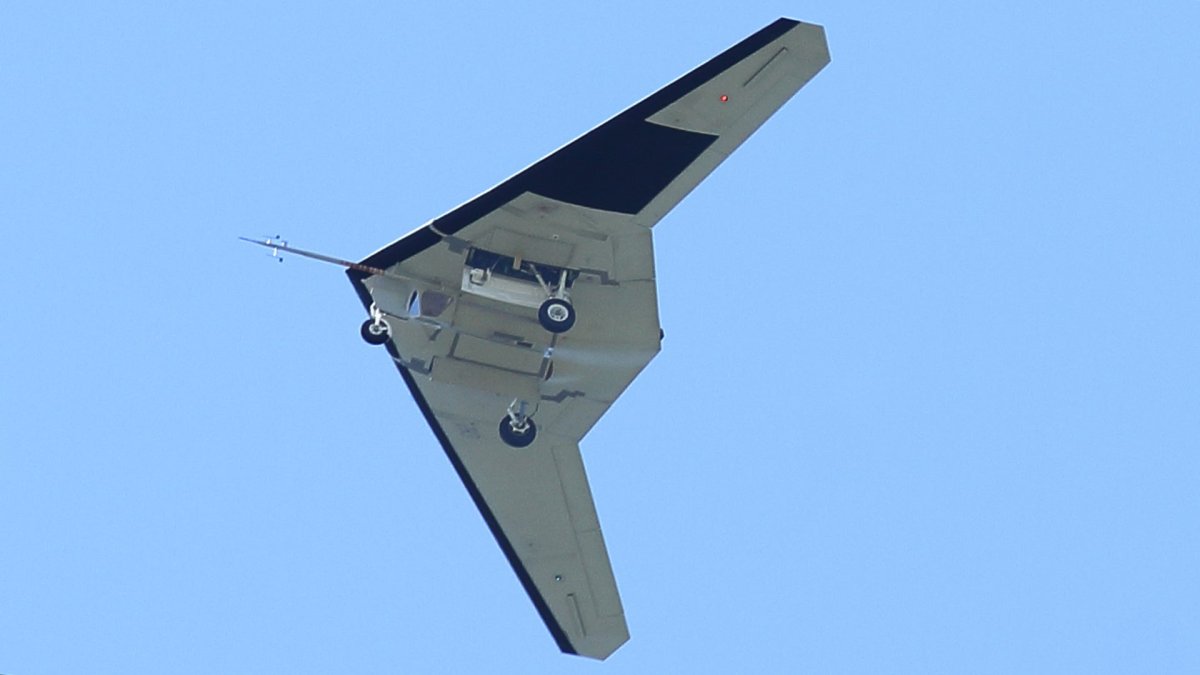
Although the RQ-170 may still have some presence at shadowy Tonopah Test Range Airport , where the 30th Reconnaissance Squadron was stood up to fly the type in secrecy in 2005, the unit is thought to have moved their operations from the remote base to Creech AFB in recent years. The War Zone’s own Joseph Trevithick learned, via an official USAF document, that the 30th RS had also activated a detachment in 2011 at Vandenberg AFB, of all places. Now, years after this action had supposedly occurred, the first photographic proof of the RQ-170’s presence at Vandenberg is shown below.
Matt C. Hartman/Shorealonefilms.com
The images were snapped by photographer Matt Hartman while visiting the base to capture the launch of a classified reconnaissance satellite (NROL-79) . His images show an RQ-170 like we have never seen before, sporting a large air data boom , a strange hodgepodge of black and white paneling, as well as some other features not seen in prior RQ-170 photos. These include an air inlet on the right-rear underside of the aircraft and what appear to be doors, either for access or otherwise, outboard of the aircraft’s shrouded sensor turret and what is likely a synthetic aperture radar housing that protrudes down the drone’s centerline. Some highly visible air-data sensors are also seen embedded into the drone’s leading edge, and what appear to be some sort of speed-brake like units towards the outer edges of the Sentinel’s wings. These exist on top of the aircraft as well as the Iranians have shown video of their officers messing with them. As for if we are seeing the oldest, or newest evolution of the RQ-170 design, that is not clear, but we can say with certainty that this particular RQ-170 is used for testing purposes.
Vandenberg AFB, nestled along the southern California coastline between Santa Maria and Santa Barbara, is the USAF’s premier ballistic missile test and rocket launch facility, and is not widely known for supporting fixed-wing aircraft programs. The base had been the home of the X-37B miniature spaceplane until recently , when the program moved to Kennedy Space Center in Florida. Before that the RQ-4 Global Hawk used the base for testing, with the runway’s somewhat even slope and close proximity to the sea acting as a proving ground before the high-altitude, long-endurance unmanned aircraft deployed to Guam for the first time. But beyond this, Vandenberg AFB has no aircraft permanently assigned to it.
These is just one large hangar and some smaller support buildings near the base’s massive runway. To the southwest, the old Orbiter Processing Facility that was built to support the failed military Space Shuttle program and its co-located SLC-6 launch complex is connected to the runway via a long taxiway. It is unknown what this facility is used for today, but it appears to feature high security and is still active, judging from satellite photos.
The old orbiter processing facility (also known as the orbiter maintenance and checkout facility) has remained busy long after the Space Shuttle’s fate at Vandenberg was sealed. , Google Earth
Vandenberg’s 15,000-foot runway is mainly used to support aerial transports moving missile and rocket material to and from the installation, and to provide a practice runway for military aviation units based all around California. A 2011 report noted that the airfield had just 4,000 operations a year, a tiny number compared to other USAF installations. But those operations are condensed largely within a nine hour timeframe each day, as the field is open from 8AM to 5PM and closed on weekends. It is possible that the base opens up for limited operations at other hours to support testing and classified programs, and there have been times when the base’s large runway is restricted even for transient military traffic.
So why base a detachment of RQ-170s at Vandenberg? First off, the base is relatively secluded, has high security, and as mentioned earlier, the RQ-170 would not have to compete with many other aircraft based there for runway time. Additionally, it gives incredible access to the Navy’s massive Pacific Range complex, including certain Channel Islands that are used exclusively for military training and weapons development.
For instance, one of the RQ-170’s missions is to provide overwatch, including streaming video to commanders (and possibly communications relay), for special operations units operating in contested territory. Members of SEAL Team Six supposedly had an RQ-170 overhead during Operation Neptune Spear—the mission to kill or capture Osama Bin Laden. One of the SEALs’ most elaborate and remote training grounds—one that also blends water and land operations—is located on the northern tip of San Clemente Island ( you can read all about it here ). San Nicolas Island hosts live weapons tests and an active bombing range. The island is also equipped with multiple threat emitters that mimic enemy radar and electronic warfare systems. The RQ-170 is known to have worked with the B-2 and other assets when it comes to targeting and bomb damage assessment. RQ-170s could use these facilities to develop and hone their tactics and interoperational capabilities. But above all else, these vast military operating areas located right off Vandenberg’s coast provide a safe and secure place for experimenting with new technologies without the risk of an aircraft crashing to the ground in a populated area, something that the RQ-170 may have already done in the past.
Just like the Global Hawk, the RQ-170 is known to have been deployed to Guam , and other potential operating locations could take the aircraft over water. Testing and training to operate the Sentinel in a similar maritime environment that it could face operationally isn’t just prudent, but it may also be necessary. In fact, the RQ-170, with its electo-optical sensors and what most experts think is a highly sensitive AESA-based synthetic aperture radar ( like the ASQ-236 ), could make the aircraft a potent targeting and surveillance node in an anti-access maritime and/or littoral combat environment. Proving that the RQ-170’s talents can be applied to the surface warfare realm would require that the aircraft have access to such an environment, and the middle of the Nevada desert surely does not offer that kind of an opportunity, but Vandenberg AFB certainly does.
Don’t be surprised if more unmanned aircraft testing, development and training makes its way to Vandenberg in the future, especially if the USAF ever brings the swarming UCAV revolution into the light . There is plenty of room along the runway at Vandenberg to build new ramp space, hangars and other facilities if they are required. With the RQ-4, X-37B and now the RQ-170 having used the site for various parts of their development, it only makes sense that more of the USAF’s most sophisticated drones, both known and unknown, will call the site home at some point in time. In fact, the Vandenberg is currently in the running to house a wing of MQ-9 Reaper drones, which would see aircraft permanently assigned to installation. This would kickstart facilities expansion uniquely tailored to unmanned aircraft mission, and would give the base a whole new and exciting mission as passes its 60th year of operations.
Contact the author: Tyler@thedrive.com
Comments couldn’t be loaded. Please refresh the page.
更新于美国东部时间2020年7月5日下午6:55
RQ-170“哨兵”无人机自十年前首次被拍摄到以来,至今仍笼罩在神秘之中。这款由美国宇航局臭鼬工厂制造的飞翼无人机曾对奥萨马·本·拉登的住所进行侦察,后落入伊朗政府手中,至今已近六年。近年来,人们只在位于拉斯维加斯北部、美国空军主要的无人机基地——克里奇空军基地——拍摄到过几次“哨兵”无人机的起降照片和视频。
尽管RQ-170可能仍然在神秘的托诺帕试验场机场(Tonopah Test Range Airport)留有踪迹——2005年,第30侦察中队曾在此秘密组建并驾驶该机型——但据信该部队近年来已将其行动从这个偏远基地转移到了克里奇空军基地(Creech AFB)。战区(War Zone)的约瑟夫·特雷维西克(Joseph Trevithick)通过一份美国空军官方文件获悉,第30侦察中队竟然还在2011年于范登堡空军基地(Vandenberg AFB)设立了一个分遣队。如今,在据称此事发生数年后,RQ-170出现在范登堡的首张照片证据如下所示。
Matt C. Hartman/Shorealonefilms.com
这些照片由摄影师马特·哈特曼在前往该基地拍摄一颗机密侦察卫星(NROL-79)发射时拍摄。他的照片展示了一架前所未见的RQ-170无人机,它配备了大型空速传感器吊杆、黑白相间的奇特面板,以及一些在之前的RQ-170照片中未曾出现过的特征。这些特征包括位于飞机右后下方的进气口,以及位于机身隐蔽式传感器炮塔外侧的疑似舱门(可能是用于进出),还有可能是沿无人机中心线突出的合成孔径雷达外壳。此外,还可以看到一些清晰可见的空速传感器嵌入在无人机的前缘,以及位于“哨兵”无人机机翼外缘的类似减速板的装置。这些装置也位于飞机顶部,伊朗方面曾发布过一段视频,显示其军官正在操作这些装置。至于我们看到的是 RQ-170 设计的最古老版本还是最新版本,目前尚不清楚,但我们可以肯定地说,这架 RQ-170 是用于测试目的的。
范登堡空军基地位于南加州海岸线,介于圣玛丽亚和圣巴巴拉之间,是美国空军最重要的弹道导弹试验和火箭发射基地,但并不以支持固定翼飞机项目而闻名。该基地曾是X-37B微型航天飞机的基地,直到最近该项目才转移到佛罗里达州的肯尼迪航天中心。在此之前,RQ-4“全球鹰”无人机也曾在此进行测试,跑道较为平缓的坡度和靠近海洋的地理位置,使其成为高空长航时无人机首次部署到关岛前的试验场。但除此之外,范登堡空军基地没有其他常驻飞机。
这里只有一座大型机库和一些靠近基地巨大跑道的小型辅助建筑。西南方向,曾经为支持失败的军用航天飞机计划及其毗邻的SLC-6发射场而建造的旧轨道飞行器处理设施,通过一条长长的滑行道与跑道相连。目前尚不清楚该设施的用途,但从卫星照片来看,它似乎安保严密,并且仍在运行。
范登堡空军基地旧航天飞机处理设施(也称航天飞机维护和检查设施)在航天飞机的命运尘埃落定之后,依然繁忙运转。(谷歌地球)
范登堡空军基地15000英尺长的跑道主要用于支持导弹和火箭物资的空中运输,往返于基地内外,并为驻扎在加利福尼亚州各地的军事航空部队提供训练跑道。2011年的一份报告指出,该机场每年仅有4000架次起降,与其他美国空军基地相比数量极少。但这些起降活动大多集中在每天9小时的开放时间内,因为机场的开放时间为上午8点至下午5点,周末关闭。基地可能在其他时间段开放有限的起降活动,以支持测试和机密项目,而且有时即使是过境的军事航班,基地的大型跑道也会受到限制。
那么,为什么要在范登堡空军基地部署一支RQ-170侦察机分遣队呢?首先,该基地相对偏僻,安保严密,而且正如前文所述,RQ-170无需与其他驻扎于此的飞机争夺跑道时间。此外,它还能便捷地进入海军庞大的太平洋靶场,包括一些专门用于军事训练和武器研发的海峡群岛。
例如,RQ-170 的任务之一是为在敌对区域作战的特种作战部队提供空中监视,包括向指挥官传输视频流(并可能进行通信中继)。据称,在“海王星之矛行动”(即击毙或抓捕奥萨马·本·拉登的任务)期间,海豹突击队第六分队的成员曾有 RQ-170 在其头顶盘旋。海豹突击队最复杂、最偏远的训练基地之一——该基地融合了水陆作战——位于圣克莱门特岛北端(您可以在这里阅读相关内容)。圣尼古拉斯岛是实弹武器试验场和轰炸靶场所在地。该岛还配备了多个威胁发射器,用于模拟敌方雷达和电子战系统。据悉,RQ-170 曾与 B-2 轰炸机和其他装备协同作战,进行目标定位和炸弹杀伤评估。RQ-170 可以利用这些设施来发展和磨练其战术和协同作战能力。但最重要的是,这些位于范登堡海岸附近的广阔军事行动区为试验新技术提供了一个安全可靠的场所,而无需担心飞机坠毁在人口稠密的地区,而 RQ-170 过去可能已经发生过这种情况。
与“全球鹰”无人机一样,RQ-170也已部署到关岛,其他潜在的作战地点也可能需要该机飞越水域。在与实际作战环境类似的海洋环境中对“哨兵”无人机进行测试和训练不仅是明智之举,而且可能也是必要的。事实上,RQ-170配备了光电传感器,并且大多数专家认为它搭载了高灵敏度的基于有源相控阵雷达(AESA)的合成孔径雷达(例如ASQ-236),这使得该机成为反介入/近海作战环境中强大的目标定位和监视节点。要证明RQ-170的性能可以应用于水面作战领域,就需要该机能够进入这样的环境进行训练,而内华达沙漠腹地显然无法提供这样的机会,但范登堡空军基地却能提供。
未来,如果范登堡空军基地开展更多无人机测试、研发和训练,尤其是在美国空军真正将集群式无人作战飞行器(UCAV)革命推向市场之后,请不要感到惊讶。范登堡跑道沿线有足够的空间,可以根据需要建造新的停机坪、机库和其他设施。RQ-4、X-37B 以及现在的 RQ-170 都曾在此进行过不同阶段的研发,因此,未来美国空军更多最先进的无人机,无论已知还是未知,都将以这里为家,这也就不足为奇了。事实上,范登堡目前正在竞标,争取驻扎一个 MQ-9“死神”无人机联队,这意味着这些无人机将永久部署在该基地。这将启动专门针对无人机任务的设施扩建,并在该基地成立 60 周年之际,赋予其全新的、令人兴奋的使命。
联系作者:Tyler@thedrive.com
评论加载失败,请刷新页面。