Declassified Document Shows Reagan Had the NSA Monitor Vietnam for Details on POW/MIAs解密文件显示,里根曾指示国家安全局监控越南战俘/失踪人员的详细信息。
Intelligence specialists in Hawaii spent six months listening in on Vietnamese radio messages.
By Joseph Trevithick
Updated Jun 29, 2019 11:53 PM EDT
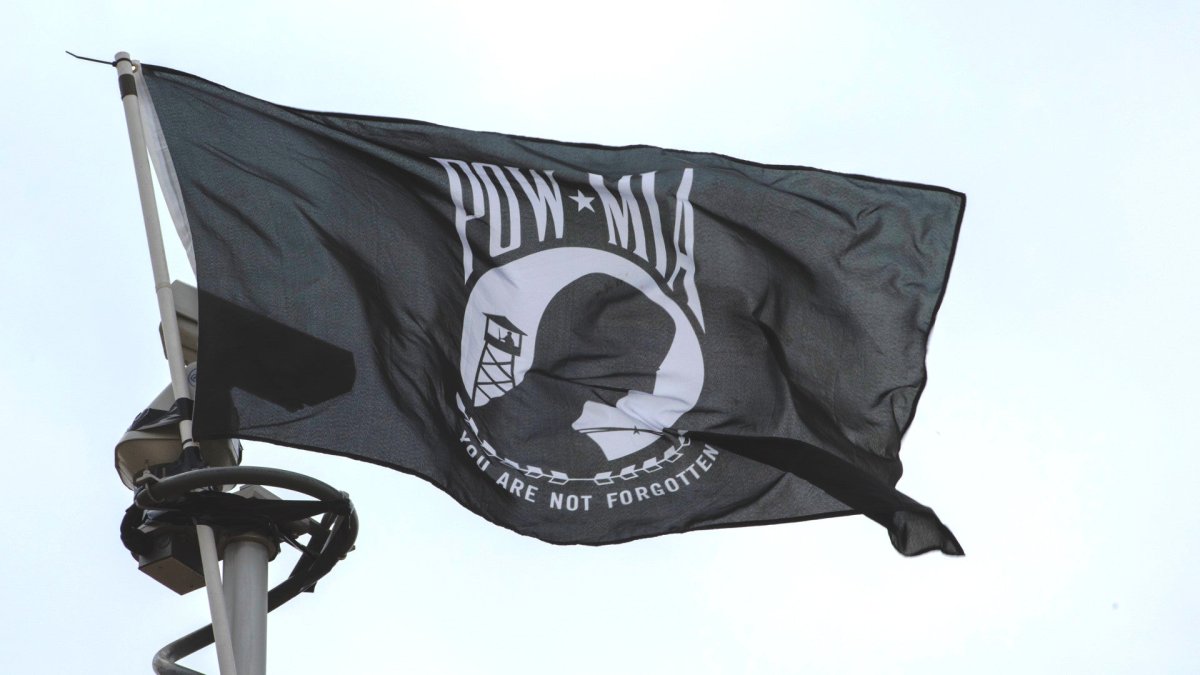
In a simple coincidence, U.S. President Donald Trump will spend Veterans Day 2017 in Vietnam, underscoring just how much the relationship between the two countries has changed in more than four decades. If anything, he is likely to laud the Vietnamese for their help in resolving the long-standing and controversial issue of American prisoners of war and those still listed as missing in action during the fighting in Southeast Asia . But while there is absolutely no evidence to support the idea that there are still any U.S. POWs alive in the region, declassified documents show that the United States put the full power of the intelligence community to work for years so as to be absolutely sure this was the case.
In the Summer 1984, as he campaigned for a second term, U.S. President Ronald Reagan personally ordered the National Security Agency and other elements of the U.S. signals intelligence community to gather as much information as possible about the potential status of Americans MIA in South East Asia. In response, U.S. Army and Air Force personnel at the Field Station Kunia listening post in Hawaii dutifully tuned their equipment toward targets in Vietnam.
“For a period of 6 months, USM-2 was assigned the mission of searching out and exploiting Vietnamese communications that might contain information on the issue,” a heavily redacted annual history of the U.S. Army’s Intelligence and Security Command for the 1985 fiscal year explained. “Upon receipt of the message, USM·2 and its Air Force counterpart, USA-32, organized a Joint task force of 39 Army and 50 Air Force operators and 22 Army analysts.”
A private individual obtained a copy of the historical review through a Freedom of Information Act Request. Government transparency website GovernmentAttic.org posted a copy online in October 2017.
US President Ronald Reagan salutes supporters at the 1988 Republican National Convention., Arnie Sachs/Picture-Alliance/DPA/AP
“USM-2” and “USA-32” are known as Signals Intelligence Activity Designators, or SIGADs, which are codes for specific elements within a particular field station, which could be a fixed base on land or a spy ship. These abbreviations are used by intelligence agencies in all the members of the so-called Five Eyes intelligence bloc, which includes the United States, the United Kingdom, Canada, Australia, and New Zealand.
When one activity shuts down, agencies are free to reuse the SIGAD again. The Army’s USM-2 operated from a site in Petaluma, California until 1971. In 1980, it stood up again at Kunia, as did the Air Force’s USA-32. The USA-32 element had actually been inside South Vietnam previously, situated within the American base at Da Nang until 1973, according to a declassified and heavily redacted internal NSA news item .
U.S. President Jimmy Carter had ordered the expansion of signals intelligence capabilities in response to a number of growing worldwide security concerns, including the crisis in Iran and Communist insurgencies in Latin America. After taking office in 1981, Reagan had pushed for more funding to further improve their capabilities.
The Kunia facility itself dates back to World War II, when the U.S. military decided to build a massive, bomb proof underground bunker following Japan’s surprise attack on Pearl Harbor. Originally known as the Kunia Tunnel , it subsequently became Field Station Kunia, and then the NSA’s Kunia Regional Security Operations Center (KRSOC). The U.S. Navy took over management of the site in 1995.
A view of the entrance to the KRSOC “tunnel” in 1998., USN via Cryptome
According to the INSCOM history, in July 1985, Kunia began using a new intelligence collection and distribution system, the name of which remains classified. This allowed the site to expand its capacity and take on additional missions – one of which would have been what the Army described as the “Southeast Asia Development Mission,” regarding the POW/MIA issue.
That Reagan personally initiated the intelligence operation in 1984 isn’t particularly surprising. At the time, it remained a hot button issue . This was true especially within veterans communities, who were skeptical of the U.S. government’s insistence that no one had gotten left behind as the country had extricated itself from a messy and unpopular war.
In 1983, the President had first proclaimed National POW/MIA Recognition Day, which the United States now observers every year on the third Friday in September . Politicians and activists were still publishing accounts from anonymous sources describing active prison camps in Vietnam, Laos, and Cambodia full of U.S. troops.
US Air Force Technical Sergeant James Cook salutes the flag from his stretcher as he is carried aboard a C-141 tranport during Operation Homecoming, the repatriation of US prisoners of war from North Vietnam in 1973., USAF
There has never been any confirmed evidence that these reports were true, but conspiracy theories remain widespread about the fate of hundreds of still missing American military personnel. So, turning already expanding intelligence resources to look into the matter, even if briefly, undoubtedly seemed liked a good idea to Reagan, who would go on to declare the final accounting of the living and the dead at one point as “ the highest national priority .”
That listening posts as far away as Hawaii can pick up high frequency transmission from as far away as Vietnam is itself down just to physics. To work at all, these long-range communication systems bounce radio waves off of the ionosphere in the upper atmosphere.
As a result, intelligence agencies can build huge antenna arrays on the ground to stand ready to collect those signals as they come flying back down to earth. Some of the most notable of these were the eight AN/FLR-9 systems the United States put in place across the Pacific and Europe.
An undated aerial shot of the AN/FLR-9 “Elephant Cage” at Field Station Augsburg in Germany., US Army
The United States has steadily dismantled these antenna farms , nicknamed “ Elephant Cages ” because of their large and odd appearance, as signal scooping satellites and spy planes became more powerful and available. In 1997, authorities in the Philippines turned the setup at the former U.S.-operated Clark Air Base into an amphitheater .
From Kunia, Army and Air Force intelligence specialists listened in on Vietnamese communications for any indication that there might be Americans alive, but MIA somewhere in the region. As with efforts before and after, it failed to produce any actual details about prisoners or missing individuals.
“The [high frequency] manual Morse collection provided by Field Station Kunia against Vietnamese targets exceeded all expectations,” the Army reported in its 1985 history. But “no POW/MIA-related communications were isolated during the period of the project.”
Despite the continuing lack of evidence, the belief that American POWs and MIAs remained alive in Southeast Asia persisted and the theme was especially prevalent in entertainment at the time. Popular action television shows like Airwolf and Magnum P.I. wove Vietnam POW and MIA storylines into their overall narratives. Most notably, in 1985, Sylvester Stallone starred in Rambo: First Blood Part II , with a plot that revolved around a government cover up of the issue.
At the same time, however, the U.S. government was pushing for improved relations with Vietnam and increased cooperation in locating remains of American service members. The Reagan Administration sent a POW/MIA special envoy, U.S. Army General John Vessey, on various rips to the region, beginning in 1987 .
In 1991, under President George H.W. Bush, the United States opened an American satellite office for MIA affairs in the Vietnamese capital Hanoi. A year later, the U.S. government began conducting large-scale recovery efforts in coordination with authorities in Vietnam, Laos, and Cambodia, which continue to this day.
Most recently, in September 2017, the Pentagon’s dedicated Defense POW/MIA Accounting Agency, or DPAA, announced it had released the remains of U.S. Air Force Colonel Martin R. Scott, who died when North Vietnamese forces shot his F-4C Phantom II down in 1966, to his family for burial. American and Vietnamese personnel had first begun recovering the remains in 2014 and then finished delivery of them for laboratory tests in 2016.
In July 2017, DPAA said it had identified the remains of U.S. Air Force Captain Robert E. Holton, the pilot of an F-4D Phantom II that went down in Laos in 1969. He is the most recent individual the organization has accounted for from the Vietnam War.
DPAA is responsible for such work broadly and continues to identify the remains of American personnel who died during World War II and the Korean War, as well.
Contact the author: joe@thedrive.com
Comments couldn’t be loaded. Please refresh the page.
作者:约瑟夫·特雷维西克
更新于美国东部时间2019年6月29日晚上11:53
美国总统唐纳德·特朗普将在2017年退伍军人节访问越南,这纯属巧合,也凸显了美越两国关系在过去四十多年里发生的巨大变化。他很可能会赞扬越南方面在解决美国战俘和在东南亚战争中失踪人员这一长期存在的争议性问题上提供的帮助。然而,尽管没有任何证据表明该地区仍有美国战俘在世,但解密文件显示,美国多年来动用了情报部门的全部力量,以确保这一点。
1984年夏天,美国总统罗纳德·里根在竞选连任期间,亲自下令国家安全局和美国信号情报部门的其他机构尽可能多地收集有关在东南亚失踪的美国公民状况的信息。作为回应,驻扎在夏威夷库尼亚野战站监听站的美国陆军和空军人员尽职尽责地将设备对准了越南境内的目标。
“在为期六个月的时间里,美国陆军情报与安全司令部第2中队(USM-2)的任务是搜寻并利用可能包含有关该问题信息的越南通信,”一份经过大量删减的1985财年美国陆军情报与安全司令部年度历史记录解释道。“收到电报后,USM-2及其空军对应机构USA-32组建了一支由39名陆军操作员、50名空军操作员和22名陆军分析员组成的联合特遣部队。”
一位私人人士通过《信息自由法》申请获得了这份历史回顾报告的副本。政府透明度网站 GovernmentAttic.org 于 2017 年 10 月将该副本发布在了网上。
美国总统罗纳德·里根在1988年共和党全国代表大会上向支持者致意。(图片来源:Arnie Sachs/Picture-Alliance/DPA/AP)
“USM-2”和“USA-32”是信号情报活动标识符(SIGAD),用于标识特定野战站内的特定要素,这些野战站可以是陆地上的固定基地,也可以是间谍船。这些缩写被所谓的“五眼联盟”情报集团所有成员国的情报机构使用,该联盟包括美国、英国、加拿大、澳大利亚和新西兰。
当一项活动停止后,各机构可以再次启用特别情报与安全局(SIGAD)。陆军的USM-2行动小组在加利福尼亚州佩塔卢马的基地运行至1971年。1980年,该小组在库尼亚重新启用,空军的USA-32行动小组也同样如此。根据一份解密且经过大量删减的美国国家安全局内部新闻稿,USA-32行动小组此前实际上已在南越境内,驻扎在岘港的美军基地内,直至1973年。
美国总统吉米·卡特曾下令扩大信号情报能力,以应对包括伊朗危机和拉丁美洲共产主义叛乱在内的一系列日益严峻的全球安全问题。里根于1981年就任总统后,力主增加拨款,以进一步提升信号情报能力。
库尼亚设施本身的历史可以追溯到二战时期。当时,日本偷袭珍珠港后,美军决定建造一个巨大的防弹地下掩体。该设施最初被称为库尼亚隧道,后来成为库尼亚野战站,之后又成为美国国家安全局的库尼亚区域安全行动中心(KRSOC)。1995年,美国海军接管了该设施的管理权。
1998年韩国皇家海军特种作战司令部(KRSOC)“隧道”入口处的照片,图片来自Cryptome网站。
根据美国陆军情报与安全司令部(INSCOM)的历史记载,1985年7月,库尼亚基地开始使用一套新的情报收集和分发系统,该系统的名称至今仍属机密。这使得该基地能够扩展其能力并承担更多任务——其中一项任务就是陆军所称的“东南亚发展任务”,该任务涉及战俘/失踪人员问题。
里根亲自在1984年启动这项情报行动并不令人意外。当时,这仍然是一个棘手的问题。尤其是在退伍军人群体中,他们对美国政府声称国家从一场混乱且不得人心的战争中脱身时没有落下任何人的说法持怀疑态度。
1983年,总统首次宣布设立国家战俘/失踪人员纪念日,美国现在每年九月的第三个星期五都会纪念这一天。当时,政界人士和活动家们仍在发表匿名消息来源的报道,描述越南、老挝和柬埔寨的战俘营里关押着大量美军士兵。
1973年,在“归乡行动”(即从北越遣返美国战俘的行动)期间,美国空军技术军士詹姆斯·库克躺在担架上,被抬上C-141运输机时,向国旗敬礼。(美国空军)
虽然从未有任何确凿证据证明这些报道属实,但关于数百名至今下落不明的美国军人命运的阴谋论仍然甚嚣尘上。因此,即便只是短暂地,动用当时已经不断扩充的情报资源来调查此事,对里根来说无疑也是个好主意。里根后来甚至一度将清点生死归宿列为“国家最高要务”。
远在夏威夷的监听站能够接收到来自越南的高频信号,这本身就完全是物理定律使然。这些远程通信系统之所以能够运作,是因为它们利用高层大气中的电离层反射无线电波。
因此,情报机构可以在地面上建造庞大的天线阵列,随时准备收集这些返回地球的信号。其中最引人注目的是美国在太平洋和欧洲部署的八套AN/FLR-9系统。
一张未注明日期的航拍照片,拍摄的是位于德国奥格斯堡野战站的AN/FLR-9“象笼”导弹防御系统,美国陆军
随着信号拦截卫星和侦察机的性能日益强大且应用日益广泛,美国逐步拆除了这些因其庞大而奇特的外形而被戏称为“象笼”的天线阵列。1997年,菲律宾当局将位于前美军运营的克拉克空军基地的天线阵列改造成了一座露天剧场。
在库尼亚,陆军和空军情报专家监听越南方面的通讯,试图寻找任何可能还有美国人活着但失踪在该地区某处的迹象。与之前和之后的尝试一样,这次监听未能提供任何关于战俘或失踪人员的实际信息。
“库尼亚野战站针对越南目标提供的[高频]手动莫尔斯电码采集能力超出了所有预期,”陆军在其1985年的历史报告中写道。但“在项目期间,没有截获任何与战俘/失踪人员相关的通信。”
尽管缺乏确凿证据,但美国战俘和失踪人员仍然在东南亚幸存的信念依然根深蒂固,这一主题在当时的娱乐作品中尤为盛行。像《飞狼》(Airwolf)和《夏威夷神探》(Magnum P.I.)这样的热门动作电视剧都将越战战俘和失踪人员的故事融入到整体剧情中。最引人注目的是,1985年,西尔维斯特·史泰龙主演的《第一滴血2》(Rambo: First Blood Part II)就围绕着政府掩盖这一问题展开。
然而,与此同时,美国政府也在努力改善与越南的关系,并加强在寻找美国军人遗骸方面的合作。里根政府从1987年开始,多次派遣战俘/失踪人员特使、美国陆军上将约翰·维西前往该地区。
1991年,在老布什总统任内,美国在越南首都河内设立了负责失踪人员事务的美国卫星办公室。一年后,美国政府开始与越南、老挝和柬埔寨当局协调开展大规模的搜寻工作,这项工作至今仍在进行。
最近,在2017年9月,五角大楼专门负责战俘/失踪人员统计署(DPAA)宣布,已将美国空军上校马丁·R·斯科特的遗骸移交给其家人安葬。斯科特上校于1966年驾驶的F-4C“鬼怪II”战斗机被北越军队击落身亡。美越双方人员于2014年开始搜寻遗骸,并于2016年完成遗骸的移交工作,送往实验室进行检测。
2017 年 7 月,美国国防部战俘/失踪人员统计署 (DPAA) 表示,他们已确认美国空军上尉罗伯特·E·霍尔顿的遗骸,他是 1969 年在老挝坠毁的 F-4D 鬼怪 II 战斗机的飞行员。他是该机构公布的越南战争中最新遇难者的信息。
DPAA 负责此类工作,并继续鉴定在二战和朝鲜战争中阵亡的美国人员的遗骸。
联系作者:joe@thedrive.com
评论加载失败,请刷新页面。